tech

‘AI will replace your job, including mine’, warns Fiverr CEO
In a strikingly candid internal message that has now gone viral, Fiverr CEO Micha Kaufman has issued a stark warning about the accelerating impact of artificial intelligence (AI) on the global workforce.
His bold assertion? AI is poised to replace a significant number of white-collar jobs — including, he says, his own.
The email, originally intended for Fiverr employees and later shared online by Neatprompts CEO Aadit Sheth, has ignited widespread discussion among professionals. It signals a dramatic shift in how top tech leaders view the pace and scope of AI-driven disruption across industries.
“AI is coming for your jobs. Heck, it’s coming for my job too,” Kaufman wrote, laying bare the reality many businesses are beginning to confront.
Eight Roles on the Line
Kaufman identified eight job categories that he believes are most at risk of being eliminated or fundamentally reshaped by AI:
ProgrammersDesignersProduct ManagersData ScientistsLawyersCustomer Support ProfessionalsSalespersonsFinance Professionals“It doesn’t matter if you are a programmer, designer, product manager, data scientist, lawyer, customer support, salesperson or a finance person — AI is coming for you,” he emphasised.
According to Kaufman, tasks once thought to be ‘hard’ are being made easier by AI, while ‘easy’ tasks are being fully automated. This shift, he argues, will render many current skillsets obsolete unless professionals take urgent action.
Adapt or Be Left Behind
Rather than sounding an alarmist note, Kaufman positioned his warning as a wake-up call. He urged workers to embrace the change and begin upskilling immediately by learning how to integrate AI tools into their workflows.
He cited a few examples of AI applications transforming various sectors:
Cursor for codingIntercom Fin for customer supportLexis+ AI for legal workHe also advised employees to become proficient in using large language models (LLMs) and to learn prompt engineering — a skill he now sees as essential for navigating the new world of work. His most provocative remark? “Google is dead,” suggesting that traditional search and knowledge discovery methods are being replaced by AI-powered interactions.
AI Before Expansion
Kaufman’s message concluded with a recommendation to business leaders: before considering increasing headcount, companies should focus on enhancing productivity by integrating AI into existing teams. For him, this is no longer a question of choice but of survival.
“Exceptional talent and prompt engineering are the new must-have skills,” he wrote, reflecting a growing sentiment within tech leadership circles that AI literacy will soon become a baseline requirement.
A Tipping Point for the Workforce
The viral nature of Kaufman’s message has sparked debate across social platforms. Some argue that his predictions are overly dire, while others applaud his candour and proactive stance. Regardless of where one stands, the broader consensus is clear: the AI revolution is not a distant threat — it is here, now, and moving fast.
Firefox could vanish if Google loses antitrust battle: Mozilla
As companies scramble to redefine roles and responsibilities in the age of AI, professionals face an urgent choice — adapt or risk being left behind.
Source: With inputs from India Today
1 year ago

OpenAI reverses course and says its nonprofit will continue to control its business
After months of exploring a transition to a for-profit model, OpenAI announced on Monday that it is changing direction and will keep its nonprofit entity in charge of the organization behind ChatGPT and other AI technologies.
“In light of feedback from civic leaders and discussions with the Attorneys General of California and Delaware, we’ve decided the nonprofit will maintain control,” CEO Sam Altman wrote in a message to staff.
Altman and Bret Taylor, the chair of OpenAI’s nonprofit board, explained that while the board chose to preserve nonprofit oversight, they are introducing a new strategy to support the company’s growth.
As part of what Taylor referred to as a “recapitalization,” the existing for-profit branch of the organization will be restructured into a public benefit corporation—one that must weigh both shareholder interests and its broader mission.
Shareholders will also receive stock and a cap on profit for some investors will be lifted, as part of the new plan. Altman said the changes would make it easier for the for-profit to behave more like a normal company.
Taylor declined to say Monday how large of an ownership stake the nonprofit will have in the new public benefit corporation. He said in a call with reporters that the nonprofit will choose the board members of the public benefit corporation and, at first, they will likely be the same people who now sit on OpenAI’s nonprofit board.
Grand Theft Auto VI delayed again, this time until May 2026
Public benefit corporations were first created in Delaware in 2013 and other states have adopted the same or similar laws that require the companies to pursue not just profit but a social good. Public benefit corporations, which include Amalgamated Bank and the online education platform Coursera, need to define that social good, which can vary broadly, when they incorporate.
Altman said that converting from a limited liability company to a public benefit corporation “just sets us up to be a more understandable structure to do the things that a company of our scope has to do.”
“There’s so much more demand to use AI tools than we thought there was going to be,” Altman said. Getting access to more capital will make it easier for OpenAI to pursue mergers and acquisitions “and other normal things companies would do,” Altman said.
OpenAI’s co-founders, including Altman and Tesla CEO Elon Musk, originally started it as a nonprofit research laboratory on a mission to safely build what’s known as artificial general intelligence, or AGI, for humanity’s benefit. Nearly a decade later, OpenAI has reported its market value as $300 billion and counts 400 million weekly users of ChatGPT, its flagship product.
OpenAI first outlined plans last year to convert its core governance structure but faced a number of challenges. One is a lawsuit from Musk, who accuses the company and Altman of betraying the founding principles that led Musk to invest in the charity and tried to block the conversion to a for-profit. A federal judge last week dismissed some of Musk’s claims and allowed others to proceed to a trial set for next year.
OpenAI also faced scrutiny from the top law enforcement officers in Delaware, where the company is incorporated, and California, where it operates out of a San Francisco headquarters. The California attorney general’s office said in a statement that it was reviewing the plan and, “This remains an ongoing matter — and we are in continued conversations with Open AI.”
The attorney general’s office in Delaware did not immediately return a request for comment.
Altman said he still expects a large investment from Japanese technology giant SoftBank Group, which in February announced plans to set up a joint company with OpenAI to push AI services.
1 year ago

Grand Theft Auto VI delayed again, this time until May 2026
Grand Theft Auto VI delayed again, this time until May 2026Rockstar Games announced on X (formerly Twitter) Friday that the release of Grand Theft Auto VI has been postponed to May 26, 2026. The company issued an apology for the delay but did not offer specific reasons for pushing the launch from its previously expected fall 2025 window.
OnePlus Nord 5: What We Know So Far
“With every game we’ve released, our aim has been to surpass expectations, and Grand Theft Auto VI is no exception,” Rockstar said in a statement. “We hope you understand that this extra time is necessary to meet the high standards you’ve come to expect from us.”
The delay had an immediate impact on the market, with shares of Take-Two Interactive, Rockstar’s parent company, falling nearly 7% on Friday.
Take-Two CEO and chairman Strauss Zelnick expressed full support for Rockstar’s decision, stating that the company backs the additional development time needed to bring the team’s creative vision to life. He reaffirmed expectations for the game to be a groundbreaking, blockbuster experience.
“Although we take changes to our release schedule seriously and recognize the global anticipation surrounding Grand Theft Auto VI, we remain committed to delivering excellence,” Zelnick said. “As we roll out more titles from our strong development pipeline, we anticipate entering a period of sustained growth and increased shareholder value.”
While fans expressed frustration over the latest delay, many responded with resigned acceptance, as the game's release has already been rumored for both 2024 and 2025.
On a Reddit discussion forum dedicated to the game, several fans noted they had seen this before and wouldn’t be surprised if the release was delayed again. Others took a more optimistic tone, saying an exact release date means it will actually happen this time around.
One of the last times the game garnered this much buzz was in 2023, when a trailer for the game was leaked online. At the time, Rockstar released the first look of the sixth game 15 hours earlier than planned, citing the leak.
That 90-second trailer gave fans a taste of what comes next for the game. The trailer suggested the next installment would be set in the Miami-inspired Vice City and star a female protagonist, a first for the franchise, named Lucia.
It is unclear whether the delay means any, or all, of these details will remain part of Grand Theft Auto VI.
1 year ago

OnePlus Nord 5: What We Know So Far
The popular Chinese consumer electronics manufacturer OnePlus’s Nord Series usually targets the budget-friendly to mid-range phone market in Bangladesh. In this wave, the OnePlus Nord 5 is going to be a new addition to the mid-range phone segment in 2025. There are several leaks and rumors about the features and specifications of the Nord 5. Here's an overview of what we know so far about the OnePlus Nord 5.
Leaks and Rumours about OnePlus Nord 5
.
Design and Display
Rumours suggest a sleek design with thin bezels for immersive viewing experiences. It will be built with a glass back and a plastic frame.
Nord 5 is expected to bear a 6.74-inch OLED display featuring a 1.5K resolution and a 120Hz refresh rate. It may offer LTPO 3.0 technology for adaptive refresh rates. However, the absence of LTPO will result in a fixed refresh rate.
Read more: Best 10 Smartphones Releasing in May 2025
Camera
The camera section of the OnePlus Nord 5 is likely to offer a 50MP main sensor, an 8MP ultrawide, and a 2MP macro lens. A 32MP selfie camera is also expected in Nord 5, featuring high-resolution self-portraits and video calls.
Performance and Hardware
Some sources suggest the Nord 5 will be powered by the MediaTek Dimensity 9350, a flagship-level processor built on TSMC’s 3nm process, boasting an impressive AnTuTu score of 2.3 million. However, some other leaks indicate using the Qualcomm Snapdragon 7+ Gen 3, which would still offer robust mid-range performance.
It is expected that Nord 5 variants will offer 8GB, 12GB, and 16GB of RAM. The storage options will range from 128GB to 512 GB. UFS 4.0 data transfer mechanism will be provided as per the leaks.
Read more: vivo V50 Lite Review: Does it offer value-for-money
Battery and Charging
According to some rumours, the battery capacity of the OnePlus Nord 5 will be 5500mAh or 7000mAh. The device is expected to support 100W wired charging, enabling rapid power-ups. However, no information is found regarding the wireless charging support.
Software and Features
The Nord 5 is anticipated to run on OxygenOS 15 on top of Android 15. Potential enhancements include AI-powered functionalities for photography and system optimization, improved haptic feedback, etc.
Expected Price of OnePlus Nord 5
The price of the OnePlus Nord 5 in Bangladesh may range from 63,000 to 70,000 TK, depending on the variant.
Read more: Tecno Camon 40 Pro Review: Is It Worth It?
Verdict
The OnePlus Nord 5 is expected to come with several upgrades over its predecessor, including better performance, larger battery, and advanced display. However, precise specifications about this mid-range phone will be available after the official launch.
1 year ago
TikTok fined $600 million for China data transfers that broke EU privacy rules
TikTok has been fined €530 million ($600 million) by a European Union privacy regulator on Friday, following a four-year probe that concluded the platform’s transfer of user data to China posed potential spying risks and violated the EU's strict data protection laws.
Ireland’s Data Protection Commission, which oversees TikTok’s compliance in the EU due to the company’s European headquarters being located in Dublin, also criticized the platform for failing to clearly inform users about where their data was being sent. The watchdog has given TikTok six months to bring its practices in line with EU standards.
“Tiktok did not sufficiently ensure or prove that the personal information of EU users — accessed remotely by employees in China — received a level of protection comparable to that required within the EU,” said Deputy Commissioner Graham Doyle in a statement.
TikTok said it disagreed with the decision and plans to appeal.
The company said in a blog post that the decision focuses on a “select period” ending in May 2023, before it embarked on a data localization project called Project Clover that involved building three data centers in Europe.
Firefox could vanish if Google loses antitrust battle: Mozilla
“The facts are that Project Clover has some of the most stringent data protections anywhere in the industry, including unprecedented independent oversight by NCC Group, a leading European cybersecurity firm,” said Christine Grahn, TikTok’s European head of public policy and government relations. “The decision fails to fully consider these considerable data security measures.”
TikTok, whose parent company ByteDance is based in China, has been under scrutiny in Europe over how it handles personal information of its users amid concerns from Western officials that it poses a security risk over user data sent to China. In 2023, the Irish watchdog also fined the company hundreds of millions of euros in a separate child privacy investigation.
The Irish watchdog said its investigation found that TikTok failed to address “potential access by Chinese authorities” to European users’ personal data under Chinese laws on anti-terrorism, counterespionage, cybersecurity and national intelligence that were identified as “materially diverging” from EU standards.
Grahn said TikTok has “has never received a request for European user data from the Chinese authorities, and has never provided European user data to them.”
Under the EU rules, known as the General Data Protection Regulation, European user data can only be transferred outside of the bloc if there are safeguards in place to ensure the same level of protection.
Grahn said TikTok strongly disagreed with the Irish regulator’s argument that it didn’t carry out “necessary assessments” for data transfers, saying it sought advice from law firms and experts. She said TikTok was being “singled out” even though it uses the “same legal mechanisms” that thousands of other companies in Europe does and its approach is “in line” with EU rules.
The investigation, which opened in September 2021, also found that TikTok’s privacy policy at the time did not name third countries, including China, where user data was transferred. The watchdog said the policy, which has since been updated, failed to explain that data processing involved “remote access to personal data stored in Singapore and the United States by personnel based in China.”
TikTok faces further scrutiny from the Irish regulator, which said that the company had provided inaccurate information throughout the inquiry by saying that it didn’t store European user data on Chinese servers. It wasn’t until April that it informed the regulator that it discovered in February that some data had in fact been stored on Chinese servers.
Doyle said that the watchdog is taking the recent developments “very seriously” and “considering what further regulatory action may be warranted.”
1 year ago

Firefox could vanish if Google loses antitrust battle: Mozilla
Imagine a world with no Firefox. That could be our future — and not because people stopped using it, but because of a major legal battle in the US.
Mozilla, the non-profit behind Firefox, just dropped a bombshell: If Google is forced to break up its business, Firefox might not survive. Why? Because Google pays Mozilla to be the default search engine on Firefox — and that deal covers 85% of Mozilla’s revenue!
“If we lose that funding, we’d have to make massive cuts,” said Mozilla’s CFO Eric Muhlheim. That means fewer engineers, slower updates, and possibly the end of Firefox as we know it. And it's not just about the browser — Mozilla’s open-source and climate tech projects would also take a hit.
This comes as the US government tries to rein in Google’s dominance, possibly by forcing it to sell off its Chrome browser. But Mozilla warns: “You might break one monopoly, but you’ll kill the competition with it.”
Apple, Firefox tools aim to thwart Facebook, Google tracking
Here’s the twist: Firefox runs on its own browser engine called Gecko — the only one not controlled by a tech giant. If it disappears, the entire internet becomes even more dependent on Google and Apple.
Judge Amit Mehta asked if a world with more strong search engines would help. Mozilla’s answer? Absolutely. But until that world exists, losing the Google deal could be fatal.
No Google. No Firefox. No real choice online.
Be aware. Big tech changes can have unexpected consequences.
#SaveFirefox #TechNews #GoogleTrial #Mozilla #Firefox #OpenWeb #BigTech #Antitrust #InternetFreedom
Would you like a shorter version for Instagram or a carousel format?
Source: With inputs from India Today
1 year ago

Rockstar confirms GTA VI to launch 'May 26, but not this year'
Rockstar Games has officially announced that the highly anticipated Grand Theft Auto VI will be released on May 26, next year.
The release date marks a delay from earlier expectations, with the developer citing the need for additional time to ensure the game meets the high standards fans have come to expect from the franchise, according to Rockstar.
"We are very sorry that this is later than you expected," Rockstar said in a statement released Friday. "The interest and excitement surrounding a new Grand Theft Auto has been truly humbling for our entire team."
The company emphasised its commitment to quality, stating that the extra development time is necessary to deliver an experience that lives up to players’ expectations.
Microsoft increases Xbox prices globally amid tariff-driven industry uncertainty
"With every game we have released, the goal has always been to try and exceed your expectations, and Grand Theft Auto VI is no exception," the statement added.
Rockstar thanked fans for their continued patience and support, promising to share more updates in the near future.
Started in 1997, the Grand Theft Auto series almost immediately created a name for itself as a nihilistically provocative and crudely satirical pop-culture sensation, in which players took on the roles of urban criminals testing the frameworks of US society as they tried to rise up the ranks of a gangland underworld.
Created by Rockstar, a games development studio based in Dundee, Scotland, the GTA games have always been a parody of US excess, with witty in-game jokes on everything from heart attack-inducing burgers to smart homes.
1 year ago
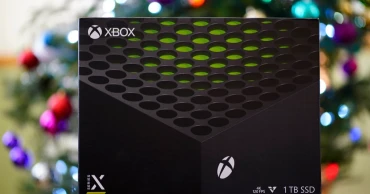
Microsoft increases Xbox prices globally amid tariff-driven industry uncertainty
As trade tensions and tariff-related uncertainty continue to cloud the global economy, gamers worldwide are beginning to feel the impact through higher prices.
Microsoft has increased the suggested retail prices for its Xbox consoles and accessories globally this week. In the U.S., the Xbox Series S now starts at $379.99—an $80 increase from its original $299.99 launch price in 2020. The more advanced Xbox Series X will now retail for $599.99, up $100 from its previous cost.
“We recognize these changes may be difficult,” Microsoft said in a support update and a statement to the Associated Press. While the company didn’t directly cite tariffs, it attributed the increases to broader "market conditions and rising development costs."
The price hikes are not limited to the U.S. — Europe, the U.K., and Australia will also see revised pricing, with additional regions to follow. Accessories such as wireless controllers and headsets are also affected, including in the U.S. and Canada.
Microsoft also signaled that prices for some of its upcoming first-party games could rise to $79.99 by the holiday season.
These adjustments come during a volatile period for the gaming industry, which has been rattled by new U.S. tariffs introduced by former President Donald Trump and retaliatory measures from countries like China. Economists warn these tariffs will drive up prices on a wide range of goods that depend on international supply chains, including electronics.
Microsoft isn't alone. Sony recently raised PlayStation 5 prices in parts of Europe, the Middle East, Africa, Australia, and New Zealand, citing economic pressures such as inflation and volatile exchange rates.
Nintendo also delayed preorders for its upcoming Switch 2 console in April to assess the potential impact of tariffs. While the base price of $449.99 remains unchanged, the new console is significantly more expensive than the original $299 model, a hike experts partly attribute to rising import duties.
Although many tech firms have already reported cautious forecasts due to tariff uncertainty, the full impact on their financial results may take time to surface. Microsoft’s price hike followed a strong quarterly earnings report: the company earned $70.07 billion in revenue and $25.8 billion in net income for the January–March period. Its personal computing division, which includes Xbox, saw a 6% revenue increase—prior to the enforcement of the latest tariffs.
1 year ago

Best 10 Smartphones Releasing in May 2025
May 2025 is coming to stretch out a long list of smartphones. From budget-friendly to high-end, minimal to gallant, a diverse collection of smartphones will blow the minds of smartphone users. Let’s find out the top smartphones coming from reputed brands in this May.
Top 10 Most Hyped Smartphones Releasing in May 2025
.
Motorola Edge 60 Pro
The Motorola Edge 60 Pro was launched on April 24, 2025, in only a few selected regions worldwide. The phone will be available in the rest of the world in May. Dimensionally the phone is 6.33 inches by 2.88 inches by 0.32 inches with a weight of 186g. For display, it uses a 6.7-inch P-OLED screen that responds to touch at 120 Hz and brightens at up to 4500 nits.
The phone runs on a 4nm Mediatek Dimensity 8350 Extreme chipset, accompanied by a Mali G615-MC6. The primary camera module is a triple camera set that comprises a 50MP wide, a 50MP ultrawide, and a 10MP telephoto shooter, while the front camera is a 50MP wide lens. For battery, the phone uses a 6000mAh Si/C cell with a 90W wired and a 15W wireless charging capacity.
Read more: vivo V50 Lite Review: Does it offer value-for-money
Samsung Galaxy S25
The Samsung Galaxy S25 is rumoured to be launched in May. Dimensionally, the phone measures 6.26 inches by 2.99 inches by 0.23 inches and weighs 163g. It features a 6.66-inch OLED display that refreshes at 120Hz and supports HDR10+, protected by Corning Gorilla Glass Ceramic 2. Powering the device is the 3nm Qualcomm Snapdragon 8 Elite chipset, paired with an Adreno 830 GPU.
The rear camera system is a dual setup, comprising a 200MP wide shooter and a 12MP ultrawide lens, while the front houses a 10MP wide camera for selfies. The phone records video at up to 8K and 30 fps and supports 4K at various frame rates. For battery, the Galaxy S25 is equipped with a 3900mAh cell supporting 25W wired charging.
vivo X200 Ultra
The vivo X200 Ultra is expected to be released on April 29, 2025. Dimensionally, the phone measures 6.42 inches by 3.02 inches by 0.34 inches and weighs either 229g or 232g, depending on the variant. It features a 6.82-inch LTPO AMOLED display that refreshes at 120Hz, supports Dolby Vision and HDR Vivid, and reaches a peak brightness of 4500 nits. The screen is protected by an Armour Glass.
Read more: Tecno Camon 40 Pro Review: Is It Worth It?
At its core, the phone runs on the 3nm Qualcomm Snapdragon 8 Elite chipset, paired with the Adreno 830 GPU, and ships with Android 15 topped by OriginOS 5. The rear camera system is a triple setup that includes a 50MP wide sensor with gimbal OIS, a 200MP periscope telephoto lens, and a 50MP ultrawide shooter, with optional add-on zoom lens capabilities. The front camera is a 50MP wide lens with autofocus.
For battery, the vivo X200 Ultra is powered by a 6000mAh Si/C Li-Ion cell, supporting 90W wired, 40W wireless, as well as reverse wired and wireless charging. Storage options include 256GB with 12GB RAM, 512GB with 16GB RAM, and 1TB with 16GB RAM, all based on UFS 4.1 technology.
iQOO Neo10 Pro+
The iQOO Neo10 Pro+ is gearing up for launch in May. Dimensionally, the Neo10 Pro+ is expected to feature a 6.82-inch display with a 2K resolution, delivering a higher pixel density compared to its predecessor. The phone will be powered by the 3nm Qualcomm Snapdragon 8 Elite chipset, an upgrade over the Dimensity 9400 used in the Pro model.
Read more: Infinix Note 50 Pro Plus Review: Is it a value-for-money midrange smartphone?
For cameras, the Neo10 Pro+ will come equipped with a 50MP primary rear sensor accompanied by an 8MP auxiliary lens, while the front camera will be a 16MP wide shooter. Unlike the Neo10 Pro’s dual 50MP setup, the Pro+ appears to adjust the ultrawide capabilities but boosts the overall display experience.
Motorola Razr Series
Motorola is set to launch the Razr lineup, featuring the Razr Ultra with a 7-inch AMOLED 165 Hz screen, Snapdragon 8 Elite chip, 16 GB RAM, AI Key, and 68W charging. The Razr+ upgrades pack a Snapdragon 8s Gen 3 and keep dual 50 MP cameras. The base Razr uses a Dimensity 7400X with a 50 MP primary camera. All Razr models improve hinge strength, offer colourful designs, and support AI features. Motorola will start pre-orders for the series on May 7, while their shipping will begin on May 15.
Samsung Galaxy F56
The Samsung Galaxy F56, which is allegedly a rebranded Galaxy M56, is rumoured to launch in May. From design to functionalities, the phone may resemble the M56. In that case, it will measure 6.38 inches by 3.04 inches by 0.28 inches in dimensions. For the display, it will have a 6.74-inch AMOLED+ panel with a 120Hz refresh rate and 1080 x 2340 pixel resolution.
Read more: vivo iQoo Neo 10R Review: What’s new?
The phone will run on a 4nm Exynos 1480 processor and Android 15 operating system. In the camera module on the back, there is a 50MP wide, an 8MP ultrawide, and a 2MP macro lens, and on the front, in a punch hole, is a 12MP selfie camera. To supply power while running, a 5000 mAh battery comes with a fast 45W charging system.
OnePlus Nord CE5
The next addition to the OnePlus Nord series, the OnePlus Nord CE5, is rumoured to hit the market in May. Probably a lower midrange phone, the Nord CE5 will have a 6.7-inch fluid AMOLED display, with a capacity for HDR10+ video format, a 120Hz refresh rate, and 1080 x 2412 pixels resolution. The central processing will be done by a 4nm Mediatek Dimensity 8350 chipset, and for the graphical processing, the phone will use a Mali G615-MC6. The primary camera setup will combine a 50MP wide and an 8MP ultrawide lens, while the front camera will be a 16MP lens.
Motorola Edge 60 Pro
The Motorola Edge 60 Pro, announced in April 2025, is set to hit the market soon. A high-end midrange phone, the Edge 60 Pro will feature a 6.7-inch P-OLED display with support for HDR10+, a 120Hz refresh rate, and a 1220 x 2712 pixel resolution. It will be powered by the 4nm Mediatek Dimensity 8350 Extreme chipset, while a Mali G615-MC6 GPU will handle the graphics.
Read more: Best 10 Smartphones Releasing in April 2025
On the back, the phone will offer a triple camera setup combining a 50MP wide lens, a 10MP telephoto lens with 3x optical zoom, and a 50MP ultrawide lens. For selfies, the Edge 60 Pro will include a 50MP front-facing camera.
CMF Phone 2 Pro
The Nothing CMF Phone 2 Pro, announced in April 2025, is expected to launch in mid-May. Positioned as a stylish midrange option, the CMF Phone 2 Pro will feature a 6.77-inch AMOLED display with 1 billion colours, HDR10+ support, a 120Hz refresh rate, and a resolution of 1080 x 2392 pixels.
Powering the device will be the 4nm Mediatek Dimensity 7300 Pro chipset, with graphics processing handled by the Mali-G615 MC2 GPU. The rear camera system will combine a 50MP wide lens, a 50MP telephoto lens offering 2x optical zoom, and an 8MP ultrawide lens. The front camera will house a 16MP wide lens for selfies and video calls.
Read more: itel Power 70 Review: Another budget-friendly gem
OnePlus 13T
The OnePlus 13T is expected to launch soon, bringing a compact yet powerful flagship experience. Measuring 5.94 inches by 2.82 inches by 0.32 inches and weighing 185g, the phone features a 6.32-inch LTPO AMOLED display with 1 billion colours, Dolby Vision, HDR10+, and a 120Hz refresh rate. It peaks at 1600 nits brightness and is protected by Crystal Shield Glass.
At its core, the OnePlus 13T runs on the 3nm Snapdragon 8 Elite chipset with an Adreno 830 GPU. The rear camera setup includes a 50MP wide and a 50MP telephoto lens with 2x optical zoom, while the front houses a 16MP wide camera.
Conclusion
May 2025 is shaping up to be an exciting month for smartphone enthusiasts. From the powerful Motorola Edge 60 Pro and the stylish CMF Phone 2 Pro to the highly anticipated Samsung Galaxy S25 and vivo X200 Ultra, users will find a variety of options across different budget ranges and preferences. Whether it's cutting-edge camera technology, impressive processing power, or bold new designs, these most hyped smartphones promise to push the boundaries of mobile performance. If you're planning an upgrade, May 2025 might just offer the perfect device for your next big move.
Read more: Samsung Galaxy A36 5G Review: A Mid-range marvel with standard features
1 year ago
Irish watchdog fines TikTok €530m over data transfers to China
European Union privacy watchdogs fined TikTok 530 million euros ($600 million) on Friday after a four-year investigation found that the video sharing app's data transfers to China breached strict data privacy rules in the EU.
Ireland's Data Protection Commission also sanctioned TikTok for not being transparent with users about where their personal data was being sent and it ordered the company to comply with the rules within six months, AP reports.
The Irish national watchdog serves as TikTok's lead data privacy regulator in the 27-nation EU because the company's European headquarters is based in Dublin.
“TikTok failed to verify, guarantee and demonstrate that the personal data of (European) users, remotely accessed by staff in China, was afforded a level of protection essentially equivalent to that guaranteed within the EU,” Deputy Commissioner Graham Doyle said in a statement.
TikTok said it disagreed with the decision and plans to appeal.
The company said in a blog post that the decision focuses on a “select period” ending in May 2023, before it embarked on a data localization project called Project Clover that involved building three data centres in Europe.
Microsoft and Meta Platforms lead Wall Street higher
“The facts are that Project Clover has some of the most stringent data protections anywhere in the industry, including unprecedented independent oversight by NCC Group, a leading European cybersecurity firm," said Christine Grahn, TikTok's European head of public policy and government relations. “The decision fails to fully consider these considerable data security measures.”
TikTok, whose parent company ByteDance is based in China, has been under scrutiny in Europe over how it handles personal information of its users amid concerns from Western officials that it poses a security risk over user data sent to China. In 2023, the Irish watchdog also fined the company hundreds of millions of euros in a separate child privacy investigation.
The Irish watchdog said its investigation found that TikTok failed to address “potential access by Chinese authorities” to European users' personal data under Chinese laws on anti-terrorism, counter-espionage, cybersecurity and national intelligence that were identified as "materially diverging" from EU standards.
Grahn said TikTok has “has never received a request for European user data from the Chinese authorities, and has never provided European user data to them.”
Under the EU rules, known as the General Data Protection Regulation, European user data can only be transferred outside of the bloc if there are safeguards in place to ensure the same level of protection.
1 year ago