tech
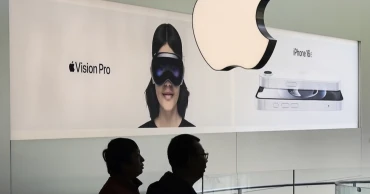
Apple posts stronger-than-expected Q2 results, says majority of US iPhones sold will come from India
Apple CEO Tim Cook said Thursday that the majority of iPhones sold in the U.S. in the current fiscal quarter will be sourced from India, while iPads and other devices will come from Vietnam as the company works to avoid the impact of President Trump's tariffs on its business.
Apple's earnings for the first three months of the year topped Wall Street's expectations thanks to high demand for its iPhones, and the company said tariffs had a limited effect on the fiscal second quarter's results.
Cook added that for the current quarter, assuming things don't change, Apple expects to see $900 million added to its costs as a result of the tariffs, but Cook said the company remains “confident” in this business.
The Cupertino, California-based company earned $24.78 billion, or $1.65 per share, in the first three months of the year, up 4.8% from $23.64 billion, or $1.53 per share, in the same period a year earlier.
Revenue rose 5.1% to $95.36 billion from $90.75 billion.
Analysts, on average, were expecting earnings of $1.62 per share on revenue of $94.19 billion, according to a poll by FactSet.
The numbers for the January-March period provide a snapshot of how Apple was faring before President Trump's unveiling of sweeping tariffs in April that rattled the financial markets amid fears a trade war would reignite inflation and shove the U.S. economy into a recession.
“While it is likely that some of the sales growth was driven by consumers accelerating purchases ahead of expected tariff increases, margins remained healthy on the other side of the balance sheet,” said Thomas Monteiro, an analyst at Investing.com. He added that the company “still has room for maneuver” regardless of the economic backdrop and will “likely not need to significantly deplete cash reserves to keep moving the needle.”
Court sides with Fortnite maker Epic as Apple sanctioned for defying order in App Store case
Apple’s reliance on Chinese factories to make its iPhones and other devices thrust the technology trendsetter into the crosshairs of Trump’s trade war. The exposure caused Apple’s stock price to plunge 23% shortly after the president announced the severity of the reciprocal tariffs, temporarily erasing $773 billion in shareholder wealth in the process.
Most of those losses have since been recovered after Trump temporarily exempted iPhones and other electronics from the reciprocal tariffs, but Apple’s stock remains down by nearly 5% since the April fusillade of tariffs.
Besides the trade war, Apple has been hurt by its inability to live up to its own hype surrounding artificial intelligence features on the iPhone 16 lineup that came out last fall.
The technology wasn’t ready when the iPhone 16 went on sale. Some AI features have rolled out in parts of the world as part of software updates, but Apple still hasn’t been able to live up to its original promise to make Siri smarter and more versatile. The missteps prompted Apple to pull advertising campaigns promoting AI breakthroughs on the iPhone, although the company still intends to release more features powered by the technology at some point.
Apple had been counting on its late entry into the AI craze to revive demand for the iPhone after last year’s sales dipped 2% from 2023’s levels. Apple said Wednesday that its phone sales climbed 1.9% to $46.84 billion for the first three months of the year. Wall Street had expected iPhone sales of $45.62 billion.
But the company continues to see its China business decline, with revenue from the Greater China region down 2.3% to $16 billion for the quarter. Other regions, including the Americas, Europe and the rest of Asia, saw sales increases.
When Trump initially indicated his 145% tariffs on Chinese-made goods would apply to the iPhone, U.S. consumers rushed to stores to buy new devices rather than risk prices spiking higher after the duties began driving up costs. But the flurry of panic buying won't show up until Apple reports its results for the April-June quarter this summer.
EU fines Apple 500 million euros, Meta 200 million in digital cases
Trump's trade war has ramped up the pressure on Cook to work the same diplomatic sleight of hand that enabled the iPhone to avoid being stung by the China tariffs that the president imposed during his first administration.
Cook signaled his intention remain on good terms with Trump by arranging private meetings with him and personally donating $1 million to the president's second inauguration ceremony before sitting on the dais when Trump was sworn into office on January 20. Apple subsequently announced plans to invest $500 billion in the U.S. while hiring 20,000 workers during the next four years.
Trump's trade war also is prompting a push to Apple to shift all the production of the iPhones that it sells in the U.S. from China to India, where the company has been building up its supply chain for the past seven years, according to a recent story in the Financial Times. But the complicated logistics of making such a huge move likely couldn't be completed until next year, at the earliest, leaving Apple vulnerable to the vagaries of Trump's trade war.
Apple's stock fell $5.81, or 2.7%, to $207.51 in after-hours trading.
1 year ago

Microsoft and Meta Platforms lead Wall Street higher
Microsoft and Meta Platforms are driving Wall Street higher on Thursday after profits for the Big Tech companies at the start of the year turned out to be even bigger than analysts expected.
The S&P 500 was up 1% and heading for an eighth straight gain, which would be its longest winning streak since August, AP reports.
The Dow Jones Industrial Average was up 248 points, or 0.6%, as of 10:20 a.m. Eastern time, and the Nasdaq composite was 1.8% higher.
Microsoft jumped 9% after the software giant said strength in its cloud computing and artificial intelligence businesses drove its overall revenue up 13% from a year earlier.
Meta, the parent company of Facebook and Instagram, also topped analysts’ targets for revenue and profit in the latest quarter. It said artificial intelligence tools helped boost its advertising revenue, and its stock climbed 5.3%.
CVS Health, Carrier Global and a bevy of other companies also joined the stream of better-than-expected profit reports that have helped steady Wall Street over the last week. The S&P 500 is back to within 8.5% of its record set earlier this year, after briefly dropping nearly 20% below the mark.
Court sides with Fortnite maker Epic as Apple sanctioned for defying order in App Store case
Still, plenty of uncertainty remains about whether President Donald Trump’s trade war will force the economy into a recession. A couple mixed reports on the U.S. economy Thursday followed up on several recent updates that have suggested it's weaker than expected.
One of Thursday's reports said more US workers filed for unemployment benefits last week than economists had forecast, setting the stage for a more comprehensive report on the job market arriving Friday.
A separate update said US manufacturing activity was better last month than economists expected, though it still contracted again.
And even though companies have been reporting better profits for the first three months of the year than analysts expected, many CEOs are remaining cautious about the rest of the year.
1 year ago
Court sides with Fortnite maker Epic as Apple sanctioned for defying order in App Store case
A federal judge has strongly rebuked Apple, finding that the iPhone maker willfully violated a court injunction in an antitrust case filed by Fortnite maker Epic Games.
U.S. District Judge Yvonne Gonzalez Rogers had ordered Apple to lower the barriers protecting its previously exclusive payment system for in-app digital transactions and allow developers to display links to alternative options. On Wednesday she found that Apple violated a 2021 injunction that, she wrote, sought to “restrain and prohibit the iPhone maker’s anticompetitive conduct” and pricing.
“Apple’s continued attempts to interfere with competition will not be tolerated,” Gonzalez Rogers said in the ruling, which held Apple in contempt.
She ordered that Apple “no longer impede developers’ ability to communicate with users nor will they levy or impose a new commission on off-app purchases.”
Epic CEO and founder Tim Sweeney said on X the company will return Fortnite to Apple's U.S. App Store next week.
Apple did not immediately respond to a request for comment.
Meta launches AI app, Zuckerberg chats with Microsoft CEO Satya Nadella at developer conference
Epic first filed an antitrust lawsuit in 2020 alleging that Apple had built an illegal monopoly around its popular App Store that makes billions of dollars annually from a then-exclusive payment system collecting commissions ranging from 15% to 30% on in-app commerce.
Although Gonzalez Rogers had rejected the monopoly claims, she ordered Apple to lower the barriers protecting its previously exclusive payment system for in-app digital transactions and allow developers to display links to alternative options. The Supreme Court rejected Apple's appeal in the case in January 2024.
“In stark contrast to Apple’s initial in-court testimony, contemporaneous business documents reveal that Apple knew exactly what it was doing and at every turn chose the most anticompetitive option,” the judge wrote Wednesday. She accused the company's Alex Roman, vice-president for finance, of “outright” lying under oath.
“Internally, (longtime Apple executive) Phillip Schiller had advocated that Apple comply with the injunction, but (CEO) Tim Cook ignored Schiller and instead allowed Chief Financial Officer Luca Maestri and his finance team to convince him otherwise. Cook chose poorly,” Gonzalez Rogers wrote.
Amazon launches its first internet satellites to compete against SpaceX's Starlinks
The judge referred the matter to the U.S. Attorney for the Northern District of California to investigate whether criminal contempt proceedings are appropriate.
1 year ago
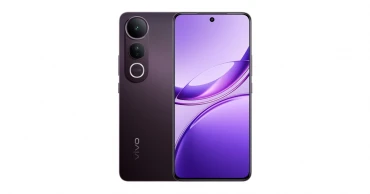
vivo V50 Lite Review: Does it offer value-for-money
The Chinese smartphone company vivo has unveiled the vivo V50 Lite in Bangladesh. The phone officially became available for sale on April 24, 2025, in Bangladesh. Offering a few robust features at a budget-friendly to lower midrange price, the phone has created hype among smartphone lovers. Here is a detailed review that highlights the key features, competitive value, pros, cons, and pricing of the vivo V50 Lite.
Key Features of vivo V50 Lite
In its price segment, the vivo V50 Lite confronts several phones like the Xiaomi Poco X7, vivo iQOO Z10, and TECNO CAMON 40 Pro. Let’s find out how the V50 Lite plays out among its competitors.
Design
The vivo V50 Lite looks sleek and stylish and has a height of 6.45 inches, a width of 3 inches, and a depth of 0.31 inches. Its mainframe is plastic-made with a glossy finish around the edges and a frosted texture on the back panel. Users expecting a metal body may feel disheartened, but it’s common for most brands to use a plastic body for their mid-range models. Devices like the TECNO CAMON 40, Xiaomi Poco X7, and vivo iQOO Z10 serve as clear examples of this industry trend.
Weighing 197g, the vivo V50 Lite appears a bit heavier than the Tecno Camon 40 Pro (179g) and the Xiaomi POCO X7 (up to 190g).
Read more: Tecno Camon 40 Pro Review: Is It Worth It?
The linear camera panel, placed in the rear panel’s top left corner, resembles an exclamation mark. The panel is made of three vertically placed cutouts allotted for a primary camera, a depth sensor, and a flashlight. On the front, the display has a punch-hole camera cutout on its top and an in-display fingerprint sensor on the bottom area. The flat display spreads across the front, leaving little room for the bezels and chin.
Around the sides of the vivo V50 Lite, keeping a symmetrical balance in their positions, sit a microphone, active noise cancellation systems, volume rockers, and a SIM tray. Marking the second disappointment, the phone doesn’t offer an audio jack.
For a phone coming at a budget-friendly to lower midrange price, the vivo V50 Lite has nothing unusual about its design. Its camera panel caters to users who love a vertically placed camera module, while phones like the vivo iQOO Z10 and Xiaomi Poco X7 offer circular panels. The V50 Lite provides IP65 dust and water resistance and is compliant with MIL-STD-810H. That means it can survive mild water jets and occasional hand drops.
Read more: Infinix Note 50 Pro Plus Review: Is it a value-for-money midrange smartphone?
Display
The phone’s display is a 6.77-inch AMOLED screen with a Full HD+ resolution. Featuring a 120Hz refresh rate and a brightness range of 1300 nits to 1800 nits, the display responds fast to the touch and remains visible in direct sunlight. With a 1080 x 2392 pixel distribution and 388 ppi density, it can render vivid and colour-accurate graphics.
Among vivo V50’s competitors, none offer a better display, but the vivo iQOO Z10 has the highest brightness level of 5000 nits, the Xiaomi Poco X7 stands out with the highest resolution of 1220 x 2712 pixels, and the Tecno Camon 40 Pro responds the fastest at a 144Hz refresh rate.
Cameras
The vivo V50 Lite’s photography features consist of two rear cameras and one front camera, keeping it simple yet not insufficient. The vertical rear camera module houses a 50MP (f/1.8) wide lens and a 2MP (f/2.2) depth sensor. It lacks an ultrawide lens, most expected at this budget, damaging the phone’s overall customer acceptance. The front camera is a 32MP (f/2.5) wide lens.
Read more: vivo iQoo Neo 10R Review: What’s new?
All the cameras work fine at capturing photos, regardless of the time of day. All the rivals at its price, including the vivo iQOO Z10, Xiaomi Poco X7, and the Tecno Camon 40 Pro, come with 50MP primary lenses, which makes the V50 Lite’s camera performance on par with the mass expectations. However, the Xiaomi Poco X7 and Tecno Camon 40 Pro outplay the V50 Lite by offering 8MP ultrawide lenses.
vivo V50 Lite has no 4K video recording capacity, which is offered by similarly priced rivals like the vivo IQOO Z10, Tecno Camon 40 Pro, and POCO X7.
Hardware, Software and Performance
The vivo V50 Lite runs on Funtouch OS 15, based on Android 15, offering a smooth and intuitive experience with updated animations, improved privacy controls, and lightweight UI enhancements.
Under the hood, it’s equipped with the Snapdragon 685 chipset fabricated on a 6 nm node. The octa-core processor is configured as 4 × 2.8 GHz and 4 × 1.9 GHz, providing consistent performance for everyday use, though it’s not built for heavy-duty tasks or intensive gaming.
Read more: Best 10 Smartphones Releasing in April 2025
The phone pairs 8 GB of RAM with 256 GB of UFS 2.2 storage. Extended RAM supports memory expansion up to 8 GB, though storage expansion is not supported.
Among rivals, the vivo iQOO Z10 leads in raw performance with its Snapdragon 7s Gen 3, offering faster CPU cores and the Adreno 710 GPU. The Xiaomi Poco X7 and Tecno Camon 40 Pro also push ahead with more powerful chipsets—the MediaTek Dimensity 7300 Ultra and Dimensity 7300, respectively, both featuring Cortex-A78 cores and Mali-G615 MC2 GPUs for better gaming and multitasking performance. The iQOO Z10 also provides more configuration options, scaling up to 12 GB of RAM for users needing extra power.
Battery and Charger
The vivo V50 Lite comes equipped with a 6500 mAh silicon-carbon Li-ion battery, offering extended endurance for all-day use and beyond. It supports 90W wired charging, capable of reaching 50% in just 23 minutes and a full charge in 52 minutes. The device also features 6W reverse-wired charging, allowing it to power up other gadgets in a pinch.
Read more: itel Power 70 Review: Another budget-friendly gem
Among competitors, the vivo iQOO Z10 leads in capacity with a massive 7300 mAh battery and matches the V50 Lite’s 90W wired charging, though without officially stated charge times. The Tecno Camon 40 Pro offers a smaller 5200 mAh capacity. Meanwhile, the Xiaomi Poco X7, with a 5110 mAh battery, lags behind with 45W charging.
Pros and Cons of vivo V50 Lite
Pros
- 120Hz AMOLED display- Android 15 with Funtouch 15- 6500 mAh battery, 90W charging- Under-display fingerprint scanner- IP65 and MIL-STD-810H compliant- Stereo speakers
Read more: realme P3 5G Review: Is it a value-for-money smartphone
Cons
- No optical zoom- No wireless charging- No microSDXC slot- No 4K video recording- No 512GB or 1 TB internal storage options- No Gyro-EIS- No Gorilla Glass- No audio jack
Read more: ZTE Nubia Red Magic 10 Pro Golden Saga Special Edition Review
Price of vivo V50 Lite in Bangladesh
The Vivo V50 Lite is available in two variants. The one with 8GB RAM and 128GB storage options is priced at BDT 29,999, while the other with 8GB RAM and 256GB storage options is priced at BDT 32,999.
Conclusion
The vivo V50 Lite stands out with its vibrant 120Hz AMOLED display, massive 6500 mAh battery with 90W fast charging, and clean Android 15 experience. Though it lacks features like ultrawide cameras, 4K video recording capacity, 512 GB and 1 TB storage options, and wireless charging, its performance, design, and endurance make it a compelling choice for everyday use within 30000 to 32000 TK price ranges.
Read more: Samsung Galaxy A36 5G Review: A Mid-range marvel with standard features
1 year ago

Meta launches AI app, Zuckerberg chats with Microsoft CEO Satya Nadella at developer conference
Working to differentiate itself in the crowded field of artificial intelligence, Meta Platforms has launched a standalone AI app — with a social media component — to compete with OpenAI's ChatGPT.
The Meta AI app, built with the company’s Llama 4 AI system. It includes a “discover” feed that lets users see how others are interacting with AI. It also has a voice mode for interacting with the AI.
“It’s smart for Meta to differentiate its ChatGPT competitor by drawing from the company’s social media roots. The app’s Discover feed is like a version of the OG Facebook Feed but only focused on AI use cases," said Forrester research director Mike Proulx.
By letting users link their Facebook and Instagram accounts, the Meta AI app “gets a leg up on instantly personalizing its user experience with social media context.”
Meta has taken a different approach to AI than many of its rivals, releasing it for free as an open-source product. The company says more than a billion people use its AI products each month.
At the Menlo Park, California-based tech giant's inaugural conference, LlamaCon, on Tuesday Meta CEO Mark Zuckerberg chatted with Microsoft CEO Satya Nadella in a technical discussion around the speed of AI development and how the technology is shifting both their companies — where AI is already writing code — as well as the world.
EU fines Apple 500 million euros, Meta 200 million in digital cases
Acknowledging there is a lot of "hype” around AI, Zuckerberg said “if this is going to lead to massive increases in productivity, that needs to be reflected in major increases in GDP.”
“This is going take some multiple years, many years, to play out,” Zuckerberg said. “I’m curious how you think, what’s your current outlook on what we should be looking for to understand the progress that this is making?”
Nadella brought up the advent of electricity, saying that “AI has the promise, but you now have to sort of really have it deliver the real change in productivity — and that requires software and also management change, right? Because in some sense, people have to work with it differently.”
He said it took 50 years before people figured out to change how factories operated with electricity.
Zuckerberg replied “well we’re all investing as if it’s not going to take 50 years, so I hope it doesn’t take 50 years.”
Meta CEO Mark Zuckerberg wraps up testimony in antitrust case
1 year ago

BTRC issues licenses to Starlink to operate in Bangladesh
The Bangladesh Telecommunication Regulatory Commission (BTRC) has issued licenses in favour of Starlink Services Bangladesh Limited, enabling the company to provide internet services through non-geostationary satellite orbit (NGSO) systems in the country.
The license handover ceremony took place on Tuesday afternoon at the BTRC headquarters in Agargaon, Dhaka, said a press release.
BTRC grants initial approval to Starlink, awaits final ministry clearance
BTRC handed over two separate licenses—Non-Geostationary Satellite Orbit Operator License and Radio Communication Apparatus License —to Starlink, marking a significant step in the expansion of satellite-based internet connectivity in Bangladesh.
The licenses have been granted for a period of 10 years, following prior approval from the government.
Under the first license, issued by BTRC’s Licensing Division, Starlink will be able to conduct commercial operations in Bangladesh. The second license, issued by the Spectrum Division, allows the company to use approved frequencies to provide internet services, as well as to import and use radio communication equipment and related devices.
Electronics Tariff relief is temporary, semiconductor tariffs on the way :Commerce Secretary
Lt Col Syed Md Tawfiqul Islam, Director of the Licensing Division, handed over the first license to Rebecca Slick Hunter, Director of Global Licensing and Market Aviation at Starlink.
The second license was handed over by Dr Md Sohel Rana, Director of the Spectrum Division, also to Rebecca Slick Hunter.
1 year ago
Tecno Camon 40 Pro Review: Is It Worth It?
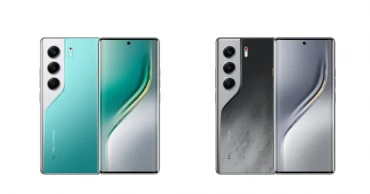
Tecno, known for delivering feature-packed smartphones at budget-friendly prices, continues to push boundaries with its camera-focused Camon series. The Tecno CAMON 40 Pro, expected to be released in Q2, 2025, brings major upgrades in photography, performance, and display. In this review, we will explore its strengths and weaknesses in design, display, camera, battery life, gaming performance, and more.
Key Features of Tecno CAMON 40 Pro
.
Design and Build Quality
The Tecno Camon 40 Pro features a sleek design with dimensions of 164.3 x 74.6 x 7.3 mm and a weight of 179g. Its slim profile is complemented by an IP68/IP69 rating, ensuring dust tightness and water resistance up to 2 meters for 30 minutes. The device is protected by Corning Gorilla Glass 7i, offering durability against scratches and minor impacts.
In comparison, the Tecno Camon 30 Pro measures slightly thicker at 7.7 mm and weighs 188.6g, while the Infinix Note 50 4G is heavier at 199g but features an aerospace-grade aluminium frame with an RGB notification light on the back panel. In contrast, the Oppo K13 5G is the heaviest of the group, weighing 208g with an 8.5 mm thickness, and it also features IP65-rated dust and water resistance.
Read more: Infinix Note 50 Pro Plus Review: Is it a value-for-money midrange smartphone?
Display Quality
Like the Camon 30 Pro, the Camon 40 Pro boasts a 6.78-inch AMOLED display with a resolution of 1080 x 2436 pixels, resulting in a pixel density of approximately 393 ppi. The screen supports a 144Hz refresh rate and HDR image support, providing smooth visuals and vibrant colours, which was also offered by the ancestor Camon 30 Pro. Corning Gorilla Glass 7i protects the display and features an always-on display function.
The Infinix Note 50 4G matches the Camon 40 Pro’s 144Hz refresh rate but goes a step further with a peak brightness of 1300 nits, making it easier to see in bright light. Meanwhile, the Oppo K13 offers a slightly smaller 6.67-inch AMOLED display with a 120Hz refresh rate but a lower peak brightness of 1200 nits. This gives the Infinix Note 50 4G a clear edge in display visibility.
Camera Performance
The Camon 40 Pro is equipped with a dual rear camera setup, comprising a 50 MP primary sensor with an f/1.9 aperture, 1/1.56" sensor size, 1.0µm pixel size, PDAF, and OIS, along with an 8 MP ultrawide lens. This configuration supports 4K video recording at 30/60 fps and 1080p at 30 fps. The front camera features a 50 MP sensor with an f/2.5 aperture, 24mm focal length, 1/2.8" sensor size, 0.64µm pixel size, and PDAF.
Read more: vivo iQoo Neo 10R Review: What’s new?
On the other hand, the Camon 30 Pro offers a triple rear camera setup with two 50 MP sensors (wide and ultrawide) and a 2 MP depth sensor, along with a 50 MP front camera. The downgrade of the ultrawide camera from 50MP to 8 MP in the Camon 40 Pro is disheartening.
The Oppo K13 is equipped with a 50 MP primary camera featuring an f/1.9 aperture, accompanied by a 2 MP depth sensor. On the front, it features a 16 MP selfie camera with an f/2.5 aperture. It can capture 4K video at maximum.
The Infinix Note 50 4G features a 50 MP main camera with an f/1.9 aperture and a 2 MP macro lens, while the front camera is 13 MP with an f/2.2 aperture. Capturing 1440p at highest capacity, it falls behind the race.
Read more: Best 10 Smartphones Releasing in April 2025
In this comparison, the Tecno Camon 30 Pro clearly emerges as the top choice among the four devices.
Processor Performance
The Camon 40 Pro is powered by the Mediatek Dimensity 7300 chipset, built on a 4nm process, featuring an octa-core CPU (4x2.5 GHz Cortex-A78 & 4x2.0 GHz Cortex-A55) and a Mali-G615 MC2 GPU. This setup provides smooth performance for everyday tasks and casual gaming.
However, the Camon 30 Pro comes with a more powerful MediaTek Dimensity 8200 Ultimate chipset, built on a 4nm process. It features an octa-core CPU (1x3.1 GHz Cortex-A78, 3x3.0 GHz Cortex-A78, and 4x2.0 GHz Cortex-A55) and a Mali-G610 MC6 GPU, delivering significantly better performance.
Read more: itel Power 70 Review: Another budget-friendly gem
The Infinix Note 50 4G shares the Helio G100 Ultimate (6 nm) chipset, while the Oppo K13 5G is powered by the Qualcomm Snapdragon 6 Gen 4 chipset, built on a 4nm process, featuring an octa-core CPU and Adreno 810 GPU.
The Camon 30 Pro has the best processor among these four.
Gaming Performance
Powered by the MediaTek Dimensity 7300 4nm chipset and Mali-G615 MC2 GPU, the Camon 40 Pro offers smooth performance for casual gaming and handles moderate multitasking efficiently. However, users may notice occasional frame drops during more demanding games or intensive usage.
With its Dimensity 8200 Ultimate chipset and Mali-G610 MC6 GPU, the Camon 30 Pro delivers a stronger gaming experience, smoothly handling high-end games without lag. The Infinix Note 50 4G provides similar gaming capabilities as the Camon 40 Pro, while the Oppo K13, with its Snapdragon 6 Gen 4 chipset and Adreno 810 GPU, offers competitive gaming performance in its segment.
Read more: Samsung Galaxy A36 5G Review: A Mid-range marvel with standard features
Battery Life
The Camon 40 Pro is equipped with a 5200 mAh battery, supporting 45W wired charging, capable of reaching 50% charge in 23 minutes and 100% in 43 minutes. The Camon 30 Pro features a slightly smaller 5000 mAh battery but s
upports faster 70W wired charging, achieving a full charge in 47 minutes.
The Infinix Note 50 4G also houses a 5200 mAh battery, offering 45W wired charging (100% in 60 minutes), 30W wireless MagCharge, 10W reverse wired, reverse wireless charging, and bypass charging capabilities. The Oppo K13 stands out with a massive 7000 mAh battery, supporting 80W wired charging, reaching 62% in 30 minutes and 100% in 56 minutes.
In this section, Oppo K13 offers the highest longevity.
Read more: ZTE Nubia Red Magic 10 Pro Golden Saga Special Edition Review
Software and User Interface
Powered by Android 15 (with support for up to 3 major Android upgrades) and HIOS 15, the Camon 40 Pro provides a modern, user-friendly interface along with the latest features and regular security updates. In comparison, the Camon 30 Pro runs on Android 14 with HIOS 14 and offers up to two major Android upgrades.
The Infinix Note 50 4G also operates on Android 15, with a promise of up to 2 major Android upgrades. It uses the XOS 15 interface, offering a comparable user experience with modern features and customisation options. The Oppo K13 comes with ColorOS 15 based on Android 15 (up to 2 major Android upgrades), which offers a polished and fluid UI with enhanced customisation, multitasking features, and better resource management.
Among all, ColorOS is generally considered more refined and smoother, while HIOS and XOS provide a feature-rich experience with some additional tools and customisation options targeted toward budget-conscious users. Tecno’s HIOS 15, however, shows notable improvement over previous versions in terms of bloatware reduction and UI consistency.
Read more: realme P3 5G Review: Is it a value-for-money smartphone
Storage Options
The Tecno Camon 40 Pro offers 256GB UFS 2.x storage with 8GB or 12GB RAM but lacks a microSD card slot. The Camon 30 Pro provides 256GB or 512GB of internal storage with 12GB of RAM, also without microSD support.
The Oppo K13 comes with 256GB UFS 3.1 storage and 8GB RAM, offering the fastest read/write speeds among the group but no expandability. The Infinix Note 50 4G features 256GB UFS 2.2 storage and 8GB RAM, with microSD support unconfirmed but likely.
The Camon 30 Pro stands out with up to 512GB storage and 12GB RAM, making it the best option for users who prioritise higher capacity and multitasking. If speed is your focus, the Oppo K13 is a solid alternative with faster UFS 3.1 storage.
Pros and Cons of Tecno CAMON 40 Pro
.
Pros
- Sleek and lightweight design (179g, 7.3 mm thickness)- IP68/IP69 rated for water and dust resistance- 6.78-inch AMOLED display with 144Hz refresh rate- Protected by Gorilla Glass 7i- 50MP rear and 50MP front cameras with 4K video- Android 15 with HIOS 15 (3 major updates promised)- 5200mAh battery with 45W fast charging- Dual stereo speakers for better sound- Infrared port and NFC support.
Read more: Home Safety Digital Lockers and Vaults: Popular Models with Price Ranges in Bangladesh
Cons
- Dimensity 7300 is not the most powerful chipset in its class- No 5G support- No microSD card slot for extra storage- Slower storage (UFS 2.x compared to UFS 3.1 in some rivals)- Lacks wireless charging- Lacks reverse charging option- Lacks 512 and 1TB memory options- Front camera video capacity is not specified
Price of Tecno CAMON 40 Pro in Bangladesh
The approximate price of the Tecno Camon 40 Pro in Bangladesh varies based on the storage and RAM configuration, where 8GB RAM + 256GB storage is around BDT 28,000.
Verdict
The Tecno Camon 40 Pro offers a vibrant AMOLED display, a standard camera setup, Android 15, and decent battery life. However, it lacks 5G and uses a mid-tier processor. Ideal for users who want great visuals and photography on a budget. Not recommended for heavy gamers or those needing future-proof 5G connectivity.
Read more: Samsung Galaxy F15 5G Review: Decent budget-friendly smartphone with large battery
1 year ago

Amazon launches its first internet satellites to compete against SpaceX's Starlinks
Amazon’s first batch of internet satellites rocketed into orbit Monday, the latest entry in the mega constellation market currently dominated by SpaceX's thousands of Starlinks.
The United Launch Alliance's Atlas V rocket carried up 27 of Amazon's Project Kuiper satellites, named after the frigid fringes of our solar system beyond Neptune. Once released in orbit, the satellites will eventually reach an altitude of nearly 400 miles (630 kilometers).
Two test satellites were launched in 2023, also by an Atlas V. Project officials said major upgrades were made to the newest version. The latest satellites also are coated with a mirror film designed to scatter reflected sunlight in an attempt to accommodate astronomers.
Stargazers oppose the fast-growing constellations of low-orbiting satellites, arguing they spoil observations. Others fear more satellite collisions.
Founded by Jeff Bezos, who now runs his own rocket company, Blue Origin, Amazon aims to put more than 3,200 of these satellites into orbit to provide fast, affordable broadband service around the globe.
Spaceship carrying 3 Chinese astronauts docks with Tiangong space station in latest crew rotation
Elon Musk's SpaceX already has launched more than 8,000 Starlinks since 2019. The company marked its 250th Starlink launch Sunday night. More than 7,000 Starlinks are still in orbit some 300-plus miles (550 kilometers) above Earth.
The European-based OneWeb satellite constellation numbers in the hundreds in an even higher orbit.
Amazon already has purchased dozens of rocket launches from United Launch Alliance and Blue Origin for Project Kuiper, as well as others.
“There are some things you can only learn in flight" despite extensive testing on the ground, said Rajeev Badyal, the project's vice president.
“No matter how the mission unfolds, this is just the start of our journey," he said in a statement ahead of the evening liftoff.
‘Flying taxis’ poised to revolutionise urban commuting
The first liftoff attempt earlier this month was nixed by bad weather. It took until now to secure another spot in the launch lineup at Cape Canaveral Space Force Station.
1 year ago
BTRC grants initial approval to Starlink, awaits final ministry clearance
The Bangladesh Telecommunication Regulatory Commission (BTRC) has given initial approval to Starlink to provide satellite internet services in Bangladesh.
It sent a letter to the Posts and Telecommunications Division last week seeking final endorsement, according to a ministry source.
Under the telecommunications law, BTRC is required to obtain prior approval from the ministry before making major decisions, including the issuance of licences.
Bangladeshi firms join hands with US telecom giant Starlink
On April 7, Starlink applied to the BTRC for a licence to operate in the country under the regulatory framework titled "Guidelines for Non-Geostationary Orbit (NGSO) Satellite Services Operators in Bangladesh.
On March 25, Chief Adviser Dr Muhammad Yunus directed the relevant authorities to ensure the commercial launch of Starlink’s satellite broadband internet service in Bangladesh within 90 days.
During trial broadcasts in the country, Starlink operated using its foreign satellite broadband gateway, according to officials.
However, for commercial operations, the company must comply with the Non-Geostationary Satellite Orbit (NGSO) policy. This policy requires the use of a local broadband gateway or International Internet Gateway (IIG).
Starlink, a subsidiary of Elon Musk’s SpaceX, has been in negotiations with Bangladesh’s regulatory authorities over the licensing process.
The initiative aims to address the recurring internet shutdowns that have disrupted freelance and business activities.
Starlink's entry ensures uninterrupted internet in Bangladesh: CA’s Press Secretary
Starlink’s entry into the market is seen as a major breakthrough for ensuring uninterrupted connectivity, particularly benefiting remote communities and local entrepreneurs.
Bangladeshi companies are already collaborating with Starlink to establish ground stations, facilitating the integration of satellite connectivity.
1 year ago

Tesla could benefit the most from new rules on reporting of self-driving car crashes
Rule changes announced by the Trump administration this week could allow automakers to report fewer crashes involving self-driving cars, with Tesla potentially emerging as the main beneficiary.
The Transportation Department announced Thursday that it will no longer require automakers to report certain kinds of non-fatal crashes — but the exception will apply only to partial self-driving vehicles using so-called Level 2 systems, the kind Tesla deploys. Tesla CEO Elon Musk had complained the old reporting rules cast his company in a bad light.
If Tesla and other automakers are required to report fewer crashes into a national database, that could make it more difficult for regulators to catch equipment defects and for the public to access information about a company's overall safety, auto industry analysts say. It will also allow Tesla to trumpet a cleaner record to sell more cars.
“This will significantly reduce the number of crashes reported by Tesla,” said auto analyst Sam Abuelsamid at Telemetry Insight. Added Dan Ives of Wedbush Securities, noting that Tesla rival Waymo won’t get an exception, “This is a win for Tesla, a loss for Waymo.”
Tesla stock soared nearly 10% Friday on the rule changes. Wall Street analysts, and Musk critics, have said that Musk’s role as an adviser to President Donald Trump could put Tesla in position to benefit from any changes to regulations involving self-driving cars.
Other car makers such as Hyundai, Nissan, Subaru and BMW make vehicles with Level 2 systems that help keep cars in lanes, change speed or brake automatically, but Tesla accounts for the vast majority on the road. Vehicles used by Waymo and others with systems that completely take over for the driver, called Automated Driving Systems, will not benefit from the change.
The National Highway Traffic Safety Administration, which enforces vehicle safety standards, said the new rules don’t favor one type of self-driving system over another, and that raft of changes it announced will help all self-driving automakers.
Musk damaged Tesla’s brand in just a few months. Fixing it will likely take longer
“No ADS company is hurt by these changes,” the agency said in statement to The Associated Press, using the acronym for Automatic Driving System. It added that the changes also make sense because “with ADS, no driver is present meaning stronger safety protocols are needed.”
Waymo declined to comment for this story. The AP reached out to Tesla but did not receive a reply.
Under the change, any Level 2 crash that is so bad it needs a tow truck to come will no longer be required to be reported if it doesn’t result in death or injury or air-bag deployment. But if a tow truck is called for crashes of vehicles using ADS, it has to be reported.
The vast majority of partial self-driving vehicle crashes reported under the old NHTSA rules involved Teslas — more than 800 of a total 1,040 crashes in the past 12 months, according to an AP review of the data. It’s unclear how many of those Tesla crashes required the vehicles to be towed, because a column requesting that information in the database is mostly blank.
The NHTSA said after the story was published that only 8% of total reported crashes under the old criteria were cases in which partial self-driving vehicles had to be towed away and there was no other qualifying crash-reporting factor involved. It is not clear about cases where tow-away information wasn’t provided.
The relaxed crash rule was part of several changes described by the Transportation Department as a way to “streamline” paperwork and allow U.S. companies to better compete with the China in the race to make self-driving vehicles. The department said it would also move toward national self-driving regulations to replace a confusing patchwork of state rules.
“We’re in a race with China to out-innovate, and the stakes couldn’t be higher,” said Transportation Secretary Sean Duffy on Thursday. “Our new framework will slash red tape and move us closer to a single national standard.”
Traffic safety watchdogs had feared that the Trump administration would eliminate the NHTSA reporting requirement completely.
The package of changes came days after Musk confirmed on a conference call with Tesla investors that the electric vehicle maker will begin a rollout of self-driving Tesla taxis in Austin, Texas, in June. Waymo, which is owned by Google parent Alphabet, already has cybercabs available in that city and several others.
Tesla sales fall by 49% in Europe even as the EV market grows
Musk has argued that the previous reporting requirements were unfair since Tesla vehicles all use its partial self-driving systems and therefore log more miles than any other automaker with such technology. He says that his cars are far safer than most and save lives.
Tesla sales have plunged in recent month amid a backlash against Musk’s backing of far-right politicians in Europe and his work in the U.S. as head of Trump’s government cost-cutting group. The company has pinned its future on complete automation of its cars, but it is facing stiff competition now from rivals, especially China automaker BYD.
1 year ago