tech

Japan's anti-monopoly watchdog accuses Google of violations in smartphones
Japanese regulators on Tuesday accused US tech giant Google of violating anti-monopoly laws, echoing similar moves in the US and Europe.
Google Japan said in a statement that it found the action “regrettable.” It said it has invested in Japan significantly to promote innovation as a technology leader, AP reports.
The Japan Fair Trade Commission’s “cease and desist order” says Google must stop the pre-installation of the Google search engine in Android smartphones, which it said in effect shuts out competition.
It’s unclear if Google, a subsidiary of Alphabet Inc., based in Mountain View in the Silicon Valley, will take legal action to fight the order.
In the US, a judge ruled last year that Google’s ubiquitous search engine illegally exploited its dominance to squash competition. Google has denied the allegations, arguing that it’s immensely popular because people like what it offers. The appeals process is likely to take years.
Japanese regulators began their investigation into Google in 2023. They said they consulted with overseas authorities dealing with similar cases.
European regulators have also slammed what they see as Google’s monopolistic dominance.
Tuesday’s move marks the first time the Japan Fair Trade Commission has taken such an action against a major global technology company.
1 year ago

10 Essential Tech Skills for Thriving in the Metaverse by 2030
As the boundaries between physical and virtual worlds dissolve, the Metaverse is poised to redefine interaction, innovation, and digital enterprise. This immersive ecosystem demands more than imagination—it requires a sharp command of next-generation technical capabilities. Let’s explore the most demanding tech skill set to drive success in the metaverse by 2030.
10 In-demand Tech Skills to Succeed in the Metaverse Economy
.
Advanced Programming
Core programming languages like C++ and C# form the foundation of Metaverse development. C++ offers low-level memory control ideal for performance-intensive virtual environments, while C# is essential for scripting within Unity-based projects.
Read more: 7 Warning Signs Social Media Is Affecting Your Child’s Mental Health
These languages power avatars, object behaviours, and backend logic across immersive platforms. Demand for developers fluent in these software continues to grow, especially in
- Game studios- Simulation platforms- Enterprise metaverse projects
Platforms such as Codecademy, Coursera, and Microsoft's Learn portal offer structured pathways for mastering these programming languages.
VR/AR Software Development
Virtual Reality (VR) and Augmented Reality (AR) development rely heavily on engines like Unity and Unreal. Unity supports rapid prototyping and cross-platform deployment, whereas Unreal excels in high-fidelity rendering. These tools are used to build interactive training simulations, virtual showrooms, social spaces, and metaverse gaming worlds.
Read more: Best 10 Smartphones Releasing in April 2025
VR/AR developers are in high demand across industries, from healthcare to education and retail.
Learning paths include
- Unity Learn- Unreal Online Learning- XR (Extended Reality) boot camps that offer hands-on experience in creating real-time, interactive 3D applications
3D Modeling and Animation
Creating realistic avatars, environments, and dynamic objects in the Metanetwork hinges on expert-level 3D modelling and animation. These skills bring digital worlds to life, enhancing immersion and interaction. Artists and technical animators use tools like Blender, Autodesk Maya, and Cinema 4D to produce characters, textures, and visual effects.
Read more: Assassin’s Creed Shadows Game Review: What’s New
As per Horizon Grand View Research, the global 3D animation market reflects this booming demand. The market already generated USD 25,259.6 million in 2024 (over BDT 30,077 crore) and is projected to hit USD 51,028.6 million (more than BDT 60,760.7 crore) by 2030. The CAGR (Compound Annual Growth Rate) is 12.3%.
Career opportunities span gaming, virtual production, fashion tech, and education. Skill acquisition is accessible through platforms like CG Spectrum, Udemy, and Skillshare.
Blockchain Engineering and Smart Contract Development
Decentralisation in metaplatforms depends on blockchain frameworks, where smart contracts automate transactions, ownership, and governance. Engineers proficient in Solidity (Ethereum), Rust (Solana), and Web3.js are driving the development of digital assets, token economies, and interoperable virtual platforms.
Read more: Best Free Blockchain Development Courses in 2024
Applications range from NFT marketplaces to decentralised identity systems and virtual land registries. As enterprises and startups scale blockchain-based metaverse ventures, skilled developers remain in high demand.
Learning can begin through free resources like
- CryptoZombies- Moralis Academy - MIT's blockchain curriculum
Practical GitHub contributions and hackathons further solidify expertise.
Artificial Intelligence and Machine Learning Implementation
AI and machine learning technologies shape intelligent behaviours across Metaverse systems-—from NPCs (non-player characters) to personalised content delivery. These implementations enhance realism, automate moderation, and enable user-specific interactions.
Read more: Home Safety Digital Lockers and Vaults: Popular Models with Price Ranges in Bangladesh
Neural networks, NLP (Natural Language Processing), and computer vision are increasingly integrated into Metaverse platforms. The aim is to interpret human gestures, speech, and decision-making patterns.
The job market favours ML engineers, AI specialists, and data scientists with domain knowledge in immersive systems.
Gaining proficiency involves mastering Python, TensorFlow, and PyTorch, with structured learning paths on platforms like
- DeepLearning.AI- Fast.AI- Google’s ML Crash Course
Read more: 10 Best Alternatives to Skype in 2025
Real-Time Computer Graphics and Rendering
Visual immersion in the Metaverse relies on advanced real-time graphics and rendering techniques. These enable high-quality visuals without compromising performance. This includes mastering shaders, ray tracing, and optimisation algorithms.
Applications extend across gaming, virtual architecture, simulation training, and digital twin environments.
Research and Markets (The World's Largest Market Research Store) report shows a significant expansion in the global computer graphics market. It rose from USD 221.80 billion in 2023 (more than BDT 264101.5 crore) to USD 238.19 billion in 2024 (over BDT 284462.8 crore). Now it is projected to reach USD 372.42 billion (above BDT 443447.6 crore) by 2030, growing at a CAGR of 7.68%.
Learning pathways include NVIDIA’s Deep Learning Institute, Unity and Unreal Engine tutorials, and university-led graphics courses.
Read more: Which phones are getting One UI 7 first and when
Network Infrastructure and Cloud Computing Architecture
The scalability and responsiveness of the Metaspace depend heavily on robust network infrastructure and distributed cloud systems. Skills in building and managing cloud-native applications and latency-optimised networks are critical for delivering seamless virtual experiences.
Technologies like Kubernetes, Docker, AWS, Microsoft Azure, and Google Cloud play central roles in hosting real-time environments and data-heavy simulations. Professionals with cloud certifications and networking expertise are in high demand across sectors such as
- Gaming- Virtual conferencing- Enterprise XR platforms
Practical skills can be developed through vendor-specific training programs (like AWS Certified Solutions Architect).
Read more: Top 10 Holy Quran Apps on iOS and Android in Ramadan 2025
Cybersecurity for Virtual Environments
With rising interoperability and digital asset transactions, the metaverse is a prime target for cyber threats. Cybersecurity experts who understand virtual environments are essential to defend decentralised systems and protect digital identities.
Key focus areas include encryption protocols, zero-trust architecture, threat modelling for XR platforms, and blockchain forensics.
Learning pathways include certifications such as
- CEH (Certified Ethical Hacker)- CompTIA (Computing Technology Industry Association) Security+- Labs from platforms like TryHackMe, Hack The Box, and Cybersecurity Virtual Labs.
Read more: Top 10 Best Offline Android Games Under 200MB for Low-End Phones
Data Analytics and Big Data Engineering
Decision-making within the metaplatforms hinges on vast, real-time data-—from user interactions and movement patterns to asset performance and behavioural analytics. Big data engineering enables the structuring, processing, and querying of these large-scale datasets. On the other hand, analytics transforms raw information into strategic insights.
Use cases span immersive retail analytics, virtual ad targeting, and optimisation of interactive environments.
According to the World Economic Forum’s Future of Jobs Report 2025, job disruption may impact 22% of global roles by 2030, but 170 million new jobs are expected to emerge.
Skills in SQL, Hadoop, Spark, and tools like Tableau or Power BI are highly sought after.
Learning can be accelerated through platforms like DataCamp, edX, and IBM’s data engineering pathways.
Read more: Lenovo Yoga Slim 7i Aura Edition Review: A True MacBook Competitor or Just Hype?
UX/UI Design
Designing for spatial computing demands a unique approach to user experience and interface layout. UX (User Experience) / UI (User Interface) professionals must account for 3D space, movement, gesture control, and device-specific constraints.
Applications include virtual marketplaces, training environments, and social hubs. Skilled designers with knowledge of the following software become increasingly valuable:
- Figma- Adobe XD- 3D prototyping tools like ShapesXR and Gravity Sketch
Learning resources include Coursera’s AR/VR design courses, Meta Spark tutorials, and HCI (Human-Computer Interaction)-focused design programs.
Read more: Avro Keyboard: Groundbreaking Journey of a Bangla Typing Software by Mehdi Hasan's Team
Bottom Line
These 10 in-demand skills define the future-ready toolkit for thriving in the evolving Metaverse landscape. From advanced programming and VR/AR software development to 3D modelling, blockchain engineering, and AI/ML implementation, technical fluency fuels innovation.
Real-time graphics, cloud infrastructure, and cybersecurity safeguard interactive ecosystems, while big data analytics and UX/UI design shape user engagement and decision-making. Mastery of these hard skills ensures adaptability and relevance as virtual experiences grow central to global interaction, commerce, and collaborative creation by 2030.
Read more: How to Verify If Your Smartphone is Truly Brand New and Never Used Before
1 year ago

Meta CEO Zuckerberg considered spinning off Instagram in 2018 over antitrust worries, email says
Meta CEO Mark Zuckerberg once considered separating Instagram from its parent company due to worries about antitrust litigation, according to an email shown Tuesday on the second day of an antitrust trial alleging Meta illegally monopolized the social media market.
In the 2018 email, Zuckerberg wrote that he was beginning to wonder if “spinning Instagram out” would be the only way to accomplish important goals, as big-tech companies grow. He also noted “there is a non-trivial chance” Meta could be forced to spin out Instagram and perhaps WhatsApp in five to 10 years anyway.
He wrote that while most companies resist breakups, “the corporate history is that most companies actually perform better after they've been split up.”
Asked Tuesday by attorney Daniel Matheson, who is leading the antitrust case for the Federal Trade Commission, which incidence in corporate history he had in mind, Zuckerberg responded: “I'm not sure what I had in mind then.”
Zuckerberg, who was the first witness, testified for more than seven hours over two days in the trial that could force Meta to break off Instagram and WhatsApp, startups the tech giant bought more than a decade ago that have since grown into social media powerhouses.
While questioning Zuckerberg on Tuesday morning, Matheson noted that he had referred to Instagram as being a “rapidly growing, threatening, network.” The attorney also pointed out Zuckerberg's referring to trying to neutralize a competitor by buying the company.
But Zuckerberg said while Matheson was able to show documents in court that indicated his concern about Instagram's growth, he also had many conversations about how excited his company was to acquire Instagram to make a better product.
Zuckerberg defends Instagram and WhatsApp deals as Meta faces landmark antitrust trial
Zuckerberg also said Facebook was in the process of building a camera app for sharing on mobile phones, and he thought Instagram was better at that, “so I wanted to buy them.”
Zuckerberg also pushed back against Matheson's contention that the reason for buying the company was to neutralize a threat.
“I think that that mischaracterizes what the email was," Zuckerberg said.
In his questioning of Zuckerberg, Matheson repeatedly brought up emails — many of them more than a decade old — written by Zuckerberg and his associates before and after the acquisition of Instagram.
While acknowledging the documents, Zuckerberg has often sought to downplay the contents, saying he wrote them in the early stages of considering the acquisition and that what he wrote at the time didn't capture the full scope of his interest in the company.
Matheson also brought up a February 2012 message in which Zuckerberg wrote to the former chief financial officer of Facebook that Instagram and Path, a social networking app, already had created meaningful networks that could be “very disruptive to us.”
Zuckerberg testified that the message was written in the context of a broad discussion about whether they should buy companies to accelerate their own developments.
Zuckerberg also testified that buying the company, taking it off the market and building their own version of it was “a reasonable thing to do.”
Later Tuesday, Mark Hansen, an attorney for Meta, began his questioning of Zuckerberg. Hansen, in his opening statements Monday, emphasized that Meta's services are free and that the company, far from holding a monopoly, actually has a lot of competition. He made a point of bringing up those issues in just over an hour of questioning Zuckerberg, with more expected to come Wednesday.
“It's very competitive,” Zuckerberg said, noting that charging for using services like Facebook would likely drive users away, since similar services are widely available elsewhere.
7 Warning Signs Social Media Is Affecting Your Child’s Mental Health
The trial is one of the first big tests of President Donald Trump’s FTC’s ability to challenge Big Tech. The lawsuit was filed against Meta — then called Facebook — in 2020, during Trump’s first term. It claims the company bought Instagram and WhatsApp to squash competition and establish an illegal monopoly in the social media market.
Facebook bought Instagram — which was a photo-sharing app with no ads — for $1 billion in 2012.
Instagram was the first company Facebook bought and kept running as a separate app. Until then, Facebook was known for smaller “acqui-hires” — a popular Silicon Valley deal in which a company purchases a startup as a way to hire its talented workers, then shuts the acquired company down. Two years later, it did it again with the messaging app WhatsApp, which it purchased for $22 billion.
WhatsApp and Instagram helped Facebook move its business from desktop computers to mobile devices, and to remain popular with younger generations as rivals like Snapchat (which it also tried, but failed, to buy) and TikTok emerged.
However, the FTC has a narrow definition of Meta’s competitive market, excluding companies like TikTok, YouTube and Apple’s messaging service from being considered rivals to Instagram and WhatsApp.
Apple unlikely to make iPhones in US despite Trump’s China tariffs
U.S. District Judge James Boasberg is presiding over the case. Late last year, he denied Meta’s request for a summary judgment and ruled that the case must go to trial.
1 year ago

Ubisoft’s colour-blind simulation tool ‘Chroma’ now open to public
Ubisoft has made its colour-blind simulation tool, Chroma, publicly available after years of internal development and use. With around 300 million people globally affected by colour blindness, Chroma aims to help developers better understand and address their accessibility needs.
The open-source tool applies a filter over the game screen to replicate how colour-blind players perceive visuals—without impacting performance. Chroma allows developers to simulate different types of colour blindness in real-time while controlling the game, offering valuable insights during the creative and testing processes, according to Ubisoft.
Assassin’s Creed Shadows Game Review: What’s New
“Over the past few years, Chroma has proven to be a highly efficient tool for us at Ubisoft,” said David Tisserand, Director of Accessibility.
“It has allowed us to assess the accessibility of our games for colour-blind players much faster and more comprehensively than ever before. Because we believe accessibility is a journey, not a race, we're thrilled to share Chroma with the entire industry. We invite everyone to benefit from it, provide feedback, and contribute to its future development."
Chroma’s development began in 2021 through Ubisoft’s Quality Control (QC) team in India. The goal was to create a responsive tool that provides real-time feedback and eliminates lag and visual inaccuracies.
The current version is powered by the Color Oracle algorithm and is compatible with both dual and single screens. It supports hotkeys and features a customisable overlay for enhanced usability.
“Chroma was created with a clear purpose—making colour blindness accessibility a natural part of the creative and testing process,” said Jawad Shakil, QC Product Manager.
“The team faced and overcame significant challenges while building it... Open-sourcing Chroma is a proud step forward, allowing everyone to benefit from this innovation."
Chroma is now available for download at — https://github.com/ubisoft/UbiChroma
1 year ago

Top 10 Football Live Streaming Apps for iOS and Android in 2025
Never miss a football match live just because you are neither in the stadium nor have access to a TV. With several iOS and Android apps streaming live matches and scores, you can watch your favourite game from anywhere on your smartphone. Here are the top mobile phone apps in 2025 to watch live football streaming.
Top 10 iOS and Android Apps to Watch Live Football
.
FuboTV
With the ability to stream over 350+ TV channels, FuboTV is one of the most popular sports streaming apps in the world. The versatile app is designed to empower mobile users by making important sports channels and websites reachable via mobiles. Whether you are a college football fan, a fan of club football, or someone who loves football in general, you can stream your favourite event or match on FuboTB.
FuboTV is developed by a company with the same name. Although streaming on the app is completely free, users must endure frequent ads. With 4+ ratings on PlayStore and AppStore, the phone is ever-growing in popularity. It has a download size of 57.7 MB on the AppStore.
Read more: How to Get Traffic Updates in Dhaka: Useful Apps and Sources
Kayo Sports
Kayo Sports is your go-to choice if you are looking for a live-streaming app focused on sports. Featuring over 50 live and on-demand channels, this app covers events like AFL, NRL, ESPN, NBL, NFL, PGA Tour Events, UFC, and so on. Among other features, the phone lets you split the screen and watch multiple sports at the same time, track key moments, analyse matches with match statistics, and summarise a match using minis.
Developed by Hubbl Pty Ltd, Kayo Sports offers subscription-based services. It has garnered a rating of 3.8 stars on the AppStore and over 4 stars on the PlayStore. You can download it at 81.5 MB on the AppStore and 17.66 MB on the PlayStore.
ESPN
ESPN allows users to watch live sports and access key information, such as highlights, news, and expert analysis of each event and match. From the NBL, and MLB, to UEFA Euro and FIFA events, ESPN covers all major football events, extending its reputation as one of the best sports channels.
Read more: Best Free Bangladeshi Online Doctor Apps for Android, iOS
Developed by Disney, the ESPN app is available on Android and iOS platforms, providing services free of cost or in exchange for a few in-app purchases. The app has a 3.3-star rating on the PlayStore and a 4.7-star rating on the AppStore, with a downloadable size of 34 MB for Android and 253.3MB for Apple platforms.
CBS Sports
Brought by CBS Interactive, CNS Sports is a versatile mobile app that covers important football events worldwide. The app's simplistic design, easy navigation, and unique features like detailed game analysis, top highlights, and live updates have garnered it well-deserved popularity.
Free to download, CBS Sports requires in-app purchases from the users to access live matches and analysis. On the PlayStore, the app has a downloadable size of 59MB and a 4.1-star rating, while on the AppStore, it is downloadable at 222.6 MB and has a 4.7-star rating.
Read more: Best Free Personal Safety Android, iOS Apps for Women
SuperSport
Developed by Multichoice Support Services (Pty) Ltd, SuperSport is a free football streaming app with occasional in-app purchasable services. Users can watch live scores, highlights, and top moments on the app from anywhere, anytime. It also provides detailed coverage and updates of a match, offering a portable live-streaming solution to sports lovers.
On the PlayStore, the app has a downloadable size of 82MB and a 3.9-star rating, while on the AppStore, it is downloadable at 70.5 MB and has a 4.3-star rating.
1 year ago
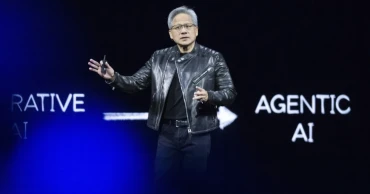
Nvidia plans to manufacture AI chips in the US for the first time
Nvidia announced Monday that it will produce its artificial intelligence super computers in the United States for the first time.
The tech giant said it has commissioned more than one million square feet of manufacturing space to build and test its specialized Blackwell chips in Arizona and AI supercomputers in Texas — part of an investment the company said will produce up to half a trillion dollars of AI infrastructure in the next four years.
“The engines of the world’s AI infrastructure are being built in the United States for the first time,” Nvidia founder Jensen Huang said in a statement. “Adding American manufacturing helps us better meet the incredible and growing demand for AI chips and supercomputers, strengthens our supply chain and boosts our resiliency.”
Nvidia’s announcement comes as the Trump administration has said that tariff exemptions on electronics like smartphones and laptops are only a temporary reprieve until officials develop a new tariff approach specific to the semiconductor industry.
White House officials, including President Donald Trump himself, spent Sunday downplaying the significance of exemptions that lessen but won’t eliminate the effect of US tariffs on imports of popular consumer devices and their key components.
Zuckerberg defends Instagram and WhatsApp deals as Meta faces landmark antitrust trial
“They’re exempt from the reciprocal tariffs but they’re included in the semiconductor tariffs, which are coming in probably a month or two,” US Commerce Secretary Howard Lutnick told ABC’s “This Week” on Sunday.
Nvidia said in a post on its website that it has started Blackwell production at Taiwan Semiconductor Manufacturing Co. chip plants in Phoenix. The Santa Clara, California-based chip company is also building supercomputer manufacturing plants in Texas — with Foxconn in Houston and Wistron in Dallas.
Nvidia's AI super computers will serve as the engines for AI factories, “a new type of data center created for the sole purpose of processing artificial intelligence,” the company said, adding that manufacturing in the US will create “hundreds of thousands of jobs and drive trillions of dollars in economic security over the coming decades."
Mass production at both plants is expected to ramp up in the next 12-15 months, Nvidia said. The company also plans on partnering with Taiwan-based company SPIL and Amkor for “packaging and testing operations” in Arizona.
In a statement Monday, the White House called Nvidia’s move “the Trump Effect in action.”
Trump “has made US-based chips manufacturing a priority as part of his relentless pursuit of an American manufacturing renaissance, and it’s paying off — with trillions of dollars in new investments secured in the tech sector alone,” the White House said.
Earlier this year, Trump announced a joint venture investing up to $500 billion for infrastructure tied to artificial intelligence by a new partnership formed by OpenAI, Oracle and SoftBank. The new entity, Stargate, was tasked with building out data centers and the electricity generation needed for the further development of the fast-evolving AI in Texas, according to the White House.
The initial investment is expected to be $100 billion and could reach five times that sum.
1 year ago

Zuckerberg defends Instagram and WhatsApp deals as Meta faces landmark antitrust trial
Meta CEO Mark Zuckerberg took the stand on Monday in a landmark antitrust trial that could reshape the future of the tech giant and the legal approach to major technology mergers in the United States.
The trial, brought by the US Federal Trade Commission (FTC), accuses Meta of illegally monopolising the social media market through its acquisitions of Instagram and WhatsApp — moves allegedly aimed at eliminating potential competition.
Electronics Tariff relief is temporary, semiconductor tariffs on the way :Commerce Secretary
The FTC argues that Meta’s actions have left users with “no reasonable alternatives” in what it defines as the “personal social networking” market — digital platforms intended primarily to connect individuals with friends and family.
The agency’s top litigator, Daniel Matheson, opened the trial by asserting that Meta strategically acquired rising competitors to avoid direct competition and maintain its dominance.
Zuckerberg, who was the first witness to testify, rejected these claims, describing the acquisitions as “strategic investments” to promote innovation and enhance the user experience. He acknowledged that Meta’s platforms had shifted somewhat from their original focus, saying, “It is the case that, over time, the ‘interest’ part of that has gotten built out more than the friend part.” Still, he insisted that fostering personal connections remained central to Meta’s mission.
The FTC’s case hinges significantly on a series of internal emails, including a 2012 exchange in which Zuckerberg discussed the potential of acquiring Instagram as a way to “neutralise a competitor.” Another email revealed his concern that Facebook Camera — Meta’s own photo-sharing app — was lagging behind Instagram.
While Zuckerberg conceded these emails reflected genuine internal discussions, he maintained they were taken out of context and did not represent Meta’s long-term strategy, which involved major investments in both Instagram and WhatsApp after their acquisitions.
Meta’s legal team is expected to counter the FTC’s narrative by disputing its narrow definition of the market. Company lawyers argue that Meta faces stiff competition from a range of platforms, including TikTok, Snapchat, YouTube, and Apple’s iMessage.
They also emphasised that US regulators had approved both the Instagram (2012) and WhatsApp (2014) acquisitions at the time, questioning the legitimacy of revisiting those decisions more than a decade later. “The FTC’s case rests almost entirely on decade-old emails,” a Meta spokesperson said.
7 Warning Signs Social Media Is Affecting Your Child’s Mental Health
However, the FTC contends that Meta’s post-acquisition behaviour further substantiates its case. Matheson alleged that after acquiring Instagram, Meta intentionally slowed its development to prevent it from overtaking Facebook — a tactic he described as “a rational business decision” but one that “offends the policy” of antitrust law.
Zuckerberg is expected to return to the stand on Tuesday, with further questioning likely to focus on Meta’s internal decision-making processes and the broader competitive landscape. Former COO Sheryl Sandberg and Instagram co-founder Kevin Systrom are also slated to testify in the coming weeks.
If the FTC prevails, the outcome could be dramatic: Meta may be forced to divest Instagram and WhatsApp, unravelling years of integration and dealing a serious blow to its advertising-driven revenue model. Instagram alone is projected to contribute over half of Meta’s US ad revenue in 2025.
The trial is set to continue over the next eight weeks, with the potential to set a precedent in how tech consolidation is treated under antitrust laws going forward.
Source: With inputs from BBC, India Today
1 year ago

Electronics Tariff relief is temporary, semiconductor tariffs on the way :Commerce Secretary
Newly announced U.S. tariff exemptions on electronics like smartphones and laptops are only temporary, according to Commerce Secretary Howard Lutnick. The Biden administration is preparing a separate tariff policy focused on semiconductors, expected in the coming months.
On Sunday, top officials including President Donald Trump sought to downplay the significance of the exemptions, which lessen — but don’t eliminate — the impact of tariffs on key consumer tech products.
“These items may be spared from reciprocal tariffs for now, but they’re still part of the upcoming semiconductor tariff framework,” Lutnick said during an appearance on ABC’s This Week.
Trump added confusion by posting on social media that there was no true exemption, saying the products are simply shifting into a new category and will still face a 20% tariff. The measure is part of his broader strategy to penalize China over fentanyl trafficking.
Announced late Friday, the exemptions cover products like smartphones, laptops, monitors, hard drives, and some chips — items largely not manufactured in the U.S. The move is expected to temporarily ease price pressures for tech consumers and manufacturers.
China’s Ministry of Commerce welcomed the exemption as a positive step, though it reiterated calls for a full rollback of U.S. tariffs.
Big tech firms like Apple, Samsung, and Nvidia were seen as immediate beneficiaries, though the looming uncertainty around future tariffs may dampen investor confidence. U.S. Customs and Border Protection confirmed that while many finished products are exempt, machines used to manufacture chips are not.
The exemptions mark another shift in the Trump administration’s evolving tariff strategy. U.S. Trade Representative Jamieson Greer stressed on CBS’s Face the Nation that the policy change is not a true exemption but a reclassification under national security-related tariffs.
“There’s no room for a patchwork of carve-outs,” Greer said. “We need a unified front.”
Trump, speaking aboard Air Force One over the weekend, said more clarity would come Monday. He later posted on TruthSocial that the administration is reviewing the entire electronics and semiconductor supply chain.
The move sparked speculation that the administration recognizes its China-focused tariffs haven’t driven tech manufacturing back to the U.S. Building domestic production capacity would require massive investment and years of development — potentially driving up iPhone prices and hurting sales.
The trade turmoil has taken a toll on tech stocks, particularly the so-called “Magnificent Seven” — Apple, Microsoft, Nvidia, Amazon, Tesla, Google parent Alphabet, and Facebook parent Meta. Their collective market value dropped by over $2 trillion earlier this month before partially rebounding after a pause in tariffs outside China.
The electronics exemption had been seen as a positive sign by industry leaders, many of whom, like Apple CEO Tim Cook and Tesla’s Elon Musk, supported Trump’s inauguration with hopes of favorable policy shifts. Apple recently pledged $500 billion in U.S. investment and 20,000 new jobs over four years.
Still, the mixed signals from Washington have rattled the industry. Analyst Dan Ives of Wedbush called the weekend’s developments “dizzying,” warning of continued uncertainty for companies trying to plan their supply chains and inventories.
Apple, Samsung, and Nvidia declined to comment on the matter.
1 year ago

Trump administration excludes smartphones, laptops from tariffs
The Trump administration announced Friday that it will exempt certain electronics—such as smartphones, laptops, hard drives, and flat-panel monitors—from its reciprocal tariffs. The move aims to prevent a spike in consumer prices and could trigger a tech stock rebound, benefiting major tech firms like Apple, Samsung, and Nvidia.
U.S. Customs and Border Protection confirmed the exemptions, which also apply to some semiconductor chips and manufacturing equipment. These items will not be subject to the steep 145% tariffs on Chinese imports or the 10% baseline tariffs on goods from other countries.
This marks a shift in Trump’s broader tariff policy, which has seen several reversals. Speaking aboard Air Force One Saturday night, Trump said he would reveal more details Monday, asserting the U.S. is now gaining economically after years of losing out—especially to China.
The exemption indicates a recognition that U.S. manufacturing of smartphones and other electronics is unlikely to ramp up anytime soon, despite earlier predictions. Apple, for instance, has spent decades building an efficient supply chain in China. Moving production stateside would be costly and time-consuming, potentially tripling iPhone prices and hurting sales.
This move mirrors a similar exemption Trump granted during his first term. However, in his second term, he initially took a harder stance, imposing broader tariffs that sent tech stocks tumbling. Earlier this week, the market value of tech’s "Magnificent Seven"—Apple, Microsoft, Nvidia, Amazon, Tesla, Alphabet, and Meta—had dropped $2.1 trillion. That loss narrowed to $644 billion after Trump paused tariffs on countries outside China.
With the latest exemption, analysts expect a tech stock rally when U.S. markets reopen, led by Apple. It may also ease consumer fears of rising electronics prices.
This favorable move aligns with Big Tech’s support for Trump, symbolized by key CEOs—Tim Cook, Elon Musk, Sundar Pichai, Mark Zuckerberg, and Jeff Bezos—standing with him at his January 20 inauguration.
Apple received praise in February for pledging $500 billion in U.S. investments and 20,000 new jobs over four years—echoing a similar commitment during Trump’s first term.
“This removes a major overhang from the tech sector,” said Wedbush analyst Dan Ives.
While the White House didn’t directly address the exemptions, Press Secretary Karoline Leavitt said Trump remains committed to reducing reliance on China for essential tech products. She cited ongoing U.S. investments by companies like Apple, TSMC, and Nvidia as evidence that tech firms are accelerating efforts to move manufacturing back to the U.S.
Apple and Samsung did not comment, while Nvidia declined to respond.
1 year ago

7 Warning Signs Social Media Is Affecting Your Child’s Mental Health
In today’s hyper-connected world, children are growing up with screens as constant companions—scrolling, sharing, and seeking approval online. While social media offers scopes of connection and creativity, its darker effects often go unnoticed. Minor shifts in behaviour, mood, and daily habits may indicate underlying emotional distress. Recognising these early warning signs is crucial to safeguarding kids’ mental health and overall well-being. Let’s look closely at the red flags that social media-addicted children may reveal, which is more than just screen fatigue.
7 Red Flags That Signal Social Media Affects Your Child’s Mental Wellbeing
.
Irritability, Anger, Anxiety, and Depression
Emotional turbulence is often one of the first signs that social networks are impacting a child’s mental well-being. A child who once handled challenges with calm may suddenly snap over minor inconveniences—like being asked to pause their screen time. This shift is more than a passing phase.
Excessive digital platform exposure can condition a kid’s brain to expect instant gratification. Consequently, it gets difficult to tolerate delays or engage in slower-paced activities like reading or studying. The flood of fast, dopamine-triggering content rewires emotional responses, often replacing patience with frustration. As a result, parents might find their child increasingly restless, easily angered, and emotionally unbalanced even outside the screen.
Read more: How to Keep Your Baby Comfortable and Healthy While Using Air Conditioner or Cooler
Losing Track of Time
When children spend long hours online, it’s easy for them to lose a sense of time. What often begins as a quick scroll can spiral into hours of passive consumption, especially on apps designed to encourage endless engagement. This disconnection from time awareness can quietly lead to neglect of daily responsibilities such as homework, family interactions, or personal hygiene.
The 2025 report from Common Sense Media reveals that children under 8 now spend an average of 2 hours and 27 minutes each day engaging with screen-based media. TikTok dominates their screen time with nearly two hours a day, making it the top platform among this age group. These numbers point to a growing trend where time management skills erode as children become immersed in the virtual world.
Social Withdrawal
As children spend more time scrolling through digital feeds, their connection with real-world interactions often begins to fade.
Social psychologist Jonathan Haidt, in his book The Anxious Generation (2024), likens social media to a firehose of addictive content. It displaces physical activity and in-person play—fundamental elements of healthy childhood development.
Read more: Summer Tips for School-going Children
Children using online media for three or more hours a day often avoid eye contact and struggle to express emotions clearly. Moreover, they speak in incomplete sentences during face-to-face interactions.
For instance, a child who once eagerly engaged in family dinners might now retreat to their room, avoiding conversation entirely. This pattern of withdrawal isn’t shyness-—it’s discomfort, shaped by a digital world that rarely demands verbal or emotional expression.
Misguided Self-esteem
Virtual communities often act as distorted mirrors, shaping how children perceive their worth. Constantly exposed to highlight reels of peers’ lives, many begin to question their own value.
According to ElectroIQ's Social Media Mental Health Statistics, 52% of users report feeling worse about their lives after seeing friends’ posts. 43% of teenagers admit feeling pressure to post content, driven by the hope of gaining likes or comments.
Read more: How to Protect Children from Electric Shocks
This chase for validation can have serious consequences. Children may develop body image issues or body dissatisfaction, comparing themselves to edited or filtered content. To gain approval online, they might resort to risky behaviour. For example, a teen might post provocative or reckless videos for attention and digital praise.
Losing Attention in Offline Tasks
Children nowadays are increasingly struggling to stay focused on tasks that require sustained concentration, like reading, studying, or completing chores. SambaRecovery's report highlighted that children’s average attention span is only 29.61 seconds. Over time, this figure showed a significant 27.41% decline during the continuous performance test.
This trend mirrors parental concerns- 79% of parents, as cited by Common Sense Media 2025, fear that heavy screen exposure is eroding their child's ability to concentrate.
This erosion is often visible in daily life. Constant notifications, videos, and scrolling content condition young minds to crave quick bursts of stimulation. It makes slow, offline tasks feel dull and unrewarding. Over time, this affects not just academics but also a child’s overall cognitive stamina and productivity.
Read more: Parenting a Teenager? 10 Tips to be Their Best Friend
Fear Of Missing Out (FOMO)
This is a powerful psychological driver that affects emotional health and can be especially damaging. This feeling stems from the perception that others are enjoying experiences, events, or interactions without them. It's amplified through the constant visibility of others’ lives online.
For example, a kid might see classmates hanging out without him/her, sparking feelings of exclusion, sadness, or even jealousy. These emotions, although silently endured, can create deep emotional turbulence. FOMO intensifies anxiety and self-doubt, fuelling compulsive social network checking as children try to stay “in the loop” at all times.
Increased Secrecy and Refusal to Go Outside
When children begin to maintain excessive secrecy, it’s often a red flag that something deeper is affecting their well-being. If your child has previously been open but suddenly becomes reluctant to share details about their day or their online activities, it could signal emotional distress. Secrecy often indicates that they are hiding something troubling, like exposure to cyberbullying or other online dangers.
According to social media mental health statistics, 87% of teens report being cyberbullied. Notably, 36.4% of girls report being affected by online harassment, compared to 31.4% of boys.
Read more: The Importance of Instilling Leadership Skills in Your Child
This constant exposure to negativity can cause children to avoid going outside, preferring the perceived safety of digital spaces. Over time, this behaviour can lead to a loss of trust and emotional isolation, as children avoid engaging in conversations.
Wrapping Up
These 7 warning signs reflect social media's negative impact on children's mental and emotional health. Excessive screen time can cause them to lose track of time and decrease their attention span, neglecting important tasks and responsibilities. Over time, this often results in social withdrawal. The constant comparison to others online fosters misguided self-esteem and worsens their mental well-being. Furthermore, children may struggle with FOMO, which heightens their feelings of inadequacy. As they struggle with these emotions, many develop increased secrecy, distancing themselves from the real world. All of these factors contribute to heightened emotional distress, often manifesting as irritability, anger, anxiety, and depression.
Read more: Bullying in School: How to Protect Children and Deal with the Issue
1 year ago