lifestyle
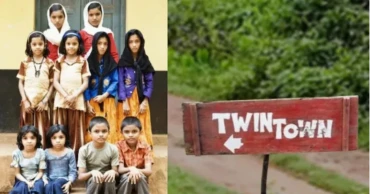
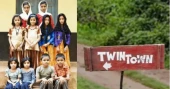
India’s ‘Twin Town’, returns to spotlight with viral campaign
Tucked away in Kerala’s Malappuram district, the quiet village of Kodinhi appears like any other rural settlement at first sight. But a closer look reveals an unusual pattern that has long fascinated visitors and researchers alike — an unusually high number of twins.
Over the years, Kodinhi has gained global recognition as India’s “Twin Town”, where nearly 20 percent of the population are twins. In a country that generally records one of the lowest twin birth rates in the world, the village stands out as a rare demographic mystery.
The village has recently returned to online attention following a widely circulated advertising campaign by e-commerce platform Flipkart. The campaign creatively builds on Kodinhi’s identity, imagining a world where everything comes in pairs, using the village’s real-life phenomenon as a metaphor for “double” value and offers.
The concept has been widely appreciated on social media, with users praising its humour and originality. One user commented, “Very creative, with genuinely good jokes. They hit a home run with this concept.”
A village defined by twinsKodinhi’s statistics remain extraordinary. In a community of around 2,000 families, there are an estimated 400 to 550 pairs of twins. The twin birth rate is reported at 42 to 45 per 1,000 births, far higher than India’s national average of about 4 to 9 per 1,000.
What makes the phenomenon more striking is its consistency. The trend has continued for at least six to seven decades, with new twin births recorded every year.
Locals also note a curious pattern — women born in Kodinhi who move elsewhere after marriage reportedly still give birth to twins, adding further intrigue to the mystery.
Scientific mystery remains unsolvedDespite repeated studies by Indian and international researchers, the reason behind Kodinhi’s unusually high twin birth rate remains unclear.
Scientists have explored possible environmental influences, including water composition and diet, but no consistent factor has been identified. Unlike some regions such as Nigeria’s Igbo-Ora, where specific dietary habits are linked to twin births, Kodinhi shows no such clear correlation.
Genetics has also been considered a possible explanation, but researchers have yet to identify any specific gene responsible for the high rate of twins. Studies have also ruled out pollution, chemicals, lifestyle factors, and supernatural explanations suggested in local folklore.
Despite the lack of scientific consensus, the phenomenon continues.
A community that embraces its identityMany residents view twins as a blessing and attribute the phenomenon to divine favour. These beliefs coexist with ongoing scientific curiosity about the village.
To better document and support this unique identity, locals formed the Twins and Kins Association (TAKA) in 2008. The group helps track twin births, supports families, and collaborates with researchers studying the phenomenon. #From NDTV
2 months ago

‘Breathtaking’ rainbow cloud over Indonesia triggers online curiosity
A rare “rainbow cloud” phenomenon captivated residents in Indonesia last week, with videos and photos quickly spreading across social media. The unusual sight sparked widespread curiosity, as users debated whether it was a natural occurrence, a symbol of good fortune, or something more mysterious.
The iridescent clouds were seen over parts of Bekasi and Bogor, including Jonggol, where footage showed patches of sky glowing in shades of pink, green and blue. The clips drew millions of views, with many describing the scene as “breathtaking” and “otherworldly.”
However, not everyone was convinced. Some social media users questioned the authenticity of the visuals, while others speculated about alternative explanations, including conspiracy theories. The authenticity of the viral videos could not be independently verified.
According to local reports, Indonesia’s Meteorology, Climatology and Geophysics Agency (BMKG) confirmed that the phenomenon is both real and natural. Officials explained that it is linked to atmospheric optics.
The vibrant colours are caused by cloud iridescence—often referred to as “rainbow clouds” or “fire rainbows.” This occurs when sunlight interacts with tiny, evenly sized water droplets or ice crystals in thin clouds, bending and separating light into different colours to create a shimmering effect.
Online, the videos attracted significant engagement, generating tens of thousands of views and thousands of reactions. Many users praised the striking visuals, while others remained skeptical or offered alternative interpretations of the phenomenon.
Source NDTV
2 months ago

Pen pal culture endures in digital age as interest in handwritten letters grows
Despite the dominance of digital communication, pen pal programmes continue to survive and even attract renewed interest, with many people rediscovering the value of handwritten letters.
The trend is reflected in stories like that of a woman who recently travelled thousands of miles to fulfil a decades-old promise to her childhood pen friend from New Zealand, highlighting the lasting bonds created through letter writing.
Although organisations such as International Youth Service, which once connected pen pals globally, have shut down, others have persisted or emerged during the internet era. Even as some countries scale back traditional mail services, enthusiasts say there is growing enthusiasm for physical correspondence.
Rachel Syme, a writer for The New Yorker, launched a pen pal initiative during the COVID-19 pandemic that drew more than 15,000 participants. She continues to see strong interest, with hundreds signing up for new rounds of matches and readers seeking pen pals at her book events.
She believes handwritten communication appeals particularly to younger generations looking for a more meaningful and mindful alternative to constant digital interaction.
Long-time participants also highlight the emotional value of pen pal relationships. Julie Delbridge, who joined International Pen Friends as a teenager, described the experience as deeply rewarding and supportive, offering friendship and diverse perspectives during a difficult period in her life.
Over the decades, International Pen Friends has connected more than 2 million people worldwide, with membership rising again during the pandemic and increasing interest recently among young adults.
Educational institutions have also embraced the concept. In the United States, schools and universities are using letter writing to promote communication skills, empathy and reflection. Some professors even require students to exchange letters by post to better understand different forms of connection.
Experts say the appeal of letter writing lies in its slower, more deliberate nature. Compared with instant messaging, it encourages deeper thought and emotional expression.
Digital platforms are also adapting the idea. Apps like Slowly recreate the pen pal experience by delaying message delivery to mimic traditional mail, attracting millions of users globally.
Still, many enthusiasts argue that the tactile experience of writing and receiving letters remains unmatched, offering a unique and personal form of communication.
For those who have maintained long-term pen friendships, the connections often go beyond words, sometimes lasting decades and leading to real-life meetings that reinforce the enduring power of handwritten correspondence.
2 months ago
Met Gala fashion show aims to reclaim overlooked body types in art history
A new fashion exhibition opening alongside Monday’s Met Gala is aiming to challenge long-held ideas of beauty in art by spotlighting body types that have often been ignored.
The exhibit, titled “Costume Art,” begins with familiar classical ideals, including a glittering Dolce & Gabbana gown decorated with sequins and an image of the Greek goddess Aphrodite holding a golden apple, a symbol of traditional beauty standards rooted in ancient Greek art.
But curators say the goal is not to celebrate only that classical form. Instead, the show uses it as a starting point to question and expand how bodies are represented in art history.
Andrew Bolton, head curator at the Metropolitan Museum of Art’s Costume Institute, said the exhibition seeks to “reclaim the body” by bringing attention to forms that have long been overlooked or underrepresented.
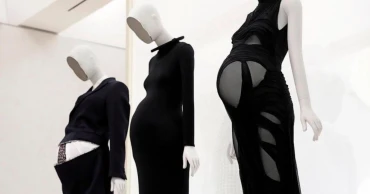
Those include corpulent bodies, disabled bodies, pregnant bodies and aging bodies. The exhibition features around 400 items, many displayed on newly designed mannequins based on real people with diverse body shapes and conditions.
One section focused on aging includes a large grey hoodie with the phrase “I’M RETIRED. (This is as dressed up as I get.),” reflecting a more casual, humorous approach to aging and identity.
Bolton said the exhibition is the most body-inclusive show the museum has ever staged, and visitors attending the Met Gala will preview it before it opens to the public on May 10.
The show also marks the opening of new gallery space for the Costume Institute inside the museum’s main floor, near the Great Hall. The expansion was funded in part by the Met Gala, which raised a record $31 million last year. The new space will allow fashion exhibitions to run longer, with “Costume Art” scheduled to remain on view for eight months.
The exhibition pairs fashion pieces with artworks from different periods, arguing that fashion itself should be seen as art, and that art can also be understood through fashion. It begins with Grecian-inspired garments and classical imagery but gradually moves toward more diverse and modern interpretations of the human body.
One section focuses on pregnancy, featuring designs that highlight and celebrate the pregnant form. Among them is British designer Georgina Godley’s 1986 “Bump and Lump” dress, which emphasizes the shape of pregnancy. It is shown alongside a rare early 20th-century sculpture by Edgar Degas titled “Pregnant Woman,” depicting a nude figure holding her belly.
Another section explores larger body types and challenges stereotypes linking size with fertility or femininity. Designer Michaela Stark’s corsetry works are included, some of which are displayed on mannequins based on her own body. One piece titled “Fat Not Fertile” is paired with an ancient marble figurine of a similar body shape, highlighting changing perceptions of beauty and power.
Disability is also a central focus, with different displays highlighting physical, sensory and cognitive conditions. One mannequin inspired by Paralympian Aimee Mullins wears prosthetic-style boots designed by Alexander McQueen, paired with a 1965 sculpture titled “The Amputee.”
Irish disability activist Sinéad Burke is also represented through mannequins wearing adapted fashion pieces, including a Burberry trench coat and a Vivienne Westwood design. Another display features model and wheelchair user Aariana Rose Philip, presented in a seated pose wearing casual clothing with a slogan shirt.
The exhibition also addresses less visible conditions, including Alzheimer’s disease. A coat by designer Nadia Pinkney incorporates patterns inspired by brain scans of her relatives who lived with the condition. It is shown alongside artwork by Willem de Kooning, whose later work was affected by Alzheimer’s.
A final section explores themes of shared human experience such as aging and mortality. It includes pieces like a Vivienne Westwood jacket decorated with red beads symbolizing blood and injury, paired with historical religious artwork.
“Costume Art” will open to the public on May 10 and run through January 10, 2027.
2 months ago

Converted Pennsylvania church turns into hub for Amish roots music
Fisher, who grew up in an Amish-rooted family before moving to Nashville and later returning home, now produces recordings and videos of musicians with Amish and Mennonite backgrounds, helping them reach audiences beyond their communities.
Recently, he hosted two sold-out concerts at Ragamuffin Hall, a former Presbyterian church he purchased and turned into a performance space and recording studio in McCoysville. The shows featured Ben and Rose Stoltzfus, an Amish-background married duo whose harmonies have drawn millions of YouTube views, ahead of upcoming larger shows in Pennsylvania and Indiana.
Fisher said the venue is meant to support artists whose creativity might otherwise be discouraged in conservative communities, where musical instruments and public performances are often limited.
Raised in a Mennonite environment with minimal instrumental music, Fisher was influenced by his father’s love of country music and early exposure to artists like Chuck Berry and the Beach Boys, which led him into music production.
After working in Tennessee’s songwriting scene, he returned home, focusing on family life and faith while expanding his recording work.
Since purchasing the church in 2022, he has hosted “clean country,” bluegrass and gospel-influenced music sessions. The growing exposure of Amish-rooted musicians online is helping reshape traditional boundaries.
3 months ago
Fuel price uncertainty clouds Croatia’s summer tourism outlook
Croatia is preparing for its busy summer tourism season, but rising fuel prices and global tensions linked to the Iran conflict are creating uncertainty for the industry.
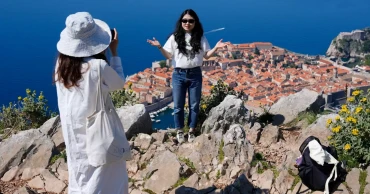
Dubrovnik’s historic old town is already crowded with visitors from around the world, usually a sign of a strong season ahead. But officials say this year’s outlook is less predictable.
Tourism is a key pillar of Croatia’s economy, heavily reliant on foreign visitors. While arrivals have increased so far, authorities warn that higher fuel costs could push up airfares and slow travel demand in the coming months.
Miro Draskovic, head of the Dubrovnik Tourist Board, said the US market remains stable, but some Australian tourists are facing difficulties travelling to Europe.
“The situation is very challenging, and we are monitoring developments closely every day,” he said.
Despite concerns, early indicators are positive. Dubrovnik Airport reported a 13 percent increase in passenger numbers during the Easter period compared to last year. The city remains lively, with busy streets and tourist boats along the coast.
Dubrovnik, a UNESCO World Heritage site, is known for its medieval architecture, seaside setting and historic landmarks. Its popularity surged further after being featured in the television series “Game of Thrones.”
However, the city could be more vulnerable than other parts of Croatia if the fuel crisis worsens, as about 80 percent of its visitors arrive by air.
Airport spokesperson Marina Ruso Mileusnic said officials are approaching the upcoming season with caution, despite connections to around 70 global destinations.
Forecasts remain mixed. Earlier in April, International Energy Agency chief Fatih Birol warned Europe could face a major jet fuel shortage within weeks. But this week, EU Transport Commissioner Apostolos Tzitzikostas said there is no clear evidence of such shortages and encouraged people to continue planning holidays.
Some travellers are already adjusting. Singapore-based businessman Ramon Padiernos said he had to switch airlines due to the Middle East situation but still travelled to Dubrovnik.
“People may feel the impact of higher oil prices, but most still go ahead with their travel plans,” he said.
Beyond tourism, the energy crisis has also pushed up inflation in Croatia, which reached 5.8 percent in April, among the highest in the European Union.
Croatia welcomed nearly 22 million tourists last year. Out of about 110 million overnight stays in 2025, Dubrovnik alone accounted for more than 4 million, according to official data.
Draskovic said hopes remain that conditions will stabilise soon. Until then, he said authorities will continue working day by day to ensure the best possible tourism season.
3 months ago

‘The Devil Wears Prada 2’ delivers style and nostalgia
Two decades after the original hit, ‘The Devil Wears Prada 2’returns with the same charm, fashion flair and star power, but struggles to match the sharp storytelling that made the first film iconic.
Meryl Streep, Anne Hathaway and Stanley Tucci reprise their roles, while Emily Blunt, once a lesser-known name, now returns as a full-fledged star. The cast slips back into their characters with ease, giving the sequel its strongest appeal. Nostalgia and high-fashion glamour also add to the attraction for fans of the 2006 film.
However, the film’s story feels less sharp. While the original thrived on the tense relationship between a demanding boss and her inexperienced assistant, the sequel shifts focus to a changed media and fashion world, where digital influence and corporate struggles dominate.
The story follows Andrea Sachs, played by Hathaway, who is laid off from a newspaper job after receiving an award for investigative journalism. Around the same time, Runway magazine is struggling to stay relevant in a digital-first world. After a major PR crisis involving a fashion brand, Andrea is brought back into Runway’s orbit, setting up a complicated professional reunion with Miranda Priestly.
The film adds further corporate drama as ownership changes and new power players enter the scene, including a tech-focused executive and Emily Blunt’s character, now working in the luxury fashion industry. Subplots involving media influence, brand reputation and corporate takeover give the sequel a more modern backdrop.
Despite these updates, critics may find the emotional impact weaker than the original. The intense boss-assistant dynamic that defined the first film is largely replaced by a more polite, less tense workplace environment. Even Miranda Priestly appears softer, with fewer of the biting remarks that once defined her character.
The sequel also leans heavily on cameos, international locations and multiple side characters, which at times distract from the main narrative. While it attempts to reflect today’s media and fashion industries, it loses some of the tight focus that made the original so engaging.
Overall, ‘The Devil Wears Prada 2’ offers style, nostalgia and strong performances, but its story does not carry the same weight as its predecessor.
The film runs for 119 minutes, is rated PG-13 for strong language and suggestive references, and earns two stars out of four.
3 months ago
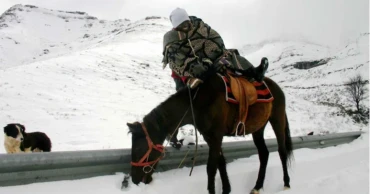
Lesotho: Africa’s ‘Kingdom in the Sky’ with snow, mountains and ski resort
When people think of Africa, images of heat, savannas and wildlife often dominate imagination. But tucked away in southern Africa is a rare exception— Lesotho, a high-altitude, landlocked country entirely surrounded by South Africa.
Often called the “Kingdom in the Sky,” Lesotho stands out as the only country in Africa where all land lies above 1,000 metres, making it the continent’s coldest nation.
Snowfall and freezing temperatures are common between May and August, particularly in the Maluti Mountains, where winter temperatures can drop below minus 10 degrees Celsius. In some high-altitude areas, snow and ice are frequent, allowing for rare winter sports like skiing and snowboarding on the continent.
Historically, the region was inhabited by Khoisan-speaking hunter-gatherers before the Sotho people unified the territory under King Moshoeshoe I in the early 19th century. Lesotho later became a British protectorate and gained independence in 1966.
Since then, the country has faced political instability, economic challenges and persistent poverty, with heavy reliance on neighbouring South Africa for trade and access to global markets.
Despite its challenges, Lesotho has pursued modernisation efforts since the 1990s. Tourism and diamond mining have emerged as key economic sectors, while the capital Maseru has expanded as an urban centre. The country is one of only three in the world, along with Vatican City and San Marino, that is completely surrounded by another nation.
The country experiences a seasonal climate, with most rainfall between October and April. Weather conditions vary sharply with altitude, with summer highs reaching around 32°C in lowlands, while winter temperatures in highland areas can fall below minus 18°C. Frost is widespread, and the Maluti Mountains are often snow-covered in winter.
Its landscape is largely dominated by grasslands and mountains, though overgrazing and soil erosion have damaged natural vegetation in many areas. Conservation efforts, including reforestation, have had limited success so far.
Wildlife populations have also declined significantly over time due to hunting and habitat loss. Large species such as lions, zebras and wildebeests have disappeared, though smaller animals like antelopes, hares and hyraxes still exist. Protected areas such as Sehlabathebe National Park preserve endangered species including the bearded vulture and mountain reedbuck.
Lesotho’s population is predominantly Basotho, a group with strong cultural unity rooted in the legacy of King Moshoeshoe I. Smaller communities include Zulu-origin groups, people of mixed or Asian heritage, and a limited number of expatriates.
The country has also gained global cultural recognition. Its dramatic mountain scenery and cultural elements, including the traditional Basotho blanket, influenced the design of the fictional African kingdom Wakanda in Marvel’s Black Panther. The film’s costume designers drew inspiration from Lesotho’s landscape and clothing traditions to shape its visual identity.
Tourism is further boosted by Afriski Mountain Resort, one of only two ski resorts in sub-Saharan Africa. Located at around 3,050 metres in the Maluti Mountains, it offers skiing and snowboarding between June and August, along with year-round adventure activities such as mountain biking, hiking and trail running.
With its snow-covered peaks, unique geography and rich cultural identity, Lesotho remains one of Africa’s most unusual destinations, challenging common perceptions of the continent while continuing to attract global attention.
#From NDTV
3 months ago

Preity Zinta shares simple lifestyle tips behind glowing skin at 51
Actress Preity Zinta has revealed that a simple, disciplined lifestyle is the key to her glowing skin, saying she avoids smoking and alcohol, drinks plenty of water and sticks to basic skincare.
Responding to a fan on social media, Zinta said her skincare routine is minimal and focuses on natural care rather than expensive or harsh products. She said she regularly uses sunscreen, chooses clean products and avoids strong ingredients like retinol, while also keeping makeup to a minimum so her skin can breathe.
The actress also said, skincare goes beyond what is applied externally. She stressed maintaining a balanced diet, regular exercise, proper sleep and managing stress, describing them as game changers for healthy skin.
She advised avoiding smoking, alcohol and unhealthy foods, noting that these can speed up skin ageing and affect overall health. Zinta also pointed out that habits like smoking, drinking alcohol and consuming inflammatory foods can speed up ageing and damage the skin, advising people to avoid them.
She added that staying hydrated is crucial, saying she drinks plenty of water and focuses on staying active and positive.
“Stick to the basics and be consistent,” she said, adding that simple habits can bring long-term results both in skincare and in life.
She is now 51 and a mother of two, continues to impress fans with her youthful appearance. She gained wide recognition for her role in Veer-Zaara and remains active in public life, often sharing lifestyle tips with her followers.
With inputs from NDTV
3 months ago

Hainan sees surge in duty-free sales as policy evolves over 15 years
China’s southern island province of Hainan has recorded strong growth in offshore duty-free shopping over the past 15 years, with total sales reaching 286.4 billion yuan, according to local customs authorities.
The sales volume includes around 347 million items since the policy was introduced in April 2011 to boost tourism and consumer spending.
Over the years, the policy has been revised and improved several times to expand its scope and attract more shoppers.
At present, Hainan has 12 offshore duty-free stores operating across the island, reflecting the steady expansion of the programme.
3 months ago