special

Govt moves to ensure safe animal feed, protect public health
The government has taken a move to tighten control over animal feed and expand support for livestock entrepreneurs as concerns mount over food safety risks that extend from farm to table.
Officials said it is designed to ensure safer feed for cattle and poultry, ultimately improving the quality of meat, milk and eggs consumed by people.
According to an official document, the government has planned to introduce a dedicated priority loan scheme for women, youth and expatriate entrepreneurs in the livestock sector.
Ecnec approves Tk 5,452.42 crore school feeding programme to tackle malnutrition
The scheme will offer easy-term loans, with little or no collateral alongside the introduction of animal insurance to reduce financial risks for borrowers.
Authorities are also working to strengthen systems to regulate the production and supply of safe, quality feed.
Efforts are underway to coordinate with the Ministries of Land and Agriculture to expand the cultivation of natural fodder on char lands, khas lands and other fallow areas.
Besides, the process of amending the Fish Feed and Animal Feed Act, 2010 is ongoing, aimed at improving regulatory oversight and ensuring stricter quality control.
As part of broader efforts to improve animal nutrition, 8,906 demonstration plots of high-yielding grass varieties have already been established under a government project.
Silage technology has been introduced in 8,144 farms while hay-making techniques have reached 97 farms.
Around 30,000 farmers have also received training on modern livestock nutrition practices, according to the document.
Bangladesh Livestock Research Institute (BLRI) has launched research into climate-resilient fodder crops, focusing on varieties that can withstand drought, salinity and changing weather patterns.
The initiative also includes developing improved methods for grass preservation.
Despite these measures, experts warn that unsafe feed remains a serious threat to public health.
Data from National Livestock Research Institute showed that nearly 40 percent of feed samples collected across the country contain harmful substances, including heavy metals like lead and chromium, as well as residues of restricted antibiotics.
Experts point to the use of contaminated raw materials—such as tannery waste used as a protein source—and crops grown with untreated industrial wastewater as major causes.
Laboratory tests indicate that a notable share of beef and poultry products sold in urban markets exceed internationally accepted safety limits for toxic residues.
Medical experts caution that long-term consumption of contaminated animal products can lead to chronic illnesses, including kidney disease, hormonal disorders and certain cancers.
They also warn of a growing threat from antimicrobial resistance, driven by the widespread use of low-dose antibiotics in animal feed.
Public health advocates have called for stricter enforcement of existing laws, noting that only about 15 percent of feed mills currently undergo regular safety inspections.
They recommend transitioning to traceable, organic feed sources and increasing testing at key points in the supply chain to reduce risks.
Without urgent and sustained action, experts warn, contamination in the food chain could undermine gains in nutrition and public health achieved over recent decades.
3 months ago
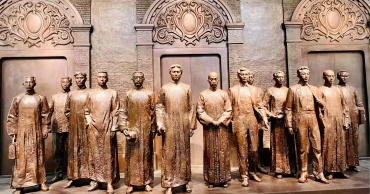
Echoes of 1921: Inside the birthplace of modern China
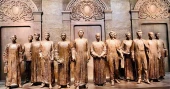
In the heart of Shanghai’s bustling Xintiandi district, tucked away within the grey-brick walls of a traditional shikumen house, lies the epicenter of a political earthquake that reshaped the global political map.
This is the Memorial Hall of the First National Congress of the Communist Party of China, a site often described as the place where the fate of China was sealed and the shape of the world was envisioned.
Recently, a delegation of journalists from Dhaka, visiting at the invitation of the Chinese government, joined thousands of international and domestic tourists to walk the halls of this historic landmark. What they found was a meticulously preserved bridge between China’s turbulent past and its superpower present.
A Secret Gathering in the French Concession
The story begins on July 23, 1921. At the time, the location at 106 Rue Wantz (now 76 Xingye Road) sat within the French Concession, offering a layer of precarious colonial protection from local warlords.
Thirteen delegates, including a young Mao Zedong and Dong Biwu, representing just over 50 early members, gathered in a modest living room. They were joined by two Comintern representatives, Maring and Nikolski. Together, they held six sessions in secrecy until the threat of a police raid on July 30 forced them to flee.
The final act of this historic drama didn’t even happen on land. The delegates moved their seventh and final session to a tourist boat on South Lake (Nanhu) in Jiaxing, Zhejiang Province, where the party’s first program and resolutions were officially passed.
3 months ago
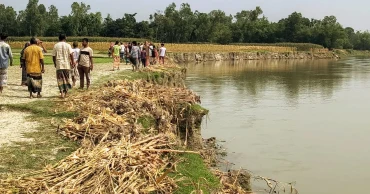
Locked in poverty and erosion: The reality of Kurigram
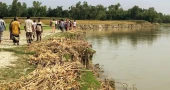
Kurigram, a northern border district of Bangladesh, continues to struggle with extreme poverty, widespread landlessness and relentless river erosion, trapping millions of people in harsh living conditions despite its large geographic size.
Spanning around 2,255 square kilometres and home to over 23 lakh people, the district’s development has remained slow due to geographic isolation, weak infrastructure and decades of neglect.
According to the Bangladesh Bureau of Statistics (BBS), Kurigram’s poverty rate stands at 70.8 percent against 19 percent at the national level. The extreme poverty rate in the district is 53.2 percent.
In Char Rajibpur upazila alone, the poverty rate rises to 79.8 percent, highlighting the severity of deprivation in riverine areas.
Landlessness is also widespread, with around 35 percent to 50 percent of families without land. At the same time, about 57 percent of residents suffer from various illnesses, making poverty and poor health closely linked problems in the district.
River erosion remains one of the biggest threats. Sixteen rivers, including the Brahmaputra, Teesta and Dharla, flow through Kurigram. Out of 469 chars (river islands), 269 are inhabited, where around 550,000 people live. Every year, river erosion forces thousands of families to lose their homes and become landless.
Experts say urgent river management is needed along about 70 kilometres of the Brahmaputra, 45 kilometres of the Teesta and 60 kilometres of the Dharla river routes in the region.
The lack of industrial development has also created an acute employment crisis. The Kurigram Textile Mills, established in 1987, was closed in 2011, and no major industry has replaced it since.
To establish the proposed “Bhutanese Special Economic Zone” on the bank of the Dharla River, a memorandum of understanding (MoU) was signed between the governments of Bangladesh and Bhutan in 2024.
However, it will take time for the zone to come into operation.
The administrative approval has been granted to allocate or acquire 150.07 acres of khas land and 69.57 acres of privately owned land in favour of BEZA for the project.
So far, BEZA has acquired 133.92 acres of land in the area, while the process of acquiring an additional 61.87 acres is currently underway.
3 months ago

DC conference 2026: 498 proposals set for policy review
A total of 498 proposals submitted by divisional commissioners and deputy commissioners will be discussed at the policy level during the four-day Deputy Commissioner (DC) Conference beginning on May 3.
The conference, aimed at sharing field-level administrative experiences and recommendations on key issues such as public service delivery, land management, law and order, drug control, infrastructure development and social safety, is the first major administrative event of the year.
According to the Cabinet Division, the conference will run from May 3 to May 6, covering discussions on 56 ministries, divisions, offices and organisations across 34 working sessions. Advisors, senior secretaries and secretaries of the ministries concerned will participate, while the Cabinet Secretary will preside over the sessions.
DC Conference to be held May 3-6
Joint Secretary (District and Field Administration Branch) of the Cabinet Division Mohammad Khorshed Alam told UNB that a total of 1,729 proposals were received from eight divisional commissioners and deputy commissioners of 64 districts.
After scrutiny, 498 proposals were finalised for discussion, while the rest were excluded due to duplication, disagreement or prior discussion in earlier meetings.
The inaugural session will be held at 10:30am on May 3 at the Osmani Memorial Auditorium in the capital.
It will be inaugurated in the presence of the Prime Minister, followed by an open discussion between the deputy commissioners and the Prime Minister. The concluding session will also take place at the same venue.
In addition, courtesy meetings have been arranged between district administrators and the President, Chief Justice, Speaker, and chiefs of the three-armed forces, which was not included in last year’s conference.
The DC conference is held annually to facilitate direct dialogue between policymakers and field administration officials. Last year, the event was held for three days in February during the interim government.
Officials said that apart from the scheduled agenda, deputy commissioners will also be able to raise urgent issues during the sessions.
According to the Cabinet Division, this year’s proposals focus on reducing public suffering, improving land management, expanding healthcare and public services, developing infrastructure, strengthening law and order, modernising disaster management, creating employment, alleviating poverty and enhancing the social safety net.
Increasing the use of information and communication technology to combat misinformation has also been highlighted.
Several proposals have also been placed on education and administrative reforms. These include proposals to amend laws to allow executive magistrates to take swift action against irregularities in admission and recruitment examinations, the formulation of a policy for establishing Qawmi madrasas, appointment of teachers for minority languages, and the establishment of a public university in Faridpur.
Other recommendations include ensuring the security of field administration officials, strengthening local government institutions and expanding their activities.
Drug control has also been identified as a key concern. The proposals note that efforts to build a drug-free society are being undermined by the involvement of influential individuals and weaknesses in law enforcement, calling for stronger measures to curb cross-border drug trafficking.
In the water management and agriculture sector, urgent calls have been made for the construction of the Padma Barrage to protect the southwestern region from the impact of the Farakka Barrage in India.
Immediate maintenance and rehabilitation of the Ganga-Kapotaksha Irrigation Project has also been proposed to ensure irrigation facilities across around 150,000 hectares of land in Kushtia, Chuadanga, Magura and Jhenaidah districts.
3 months ago
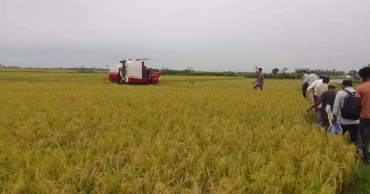
Fuel shortage, rains hit Boro harvest in Habiganj haors; paddy prices plunge
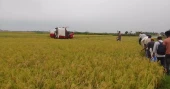
Boro cultivation in the haor areas of Habiganj is facing challenges due to a fuel crisis and excessive rainfall while a sharp fall in paddy prices has deepened farmers’ distress.
Besides, Boro paddy is currently selling at around Tk 700 per maund in local markets—less than half of the government-fixed rate, said farmers.
The government has set the procurement price at Tk 36 per kg, equivalent to Tk 1,440 per maund but farmers say they are being forced to sell at even lower prices in the field.
This season, heavy rain and hailstorms submerged vast tracts of Boro fields across the district. Water has yet to recede in many areas, while in some places it continues to rise, further complicating harvesting efforts.
The situation has been worsened by an acute shortage of fuel, disrupting mechanised harvesting.
In Baniachong upazila, the district’s main Boro-producing upazila, only 27 percent of paddy have been harvested as of April 23—15 percentage points lower than the same period last year.
Local trader Suman Ahmed, owner of Bismillah Store in Baniachong sadar, said they were buying paddy from small traders at Tk 700 per maund, while farmers were selling at even lower prices.
According to Department of Agricultural Extension (DAE) data, Boro was cultivated on 123,644 hectares of land across nine upazilas in the district this season, falling short of the target by 204 hectares.
Of the total, 46,954 hectares are in haor areas, with the highest 33,700 hectares in Baniachong alone.
Alok Kumar Chand, sub-assistant plant protection officer at the Baniachong upazila Agriculture Office, said there are 106 combine harvesters in the upazila.
While around 10,000 litres of fuel are required daily, only about 1,000 litres are being supplied, making it difficult to keep the machines operational, he said.
In many cases, harvesters cannot even enter fields due to standing water.
Farmers said they are unable to obtain fuel from filling stations despite having fuel cards, forcing them to buy at higher prices in open market.
Shahid Chowdhury, a farmer from Kumri village, said he was struggling to harvest his crop due to waterlogged fields and fuel shortages. “I didn’t get a single drop of fuel from the pump,” he said.
Authorities urged farmers in haor areas to harvest paddy quickly amid fears of flooding, but a shortage of labour has further compounded the crisis.
Government data shows that around 80 percent of haor paddy has been harvested using machines in recent years.
However, the ongoing fuel shortage and adverse weather have severely disrupted that process this season.
According to the Department of Agricultural Rehabilitation, significant areas of Boro crops in six upazilas have been damaged by rains.
These include 248 hectares in Baniachong, 154 hectares in Ajmiriganj, 90 hectares in Habiganj Sadar, 25 hectares in Lakhai, 20 hectares in Nabiganj and 19 hectares in Chunarughat.
Farmers fear that without urgent and effective measures, Boro production in the haor region could suffer major losses this season.
3 months ago
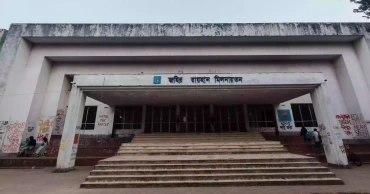
JU still operates its lone auditorium without basic modernisation
Zahir Raihan Auditorium, the central hub of academic, cultural and political activities at Jahangirnagar University (JU), continues to struggle with outdated facilities despite growing demands for modern infrastructure.
The university authorities rely heavily on its single venue to host convocations, freshers’ receptions, national day programs, cultural performances seminars and international conferences and many other programmes.
However, the auditorium fails to keep pace and suitable environment with modern standards, forcing students, teachers and guests and other stockholders to face regular inconvenience.
Audiences frequently survive excessive heat, poor lighting and disruptions from external noise during events. Authorities said these issues have become routine, often affecting the quality and professionalism of programs.
University sources said the auditorium has around 1,500 seats, along with a 250-seat seminar room that hosts year-round academic and cultural activities. Yet, the facilities fail to meet the growing demand.
The auditorium lacks a suitable cooling system, proper lighting, effective soundproofing and sufficient VIP seating creating ongoing challenges; especially during large-scale events.
The situation worsens in summer. Lack of effective air conditioning or sufficient ventilation, temperatures inside the hall room rise quickly, forcing many other attendees to leave programmes midway.
Noise pollution remains a major problem as well. Sounds from passing vehicles and surrounding disturbances easily enter the hall room due to weak soundproofing, disrupting speeches, performances and discussions.
Second-year student Abu Raihan said, "The environment often fails to match the standard of national-level events."
"Both guests and audiences feel uncomfortable due to heat and noise," he added.
‘Zero tolerance’ on SSC question leaks; fraudsters to face strict action: Mahdi Amin
Lighting conditions inside the auditorium also remain substandard. Lack of sufficient lighting, stage visibility suffers, especially during theatrical and cultural performances.
Students also pointed out the lack of proper VIP arrangements. Although organisers reserve some front-row seats, they do not provide enough seating for large events, forcing organizers to make temporary adjustments that fall short of professional standards.
Robin Hossain, a student of the Drama and Dramatics Department, said that visiting guests often feel uncomfortable compared to facilities at other universities.
In contrast, institutions such as Dhaka University, Rajshahi University and University of Chittagong have expanded and modernized their auditorium facilities in recent years, incorporating central air conditioning, advanced sound systems and improved lighting.
Despite repeated demands, Jahangirnagar University has yet to implement any visible large-scale renovation of its main auditorium. Questions have emerged over why a major residential university still depends on a single outdated venue.
JUCSU General Secretary Mazharul Islam said, "The issue had been discussed earlier and that complications no longer exist."
"We recently held a meeting on April 6 and agreed to expedite the process. We expect the tender to be floated soon," he added.
According to university officials, the university’s Tk 1,450 crore development project, approved by ‘Executive Committee of the National Economic Council’ in 2018, included plans to renovate the auditorium along with roads, sidewalk, cycle lanes and the Selim Al Deen Muktamancha. However, implementation has yet to begin.
The Project Director Engineer Md Nasir Uddin said, "The administration have completed discussions with the Education Engineering Department (EED) and are now reviewing the project."
"We hope the tender will be invited soon and the work will proceed under their supervision," he added.
He also said that a consultant from Bangladesh University of Engineering and Technology (BUET), Prof Dr Nazmul Imam, is reviewing the renovation plan.
Experts suggest phased renovation as a practical solution. In the short term, they recommend improving soundproofing, lighting, ventilation and temporary cooling system. In the long term, they stress the need for constructing a modern and large-scale auditorium.
JUCSU Vice President Abdur Rashid Jitu said, "Our only auditorium is in a deteriorating condition. Students continue to suffer due to lack of modern facilities."
Vice-Chancellor Prof Dr Mohammad Kamrul Ahsan said, "The issue is under discussion and steps are being taken to ensure transparency in the tender process."
"We cancelled previous tenders due to irregularities. Now the project has been finalized and a fresh tender will be floated soon," he added.
The University's stakeholders warn that without a structured and timely plan, the university may face growing challenges in hosting major academic and cultural events and emphasize that a modern auditorium is essential for sustaining a vibrant university life.
3 months ago
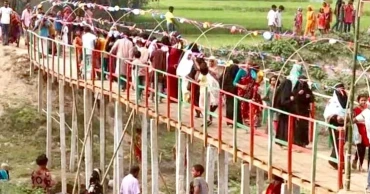
Porter builds bridge with 25 years of savings, ends decades of suffering in Kurigram
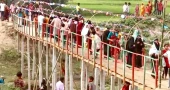
A wooden bridge built with the 25 years of savings of a porter now spares thousands in Kurigram the daily risk of crossing the Buri Teesta River.
Abdul Karim, a resident from the Jonaidanga area under ward No. 8 of Ulipur municipality, spent nearly Tk 3 lakh to build the 120-foot bridge entirely on his own initiative.
What makes the feat extraordinary is how the money was raised: Karim saved bit by bit from his earnings as a porter over 25 years, later selling his motorcycle and taking small loans to complete the bridge.
Bangladesh farmers cut costs with solar irrigation, save 7.5m litres of diesel
For more than two decades, locals had been forced to cross the river using a risky bridge, often facing the danger of accidents. The situation was especially difficult for students, patients, and daily wage workers.
With the new bridge now in place, residents from several nearby villages say their daily travel has become safer and far more convenient.
Earlier, travelling on this route was extremely risky. Students and sick patients suffered the most, local residents said, adding that the bridge has significantly eased their daily struggle.
The bridge was formally inaugurated on April 17 by Karim’s mother. A prayer gathering was held on the occasion, attended by thousands of local people.
Karim said he was compelled to take the initiative after years of waiting for official action.
“The nearby railway bridge was very dangerous. There was always a risk of accidents. Even though many public representatives came, no one took action,” he said.
“So I built this bridge with my own ability — from my income as a porter, my savings over 25 years, selling a motorcycle, and taking loans. I seek everyone’s prayers,” the porter added.
Locals now hope the initiative will inspire improved infrastructure development in neglected rural areas.
3 months ago

Ganges Water Treaty ‘needs comprehensive review’ before renewal
The Bangladesh-India Ganga/Ganges Water Treaty, which is expiring in December this year, needs to be ‘reviewed and reformed comprehensively’ before going for a renewed treaty by engaging economists, urban planners, sociologists and environmentalists in the planning, as Dhaka shares the ‘risk’ of not sharing it appropriately.
“MoFA (Ministry of Foreign Affairs) has to do a lot of homework and data sharing is key. We need to keep in mind that the situation in 1996 and 2026 is not the same. This can't be seen only from engineering or diplomatic prisms; they should include economists, urban planners, and sociologists in the planning,” international affairs expert Prof Shahab Enam Khan told UNB.
Bangladesh-India partnership set to boost medical tourism
What's at stake?
Officials in Dhaka said Bangladesh’s agriculture and food availability will be badly affected while climate vulnerability will increase substantially if the treaty is allowed to expire with no new sharing agreement in its place.
The Ganges Water Treaty was signed on December 12, 1996 for a period of 30 years, which make this the last year covered by it. Discussions over its possible revision and renewal are yet to commence between the two governments.
Bangladesh and India share 54 rivers including the Ganges, or Ganga.
To discuss all relevant issues that form part of this cooperation, the two countries have a bilateral mechanism in place, which is the Joint Rivers Commission.
Foreign Minister Dr Khalilur Rahman said that given the willingness and interest of both sides to reset the relationship, an arrangement for sharing the Ganges waters in an ‘equitable and climate-proof manner’ will be one of the first tests of the reset.
Indian Minister of State for External Affairs Kirti Vardhan Singh has already informed the Lok Sabha, lower house of the Indian parliament, that inputs on drinking water and industrial water requirements have also been received from all stakeholders including the government of West Bengal which have been taken into account while formulating the Indian government’s views.
An authorised representative from the government of West Bengal took part in inter-ministerial discussions held on the matter on October 30, 2023; March 15, 2024; May 31, 2024; and also on March 26, 2025, where a collective view was formulated on the part of the Indians, a diplomatic source told UNB, referring to the issue.
Despite the well-publicised strain in relations following the oustre of the Awami League government in August 2024, under the framework of the Joint Rivers Commission, technical-level meetings continue to be held between India and Bangladesh on all water-related issues of mutual interest, officials said.
Calls to revise and renew
“I think it is very important for Bangladesh and India to renew the Ganges Treaty. But it has to be revised. The very simple reason is that the treaty was done almost three decades ago,” said Prof Shahab, who is the Executive Director of Bangladesh Center for Indo-Pacific Affairs.
He isn’t the first to advocate for the Ganges Water Treaty to undergo “a climate makeover,” since the multifaceted issues arising out of climate change were now well-understood when the treaty was signed, and this reflects in the text of the agreement.
By now, the international relations expert said the science, technology, topography, and of course the climate issues have changed. “Therefore, it has to be reviewed on the basis of what is available at the moment in terms of science and technology.”
Prof Shahab strongly suggested that this should also come with arrangements such as revitalising the JRC and including a much more transparent and accountable data-sharing system, which will definitely build much more confidence over ‘hydro-diplomacy’ and water management and water sharing, most importantly, between the two countries.
“This is very important that we should also go into the diplomatic negotiations not only from the diplomatic perspective, but also from engineering, science, and definitely economic perspectives,” he said.
Because largely, Prof Shahab said, if they see it only from diplomacy or perhaps from engineering, this is not going to give them a holistic solution.
“That is the reason, I believe, that the Bangladesh government should do enough homework, in which they should include people from different walks of society - economists, affected people, and most importantly, social scientists,” he said, noting that environmentalists should be included too.
“The whole idea that they see water only from a water perspective, or perhaps a diplomatic or legal perspective, is an age-old and somewhat archaic understanding of water management,” said Prof. Shahab.
“If sense prevails among these two countries, they would definitely go for a comprehensive review, comprehensive reform, and then go for a treaty which makes much more sense in this particular millennium, when climate change and other effective issues are dictating the rules of engagement.”
Foreign Minister Dr Khalilur, while attending the ninth Indian Ocean Conference in Mauritius, said they would like to see that there is an arrangement and a new treaty, or a revised treaty, ensuring the essential needs of their people.
“These are common rivers, and we have common legacies here, common interests and, as I said, there's no other alternative but to seek a solution that is durable and will win public trust. And this will also be very important to lay the basis for the relationship over the next 25 to 50 years,” he told NDTV on the sidelines of the conference.
The Foreign Minister said they have done 55 years (of bilateral relations) already. “So, I don't think we should look at five years or ten years. We have to look at the very long term. So, mutual climate resilience as a priority in our foreign policies, our people policy, I should say, will actually be a key driver of the future.”
3 months ago
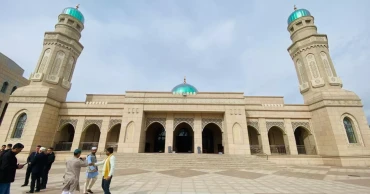
Inside Xinjiang Islamic Institute: Blending faith, state and modernity
In the heart of Urumqi, Xinjiang Islamic Institute is carving out a new identity as a center of religious excellence, challenging prevailing Western media narratives through a blend of traditional Islamic scholarship and modern social integration.
As Xinjiang continues its role as a pivotal hub for China’s Belt and Road Initiative (BRI), the institute is being highlighted as a model for how religious education can coexist with state-led stability and economic development.
The state-approved institute serves as a premier destination for students across the region seeking to become imams and religious scholars.
The curriculum is rigorous, balancing core Islamic theology with the practical needs of a modern society.
3 months ago
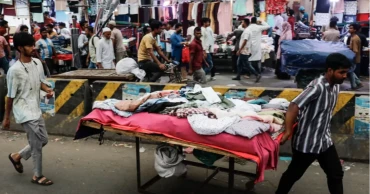
Anti-hawker drive : Without rehabilitation, reoccupation becomes inevitable
Barely two weeks after eviction drives cleared major footpaths in Gulistan and Baitul Mukarram areas, hawkers have started returning to the spots they had vacated, raising fresh questions as to whether the government was merely flexing its muscles, or truly serious about pursuing a sustainable solution to the problem.
To many, the government 's commitment can only be ensured via a rehabilitation component or merely repeating a cycle of eviction and reoccupation.
On a recent visit to the area, our correspondent found that vendors have gradually resumed business along the stretch from the Gulistan intersection to Paltan, awaand in front of Baitul Mukarram Mosque. Crowds of customers have also started returning to the sidewalks.
A shoe seller in Gulistan told UNB, “We have been doing business here for many years. We do not know of any alternative livelihood right now. That is why we have returned despite the risks.”
Another vendor said, “We have very little capital. With such limited resources, street vending is our only option.”
Pedestrians, however, said the sidewalks had remained relatively clean and accessible for several days after the eviction drives before vendors started returning.
Zubayer, a commuter walking from Paltan toward Gulistan, said, “For the last few days the roads were much cleaner and easier to walk through. Since yesterday, I noticed shops are coming back again. The familiar picture of occupied footpaths is returning.”
Dhaka’s two city corporations spend millions of taka every year to remove illegal structures and free public spaces from encroachment. Authorities also conduct regular eviction drives that involve significant operational costs.
Despite repeated operations, vendors continue to return, highlighting the lack of a long-term solution. Urban experts say eviction alone cannot resolve the issue, as Dhaka’s footpaths have evolved into a major informal economic hub.
According to various studies and sector insiders, around 250,000 to 350,000 hawkers are currently active across Dhaka.
Thousands of temporary stalls operate daily in key commercial areas such as Gulistan, Farmgate and New Market, selling clothes, food, electronics and other daily essentials at affordable prices for low- and middle-income consumers.
Traders say an average hawker earns between Tk 500 and Tk 1,000 in daily sales, while earnings in busy areas can be much higher. Based on these estimates, the total daily transactions in Dhaka’s footpath economy could reach nearly Tk 300 crore.
Economists say the sector plays a significant role in the country’s informal economy, although most of its activities remain outside official records.
The sector has also long been associated with allegations of extortion, illegal control networks and political patronage.
There are claims that following eviction drives, extortion demands often increase in some areas while new groups attempt to establish control over footpaths.
Urban planners call for long-term policy
The Institute for Planning and Development (IPD) has proposed a 10-point plan for sustainable management of hawkers in Dhaka.
Its recommendations include creating designated hawker zones, introducing licensing and digital databases, allowing time-based vending in selected areas, establishing holiday and night markets, dismantling extortion syndicates, and creating alternative employment opportunities.
Executive Director of IPD, Professor Adil Muhammad Khan, said, “Eviction without comprehensive planning will not produce sustainable results. What is needed is a clear policy and legal framework for hawker management.”
He said authorities must address the political economy behind footpath control and identify those involved in extortion networks instead of repeatedly targeting only poor vendors.
According to him, long-term solutions require vendor registration, rehabilitation measures, alternative employment opportunities and social protection for the urban poor.
He also stressed that Dhaka’s streets “cannot continue to bear the burden of poverty from across the country,” calling for decentralised economic development and employment generation outside the capital.
Urban planners believe the hawker issue is no longer simply about illegal occupation of sidewalks, but also about poverty, employment, urban management and political influence.
As vendors continue returning to the streets shortly after eviction drives, the debate remains unresolved: will authorities move toward structured rehabilitation and regulation, or continue the recurring cycle of eviction and reoccupation?
Dhaka South City Corporation Administrator Abdus Salam said “Businesses cannot be allowed to operate indiscriminately on the streets causing public inconvenience. However, we do not want to be
inhumane toward hawkers and rickshaw pullers. Following the directives of the Prime Minister, we are working to reduce public suffering while ensuring humane treatment.
“To conduct temporary business on footpaths, vendors will have to obtain licenses from the city corporation. We are currently preparing area-based lists of hawkers with the assistance of the police," he said.
He added "Once the list is completed, a specific number of hawkers will be allowed to operate in designated areas at designated times. We are also planning to introduce ‘holiday markets’ and ‘night markets.’ We do not want to evict people; rather, we want to rehabilitate them.”
Dhaka North City Corporation (DNCC) Administrator Shafiqul Islam Khan has said plans are underway to set up temporary markets in six open fields to rehabilitate street vendors currently occupying footpaths in Dhaka.
He said hawkers will be relocated to these designated areas through a registration process, and the sites will be managed by collecting a fixed fee.
3 months ago