Education
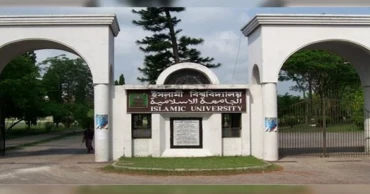
273,554 applications submitted for GST admission test
A total of 273,554 students have applied to sit for the undergraduate first-year admission tests for the 2025–26 academic session under the GST cluster admission system, reflecting strong competition for public university seats.
The online application process concluded at midnight on December 30, officials said.
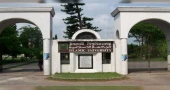
Professor Dr Manjurul Haque, registrar of Islamic University in Kushtia and secretary of the Central Committee of the GST admission tests, confirmed the figures on Saturday morning.
He said that among the total applicants, 159,189 students applied for A unit (Science), 90,408 for B unit (Humanities), and 23,957 for C unit (Business Studies).
The online application process began on December 10 and was initially scheduled to end on December 24.
Later, the deadline was extended by six days to facilitate more students, he said.
According to the published schedule, the C unit admission test will be held on March 27, followed by B unit on April 3 and A unit on April 10.
The GST cluster admission tests will be conducted for undergraduate first-year admission at Islamic University in Kushtia, Mawlana Bhashani Science and Technology University, Patuakhali Science and Technology University, Noakhali Science and Technology University, Jatiya Kabi Kazi Nazrul Islam University, Jessore University of Science and Technology, Begum Rokeya University, Pabna University of Science and Technology, Gopalganj Science and Technology University, University of Barishal, Rangamati Science and Technology University, Rabindra University, University of Frontier Technology Bangladesh, Netrokona University, Jamalpur Science and Technology University, Kishoreganj University, Chandpur Science and Technology University, Sunamganj Science and Technology University, and Pirojpur Science and Technology University.
7 months ago

Leading University to hold fourth convocation on Saturday, Adviser Rizwana to attend
Leading University, Sylhet’s first private university approved by the Government of Bangladesh and the University Grants Commission (UGC), and holding a permanent certificate from the Ministry of Education, will hold its fourth convocation on Saturday (Jan 3). A total of 6,193 graduates will receive their degrees at this ceremony.
Speaking on the occasion, the university’s Vice-Chancellor Professor Dr. Mohammad Taj Uddin said the convocation marks a significant milestone in the university’s academic journey and a formal recognition of the graduates’ achievements.
The ceremony will be presided over by Adviser Syeda Rizwana Hasan of the Ministry of Environment, Forest and Climate Change, the Ministry of Water Resources, and the Ministry of Information and Broadcasting. She will confer degrees to the graduates as the convocation chair.
Internationally acclaimed Australian-based Bangladeshi writer and researcher, Dr. Abed Chowdhury, renowned for his work on the Panchbrihi Multi-Harvest Rice Variety and genetic science, will deliver the keynote speech.
Special guests include UGC member Professor Dr. Mohammad Anwar Hossain, while the chairman of the university’s Board of Trustees, Dr. Syed Ragib Ali, will deliver the welcome address.
Dr. Taj Uddin added that graduates from Spring 2018 to Fall 2025 semesters across four faculties—Business Administration, Arts and Modern Languages, Social Sciences, and Modern Sciences—will receive degrees in ten departments, including Business Administration, Tourism and Hospitality Management, English, Law, Islamic Studies, Computer Science and Engineering, Architecture, Civil Engineering, Electrical and Electronic Engineering, and Public Health.
Among the registered graduates, 15 outstanding students will be awarded Chancellor Gold Medals, Vice-Chancellor Gold Medals, Founder Gold Medals, and Co-Founder Gold Medals.
The Vice-Chancellor also highlighted the growth in convocation numbers: 156 graduates in the first convocation, 1,210 in the second, 4,734 in the third, and 6,199 in the fourth. A colorful cultural program is scheduled as the second phase of the convocation.
Dr. Taj Uddin called for cooperation from all to ensure the convocation is successfully conducted.
7 months ago
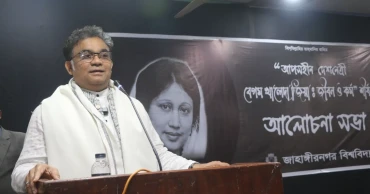
Khaleda Zia became central figure in politics through resolute leadership: JU vice chancellor
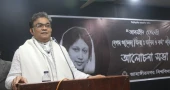
A discussion titled “Unyielding National Leader Begum Khaleda Zia: Life and Work” was held at Jahangirnagar University on Thursday (Jan 1) to commemorate BNP Chairperson and former Prime Minister Begum Khaleda Zia. The program took place in the seminar hall of Zahir Raihan Auditorium.
The session was moderated by JU’s Acting Registrar Dr. A.B.M. Azizur Rahman, while welcome remarks were delivered by Treasurer Prof. Dr. Abdur Rob. JU Vice-Chancellor Prof. Dr. Mohammad Kamrul Ahsan attended as the chief guest.
In his speech, the Vice-Chancellor said, “Through various political developments, Begum Khaleda Zia has emerged as a central figure in Bangladesh’s politics. From the beginning of her political career, she has advanced with the nation and its people at the forefront.”
He added, “Her unwavering stance on principles, ethics, ideals, and the aspirations of the people earned her the reputation of an ‘unyielding’ national leader. While holding state responsibilities, she took firm positions on issues such as the Farakka Barrage and the Bihari community crisis, actively working to resolve these challenges.”
Other speakers at the session included Pro-Vice-Chancellor (Education) Prof. Dr. Mohammad Mahfuzur Rahman, Pro-Vice-Chancellor (Administration) Prof. Dr. Sohel Ahmed, President of the Nationalist Teachers’ Forum Prof. Dr. Md. Shamsul Alam, General Secretary Prof. Md. Jamal Uddin, and various faculty members, officials, staff, and student leaders.
Earlier in the morning, a condolence rally was organized by the Nationalist Teachers-Officials Forum in front of Begum Khaleda Zia Hall. The rally circled the campus and concluded at the Zahir Raihan Auditorium.
7 months ago
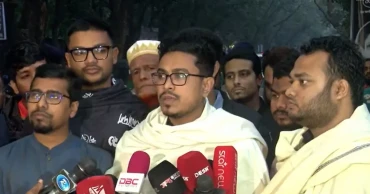
DUCSU representatives meet Tarique Rahman, discuss student politics
Representatives of the Dhaka University Central Students’ Union (DUCSU) on Thursday met BNP Acting Chairman Tarique Rahman to discuss safeguarding the spirit of the July Revolution and shaping the future of student politics in Bangladesh.
The meeting took place at the BNP Chairperson’s political office in Gulshan.
Before meeting Tarique Rahman, the DUCSU delegation signed the condolence book for late former Prime Minister and BNP Chairperson Begum Khaleda Zia.
Talking to reporters after the meeting, DUCSU Vice President Abu Shadik Kayem said they offered prayers for Khaleda Zia, hoping Allah grants her the highest place in Jannatul Firdaus.
He said Tarique Rahman provided guidance on student participation in politics and the broader democratic movement, emphasising the importance of unity among forces committed to anti-fascist struggles following the July Revolution.
Shadik said the BNP Acting Chairman stressed cooperation among all political and student organisations, including BNP, Jamaat, NCP, Chhatra Dal, and Chhatra Shibir, to rebuild the country.
He said the youth must work together to ensure free, fair, and credible elections, restore state institutions weakened over the past 16 years, and implement the ‘July Charter’.
The meeting also addressed the killing of martyr Sharif Osman Hadi, with Shadik alleging that those involved in planning and executing the murder have not yet been arrested and that some still hold positions within the interim government.
He called for swift legal action against the perpetrators.
Shadik said the discussion reaffirmed a commitment to ‘Bangladesh-oriented’ politics and resistance to external domination, reflecting the ideals of Khaleda Zia and late President Ziaur Rahman.
Jamaat, BNP should work together for next five years: Ameer
He stated that young people have been deprived of their voting rights for the past 16 years and urged the student community to play a united role in restoring democracy through free, fair, and credible elections.
The DUCSU leader also encouraged the youth to take an active part in rebuilding weakened state institutions and implementing the ‘July Charter’, including steps such as holding a national referendum.
7 months ago
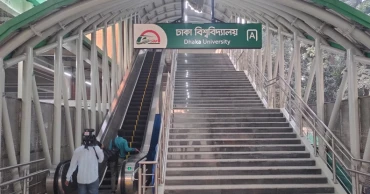
DU Metro Station closed from evening for 31st night security
The Dhaka University (DU) Metro Rail Station was temporarily closed from 7:00 pm on Wednesday due to security measures ahead of Thirty-first Night celebrations.
The Dhaka Mass Transit Company Limited (DMTCL) said in a statement that the closure was implemented following a special request from Dhaka University authorities.
DU in mourning over death of Begum Khaleda Zia
As a result, metro trains will not stop at the DU station from 7:00 pm until the end of service for the day. Trains departing from Shahbagh will run directly to the Jatiya Press Club–Secretariat station without stopping at DU.
DMTCL confirmed that services at all other stations will continue as usual, with operations concluding at 10:10 pm in line with the regular schedule.
7 months ago
JU announces results of ‘A’ unit admission test
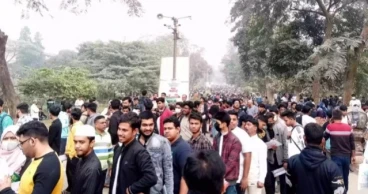
Jahangirnagar University (JU) has published the results of the 2025–26 academic year admission test for the first-year undergraduate (honours) batch-55 ‘A’ unit, which includes the Faculty of Mathematical and Physical Sciences and the Institute of Information Technology.
The results were released Tuesday on the university’s official admission website.
According to university sources, a total of 60,351 candidates applied for 426 seats in the ‘A’ unit this year, meaning an average of nearly 140 students competed for a single seat.
The JU administration said detailed information regarding the admission process and results can be accessed at the university’s admission portal: ‘ju-admission.org’.
The first-year undergraduate (honours) admission tests for the 2025–26 academic year started on December 21 and concluded on December 29.
7 months ago

JU announces one-day holiday, three-day mourning over Khaleda Zia’s death
Jahangirnagar University (JU) has announced a one-day general holiday and will keep the national flag at half-mast for three days following the death of Bangladesh Nationalist Party (BNP) Chairperson and former Prime Minister Khaleda Zia.
The decision was announced in a press release signed by Acting Registrar ABM Azizur Rahman on Tuesday.
According to the release, in line with the government’s declaration, all classes and examinations at the university will remain suspended on Wednesday (December 31). All administrative offices will also remain closed on the day.
The press release further said that the Government of Bangladesh has declared a three-day state mourning from December 31 to January 2 over the demise of the former prime minister. As part of the observance, the national flag will be flown at half-mast across the Jahangirnagar University campus during the mourning period.
In addition, special prayers will be offered for the salvation of her departed soul. A doa mahfil will be held at all mosques on the campus after Jumma prayers on Friday (January 2). Special prayers will also be arranged at other religious places of worship seeking eternal peace for the deceased.
Khaleda Zia passed away at 6:00am on Tuesday (December 30) while undergoing treatment at Evercare Hospital in the capital.
7 months ago
Candidates not allowed to enter any center other than their own: JnUCSU Election Commission
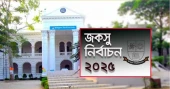
Candidates will not be allowed to enter any polling center other than their own. Even after casting their vote, a candidate will not be permitted to re-enter their designated center, said the Election Commission of the Jagannath University Central Students’ Union (JnUCSU) and Hall Students’ Union Election 2025.
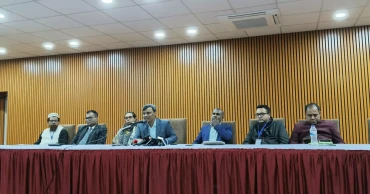
The information was disclosed on Monday night at a press conference organized by the Election Commission at Jagannath University, where Chief Election Commissioner Professor Dr. Mostafa Hasan briefed the media.
He further said that all preparations for conducting the election have been completed. With the cooperation of all concerned, he expressed optimism that a transparent, orderly, acceptable, and historic election would be held.
According to him, voting will take place uninterrupted from 8:30 a.m. to 3:00 p.m. on Tuesday. However, voters who enter the polling center and its perimeter before 3:00 p.m. will be allowed to cast their votes.
Read more: Long-cherished JnUCSU Election on Tuesday
As per Election Commission data, a total of 16,645 voters will exercise their franchise at 38 polling centers in the JnUCSU election. In addition, 1,242 voters will vote at a single polling center for the hall students’ union election.
The Chief Election Commissioner said that votes will be counted separately at each center after polling ends. The respective returning officer will announce the results immediately at the center. Later, after consolidating results from all centers, the Election Commission will announce the final results. A total of six machines will be used for vote counting.
To ensure transparency and security, a three-tier security system will be enforced across the campus, he said. The entire university campus and all polling centers have been brought under CCTV surveillance. Moreover, live broadcasting of vote counting will be arranged through three digital boards across the campus and surrounding areas, as well as on the social media platform Facebook.
He also stated that voters whose ID cards have expired will be able to vote by accessing the voter list and collecting their voter ID via QR code scan on mobile phones or as a printed copy. The voter list will be photo-based.
The Election Commission further informed that indelible ink will be used at polling centers. Ballot papers will be supplied department-wise in the morning. Students will vote only in the department where they are registered as voters. The ballot papers will contain special security codes.
Read more: Election season kicks off in Bangladesh; 2,582 candidates submitted nomination papers
It was also announced at the press conference that a ‘mock test’ was completed on Monday ahead of the election, in which around 30 candidates participated. No extra ballots have been printed. After casting their votes, voters must leave the campus. Only candidates and valid cardholders will be allowed to remain on campus.
Those present at the press conference included Election Commissioners Professor Dr. Md. Shahidul Islam, Professor Dr. Kaniz Fatema Kakoli, Professor Dr. Zulfikar Mahmud, and Dr. Md. Anisur Rahman. Also present were Director of the ICT Cell Professor Dr. Mohammad Nasir Uddin and PRIP Director Dr. Muhammad Anwarus Salam.
7 months ago
Long-cherished JnUCSU Election on Tuesday
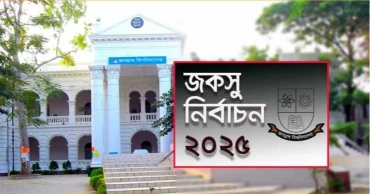
The Jagannath University Central Students’ Union (JnUCSU) and Hall Students’ Union elections will be held on Tuesday (December 30, 2025).
Voting will start at 9:00 am and continue until 3:00 pm without any break.
A total of 16,500 students are expected to exercise their voting rights at 178 booths across 39 polling centers.
Ballot papers will be distributed to the polling centers in the morning before voting begins. Votes will be counted using digital OMR machines. To ensure security, CCTV cameras have been installed at every polling center.
Read more: Candidates not allowed to enter any center other than their own: JnUCSU Election Commission
Ahead of the election, the university administration has strengthened security in and around the Jagannath University campus. Alongside law enforcement personnel, intelligence officers have also been seen on duty. A police control room has been set up at Victoria Park in front of the university.
Meanwhile, to ensure campus security, a separate notice issued by the Registrar’s Office instructed all students to vacate the campus by 3:30 pm on Monday. It was also announced that all buses operating under the university transport pool would depart 15 minutes earlier than scheduled. Officers and teachers assigned election duties have been directed to perform their responsibilities in accordance with the Election Commission’s guidelines.
Faisal Ahmed, officer-in-charge (OC) of Kotwali Police Station, said there is no security concerns surrounding the elections.
“We have taken all necessary preparations. Special forces are on standby around the campus, and CCTV cameras have been installed at various important points for round-the-clock surveillance,” he added.
Election Commissioner Professor Dr. Zulfikar Mahmud said that all preparations related to the election have been completed.
“Responsibilities have been assigned to teachers and officials for election duties. We hope the election will be held smoothly with everyone’s participation,” he added.
Jagannath University Vice-Chancellor Professor Dr. Md. Rezaul Karim said, “The JnUCSU election will definitely be held. The ministry has sought some information from me regarding security matters. Overall, I am optimistic that the election will be conducted in a very fair and festive environment.”
Jatiyatabadi Chhatra Dal-backed VP candidate AKM Rakib said, “Tomorrow (Tuesday) is our long-cherished election, for which we have been continuing movements and struggles for a long time. We have stood by the students in the past and will continue to do so in the future. We hope for a good election in a festive atmosphere.”
Islami Chhatra Shibir-backed VP candidate Riazul Islam said, “Students are spontaneously participating in our campaign. Just as talented students in other campuses across Bangladesh have placed their trust in Shibir, we are hopeful that the same trust will be reflected in the JnUCSU election.”
Chhatra Shakti-backed Oikjoboddho Jobiyan panel’s VP candidate Kishor Samya said, “The Election Commission is merely a nominal commission. This commission could not resolve even a single violation of the code of conduct. We call upon students to vote against oppression.”
JnUCSU election: Students asked to vacate campus by 3:30pm
According to the list published on the website, there are 4 candidates for the Liberation War and Democracy position, 9 for Education and Research, 5 for Science and Technology Editor, 5 for Health and Environment Editor, 4 for Law and Human Rights Editor, 8 for International Affairs Editor, 7 for Literature and Culture Editor, 7 for Sports Editor, 4 for Transport Editor, 10 for Social Service and Student Welfare Editor, 7 for Library and Seminar Editor, and 57 candidates contesting 7 general member positions.
In the women’s hall, for 13 positions, the preliminary list includes 3 candidates for Vice-President (VP), 3 for General Secretary (GS), 2 for Assistant General Secretary (AGS), 2 for Literature and Publication Editor, 4 for Culture Editor, 2 for Library Editor, 2 for Sports Editor, 3 for Social Service and Student Welfare Editor, 4 for Health and Environment Editor, and 8 candidates contesting 4 general member positions in the hall parliament.
7 months ago
Japanese delegation visits Sydney International School
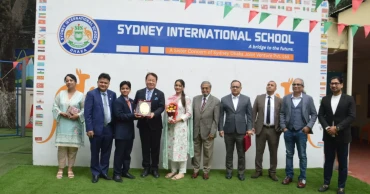
A delegation from Japan recently visited Sydney International School (SIS) and discussed educational development, international collaboration, and future expansion initiatives.
The chairman and directors of the school welcomed the guests with flower bouquets and a school-branded crest, said a press release.
During the visit, SIS Chairman Mynul Mridha briefed the delegation on the institution’s academic philosophy, growth, and long-term vision. He said the school is committed to providing quality international education and outlined plans to establish a new campus in Uttara to expand access to modern learning facilities.
The visiting team included Motoyuki Odachi, chief operating officer of Cipher Core Co Ltd and former vice minister of finance of Japan; Apple Mahmud, chairman of Apple Corporation Ltd (Japan); Takatoshi Nakamura; Md Mehedul Islam; and architect Ahmed Imtiaz Khan, partner at 4 Walls Inside Outside.
Both sides exchanged views on educational infrastructure, international best practices, and the potential for collaboration in developing future-ready campuses.
Participants expressed optimism about strengthening education-focused partnerships between Bangladesh and Japan.
SIS officials said such international engagements help broaden students’ global perspectives and support sustainable institutional growth.
7 months ago