Education
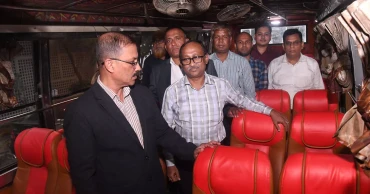
DU students to enjoy shuttle bus service for first time
For the first time, Dhaka University (DU) is going to launch a shuttle bus service for its students.
The service, which will operate on a trial basis for three months, is expected to be inaugurated by DU Vice-Chancellor, Professor Dr. Niaz Ahmad Khan, in the last week of this month.
Prof Dr. Mohammad Jahangir Alam Chowdhury, treasurer at the university, inspected the buses designated for the shuttle service on Thursday (November 21).
The service will operate with three non-AC minibuses, running in circular routes across the campus from 7:00am to 9:00pm.
1 year ago

Application for JnU admission begins Dec 1
Applications for admission to Bachelor’s (Hons) and BBA first-year programmes at Jagannath University (JnU) for the academic year 2024–2025 will open on December 1.
Prospective students can apply online from 12:00 PM on December 1 until 11:59 PM on December 15, according to a notification signed by the university's Acting Registrar, Professor Dr. Md. Gias Uddin, on Thursday.
According to the notification, students who passed the SSC or equivalent examinations in 2021 or 2022 and the HSC or equivalent examinations in 2024 will be eligible to apply, provided they meet the specific admission criteria for the various units of JnU.
The notification further stated that applicants must pay an initial application fee of Tk 100 during the online application process. From the pool of applicants, the top 40,000 candidates will be shortlisted to participate in the admission tests.
Shortlisted candidates will need to pay Tk 700 to download their admit cards for the exams, the notice added.
Admission Test Schedule
The admission tests for the 2024–2025 academic year will be held as follows:
Faculty of Fine Arts (E Unit): Friday, January 31, 2025
Faculty of Social Sciences (D Unit): Friday, February 14, 2025
Faculty of Arts (B Unit): Saturday, February 15, 2025
Faculty of Science and Life and Earth Sciences (A Unit): Saturday, February 22, 2025
Faculty of Business Studies (C Unit): Friday, February 28, 2025
Each unit's admission test will be conducted in three shifts on the respective day.
Further Information
Details regarding the application process, eligibility requirements, application fees, and admission test participation fees are available in the admission guide on the Jagannath University website: https://admission.jnu.ac.bd.
1 year ago

JnU to conduct independent admission tests, exits integrated cluster system
Jagannath University will begin its independent admission tests for the 2024-25 academic year from January 31, following its decision to exit the Integrated Cluster Admission system.
The university will administer a 100-mark exam, with 48 marks allocated to written questions, 24 marks for multiple-choice questions, and 28 marks based on the results of the SSC and HSC exams.
Professor Dr. Sheikh Gias Uddin Ahmed, acting registrar of the university, shared the details of the upcoming tests on Wednesday.
According to him, the admission tests will start with Unit 'E' (Faculty of Fine Arts) on January 31. The schedule for other units is as follows:
February 14: Unit 'D' (Faculty of Social Sciences)February 15: Unit 'B' (Faculty of Arts)February 21: Unit 'A' (Faculty of Science)February 28: Unit 'C' (Faculty of Business Studies)
For the Faculty of Science and Business Studies, the exam will cover HSC syllabus related to the respective departments. For the Faculty of Arts, the questions will focus on Bangla, English, and General Knowledge in both written and multiple-choice formats.
1 year ago
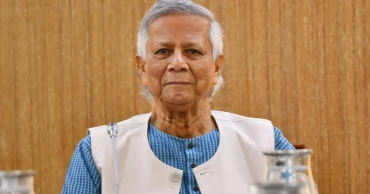
Should reform education system to create generation of entrepreneurs: Prof Yunus
Highlighting the importance of education system's reform, Chief Adviser Prof Muhammad Yunus on Wednesday said the country's education system must foster creativity to create a generation of entrepreneurs in the country.
"We should reform the education system in a way that it creates a generation of entrepreneurs. We need education, which helps students become creative people. Our young people must fulfil their creative potentials," the Chief Adviser said when he visited the Education Ministry at the Secretariat.
He said humans are born entrepreneurs. "Yet, our education system creates job seekers. It is a flawed education system."
The Chief Adviser chaired his first Cabinet meeting at the Secretariat and later visited the Education Ministry.
Prof Yunus said Bangladesh should not create an education system that emphasises only test scores.
"The perception that test score is everything must go," he said.
The Chief Adviser also called for narrowing generational gaps in Bangladeshi society, saying the country must understand the language of the new generation—their aspirations and their thought process.
"We must understand the language and the thought process of the youth. We need to know how the older generation can share their experience with the younger generation," he said.
"The distance between young and old generations gets bigger; it will create troubles. We must minimise the idea gaps between generations," the chief adviser said.," the chief adviser said.
He also stressed the need for fostering family values in our national curricula.
Education Adviser Wahiduddin Mahmud and Education Secretary Siddiq Jobaer were present during the Chief Adviser's meeting with senior education ministry officials.
1 year ago
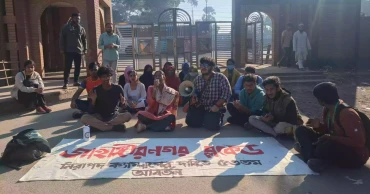
JU students stage blockade over Afsana's death
A section of students of Jahangirnagar University on Wednesday locked the university's main gate and staged a sit-in there to protest the death of Afsana Karim Rachi, a first-year student, in a campus accident.
Afsana, a marketing department student, died on Tuesday after being hit by a battery-run rickshaw near the arts building of the campus.
Residents protest govt decision on Saint Martin’s tourism
The protest is being held by students of 53 batch and the protesters vowed to continue it until the authorities accept their 8-point demands, including punishment to the culprit and ensuring safety of the students on the campus.
No vehicle is being allowed to move in and out of the campus during the protest.
1 year ago

10 injured in clash between rival students at Rajshahi University
At least 10 people have been injured after students of Law Department and Marketing Department of Rajshahi University (RU) clashed over sledging during an interdepartmental football match.
The violence occurred on Monday evening, authorities said.
The injured were Mahfuzur Rahman, a law teacher and nine students of two departments, including Tanjil and Tofail.
Dr. Saeeda Anju, Chairperson of the Law Department, said on Tuesday , "I am currently at Rajshahi Medical College with the injured teacher and students. Several of them, including our teacher, sustained serious injuries."
Special committee formed to review political activities on DU campus
Abu Saleh Shoaib, RU correspondent of Bonik Barta, was beaten up while covering the clash. He alleged that the students of the marketing department snatched his phone, forced him to delete the video and tore his ID card. Several other journalists were attacked.
Later, Police have been deployed on the campus to calm the situation.
Eyewitnesses said the clash erupted on Monday evening during a Round-16 match of the university's interdepartmental football tournament, in which the Marketing Department defeated the Law Department by one goal. During the game, spectators from both sides exchanged chants, accusing each other of being "frauds," which led to verbal altercations.
After the game, the Law Department team left the stadium first, followed by the Marketing Department.
However, the dispute reignited at the stadium gate between some students from both sides, escalating into stone-throwing and chasing with sticks.
1 year ago
Dhaka University lifts ban on Pakistani students
Dhaka University (DU) has officially lifted its ban on admitting students from Pakistan, marking a significant policy shift aimed at fostering academic cooperation between the two nations.
The decision was made during a syndicate meeting chaired by Vice-Chancellor Professor Niaz Ahmad Khan on November 13, said Pro-Vice-Chancellor (Admin) Prof Sayma Haque Bidisha.
Under the revised policy, Pakistani students will be allowed to enroll at Dhaka University, and Bangladeshi students will also have the opportunity to pursue higher education in Pakistan.
University officials expect that the move will strengthen collaboration in education, culture and other areas of mutual interest.
Explaining the decision, Prof Bidisha said that while ties with Pakistan had been severed in the past, the university recognised its responsibility as an academic institution to facilitate opportunities for students.
“At one point, ties with Pakistan were cut, but Dhaka University is an academic institution. Many of our students need to visit Pakistan for scholarships or academic conferences. We resolved this issue through discussion to restore normal relations,” she said.
Chhatra Dal activists demonstrate at Dhaka University
The decision was made purely from an academic perspective and did not involve any discussions on sensitive political matters, such as Pakistan’s denial of the 1971 genocide. “This is about academic cooperation, not political dialogue,” Bidisha added.
The ban had been in place since December 2015, when an emergency syndicate meeting led by then-Vice-Chancellor Prof AAMS Arefin Siddique imposed the restriction.
The move followed Pakistan’s refusal to acknowledge the genocide and atrocities committed during Bangladesh’s Liberation War in 1971.
At the time, Prof Arefin Siddique said, “As long as they do not acknowledge the genocide and atrocities, this institution will not maintain any relationship with them. Our students will not go to Pakistan for higher education, nor will we admit any of their students.”
The recent policy shift comes after a significant diplomatic gesture in September 2024, when Pakistan’s High Commissioner to Bangladesh, Syed Ahmed Maroof, met DU Vice-Chancellor Prof Niaz Ahmad Chowdhury. It was the first such visit in nearly a decade and is seen as paving the way for renewed academic ties.
The syndicate meeting, which approved the decision, was attended by Pro-Vice-Chancellor (Education) Prof Mamun Ahmed and other members of the university administration.
1 year ago
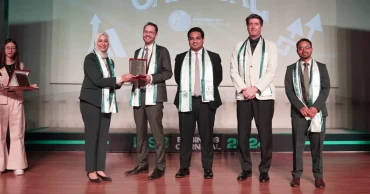
Britain keen to invest in Bangladesh’s youth education: UK Deputy High Commissioner
James Goldman, the British Deputy High Commissioner and British Development Director in Bangladesh, said on Friday that the British government is eager to invest further in the education of young people in Bangladesh.
He made the remarks at the opening of the Second IHSB Inter-School Business Carnival, which is being held at the International Hope School Bangladesh (IHSB) in Uttara, Dhaka, from November 15 to 17.
The carnival, organised by the IHSB Business Club and supported by OkoTex, promotes business and entrepreneurship among students.
Goldman said, "The British government is investing in education in Bangladesh. Yesterday, I visited a school for underprivileged children funded by the British government. Today, I am here at the IHSB Business Carnival, and we are keen to invest further in the education of young people. It’s great to see Sterling Education here. Partnerships like this between the UK and Bangladesh add value and foster collaboration."
The event features over 600 students from 50 prominent schools in Dhaka. Timothy Donald Fisher, CEO of Sterling Education, who also attended the event, emphasised Sterling Education’s commitment to supporting education in Bangladesh and creating opportunities for teachers and students. He added that IHSB’s initiatives, such as the Business Carnival, Bangla Olympiad, and STEM Fest, aim to develop entrepreneurial and self-reliant students who contribute to the nation’s growth.
The carnival includes three competitions: "Friedman’s Fallacy," where students address economic issues; "Pitch Perfect," where they present business plans; and "Marketing Mania," which tests business skills. Biman Bangladesh Airlines will reward the best business idea with a special gift.
In addition to the student competitions, there will be an exhibition and fair featuring products from 20 top business groups. The fair, open to the public from 9:30 AM to 4:30 PM on Friday and Saturday, will offer business advice and showcase student-run stalls with food and other items.
The closing ceremony on November 17 will feature a welcome address by the school principal, Roksana Zarin, and speeches from special guests, including Dilruba Tonu, Managing Director of Hi-Tech Park, and Golam Samdani Don, a corporate entrepreneur and trainer.
The event will end with a cultural performance by the band Shunno.
1 year ago

Special committee formed to review political activities on DU campus
A special committee has been established to provide recommendations and guidance to the university administration on the nature and extent of political activities at Dhaka University.
This initiative is in response to a directive from the university’s Vice-Chancellor, Professor Dr Niaz Ahmad Khan, said Mohammad Rafiqul Islam, acting director of DU’s Public Relations Office.
The committee will be chaired by retired Supreme Court Appellate Division Justice Md Abdul Matin. Its members include Dr. Z.N. Tahmida Begum, former Chairman of the Bangladesh Public Service Commission and retired Professor of Botany at Dhaka University; Dr. Abul Kasem Fazlul Haque, Chairman of the Bangla Academy and retired Professor of Bengali at Dhaka University; and Dr. S.M. Shamim Reza, Professor of Mass Communication and Journalism at Dhaka University.
The committee also has the authority to co-opt up to three additional members if necessary.
1 year ago
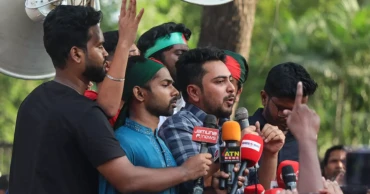
Adviser Nahid promises to fulfill demands of JnU students within 3 days
Nahid Islam, adviser to the Ministry of Posts, Telecommunications, and Information Technology has assured to fulfill the five-point demand of Jagannath University students within the next three days.
"All the demands of the students are justified. I agree with them,” he said while addressing the students after they besieged the Secretariat on Monday.
JnU students besiege Secretariat
"The students of Jagannath University endure a lot of hardship. They don’t have a hall. Their demand for a second campus is completely justified. I fully agree with the students' demands. We cannot provide a hall within three days, but we can hand over the second campus project to the Army. However, for that, we will have to have meetings. Within three days, we will work to transfer the new campus project to the Army,” said Nahid.
Regarding an incident involving a secretary "insulting" the students at the Secretariat, he said that the secretary and others involved will apologise.
1 year ago