education
Over 12.70 lakh students to sit for HSC, equivalent exams from Thursday
The Higher Secondary Certificate (HSC) and equivalent examinations will begin simultaneously across the country on Thursday, with over 12.70 lakh candidates set to appear under 11 education boards.
Secondary and Higher Education Division Secretary Abdul Khaleque revealed this information at a press briefing held the Secretariat on Wednesday.
Education Minister A N M Ehsanul Hoque Milon and the Prime Minister's Adviser on Education Mahdi Amin were also present.
Students from 9,439 educational institutions will sit for the examinations at 2,697 centres under the country's nine general education boards, the Bangladesh Madrasa Education Board and the Bangladesh Technical Education Board, said Khaleque.
A total of 77 subjects will be covered over 21 examination days.
Regular classes will continue at educational institutions on days when no examinations are scheduled, he said.
Of the total candidates, 6,21,969 are male and 648,614 are female under the nine general education boards with female candidates outnumbering males by 26,645.
The Education Minister said all nine general education boards will conduct examinations using a uniform set of question papers this year.
CCTV cameras have been installed at all examination centres, while a central monitoring cell has been set up at the Ministry of Education to oversee examination activities in real time across the country, he said.
Police officers deployed at examination centres will also be equipped with body-worn cameras to help prevent any untoward incidents, he added.
Abdul Khaleque said exam centres previously identified as vulnerable to question paper leaks or cheating have been cancelled.
However, some centres in haor areas, the Chattogram Hill Tracts and remote char regions have been retained considering the transportation difficulties faced by students.
Candidates belonging to the Seventh-day Adventist community will be allowed to take Saturday examinations after sunset under special arrangements, he said.
A total of 1,069,714 candidates will sit for the examinations under the nine general education boards this year, an increase of 14,316 from last year.
The number of participating institutions has increased by 77, while the number of examination centres has risen by 21.
Bangladesh Madrasa Education Board has 92,905 candidates this year, up by 6,803 from last year. The number of institutions under the board has increased by 23 and examination centres by two.
Meanwhile, Bangladesh Technical Education Board has 107,964 candidates, 1,647 fewer than last year.
The number of examination centres under the board has also declined by 123 to 610.
3 months ago
Bill to amend the legislation under which BMU operates presented in JS
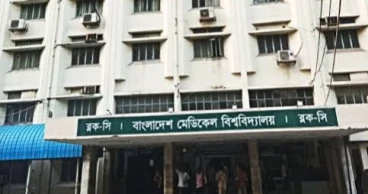
A bill seeking to amend the Bangladesh Medical University Act, 1998 was placed in Parliament on Sunday to facilitate the operation of the university's Super Specialised Hospital and empower the institution to establish and invest in companies to expand medical education, research and healthcare services.
Health Minister Sardar Md Sakhawat Husain placed the Bangladesh Medical University (2nd Amendment) Bill, 2026, which was subsequently sent to the relevant parliamentary scrutiny committee for detailed examination. The committee has been asked to submit its report within the next three working days.
According to the statement of objects and reasons of the bill, Bangladesh Medical University was established under the Bangladesh Medical University Act, 1998 to promote higher education, research and advanced healthcare services in the country.
A Super Specialised Hospital was later established under the university, but despite the completion of its construction, it could not be fully commissioned due to the absence of adequate doctors and supporting staff as well as the lack of a clear operational framework.
To make the hospital functional, the university's Syndicate decided to operate it under the Companies Act, 1994, making it necessary to amend the existing law.
The proposed amendment also seeks to authorise the university to establish profit-making or non-profit companies or organisations and to acquire, hold and transfer shares in such entities for expanding its medical education, healthcare and research activities.
The bill aims to provide the university with explicit legal authority to establish and manage such companies while clarifying the Syndicate's powers, the scope of regulations governing these entities, provisions for incorporating income generated by them into the university's funds and conditions for investment from university funds.
According to the bill, establishing internationally standard specialised hospitals under this framework would enable the university to engage renowned local and foreign physicians, teachers and researchers on a contractual basis, facilitating the transfer of modern medical technology, knowledge and expertise.
The bill said that the government believes the initiative would strengthen residency, fellowship and other advanced medical training programmes, provide students with improved clinical exposure and help produce internationally competent doctors, researchers and healthcare professionals.
The bill also says that income generated from these companies could be reinvested in the university's healthcare, education and research activities, contributing to its overall academic excellence.
3 months ago
Milon places bill to clean up exams, targeting question leaks and other offences
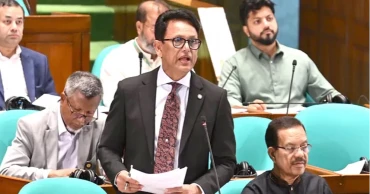
Education Minister Dr A N M Ehsanul Hoque Milon on Sunday placed the The Public Examinations (Offences) (Amendment) Bill, 2026 in Parliament, aiming to strengthen legal measures against question paper leaks, cheating, fake certificates and technology-driven examination offences.
The bill was subsequently sent to the relevant parliamentary scrutiny committee for detailed examination, with the committee asked to submit its report within the next three working days.
According to the objective of the Bill placed before the House, the existing The Public Examinations (Offences) Act, 1980 was enacted about 45 years ago to prevent malpractice in public examinations, including cheating, question leaks, fabrication of certificates and other irregularities.
However, the Bill observed that the widespread use of technology and the growing trend of committing examination-related crimes through digital means have rendered several provisions of the existing law outdated.
The proposed amendment seeks to ensure a fair and malpractice-free examination environment by bringing offences committed through digital systems and online platforms within the legal framework.
The draft law received policy approval from the Cabinet on April 2, 2026. Following Cabinet directives, the draft underwent several rounds of revision, vetting and further amendments by the Legislative and Parliamentary Affairs Division and the Cabinet Division before receiving final Cabinet approval on June 18.
One of the key features of the proposed legislation is the inclusion and definition of the term “Digital Manipulation” to cover unauthorised access to examination databases through cybercrime, as well as any form of digital tampering.
The bill proposes a maximum punishment of five years’ imprisonment and fines for those found guilty of digital manipulation.
It also provides for stricter penalties and financial sanctions against individuals or groups involved in organised examination fraud or the formation of criminal networks to facilitate such offences.
The government said the amendment has become urgently necessary to address emerging challenges in safeguarding the integrity of public examinations in the digital age.
3 months ago
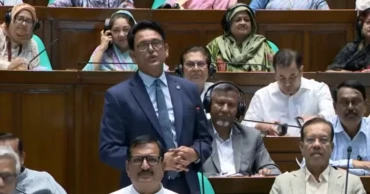
Technical , vocational education to expand from Class VI: Milon
Education Minister A N M Ehsanul Hoque Milon on Sunday said the government has allocated the highest-ever budget for the education sector, amounting to 2 percent of the country's GDP, while unveiling an ambitious package of reforms ranging from multimedia classrooms and free Wi-Fi to unique education IDs and nationwide school nutrition programmes.
Taking part in the budget discussion in Parliament, Milon said the Prime Minister has attached the highest priority to education and allocated Tk 136,000 crore for the sector in the proposed budget.
He claimed that during the previous government's tenure, education received only 1.39 percent of GDP, alleging that the figure was misleading as it included allocations for the ICT Ministry and the Rooppur Nuclear Power Plant.
Emphasising the need to develop skilled human resources, the minister said technical and vocational education would receive the highest priority with plans to expand technical, professional education and training from Class VI.
The minister said part of the education allocation is distributed among different ministries, including Tk 107.24 crore for the Ministry of Chittagong Hill Tracts Affairs, adding that the funds should have helped address shortages of schools in remote areas.
Highlighting the government's education roadmap, Milon said initiatives have been undertaken to establish more multimedia classrooms, provide teacher training, introduce free Wi-Fi in educational institutions, launch a unique education ID for every student and encourage environment-friendly activities among learners.
He said teachers would be provided with tablet computers to facilitate multimedia teaching, prepare lesson plans and maintain student records digitally.
The minister said the government's objective is to promote "learning with happiness" by reducing students' dependence on textbooks and notebooks alone, adding that teachers are being trained to implement the programme.
Milon also announced plans to establish another 20,000 multimedia classrooms at secondary and higher secondary institutions in phases.
He said the government has initiated Geographic Information System (GIS) mapping of 500 educational institutions to help reduce social and geographical disparities and plans to provide free Wi-Fi at 15,000 educational institutions.
The minister said a unique education ID would be introduced for every student, noting that such a system would have been unnecessary if Bangladesh had a comprehensive national registration system from birth similar to the social security numbering systems used in many developed countries.
Referring to the Prime Minister's "One Child, One Tree" initiative, he said every student across the country would be encouraged to plant a tree.
Milon said the government is also promoting innovation and entrepreneurship among students through startup initiatives, alongside strengthening co-curricular activities such as debate competitions, Olympiads, Scouts, BNCC and Girl Guides.
He said preparations are underway to increase the number of BNCC cadets to 24,000 nationwide from next year.
He also highlighted government plans to provide primary school students with uniforms, shoes, bags and midday meals nationwide.
The minister said the inspiration for the initiative came from the Prime Minister's observations of schoolchildren's welfare during a visit to London.
He expressed hope that the midday meal programme would be rolled out across Bangladesh in the next fiscal year to improve children's nutrition.
Milon also raised concerns over salary delays for madrasa teachers, saying around 17,000 teachers recruited through the Non-Government Teachers' Registration and Certification Authority (NTRCA) had not received salaries for May and June because the previous government had not arranged the required funds.
He said the monthly salary requirement for the teachers is Tk 501 crore, adding that the Finance Minister had already arranged Tk 100 crore and assured that the remaining funds would be released in July.
The minister further said teachers who retired from non-government educational institutions since 2022 have yet to receive welfare trust benefits and retirement allowances, thanking the Finance Minister for allocating funds in the budget to clear the outstanding payments.
3 months ago
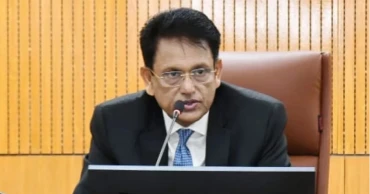
Govt aims to clear teachers' retirement benefit backlog in six months: Minister
Education Minister Dr ANM Ehsanul Hoque Milon on Sunday said the government is committed to ensuring the prompt payment of retirement and welfare benefits to retired teachers and employees of private educational institutions, aiming to clear the existing backlog within six months once the required funds are allocated.
Responding to a question from Bangladesh Jamaat-e-Islami MP Md Abdul Wares (Gaibandha-5) in Parliament, the minister said around 67,000 applications for retirement benefits are currently pending with the Non-Government Teacher Employee Retirement Benefits Board.
He said each retired teacher or employee receives an average retirement benefit of about Tk 13 lakh.
According to Milon, settling all pending applications requires approximately Tk 8,710 crore, while the retirement fund currently holds only around Tk 1,300 crore, leaving a shortfall of nearly Tk 7,410 crore.
He also informed the House that about 45,000 applications have remained pending with the Non-Government Teachers and Employee Welfare Trust since August 2023 to June 21, 2026.
The minister said clearing those applications will require a one-off allocation of around Tk 3,150 crore.
He said the government has already initiated measures to address the financial crisis facing both the retirement benefits board and the welfare trust by arranging the necessary budgetary allocation.
Milon said several administrative reforms have also been undertaken to speed up the settlement process, including reactivating the software system, increasing manpower, expanding online services and introducing direct payments to teachers' and employees' bank accounts through the iBAS++ financial management system.
"If the necessary funds are allocated, it will be possible to dispose of all currently pending retirement benefit applications within six months," he told Parliament.
The minister added that the government's long-term objective is to ensure that retired teachers and employees of private schools, colleges and madrasahs receive their retirement and welfare benefits within three to six months after retirement.
In his question, Abdul Wares highlighted the prolonged suffering of retired teachers of private schools, colleges and madrasahs who have been waiting for years to receive their retirement benefits, and asked whether the government will ensure payments within three to six months of retirement.
4 months ago

New executive committee takes charge of LAABRACU
The newly elected Executive Committee of the Law Alumni Association of BRAC University (LAABRACU) for the 2026–2028 term has officially begun its tenure.
The formal handover ceremony was held at the BRAC University Alumni Lounge, bringing together members of the Association, while current students of the School of Law attended the event as observers.
The programme began with welcome remarks from the Association’s Advisors, said a handout.
They highlighted the importance of strengthening alumni engagement, fostering professional collaboration, and building meaningful connections between alumni and future generations of law graduates.
The election proceedings were conducted by Chief Election Commissioner Advocate Shah Maksud Noor, who addressed the audience and formally announced the election results. The introduction of the newly elected committee members was met with enthusiastic applause, creating a vibrant and celebratory atmosphere.
According to the election results, the 19-member Executive Committee for the 2026–2028 term is led by Meher Niger as President, Tafsir Ahmed Khan as General Secretary, Yaser Md. Adnan as Vice President, Ali Arman Khan Apon as Assistant General Secretary, and Tahmid Bin Rahman as Treasurer.
The following members have been entrusted with key responsibilities within the Committee: Tarannuma Rahman Lira as Supreme Court Secretary, Irfan Bashir Parag as Judge Court Secretary, Mohammad Abdul Mahir as Organizing Secretary, Ramisa Anjum Rusmi as Communications Secretary, Rayhan Ahmed as Academic and Publications Secretary, Sheikh Rasiful Islam as Sports and Cultural Secretary, and Mehrab Hossain Ifty as Social Welfare Secretary.
The elected Executive Members are Md. Asif Reza, Tanzin Habib Keya, Priyanshu Paul Chowdhury, Nafis Al Sadik, Sounak Sayantan Kingshuk, Rafa Anan, and Md. Khalid Tanim.
Following the announcement of the results, the newly elected President and General Secretary expressed their sincere gratitude to the members for the confidence and trust placed in them.
They reaffirmed their commitment to making the Association more dynamic, inclusive, and impactful while creating greater opportunities for alumni engagement, professional networking, and collaboration.
They also conveyed their heartfelt appreciation to the outgoing Executive Committee for its dedication, leadership, and valuable contributions to the growth of the Association. Acknowledging the foundation built by their predecessors, they expressed their hope for continued guidance and support in advancing the Association’s mission.
The newly elected Executive Committee pledged to work collectively to strengthen alumni relations, expand professional and academic networking opportunities, foster closer engagement between students and alumni, and further establish LAABRACU as a vibrant platform for connection, collaboration, and service within the legal community.
4 months ago

BUET to be developed as a world-class research hub: Mahdi Amin
Adviser to the Prime Minister and Spokesperson of the Prime Minister's Office Mahdi Amin on Saturday said the government is committed to transforming the Bangladesh University of Engineering and Technology (BUET) into a world-class centre for research and innovation.
Addressing the orientation programme for students of the 2025-26 academic session at the BUET auditorium, he said the university has long been recognised as a centre of excellence for creativity, talent and intellectual leadership, while also making significant contributions to Bangladesh's independence, sovereignty and the July Mass Uprising.
Referring to BUET's academic reputation, Mahdi Amin said its faculty members have played a crucial role in infrastructure planning, design and development, and its graduates are studying and teaching at some of the world's leading universities.
"By gaining admission to BUET, you have become part of a rich legacy closely linked to Bangladesh's history and recognised by many prestigious institutions around the world," he said.
He said the government's goal is to prepare students to become future leaders by creating opportunities for employment and entrepreneurship.
Urging students to contribute to the country's future, Mahdi Amin said BUET has a major responsibility in shaping the next generation of national leadership.
"As the country's brightest and most creative students, you are naturally expected to lead tomorrow's Bangladesh," he said.
Assuring the students of the government's continued support, he said the education minister would discuss with Prime Minister Tarique Rahman ways to increase research funding for BUET.
"The government will provide all necessary support and cooperation to help you build the Bangladesh of tomorrow," he added.
The adviser also paid tribute to martyred BUET student Abrar Fahad, saying his memory should inspire students to uphold the values of independence, sovereignty and responsible citizenship while ensuring an environment where talent can flourish at BUET and other educational institutions.
BUET Vice-Chancellor (VC) Prof Dr Eqramul Haque chaired the programme.
Education Minister Dr. ANM Ehsanul Haque Milon, Pro-Vice Chancellor Prof Dr. Abdul Hasib Chowdhury and Director of the Directorate of Student Welfare Prof Dr. AKM Masud also addressed the event.
4 months ago
JU proposes Tk 348.70cr budget for FY26-27
Jahangirnagar University (JU) has placed a proposed revenue budget of Tk348.70 crore for the 2026-27 fiscal year, keeping no allocation for research and innovation from its own revenue fund.
The university has also placed the revised budget of Tk348.25 crore for FY2025-26 for approval.
JU Treasurer Prof M Abdur Rob presented the proposed budget at the university's 43rd annual Senate session on Saturday, chaired by Vice-Chancellor Prof Mohammad Kamrul Ahsan. The budget is awaiting approval by the Senate.
According to the proposed budget, the largest allocation- Tk201.43 crore, or 57.77 percent of the total outlay has been earmarked for salaries and allowances of teachers, officers and employees.
The second-largest allocation of Tk78.03 crore (22.38 percent) has been set aside for general goods and services, including administrative expenditures.
The university has proposed Tk37.14 crore (10.65 percent) for pensions and retirement benefits, down from Tk44.24 crore in the revised budget for FY2025-26, marking a reduction of about Tk7.10 crore.
One of the most notable features of the proposed budget is the absence of any allocation for research and innovation from the university's own revenue budget. The allocation for the sector has been shown as zero.
However, university sources said research activities would continue with funding to be provided directly by the University Grants Commission (UGC).
The budget also proposes Tk11.37 crore (3.26 percent) for machinery and equipment, Tk9.47 crore (2.72 percent) for repair and maintenance of infrastructure, Tk2.82 crore (0.81 percent) for information and communication technology (ICT), Tk2.44 crore (0.70 percent) for vehicle purchases and Tk70 lakh (0.20 percent) for primary healthcare support.
Compared with the revised budget for FY2025-26, the allocation for salaries and allowances has increased by around Tk2.81 crore, while spending on general goods and services has risen by about Tk8.21 crore. The ICT allocation has increased by Tk12 lakh and primary healthcare support has been raised from Tk60 lakh to Tk70 lakh.
The allocation for machinery and equipment has also increased significantly, rising from Tk6.68 crore in the revised budget to Tk11.37 crore in the proposed budget.
An analysis of the proposed budget shows that more than 90 percent of the total allocation has been concentrated in three sectors: salaries and allowances, general administrative expenditure and pensions.
The university allocates less than two percent of its own revenue budget to research, healthcare and ICT combined, highlighting its limited investment in academic development and research.
The financial report presented at the Senate also disclosed that the university has been running a revenue deficit for years.
By the end of FY2024-25, Jahangirnagar University had accumulated a deficit of nearly Tk 100 crore and leaving it heavily dependent on government grants to implement its annual budget.
4 months ago

Urgent steps to be taken to resolve BUET hall crisis: Education Minister
Education Minister Dr ANM Ehsanul Haque Milon on Saturday said the government will take urgent steps to resolve the accommodation crisis at the Bangladesh University of Engineering and Technology (BUET).
He said a shortage of seats in the university's residential halls is creating difficulties for students and affecting their academic activities.
"If students face accommodation problems, their studies will also suffer. There is a shortage of seats in BUET's residential halls, and we will address these problems," he said.
The minister made the remarks while speaking as the chief guest at the orientation programme for newly admitted students of the 2025-26 academic year at BUET in Dhaka, according to a PID handout.
Describing BUET students as highly talented, Milon said even talented students can sometimes lose their way.
Referring to the killing of BUET student Abrar Fahad, he said it was a tragic incident that no one could forget.
"To preserve his memory, we will request the Prime Minister to establish a residential hall in Abrar Fahad's name," he said.
The minister also said research grants would be increased to improve the quality of research at universities.
He noted that many university laboratories still use outdated equipment and said necessary steps would be taken to modernise research facilities.
The programme was chaired by BUET Vice-Chancellor Prof Dr Eqramul Hoque.
Prime Minister's Education Adviser Dr Mahdi Amin and BUET Pro-Vice-Chancellor Prof Dr Abdul Hasib Chowdhury attended the event as special guests.
4 months ago

State Minister Bobby Hajjaj visits Glenrich Satarkul
State Minister for Primary and Mass Education Bobby Hajjaj on Thursday visited Glenrich International School's Satarkul campus, where he observed the school's progressive, inquiry-based learning environment and praised its academic approach.
During the visit, State Minister Bobby Hajjaj highly appreciated Glenrich International School for the school’s focus on quality education and the students’ holistic development for future readiness.
He interacted with the institution’s leadership team, teachers and students. Guided by Manas Singh, the Chief Executive Officer of STS Group, the Minister toured the school’s campus and visited its learning spaces, facilities and academic environment.
The walkthrough included the pre-primary classroom, play zone, Montessori lab, central courtyard, school library and secondary classrooms. It also included some of the advanced academic hubs, including the Science labs, Art lab, Math lab, Robotics lab and ICT lab, said a media release.
The Minister also toured the creative and athletic zones, including the music rooms (Guitar, Violin, Piano, Vocal), dance room, indoor gym, swimming pool, skating rink and outdoor sports areas designated for football, basketball and cricket practice.
Commenting on the occasion, Manas Singh, CEO, STS Group, said, “We are deeply honoured to host the State Minister at our Satarkul campus. His appreciation reinforces our commitment to delivering a global standard of education and providing state-of-the-art infrastructure that nurtures the diverse talents of our students.”
4 months ago