Local-Business

City Bank's net profit reaches Tk526.69 crore in H1 2026
City Bank recorded a significant surge in profitability for the first half of 2026, posting a consolidated profit after tax of Tk 526.69 crore for the six months ended June 2026, according to a press release issued on Sunday.
The half-yearly net profit marks a substantial growth from Tk 301.11 crore reported in the corresponding period of the previous year.
The bank’s Consolidated Earnings Per Share (EPS) for the half-year ended June 2026 rose to Tk 3.01, up from Tk 1.72 in H1 2025.
The performance figures were disclosed during the bank's digital Earnings Disclosure webcast held on Sunday to present its Q2 2026 financial results. The event drew participation from local and international investors, equity researchers, capital market analysts, and financial sector stakeholders.
Mashrur Arefin, Managing Director and CEO of City Bank, presented the bank's strategic initiatives and future growth plans. Md. Mahbubur Rahman, Additional Managing Director and Chief Financial Officer, delivered a detailed breakdown of the financial metrics.
The management team—including Deputy Managing Director (DMD) and Head of Wholesale Banking Mesbaul Asif Siddiqui, DMD and Head of Internal Control and Compliance AKM Saif Ullah Kowchar, and Chief Risk Officer Mohammad Firoz Alam—addressed questions from global participants during an interactive Q&A session.
1 day ago

Bangladesh Bank cuts repo rate by 50 bps to 9.50% to spur investment, economic recovery
Bangladesh Bank (BB) has reduced its key policy rate (repo rate) by 50 basis points to 9.50 percent from 10 percent, aiming to boost private sector credit flow, spur investment, and accelerate economic recovery and employment generation.
The central bank issued a circular on Sunday (August 2) to the managing directors, chief executive officers, and administrators of all banks and finance companies, confirming that the new rates take effect immediately from August 2, 2026.
The decision was taken at a meeting of the Monetary Policy Committee (MPC) held on July 30, 2026, superseding the earlier policy rate corridor set in February 2026.
Under the re-aligned policy rate corridor, the upper limit—the Standing Lending Facility (SLF) rate—has also been slashed by 50 basis points to 11.0 percent from 11.50 percent.
However, the lower limit of the corridor, the Standing Deposit Facility (SDF) rate, remains unchanged at 7.50 percent.
According to the circular signed by Dr. Mohammad Monirul Islam Sarkar, Director of the Monetary Policy Department (MPD), the downward adjustment in policy rates is intended to facilitate private credit growth and create a more favorable environment for job-creating investments across the country.
1 day ago

Polish fashion giant LPP SA suspends Bangladesh sourcing over $40m payment disputes
Polish fashion retail giant LPP SA, famous for brands like Reserved, Cropp, and Sinsay, has suspended its apparel sourcing from Bangladesh following mounting payment disputes totaling around $40 million with local garment manufacturers.
Industry insiders and leaders from the Bangladesh Garment Manufacturers and Exporters Association (BGMEA) confirmed that the Polish buyer halted fresh orders after local suppliers repeatedly raised allegations of delayed payments, discounts demanded after shipment, and non-settlement of outstanding dues.
According to sources, dozens of Bangladeshi apparel exporters have been suffering from financial strain as LPP SA withheld payments worth approximately $40 million for goods already manufactured or shipped. While some suppliers claim the buyer sought ungrounded price cuts and delayed payments beyond agreed terms, representatives from the buyer side reportedly cited quality discrepancies, delayed deliveries, and global retail headwinds as reasons for the payment delays.
The dispute escalated to a point where the BGMEA intervened to mediate between the affected factory owners and the Polish buyer to resolve the outstanding financial liabilities amicably. However, as talks stalled and tensions grew over unresolved claims, LPP SA decided to temporarily halt its sourcing activities from the Bangladeshi market.
The suspension comes as a significant blow to Bangladesh's ready-made garment (RMG) sector, as LPP SA has been one of the prominent European buyers expanding its footprint rapidly in Central and Eastern Europe and sourcing millions of pieces of apparel from Bangladesh annually.
BGMEA president Mahmud Hasan Khan has expressed concern over the situation, noting that such large-scale payment disputes create operational distress for local factories, affecting cash flow, raw material payments, and worker wage disbursements.
The apex trade body is actively working with trade officials, legal advisors, and the buyer’s representatives to recover the unpaid dues and restore commercial ties, he said.
The Bangladesh Knitwear Manufacturers and Exporters Association (BKMEA) has also taken a firm stance regarding the matter. BKMEA President Mohammad Hatem confirmed receiving the suspension letter from the Polish brand.
"Whether they continue sourcing from Bangladesh is their business," Hatem said. "But if they fail to take steps to settle the outstanding payments owed to Bangladeshi exporters, we will move to have them blacklisted in Bangladesh."
He added that the association would also raise the issue of LPP's alleged non-compliance with the European Union, buyers' forums, and other relevant stakeholders.
1 day ago

NBR offers up to 5% tax rebate for early income tax return filing
The National Board of Revenue (NBR) has announced a tax incentive of up to five percent for individual taxpayers and Hindu Undivided Families (HUFs) who submit their income tax returns between July 1 and September 30, aiming to encourage voluntary tax compliance and timely return filing.
According to an NBR press release issued on Sunday, eligible taxpayers filing their returns within the three-month period will receive a tax rebate equivalent to five percent of the tax payable under Section 173 of the Income Tax Act, 2023, subject to a maximum benefit of Tk 25,000.
The revenue authority said no tax incentive will be available for returns filed between October 1 and December 31.
The NBR also outlined additional tax liabilities for late filers.
Taxpayers submitting returns between January 1 and March 31 will have to pay an additional amount equal to two percent of the tax payable or Tk 3,000, whichever is higher, under Section 173(2) of the Income Tax Act, 2023.
For returns filed between April 1 and June 30, the additional tax will be five percent of the tax payable or Tk 5,000, whichever is higher.
It said the new provision is intended to strengthen the culture of voluntary tax compliance by encouraging taxpayers to submit their returns at the beginning of the filing period, while also making tax administration more efficient and orderly.
The NBR noted that it launched the e-return service for individual taxpayers for the 2026-27 tax year on July 22.
Taxpayers can file their returns and pay taxes online through the NBR’s e-tax platform using bank transfers, debit and credit cards, as well as digital payment services including bKash, Nagad and Rocket.
Upon successful submission with accurate information, taxpayers can instantly obtain an acknowledgement receipt and tax certificate through the online system.
To assist taxpayers facing difficulties with online filing, NBR officials will provide support through the call centre (09643717171) and other electronic channels during office hours on working days.
The revenue authority urged taxpayers to submit their returns by September 30 to avail themselves of the tax rebate, reiterating that no incentive will be granted for returns filed after the deadline.
1 day ago

Shahedul Islam joins BGMEA as new Secretary General
Major General Dr. Md Shahedul Islam (Retd) has officially assumed charge as the new Secretary General of the Bangladesh Garment Manufacturers and Exporters Association (BGMEA), the apex trade body representing the country’s ready-made garment (RMG) sector.
Bringing over 35 years of multifaceted experience spanning military leadership, international diplomacy, and academia, Dr. Islam previously served as the Defence Attaché in Washington, D.C., where he was awarded the prestigious ‘Legion of Merit’ by the United States government.
He holds a PhD and an MPhil from the University of Dhaka, focusing his doctoral research on 'Review and Development of Workers' Skills.' He also earned an MBA from Dhaka University and a Master’s in Management Studies from Osmania University, India. Throughout his distinguished career, he served as a Dean at Bangladesh University of Professionals (BUP), a Treasurer and Professor at the Central University of Science and Technology, and held key positions in UN Peacekeeping Missions.
Welcoming the new Secretary General, the BGMEA leadership expressed optimism that Dr. Islam’s extensive expertise in international diplomacy, strategic innovation, and executive leadership will play a pivotal role in driving continuous growth, enhancing workforce skill sets, and navigating evolving global economic challenges facing the RMG industry.
Expressing his delight at joining the country’s primary export-driving organization, Major General Dr. Md Shahedul Islam (Retd) committed to working closely with the BGMEA Board of Directors and apparel entrepreneurs.
He emphasized his resolve to fortify Bangladesh's position in the global market through product and market diversification, skill development, and strategic navigation of current macroeconomic dynamics.
2 days ago
Multiple intermediaries widen farm-retail price gap, says CPD
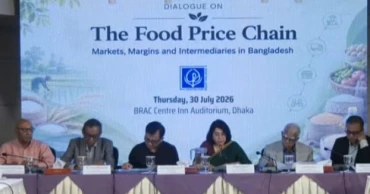
Multiple layers of intermediaries and heavy dependence on urban wholesalers are major factors behind the wide gap between farm gate and retail prices of essential food commodities in Bangladesh, a study by the Centre for Policy Dialogue (CPD) revealed on Thursday.
The findings were presented at a seminar titled ‘The Food Price Chain: Markets, Margins and Intermediaries in Bangladesh,’ held at the BRAC Centre in the capital with CPD Executive Director Fahmida Khatun in the chair.
Foqoruddin Al Kabir, Senior Research Associate of CPD, presented the keynote paper, which traced the supply chains of 10 essential food commodities: rice, lentil, onion, potato, green chilli, brinjal, egg, beef, fish and chicken, from retail markets back to producers, covering 10 markets in Dhaka Division and 820 market agents.
The study found that prices rose between 10 percent and 116 percent from farm gate to retail depending on the commodity, with green chilli recording the steepest escalation at 116 percent, followed by onion at 87 percent and rice at 100 percent.
Commodities with shorter supply chains, such as eggs, chicken, beef and Rui fish, showed comparatively lower price margins, while those with longer chains, involving middlemen (farias, beparis, aratdars), millers and wholesalers before reaching retailers, saw larger price increases.
According to the study, urban wholesalers emerged as the primary procurement source for six of the 10 commodities surveyed: onion, potato, green chilli, brinjal, egg and Rui fish, a concentration that the researchers said could heighten bargaining power imbalances and price volatility, particularly if disruptions, hoarding or collusion occur at that level.
The paper further noted that supply shortages, trader collusion and hoarding were cited most frequently as causes of high prices, while commission payments were evident across market agents for onion, brinjal, green chilli, fish and beef.
In the case of chicken and beef, farmers recorded negative net marketing margins, driven largely by high feed costs, the study said.
Speaking at the event, Fahmida said low-income households in Bangladesh are spending nearly all of their savings just to keep food on the table amid soaring prices of essential items, warning that this is taking a heavy toll on overall living standards.
She said persistent inflation is severely undercutting savings, healthcare access, essential services and the quality of life for lower-income families.
Fahmida described the market dynamics behind rising food prices, spanning production, supply chain bottlenecks and demand, as caught in a vicious cycle, pointing to the steep gap between the prices farmers receive at the farm gate and what consumers ultimately pay at retail.
She said food inflation has been the primary driver of the country's elevated overall inflation over the past four to five years, and cautioned that unless it is brought down to a manageable level, it will cripple the economy and hit ordinary citizens hardest.
The CPD study recommended reducing unnecessary layers between farmers and consumers, increasing competition in wholesale markets, expanding market choices for farmers and retailers through cooperatives and direct linkages, and improving transparency of prices and market information.
It also called for stronger monitoring against collusion and hoarding, investment in storage and cold-chain infrastructure, and measures to ease production cost pressures faced by farmers, particularly for feed and veterinary services.
4 days ago

Qingfeng Zhang appointed ADB Country Director in Bangladesh
Asian Development Bank (ADB) has appointed Qingfeng Zhang as its new Country Director for Bangladesh.
Zhang will oversee ADB’s operations in Bangladesh—one of its largest country programmes—further strengthen the bank’s long-standing partnership with the Government of Bangladesh, lead strategic policy dialogue with stakeholders, and guide the preparation of ADB’s next country partnership strategy, said a press release.
Zhang said that it is a privilege to serve as ADB Country Director for Bangladesh at an important stage in the country’s development.“Bangladesh has demonstrated remarkable resilience and economic progress over past decades.”
He also said that ADB remains committed to working closely with the government and development partners to create quality jobs, strengthen resilience, accelerate private sector-led growth, and deepen regional cooperation through innovative financing, knowledge solutions, and high-quality investments.
Zhang brings more than 30 years of professional experience in sustainable development, including over 20 years with ADB.
Throughout his career, he has led transformative programs and strategic initiatives in agriculture, food systems, water resources, environment, natural capital, and rural development. He has also built strong partnerships with governments, development institutions, academia, and the private sector.
Prior to this appointment, Zhang served as Senior Director of ADB’s Agriculture, Food, Nature, and Rural Development Sector Office, where he guided the bank’s strategic and operational engagement in advancing sustainable and resilient development across the region.
Zhang is a national of the People’s Republic of China.
He holds a doctorate in environmental engineering from Tsinghua University, a master’s degree in water resources management, and a bachelor’s degree in hydrology from Sichuan University. He also completed executive education at Harvard Business School.
5 days ago

Poultry farmers demand 6-point reform to curb corporate monopoly
The Bangladesh Marginal Poultry Industry Protection Association has urged the government to implement a 6-point demand to rescue marginal poultry farmers from soaring production costs and corporate market manipulation.
At a roundtable discussion held in Jatiya Press Club on Wednesday, the association's Founding Chairman, Md. Mofijul Islam (Mollik), warned of countrywide protests—including a sit-in program in the capital's Shahbagh wearing shrouds—if their demands are not implemented by August 17.
Speakers at the seminar alleged that despite six years of continuous advocacy, marginal farmers are facing extinction due to the unbridled prices of poultry feed, day-old chicks, and veterinary medicine, compounded by corporate syndication.
"While marginal farmers are failing to secure fair prices for eggs and broiler chickens, intermediaries and syndicates are manipulating the market, causing financial distress for both producers and general consumers," Mofijul Islam stated.
He criticized the continuous involvement of large corporate entities in direct egg and chicken production, which he argued undercuts small-scale farm operations.
The Association's 6-Point Demands:
1. Cap Feed Prices: Reduce and fix the price of 50-kg broiler feed bags between Tk 2,000 and Tk 2,100, and layer/Sonali feed between Tk 1,700 and Tk 1,800, while ensuring feed quality.
2. Regulate Chick Prices: Standardize day-old broiler and layer chick prices between Tk 20 and Tk 25 throughout the year.
3. Ban Corporate Commercial Farming: Restrict feed and chick manufacturing corporate companies from directly producing commercial eggs and ready chickens.
4. Low-Interest Bank Loans: Provide easy-term, low-interest bank loans to small and marginal poultry farmers.
5. Production Cap: Impose a maximum limit of 10,000 birds per individual commercial farmer to prevent market monopolization.
6. State-Run Hatchery Support: Produce and supply broiler, layer, and Sonali chicks through government-run hatcheries at fair prices.
The association announced plans to send a 7-member delegation to meet with government officials at the Bangladesh Secretariat by August 7 to negotiate solutions.
If the discussions yield no results or the demands remain unfulfilled by August 17, marginal farmers from across the country will gather at Dhaka's Shahbagh intersection on August 29 to launch a hunger strike and road blockade.
Among others, central leaders of the association Imran Ali, Yousul Ali, Kahol Mia, Babla Mia, Mostafa Kamal, and Asraful Islam spoke at the event.
5 days ago

Bapex begins drilling new gas well in Noakhali
Bangladesh Petroleum Exploration and Production Company Limited (Bapex) has initiated drilling works at a new gas well in Boro Charigaon village under Nabipur Union of Senbagh upazila in Noakhali district.
If the drilling and subsequent Drill Stem Test (DST) are successfully completed, an estimated 7 million cubic feet of natural gas per day (mmcfd) could be added to the national grid, according to preliminary assessments by Bapex.
Bapex inaugurated the drilling operations for the project, titled "Sundalpur-4 Evaluation-cum-Development Well Drilling Project," on Tuesday afternoon and full-scale drilling operations commenced on Wednesday.
Zakir Hossain Khan, Drilling In-Charge of the Sundalpur-4 project, said the reserve volume will be confirmed following 45 days of continuous drilling and a subsequent 15-day DST testing period.
Bapex has set a primary drilling depth target of 1,550 meters underground. Natural gas deposits are expected across two potential zones situated at depths of 1,361 meters and 1,450 meters.
The drilling is being conducted using the directional well method alongside Measurement While Drilling (MWD) technology.
Historical data from Bapex shows that gas exploration in the region dates back to 1976 when the first well was discovered in Begumganj.
A second well was discovered in 1978, though subsequent drilling in both wells yielded no gas. In 2013, a third well was successfully drilled and brought into production, which, following a workover in 2018, currently supplies 8 mmcfd to the national grid.
In addition, Bapex previously drilled three wells in Noakhali designated as Sundalpur-1, Sundalpur-2, and Sundalpur-3. While production at Sundalpur-1 and Sundalpur-3 is currently suspended, Sundalpur-2 continues to supply gas to the national grid.
Production at Sundalpur-3 is expected to resume once ongoing workover activities are completed.
The development comes amid a widespread gas shortage across various regions, including Dhaka, over the past week following a fire at a floating Liquefied Natural Gas (LNG) terminal in Cox's Bazar.
The supply drop has disrupted domestic cooking, halted industrial production, exacerbated load shedding due to reduced power generation, and caused long queues of vehicles at CNG filling stations.
5 days ago

Bangladesh Bank clears way for PayPal, other global digital payment services
Bangladesh Bank has cleared the regulatory path for the introduction of international digital payment and money transfer services in Bangladesh allowing local banks to partner with global platforms such as PayPal and Payoneer to facilitate cross-border transactions.
According to a circular issued by the Foreign Exchange Policy Department of Bangladesh Bank, authorised dealer (AD) banks can establish operational agreements with foreign digital payment service providers, international payment gateways, and aggregators following approval from the central bank.
The central bank emphasised that these agreements will allow local banks to facilitate cross-border digital money transfers, remittances, service fees, e-commerce transactions, and freelancer payments through secure international channels.
Central bank officials stated that the main objective of the new framework is to modernise cross-border transaction services, enhance transparency, and simplify international payment flows for freelancers, IT service exporters, and small entrepreneurs.
5 days ago