Local-Business
Confusion over 8pm shop closure as traders give conflicting statements
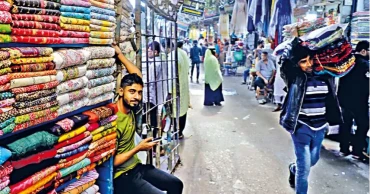
A section of shop owners have announced that all shops, retail outlets and shopping malls across the country will close by 8pm daily to help ease pressure from the ongoing global energy crisis, while another major organisation says no such decision has been taken.
The shop closure decision was disclosed in a statement on Thursday following a joint meeting of the standing committees of the Bangladesh Shop Business Owner’s Association and the Dhaka Metropolitan Shop Business Owner’s Association.
The move is aimed at conserving electricity and fuel amid instability in international energy markets triggered by the Middle East situation.
According to the decision, all shops and malls will shut by 8pm, while essential services such as hotels, pharmacies and kitchen markets will remain open beyond the deadline.
Association President Md Nazmul Hasan Mahmud and General Secretary Md Arifur Rahman Tipu urged traders to comply with the directive.
However, the Bangladesh Shop Owners’ Association has rejected the announcement, saying no final decision has been taken to enforce an 8pm closure.
In a video message, its President Helal Uddin said the Power, Energy and Mineral Resources Ministry has convened a meeting on Saturday to discuss the issue.
The meeting will be attended by the home minister and commerce minister, along with district-level leaders of the association, where energy-saving measures and a possible collective decision will be discussed, he added.
6 months ago
600 firms picked for VAT audit under automated system
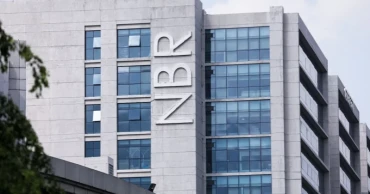
The National Board of Revenue (NBR) has selected 600 firms for VAT audit through a fully automated system, aiming to ensure transparency and reduce human intervention in the process.
In a press release issued on Thursday, the revenue authority said it has successfully implemented an Automated Risk Management Module in the e-VAT system to streamline audit selection.
Under the new system, entities are being selected automatically based on 20 risk criteria – each assigned a specific weightage to assess risk levels without any manual involvement.
The NBR said the introduction of this module fulfils a long-standing demand from taxpayers and civil society for a transparent and unbiased audit selection process.
Initially, 600 firms were selected, and the list was published on the NBR website.
Of these, 405 are manufacturing entities, 98 service providers, 65 wholesale and retail businesses, and 32 are importers or exporters.
The revenue board noted that the risk criteria and their assigned weightage may be revised in the future, depending on the effectiveness of audit outcomes.
According to the NBR, the automated system is expected to enhance transparency, neutrality and efficiency in VAT management, while also helping prevent revenue evasion and making the system more taxpayer-friendly.
6 months ago

All banks must launch ‘Bangla QR’ apps by June: Bangladesh Bank Governor
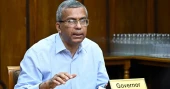
Bangladesh Bank (BB) Governor Mostaqur Rahman has directed all commercial banks in the country to launch ‘Bangla QR’ apps by June this year to expand digital transactions and boost revenue.
The Governor issued this directive on Wednesday during an interactive session with business editors of electronic media held at the central bank headquarters.
Governor Rahman emphasized that political influence has historically been a major obstacle to ensuring good governance in the banking sector. He warned that no political interference will be tolerated in banking operations moving forward.
Speaking on the issue of non-performing loans (NPLs), the Governor instructed banks to implement rigorous scrutiny before approving projects. He also urged banks to exercise greater caution when disbursing high-risk loans to reduce the burden of defaults.
According to Bangladesh Bank, ‘Bangla QR’ is the nationally standardized, central bank-approved QR-based payment system. The technology allows customers to make secure, contactless digital payments via smartphone by scanning a code through their respective bank apps, eliminating the need for physical cash or cards.
The central bank noted that this system is designed for a wide range of users—from low- to high-income groups—and is accessible to retailers of all sizes, including small, medium, and large entrepreneurs, restaurants, and grocery stores.
Customers using Visa cards from banks that have already integrated ‘Bangla QR’ into their mobile apps and received Visa certification can currently make payments using this system.
One of the primary advantages for merchants is that no additional hardware or machines are required. Once a payment is completed, the shopkeeper receives an instant SMS confirmation.
Additionally, a dedicated merchant app will allow business owners to track daily transactions and access features like a digital ledger (Halkhata), service sales tracking, and wholesaler payment management.
6 months ago

Gold price rises by Tk 3,266 per bhori on first day of April
The Bangladesh Jewellers Association (BAJUS) has once again increased gold prices in the local market, raising the rate by Tk 3,266 per bhori on Wednesday, the first day of April.
According to a statement issued in the morning, the price of 22-carat gold has been set at Tk 247,977 per bhori (11.664 grams).
BAJUS said the latest adjustment was made due to a rise in the price of pure gold (tejabi gold) in the local market, prompting a revision of overall gold rates.
Under the new pricing structure, 21-carat gold will cost Tk 236,721 per bhori, while 18-carat gold has been fixed at Tk 202,895 per bhori. Gold of traditional method has been set at Tk 165,279 per bhori.
The association last revised gold prices on March 31, when it increased the rate by Tk 3,266 per bhori, setting the price of 22-carat gold at Tk 244,711.
So far in 2026, gold prices have been adjusted 51 times in the domestic market, with rates increased on 30 occasions and reduced 21 times.
Despite the hike in gold prices, silver rates remain unchanged.
Currently, 22-carat silver is being sold at Tk 5,715 per bhori, while 21-carat silver costs Tk 5,424 per bhori, 18-carat Tk 4,666, and traditional silver Tk 3,499 per bhori.
In 2026, silver prices have been adjusted 30 times so far, with 17 increases and 13 decreases.
6 months ago

Stocks open lower on both DSE, CSE as indices fall
Trading on Bangladesh’s two bourses opened on a negative note on Tuesday, with all major indices declining in early hours.
During the first hour of trading, the benchmark DSEX index of the Dhaka Stock Exchange (DSE) dropped by 45 points.
The Shariah-based DSES index fell by 6 points, while the blue-chip DS30 index lost 18 points.
Most listed companies saw price declines, as share prices of 263 companies fell against 79 gainers, while 44 remained unchanged.
Turnover on the DSE exceeded Tk 270 crore within the first hour of trading.
A similar downward trend was observed on the Chittagong Stock Exchange (CSE), where the overall CASPI index fell by more than 130 points.
Out of the traded issues, 71 companies recorded price declines, while 24 advanced and 21 remained unchanged.
The CSE recorded a turnover of over Tk 5 crore in the first hour.
6 months ago

Gold prices surge again in Bangladesh
Gold prices in Bangladesh rose sharply on Tuesday with the price of 22-carat gold increasing by Tk 3,266 per bhori, according to the Bangladesh Jewellers Association (BAJUS).
In a statement issued in the morning, BAJUS said the new price has been set at Tk 244,711 per bhori (11.664 grams) of 22-carat gold, effective immediately.
The association attributed the latest hike to a rise in the price of pure gold (tejabi gold) in the local market, prompting an adjustment in overall pricing.
Under the revised rates, 21-carat gold will cost Tk 233,572 per bhori, while 18-carat gold has been priced at Tk 200,213 per bhori. The price of gold produced through traditional methods has been set at Tk 163,063 per bhori.
Previously, on March 28, BAJUS had increased the price of 22-carat gold by Tk 4,433 per bhori, setting it at Tk 241,445.
So far in 2026, gold prices have been adjusted 50 times in the country raised on 29 occasions and reduced 21 times.
Alongside gold, silver prices have also been increased. The price of 22-carat silver has gone up by Tk 350 per bhori to Tk 5,715.
The new rates for silver stand at Tk 5,424 per bhori for 21-carat, Tk 4,666 for 18-carat, and Tk 3,499 for traditional silver.
In 2026, silver prices have been revised 30 times so far, with 17 increases and 13 decreases.
6 months ago
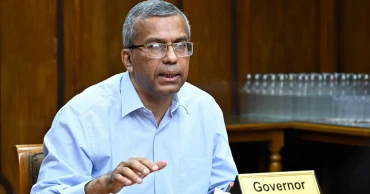
Bangladesh eyes $2 billion loan to stabilize balance of payments amid Middle East tensions: BB Governor
Bangladesh is planning to seek $2 billion in foreign assistance to counter economic pressures arising from domestic crises and the volatile situation in the Middle East.
The initiative aims to stabilize the country's Balance of Payments (BoP) through support from global lenders, including the International Monetary Fund (IMF).
Governor of Bangladesh Bank, Md. Mostaqur Rahman, shared this strategic plan during an exchange meeting with senior economic journalists held on Sunday at the central bank’s headquarters in Motijheel.
The Governor confirmed that discussions are underway to secure $2 billion to safeguard the economy. "We have already initiated talks with the IMF, and the Economic Relations Division (ERD) is exploring other potential sources," he stated.
Highlighting the uncertainties in the Middle East, the Governor emphasized a policy of caution. "We are adopting a 'wait and watch' strategy to navigate the current geopolitical tensions," he noted.
Governor Rahman outlined his administration's top three priorities:
i) Strengthening food security and rural economy.
ii) Supporting small and medium enterprises as the backbone of the economy.
iii) Governor described closed factories as "national assets" and urged banks to assist in restarting them to boost employment without triggering inflation through new heavy investments.
He maintained a firm stance on monetary policy, stating that reducing interest rates is currently not advisable as the central bank remains focused on controlling inflation.
The Governor expressed satisfaction with the current foreign exchange reserves. Regarding remittances, central bank officials projected an increase of $2 billion to $2.5 billion by the end of this fiscal year compared to the previous one, despite the Middle East crisis.
During the two-hour session, Deputy Governors Md Habibur Rahman and Nutun Nahar and the central bank spokesperson Arif Hossain Khan also presented in the event.
The governor addressed concerns about expatriate welfare and potential job losses abroad. He suggested that in times of crisis, migrants often send back their total savings, providing a short-term boost to reserves, though they acknowledged long-term risks if conflicts escalate.
"Since the pandemic and the Russia-Ukraine war, it seems we must learn to move forward amidst such global challenges," Governor Rahman remarked, concluding the meeting with a commitment to maintaining market stability.
6 months ago

BB unveils new ‘Cybersecurity Framework’ to safeguard financial sector
Bangladesh Bank (BB) on Sunday issued a comprehensive ‘Cybersecurity Framework’ to safeguard the financial sector against increasingly sophisticated cyber threats.
The new guidelines are mandatory for all scheduled banks, finance companies, Mobile Financial Service (MFS) providers, Payment Service Providers (PSP), and Payment System Operators (PSO) operating in the country.
According to a circular issued by the Banking Regulation and Policy Department (BRPD), all relevant financial entities must ensure full compliance with the new framework by December 31, 2026.
The central bank stated that the rapid expansion of digital platforms, online transactions, and cloud-based services has significantly increased the "attack surface" for cybercriminals.
The framework aims to protect national financial stability, establish a minimum baseline for cyber resilience and governance, standardize the approach to detecting and responding to threats such as hacking, phishing, and ransomware and define clear roles and responsibilities for all relevant parties.
Aligned with the international NIST standards, the framework is built around seven core functions: Preparation & Govern, Identify, Protect, Detect, Respond, Recovery, and Reporting.
Under these functions, the framework mandates several critical measures, including:
Mandatory CISO: Every organization must recruit a qualified Chief Information Security Officer (CISO) with industry-accepted certifications and provide them with a sufficient budget and human resources.
Incident Reporting: For any critical cyber incident, organizations are now required to report to both internal and external stakeholders—including Bangladesh Bank and the BGD-CIRT—within 72 hours.
Security Infrastructure: Banks must implement advanced solutions such as Security Information and Event Management (SIEM), Multi-Factor Authentication (MFA), and Web Application Firewalls (WAF).
Data Protection: Strict protocols for data encryption, access control based on "least privilege," and regular audit log monitoring have been established.
Oversight and Implementation
The framework was developed by a technical committee headed by Debdulal Roy, Executive Director (ICT) of Bangladesh Bank, with contributions from various private and state-owned banks.
Bangladesh Bank warned that these guidelines act as a "baseline" and that organizations should perform their own risk analysis to achieve higher maturity levels. The ICT Audit, Inspection, and Compliance Wing of the central bank will provide support to institutions during the implementation phase.
6 months ago

Bangladesh Bank issues guidelines on ‘Partner Network’ to ensure secure digital connectivity
Bangladesh Bank (BB) on Sunday issued a new guideline titled ‘Guidelines on Partner Network, Version 1.0 (2026)’ to ensure secure, seamless and efficient digital communication among financial institutions.
In a circular, the central bank said it remains electronically connected with various licensed entities including scheduled banks, non-bank financial institutions, mobile financial service providers, payment service providers and payment system operators to facilitate clearing, settlement and other financial services.
Bangladesh Bank also maintains connectivity with different government agencies to deliver IT-enabled services to citizens.
According to the guideline, information exchange between the central bank and participating institutions is conducted through an extranet-based ‘Partner Network’. “In the evolving technological and financial landscape, ensuring effective and secure digital communication has become increasingly critical,” BB said.
The new policy aims to guarantee uninterrupted connectivity, efficient system operations and secure data exchange between Bangladesh Bank and its partner institutions.
Under the guideline, all banks, financial institutions and other entities regulated or licensed by the central bank will be eligible to connect to Bangladesh Bank’s services subject to full compliance with the prescribed requirements.
Partner Network Guidelines
The ‘Guidelines on Partner Network’ set out a structured framework enabling organizations such as finance companies, MFSPs, PSPs, PSOs, WLAMA and other licensed financial service providers collectively termed as “the Organization”.
Each organization is required to designate a dedicated team or focal entity to implement and monitor the extranet, while the central bank may flag any non-compliance.
The guideline categorises organizations into two groups: Category-A, which must ensure both security and high availability with redundancy, and Category-B, which must ensure security and is encouraged to adopt high availability where feasible, with a pathway to upgrade to Category-A.
It defines minimum control requirements to ensure baseline security standards and infrastructure readiness for connectivity with Bangladesh Bank, with strict provisions on network segregation, firewall zoning and monitoring of abnormal traffic within critical systems.
Detailed controls have been outlined for change management, including documented processes, audit trails, rollback plans and mandatory testing before deployment, alongside strict access restrictions, prohibiting internet access in extranet zones and limiting access to authorised personnel only.
The guideline also mandates robust remote connection security, including encryption, authentication, logging and restrictions on privileged access, while requiring VPN-based connectivity compliant with cryptographic standards.
Organizations must ensure continuous monitoring, vulnerability assessments, patch management and secure configuration of devices, including disabling unused ports, filtering traffic and maintaining regular backups.
It also prohibits the use of personal devices in the partner network and requires updated antivirus protection for all connected systems.
Further, organizations must appoint trained focal persons, maintain proper documentation of network architecture and configurations, and follow Bangladesh Bank’s ICT security controls for monitoring and auditing.
In case of incidents, entities are required to report service disruptions with detailed information on affected infrastructure, causes and impacts.
The guideline also emphasises formal service level agreements and requires organizations to use approved, preferably redundant, network service providers with prior approval needed for any changes.
The central bank instructed all concerned institutions to follow the guideline when conducting any activities related to the Partner Network. All relevant entities have been asked to ensure compliance with the guideline by December 31, 2026.
6 months ago

Runner seeks clarity on BYD EV deal; financial impact yet to be finalised
Runner Automobiles PLC has said the financial implications and investment size of its planned electric vehicle (EV) assembly partnership with BYD Auto Industry Company are still under evaluation, following a query from the Dhaka Stock Exchange (DSE).
In a disclosure on Sunday, the company said the “Master Supply and Manufacturing Agreement” (MSMA) signed with BYD serves as a framework for a completely knocked down (CKD) manufacturing arrangement and is currently being used to assess overall investment feasibility, implementation timeline and projected financial outcomes.
Responding to a DSE query, Runner Automobiles said detailed commercial, operational and financial parameters will be finalised through separate Technical License Agreements (TLAs) for each vehicle model.
“The final investment size, financial projections and related outcomes are currently under evaluation and are subject to confirmation from both the supplier (BYD) and the Board of Directors,” the company said.
It also noted that although the agreement was signed during a BYD conference in Shenzhen on March 20, 2025, it is still undergoing remaining legal formalities from BYD’s end, which are expected to be completed within five to six working days. The signed copy will be shared once received.
Earlier, the company announced plans to assemble BYD electric vehicles locally, aiming to bring them to market within the next year.
The board approved the agreement after reviewing the company’s current business situation, said Hafizur Rahman Khan, chairman of Runner Group.
Runner Automobiles plans to set up a manufacturing facility in Bhaluka, Mymensingh, to assemble and paint EVs with technical support from BYD, enabling production localisation and cost reduction.
The initiative is expected to open new opportunities in Bangladesh’s automotive sector through technology transfer and local manufacturing.
6 months ago