Local-Business
Bangladesh Bank rolls out risk-based supervision to rebuild depositor confidence
Bangladesh Bank has launched a new Risk-Based Supervision (RBS) framework, marking a major shift in how the country’s banking and financial institutions are monitored as authorities seek to restore confidence among depositors after years of sectoral stress.
The central bank on Sunday formally moved away from a traditional, compliance-driven oversight model to a system that prioritises supervision based on the specific risk profiles of individual institutions.
Officials say the new approach will allow regulators to identify financial vulnerabilities earlier and respond more decisively.
Under the RBS regime, Bangladesh Bank will abandon a “one-size-fits-all” model of supervision. Instead, banks and financial institutions will be assessed and monitored according to the level and nature of risks embedded in their operations, including governance, asset quality and liquidity exposures.
To support the transition, the central bank has completed a major internal restructuring. Thirteen existing departments have been reorganised into 17 specialised units, including 12 bank supervision departments that will provide targeted oversight based on real-time data.
Five additional specialised units have been created to focus on digital banking, data analytics, payment systems and policy formulation.
A separate department has also been set up to monitor Anti-Money Laundering and Terrorist Financing activities, modelled on the Bangladesh Financial Intelligence Unit (BFIU), signalling a stronger regulatory focus on financial integrity.
The launch of the framework had initially been scheduled for January 1 but was postponed following the declaration of state mourning over the death of former Prime Minister Begum Khaleda Zia.
Arif Hossain Khan, Executive Director and spokesperson of Bangladesh Bank, said the reorganisation process has been completed and the full implementation of RBS officially began on Sunday.
Bangladesh Bank buys $3.05 billion to stabilise forex market
“This will be a far more rigorous supervisory regime,” he said, adding that oversight will be driven by data accuracy and proactive risk assessment rather than routine compliance checks.
Central bank officials said the results of risk assessments under the new framework could trigger tough enforcement actions against weak institutions.
These may include the removal of managing directors, dissolution of boards of directors and, where necessary, the application of the Bank Resolution Ordinance to deal with failing banks.
The reform is seen as a cornerstone of the interim government’s broader effort to clean up the banking sector, curb mismanagement and rebuild public trust in the financial system after a period marked by loan defaults and governance failures.
6 months ago
Wahiduzzaman promoted to director of Bangladesh Bank
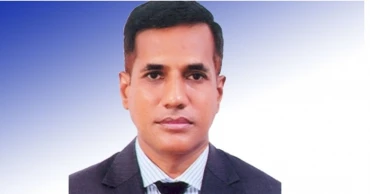
Md. Wahiduzzaman Sardar, previously serving as additional director, has been promoted to the position of director (Research) at Bangladesh Bank.
The central bank’s Human Resources Department-1 issued an official notification regarding the promotion on Thursday, January 1.
Wahiduzzaman began his career with the central bank in 2001 as an assistant director in the Research Department. During his initial years, specifically until 2005, he worked across the Domestic Economy and Islamic Economics subdivisions. His early work focused significantly on inflation, agricultural and rural credit, and the growing sector of Islamic banking.
In 2005, he transitioned to the Monetary Policy Department, where he served for 18 years. During this extensive tenure, he was recognized for his diligent contributions to the Open Market Operations (OMO) and the Financial Reporting and Analysis Wing.
Beyond his publications, he has played a pivotal role in research projects analyzing the socioeconomic conditions of savings certificate holders and the impact of mobile banking on the domestic economy.
7 months ago

Sammilito Islami Bank starts restoring customer access
Banking operations returned to normal on Thursday as five troubled Islamic banks in Bangladesh officially merged under a single entity, Sammilito Islami Bank, allowing depositors to access their funds after months of uncertainty.
The consolidation, effective from the start of 2026, brings together EXIM Bank, Social Islami Bank, First Security Islami Bank, Global Islami Bank, and Union Bank. Across Dhaka, old signage has been replaced with banners reflecting the unified brand, signalling a fresh start for the merged institution.
For many customers, Thursday marked a long-awaited relief.
Monir Hossain, a client of the former First Security Islami Bank’s Dhanmondi branch, said, “It feels great to finally be able to withdraw my money after such a long wait. This fund was extremely urgent for me.”
Institutional deposits to be converted into shares as Bangladesh Bank finalises 'Sammilito Islami Bank' merger
To manage the transition and safeguard the banking system, the Bangladesh Bank has implemented a structured withdrawal scheme:
Deposits up to Tk2 lakh: Fully protected under the Deposit Insurance Act, these funds can be withdrawn in full at any time.Deposits above Tk2 lakh: Withdrawals are capped at Tk1 lakh every three months over a two-year period.Special exceptions: Citizens over 60 and those suffering from critical illnesses, such as cancer or kidney failure, may access funds beyond the prescribed limits for medical needs.According to a circular issued by the central bank on Dec. 30, 2025, all assets, liabilities, and contracts of the five merging banks have been officially transferred to Sammilito Islami Bank.
The Bangladesh Bank has reassured the public that deposits are secure, and clients who do not withdraw immediately will continue to earn market-based profits while retaining the right to take loans against their balances.
Sammilito Islami Bank ready for inauguration; expected to reshape Shariah banking
The merger comes amid efforts to stabilise the nation’s banking sector and restore confidence following financial stress at the five institutions.
7 months ago

Biman’s profit jumps 178% as flag carrier posts Tk 785 crore gain
Bangladesh’s state-owned airline Biman Bangladesh Airlines posted a net profit of Tk 785.21 crore in fiscal 2024–25, nearly tripling earnings from a year earlier, as higher passenger traffic and tighter cost controls lifted the carrier’s financial performance, officials said.
The state-owned airline also achieved an operational profit of Tk 1,602 crore during the same period, while its total revenue stood at Tk 11,559 crore — up 9.46 percent year-on-year — the highest in the airline’s history.
With this, Biman continued its profit streak for the fifth straight year and posted net profits in nine of the last ten fiscal years, according to a media release signed by Boshra Islam, general manager (public relations) of Biman, on Thursday.
The financial statements were disclosed at the airline’s Annual General Meeting (AGM), with Biman Board of Directors Chairman Sk. Bashir Uddin in the chair. The board members and shareholders were also present.
Representatives from the Ministry of Finance, Ministry of Civil Aviation and Tourism, Ministry of Power, Energy and Mineral Resources, Ministry of Foreign Affairs, Cabinet Division and Ministry of Commerce were also present.
Experts call for strategy, skilled workforce to lift Biman from setbacks
During FY2024–25, Biman operated 21 aircraft and transported a total of 33.83 lakh passengers across 30 domestic and international destinations, representing a 1 percent increase compared to the previous year.
The airline’s cargo operations showed significant growth, carrying 43,918 metric tonnes and generating revenue of Tk 925 crore, a 45.21 percent rise year-on-year.
Besides, Biman provided ground handling services to 31,112 foreign airline flights, serving more than 6.1 million passengers.
Officials said Biman is a fully self-financed state-owned enterprise and has not received any government subsidy in its 54-year history.
In January 2025, the airline achieved its highest-ever ticket sales, reflecting growing passenger confidence and rising market popularity. Faster baggage delivery, improved in-flight services and modernised airport processes have contributed to higher customer satisfaction.
Sk Bashir Uddin made Chairman of Biman's Board of Directors
Biman has also maintained a strong safety record by strictly adhering to international aviation safety standards.
Aviation experts have praised the airline’s recent fleet modernisation, expansion of profitable international routes and enhanced customer service.
7 months ago

Stocks advance at DSE, CSE in early trading
Bangladesh’s capital market posted gains in the first half of trading on Thursday, with key indices rising at both the Dhaka Stock Exchange (DSE) and the Chittagong Stock Exchange (CSE).
At the DSE, the benchmark index DSEX climbed 35 points, while the Shariah-based DSES gained 8 points and the blue-chip DS30 index advanced 11 points.
Out of the traded issues, the prices of 295 companies rose, while 37 declined and 49 remained unchanged.
The turnover at the DSE crossed Tk 110 crore in the first half of the session.
DSE, CSE indices slide at opening trade
The CSE also witnessed an upward trend, with its overall index CASPI increasing by 43 points.
Most listed companies traded higher on the port city bourse, as share prices of 48 companies rose against declines in 19, while prices of 4 companies remained unchanged.
The trading volume at the CSE exceeded Tk 1.3 crore during the first half.
7 months ago
Bangladesh business community mourns passing of Begum Khaleda Zia
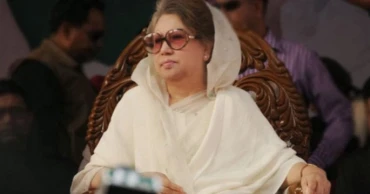
Leaders of Bangladesh's premier business organizations and trade bodies have expressed profound grief and shock following the demise of former Prime Minister and BNP Chairperson Begum Khaleda Zia.
In separate tributes, the country’s top industrial representatives hailed her as a monumental figure in Bangladesh’s economic and democratic evolution.
FBCCI: A Grateful Nation Remembers
The Federation of Bangladesh Chambers of Commerce and Industry (FBCCI), the nation's apex trade body, issued a heartfelt condolence message. FBCCI Administrator Md. Abdur Rahim Khan stated that the nation would forever remember her tireless struggle and immense contributions toward establishing democracy and safeguarding the rights of the people. He noted that her leadership provided a stable foundation for the country's commercial growth.
BGMEA & BKMEA: Icon of Economic Liberation
The Bangladesh Garment Manufacturers and Exporters Association (BGMEA) president Mahmud Hasan Khan, stated that her role in the nation’s overall development and the economic liberation of the common people is "written in golden letters" in the history of Bangladesh.
Similarly, BKMEA President Mohammad Hatem described her as an icon of the democratic struggle, noting that her contributions to the country's industrial infrastructure were "indescribable."
DCCI & BTMA: A Loss for the Global Muslim Community
The Dhaka Chamber of Commerce and Industry (DCCI), led by President Ashraf Ahmed, and the Bangladesh Textile Mills Association (BTMA), under President Showkat Aziz Russell, highlighted her historic milestone as the first elected female Prime Minister of Bangladesh and the second in the Muslim world. They emphasized her lifelong commitment to establishing the socio-economic rights that modern businesses now rely upon.
DSE & BASIS: Symbols of Integrity and Courage
The Dhaka Stock Exchange (DSE) leadership, including Chairman Mominul Islam and Managing Director (MD) Nuzhat Anwar, praised her "unwavering commitment to honesty and public welfare," particularly her role in strengthening the national economic framework.
BASIS Administrator Abul Khair Mohammed Hafizullah Khan added that the nation has lost a "brave guardian" and a "shining star" who never compromised on the dignity of the people.
BAJUS: The End of an Era
Enamul Haque Khan, President of the Bangladesh Jewellers’ Association (BAJUS), described her passing as the "end of an era." He remarked that she was not merely a political leader but a significant chapter of Bangladesh’s history whose loss has created a void that can never be filled.
Across the board, these organizations extended their deepest sympathies to the bereaved family and the people of Bangladesh, praying for the eternal peace of her soul.
7 months ago
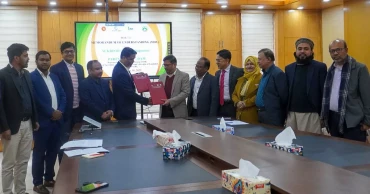
Govt signs deal with ‘Shukrishi’ to develop agri-business entrepreneurship
The Department of Agricultural Marketing (DAM) and non-government organisation Shukrishi (Shupannya Brand) will jointly work for the development of agri-business entrepreneurship, particularly among youths and women in the country.
In this regard, Shukrishi and Programme on Agricultural and Rural Transformation for Nutrition, Entrepreneurship and Resilience in Bangladesh (PARTNER-DAM Part) of the Department of Agricultural Marketing (DAM) of the Agriculture Ministry signed a Memorandum of Understanding (MoU) in the capital on Tuesday.
Agency Programme Director of the PARTNER-DAM Part Dr Mohammed Abdullah Al Faroque and Shukrishi CEO MA Baten Khan signed the deal on behalf of their respective sides.
The deal is a formal commitment of the two organisations to jointly work to run practical development activities through training to create agricultural entrepreneurs at the field level.
This MoU aims to establish a partnership with Shukrishi in its mission to empower rural communities through impactful training and development initiatives.
As per the deal, Shukrishi will conduct hands-on training programmes to enhance the capacity and skills of the potential agro-entrepreneurs as well as monitor and support the activities of agro-entrepreneurs, particularly providing market access support to the participants through the Shukrish’s supply chain on completion of the training programme.
7 months ago
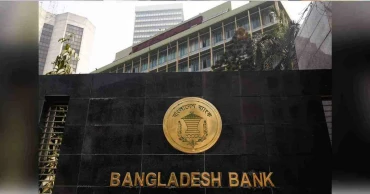
Banks to remain closed Wednesday following death of Khaleda Zia
All scheduled banks operating in Bangladesh will remain closed on Wednesday (December 31), following the government’s declaration of a public holiday in honor of the late former Prime Minister and BNP Chairperson, Begum Khaleda Zia.
The Department of Off-site Supervision (DOS) of Bangladesh Bank issued a circular to the Managing Directors and Chief Executives of all banks on Tuesday to confirm the closure.
The decision follows a notification from the Ministry of Public Administration, which declared a one-day public holiday by executive order due to the passing of the former Prime Minister.
According to the circular, banks will observe ‘Bank Holiday’ on Wednesday (December 31). Despite the general closure, banks may keep specific branches or departments open at their own discretion if it is necessary for the completion of annual or half-yearly financial accounting for the year 2025.
On the other hand, Bangladesh Bank has postponed its scheduled press conference regarding the activities of the Shammilito Islamic Bank following the passing of Begum Khaleda Zia, former Prime Minister and Chairperson of the Bangladesh Nationalist Party (BNP).
The central bank announced the decision through a short message service (SMS) sent to the media on Tuesday afternoon. But the Bangladesh Bank released a logo of Sammilito Islami Bank on Tuesday and sent it to the journalists.
According to the message, the press conference, which was originally scheduled for 5:00 PM today at the Bangladesh Bank headquarters, has been canceled in light of the national mourning declared following the demise of Begum Zia. The central bank also noted that a formal press release regarding this matter will be issued later.
7 months ago

Bangladesh Bank extends payment period for industrial raw material imports
Bangladesh Bank (BB) has extended the deferred payment period, or usance, for imports of industrial raw materials, aiming to facilitate smoother trade transactions and support the country’s manufacturing sector.
The new directive, issued by the Foreign Exchange Policy Department on Monday, adjusts the credit period for importers.
The directive, signed by Md Harun-Ar-Rashid, Director of the Foreign Exchange Policy Department, took immediate effect for all authorised foreign exchange dealers in Bangladesh.
According to the directive, the central bank has decided that industrial raw materials, including back-to-back imports, agricultural implements, and chemical fertilizers, will now be importable for a usance (deferred payment) period of up to 270 days. This applies to imports under suppliers' or buyers' credit.
The circular specifies that the usance period shall be "270 days or the cash conversion cycle, whichever is earlier". This marks a shift from the previous temporary extension of 360 days, which was set to expire on December 31, 2025.
The central bank has instructed Authorized Dealers (ADs) to ensure that the estimated cash conversion cycle reflects a ‘realistic position’ based on the customer’s historical operating and transaction trends before allowing these facilities.
For back-to-back letters of credit, the usance period will be determined in alignment with the statutory export proceeds repatriation period. But, as per standard policy, this extended usance facility will not apply to imports financed under the Export Development Fund (EDF).
This decision follows earlier policy supports (FE Circular No. 08 and FE Circular Letter No. 27) that had temporarily extended the usance period from 180 days to 360 days to facilitate trade during 2025.
The new 270-day limit aims to balance the needs of industrial importers with the necessity of maintaining a realistic cash conversion cycle in the country's foreign exchange management.
7 months ago

Stocks slide in early trading at DSE, CSE
The country’s stock markets opened on a negative note as key indices at both the Dhaka and Chattogram bourses fell in the first hour of trading on Monday, with most shares ending in the red.
At the Dhaka Stock Exchange (DSE), the benchmark DSEX shed 21 points within the first hour.
The Shariah-based DSES index lost 4 points, while the blue-chip DS-30 index dropped 14 points.
Out of the traded issues, prices declined for 209 companies, while 77 companies saw gains and 90 issues remained unchanged.
The share and unit turnover at the DSE crossed Tk 100 crore during the first hour of trading.
The downtrend also persisted at the Chittagong Stock Exchange (CSE), where the overall index fell by 11 points in early trading.
At the port city bourse, prices advanced for 17 companies against declines in 36, while 10 issues remained unchanged.
During the first half of the session, the CSE recorded share and unit turnover worth Tk 1.40 crore.
7 months ago