local-business

Gold prices surge again in Bangladesh
Gold prices in Bangladesh rose sharply on Tuesday with the price of 22-carat gold increasing by Tk 3,266 per bhori, according to the Bangladesh Jewellers Association (BAJUS).
In a statement issued in the morning, BAJUS said the new price has been set at Tk 244,711 per bhori (11.664 grams) of 22-carat gold, effective immediately.
The association attributed the latest hike to a rise in the price of pure gold (tejabi gold) in the local market, prompting an adjustment in overall pricing.
Under the revised rates, 21-carat gold will cost Tk 233,572 per bhori, while 18-carat gold has been priced at Tk 200,213 per bhori. The price of gold produced through traditional methods has been set at Tk 163,063 per bhori.
Previously, on March 28, BAJUS had increased the price of 22-carat gold by Tk 4,433 per bhori, setting it at Tk 241,445.
So far in 2026, gold prices have been adjusted 50 times in the country raised on 29 occasions and reduced 21 times.
Alongside gold, silver prices have also been increased. The price of 22-carat silver has gone up by Tk 350 per bhori to Tk 5,715.
The new rates for silver stand at Tk 5,424 per bhori for 21-carat, Tk 4,666 for 18-carat, and Tk 3,499 for traditional silver.
In 2026, silver prices have been revised 30 times so far, with 17 increases and 13 decreases.
4 months ago
Bangladesh eyes $2 billion loan to stabilize balance of payments amid Middle East tensions: BB Governor
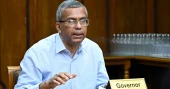
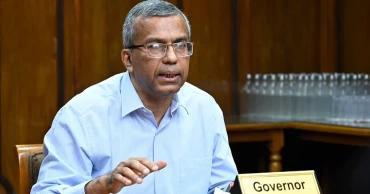
Bangladesh is planning to seek $2 billion in foreign assistance to counter economic pressures arising from domestic crises and the volatile situation in the Middle East.
The initiative aims to stabilize the country's Balance of Payments (BoP) through support from global lenders, including the International Monetary Fund (IMF).
Governor of Bangladesh Bank, Md. Mostaqur Rahman, shared this strategic plan during an exchange meeting with senior economic journalists held on Sunday at the central bank’s headquarters in Motijheel.
The Governor confirmed that discussions are underway to secure $2 billion to safeguard the economy. "We have already initiated talks with the IMF, and the Economic Relations Division (ERD) is exploring other potential sources," he stated.
Highlighting the uncertainties in the Middle East, the Governor emphasized a policy of caution. "We are adopting a 'wait and watch' strategy to navigate the current geopolitical tensions," he noted.
Governor Rahman outlined his administration's top three priorities:
i) Strengthening food security and rural economy.
ii) Supporting small and medium enterprises as the backbone of the economy.
iii) Governor described closed factories as "national assets" and urged banks to assist in restarting them to boost employment without triggering inflation through new heavy investments.
He maintained a firm stance on monetary policy, stating that reducing interest rates is currently not advisable as the central bank remains focused on controlling inflation.
The Governor expressed satisfaction with the current foreign exchange reserves. Regarding remittances, central bank officials projected an increase of $2 billion to $2.5 billion by the end of this fiscal year compared to the previous one, despite the Middle East crisis.
During the two-hour session, Deputy Governors Md Habibur Rahman and Nutun Nahar and the central bank spokesperson Arif Hossain Khan also presented in the event.
The governor addressed concerns about expatriate welfare and potential job losses abroad. He suggested that in times of crisis, migrants often send back their total savings, providing a short-term boost to reserves, though they acknowledged long-term risks if conflicts escalate.
"Since the pandemic and the Russia-Ukraine war, it seems we must learn to move forward amidst such global challenges," Governor Rahman remarked, concluding the meeting with a commitment to maintaining market stability.
4 months ago

BB unveils new ‘Cybersecurity Framework’ to safeguard financial sector
Bangladesh Bank (BB) on Sunday issued a comprehensive ‘Cybersecurity Framework’ to safeguard the financial sector against increasingly sophisticated cyber threats.
The new guidelines are mandatory for all scheduled banks, finance companies, Mobile Financial Service (MFS) providers, Payment Service Providers (PSP), and Payment System Operators (PSO) operating in the country.
According to a circular issued by the Banking Regulation and Policy Department (BRPD), all relevant financial entities must ensure full compliance with the new framework by December 31, 2026.
The central bank stated that the rapid expansion of digital platforms, online transactions, and cloud-based services has significantly increased the "attack surface" for cybercriminals.
The framework aims to protect national financial stability, establish a minimum baseline for cyber resilience and governance, standardize the approach to detecting and responding to threats such as hacking, phishing, and ransomware and define clear roles and responsibilities for all relevant parties.
Aligned with the international NIST standards, the framework is built around seven core functions: Preparation & Govern, Identify, Protect, Detect, Respond, Recovery, and Reporting.
Under these functions, the framework mandates several critical measures, including:
Mandatory CISO: Every organization must recruit a qualified Chief Information Security Officer (CISO) with industry-accepted certifications and provide them with a sufficient budget and human resources.
Incident Reporting: For any critical cyber incident, organizations are now required to report to both internal and external stakeholders—including Bangladesh Bank and the BGD-CIRT—within 72 hours.
Security Infrastructure: Banks must implement advanced solutions such as Security Information and Event Management (SIEM), Multi-Factor Authentication (MFA), and Web Application Firewalls (WAF).
Data Protection: Strict protocols for data encryption, access control based on "least privilege," and regular audit log monitoring have been established.
Oversight and Implementation
The framework was developed by a technical committee headed by Debdulal Roy, Executive Director (ICT) of Bangladesh Bank, with contributions from various private and state-owned banks.
Bangladesh Bank warned that these guidelines act as a "baseline" and that organizations should perform their own risk analysis to achieve higher maturity levels. The ICT Audit, Inspection, and Compliance Wing of the central bank will provide support to institutions during the implementation phase.
4 months ago

Bangladesh Bank issues guidelines on ‘Partner Network’ to ensure secure digital connectivity
Bangladesh Bank (BB) on Sunday issued a new guideline titled ‘Guidelines on Partner Network, Version 1.0 (2026)’ to ensure secure, seamless and efficient digital communication among financial institutions.
In a circular, the central bank said it remains electronically connected with various licensed entities including scheduled banks, non-bank financial institutions, mobile financial service providers, payment service providers and payment system operators to facilitate clearing, settlement and other financial services.
Bangladesh Bank also maintains connectivity with different government agencies to deliver IT-enabled services to citizens.
According to the guideline, information exchange between the central bank and participating institutions is conducted through an extranet-based ‘Partner Network’. “In the evolving technological and financial landscape, ensuring effective and secure digital communication has become increasingly critical,” BB said.
The new policy aims to guarantee uninterrupted connectivity, efficient system operations and secure data exchange between Bangladesh Bank and its partner institutions.
Under the guideline, all banks, financial institutions and other entities regulated or licensed by the central bank will be eligible to connect to Bangladesh Bank’s services subject to full compliance with the prescribed requirements.
Partner Network Guidelines
The ‘Guidelines on Partner Network’ set out a structured framework enabling organizations such as finance companies, MFSPs, PSPs, PSOs, WLAMA and other licensed financial service providers collectively termed as “the Organization”.
Each organization is required to designate a dedicated team or focal entity to implement and monitor the extranet, while the central bank may flag any non-compliance.
The guideline categorises organizations into two groups: Category-A, which must ensure both security and high availability with redundancy, and Category-B, which must ensure security and is encouraged to adopt high availability where feasible, with a pathway to upgrade to Category-A.
It defines minimum control requirements to ensure baseline security standards and infrastructure readiness for connectivity with Bangladesh Bank, with strict provisions on network segregation, firewall zoning and monitoring of abnormal traffic within critical systems.
Detailed controls have been outlined for change management, including documented processes, audit trails, rollback plans and mandatory testing before deployment, alongside strict access restrictions, prohibiting internet access in extranet zones and limiting access to authorised personnel only.
The guideline also mandates robust remote connection security, including encryption, authentication, logging and restrictions on privileged access, while requiring VPN-based connectivity compliant with cryptographic standards.
Organizations must ensure continuous monitoring, vulnerability assessments, patch management and secure configuration of devices, including disabling unused ports, filtering traffic and maintaining regular backups.
It also prohibits the use of personal devices in the partner network and requires updated antivirus protection for all connected systems.
Further, organizations must appoint trained focal persons, maintain proper documentation of network architecture and configurations, and follow Bangladesh Bank’s ICT security controls for monitoring and auditing.
In case of incidents, entities are required to report service disruptions with detailed information on affected infrastructure, causes and impacts.
The guideline also emphasises formal service level agreements and requires organizations to use approved, preferably redundant, network service providers with prior approval needed for any changes.
The central bank instructed all concerned institutions to follow the guideline when conducting any activities related to the Partner Network. All relevant entities have been asked to ensure compliance with the guideline by December 31, 2026.
4 months ago

Runner seeks clarity on BYD EV deal; financial impact yet to be finalised
Runner Automobiles PLC has said the financial implications and investment size of its planned electric vehicle (EV) assembly partnership with BYD Auto Industry Company are still under evaluation, following a query from the Dhaka Stock Exchange (DSE).
In a disclosure on Sunday, the company said the “Master Supply and Manufacturing Agreement” (MSMA) signed with BYD serves as a framework for a completely knocked down (CKD) manufacturing arrangement and is currently being used to assess overall investment feasibility, implementation timeline and projected financial outcomes.
Responding to a DSE query, Runner Automobiles said detailed commercial, operational and financial parameters will be finalised through separate Technical License Agreements (TLAs) for each vehicle model.
“The final investment size, financial projections and related outcomes are currently under evaluation and are subject to confirmation from both the supplier (BYD) and the Board of Directors,” the company said.
It also noted that although the agreement was signed during a BYD conference in Shenzhen on March 20, 2025, it is still undergoing remaining legal formalities from BYD’s end, which are expected to be completed within five to six working days. The signed copy will be shared once received.
Earlier, the company announced plans to assemble BYD electric vehicles locally, aiming to bring them to market within the next year.
The board approved the agreement after reviewing the company’s current business situation, said Hafizur Rahman Khan, chairman of Runner Group.
Runner Automobiles plans to set up a manufacturing facility in Bhaluka, Mymensingh, to assemble and paint EVs with technical support from BYD, enabling production localisation and cost reduction.
The initiative is expected to open new opportunities in Bangladesh’s automotive sector through technology transfer and local manufacturing.
4 months ago

Shwapno website hacked, customer data leaked online
The website of retail chain Shwapno has been hacked with attackers releasing customers’ personal information online and demanding a large ransom from the company.
The leaked data circulating across Facebook and various websites since Saturday reportedly includes names, phone numbers and purchase histories of customers who shopped at Shwapno in 2025.
Shwapno Managing Director Sabbir Hasan said hackers had gained control of the company’s customer database last year and had been demanding $1.5 million since around August 2025 to restore access. The company did not comply with the demand.
Urging caution, Shwapno advised customers to remain alert against potential phishing attempts and fraud.
“We request customers not to share personal or financial information over calls or messages from unknown or suspicious numbers, and to avoid clicking on unverified links,” the company said, adding that it never asks for passwords or OTPs over phone calls.
The company, a subsidiary of ACI PLC, said it is preparing to file a case and is working with local law enforcement, including the Counter Terrorism and Transnational Crime (CTTC) unit, as well as international forensic experts to address the breach.
4 months ago

DSE dips, CSE gains in first hour of trading after weekend
Stocks showed a mixed trend in the country’s two bourses in the first hour of trading on Sunday, the first working day after a three-day holiday, with indices falling in Dhaka and rising in Chattogram.
At the Dhaka Stock Exchange (DSE), the benchmark DSEX index shed 12 points in early trading.
The other two indices also declined, with the Shariah-based DSES losing 1 point and the blue-chip DS30 dropping 11 points.
Most listed companies saw price declines, as 167 issues lost value compared to 135 gainers, while 82 remained unchanged.
Turnover on the DSE crossed Tk 150 crore within the first hour.
Meanwhile, trading at the Chittagong Stock Exchange (CSE) witnessed a positive trend, with its overall CASPI index rising by 12 points.
Gainers outnumbered losers at the CSE, where 40 issues advanced, 11 declined and 7 remained unchanged.
The port city bourse recorded transactions worth over Tk 1.4 crore in the first hour of trading.
4 months ago

Solar Energy may turn SMEs into growth hubs
SMEs in BSCIC industrial estates could cut more than 14.09 million tonnes of carbon dioxide emissions, earn up to $0.40 million annually through carbon credits, and reduce operational costs by 30 to 50 per cent by adopting decentralised rooftop solar energy, a new study has found.
The study, conducted by Change Initiative, also revealed that such a transition could help secure long-term export competitiveness by enabling compliance with environmental and sustainability standards.
Bangladesh solar power projects fail to draw investors for rigid terms: Study
Unveiling the findings at a press conference at a hotel in Dhaka o. Saturday, M. Zakir Hossain Khan, chief executive officer of the organisation, said SMEs account for more than 90 per cent of industrial units, employ around 85 per cent of the industrial workforce, and contribute 25 to 30 per cent of the country’s GDP. Yet, he noted, they operate within an energy system in which around 95 per cent of electricity is generated from fossil fuels, leaving them highly vulnerable to global volatility.
Khan said the present government could raise the share of renewable energy to 20 per cent, in line with its electoral commitment for 2030, within just one year if it adopted a crash programme.
He said funding would not be a major obstacle if resources were allocated efficiently and safeguarded against corruption.
Replying to a question, he said Bangladesh could potentially mobilise a $5 billion renewable energy fund from development partners, while another $5 billion could be generated through carbon and pollution taxes imposed both domestically and in export destinations.
He stressed the urgent need for an energy transition to strengthen energy security and sovereignty by reducing dependence on imported fuel.
The research focused on four high-impact sectors within Bangladesh Small and Cottage Industries Corporation industrial estates: tannery, plastic manufacturing, plastic packaging and light engineering. Together, these sectors are estimated to emit 46.99 million tonnes of carbon dioxide annually, with a technically feasible reduction potential of 14.097 million tonnes per year.
The keynote presentation was delivered by co-researchers Sabrin Sultana and Najifa Alam Torsa, who highlighted the study’s key findings.
Zakir Hossain Khan said: “While global conflicts threaten to turn out our lights and air pollution steals years from our lives, our factory rooftops remain idle.
Renewable energy policy must move beyond targets to ensure energy sovereignty by reducing import dependence and delivering reliable, affordable power to SMEs, which drive Bangladesh’s economy and employment.
“We do not just want to survive the 2026 energy crisis, we want to lead the region. If China, India and Vietnam can accelerate their renewable energy transitions, Bangladesh too can move towards a nature-smart and sovereign future by securing energy independence, insulating CMSMEs from grid instability and shielding them from the price volatility of imported fossil fuels without losing competitiveness or jobs.”
The study combines machine-level energy assessments, production mapping and verified electricity data to build a robust emissions baseline.
Beyond technical solutions, the study also identifies several structural barriers hindering adoption of solar energy, including limited access to concessional finance, high upfront investment, a lack of technical expertise among relevant stakeholders, and the absence of standardised energy auditing systems.
To address these challenges, the study proposes a cluster-based decarbonisation pathway built on three pillars: shared renewable energy systems at estate level
innovative financing models, including OPEX and concessional renewable energy finance stronger institutional coordination through BSCIC and related agencies.
4 months ago

Gold prices rise by Tk 2,157 per bhori Gold after seven straight cuts
Gold prices in Bangladesh have increased by Tk 2,157 per bhori after seven straight reductions, with the new rates taking effect from Saturday.
The Bangladesh Jewellers Association (BAJUS) set the price of 22-carat gold at Tk 237,012 per bhori (11.664 grams), according to a statement issued in the morning.
BAJUS said the adjustment was made in line with a rise in the price of pure gold (tejabi gold) in the local market considering the overall market situation.
Under the revised rates, 21-carat gold will cost Tk 226,282 per bhori while 18-carat gold is priced at Tk 193,914 per bhori.
Gold produced under the traditional method will be sold at Tk 157,931 per bhori.
The last price adjustment was made on March 27, when BAJUS reduced the price of 22-carat gold by Tk 6,590 to Tk 234,855 per bhori.
So far in 2026, gold prices have been adjusted 48 times in the country, with increases recorded on 27 occasions and decreases on 21.
Despite the hike in gold prices, silver rates remain unchanged.
Currently, 22-carat silver is being sold at Tk 5,365 per bhori, while 21-carat silver is priced at Tk 5,132, 18-carat at Tk 4,432, and traditional silver at Tk 3,324 per bhori.
In 2026, silver prices have been adjusted 29 times, including 16 increases and 13 decreases.
4 months ago
Fruit prices drop sharply in Dhaka after Eid, Ramadan
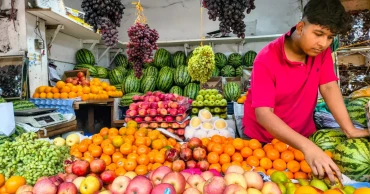
Fruit prices in Dhaka have fallen significantly after Ramadan and the Eid holidays, with several imported varieties dropping by more than Tk 100 per kilogram within just a few days, offering some relief to consumers.
A visit to major wholesale and retail markets—including Badamtoli, Karwan Bazar, Rampura, Badda and Shantinagar—on Friday found that prices of most imported fruits have eased notably from their Ramadan peaks.
Malta, which was sold at Tk 350–380 per kg during Ramadan, is now priced at Tk 280–300. Before Ramadan, it ranged between Tk 260 and Tk 280 per kg.
Apple prices have also declined, currently selling at Tk 300–340 per kg depending on the variety, down from Tk 350–400 during the fasting month.
However, prices remain slightly above the pre-Ramadan range of Tk 280–320.
Oranges are now being sold at Tk 380–400 per kg, compared to Tk 420–450 during Ramadan, while earlier prices hovered between Tk 340 and Tk 350.
Among other imported fruits, pomegranate prices have dropped to Tk 450–500 per kg from Tk 580–600 during Ramadan, though still higher than the pre-Ramadan range of Tk 400–480.
Pear has seen one of the sharpest declines, falling by around Tk 150 per kg to Tk 350, down from Tk 500 during Ramadan.
In the grape market, black grapes are selling at Tk 500 per kg, red grapes at Tk 450, and green grapes at Tk 400, while most varieties had exceeded Tk 500 during Ramadan.
Locally grown fruits have also become more affordable.
Ripe papaya is now priced at Tk 70–120 per kg, down from Tk 140–180, while guava prices have fallen to Tk 70–100 from Tk 120–150.
Watermelon, which entered the market during Ramadan, is now being sold at around Tk 50 per kg, down from Tk 100 at the start of the season.
Traders attributed the fluctuations largely to wholesale market dynamics, particularly at Badamtoli, the country’s key fruit hub.
Some alleged that a syndicate-like mechanism influences prices at the wholesale level which in turn affects retail markets.
A fruit seller in Badda said retail prices often rise by around Tk 50 per kg after sourcing from wholesalers.
Another trader noted that prices at Badamtoli are frequently determined through pre-arranged auctions, limiting competition.
Consumers said that despite the recent decline, prices have yet to fully return to pre-Ramadan levels.
They urged stronger market monitoring and greater competition to help stabilise fruit prices in the capital.
4 months ago