World-Business
Asian shares rise as Wall St rallies, China reports strong data
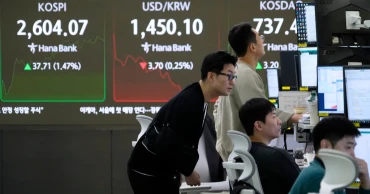
Asian stocks rose on Monday following a strong rally in U.S. markets, marking the best day since November’s election, and amid stronger-than-expected factory data from China.
Later in the day, Chinese officials were scheduled to brief the media on Beijing's efforts to boost consumer spending. Economists argue that increased consumer spending is essential for reviving the economy, though most have called for broader reforms to build confidence and enhance purchasing power.
Bangladesh's leading light engineering firms participate in Comex Singapore 2025
Hong Kong's Hang Seng gained 1.3%, reaching 24,276.64, while the Shanghai Composite rose by 0.6% to 3,429.30. China's industrial output increased nearly 6% in the first two months of the year compared to last year, and retail sales grew by 4%. However, there was continued weakness in the property market, with home prices falling and real estate investment down nearly 10% from the previous year.
In Japan, the Nikkei 225 index rose 1.3% to 37,539.36, while Seoul's Kospi surged 1.7% to 2,608.68. Australia's S&P/ASX 200 added 0.6%, reaching 7,838.20, and Taiwan’s Taiex rose by 0.9%. In contrast, Bangkok’s SET index dropped 0.7%.
On Wall Street, U.S. stocks surged on Friday, but the market still ended its fourth consecutive losing week, the longest streak since August. The S&P 500 climbed 2.1%, recovering from a correction, closing at 5,638.94. This followed a sharp decline that began less than a month ago. The last significant rally occurred the day after President Donald Trump's election, when optimism was high about his return to the White House.
The Dow Jones Industrial Average rose 1.7% to 41,488.19, while the Nasdaq composite gained 2.6% to 17,754.09. Ulta Beauty saw a 13.7% surge after reporting better-than-expected profits for the quarter.
The market was further supported by gains in Big Tech and AI-related stocks, which had been under pressure due to concerns that their prices had risen too much in the AI frenzy. Nvidia rose 5.3%, reducing its 2025 losses to under 10%, while Apple increased by 1.8%, cutting its weekly loss that had initially been on track to be its worst since the 2020 COVID-19 crash.
Senate actions to avoid a partial U.S. government shutdown also helped ease some market fears.
However, the biggest uncertainty remains the escalating trade war, with questions about how much economic pain President Trump is willing to inflict through tariffs and other policies to reshape the country and world. Trump has said he aims to bring manufacturing jobs back to the U.S. and reduce the size of the government workforce.
Although stock prices may be near completing their adjustment for tariffs scheduled to begin in April, concerns about the impact of federal spending cuts on the economy are expected to persist. U.S. households and businesses have reported declining confidence due to the uncertainty surrounding Trump’s shifting policies, raising fears that reduced spending could slow economic growth.
A preliminary survey by the University of Michigan released on Friday revealed that consumer sentiment had fallen for the third consecutive month, primarily due to concerns about the future, even though the job market and economy remain relatively strong.
Gold price increases by Tk 2,613 per bhori in Bangladesh
In early Monday trading, U.S. benchmark crude oil increased by 48 cents to $67.66 per barrel, while Brent crude rose 49 cents to $71.07 per barrel. The U.S. dollar gained slightly against the Japanese yen, rising to 148.93 from 148.81, while the euro dropped slightly to $1.0880 from $1.0882.
1 year ago

Indonesia’s cocoa farmers partner with businesses to combat climate change
The sharp buzz of a chainsaw echoes through the forest as a small group of farmers gathers around a tree bearing red seed pods. With a slow, deliberate stroke, a severed knobby branch falls to the ground.
“This will now help the tree grow new fruit,” farmer Tari Santoso says with a smile.
Millions of Muslims in Indonesia observe the beginning of holy month of Ramadan
Like Santoso, thousands of cocoa farmers across Indonesia are partnering with businesses and other organisations to safeguard their crops from the adverse effects of climate change and underinvestment, which have driven cocoa prices to record highs.
Cocoa trees require intensive care, thriving only near the equator where a delicate balance of temperature, humidity, and sunlight is necessary. It takes five years for a tree to begin producing seeds that are processed into cocoa for chocolate and other sweet treats.
Climate change poses increasing risks for farmers: Rising temperatures reduce yields, while prolonged rainy seasons encourage the spread of fungus and destructive pests. The growing unpredictability of weather patterns has made it even harder for farmers to cope with these challenges.
As a result, some farmers are turning to alternative crops, further decreasing cocoa supplies and driving prices higher. In 2024, prices nearly tripled, soaring to around US$12,000 per ton. This surge has increased chocolate costs and led some manufacturers to explore growing cocoa in laboratories.
Indonesia ranks as the world’s third-largest cocoa producer, following Côte d'Ivoire and Ghana, according to the United Nations Food and Agriculture Organization. To improve their livelihoods and develop better farming methods, farmers are collaborating with businesses and non-governmental organisations.
In his shaded forest farm in South Sumatra, located 3 miles (5 kilometres) from a national park where Sumatran tigers and rhinos roam, Santoso partners with Indonesian chocolate maker Krakakoa.
Since joining forces with the company in 2016, Santoso has adopted new techniques that have revitalised his cocoa trees. He regularly prunes and grafts new branches onto older trees to encourage growth and prevent disease spread. Additionally, he uses organic fertiliser and integrates agroforestry practices, cultivating bananas, dragon fruit, coffee, and pepper alongside cocoa to foster a healthier ecosystem and diversify his income sources.
“It wasn’t very successful before we met Krakakoa,” Santoso said. “But then we received training ... things are much better.”
Krakakoa has trained over 1,000 cocoa farmers in Indonesia, providing both guidance and financial support, according to its founder and CEO, Sabrina Mustopo.
6.0-magnitude earthquake jolts off Indonesia's North Sulawesi
Santoso and other Sumatra-based farmers say their partnership enabled them to establish a cooperative that offers low-interest loans. Instead of paying interest to banks outside their community, farmers repay it within the cooperative itself.
For those requiring larger loans from government-owned banks, working with businesses can be advantageous. The guaranteed buyer agreements serve as collateral, helping farmers secure loan approvals, explained Armin Hari, communications manager at the Cocoa Sustainability Partnership, a public-private forum for cocoa development in Indonesia.
Hari noted that numerous businesses, government agencies, NGOs, and cooperatives are supporting cocoa farmers in adapting to climate change, benefiting thousands. He highlighted a collaboration between Indonesia’s National Research and Innovation Agency and the local branch of international chocolate maker Mars, which has introduced a new cocoa variety that yields more pods per tree.
However, challenges persist, said Rajendra Aryal, the FAO’s country director for Indonesia. Fewer people view cocoa farming as a profitable venture, leading them to cultivate alternative crops like palm oil. Additionally, many small-scale farmers still struggle to obtain loans, he noted.
Despite these difficulties, Aryal remains hopeful that continued collaboration between farmers and stakeholders will provide solutions.
“If we can address the key issues these (farmers) are facing ... I believe this sector could once again become highly appealing to farmers,” he said. “Despite the challenges in Indonesia, I see opportunities ahead.”
1 year ago

Ethiopia earns over $1.2b from coffee exports in 8 months
Ethiopia has earned 1.226 billion U.S. dollars in revenue from coffee exports over the past eight months, the Ethiopian Coffee and Tea Authority (ECTA) said on Friday.
Following several reforms taken by the government and pertinent stakeholders to gain the most out of the sector, the East African country exported more than 257,000 tonnes of coffee during the first eight months of the current 2024/2025 Ethiopian fiscal year, the ECTA said in a statement.
The authority attributed the growing revenue to the government's reform, which resulted in increased coffee production, productivity, and quality, which in turn gave rise to higher export volumes.
Ethiopia is projected to generate 2 billion dollars from coffee exports in the 2024/2025 Ethiopian fiscal year by exporting more than 400,000 tonnes of coffee.
USPS partners with DOGE for reforms, plans 10,000 job cuts
Regarded as the birthplace of Arabica coffee, Ethiopia earned over 1.4 billion dollars from coffee exports in the previous fiscal year.
The ECTA said Saudi Arabia, Germany, and the United States have been the first three major export destinations of Ethiopian coffee during the period, while Belgium, South Korea, the United Arab Emirates, and China have taken from fourth to seventh positions.
1 year ago

USPS partners with DOGE for reforms, plans 10,000 job cuts
U.S. Postmaster General Louis DeJoy has announced plans to cut 10,000 jobs and reduce the U.S. Postal Service (USPS) budget by billions, working in collaboration with Elon Musk’s Department of Government Efficiency (DOGE). The initiative, outlined in a letter to Congress on Thursday, also involves the General Services Administration in an effort to improve efficiency within the agency.
DOGE will support USPS in tackling major operational challenges at the $78 billion-a-year organization, which has faced financial struggles in recent years. The agreement aims to streamline operations, including addressing mismanagement of retirement funds, the Workers’ Compensation Program, and various regulatory constraints that the letter describes as hindrances to “normal business practices.”
“This initiative aligns with our ongoing reform efforts. While we have achieved significant progress, much more remains to be done,” DeJoy stated in the letter.
However, critics argue that the proposed cuts could have severe consequences nationwide. Democratic Representative Gerald Connolly of Virginia, who received the letter, warned that DOGE’s involvement could undermine the Postal Service and push it toward privatization.
“This surrender will have devastating effects on Americans—particularly those in rural and remote areas—who depend on USPS for essential services like mail, medication deliveries, and ballots,” Connolly said in a statement.
Job cuts in tech sector spread, Microsoft lays off 10,000
USPS, which currently employs around 640,000 workers, plans to implement the job cuts within 30 days through a voluntary early retirement program, according to the letter. Neither USPS nor the Trump administration responded to requests for comment from The Associated Press.
The postal agency had previously announced measures to reduce operating costs by more than $3.5 billion annually. In 2021, it eliminated 30,000 positions as part of broader cost-cutting efforts. Amid declining first-class mail volumes, USPS has struggled to remain financially viable while resisting calls for privatization, including proposals from former President Donald Trump to place the service under the Commerce Department’s jurisdiction.
Brian L. Renfroe, president of the National Association of Letter Carriers, acknowledged the need for solutions to USPS’s challenges but opposed any moves toward privatization.
“The Postal Service requires practical, common-sense solutions—not privatization efforts that jeopardize 640,000 jobs, 7.9 million related positions, and the universal mail service that Americans rely on daily,” Renfroe stated.
DBS Bank to cut 4,000 jobs as AI replaces human roles
DeJoy, a former logistics business owner and Republican donor, was appointed as postmaster general during Trump’s first term in 2020. His tenure has been marked by significant challenges, including the COVID-19 pandemic, increased mail-in voting, and efforts to mitigate financial losses through cost-cutting and service reductions.
Source: With input from agency
1 year ago

Wall Street edges lower ahead of US inflation
With anticipation growing over President Donald Trump's upcoming tariff announcements, Wall Street opened lower on Thursday ahead of key inflation and jobless claims data.
Futures for the S&P 500 dropped 0.4%, while Dow Jones Industrial Average futures declined 0.2%. Nasdaq futures also fell, sliding 0.5%.
Canada and the EU swiftly retaliate against Trump's steel and aluminum tariffs
Intel emerged as one of the biggest gainers overnight, surging more than 11% after appointing semiconductor industry veteran and former board member Lip-Bu Tan as its new CEO. Tan, 65, is set to take on the challenging role next week, over three months after former CEO Pat Gelsinger’s abrupt retirement amid Intel’s ongoing downturn.
Conversely, American Eagle Outfitters saw an early decline despite surpassing fourth-quarter sales and profit expectations. The retailer noted that an “uncertain consumer and operating landscape” was dampening demand for the current quarter. Its cautious outlook concerned investors, leading to a 9% drop in shares before the market opened.
Uncertainty has dominated recent market trends, with fluctuations occurring each time President Trump announces—or postpones—a new round of tariffs. The market has been unsettled as investors and economists attempt to assess the extent of economic strain Trump is willing to impose through tariffs and other measures.
In response to Trump’s tariff decisions, the European Union, Canada, and China have introduced retaliatory tariffs of their own.
Even if Trump opts for less aggressive tariffs, the impact may still be significant. The continuous cycle of tariff announcements and reversals has already begun eroding confidence among U.S. consumers and businesses by amplifying uncertainty. This could lead to reduced spending by households and companies, slowing overall economic growth.
Asian markets slip despite Wall Street rebound amid trade war uncertainty
Some U.S. businesses report that customer behavior has already begun to shift.
Later on Thursday, new government data will be released regarding inflation at the wholesale level, along with a report detailing the number of Americans who filed for jobless benefits in the past week.
In European markets, Germany’s DAX was down 0.4% by midday, while France’s CAC 40 rose 0.1%. Meanwhile, Britain’s FTSE 100 remained unchanged.
Asian markets experienced broad declines as investors monitored developments in Trump’s trade policies. Hong Kong’s Hang Seng index fell 0.6% to 23,462.65, while the Shanghai Composite index slipped 0.4% to 3,358.73.
Japan’s Nikkei 225, which initially gained, closed 0.1% lower at 37,790.03.
South Korea’s Kospi inched down 0.1% to 2,573.64, while Australia’s S&P/ASX 200 declined 0.5% to 7,749.10.
Elsewhere, Taiwan’s Taiex dropped 1.4%, India’s Sensex slipped 0.1%, and Bangkok’s SET edged up 0.1%.
1 year ago

Canada and the EU swiftly retaliate against Trump's steel and aluminum tariffs
Canada and the European Union responded quickly to President Donald Trump’s new tariffs on aluminum and steel imports, imposing hefty retaliatory measures on a wide range of U.S. products, from textiles and electronics to bourbon and motorcycles.
Canada, the largest steel and aluminum supplier to the U.S., announced Wednesday that it would apply a 25% counter-tariff on steel products while also increasing duties on items such as tools, computers, display monitors, sports equipment, and cast-iron goods.
Meanwhile, the EU plans to hike tariffs on American beef, poultry, whiskey, peanut butter, jeans, and motorcycles—targeting industries based in both Republican and Democratic strongholds.
Economic Impact & Global ResponseThe retaliatory tariffs are expected to cost businesses billions, leading to either reduced profits or higher prices for consumers.
“Prices will rise in both Europe and the United States, and jobs are at risk,” said European Commission President Ursula von der Leyen. “Tariffs are taxes. They hurt businesses and, even more, they hurt consumers.”
The EU strategically targeted products from key U.S. states, affecting goods from Kansas and Nebraska (beef and poultry), Alabama and Georgia (wood products), and Illinois (soybeans). The European spirits industry has also been caught in the crossfire, with whiskey producers expressing concerns over the impact on their export markets.
Could There Be a Trade Deal?Despite the escalating tensions, von der Leyen stated that the EU remains open to negotiations.
Canada’s incoming Prime Minister Mark Carney also signaled a willingness to meet with Trump, provided there is mutual respect and a broader trade discussion. “The greatest economic and security partnership in the world can be renewed and relaunched—but only if we approach it comprehensively,” Carney said.
Trump's 25% tariffs on all steel and aluminum imports go into effect
The American Chamber of Commerce to the EU warned that continued tariff battles would harm jobs, economic growth, and transatlantic security, urging both sides to seek a resolution.
A Familiar PatternThis is not the first time Trump has imposed steep tariffs on the EU’s steel and aluminum exports. Similar actions during his first term prompted European countermeasures, including higher tariffs on U.S. whiskey, peanut butter, and jeans.
The EU’s response this time will occur in two phases:
April 1: The bloc will reinstate tariffs that were previously in place between 2018 and 2020 but suspended under the Biden administration.April 13: Additional duties will be imposed on $19.6 billion worth of U.S. exports.EU Trade Commissioner Maroš Šefčovič, who traveled to Washington last month to discuss trade concerns, said the EU had tried to prevent escalation. “I argued against unnecessary measures and countermeasures,” he said, “but it takes two to negotiate.”
Canada’s CountermeasuresAs of 12:01 a.m. Thursday, Canada has implemented 25% tariffs on steel imports worth CAD 12.6 billion (USD 8.7 billion) and aluminum imports worth CAD 3 billion (USD 2 billion). Additional U.S. goods totaling CAD 14.2 billion (USD 9.9 billion) will also face new tariffs, bringing the total to CAD 29.8 billion (USD 20.6 billion).
These tariffs come on top of the CAD 30 billion (USD 20.8 billion) in countermeasures that Canada imposed on March 4 in response to previous Trump administration tariffs, which were delayed by a month.
Steel Industry ConcernsThe European steel industry is bracing for significant losses. The EU could lose up to 3.7 million tons of steel exports, according to Eurofer, the European steel association. The U.S. is the EU’s second-largest export market for steel, accounting for 16% of total exports.
Japan's trade minister fails to win US assurances on tariff exemptions
Despite trade tensions, the EU and the U.S. maintain a robust economic relationship, with annual trade between the two totaling approximately $1.5 trillion—roughly 30% of global trade. While the EU enjoys a surplus in goods exports, it points out that the U.S. has a trade surplus in services, helping to balance the overall economic relationship.
Source: With input from agency
1 year ago

Asian markets slip despite Wall Street rebound amid trade war uncertainty
Asian markets mostly declined on Thursday, even as Wall Street recovered following a positive update on U.S. consumer prices.
U.S. futures edged lower, while oil prices remained relatively stable.
Investor focus remained on trade tensions, particularly in China, where markets retreated as traders awaited further developments in former President Donald Trump’s trade policies. Hong Kong’s Hang Seng index dropped 0.7% to 23,426.80, while the Shanghai Composite index fell 0.4% to 3,357.02.
Japan’s Nikkei 225, however, bucked the trend, rising 0.5% to 37,014.82.
South Korea’s Kospi dipped 0.1% to 2,573.05, while Australia’s S&P/ASX 200 lost 0.4% to 7,756.10. Taiwan’s Taiex also fell 0.4%, and Thailand’s SET slipped 0.1%. India’s Sensex managed a modest 0.1% gain.
Wall Street’s Mixed PerformanceOn Wednesday, the S&P 500 climbed 0.5% to 5,599.30 after fluctuating between gains and losses throughout the session. The index had briefly fallen more than 10% below its record high set last month.
Asian markets mixed as DeepSeek boosts Chinese tech stocks
The Dow Jones Industrial Average saw similar volatility, ultimately closing down 0.2% at 41,350.93, while the Nasdaq composite rose 1.2% to 17,648.45.
A new U.S. inflation report showed consumer prices increased at a slower pace than expected last month, offering some relief to investors.
AI Stocks ReboundStocks tied to artificial intelligence helped lead the market’s recovery. Nvidia surged 6.4%, trimming its losses for the year to 13.8%. Super Micro Computer, a server manufacturer, gained 4%, while GE Vernova, which supports AI data centers, advanced 5.1%.
Tesla also rebounded, rising 7.6%—its first consecutive daily gains in nearly a month—after seeing its stock price more than halve since mid-December.
Trade War FalloutDespite the broader rebound, more stocks in the S&P 500 fell than rose. Companies exposed to trade tensions suffered sharp losses.
Brown-Forman, the maker of Jack Daniel’s whiskey, dropped 5.1%, while Harley-Davidson tumbled 5.7%. Both companies face European Union tariffs in retaliation for Trump’s 25% duties on steel and aluminum, which took effect earlier in the day.
Canada also responded with tariffs on U.S. goods, including tools and sports equipment.
“Tariffs are essentially taxes,” said European Union President Ursula von der Leyen. “They hurt businesses and consumers alike.”
Asian markets are mixed after Wall Street edges back from its record
The uncertainty surrounding Trump’s trade policies continues to weigh on investor sentiment. While some believe he may implement milder tariffs, the constant shifts in trade policy have already affected confidence among U.S. consumers and businesses. This uncertainty could lead to reduced spending, slowing economic growth.
For instance, on Tuesday, Trump initially announced he would double tariffs on Canadian steel and aluminum but later reversed course after a Canadian province agreed to drop a retaliatory measure.
Business ReactionsSome U.S. companies are already seeing shifts in consumer behavior.
Delta Air Lines fell 3%, extending a 7.3% decline from the previous day after the airline reported weakening demand for last-minute bookings.
Meanwhile, Casey’s General Stores, a convenience store chain based in Iowa, provided a bright spot. Its stock jumped 6.2% after posting stronger-than-expected earnings and revenue, driven by solid sales of hot sandwiches and fuel. The company also reaffirmed its revenue outlook for the year.
Inflation & The FedThe latest inflation report arrives as concerns grow that Trump’s tariffs could drive prices higher by increasing costs for importers, which may be passed on to consumers.
The Federal Reserve had been cutting interest rates last year to support the economy but has paused this year, partly due to persistent inflation worries. The latest data may influence the central bank’s next moves.
Stock market today: Asian markets mostly higher after Biden-McCarthy deal on US debt
Oil & Currency MarketsIn early Thursday trading, U.S. benchmark crude dipped 11 cents to $67.57 per barrel, while Brent crude, the global benchmark, slipped 5 cents to $70.90 per barrel.
In currency markets, the U.S. dollar weakened to 147.88 Japanese yen from 148.25 yen, while the euro edged up slightly to $1.0889 from $1.0887.
Source: With input from agency
1 year ago

EU to impose retaliatory tariffs against Trump's steel and aluminum duties starting April 1
The European Union announced Wednesday that it will impose retaliatory tariffs in response to the Trump administration’s decision to increase tariffs on steel and aluminum imports to 25%. These countermeasures, targeting industrial and agricultural products, will take effect on April 1.
While the EU anticipated the U.S. tariffs and had prepared accordingly, the new measures have strained transatlantic relations, which were already under pressure. Just last month, the U.S. had warned Europe to take responsibility for its own security.
The EU's retaliatory tariffs will cover U.S. goods worth around 26 billion euros ($28 billion), affecting not only steel and aluminum but also textiles, home appliances, and agricultural products.
Britain, which is no longer part of the EU, has decided not to impose its own countermeasures but expressed disappointment over the U.S. decision to levy the tariffs.
European Commission President Ursula von der Leyen stated that the EU’s countermeasures are proportionate to the U.S. tariffs. She emphasized that the EU remains open to negotiations, believing it is not in anyone’s interest to burden economies with tariffs amidst global economic and geopolitical uncertainty.
Trump's 25% tariffs on all steel and aluminum imports go into effect
The tariffs will affect a range of goods, including steel, aluminum, textiles, leather products, household items, plastics, wood, and agricultural products such as poultry, beef, seafood, nuts, eggs, sugar, and vegetables.
Von der Leyen warned that the tariffs would lead to job losses and higher prices in both the U.S. and Europe, disrupting supply chains and creating economic uncertainty.
European steel companies are already bracing for losses, with some estimates suggesting the EU could lose up to 3.7 million tons of steel exports, as the U.S. is the second-largest market for European steel.
This latest round of tariffs follows similar actions during Trump’s first term, which also prompted the EU to impose countermeasures on U.S. goods like motorcycles, bourbon, and peanut butter.
The EU and U.S. engage in trade worth approximately $1.5 trillion annually, representing about 30% of global trade. While the EU has a surplus in goods trade, this is partly offset by the U.S. surplus in services.
Japan's trade minister fails to win US assurances on tariff exemptions
Meanwhile, British Business Secretary Jonathan Reynolds reaffirmed the U.K.’s intent to engage with the U.S. on trade issues and keep all options open, suggesting that the country could impose its own tariffs if necessary to protect national interests. Prime Minister Keir Starmer’s government is working to negotiate a broader economic agreement with the U.S. to eliminate additional tariffs and support U.K. businesses.
1 year ago

Trump's 25% tariffs on all steel and aluminum imports go into effect
President Donald Trump officially increased tariffs on all steel and aluminum imports to 25% on Wednesday, promising that the taxes would help create U.S. factory jobs at a time when his seesawing tariff threats are jolting the stock market and raising fears of an economic slowdown.
Trump removed all exemptions from his 2018 tariffs on the metals, in addition to increasing the tariffs on aluminum from 10%. His moves, based off a February directive, are part of a broader effort to disrupt and transform global commerce. The U.S. president has separate tariffs on Canada, Mexico and China, with plans to also tax imports from the European Union, Brazil and South Korea by charging “reciprocal” rates starting on April 2.
Trump told CEOs in the Business Roundtable on Tuesday that the tariffs were causing companies to invest in U.S. factories. The 8% drop in the S&P 500 stock index over the past month on fears of deteriorating growth appears unlikely to dissuade him, as Trump argued that higher tariff rates would be more effective at bringing back factories.
“The higher it goes, the more likely it is they’re going to build,” Trump told the group. “The biggest win is if they move into our country and produce jobs. That’s a bigger win than the tariffs themselves, but the tariffs are going to be throwing off a lot of money to this country.”
Japan's trade minister fails to win US assurances on tariff exemptions
Trump on Tuesday threatened to put tariffs of 50% on steel and aluminum from Canada, but he chose to stay with the 25% rate after the province of Ontario suspended plans to put a surcharge on electricity sold to Michigan, Minnesota and New York.
In many ways, the president is addressing what he perceives as unfinished business from his first term. Trump meaningfully increased tariffs, but the revenues collected by the federal government were too small to significantly increase overall inflationary pressures.
Trump's 2018 tariffs on steel and aluminum were eroded by exemptions.
After Canada and Mexico agreed to his demand for a revamped North American trade deal in 2020, they avoided the import taxes on the metals. Other U.S. trading partners had import quotas supplant the tariffs. And the first Trump administration also allowed U.S. companies to request exemptions from the tariffs if, for instance, they couldn’t find the steel they needed from domestic producers.
While Trump's tariffs could help steel and aluminum plants in the United States, they could raise prices for the manufacturers that use the metals as raw materials.
Moreover, economists have found, the gains to the steel and aluminum industries were more than offset by the cost they imposed on “downstream’’ manufacturers that use their products.
At these downstream companies, production fell by nearly $3.5 billion because of the tariffs in 2021, a loss that exceeded the $2.3 billion uptick in production that year by aluminum producers and steelmakers, the U.S. International Trade Commission found in 2023.
China’s foreign minister criticizes US tariffs and accuses the country of ‘meeting good with evil’
Trump sees the tariffs as leading to more domestic factories, and the White House has noted that Volvo, Volkswagen and Honda are all exploring an increase to their U.S. footprint. But the prospect of higher prices, fewer sales and lower profits might cause some companies to refrain from investing in new facilities.
“If you’re an executive in the boardroom, are you really going to tell your board it’s the time to expand that assembly line?” said John Murphy, senior vice president at the U.S. Chamber of Commerce.
1 year ago

Japan's trade minister fails to win US assurances on tariff exemptions
Japan’s trade minister said this week that he has failed to win assurances from U.S. officials that the key U.S. ally will be exempt from tariffs, some of which take effect on Wednesday.
Yoji Muto was in Washington for last ditch negotiations over the tariffs on a range of Japanese exports including cars, steel and aluminum.
Muto said Monday in Washington that Japan, which contributes to the U.S. economy by heavily investing and creating jobs in the United States, “should not be subject to” 25% tariffs on steel, aluminum and auto exports to America.
His meetings with U.S. Commerce Secretary Howard Lutnick, U.S. Trade Representative Jamieson Greer and White House economic advisor Kevin Hassett came just two days before the steel and aluminum tariffs are due to take effect. President Donald Trump has also said a possible 25% tariff on imported foreign autos could take effect in early April.
Muto said the U.S. officials acknowledged Japanese contributions and agreed to continue talks, but did not approve his request for Japan's exemption from the steep import duties.
“We did not receive a response that Japan will be exempt,” Muto told reporters. “We must continue to assert our position.”
Nissan tests driverless cars on busy Japan city streets
As Trump's tariff threats have triggered tensions and vows of retaliation from Canada, Mexico and China, Japan has been working to firm up ties with other countries.
Last week, the foreign and trade ministers from Japan and Britain gathered in Tokyo for their first “two-plus-two” economic dialogue. They agreed to stand up for “fair, rules-based international trade,” though nobody directly mentioned Trump.
Japan depends heavily on exports and the auto tariffs would hurt, because vehicles are its biggest export and the United States is their top destination.
“Clearly companies in Japan are very concerned,” said Rintaro Nishimura, political analyst and associate at Japan Practice of The Asia Group. “Obviously the auto is the crown jewel for Japan, especially in the context of these tariffs." He says they are concerned also because the Trump administration is carrying it out in just two months after taking office.
Trump also has criticized Japan’s contributions to the two countries’ mutual defense arrangements, adding to tensions with Tokyo.
Muto said the two sides agreed to keep discussing to find ways to establish a “win-win” relationship that would serve national interests of both countries.
Japan, Unicef sign $ 3.3mn deal to strengthen assistance for Rohingya children
The two sides also discussed energy cooperation, including joint development of liquefied natural gas reserves in Alaska, which Trump and Prime Minister Shigeru Ishiba agreed on during Ishiba's visit to the White House in February.
1 year ago