Middle-East
Iran raises alleged US violations of MoU at Doha talks
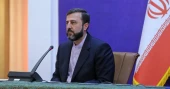
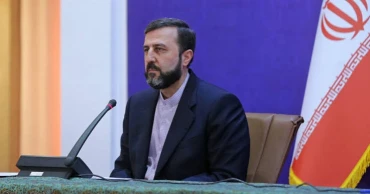
Iran's Deputy Foreign Minister Kazem Gharibabadi said the Iranian delegation held two rounds of meetings with Qatari and Pakistani mediators in Doha, where Tehran raised what it described as U.S. violations of its obligations under the memorandum of understanding (MoU), according to Iranian state media.
Gharibabadi told state broadcaster IRIB that the first meeting was held under the Monitoring and Implementation Working Group, one of four bodies established under the U.S.-Iran MoU.
During the meeting, the Iranian delegation raised what it called the "U.S.'s violation of its obligations under Article 1 of the MoU," which calls for an end to war on all fronts. The discussions also covered reports about U.S. efforts to strengthen military equipment and forces in the region, as well as what Iran described as threatening and interventionist statements by U.S. officials.
The participants agreed to establish an immediate communication channel within a day and to formally document the MoU's shortcomings so the issues could be reviewed and addressed.
The second meeting, attended by Qatari officials and representatives of the country's central bank, focused on the release of about $6 billion in frozen Iranian funds.
According to Gharibabadi, the talks discussed issues related to part of the initial $6 billion, with an understanding that Iran would use the funds to purchase goods based on its "declared needs." #Reports Al Jazeera
1 month ago
US, Iran hold separate talks in Qatar, agree to continue negotiations
U.S. and Iranian negotiators held separate meetings in Qatar on Wednesday through Qatari and Pakistani mediators, making what Qatar described as "positive progress" and agreeing to continue discussions.
Qatar's Foreign Ministry spokesperson Majed al-Ansari said on X that the next round of talks would be held "at the earliest possible time" after the funeral of Iran's former supreme leader, the late Ayatollah Ali Khamenei. The funeral is scheduled to begin Saturday in Tehran.
The U.S. delegation included Middle East envoy Steve Witkoff and Jared Kushner, the son-in-law of U.S. President Donald Trump. Iran was represented by its chief negotiator Kazem Gharibabadi.
The discussions are aimed at working out details that could pave the way for a broader agreement between senior leaders. However, major differences remain, particularly over the Strait of Hormuz and Lebanon.
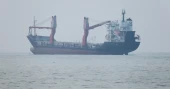
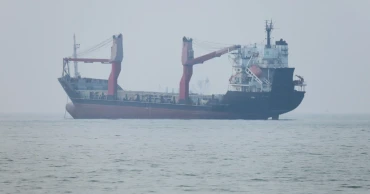
Meanwhile, Iranian state television reported that a foreign container ship ran aground in the Strait of Hormuz after using a route not approved by Iran. No further details about the vessel were released.
The report appeared intended to reinforce Tehran's claim of authority over the strategic waterway, which has long been regarded internationally as an international shipping route. During peacetime, about one-fifth of the world's oil and natural gas supplies pass through the strait.
Since the United States and Israel launched military operations against Iran on Feb. 28, Tehran has repeatedly used its ability to disrupt shipping through the Strait of Hormuz as a source of leverage, affecting global energy markets and trade.
The strait remains one of the biggest obstacles in the negotiations.
Under an interim arrangement, Iran and the United States agreed to allow ships to pass through the waterway without charges for 60 days. However, Tehran later insisted that it should control shipping routes and eventually collect transit fees, challenging long-established international practice.
The United States and several Gulf Arab countries have rejected the proposal. Efforts by Oman and a U.N. agency to establish an alternative route closer to Omani waters were followed by attacks across the Middle East last weekend, highlighting ongoing tensions.
Iranian state television said the stranded vessel became stuck because it had chosen a route with shallow waters and failed to follow approved navigation instructions. It said ships should comply with directions issued by Iran's paramilitary Revolutionary Guard in the strait.
The Guard's navy has repeatedly warned that vessels using routes other than what it called the "Route of Authority" in the Persian Gulf risk "irreparable incidents."
The report made no mention of two ships recently attacked by Iran after attempting to leave the strait without Tehran's approval, including one carrying crude oil from Qatar.
On Wednesday, Witkoff and Kushner also met Qatar's Emir Sheikh Tamim bin Hamad Al Thani and Prime Minister and Foreign Minister Sheikh Mohammed bin Abdulrahman Al Thani, according to a statement from the Qatari government.
U.S. Vice President JD Vance said discussions included shipping through the Strait of Hormuz.
"Obviously, we're worried about the nuclear issue," Vance told reporters. "We're going to start talking about that."
Sheikh Mohammed separately met Gharibabadi and other Iranian officials, with Pakistani mediators also participating. According to Iranian state media, Gharibabadi said there were no direct talks with the U.S. delegation and that discussions with mediators focused on Lebanon and plans to return some of Iran's frozen assets.
Lebanon continues to be another major point of disagreement. Iran has demanded an end to fighting between the Iranian-backed Hezbollah group and Israeli forces, while also calling on Israel to withdraw from southern Lebanon.
Israel, however, insists it must retain control of the territory and preserve its ability to strike Hezbollah, which has continued attacks into northern Israel.
Despite a sharp decline in shipping through the Strait of Hormuz after last weekend's attacks, more countries say their vessels have safely exited the area.
Thailand's Foreign Ministry said Tuesday that 10 of its 11 flagged or chartered vessels had safely passed through the strait. South Korean officials also said all but two of the country's 26 stranded vessels had departed safely.
In a separate development, the U.S. Navy said one crew member was missing after an MH-60S Sea Hawk helicopter made an emergency water landing in the Arabian Sea early Wednesday.
The Navy's 5th Fleet said there was "no indication the emergency was caused by hostile action." Three of the helicopter's four crew members were rescued, while search efforts for the missing crew member continued.
The Navy did not say whether the helicopter had been recovered. The aircraft was assigned to the USS George H.W. Bush, one of two U.S. aircraft carriers operating in waters near Iran.
1 month ago
Iran, Qatar discuss implementation of US-Iran peace MoU in Doha
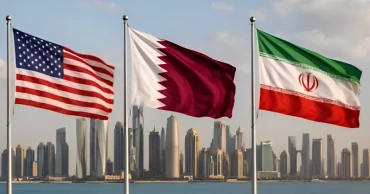
Senior diplomats from Iran and Qatar met in Doha on Wednesday to discuss the implementation of the recently signed U.S.-Iran peace memorandum of understanding (MoU), with a focus on advancing the agreement and addressing challenges surrounding the process.
According to a statement from the Iranian Foreign Ministry, Iran's Deputy Foreign Minister for Legal and International Affairs Kazem Gharibabadi and Qatar's Prime Minister and Foreign Minister Sheikh Mohammed bin Abdulrahman bin Jassim Al Thani reviewed ways to expedite implementation of the MoU, particularly efforts aimed at ending the conflict in Lebanon, while also exploring opportunities to strengthen bilateral cooperation in areas of mutual interest.
The statement said senior negotiators from Iran, Qatar and Pakistan later held a trilateral meeting on the implementation process, although the identities of the participants were not disclosed.
Gharibabadi said working groups had already been established to oversee implementation of the memorandum and prepare for final agreement negotiations. However, formal talks have yet to begin, with discussions on the date and venue continuing through mediators.
The Iranian delegation in Doha also includes representatives from the Foreign Ministry, Central Bank and Agriculture Ministry.
On Tuesday, Foreign Ministry spokesman Esmaeil Baghaei said Wednesday's discussions with Qatari officials would mainly focus on the release of Iran's frozen assets, adding that no meetings with U.S. officials had been scheduled.
Earlier Wednesday, an informed source told media that indirect U.S.-Iran talks were underway in Doha under Qatari and Pakistani mediation, focusing on implementation of the MoU, including frozen Iranian assets and maritime security in the Strait of Hormuz.
1 month ago
Container ship runs aground in Strait of Hormuz as Iran reiterates control claims amid Qatar talks
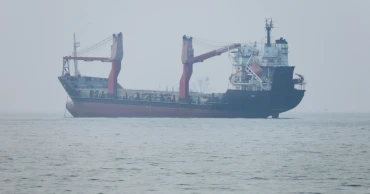
A foreign container ship ran aground in the Strait of Hormuz after allegedly failing to follow a route approved by Iran, Iranian state television reported on Wednesday, as technical talks aimed at ending the Iran-US conflict got underway in Qatar.
Iranian state media identified the vessel only as a foreign container ship and did not disclose its name, flag or cargo details.
According to the report, the ship became stranded in shallow waters after choosing a route outside what Iran describes as its designated "Route of Authority" in the strategic waterway.
Iranian state television said the country's paramilitary Revolutionary Guard had repeatedly warned shipping companies and vessel operators against using routes not authorised by Tehran, claiming such actions could lead to serious incidents.
The report appeared to reinforce Tehran's longstanding assertion of control over navigation in the Strait of Hormuz, a vital global shipping lane through which about one-fifth of the world's oil and natural gas passes during peacetime. The waterway is widely recognised internationally as an international maritime passage.
Meanwhile, technical-level negotiations between Iranian and US representatives began in Doha, Qatar, on Wednesday, according to two regional officials familiar with the talks. The discussions are aimed at resolving outstanding issues and laying the groundwork for a broader agreement to formally end recent hostilities between the two countries.
US Middle East envoy Steve Witkoff and Jared Kushner, US President Donald Trump's son-in-law, are in Qatar for the negotiations, which are being mediated by Qatari officials.
Although Iran has publicly denied scheduling direct talks with US representatives, officials have left open the possibility of indirect negotiations through Qatari mediators, a format previously used by the two sides.
Qatar's Foreign Ministry confirmed that Foreign Minister Sheikh Mohammed bin Abdulrahman Al Thani met with the US delegation, with discussions focusing on the interim agreement as well as regional security and stability through dialogue and diplomacy.
The negotiations are also expected to address broader regional issues, including tensions in Lebanon.
Iran has insisted that all hostilities between the Iran-backed Hezbollah movement and Israeli forces must end, while also calling for Israel to withdraw from territory it currently occupies in southern Lebanon. Israel has maintained that it will retain control of the area to counter Hezbollah attacks.
Speaking to Iranian state television, Iranian Parliament Speaker Mohammad Bagher Qalibaf said efforts to reach a permanent agreement were continuing but warned that Tehran remained prepared for military action if diplomatic commitments were not honoured.
"We are engaged in dialogue, but if they refuse to implement what has been agreed through dialogue, we are prepared for war," he said.
1 month ago
Vance, Rubio take different paths on Iran as 2028 speculation grows
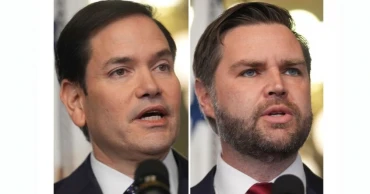
Vice President JD Vance and Secretary of State Marco Rubio appear to be taking different approaches to President Donald Trump's national security agenda as both emerge as possible contenders for the 2028 Republican presidential nomination.
Although the White House and State Department have dismissed any suggestion of a rift, the two senior officials have taken different positions, particularly on Iran and the broader Middle East.
Rubio, the son of Cuban immigrants and a longtime former senator with a strong focus on Latin America, has generally maintained a pro-Israel stance. Vance, a former Marine and Ohio senator who built his political profile by opposing foreign wars, has at times criticized Israel's military actions in Lebanon, arguing they complicated US efforts to negotiate with Iran.
Vance has taken the lead on US negotiations with Iran, while Rubio has focused more on Lebanon. Last week, Rubio played a leading role in reaching a preliminary framework agreement related to Lebanon.
Dan Fried, a former assistant secretary of state and ambassador to Poland who is now with the Atlantic Council, said there appears to be a genuine difference between the two officials.
"The talk about differences is not idle speculation," Fried said. "There is definitely something to it."
The White House rejected any suggestion of internal divisions.
"Why is the legacy media obsessed with driving a wedge between Vice President Vance and Secretary Rubio that does not exist?" White House spokeswoman Anna Kelly said. "There is one camp — President Trump's camp — and the entire administration is fully behind the president's efforts to ensure Iran can never possess a nuclear weapon."
State Department spokesman Tommy Pigott also dismissed reports of any disagreement, saying Rubio and the rest of the administration are fully aligned with Trump's policies.
According to Trump administration officials familiar with the matter, Rubio was skeptical that negotiations with Iran would produce an acceptable agreement and declined to lead the US delegation at the first ceasefire talks held in April in Islamabad, Pakistan.
Vance, seeing an opportunity to strengthen his foreign policy credentials, twice asked Trump to let him lead the negotiations before the president agreed, the officials said, speaking on condition of anonymity because they were not authorized to discuss internal deliberations.
Vance led the US delegation in Pakistan and later represented Washington again during talks in Switzerland after the United States and Iran signed a memorandum of understanding. However, the ceasefire outlined in that agreement has remained fragile, with repeated exchanges of fire in recent days.
Ian Kelly, a retired US diplomat and former ambassador during Trump's first administration, said it is unusual for a vice president to lead such negotiations.
"It's rather unusual for the VP to be given the lead role in a negotiation, but it's quite possible that Rubio is happy to let him," Kelly said. "It's a pig in a poke. It's a loser job."
He added that both Vance and Rubio appear to have ambitions of succeeding Trump, noting that Trump's recent comments suggesting he would blame Vance if the Iran talks fail could put the vice president under additional pressure.
Both Vance and Rubio have rejected suggestions of any disagreement.
"We're all focused on the jobs in front of us," Vance said. "I think the president loves to stir the pot a little bit and loves the entertainment of it."
He also praised Rubio, calling him "a great secretary of state" and "a very, very dear friend," while saying both are focused on serving the American people.
Rubio echoed that message during a visit to Bahrain last week.
"When it comes to foreign policy and national security, we have no drama. We have no games," Rubio told reporters.
He said members of the administration work closely together to carry out Trump's directives and have achieved positive results through collaboration.
Even so, Trump has continued to fuel speculation by asking supporters at campaign-style events whom they would prefer to succeed him and at one point suggested that Vance and Rubio could form an unbeatable future ticket.
Despite their public unity, analysts say the two men have different foreign policy outlooks.
Fried said Rubio largely follows the traditional Republican foreign policy approach associated with former President Ronald Reagan, while Vance has been more skeptical of military involvement overseas.
"Rubio speaks within the rubric of the Ronald Reagan construct of the free world and its importance," Fried said. "Vance is not interested in the free-world construct. He speaks in the language of not wanting to fight what he believes are abstractions."
Fried warned that current US policy could ultimately leave Iran in a stronger strategic position despite its recent setbacks.
Meanwhile, Rubio's aides note that he has repeatedly said he would support Vance if the vice president decides to seek the Republican presidential nomination in 2028.
At the same time, Rubio has strengthened his influence within the administration by reshaping the National Security Council. Several close allies have recently been appointed to key White House positions, including former State Department counselor Mike Needham as deputy national security adviser and Jeremy Lewin, who previously oversaw the dismantling of the US Agency for International Development, as a deputy for the Western Hemisphere. Dylan Johnson also continues to serve in dual roles as head of National Security Council communications and assistant secretary of state for public affairs.
1 month ago
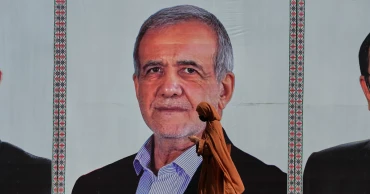
US, Iran signal diplomatic engagement despite dispute over planned Qatar talks
The United States and Iran have separately announced plans to send delegations to Qatar this week, although the two sides remain divided over whether direct negotiations are set to take place following days of military escalation in the Persian Gulf.
US President Donald Trump said Iran had requested a meeting with American officials and that talks were expected to be held in Doha on Tuesday.
However, Iranian officials rejected that claim. Senior negotiator Kazem Gharibabadi said no talks with the United States had been confirmed, while Foreign Ministry spokesman Esmail Baghaei said Tehran's delegation would travel to Qatar to discuss the terms of an interim agreement with Qatari mediators, not US representatives.
"There are no negotiation meetings with the US side at any level scheduled in the coming days," Baghaei said.
Despite the conflicting statements, recent exchanges of military strikes appeared to subside on Monday after several days of heightened tensions.
Earlier this month, Washington and Tehran reached an interim agreement under which Iran would dilute its stockpile of enriched uranium, while the United States agreed to ease oil-related sanctions. The deal also called for the free movement of commercial vessels through the Strait of Hormuz and gave both sides 60 days to negotiate a broader agreement.
The strategic waterway, through which around one-fifth of the world's oil shipments passed before the conflict, has been at the centre of the recent confrontation. Iran's attacks on vessels in the Strait of Hormuz and retaliatory US airstrikes had raised fears of wider regional instability and disruptions to global energy supplies.
A US official, speaking on condition of anonymity, said Washington believes both countries are stepping back from further military action and expects commercial shipping through the Strait of Hormuz to resume without interference.
The official also said Qatar is expected to release $6 billion in frozen Iranian assets under the interim agreement. The funds would be used to purchase food and other humanitarian supplies for the Iranian people.
Iranian President Masoud Pezeshkian also referred to the anticipated release of the assets in remarks carried by state media.
Meanwhile, Oman said it is discussing with Iran the possibility of introducing service-related charges for commercial vessels transiting the Strait of Hormuz, although Omani Foreign Minister Badr al-Busaidi stressed that transit fees themselves would violate international rules and are not supported by Muscat.
Separately, tensions emerged between Iran and France after French President Emmanuel Macron said France and its partners were coordinating efforts to clear mines from the Strait of Hormuz. Iranian Deputy Foreign Minister Kazem Gharibabadi responded that, under the interim agreement, only Iran has the authority to conduct demining operations in the strategic waterway.
In a separate regional development, Lebanese President Joseph Aoun said Lebanon is committed to deploying its army along the country's southern border under a recently signed framework agreement with Israel. The deal has been rejected by the Iran-backed Hezbollah group, which warned that efforts to implement it could trigger civil conflict.
1 month ago
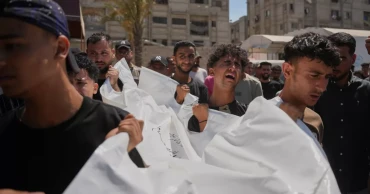
Israeli strike on Gaza tent kills three, including child
An Israeli drone strike hit a tent sheltering displaced Palestinians in central Gaza on Monday, killing at least three people, including an eight-year-old boy and his grandfather, according to local health officials.
The strike targeted a neighbourhood in Deir al-Balah, one of the least damaged towns in central Gaza. Al-Aqsa Martyrs Hospital identified the victims as Hassan al-Hanagra, his eight-year-old grandson Malik Abu Shawish, and another man. Hospital officials said Malik, whose parents are divorced, had been visiting his mother's tent when the strike occurred. His mother was among seven people injured.
The Israeli military said the strike targeted a militant but did not immediately identify the person or confirm whether the intended target was killed.
On Sunday, another Israeli strike in southern Gaza killed Zaher Abu Salem, whom the Israeli military described as an Islamic Jihad member involved in the Oct. 7, 2023, attack on Israel. Four people, including 13-year-old Eileen al-Farra, were killed in Israeli strikes across Gaza that day.
Although a ceasefire has been in place since October, Israeli forces have continued near-daily strikes. Gaza health officials say 1,045 Palestinians, including more than 360 women and children, have been killed since the truce began. Israel says it is targeting militants planning attacks on troops controlling more than 60 percent of Gaza. Five Israeli soldiers have been killed in militant attacks during the ceasefire.
According to Gaza's Health Ministry, more than 73,058 Palestinians have been killed since the war began, while the Hamas-led Oct. 7 attack on Israel killed about 1,200 people and saw 251 taken hostage.
Meanwhile, the Palestinian Health Ministry said a 15-year-old boy from Jerusalem was shot dead during an Israeli raid near Ramallah in the occupied West Bank. The Palestinian Red Crescent Society said Amir Jaber suffered a fatal gunshot wound to the head despite resuscitation efforts. Two others were injured by Israeli fire during a separate raid near Hebron.
The Israeli military did not immediately comment. The Ramallah operation was among at least six raids across the occupied West Bank reported by the Palestinian news agency WAFA on Monday.
1 month ago
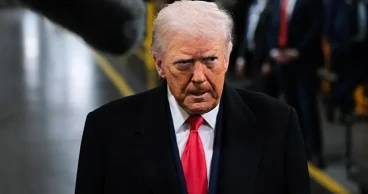
Trump says Iran sought meeting, but Tehran denies any talks are scheduled
US President Donald Trump said Monday that Iran had requested a meeting with American officials, but Iranian authorities denied that any talks had been scheduled.
In a post on social media, Trump said the meeting would take place on Tuesday in Doha, Qatar.
The US president is trying to keep an increasingly fragile interim agreement alive as tensions continue to rise in the Strait of Hormuz. The recent hostilities have raised fears of higher global oil prices, potentially weakening Trump's claims that inflation in the United States is easing.
Earlier on Monday, Iranian President Masoud Pezeshkian said Qatar would release $6 billion in frozen Iranian assets, even as negotiations with Washington faced fresh challenges following attacks in the Persian Gulf over the weekend.
His remarks appeared aimed at reassuring the Iranian public about the interim agreement, particularly as Iran's control over the Strait of Hormuz has come under pressure amid efforts to expand shipping routes through Oman's territorial waters.
Iran's attacks and threats disrupted the movement of cargo ships and oil tankers through the strategic waterway, which normally handles about one-fifth of the world's traded oil and natural gas. The disruption has fueled concerns about a global energy crisis.
Although the strait lies within the territorial waters of Iran and Oman, it has long been regarded as an international shipping route. In recent days, Iran attacked vessels travelling near Omani waters twice, prompting retaliatory US airstrikes and raising concerns that efforts to secure a formal end to the conflict could be derailed. Iran also launched drone and missile attacks targeting Bahrain and Kuwait on Sunday.
Pezeshkian, meanwhile, described the interim agreement as "a great victory for the Iranian people" in remarks carried by the state-run IRNA news agency.
"Based on the plans made, $6 billion out of the total $12 billion of Iranian resources in Qatar will be be released and returned to the country, and necessary follow-ups are being carried out," he said, without providing further details.
The reformist president is the highest-ranking Iranian official to publicly mention the planned release of the funds held in Qatar, which has been acting as a key mediator alongside Pakistan in the negotiations.
However, US officials maintain that none of Iran's frozen assets have been released. Qatar has also not confirmed any transfer, while Iran attacked a tanker carrying Qatari crude oil during the recent exchange of hostilities in the Persian Gulf.
Confusion also persisted over the next round of Iran-US negotiations.
Pakistan, which has been mediating between the two sides, said talks would resume on Tuesday. The Trump administration said on Sunday that discussions had not been canceled and that technical-level talks remained on schedule.
But senior Iranian negotiator Kazem Gharibabadi rejected reports that any talks had been arranged.
"Although consultations with Qatar, including on following up on the implementation of the other side's commitments, are continuing as usual, reports by some media about technical talks by the working groups being held in Doha are not confirmed," he said, according to IRNA.
Technical talks involve lower-level officials working out the details of a possible agreement before senior leaders from Iran and the United States return to formal negotiations.
1 month ago
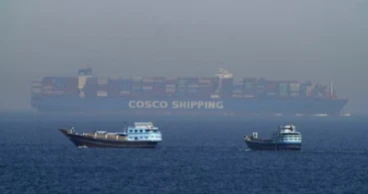
Iran claims control of Strait of Hormuz as tensions with US escalate
Iran's Foreign Minister Abbas Araghchi said Sunday that the Strait of Hormuz remains under Tehran's full control for the next 30 days, warning that continued US military action would further aggravate the already fragile security situation in the region.
His remarks came as the United States reportedly carried out a second day of airstrikes on Iranian targets, hitting Qeshm Island and the southern cities of Sirik and Bandar-e Lengeh following a drone attack on a commercial vessel near the strategic waterway.
Iran said it had launched retaliatory strikes against US forces stationed in Bahrain and Kuwait in response to the attacks and warned of a "crushing response" if further military action is taken against the country.
The latest escalation has raised fears of a broader regional conflict, particularly around the Strait of Hormuz, one of the world's most important oil shipping routes through which a significant share of global energy supplies passes.
Meanwhile, US President Donald Trump accused Iran of violating the memorandum of understanding reached between Washington and Tehran and threatened to "militarily complete the job" if Tehran continued its actions.
There was no immediate independent confirmation of the reported strikes or casualties, and both sides appeared to be hardening their positions amid growing international concern over the rapidly deteriorating security situation in the Gulf region.
Source: Al Jazeera
1 month ago
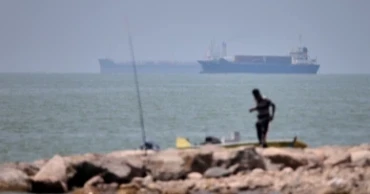
US strikes 10 Iranian military targets as ceasefire comes under fresh strain
The United States carried out strikes on 10 Iranian military targets on Saturday after accusing Tehran of violating a fragile ceasefire by attacking an oil tanker in the Strait of Hormuz.
US Central Command (CENTCOM) said the strikes targeted surveillance infrastructure, communication systems, air defence sites, drone and missile storage facilities, coastal radar installations and minelayer capabilities at multiple locations near the strategic waterway.
President Donald Trump said the attacks were launched after Iran breached the ceasefire agreement, warning Washington could take further military action if Tehran continued its attacks.
CENTCOM said Iranian forces used a one-way drone to strike the oil tanker Kiku, carrying more than two million barrels of crude oil through the Strait of Hormuz. The vessel had departed a Qatari oil field and was bound for the United Arab Emirates.
Iranian media reported explosions near the strait following the US strikes. Earlier, Bahrain accused Iran of launching several drones toward the kingdom, though no damage was reported.
The latest escalation comes as Washington and Tehran continue negotiations under a 60-day interim agreement covering maritime security in the Strait of Hormuz and Iran’s nuclear programme. Maritime authorities also warned that threats to commercial shipping remain high despite expanded alternative shipping routes near Oman.
1 month ago