middle-east
Uncertainty surrounds possible US-Iran talks as ceasefire extension leaves tensions high
Uncertainty continues over the next steps for possible US-Iran talks after US President Donald Trump said Washington had extended the ceasefire in the conflict at Pakistan’s request, while waiting for what he called a “unified proposal” from Tehran.
Iran has not yet responded to Trump’s announcement. Both sides have also warned they could resume fighting if no agreement is reached.
In a social media post on Tuesday, Trump said Iran does not want the Strait of Hormuz closed because it relies on the route to export crude oil. He also earlier indicated that the US military would maintain pressure on Iranian ports.
The developments come as tensions remain high across the wider region. Israel and the Iran-backed Hezbollah group in Lebanon exchanged fire on Tuesday, despite a recent 10-day ceasefire. Talks in Washington are expected later this week.
The conflict has already caused heavy casualties, with thousands killed in Iran and Lebanon and deaths also reported in Israel and Gulf Arab states, along with losses among soldiers and US personnel in the region.
In a separate development, Iran’s paramilitary Revolutionary Guard opened fire on a container ship in the Strait of Hormuz on Wednesday, damaging the vessel, according to the British military’s United Kingdom Maritime Trade Operations (UKMTO).
UKMTO said the incident occurred around 7:55am when a Guard gunboat fired without first contacting the ship. No injuries or environmental damage were reported.
Iranian media outlets linked to the Revolutionary Guard confirmed the incident, with one describing the move as enforcement of Iran’s control over the Strait of Hormuz.
The narrow waterway, through which a large share of global oil shipments passes, is widely regarded as an international shipping route despite lying between Iranian and Omani waters.
The incident follows recent US actions in the region, including the seizure of an Iranian-linked ship and the boarding of an oil tanker associated with Iran’s oil trade in the Indian Ocean, further heightening tensions.
3 months ago
Iran opens fire on container ship in Strait of Hormuz, raising regional tensions
Iran’s paramilitary Revolutionary Guard fired on a container ship in the strategic Strait of Hormuz on Wednesday, damaging the vessel and further heightening tensions in the region.
The United Kingdom Maritime Trade Operations (UKMTO) said the incident took place around 7:55am local time, when a Guard gunboat targeted the ship without issuing any warning.
The attack damaged the container vessel, but no one on board was injured and there was no environmental damage, according to UKMTO.
Iran did not immediately comment on the incident.
The development comes amid rising maritime tensions, following recent US actions including the seizure of an Iranian-linked container ship and the boarding of an oil tanker connected to Iran’s oil trade in the Indian Ocean.
The latest incident also coincided with stalled efforts for planned ceasefire talks in Pakistan that ultimately did not move forward.
The Strait of Hormuz is one of the world’s most important shipping routes, and any disruption there often raises global concern over energy supplies and security.
3 months ago
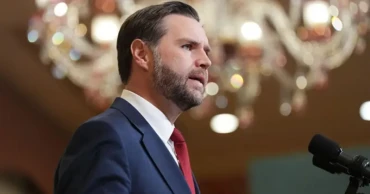
Vance’s Pakistan visit cancelled amid extended Iran ceasefire
The White House has confirmed that U.S. Vice President JD Vance’s planned visit to Pakistan for peace negotiations has been cancelled.
Vance had been scheduled to travel to Islamabad for a second time this month, with his arrival expected on Wednesday, as part of efforts to finalise a deal with Iranian officials.
"Any further updates on in-person meetings will be announced by the White House," an administration official said.
The decision follows President Donald Trump’s announcement that he agreed to extend the U.S.-Iran ceasefire indefinitely.
#From BBC
3 months ago
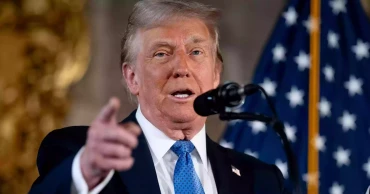
Trump extends Iran ceasefire, keeps blockade amid stalled talks
U.S. President Donald Trump on Tuesday said he is extending the ceasefire with Iran at Pakistan’s request while waiting for a “unified proposal” from Tehran, even as U.S. forces continue blocking Iranian ports.
The announcement came as uncertainty deepened ahead of the truce’s scheduled expiry on Wednesday. Washington and Tehran have both indicated they could return to fighting if no agreement is reached.
The White House has also postponed Vice President JD Vance’s planned visit to Pakistan for a second round of talks, after Iran signaled reluctance to engage further for now.
Trump said the ceasefire would remain in place “until such time as their proposal is submitted, and discussions are concluded, one way or the other.”
Earlier, an Iranian Foreign Ministry spokesperson said Tehran has yet to decide whether to join negotiations in Pakistan and would only participate if it sees a realistic chance of progress.
Since the conflict began, at least 3,375 people have been killed in Iran and more than 2,290 in Lebanon. Death tolls also include 23 in Israel and over a dozen in Gulf Arab states, along with 15 Israeli soldiers in Lebanon and 13 U.S. service members across the region.
Later Tuesday, Trump struck a combative tone in a post on his Truth Social platform after extending the ceasefire without a clear timeline for talks.
He argued that Iran wants the Strait of Hormuz to remain open to export oil, warning that allowing this without a deal would undermine any future agreement.
It remains unclear when or how negotiations in Islamabad might resume.
3 months ago
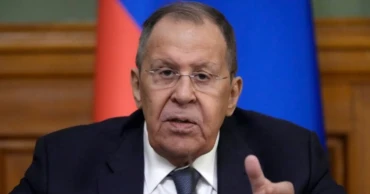
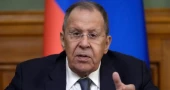
Iran ‘trapped by false promises,’ says Russia’s Lavrov on nuclear negotiations
Russian Foreign Minister Sergey Lavrov has said that Iran has been “trapped by false promises,” while commenting on ongoing US-Iran negotiations, according to Russia’s TASS news agency.
Lavrov said Moscow views the US-Iran talks as involving “threats and pledges” rather than concrete facts.
“We also see Iran’s position, which quite rightly argues that they have already found themselves trapped by false promises, including that very Joint Comprehensive Plan of Action,” he said, referring to the 2015 nuclear deal signed under former US President Barack Obama that limited Iran’s nuclear programme in exchange for sanctions relief.
US ready for war again if Iran deal fails, Trump warns
The Russian foreign minister also said Moscow is analysing developments surrounding possible new talks in Pakistan, noting that “the situation can make an about-face 10 times within 24 hours.”
“If the current efforts of the Iranian and American negotiators, which we support, result in something like the 2015 agreement, I think it would be a great success,” Lavrov added.
Source- Al Jazeera
3 months ago
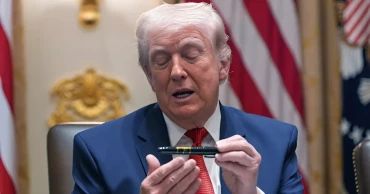
US ready for war again if Iran deal fails, Trump warns
US President Donald Trump has said he is “ready to go” back to war with Iran if no agreement is reached by the end of the ceasefire scheduled for tomorrow.
Meanwhile, Pakistan’s information minister said Iran’s response on whether it will send a delegation to meet US officials is still awaited, as diplomatic efforts to end the US-Israel conflict with Iran remain uncertain.
Earlier, Tehran said it would not enter negotiations under the “shadow of threats” or under a US naval blockade.
Vance to travel to Pakistan on Tuesday for Iran talks
Source: Al Jazeera
3 months ago
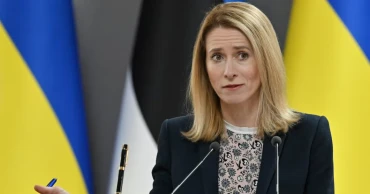
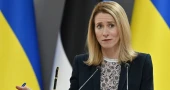
EU to expand sanctions on Iran over Strait of Hormuz, says Kallas
European Union countries have agreed to broaden sanctions against Iran to target those responsible for blocking the Strait of Hormuz, EU foreign policy chief Kaja Kallas said.
She said the decision was taken during a meeting of foreign affairs ministers in Luxembourg.
Kallas also said she had asked ministers to strengthen the EU’s naval mission in the Middle East, which is currently protecting commercial vessels from attacks by Yemen’s Houthi group in the Red Sea.
#From Al Jazeera
3 months ago
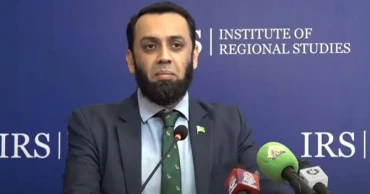
Iran yet to confirm participation in peace talks in Islamabad: Pakistani minister
Pakistan has not yet received formal confirmation from Iran regarding its participation in upcoming peace talks in Islamabad, the country’s information and broadcasting minister said.
Minister Attaullah Tarar said Pakistan, acting as a mediator, remains engaged with Iranian authorities and continues diplomatic efforts to ensure their participation.
“Pakistan, as the mediator, is "in constant touch with Iranians and pursuing the path of diplomacy and dialogue", he said, adding that a decision from Iran to attend the talks before the end of the two-week ceasefire "is critical".
He further said, "Pakistan has made sincere efforts to convince the Iranian leadership to participate in the second round of talks and these efforts continue," according to a statement posted on X.
#From BBC
3 months ago
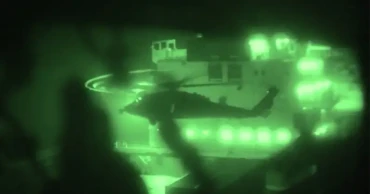
Iran files complaint at UN over US ‘illegal’ seizure of ship
Iran has lodged a formal complaint with the United Nations over the United States’ seizure of an Iranian-flagged merchant vessel, condemning the move as “illegal and barbarous”.
In a statement, Iran’s Foreign Ministry said the complaint was submitted to UN Secretary-General António Guterres and the International Maritime Organization following the interception of the vessel Touska on Monday, reports Al Jazeera.
The ministry said the seizure violated international law as well as the ongoing ceasefire arrangement.
“The Islamic Republic of Iran, while warning of the very dangerous consequences of this illegal and criminal act by the United States, emphasizes the need for the immediate release of the Iranian ship, its sailors, crew, and their families,” the statement said, according to state-run IRNA news agency.
It also alleged that the operation involved intimidation of the ship’s crew and their families.
The development comes amid heightened tensions between Tehran and Washington over maritime security and enforcement measures in the region.
3 months ago
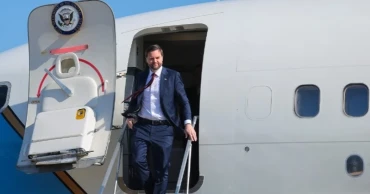
Vance to travel to Pakistan on Tuesday for Iran talks
US Vice President JD Vance is expected to travel to Pakistan on Tuesday morning from Washington for talks related to a possible deal aimed at ending the war with Iran, Axios reported, citing three unnamed sources.
The report said Vance’s visit to Islamabad is part of renewed diplomatic efforts to restart negotiations between Washington and Tehran, though neither government has officially confirmed the trip, reports Al Jazeera.
The proposed talks come amid continued tensions surrounding the ongoing US-Iran conflict and a fragile ceasefire, with both sides trading accusations over violations and military actions in key strategic areas, including the Strait of Hormuz.
Meanwhile, global rights group Amnesty International issued a sharply critical annual report warning of a decline in global human rights standards and describing the leaders of Israel, Russia and the United States as “voracious predators.”
The report said the actions of Israeli Prime Minister Benjamin Netanyahu, Russian President Vladimir Putin and US President Donald Trump are contributing to the erosion of international norms and encouraging similar behaviour by other states.
Amnesty said ongoing conflicts, including the war in Gaza, Russia’s war in Ukraine, and the US-Israeli conflict with Iran, reflect a broader breakdown of respect for international law and civilian protection.
The organisation’s secretary general Agnes Callamard said global systems built after World War II were facing a “sharp U-turn” amid rising authoritarian practices and impunity.
She also noted growing international resistance efforts, including legal cases at the International Court of Justice and the International Criminal Court, as signs of pushback against widespread violations.
3 months ago