usa-canada

US nears new cooperation deals with Pacific Island nations
The Biden administration is nearing deals with two Pacific Island nations to extend ties that are considered critical to maintaining balance in the U.S.-China rivalry for influence in a region where the Chinese are rapidly expanding their economic, diplomatic and military clout.
This week, the U.S. signed memorandums of understanding with the Marshall Islands and Palau that administration officials hope will pave the way for the quick completion of broader agreements that will govern the islands' relations with Washington for the next two decades. Those ties grant the U.S. unique military and other security rights on the islands in return for substantial aid.
The administration believes that extending those so-called “Compacts of Free Association” agreements will be key to efforts to retain American power and blunt Chinese assertiveness throughout the Indo-Pacific.
The memorandums signed this week lay out the amounts of money that the federal government will provide to the Marshall Islands and Palau if their compacts are successfully renegotiated. Negotiations on a similar memorandum with a third compact country, Micronesia, are ongoing.
The current 20-year compacts with the Marshall Islands and Micronesia expire this year; the current compact with Palau expires in 2024 but administration officials said they believe all three can be renewed and signed by mid- to late-spring.
Officials would not discuss specifics of the amounts of money involved because the deals aren’t yet legally binding and must still be reviewed and approved by Congress as part of the budget process.
A Micronesian news outlet, Marianas Variety, reported Thursday that the Marshall Islands will receive $700 million over four years under the memorandum that it signed. But that amount would cover only one-fifth of a 20-year compact extension and does not include the amount Palau would receive.
Joe Yun, Biden's special presidential envoy for compact negotiations, said the amounts will be far greater than what the U.S. had provided in the past.
Read more: Australia to reopen island detention camp after refugee bill
Islanders have long complained that the previous compacts they signed did not adequately address their needs or long-term environmental and health issues caused by U.S. nuclear testing in the 1950s and '60s. Lawmakers had expressed concern dating back to 2021 that the administration was not giving enough attention to the matter.
Yun, who signed the memorandums with representatives of the Marshalls and Palau on Tuesday and Wednesday in Los Angeles, said the Marshall Islands, in particular, would be compensated for such damage and would be given control over how that money is spent.
Yun said it would pay “nuclear-affected communities' health, welfare and development” and also noted that the U.S. had committed to building a new hospital as well as a museum in the Marshalls to preserve the memory and legacy of their role, notably in the Pacific theater during WWII.
This week's signings clear the way for individual federal agencies — including the Postal Service, the Federal Aviation Administration, the Federal Emergency Management Agency, and the National Weather Service — to negotiate their own agreements with the Marshalls and Palau, which will then become part of the broader compacts.
Along with the federal money, those agencies provide their services to the islands. In return, the U.S. is given unique military and national security basing rights and privileges in an area where China is increasingly flexing its muscles.
Yun said China did not come up specifically in the negotiations but it was a major element in all sides' discussions.
“The threat from China is unstated but there is no question that China is a factor,” Yun said. Not only does China have a large and growing economic presence in the region, but the Marshall Islands and Palau both recognize Taiwan diplomatically. “They are coming under Chinese pressure,” he said.
China has steadily poached allies from Taiwan in the Pacific, including Kiribati and the Solomon Islands in 2019. The U.S. announced plans last year to reopen an embassy in the Solomon Islands, which has signed a security agreement with China.
Since World War II, the U.S. has treated the Marshall Islands, along with Micronesia and Palau, much like territories. On the Marshall Islands, the U.S. has developed military, intelligence and aerospace facilities in a region where China is particularly active.
In turn, U.S. money and jobs have benefited the islands’ economy. And many islanders have taken advantage of their ability to live and work in the U.S., moving in the thousands to Arkansas, Guam, Hawaii, Oregon and Oklahoma.
Many on the Marshall Islands believe a U.S. settlement of $150 million agreed to in the 1980s fell well short of addressing the nuclear legacy. But the U.S. position has remained static for more than 20 years, the last time the compact came up for renegotiation.
Various estimates put the true cost of the damage at about $3 billion, including for repairs to a massive nuclear waste facility known as the Cactus Dome which environmentalists say is leaking toxic waste into the ocean.
Read more: Bangladesh to get US support in improving, widening coastal embankments
The U.S. Department of Energy says the dome contains over 100,000 cubic yards (76,000 cubic meters) of radioactively contaminated soil and debris but the structure isn’t in any immediate danger of failing.
3 years ago

Leaders of US, Canada, Mexico show unity despite friction
President Joe Biden, Mexican President Andrés Manuel López Obrador and Canadian Prime Minister Justin Trudeau sought to downplay their frustrations with one another on migration and trade as they met for the near-annual North American Leaders Summit.
The leaders offered a unified front on Tuesday despite tensions that have put a strain on their relationships even as Biden has made repairing alliances a cornerstone of his foreign policy agenda.
The tensions were front and center when Biden and López Obrador met on Monday, with the Mexican president complaining of “abandonment” and “disdain” for Latin America.
But as they closed Tuesday’s summit in Mexico City with a joint news conference, the leaders offered an optimistic outlook.
“We’re true partners the three of us,” said Biden, adding that they had “genuine like” for one another. “We share a common vision for the future, grounded on common values.”
López Obrador, for his part, thanked Biden for not building “even one meter of wall,” a not so subtle dig at Biden’s Republican predecessor, Donald Trump. The warmth during their joint press conference stood in stark contrast to the more brusque exchange a day earlier.
Still, López Obrador prodded Biden to “insist” Congress regularize undocumented Mexican migrants who work in industries where American employers are struggling mightily to find enough workers.
The three-way gathering is held most years, although there was a hiatus while Trump was president. It’s often called the “three amigos summit,” a reference to the deep diplomatic and economic ties among the countries.
However, the leaders have found themselves at odds, especially as they struggle to handle an influx of migrants and to crack down on smugglers who profit from persuading people to make the dangerous trip to the United States.
In addition, Canada and the U.S. accuse López Obrador of violating a free trade pact by favoring Mexico’s state-owned utility over power plants built by foreign and private investors. Meanwhile, Trudeau and López Obrador are concerned about Biden’s efforts to boost domestic manufacturing, creating concerns that U.S. neighbors could be left behind.
Trudeau emphasized in a one-on-one meeting with Biden the benefits of free trade and warned against Buy America policies that the U.S. administration has promoted, according to the prime minister’s office. Nearly 80% of Canada’s exports go to the U.S., so avoiding protectionism remains a priority for Canada.
The key takeaways from the summit revolve around better connections among the three nations and a shared goal of a stronger North America on energy and in particular semiconductors, climate and a pledge to cut methane emissions, an agreement to manage large waves of migrants coming to the region and a more cohesive regional strategy on dealing with future pandemic-related health threats.
In their talks on Monday, López Obrador challenged Biden to improve life across the region, telling him that “you hold the key in your hand.”
“This is the moment for us to determine to do away with this abandonment, this disdain, and this forgetfulness for Latin America and the Caribbean,” Lopez Obrador said.
Biden responded by pointing to the billions of dollars that the United States spends in foreign aid around the world.
At the start of Tuesday’s Biden-Trudeau meeting, the leaders spoke familiarly and with optimism. Trudeau called the U.S. president “Joe” and Biden joked with Trudeau — after the Canadian leader had delivered a statement to reporters in English and French — that he should have paid more attention in his college French classes.
Biden and Trudeau also discussed their countries’ efforts to support Ukraine nearly 11 months after Russia’s invasion. Canada announced Tuesday that it would buy an American-made National Advanced Surface to Air Missile System, or NASAMS, to be donated to Ukraine. The medium-range ground-based air defense system, which protects against drone, missile and aircraft attacks, costs about $406 million and brings Canada’s contribution to Ukraine to more than $1 billion since the start of the war.
The White House said in a statement that the leaders also discussed “the generational opportunity to strengthen supply chains for critical minerals, electric vehicles, and semiconductors.” The U.S. administration also announced that Biden will make his first visit to Canada as president in March.
“There’s a lot of reasons to be optimistic, especially for those of us in our countries,” Trudeau said. “But it’s going to take a lot of work, something neither you or I or most our citizens have ever been afraid of.”
Biden and López Obrador haven’t been on particularly good terms for the past two years. The Mexican leader made no secret of his admiration for Trump, and last year he skipped a Los Angeles summit of the Americas because Biden didn’t invite the authoritarian leaders of Cuba, Venezuela and Nicaragua.
But despite the tension, there’s been cooperation. The U.S. and Mexico have also reached an agreement on a major shift in migration policy, which Biden announced last week.
Under the plan, the U.S. will send 30,000 migrants per month from Cuba, Nicaragua, Haiti and Venezuela back across the border from among those who entered the U.S. illegally. Migrants who arrive from those four countries are not easily returned to their home countries for a variety of reasons.
In addition, 30,000 people per month from those four nations who get sponsors, background checks and an airline flight to the U.S. will be able to work legally in the country for two years.
The number of migrants crossing the U.S.-Mexico border has risen dramatically during Biden’s first two years in office. There were more than 2.38 million stops during the year that ended Sept. 30, the first time the number topped 2 million.
López Obrador spoke at length about Mexico’s efforts to control the flow into the United States of fentanyl, the synthetic opioid that has become a scourge for many American communities. He noted that his government gave the military control of sea ports to help with the interdiction of precursor chemicals coming from Asia.
“We are battling fentanyl, these chemicals, and we are doing it because we care. No human is foreign to us,” he said. “It really matters to us to be able to help with what is happening in the United States, the deaths from fentanyl. But also as we discussed today, it is not only an issue for the United States, because if we don’t confront this problem, this scourge, we are going to suffer it, too. So we have to act in a coordinated way.”
Canada is being nudged by the U.S. and other allies to lead an international mission to Haiti to help solve the ongoing humanitarian and security crisis.
Haitian Prime Minister Ariel Henry and the country’s Council of Ministers sent an urgent appeal Oct. 7 calling for “the immediate deployment of a specialized armed force, in sufficient quantity” to stop the crisis caused partly by the “criminal actions of armed gangs.” But more than three months later, no countries have stepped forward.
Trudeau on Tuesday called the situation “heartbreaking.” Both he and Biden said they will work with the United Nations Security Council to assist the Caribbean nation but also expressed caution about direct intervention.
“We need to make sure that the solutions are driven by the people of Haiti themselves,” Trudeau said.
3 years ago

US border cities strained ahead of expected migrant surge
Along the U.S. southern border, two cities — El Paso, Texas, and Ciudad Juarez in Mexico — prepared Sunday for a surge of as many as 5,000 new migrants a day as pandemic-era immigration restrictions expire this week, setting in motion plans for emergency housing, food and other essentials.
On the Mexican side of the international border, only heaps of discarded clothes, shoes and backpacks remained Sunday morning on the banks of the Rio Grande River, where until a couple of days ago hundreds of people were lining up to turn themselves in to U.S. officials. One young man from Ecuador stood uncertain on the Mexican side; he asked two journalists if they knew anything about what would happen if he turned himself in without having a sponsor in the U.S., and then gingerly removed sneakers and socks and hopped across the low water.
On the American side, by a small fence guarded by several Border Patrol vehicles, he joined a line of a dozen people who stood waiting with no U.S. officials in sight.
El Paso County Judge Ricardo Samaniego told The Associated Press on Sunday that the region, home to one of the busiest border crossings in the country, was coordinating housing and relocation efforts with groups and other cities, as well as calling on the state and federal government for humanitarian help. The area is preparing for an onslaught of new arrivals that could double their daily numbers once public health rule Title 42 ends on Wednesday.
The rule has been used to deter more than 2.5 million migrants from crossing since March 2020.
At a migrant shelter not far from the river in a poor Ciudad Juárez neighborhood, Carmen Aros, 31, knew little about U.S. policies. In fact, she said she’d heard the border might close on Dec. 21.
She fled the cartel violence in the Mexican state of Zacatecas a month ago, right after her fifth daughter was born and her husband went missing. The Methodist pastor who runs the Buen Samaritano shelter put her on a list to be paroled into the United States and she waits every week to be called.
“They told me there was asylum in Juarez, but in truth, I didn’t know much,” she said on the bunk bed she shared with the girls. “We got here … and now let’s see if the government of the United States can resolve our case.”
At a vast shelter run by the Mexican government in a former Ciudad Juárez factory, dozens of migrants watched the World Cup final Sunday on two TVs while a visiting team of doctors from El Paso treated many who had come down with respiratory illness in the cold weather.
Read: ‘Over 51,000 migrants die, thousands go missing in 8 years’
Constantly changing policies make it hard to plan, said Dylan Corbett, director of the Hope Border Institute, a Catholic organization helping migrants in both El Paso and Juarez. The group started the clinic two months ago.
“You have a lot of pent-up pain,” Corbett said. “I’m afraid of what’s going to happen.” With government policies in disarray, “the majority of the work falls to faith communities to pick up the pieces and deal with the consequences.”
Just a couple blocks across the border, sleet fell in El Paso as about 80 huddled migrants ate tacos that volunteers grilled up. Temperatures in the region were set to drop below freezing this week.
“We’re going to keep giving them as much as we have,” said Veronica Castorena, who came out with her husband with tortillas and ground beef as well as blankets for those who will likely sleep on the streets.
Jeff Petion, the owner of a trucking school in town, said this was his second time coming with employees to help migrants in the streets. “They’re out here, they’re cold, they’re hungry, so we wanted to let them know they’re not alone.
But across the street from Petion, Kathy Countiss, a retiree, said she worries the new arrivals will get out of control in El Paso, draining resources and directing enforcement away from criminals to those claiming asylum.
On Saturday, El Paso Mayor Oscar Leeser issued an emergency declaration to access additional local and state resources for building shelters and other urgently needed aid.
Samaniego, the county judge, said the order came one day after El Paso officials sent Texas Gov. Greg Abbott a letter requesting humanitarian assistance for the region, adding that the request was for resources to help tend to and relocate the newly arriving migrants, not additional security forces.
Samaniego said he has received no response to the request and plans to issue a similar county-wide emergency declaration specifying the kind of help the area needs if the city does not get state aid soon. He urged the state and federal governments to provide the additional money, adding they had a strategy in place but were short in financial, essential and volunteer resources.
El Paso officials have been coordinating with organizations to provide temporary housing for migrants while they are processed and given sponsors and relocate them to bigger cities where they can be flown or bused to their final destinations, Samaniego said. As of Wednesday, they will all join forces at a one-stop emergency command center, Samaniego said, similarly to their approach to the COVID-19 emergency.
Abbott, El Paso city officials and U.S. Customs and Border Protection did not immediately respond to requests for comment on Sunday.
Read: Swift return of irregular migrants to help promote legal migration: European Commissioner
Abbott has committed billions of dollars to “Operation Lone Star,” an unprecedented border security effort that has included busing migrants to so-called sanctuary cities like New York, Los Angeles and Washington, D.C., as well as a massive presence of state troopers and National Guard along the Texas-Mexico border.
Additionally, the Republican Texas governor has pushed continued efforts to build former President Donald Trump’s wall using mostly private land along the border and crowdsourcing funds to help pay for it.
El Paso was the fifth-busiest of the Border Patrol’s nine sectors along the Mexico border as recently as March and suddenly became the most popular by far in October, jumping ahead of Del Rio, Texas, which itself had replaced Texas’ Rio Grande Valley as the busiest corridor at lightning-speed late last year. It is unclear why El Paso has become such a powerful magnet in recent months, drawing especially high numbers of migrants since September.
Recent illegal crossings in El Paso – at first largely dominated by Venezuelans and more recently by Nicaraguans – are reminiscent of a short period in 2019, when the westernmost reaches of Texas and eastern end of New Mexico were quickly overwhelmed with new arrivals from Cuba and Central America. El Paso had been a relatively sleepy area for illegal crossings for years.
Meanwhile, a group of about 300 migrants began walking northward Saturday night from an area near the Mexico-Guatemala border before being stopped by Mexican authorities. Some wanted to arrive on Dec. 21, under the mistaken belief that the end of the measure would men they could no longer request asylum. Misinformation about U.S. immigration rules is often rife among migrants. The group was largely made up of Central Americans and Venezuelans who had crossed the southern border into Mexico and had waited in vain for transit or exit visas, migratory forms that might have allowed them to make it across Mexico to the U.S. border.
“We want to get to the United States as soon as possible, before they close the border, that’s what we’re worried about,” said Venezuelan migrant Erick Martínez.
3 years ago
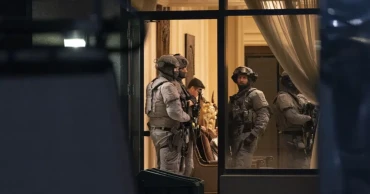
5 dead and suspect killed in Toronto area condo shooting
Five people were shot and killed in a condominium unit a Toronto suburb and the gunman was killed by police, authorities said late Sunday.
Chief James MacSween of York regional police said one of his officers shot and killed the suspect at a condo in Vaughan, Ontario.
“Horrendous scene,” MacSween said. “Six deceased. One of them is the subject. The other five are victims,”
Read more: Shooting near Chicago school leaves 2 pupils dead and 2 injured
He said a seventh person shot by the suspect was in the hospital and expected to survive.
MacSheen said he didn’t have details on whether the shooter was a resident of the building.
Ontario’s Special Investigations Unit, which gets involved when there is a death or serious injury involving police, is investigating.
Police did not identify the suspect or name the deceased.
Police evacuated the building but MacSween said there is no further threat to the community. He said they hoped to have residents back in their units within hours.
Read more: 9 killed in Walmart shooting in Virginia
Mass shootings are rare in Canada and Toronto has long prided itself as being one of the safest big cities in the world.
Canadians are nervous about anything that might indicate they are moving closer to U.S. experiences with gun violence.
3 years ago

Immigrants who are permanent residents can now enlist in Canadian army
As it struggles with low recruitment numbers, the Canadian Armed Forces (CAF) recently announced that immigrants who are permanent residents will now be able to enlist.
According to the Royal United Services Institute of Nova Scotia, a non-profit organisation of retired and active duty members of the CAF, permanent residents were previously only qualified under the Skilled Military Foreign Applicant (SMFA) entry programme, which was “open for individuals... that would reduce training costs or fill a special need... such as a trained pilot or a doctor.”
The decision was made five years after the Royal Canadian Mounted Police (RCMP) declared that they will change their “outdated recruitment process” to allow permanent citizens who have resided in Canada for ten years or more to apply, CTV News reports.
With only roughly half the candidates it needs each month to reach its target of recruiting 5,900 new members this year, Canadian Armed Forces raised the alarm in September about a serious recruitment shortfall that was preventing it from filling thousands of open positions.
Read: 2 dead after all-night shooting rampage in Vancouver, Canada
The military has not confirmed whether the new action was taken to increase recruiting, but Christian Leuprecht, a professor at the Royal Military College of Canada, believes it makes sense.
Leuprecht told CTV News: “In the past, the CAF has had the luxury of being able to limit itself to citizens because it has had enough applicants. This is no longer the case.”
He argued that many other nations have been doing this for years, so hiring non-citizens is by no means a novel idea.
Since Canadian citizenship is relatively simple to obtain for permanent residents, it’s not clear what significant incentive it would offer in the Canadian scenario, he said. “Countries such as France use military service as either a pathway to citizenship or an accelerated pathway to citizenship.”
Read: Canada imposes new sanctions on Russia’s oil and gas sector, chemical industry
Anita Anand, Canada’s Defence Minister, stated in March that the CAF must expand to fulfil international demands brought on by the Russia-Ukraine war.
3 years ago
.jpg)
Canada’s horrific knife rampage over as last suspect dies
The last suspect in a horrific stabbing spree that killed 10 and wounded 18 in western Canada is dead following his capture, and police hope the stunning end to a gripping hunt that stretched into a fourth day will bring some peace to victims’ families.
One official said Myles Sanderson, 32, died from self-inflicted injuries Wednesday after police forced the stolen car he was driving off a highway in Saskatchewan. Other officials declined to discuss how he died, but expressed relief the final suspected killer was no longer on the loose.
“This evening our province is breathing a collective sigh of relief,” Assistant Commissioner Rhonda Blackmore, commander of the Royal Canadian Mounted Police in Saskatchewan, said at a news conference Wednesday night.
The other suspect, Sanderson’s 30-year-old brother, Damien Sanderson, was found dead Monday near the scene of the bloody knife attacks inside and around the James Smith Cree First Nation reserve early Sunday. Both men were residents of the Indigenous reserve.
Blackmore said Myles Sanderson was cornered as police units responded to a report of a stolen vehicle being driven by a man armed with a knife. She said officers forced Sanderson’s vehicle off the road and into a ditch. He was detained and a knife was found inside the vehicle, she said.
Sanderson went into medical distress while in custody, Blackmore said. She said CPR was attempted on him before an ambulance arrived, and emergency medical personnel then took him to a hospital, where he was pronounced dead.
“All life saving measures that we are capable of were taken at that time,” she said.
Blackmore gave no details on the cause of death. “I can’t speak to the specific manner of death,” she said.
But an official, who spoke on condition of anonymity, earlier said Sanderson died of self-inflicted injuries, without giving any further details.
Video and photos from the scene showed a white SUV off to the side of the road with police cars all around. Air bags had deployed in the SUV. Some photos and video taken from a distance appeared to show Sanderson being frisked.
An independent investigation by members of Saskatchewan’s Serious Incident Response Team went to the arrest site and will review Sanderson’s death and police conduct.
The federal public safety minister, Marco Mendicino, also stressed that the events will be investigated.
“You have questions. We have questions,” he told reporters during a Cabinet retreat in Vancouver, British Columbia, adding: “There will be two levels of police who will be investigating the circumstances of Myles Sanderson’s death.”
His death came two days after the body of Damien Sanderson was found in a field near the scene of the knife rampage. Police are investigating whether Myles Sanderson killed his brother.
Blackmore said that with both men dead, authorities will find it hard to figure out what set off the rampage.
“Now that Myles is deceased we may never have an understanding of that motivation,” she said.
But she said she hoped the families of the stabbing victims will find some comfort that neither of the Sandersons remains a threat.
Read: Official: Suspect in Canada stab rampage died after arrest
“I hope that this brings them closure. I hope they can rest easy knowing that Myles Sanderson is no longer a threat to them.”
Some family members of the victims arrived at the scene Wednesday, including Brian Burns, whose wife and son were killed.
“Now we can start to heal. The healing begins today, now,” he said.
The stabbings raised questions of why Myles Sanderson — an ex-con with 59 convictions and a long history of shocking violence — was out on the streets in the first place.
He was released by a parole board in February while serving a sentence of over four years on charges that included assault and robbery. But he had been wanted by police since May, apparently for violating the terms of his release, though the details were not immediately clear.
His long and lurid rap sheet also showed that seven years ago, he attacked and stabbed one of the victims killed in Sunday’s stabbings, according to court records.
Mendicino, the public safety minister, has said there will be an investigation into the parole board’s assessment of Sanderson.
“I want to know the reasons behind the decision” to release him, Mendicino said. “I’m extremely concerned with what occurred here. A community has been left reeling.”
The Saskatchewan Coroner’s Service said nine of those killed were from the James Smith Cree Nation: Thomas Burns, 23; Carol Burns, 46; Gregory Burns, 28; Lydia Gloria Burns, 61; Bonnie Burns, 48; Earl Burns, 66; Lana Head, 49; Christian Head, 54; and Robert Sanderson, 49. The other victim was from Weldon, 78-year-old Wesley Patterson.
Authorities would not say if the victims might be related.
Mark Arcand said his half sister Bonnie and her son Gregory were killed.
“Her son was lying there already deceased. My sister went out and tried to help her son, and she was stabbed two times, and she died right beside him,” he said. “Right outside of her home she was killed by senseless acts. She was protecting her son. She was protecting three little boys. This is why she is a hero.”
Arcand rushed to the reserve the morning of the rampage. After that, he said, “I woke up in the middle of the night just screaming and yelling. What I saw that day I can’t get out of my head.”
As for what set off the violence, Arcand said: “We’re all looking for those same answers. We don’t know what happened. Maybe we’ll never know. That’s the hardest part of this.”
Read: Stabbings in Canada kill 10, hurt 15; suspects at large
Court documents said Sanderson attacked his in-laws Earl Burns and Joyce Burns in 2015, knifing Earl Burns repeatedly and wounding Joyce Burns. He later pleaded guilty to assault and threatening Earl Burns’ life.
Many of Sanderson’s crimes were committed when he was intoxicated, according to court records. He told parole officials at one point that substance use made him out of his mind. Records showed he repeatedly violated court orders barring him from drinking or using drugs.
Many of Canada’s Indigenous communities are plagued by drugs and alcohol.
Myles Sanderson’s childhood was marked by violence, neglect and substance abuse, court records show. Sanderson, who is Indigenous and was raised on the Cree reserve, population 1,900, started drinking and smoking marijuana at around 12, and cocaine followed soon after.
In 2017, he barged into his ex-girlfriend’s home, punched a hole in the door of a bathroom while his two children were hiding in a bathtub and threw a cement block at a vehicle parked outside, according to parole documents.
He got into a fight a few days later at a store, threatening to kill an employee and burn down his parents’ home, documents said.
That November he threatened an accomplice into robbing a fast-food restaurant by clubbing him with a gun and stomping on his head. He then stood watch during the holdup.
In 2018, he stabbed two men with a fork while drinking and beat someone unconscious.
3 years ago

Stabbings in Canada kill 10, hurt 15; suspects at large
A series of stabbings at an Indigenous community and at another town nearby in the Canadian province of Saskatchewan left 10 people dead and 15 wounded, Canadian police said Sunday as they searched for two suspects.
The stabbings took place in multiple locations on the James Smith Cree Nation and in the village of Weldon, northeast of Saskatoon, police said.
Rhonda Blackmore, the Assistant Commissioner of the RCMP Saskatchewan, said some of the victims appear to have been targeted by the suspects but others appear to have been attacked at random. She couldn't provide a motive.
"It is horrific what has occurred in our province today,” Blackmore said, adding there were 13 crime scenes where either deceased or injured people were found.
It is among the deadliest mass killings in Canadian history. The deadliest gun rampage in Canadian history happened in 2020 when a man disguised as a police officer shot people in their homes and set fires across the province of Nova Scotia, killing 22 people. A man used a van to kill 10 pedestrians in Toronto in 2019. But mass killings are less common in Canada than in the United States.
Read: 2 dead after all-night shooting rampage in Vancouver, Canada
Blackmore said police began receiving reports before 6 a.m. of stabbings on the First Nation community. More reports of attacks quickly followed and by midday police issued a warning that a vehicle reportedly carrying the two suspects had been spotted in Regina, about 335 kilometers (208 miles) south of the communities where the stabbings occurred.
Police said the last information they had from the public was that the suspects were sighted there around lunchtime. There have been no sightings since.
“If in the Regina area, take precautions & consider sheltering in place. Do not leave a secure location. DO NOT APPROACH suspicious persons. Do not pick up hitch hikers. Report suspicious persons, emergencies or info to 9-1-1. Do not disclose police locations,” the RCMP said in a message on Twitter.
Doreen Lees, an 89-year grandmother from Weldon, said she and her daughter thought they saw one of the suspects when a car came barreling down her street early in the morning as her daughter was having coffee on her deck. Lees said a man approached them and said he was hurt and needed help.
But Lees said the man took off and ran after her daughter said she would call for help.
“He wouldn’t show his face. He had a big jacket over his face. We asked his name and he kind of mumbled his name twice and we still couldn’t get it,” she said. “He said his face was injured so bad he couldn’t show it.”
She said the man was by himself and "kind of a little wobbly.”
“I followed him a little ways to see if he was going to be OK. My daughter said ‘Don’t follow him, get back here.’”
Weldon resident Diane Shier said she was in her garden Sunday morning when she noticed emergency crews a couple of blocks away.
Shier said her neighbor was killed. She did not want to identify the victim out of respect for his family.
"I am very upset because I lost a good neighbor,” she said.
The search for suspects was carried out as fans descended on Regina for a sold out annual Labor Day game between the Canadian Football League’s Saskatchewan Roughriders and Winnipeg Blue Bombers.
The Regina Police Service said in a news release that with the help of Mounties, it was working on several fronts to locate and arrest the suspects and had "deployed additional resources for public safety throughout the city, including the football game at Mosaic Stadium.″
The alert first issued by Melfort, Saskatchewan RCMP about 7 a.m. was extended hours later to cover Manitoba and Alberta, as the two suspects remained at large.
Read: Canada protests sound common refrain: ‘We stand for freedom’
Damien Sanderson, 31, was described as five feet seven inches tall and 155 pounds, and Myles Sanderson, 30, as six-foot-one and 200 pounds. They may be driving a black vehicle.
Saskatchewan Crime Stoppers issued a wanted list last May that included Myles, writing that he was “unlawfully at large.”
The Saskatchewan Health Authority said multiple patients were being treated at several sites.
“A call for additional staff was issued to respond to the influx of casualties,” authority spokeswoman Anne Linemann said in an email.
Mark Oddan, a spokesman with STARS Air Ambulance, said two helicopters were dispatched from Saskatoon and another from Regina.
He said two carried patients to the Royal University Hospital in Saskatoon, while the third carried a patient to Royal University from a hospital in Melfort, a short distance southeast of Weldon.
“The attacks in Saskatchewan today are horrific and heartbreaking. I’m thinking of those who have lost a loved one and of those who were injured,” Canadian Prime Minister Justin Trudeau tweeted.
James Smith Cree Nation declared a state of emergency.
Deadly mass stabbings are more rare than mass shootings but have happened around the world. In 2014, 29 people were slashed and stabbed to death at a train station in China’s southwestern city of Kunming. In 2016, a mass stabbing at a facility for the mentally disabled in Sagamihara, Japan, left 19 people dead. A year later, three men killed eight people in a vehicle and stabbing attack at London Bridge.
3 years ago
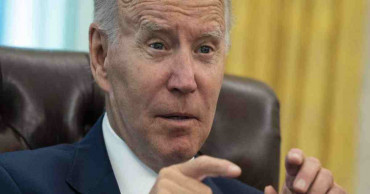
Doctor: Biden’s COVID symptoms ‘almost completely resolved’
President Joe Biden has improved enough from his coronavirus infection that he’s able to resume his regular exercise routine, according to an update Tuesday from his doctor.
Dr. Kevin O’Connor wrote in a new note that Biden’s COVID-19 symptoms “have now almost completely resolved,” and all of his vital signs are good.
Biden took his fifth and final dose of Paxlovid, which is intended to prevent severe symptoms from COVID-19, on Monday night.
Read: Biden’s COVID symptoms improve; WH says he’s staying busy
Tuesday is Biden’s fifth full day of isolation, and he plans to test for the virus on Wednesday.
If he tests negative, he will return to working in person.
“The moment that he turns negative, he’ll return to work,” said Dr. Ashish Jha, the White House COVID-19 response coordinator, during Monday’s briefing at the White House.
4 years ago

2 dead after all-night shooting rampage in Vancouver, Canada
A gunman who roamed for hours through a sleeping Vancouver suburb shot four people early Monday, two of them fatally, as he opened fire at a casino, a center for the homeless and other locations before being killed by police, authorities said.
The attacks began in the wee hours in the bedroom community of Langley and continued until dawn, according to authorities, who initially suggested the shootings had targeted homeless people.
The first shooting occurred at midnight at the casino, with more shootings at 3 a.m., 5 a.m. and 5:45 a.m. — including at a residential complex that provides support for people who are transitioning out of homelessness. The other shooting scenes were a bus stop and a highway, police said.
Evidence of the all-night rampage was scattered around Langley, including an overturned bicycle spilling personal possessions onto a street and a shopping cart with someone’s belongings.
Also read: 2 killed, 5 injured in shooting at Los Angeles park: Police
Police sent a cellphone alert to residents at 6:20 a.m., saying they were at the scene of several shootings “involving transient victims," describing the gunman and asking people to “please remain alert and out of the area.”
But by then, the gunman was already dead. Sgt. David Lee, a spokesman for homicide investigators, later told reporters that it was not yet clear if the victims were homeless.
The Royal Canadian Mounted Police said an emergency response team confronted the suspect not far from a highway bypass where a man was found with a gunshot to his leg.
That's when officers fatally shot the gunman, said Ghalib Bhayani, superintendent of the mounted police.
Also read: Chief: 3 dead in Indiana mall shooting; witness kills gunman
Police later identified the shooter as Jordan Daniel Goggin, 28, of Surrey, British Columbia. They are investigating the motive.
Authorities did not know if the shooter and his victims were acquainted, Bhayani said.
He told reporters that the suspect's death is subject to an investigation by the Independent Investigations Office of British Columbia, a civilian-led police oversight agency.
Besides the man with the leg wound, a woman was also wounded and was hospitalized in critical condition, police said.
The shootings roiled Langley, a town of 29,000 about 30 miles (48 kilometers) southeast of Vancouver. The town features a variety of shops and restaurants and boasts almost 350 acres (142 hectares) of parks. Many residents moved to Langley for its less expensive housing and commute to Vancouver, the largest city in the province of British Columbia.
Most of the shootings were in downtown Langley. One reported shooting was in neighboring Langley Township.
After the shooting began, ambulances and police vehicles converged at a mall. The area was cordoned off with yellow police tape and a major intersection was closed. A black tent was set up over one of the crime scenes. A homicide team confirmed on social media that its investigators deployed to Langley to help.
An unmarked police SUV at one of the shooting scenes, near a bus depot, had at least seven bullet holes in the windshield and one through the driver’s window.
Mass shootings are less common in Canada than in the United States. The deadliest gun rampage in Canadian history happened in 2020 when a man disguised as a police officer shot people in their homes and set fires across the province of Nova Scotia, killing 22 people.
The country overhauled its gun-control laws after an attacker killed 14 women and himself in 1989 at Montreal’s Ecole Polytechnique college.
It is now illegal to possess an unregistered handgun or any kind of rapid-fire weapon in Canada. To purchase a weapon, the country also requires training, a personal risk assessment, two references, spousal notification and criminal record checks.
4 years ago

Massive New Mexico wildfire grows, but Taos safe for now
Burning now for more than a month, the largest wildfire in the U.S. was spreading toward mountain resort towns in northern New Mexico on Wednesday, prompting officials to issue another set of warnings for more people to evacuate.
“Day 36,” fire spokesman Bill Morse said at a briefing Wednesday night. “Ever since April 6, this fire has grown day by day by day.”
Also read: Strong, swirling winds complicate New Mexico wildfire fight
Meanwhile, a wildfire that erupted Wednesday afternoon in coastal Southern California raced through coastal bluffs of multimillion-dollar mansions, burning at least 20 homes, fire officials said. The flames were fanned by gusty ocean winds but they were dying down Wednesday night. No injuries were reported but several streets were ordered evacuated.
The fire, which occurred in Laguna Niguel, was relatively small at about 200 acres (81 hectares) but the wind drove embers into palm trees, attics and dense, dry brush on slopes and steep canyons that hadn’t burned for decades, Brian Fennessy, chief of the Orange County Fire Authority, said at an evening news conference.
Fennessy said climate change has made even small fires that once would have been easily contained into extreme threats to life and property throughout the West.
As night fell, fire officials in New Mexico said the fastest-moving flames along the eastern front of the Sangre de Cristo range on the southern end of the Rockies were headed farther northeast — away from the area's biggest population center in Taos, a well-known tourist enclave 40 miles (64 kilometers) south of the Colorado line.
“Currently no issues in the Taos area," fire operations chief Todd Abel said. “The fire is kind of wanting to move to the north and east a little bit. But we’re still going to pay close attention.”
Some aircraft were able to fly to drop retardant on the blaze despite winds gusting in some areas in excess of 45 mph (72 kph). And some evacuation orders were relaxed along the southern flank of the fire near Las Vegas, New Mexico — more than 50 miles (80 km) south of the flames on the northern perimeter.
Additional crews were on order to join the more than 1,800 personnel fighting the fire, and forecasters said conditions should be more favorable by the weekend if crews can hold their ground through another red-flag warning stretch into Thursday evening.
On Wednesday, the most active part of the wind-fueled fire northeast of Mora was tossing hot embers farther into unburned territory giving the fire an even bigger foothold on the tinder-dry landscape.
“Another hot, dry, windy day. No surprises there,” fire incident meteorologist Makoto Moore said at Wednesday night's briefing in Las Vegas.
After growing more than 50 square miles (130 square kilometers) the day before, the fire had charred more than 370 square miles (958 square kilometers) by Wednesday morning. Evacuations were ordered for villages south of the resort town of Angel Fire east of Taos, where residents were told to also be packed and ready to go.
The towering plume of smoke created by the raging wildfire could be seen hundreds of miles away Wednesday afternoon, but it was more unnerving for residents of Taos.
“I think everyone is a little on edge,” Karina Armijo, a town spokeswoman, said Wednesday, adding that she's been busy fielding calls from people who are wondering whether it's still safe to visit. “It's hard to say what's going to happen a week from now versus three weeks from now — or even tomorrow.”
Also read: New Mexico residents brace for extreme wildfire conditions
In winter, the challenging ski slopes just north of town draw people from around the world. Just last month, the Taos ski valley hosted the World Pro Ski Tour’s championship races. Art galleries, adobe churches and a rich history of Hispanic and Native American culture are the attractions in warmer months along with the aspen-covered biking and hiking trails that traverse the region.
The fire already has burned through a forested landscape held sacred by its rural residents, many losing homes that have been in their families for generations. Some residents allowed to return Tuesday and Wednesday found only charred rubble. Others were more fortunate as the flames skirted their homes.
Firefighters were working to protect buildings around the towns of Mora and Holman and in smaller villages to the north, while authorities closed many roads in the area due to firefighting activity, smoke and fire danger.
“This is tough firefighting business right here,” fire Incident Commander Dave Bales said in a briefing. “This is not easy, especially in the fuel types we're in, in the Ponderosa pine, mixed conifer, even down into the grass. When we can’t fly aircraft, when we can’t get people on the direct edge of the fire, when it’s spotting over us, that’s a huge concern for us.”
A federal disaster already has been declared because of the blaze, which is partly the result of a preventative fire that escaped containment on April 6 after it was set to clear brush and small trees so they could not serve as wildfire fuel. That fire merged with another wildfire several weeks later.
Crews also were battling a smaller fire near Los Alamos National Laboratory, a key government facility for nuclear research that has been tapped to ramp up production of plutonium components for the nation's nuclear arsenal. Most employees began working remotely this week as the lab and adjacent town prepared for possible evacuations as a precaution.
Crews working that blaze have been using heavy machinery to clear out vegetation and build more fire lines in hopes of keeping the flames from moving closer to the community.
4 years ago