Gadget
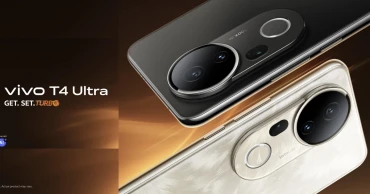
vivo T4 Ultra Review: A Game-Changing Mid-range Flagship
The inventive smartphone brand Vivo launched the vivo T4 Ultra, a midrange flagship, on June 11, 2025, in India. Packed with high-end features, the uniquely designed phone is an instant head-turner. The phone extends the reputation of Vivo’s T-series models, coming as one of the most well-rounded products from its manufacturer. Here is a detailed feature-by-feature description of the vivo T4 Ultra with an effort to delve deeper into its configuration, performance, pros, cons and pricing in Bangladesh.
Key Specs and Features of the Vivo T4 Ultra
The vivo T4 Ultra, drawing forth the efficiency granted by its robust processor and other compatible chipsets and features, seeks to cater to the demands of power users. Since the Pixel 7 Pro, the Galaxy S24 FE 5G, and the iQOO Neo 10, the T4 Ultra are remarkable additions to the higher mid-segment.
Design
The vivo T4 Ultra measures 6.32 inches by 2.95 inches by 0.30 inches dimensionally, coming a few mm shorter than the Galaxy S24 FE 5G and the iQOO Neo 10. Available in two colour variants, each with discernible design patterns: Phoenix Gold with a glittering back and Meteor Grey with a solid, minimal back design. The rear panel of the Phoenix Gold variant is styled with a feather pattern that shimmers dynamically when light is projected from different angles. The Meteor Grey, on the other hand, has a flat, polished rear surface that glows under light with a soft gleam.
Read more: Infinix GT 30 Pro Review: Best Budget Gaming Phone with Flagship Features in 2025
The rear camera panel is a giant vertical ellipse, which may remind you of a vintage wall clock. A circular cutout at the top of the ellipse houses two primary lenses. There is another lens placed below the circle. Near the bottom of the ellipse, a ring flashlight is placed. The fingerprint sensor is in-display, located near the bottom. Users will find all the essential buttons and ports, apart from a 3.5mm audio jack, around the phone's sides.
Display
The vivo T4 Ultra uses a 6.67-inch AMOLED display, which is the current market norm for higher-mid-range smartphones. The pixels on the display are balancedly distributed, keeping a resolution of 1260 x 2800 pixels and a density of 460 ppi. Its peak brightness level of 5000 nits distinguishes it from the other choices. The display is highly touch-responsive at a 120 Hz refresh rate and gives precision when controlling motion graphics.
Apart from the linear punch-hole cutout on the top, the screen extends throughout the front surface. The bezel and chin around the screen are maintained to the minimum extent, allowing for a spacious visual window. Rendered graphics look crisp and bright equally under direct or low lights with adjusted brightness.
Read more: Basic to Flagship: Top 5 Official Smartphones Released in Bangladesh in 2025
Camera
The vivo T4 Ultra sports a 50MP primary camera setup. Its powerful 50MP periscope lens sets the new standard for phones at this price, going beyond the Google Pixel 7’s 48MP periscope shooter. The setup also includes an 8MP ultrawide lens that helps capture panoramic shots, sprinkling balance all over. It’s a clear upgrade over the iQOO Neo 10’s simple 50MP wide and 8MP ultrawide camera module.
The vivo T4 Ultra offers a 32MP wide secondary lens for selfie lovers. Photography with the phone is set for a good experience with features like 3X zoom, AI enhancements, OIS support, and detailed macro images. This makes it the only option available to confront the camera-centric Pixel 7’s renown.
All lenses perform noticeably better in daylight and brighter settings. Darkness nudges down the usual sharpness from the images and smoothens the overall features to fill in missing details.
Read more: Xiaomi Redmi Turbo 4 Pro Review: Can It Survive the Competition?
Hardware and Software
The Vivo T4 Ultra outperforms the Galaxy S24 FE 5G and the Pixel 7 Pro, as the latter two are based on older chips. With T4 Ultra, you will get a last-generation 4nm Dimensity 9300+ chipset, which accompanies an Immortalis-G720 MC12 GPU and up to 12GB of RAM. Combined, these features contribute to outstanding performance. Playing graphically demanding games like Genshin Impact and PUBG will feel effortless without putting you through lag or slow movements. The phone, though, falls short of reaching the level of performance delivered by the iQOO Neo 10 with its Snapdragon 8s Gen 4 and up to 16GB RAM.
The Vivo T4 Ultra runs on Funtouch 15, the native customized operating system built on the stock Android 15. The Funtouch OS is popular for letting users personalize their phone’s navigational outlines, empowering ease of use and better appearance. There are a few promotional bloatware programs that are uninstallable on wish.
Battery and Charger
The phone presents a 5500 mAh Silicon-Carbon battery, which is already a great leap forward compared to the Pixel 7 Pro’s 5000 mAh and Galaxy S23 FE 5G’s Lithium-Ion cells. However, considering the high energy-consuming features and the current market trend, a 7000 mAh battery would be more appreciable for the phone, just as we have seen in the iQOO Neo 10. To compensate for fast power drainage during heavy gaming sessions, users will get a 90W wired charger that takes only 48 minutes to replenish the battery. A reverse charging facility is also included.
Read more: vivo iQoo Z10 Turbo Review: Is It the Mid-Range Beast You Are Looking For?
Price of vivo T4 Ultra in Bangladesh
The vivo T4 Ultra is still not available in Bangladesh. Multiple variants of the phone are available in India, starting from (8/256 GB) INR 37,999 or BDT 53,590.
Pros and Cons of vivo T4 Ultra
.
Pros
- Stylish, premium design with unique finishes- Bright AMOLED display- 5000 nits peak brightness- Robust camera setup- Dimensity 9300+ and up to 12GB RAM- 90W fast charging- 5500mAh Silicon-Carbon battery- Reverse charging support- Runs Android 15 with customizable Funtouch OS.
Cons
- No 3.5mm headphone jack- Demands for higher battery capacity- Low-light photography could be sharper- Some pre-installed bloatware.
Read more: Motorola Edge 60 Pro Review: Know the Pros and Cons
Conclusion
The vivo T4 Ultra is a stylish, performance-focused midrange flagship with a stunning AMOLED display, powerful Dimensity 9300+ chipset, and a standout 50MP periscope camera. With 90W fast charging, Android 15, and unique design variants, it offers excellent value, though it could benefit from better low-light photography and larger battery capacity.
1 year ago
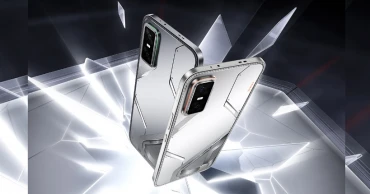
Infinix GT 30 Pro Review: Best Budget Gaming Phone with Flagship Features in 2025
Infinix is a brand known for delivering high-performance smartphones at budget-friendly prices, and it has made waves with its GT series focused on mobile gaming. The Infinix GT 30 Pro, launched on June 1, 2025, continues this trend with powerful specs and gamer-centric features.
Features of the Infinix GT 30 Pro
.
Design and Build Quality
The Infinix GT 30 Pro keeps its gamer-centric appeal with a distinctive "cyber-mecha" aesthetic, customizable RGB LED strips, and well-thought-out ergonomics for handheld gaming. The body is made from a glass front with a plastic frame and back, weighing a reasonable 189 grams.
It feels lightweight yet sturdy in hand, with IP64-rated resistance for dust and water splashes—an upgrade from the GT 20 Pro’s IP54, though still a notch below the iQOO Z10 Turbo Pro’s IP65 and Realme 14’s full IP68/IP69 protection.
The side frame houses pressure-sensitive gaming triggers, giving the GT 30 Pro a clear advantage for gamers who prefer tactile input. While this is not entirely new—its predecessor offered a similar experience—the layout and responsiveness have improved.
Read more: Basic to Flagship: Top 5 Official Smartphones Released in Bangladesh in 2025
Comparatively, the Realme 14 and iQOO Z10 Turbo Pro lack such dedicated gaming hardware, relying solely on screen touch for interaction. For gaming-focused users, this design tweak delivers real functional value.
Display Quality
Infinix has gone all out on display specs here. The GT 30 Pro sports a 6.78-inch AMOLED screen with a 144 Hz refresh rate, 1 billion colours, and an astonishing peak brightness of 4500 nits. It is easily one of the brightest displays in its class and provides an excellent viewing experience under any lighting condition. The 1224x2720 resolution and ~440 PPI density make content sharp and fluid.
Compared to the GT 20 Pro’s 1080p panel at 1300 nits and the realme 14’s 120Hz AMOLED with 2000 nits, the GT 30 Pro clearly stands out. Even the iQOO Z10 Turbo Pro, with its superior 1260x2800 resolution and HDR-ready 144Hz display, only marginally edges past in pixel density (~453 PPI) but not in raw brightness.
When factoring in price, the GT 30 Pro's panel punches way above its weight class and offers a near-flagship visual experience, especially during gaming or media consumption.
Read more: Xiaomi Redmi Turbo 4 Pro Review: Can It Survive the Competition?
Camera Performance
The Infinix GT 30 Pro is equipped with a dual rear camera setup — a 108 MP (f/1.9) main shooter and an 8 MP (f/2.2; 111˚ ultrawide) ultrawide lens. The main sensor performs solidly in daylight with crisp detail and accurate colour reproduction.
However, it lacks OIS (optical image stabilisation), which becomes apparent in low-light scenarios where the images show grain and motion blur. The 8MP ultrawide camera is usable but not spectacular, mainly serving as a utility lens.
Compared to the GT 20 Pro, which also has a 108 MP primary sensor but with OIS and additional macro and depth cameras, the GT 30 Pro loses some ground in versatility and stability. realme 14 offers a single 50MP sensor with OIS that does surprisingly well in all conditions, while the iQOO Z10 Turbo Pro boasts a 50MP wide camera with both PDAF, OIS, and 8MP ultrawide camera producing clearer, more stabilised shots and better video quality.
The 13 MP front-facing camera on the GT 30 Pro offers decent selfies, with acceptable skin tone processing and 4K @ 30 fps video support—another spec where it surpasses the competition, especially Realme 14's 1080p-only selfie cam.
Read more: vivo iQoo Z10 Turbo Review: Is It the Mid-Range Beast You Are Looking For?
Processor Performance
At the heart of the GT 30 Pro is the new MediaTek Dimensity 8350 Ultimate chipset, built on a 4nm process. It includes a powerful octa-core CPU (3.35 GHz prime core) and Mali-G615 MC6 GPU. Performance is excellent for the price, offering smooth multitasking and rapid app loads.
When benchmarked, it outpaces the Dimensity 8200 Ultimate in the GT 20 Pro, especially in sustained workloads. However, the iQOO Z10 Turbo Pro’s Qualcomm SM8735 Snapdragon 8s Gen 4 chip is a step above. It uses a Cortex-X4 prime core and Adreno 825 GPU, which perform better under stress, particularly for heavy multitasking and 3D gaming.
Realme 14’s Qualcomm Snapdragon 6 Gen 4 falls behind all three in CPU and GPU performance, making it the least powerful in this comparison. For most users, especially gamers and content creators, the GT 30 Pro provides more than enough raw processing power for both everyday and intensive tasks.
Gaming Performance
Gaming is where the GT 30 Pro truly shines. The high-refresh-rate screen, advanced cooling, and dedicated triggers create a performance-focused setup. The pressure-sensitive zones allow customisable in-game control, which can be mapped to shoot, aim, or other actions in FPS games. Bypass Charging 2 reduces thermal strain during long gaming sessions, preventing throttling while preserving battery health.
Read more: Motorola Edge 60 Pro Review: Know the Pros and Cons
Compared to the GT 20 Pro, which offered similar gaming features without bypass charging and with slightly less thermal efficiency, the GT 30 Pro is a noticeable upgrade. While iQOO Z10 Turbo Pro edges ahead in raw gaming frame rates due to its stronger GPU, it lacks the dedicated hardware gaming triggers. realme 14 simply is not built for gaming at the same level. It offers decent performance but has no dedicated hardware or cooling features.
Battery Life
The GT 30 Pro offers a massive 5200 mAh or 5500 mAh battery, which supports 45W wired, 30W wireless, 10W reverse wired, and 5W reverse wireless charging. It also features bypass charging—a godsend for gamers. The battery easily lasts over a day under mixed use, and even heavy gaming does not deplete it drastically.
The GT 20 Pro, by contrast, has a smaller 5000 mAh battery with no wireless or reverse charging features. realme 14 features a 6000 mAh battery with 45 W fast charging and bypass support but lacks wireless capabilities. iQOO Z10 Turbo Pro leads the pack in raw charging speed with a 7000 mAh battery and insane 120 W wired charging—charging to 50% in just 15 minutes.
Here, iQoo offers the biggest battery while Infinix wins on charging versatility with both wireless and reverse features, making it more flexible than its competitors.
Read more: Best 10 Smartphones Releasing in May 2025
Software and User Interface
The GT 30 Pro ships with Android 15 and XOS 15. It guarantees two major OS updates, which is decent but still trails behind flagship standards. XOS is feature-rich, especially for gamers, thanks to its XArena gaming mode, trigger customisation, and performance tuning. However, it suffers from the typical drawbacks of bloatware and occasional UI inconsistencies.
The GT 20 Pro had similar issues on Android 14 XOS 14, so while the UI has improved, it is not a revolution. Compared to Android 15 OriginOS 5 on the iQOO Z10 Turbo Pro and Android 15 Realme UI 6.0 on the Realme 14, Infinix's XOS feels more feature-heavy but less polished.
Vivo’s and Realme’s UIs are cleaner, smoother, and more optimised for day-to-day use, although they lack some of the deep gaming tools that XOS offers.
Storage Options
Infinix GT 30 Pro does not hold back in the memory department. With up to 12GB RAM and 512GB UFS 4.0 storage, it competes aggressively. The storage is blazing fast and perfect for gamers and power users alike.
Read more: vivo V50 Lite Review: Does it offer value-for-money
GT 20 Pro offers the same RAM but tops out at UFS 3.1 storage, meaning slower app loads and file transfers. The iQOO Z10 Turbo Pro offers even higher specs (up to 16GB RAM/512GB storage and UFS 4.1), making it ideal for multitaskers and streamers. Realme 14 maxes out at 12GB RAM and 512GB storage but uses older memory tech.
In this regard, GT 30 Pro hits a sweet spot of affordability and performance with modern storage solutions that most users will appreciate.
Pros and Cons of Infinix GT 30 Pro
.
Pros
- 6.78-inch AMOLED display with 144Hz refresh rate.- Super bright screen (up to 4500 nits).- Powerful Dimensity 8350 Ultimate chipset.- 8GB/12GB RAM with UFS 4.0 storage.- 108 MP main camera for sharp photos.- Dual stereo speakers tuned by JBL.- Large 5200/ 5500 mAh battery.- Fast 45W wired and 30W wireless charging.- Bypass charging for better gaming thermals.- Pressure-sensitive gaming triggers.- RGB back panel adds unique design flair.- NFC and infrared ports included.- Under-display fingerprint scanner.- Android 15 with gaming-focused XOS 15.
Read more: Tecno Camon 40 Pro Review: Is It Worth It?
Cons
- Only IP64 rating (dust and splash proof, not waterproof).- No 3.5mm headphone jack.- No microSD card slot for storage expansion.- Slight software bloat with XOS skin.- Plastic build may feel less premium.- Ultrawide and low-light camera quality could be better.
Price of Infinix GT 30 Pro
The official price of the Infinix GT 30 Pro in Bangladesh is BDT 41,999 for the 12GB RAM + 256GB storage variant.
Takeaways
The Infinix GT 30 Pro is ideal for mobile gamers and power users who want top-tier performance without overspending. However, if camera quality or water resistance is your top priority, or you need a headphone jack, this phone might not be the best fit for you.
Read more: Infinix Note 50 Pro Plus Review: Is it a value-for-money midrange smartphone?
1 year ago
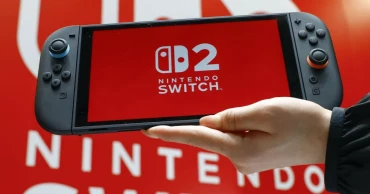
Nintendo's Switch 2 console sells over 3.5m units in 4 days
Nintendo Co on Wednesday said that it sold over 3.5 million units of its Switch 2 console worldwide in just four days after its release last Thursday, the fastest pace for any hardware of the company.
Sales of Switch 2 were about double that of the original Switch console, released in 2017 in the first four days, according to the Kyoto-based gaming giant.
Microsoft Unveils Majorana 1: A Breakthrough in Quantum Computing
Kyodo News reported that Nintendo plans to sell 15 million units of Switch 2, its first new gaming console in over eight years, in the current fiscal year through March 2026 worldwide. Strong pre-order demand has sparked optimism that the device would boost the company's fortunes.
The new console includes new features such as screen sharing and voice chat via a built-in microphone.
It also features a larger screen with roughly twice the pixel count of the original Switch and supports 4K output on televisions.
1 year ago

China criticizes US over chip restrictions and student visa threats
China strongly criticized recent U.S. actions it claims are detrimental to Chinese interests on Monday. These include new guidelines restricting exports of AI chips, a ban on selling chip design software to China, and a plan to revoke visas for Chinese students.
“These actions seriously violate the understanding reached in trade talks held in Geneva last month,” China’s Commerce Ministry stated.
The criticism refers to a joint agreement in which the U.S. and China pledged to ease trade tensions by reducing the steep tariffs each side had imposed. However, despite this temporary truce, fundamental disagreements remain unresolved, as highlighted by the latest tensions.
The 90-day agreement was intended to allow both sides time to negotiate a more lasting resolution. Yet, while tariffs were lowered, they still remain elevated compared to earlier levels, contributing to continued uncertainty for global businesses and investors.
U.S. Trade Representative Jamieson Greer confirmed that the U.S. had agreed to reduce a tariff rate from 145% to 30%, while China lowered its own rate on American imports from 125% to 10%.
According to the Commerce Ministry, China upheld its side of the deal by rolling back tariffs and other trade measures. In contrast, it accused the U.S. of reigniting tensions with new restrictions and undermining the fragile trade relationship.
“The U.S. has unilaterally instigated new economic and trade conflicts, increasing instability and uncertainty in our bilateral ties,” the ministry said. It added that China would “take firm and strong actions to protect its lawful rights and interests.”
In response to recent remarks by former President Donald Trump, China pushed back against his accusations. “Instead of examining its own actions, the U.S. has wrongly blamed China for breaking the deal—claims that have no basis in fact,” the statement read.
Trump had escalated rhetoric on Friday, posting on social media that China had “totally violated” the trade agreement and announcing he would no longer deal gently with Beijing. Later that day, he said he hoped to resolve the issue in talks with Chinese President Xi Jinping, while maintaining his criticism.
Adding to the friction, the Trump administration last week revealed plans to begin revoking U.S. student visas for Chinese nationals. Over 275,000 Chinese students are currently enrolled in American universities.
The U.S. and China are locked in a broader competition over cutting-edge technologies like artificial intelligence. Washington has been working to limit China’s access to the latest chip technology, while Beijing seeks to assert dominance in the Asia-Pacific region—including over Taiwan, a key U.S. partner and global tech hub.
1 year ago

Basic to Flagship: Top 5 Official Smartphones Released in Bangladesh in 2025
2025 has just passed its first quarter and has already stunned the world with amazing smartphones unique in design, features, and performance. However, not all of these smartphones are yet official in Bangladesh. Whether you are looking for a basic, mid-range, or high-end smartphone, the official devices offer a range of benefits. Here is a detailed overview of the top 5 official smartphones introduced in Bangladesh in 2025, ranging from entry-level to flagship.
5 Best Official Smartphones Launched in Bangladesh in 2025
.
Xiaomi Redmi A5 4G
Xiaomi’s budget-friendly smartphone, the Xiaomi Redmi A5 4G, officially launched on March 21, 2025. With a dimensional measurement of 6.76 inches by 3.06 inches by 0.33 inches, the phone weighs 193g. Among notable features, the phone offers a 6.88-inch IPS LCD display that has a visual resolution of 720 x 1640 pixels, a pixel density of 260 ppi, a brightness of 450 nits, and a peak brightness of 450 nits.
The phone uses a Unisoc T7250 chipset, a Mali-G57 MP1 GPU, up to 6GB of RAM, and a maximum of 128GB of internal storage. The primary camera module comprises a 32MP wide lens, while the secondary lens is an 8MP shooter. For battery, the phone uses a 5200 mAh cell, which comes with a 15W charger. The phone’s price starts at BDT 10,000.
Read more: Xiaomi Redmi Turbo 4 Pro Review: Can It Survive the Competition?
Tecno Camon 40 Pro
The Tecno Camon 40 Pro has created a buzz among the mid-range segment by offering outstanding features at a mid-range price. The phone is 164.44 mm by 74.32 mm by 7.31 mm and weighs 179g. It features IP68/IP69 protection and Corning Gorilla Glass 7i on the front. The front is a 6.78-inch AMOLED display with a 144Hz refresh rate and 1080 x 2436 resolution.
The rear houses a 50MP wide and 8MP ultrawide camera setup, while the front sports a 50MP selfie lens. Powered by the 4nm Dimensity 7300 chip and Mali-G615 MC2 GPU, it runs Android 15 with HIOS 15, offering 8GB and 256GB storage.
The 5200mAh battery supports 45W fast charging, reaching 50% in 23 minutes. Colour options include Emerald Lake Green, Galaxy Black, and Glacier White. The phone is priced at BDT 27,999.
Read more: vivo iQoo Z10 Turbo Review: Is It the Mid-Range Beast You Are Looking For?
realme 14
realme launched its mid-range device, the realme 14, on May 6, 2025. The phone measures 6.42 inches by 2.98 inches by 0.31 inches in dimensions and weighs 196g. Apart from a glass protection on the front, the phone offers an IP68/IP69-rated water and dust resistance support that allows for 30 min of submersion under 2.5 m of water.
The display is a 6.67-inch AMOLED panel that responds to touch at a 120 Hz refresh rate, renders visuals at a 1080 x 2400 pixel resolution, distributes graphics at a 395 ppi pixel density, and brightens to a maximum of 2000 nits.
Streamlining its performance, the phone boasts a 4nm Qualcomm Snapdragon 6 Gen 4 CPU, an Adreno 810 GPU, 12 GB of RAM, up to 512GB of internal storage, and a 6000 mAh battery. For shooters, the phone offers a 50MP wide primary lens and a 16MP secondary lens. The phone’s price starts at BDT 41,999.
Read more: Motorola Edge 60 Pro Review: Know the Pros and Cons
vivo V50
A higher mid-ranger in the list, the vivo V50 launched on February 25, 2025. The phone comes in two variants, distinct in colours, weights, and sizes. The black variant of the phone measures 163.29 mm by 76.72 mm by 7.39 mm and weighs 189g, while the blue variant measures 163.29 mm by 76.72 mm by 7.67 mm in dimensions and weighs 199g. The black’s rear panel and the frame is made of plastic, while the blue’s rear uses a glass panel.
The display of the vivo V50 is a 6.77-inch AMOLED panel with a refresh rate of 120 Hz, a resolution of 2392 × 1080 pixels, a brightness of 4500 nits, and a pixel density of 387 PPI. The phone features a 4nm Snapdragon 7 Gen 3 processor, an Adreno 720 GPU, up to 12GB of RAM, and 512GB of internal storage.
Users will get a 50MP wide sensor, a 50MP ultrawide primary camera, and a 50MP lens for the secondary camera. As for the power supply, a 6000 mAh battery comes with the phone. The phone is priced at BDT 62,999 excluding VAT.
Read more: OnePlus Nord 5: What We Know So Far
Samsung Galaxy S25 Ultra
The latest addition to Samsung’s S series flagships, the Samsung Galaxy S25, launched on February 3, 2025. The phone has introduced a 6.41-inch by 3.06-inch by 0.32-inch titanium frame with a Corning Gorilla Armor 2 on the front and a Gorilla Glass Victus 2 on the rear surface. Combined with this strong structure that weighs 218g, IP68 water and dust protection has made the phone durable and long-lasting.
As for display, the phone offers an LTPO AMOLED panel that responds to touch at a 120Hz refresh rate, produces visuals at a 1440 x 3120 resolution, and shines at a brightness up to 2600 nits. On the rear, the primary camera panel houses a 200MP wide, 10MP telephoto, 50MP periscope telephoto, and a 50MP ultrawide lens, while the selfie shooter on the front is a 12MP wide lens.
In the performance segment, the Samsung Galaxy S25 Ultra offers a 3nm Qualcomm Snapdragon 8 Elite processor, an Adreno 830 GPU, up to 1TB of RAM, and a 5000mAh battery. The phone’s price starts at BDT 236,999.
Read more: Best 10 Smartphones Releasing in May 2025
Conclusion
From flagship powerhouses like the Galaxy S25 Ultra to budget kings like the Redmi A5 4G, 2025’s official smartphone releases in Bangladesh have brought innovation across all price points. With powerful chipsets, high-refresh displays, massive batteries, and advanced cameras, these 5 smartphones, ranging from entry-level to high-end, cater to the needs of users looking for phones under different price segments. However, these prices are subject to change.
1 year ago
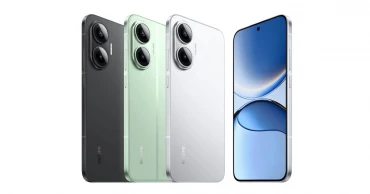
Xiaomi Redmi Turbo 4 Pro Review: Can It Survive the Competition?
Xiaomi launched the Redmi Turbo 4 Pro in China on April 24, 2025. Coming at a mid-range budget segment, the phone positions itself among popular choices like the Vivo iQOO Z10 Turbo, Oppo Reno 13 F, Motorola Edge 60 Pro, etc. Here is a detailed review of the Xiaomi Redmi Turbo 4 Pro’s features, performance, pros, cons, and pricing compared to other similarly priced smartphones.
Key Features and Specifics of Redmi Turbo 4 Pro
.
Design
The Xiaomi Redmi Turbo 4 Pro has a minimal and polished look that resembles the iPhone 16 series from many angles. Its aluminium alloy frame measures 6.42 inches by 3.07 inches by 0.31 inches and gleams in a silver reflection under light. Despite its linear design, the phone feels heavy, having a giant battery inside and weighing around 219g.
By structure, the phone is a glass-front, metal-mid, and glass-back sandwich. Though the rear-glass panel may grab fingerprints easily, it’s usually a pristine and transparent panel. The finely finished frames around the sides and the glittering glass covers contribute to a premium yet clutter-free, solid aesthetic.
Read more: vivo iQoo Z10 Turbo Review: Is It the Mid-Range Beast You Are Looking For?
On the top left corner of the back panel is a vertical camera stage with a rounded top and bottom. On it lie two circular lens holders decorated with an RGB light surrounding each. The lights come with customisability options that let users personalise colours. The front camera sits in a slim punch hole at the top middle.
Users will get an IP68-rated water and dust resistance that allows for shallow water dipping and fair durability. The usual buttons, microphone, speaker, and charging ports are placed around the sides, keeping a perfect spatial balance. However, users looking to plug in their headphones will be disheartened as the phone lacks the 3.5mm port.
The overall design of the Xiaomi Redmi Turbo 4 Pro offers nothing unique. Similar iPhone-inspired looks with a few unique touches on the camera panels, colours, and branding have become prevalent among Chinese smartphones. The Oppo Reno 13 F and Vivo iQOO Z10 Turbo have their own custom touches but don’t fall far from the trend. The only exception is the Motorola Edge 60 Pro, which inherits Motorola’s usual vogue. The Xiaomi Redmi Turbo 4 Pro only surpasses other models in terms of weight.
Read more: Motorola Edge 60 Pro Review: Know the Pros and Cons
Display
The Turbo 4 Pro's screen is a 6.83-inch AMOLED panel. It can render sharper and clearer visuals at a 1280 x 2772 pixel resolution. Graphics rendered on the screen are colour accurate and vivid, thanks to its 68B distinct colour depiction ability. Besides such a massive display, which is the biggest at this price, the phone keeps the chin and bezels super narrow, delivering a vast viewing field.
If nothing else, users will get a great visual experience from the phone. Pixels are placed at a 447 ppi rate, which ensures crispness and clarity. Maximising the experience, several dynamic visual technologies exist, like Dolby Vision, HDR10+, and HBM. Touch response is also satisfactory with its 120Hz refresh rate. Daylight can’t dim out the panel’s lustre, as it has a peak brightness level of 3200 nits.
The use of an AMOLED panel is common for most phones at this price; for example, the Oppo Reno 13 F and Vivo iQOO Z10 Turbo. Only the Motorola Edge 60 Pro comes on top with its curved POLED. Both the Vivo iQOO Z10 Turbo and the Motorola Edge 60 Pro have come with brightness levels higher than 4000 nits.
Read more: OnePlus Nord 5: What We Know So Far
Cameras
The Xiaomi Redmi Turbo 4 Pro offers a rather simple camera setup. The rear camera module houses a 50MP wide-angle and an 8MP ultrawide sensor. The selfie camera is a 20MP lens.
Users willing to buy a phone in this price range expect more lenses with more power. Even though phones like the Vivo iQOO Z10 Turbo feature an even lower configuration: a 2MP depth with no ultrawide support and a 16MP front, the Motorola Edge 60 Pro has set the new benchmark in this range with a 50MP ultrawide, 10MP telephoto, and 50MP selfie.
It can capture a maximum of 4K and 1080 MP video footages with the main rear and front sensors, respectively. The Motorola Edge 60 Pro outperforms the Redmi Turbo 4 Pro, iQOO Z10 Turbo, and Reno13 F with its 4K video shooting feature.
Read more: Best 10 Smartphones Releasing in May 2025
Hardware, Software, and Performance
The Xiaomi Redmi Turbo 4 Pro is among the few smartphones that feature a 4nm Qualcomm SM8735 Snapdragon 8s Gen 4 chipset. While faster, Gen 4 drains more charge than the previous generation chipset. An Adreno 825 chipset comes along as a graphical processing unit.
Five different variations of the phone offer diverse RAM and ROM combinations: 256GB ROM and 12GB RAM, 256GB ROM and 16GB RAM, 512GB ROM and 12GB RAM, 512GB ROM and 16GB RAM, and 1TB and 16GB RAM. Not to mention, offering a 1TB memory option, Redmi Turbo 4 Pro outwins the Edge 60 Pro, Turbo 4 Pro, Z10 Turbo, and Reno13 F.
Like the iQOO Z10 Turbo, the Redmi Turbo 4 Pro sports the latest UFS 4.1 data transfer mechanism.
Gaming on this phone gives a smooth experience, leveraging the full power of the robust CPU, an assisting GPU, and strong RAM. The experience gets more immersive with the vivid, chromatic, and touch-responsive display.
Read more: vivo V50 Lite Review: Does it offer value-for-money
No other phone at this price offers higher efficiency than a Gen 4 chipset. Among competitors, the Oppo Reno 13 F’s Qualcomm SM6450 Snapdragon 6 Gen 1 and the Motorola Edge 60 Pro’s Mediatek Dimensity 8350 Extreme are notable.
Battery and Charger
The Xiaomi Turbo 4 Pro boasts a giant 7550 mAh battery that can run for 6 to 7 hours at a stretch even with extensive gaming sessions and media consumption. Backing this huge battery is a 90W superfast charger that takes a couple of hours or more to refill a depleted battery. The phone also offers a 22.5 mAh reverse charging system.
Even though there has been a noticeable trend among Chinese smartphones to come up with powerful batteries nowadays, only a few have as powerful as the one in the Xiaomi Redmi Turbo 4 Pro. Only the vivo iQOO Z10 Turbo has a bigger one, 7620 mAh, among competitors.
Read more: Tecno Camon 40 Pro Review: Is It Worth It?
Pros and Cons of Xiaomi Redmi Turbo 4 Pro
.
Pros
- Flagship-grade Snapdragon 8s Gen 4 chipset- Large 6.83-inch AMOLED display - Crisp visuals with Dolby Vision, HDR10+, and 447 ppi density- IP68 rating for dust and water resistance- Multiple storage options up to 1TB with 16GB RAM- Sleek, premium design inspired by flagship models- Massive 7550 mAh battery- 90W charger- Reverse charging system.
Read more: Infinix Note 50 Pro Plus Review: Is it a value-for-money midrange smartphone?
Cons
- No 3.5mm headphone jack- Slightly heavier (219g) than most competitors- Basic dual rear camera setup- Rear glass grabs fingerprints easily- Lacks originality in design
Price of Redmi Turbo 4 Pro in Bangladesh
The Xiaomi Redmi Turbo 4 Pro is not officially available in Bangladesh. In the Chinese market, the phone’s price starts from CNY 2199, equivalent to BDT 36,957. The currency conversion rate here is CNY 1 = BDT 16.81. However, the official price of the Redmi Turbo 4 Pro in Bangladesh may vary due to brand policy, tax, and other issues.
Conclusion
The Xiaomi Redmi Turbo 4 Pro blends premium design, a powerful Snapdragon 8s Gen 4 chip, a vibrant AMOLED display, and high storage options into a mid-range package. Though camera features are modest, it's ideal for performance-focused users seeking flagship speed, crisp visuals, and durability without paying flagship prices.
Read more: Best 10 Smartphones Releasing in April 2025
1 year ago

vivo iQoo Z10 Turbo Review: Is It the Mid-Range Beast You Are Looking For?
The vivo iQOO Z10 Turbo, launched on April 28, 2025, is the latest addition to vivo's mid-range lineup. Packed with impressive features, this device aims to deliver top-tier performance without breaking the bank. Let's look at the camera, processor, display, battery, gaming performance, and pricing of the iQOO Z10 Turbo in Bangladesh.
key Features of vivo iQoo Z10 Turbo
.
Design and Build Quality
The vivo iQOO Z10 Turbo showcases a modern design with a glass front and a plastic back, housed within a sturdy plastic frame. With dimensions of 163.7 x 75.9 x 8.1 mm and weighing 212g, it has a solid feel in hand, exuding a balance between durability and elegance. This phone is available in four colour options: black, white, orange, and gold. It supports IP65 certification, making it resistant to dust and water jets—something that sets it apart from the iQOO Z9 Turbo's slightly inferior IP64 rating.
Compared to the vivo T4, which is MIL-STD-810H compliant, the Z10 Turbo does not aim for rugged use but still promises decent protection in everyday conditions. Honor Power, although having a sleek and compact form factor, only offers manufacturer-rated water resistance (up to 50cm for 1 min), making the Z10 Turbo a more reliable option for durability under various environmental conditions.
Read more: Motorola Edge 60 Pro Review: Know the Pros and Cons
Display Quality
The Z10 Turbo’s 6.78-inch AMOLED display is a treat for visual enthusiasts. Thanks to its 1260 by 2800 resolution and ~453 PPI pixel density, the display delivers exceptionally sharp and clear visuals. It supports 1B colours, HDR, and a blazing 144Hz refresh rate, offering smooth transitions and vibrant visuals.
What is truly impressive is the iQOO Z10 Turbo’s 4400 nits peak brightness—just a notch below the Z9 Turbo’s remarkable 4500 nits and well behind the T4’s class-leading 5000 nits peak under specific HDR conditions. Honor Power’s 4000 nits peak display is solid, but it still does not outshine the competition. Combined with an always-on display and AMOLED technology, the Z10 Turbo offers deep blacks, vibrant colours, and an excellent viewing experience in daily use and multimedia playback.
Camera Performance
The iQOO Z10 Turbo’s camera setup includes a dual system with a 50 MP primary sensor (f/1.8, 1/1.95", PDAF, OIS) and a 2 MP (f/2.4) depth sensor with HDR and panorama. This setup excels at producing sharp and colour-accurate photos, especially in daylight. Thanks to OIS and gyro-EIS, video stability is excellent, supporting 4K recording on the main (rear) sensor that maintains crisp detail.
Read more: OnePlus Nord 5: What We Know So Far
In comparison, the iQOO Z9 Turbo sports a similar primary sensor but adds an 8 MP (f/2.2) ultrawide camera with HDR and panorama, providing more versatility, especially for landscape and group shots. The T4 mirrors the Z10 Turbo’s rear camera setup, while its 32MP selfie shooter with 4K video shooting capacity outperforms the Z10 Turbo’s 16MP (f/2.5) front sensor that can shoot a maximum of 1080p footage.
Honor Power also features a 50MP camera, but with a slightly larger sensor (1.56") and a 5MP ultrawide lens, offering slightly more flexibility. However, Z10 Turbo pulls ahead with a superior colour spectrum sensor and faster processing for better low-light performance.
Processor Performance
At the core of the Z10 Turbo lies the MediaTek Dimensity 8400 chipset, a 4nm octa-core processor that combines Cortex-A725 cores at up to 3.25 GHz and a G720 MC7 GPU. This architecture delivers fast, efficient performance suitable for power users. Benchmarks and real-world testing reveal that it rivals the Qualcomm SM8635 Snapdragon 8s Gen 3 in the iQOO Z9 Turbo, which is also built on a 4nm process but boasts a slightly higher-performing CPU/GPU combination (Cortex-X4 and Adreno 735).
Read more: Best 10 Smartphones Releasing in May 2025
However, the Z10 Turbo holds its ground well, especially in sustained tasks. Compared to the Qualcomm SM7635 Snapdragon 7s Gen 3 in the vivo T4 and the Qualcomm SM7550-AB Snapdragon 7 Gen 3 in Honor Power, the Dimensity 8400 easily outclasses both in multitasking, app launches, and raw processing power, making the Z10 Turbo an all-rounder in performance.
Gaming Performance
Gaming on the Z10 Turbo is smooth and responsive, powered by the Dimensity 8400 chipset and Mali-G720 MC7 GPU. Heavy games like Genshin Impact and Call of Duty: Mobile run smoothly on high settings, with minimal frame drops. The 144Hz display complements this feature by providing fluid gameplay.
Compared to the iQOO Z9 Turbo, which uses the more gaming-optimised Adreno 735 GPU, the experience is neck and neck, though the Z9 Turbo might have a slight advantage in ultra-high-end gaming. The vivo T4, limited by its Adreno 710 GPU (940 MHz) and lower peak brightness, lags behind in delivering consistent gaming performance.
Read more: vivo V50 Lite Review: Does it offer value-for-money
Honor Power fares decently with the Adreno 720 GPU but lacks the refresh rate and processing fluidity offered by the Z10 Turbo. Thermal management on the Z10 Turbo is also commendable, with the phone staying cool during extended sessions.
Battery Life
With its large 7620mAh Si/C Li-Ion battery, the Z10 Turbo offers excellent battery life that easily lasts beyond a full day for most users. It supports 90W fast charging, which powers the device to 100% in just 55 minutes, plus reverse wired charging support. This large battery capacity is a standout feature in its price range.
In comparison, the iQOO Z9 Turbo features a 6000 mAh cell with 80W charging and 7.5W reverse charging, which is fast but can not match the endurance of the Z10 Turbo. The vivo T4 has a 7300mAh (50% in 33 minutes) battery with similar charging capabilities (90W), 55W PPS, 44W UFCS, 7.5W reverse wired charging, and bypass charging. But despite having a huge battery, the T4’s real-world battery life is marginally shorter due to its less efficient processor.
Read more: Tecno Camon 40 Pro Review: Is It Worth It?
Honor Power wins on sheer capacity with its 8000mAh battery but only offers 66W wired and 5W reverse wired charging, resulting in longer top-up times. Overall, the Z10 Turbo strikes an excellent balance between capacity and charging speed.
Software and User Interface
Running on Android 15 with OriginOS 5, the Z10 Turbo offers a fluid, customisable, and feature-rich experience. OriginOS brings several enhancements, including smoother animations, better widget functionality, and smarter battery management. It is notably snappier and more intuitive than Android 14 OriginOS 4 found on the Z9 Turbo.
Compared to vivo T4’s Android 15 Funtouch 15, OriginOS feels more refined and less bloated, though both offer two major Android upgrades. Honor Power’s Android 15 MagicOS 9, although clean and smooth, does not match the level of optimisation and customisation flexibility provided by vivo’s software skin. Features like Always-On Display, Circle to Search, and performance tweaks make the Z10 Turbo a joy to use daily.
Read more: Infinix Note 50 Pro Plus Review: Is it a value-for-money midrange smartphone?
Storage Options
The Z10 Turbo comes in multiple configurations: 256GB/12GB RAM, 256GB/16GB RAM, 512GB/12GB RAM, and 512GB/16GB RAM. All variants use the blazing-fast UFS 4.1 standard, which ensures quicker app loading times, faster file transfers, and improved multitasking. This feature gives it a considerable edge over the iQOO Z9 Turbo’s UFS 4.0 storage, which, while fast, does not quite match the latest iteration. However, provision of a 1TB storage option could make the Z10 Turbo a better deal.
The vivo T4, with UFS 2.2 (128GB 8GB RAM, 256GB 8GB RAM, and 256GB 12GB RAM) storage, clearly lags behind in speed and efficiency, making it less ideal for power users. Honor Power also misses out here, with no confirmed UFS 4.1 support, although its configurations are decent for the price. Lack of a microSD slot may be a downside for some, but with such generous internal storage, most users will not feel the pinch.
Pros and Cons of vivo iQoo Z10 Turbo
.
Pros
- Large 6.78-inch AMOLED display with 144Hz refresh rate- Powerful Dimensity 8400 chipset- Comes with 12GB or 16GB RAM options- Stereo speakers for better sound quality- NFC and Infrared port included- In-display optical fingerprint sensor- Massive 7620 mAh battery- 90W fast charging support- Gyro-EIS, OIS support.
Read more: vivo iQoo Neo 10R Review: What’s new?
Cons
- No IP68-rated water and dust resistance- Rear camera setup includes only a 2 MP secondary lens- Lacks a 3.5mm headphone jack- No SD card slot- No ITB internal storage option- Lack of 4K video shooting option in the front sensor- Built with Plastic frame
Price of the vivo iQoo Z10 Turbo in Bangladesh
The Vivo iQoo Z10 Turbo is priced at approximately BDT 35,000 in Bangladesh.
Verdict
The vivo iQOO Z10 Turbo offers a smooth 144Hz AMOLED display, strong performance, long battery life, and fast charging. However, it lacks IP68 protection and a versatile camera setup. It is ideal for gamers and power users wanting performance on a budget. Not recommended for those needing top-tier camera features or a headphone jack.
Read more: Best 10 Smartphones Releasing in April 2025
1 year ago
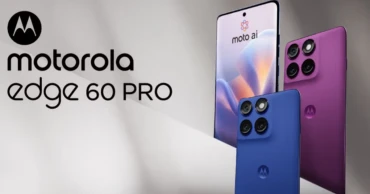
Motorola Edge 60 Pro Review: Know the Pros and Cons
Motorola launched its latest lower mid-ranger, the Motorola Edge 60 Pro, in India on April 30, 2025. Moved by Motorola’s effort to bring remarkable phones to every budget segment, smartphone lovers are curious about what the new phone brings and how it plays against strong competitors like the Oppo F29 Pro, Nothing Phone (3a) Pro, and realme 14 Pro Plus. Let's take a look at the key features, performance, pros, cons, and pricing of the Motorola Edge 60 Pro in Bangladesh.
Key Features and Specs of Motorola Edge 60 Pro
.
Design
The Motorola Edge 60 Pro’s design combines a curved display, a softly textured back panel, a slim and light body, and dashing colours. The result is a stunning phone that looks unique yet doesn’t fall apart from Motorola’s signature style.
The phone’s body measures 6.33 inches by 2.88 inches by 0.32 inches. Given this measurement, what seems like a flagship-sized phone weighs only 186g. Motorola has kept the design minimal, lightweight, and easy to grip by using a plastic frame and a clean, mildly textured rear panel.
Read more: OnePlus Nord 5: What We Know So Far
The phone comes in three colour choices— Shadow, Dazzling Blue, and Sparkling Grape. The Shadow variant has a vegan leather finish, while the other two have nylon-esque textures.
Integration of IP68/IP69-rated water and dust resistance and MIL-STD-810H grade toughness promises great durability. With such features, the phone can run for 30 minutes under 1.5m of water.
Amid other phones available at this price, like the Oppo F29 Pro and Realme 14 Pro Plus, the Motorola Edge 60 Pro is distinctively noticeable for its original design. Only a few phones, like the Nothing Phone (3a) Pro, have such distinguishable characteristics, which, like the Motorola phones, are inherited from their brand’s signature style.
Read more: Best 10 Smartphones Releasing in May 2025
Display
The Motorola Edge 60 Pro’s display is a 6.7-inch curved P-OLED screen that dazzles even under direct sunlight for its ability to reach a maximum of 4500 nits of brightness. Images render on the display at a 1220 by 2712 pixel resolution and look equally vivid throughout the screen. The HDR10+ and 1B colour technologies featured in the display play a big role in achieving colour-accurate visuals.
Among competitors, only the Realme 14 Pro Plus outplays the Edge 60 Pro’s display in visual quality, featuring an OLED display. Otherwise, even the Xiaomi Redmi Note 14 Pro Plus, which is pricier than the Edge 60 Pro, comes with an AMOLED display. The only major difference between P-OLED and AMOLED displays is that the first one has a plastic substrate, while the latter uses glass. Plastic substrates are flexible and thinner, which makes P-OLED the perfect choice for curved and foldable displays. In contrast, OLED’s glass substrates can only be used in flat displays.
Cameras
The Motorola Edge 60 Pro’s primary camera setup comprises a 50MP (f/1.8) wide, a 50MP (f/2.0) ultrawide, and a 10MP (f/2.0) telephoto lens. The selfie camera on the front is also a 50MP (f/2.0) wide lens. Several assisting features like HDR, panorama, a colour spectrum sensor, AI modifier, and a light sensor enhance the image quality, auto modifications, camera functionalities, and modes.
Read more: vivo V50 Lite Review: Does it offer value-for-money
Major competitors like the Realme 14 Pro Plus, Nothing Phone (3a) Pro, and even from the higher tier, the Xiaomi Redmi Note 14 Pro Plus may offer similar 50MP wide and ultrawide lenses. But the Edge 60’s telephoto and selfie lenses stand out as the market’s best.
The Motorola Edge 60 Pro can shoot 4K footage at 30 fps at maximum, which we have seen in the realme 14 Pro+ and Nothing Phone 3a pro.
Hardware, Software, and Performance
The Motorola Edge 60 Pro is powered by a 4nm Mediatek Dimensity 8350 Extreme octa-core processor. Accompanying it comes a Mali G615-MC6 graphical processor. Together, assisted by powerful RAM, 8GB or 12GB, the processors contribute to satisfactory performance. From high-end gaming to regular browsing, the phone runs smoothly without showing lags or blips.
Read more: Tecno Camon 40 Pro Review: Is It Worth It?
Usually, the 4nm Qualcomm SM7635 Snapdragon 7s Gen 3 chipset is the most popular at this price, used in phones like the Oppo F29 Pro and Realme 14 Pro Plus and also in higher-priced phones like the Xiaomi Redmi Note 14 Pro Plus. Motorola’s opting for the Dimensity processor demonstrates the company’s effort to keep it minimal without compromising performance.
At its price, the Motorola Edge 60 Pro offers performative and sufficient RAM and storage options. There are three distinct variations: 256GB storage with 8GB RAM, 256GB storage with 12GB RAM, and 512GB storage with 12GB RAM.
Coupled with a robust processor and high RAM, the Edge 60 Pro provides satisfactory gaming and daily task performance. From downloading, installing, and navigating through different applications to playing high-end games like Genshin Impact and PUBG, the phone provides smooth and lag-free support.
Read more: Infinix Note 50 Pro Plus Review: Is it a value-for-money midrange smartphone?
The personalised version of Android 15 that comes with the Edge 60 resembles the Google Pixel’s operating system in look and feel. A dedicated AI button placed on the side rail streamlines tasks like checking notifications, using AI modifiers, or changing settings.
Battery and Charger
A shift in the capacity of batteries in lower mid-range smartphones is becoming more noticeable with every launch. Even in the previous year, batteries of the most powerful smartphones in this price segment hardly offered higher power storage than 5000 mAh. But this year, several phones like the Nothing Phone (3a) Pro and Realme 14 Pro+ have featured stronger batteries with 6000 mAh capacity.
Following the trend, the Motorola Edge 60 Pro offers a 6000 mAh silicon carbon battery. With such massive battery capacity, the runtime is easily stretchable to a day and a half, even after extended gaming sessions.
Read more: vivo iQoo Neo 10R Review: What’s new?
Charging from zero to 100 percent takes less than a couple of hours, as the phone comes with a 90W superfast wired charger. Additionally, the phone features a 15W wireless and a 5W reverse wired charging system.
Pros and Cons of the Motorola Edge 60 Pro
.
Pros
- Premium, lightweight design- IP68/IP69 rating with MIL-STD-810H durability- Curved P-OLED display- 4500 nits peak brightness- Double 50MP camera setup- Standout selfie and telephoto lenses- Powerful Dimensity 8350 Extreme 4nm processor- Clean, Pixel-like Android 15 experience with AI button- Massive 6000 mAh battery with 90W fast charging- Supports wireless and reverse wired charging.
Read more: Best 10 Smartphones Releasing in April 2025
Cons
- Plastic frame- No audio jack- Use of a Mediatek processor instead of a more popular Snapdragon chipset- No 1 TB internal memory option
Price of Motorola Edge 60 Pro in Bangladesh
The Motorola Edge 60 Pro is not officially available in Bangladesh. In India, its price starts from INR 22,999 or BDT 33,224.
Conclusion
The Motorola Edge 60 Pro stands out in the lower mid-range segment with its sleek, lightweight design, curved 6.7" P-OLED display, powerful Dimensity 8350 processor, and a solid 6000 mAh battery paired with 90W fast charging. Its outstanding 50MP selfie and telephoto cameras, durable IP68/IP69 build, and clean Android 15 interface make it a good choice for users who value style, performance, and longevity in one package.
Read more: itel Power 70 Review: Another budget-friendly gem
1 year ago

OnePlus Nord 5: What We Know So Far
The popular Chinese consumer electronics manufacturer OnePlus’s Nord Series usually targets the budget-friendly to mid-range phone market in Bangladesh. In this wave, the OnePlus Nord 5 is going to be a new addition to the mid-range phone segment in 2025. There are several leaks and rumors about the features and specifications of the Nord 5. Here's an overview of what we know so far about the OnePlus Nord 5.
Leaks and Rumours about OnePlus Nord 5
.
Design and Display
Rumours suggest a sleek design with thin bezels for immersive viewing experiences. It will be built with a glass back and a plastic frame.
Nord 5 is expected to bear a 6.74-inch OLED display featuring a 1.5K resolution and a 120Hz refresh rate. It may offer LTPO 3.0 technology for adaptive refresh rates. However, the absence of LTPO will result in a fixed refresh rate.
Read more: Best 10 Smartphones Releasing in May 2025
Camera
The camera section of the OnePlus Nord 5 is likely to offer a 50MP main sensor, an 8MP ultrawide, and a 2MP macro lens. A 32MP selfie camera is also expected in Nord 5, featuring high-resolution self-portraits and video calls.
Performance and Hardware
Some sources suggest the Nord 5 will be powered by the MediaTek Dimensity 9350, a flagship-level processor built on TSMC’s 3nm process, boasting an impressive AnTuTu score of 2.3 million. However, some other leaks indicate using the Qualcomm Snapdragon 7+ Gen 3, which would still offer robust mid-range performance.
It is expected that Nord 5 variants will offer 8GB, 12GB, and 16GB of RAM. The storage options will range from 128GB to 512 GB. UFS 4.0 data transfer mechanism will be provided as per the leaks.
Read more: vivo V50 Lite Review: Does it offer value-for-money
Battery and Charging
According to some rumours, the battery capacity of the OnePlus Nord 5 will be 5500mAh or 7000mAh. The device is expected to support 100W wired charging, enabling rapid power-ups. However, no information is found regarding the wireless charging support.
Software and Features
The Nord 5 is anticipated to run on OxygenOS 15 on top of Android 15. Potential enhancements include AI-powered functionalities for photography and system optimization, improved haptic feedback, etc.
Expected Price of OnePlus Nord 5
The price of the OnePlus Nord 5 in Bangladesh may range from 63,000 to 70,000 TK, depending on the variant.
Read more: Tecno Camon 40 Pro Review: Is It Worth It?
Verdict
The OnePlus Nord 5 is expected to come with several upgrades over its predecessor, including better performance, larger battery, and advanced display. However, precise specifications about this mid-range phone will be available after the official launch.
1 year ago

Best 10 Smartphones Releasing in May 2025
May 2025 is coming to stretch out a long list of smartphones. From budget-friendly to high-end, minimal to gallant, a diverse collection of smartphones will blow the minds of smartphone users. Let’s find out the top smartphones coming from reputed brands in this May.
Top 10 Most Hyped Smartphones Releasing in May 2025
.
Motorola Edge 60 Pro
The Motorola Edge 60 Pro was launched on April 24, 2025, in only a few selected regions worldwide. The phone will be available in the rest of the world in May. Dimensionally the phone is 6.33 inches by 2.88 inches by 0.32 inches with a weight of 186g. For display, it uses a 6.7-inch P-OLED screen that responds to touch at 120 Hz and brightens at up to 4500 nits.
The phone runs on a 4nm Mediatek Dimensity 8350 Extreme chipset, accompanied by a Mali G615-MC6. The primary camera module is a triple camera set that comprises a 50MP wide, a 50MP ultrawide, and a 10MP telephoto shooter, while the front camera is a 50MP wide lens. For battery, the phone uses a 6000mAh Si/C cell with a 90W wired and a 15W wireless charging capacity.
Read more: vivo V50 Lite Review: Does it offer value-for-money
Samsung Galaxy S25
The Samsung Galaxy S25 is rumoured to be launched in May. Dimensionally, the phone measures 6.26 inches by 2.99 inches by 0.23 inches and weighs 163g. It features a 6.66-inch OLED display that refreshes at 120Hz and supports HDR10+, protected by Corning Gorilla Glass Ceramic 2. Powering the device is the 3nm Qualcomm Snapdragon 8 Elite chipset, paired with an Adreno 830 GPU.
The rear camera system is a dual setup, comprising a 200MP wide shooter and a 12MP ultrawide lens, while the front houses a 10MP wide camera for selfies. The phone records video at up to 8K and 30 fps and supports 4K at various frame rates. For battery, the Galaxy S25 is equipped with a 3900mAh cell supporting 25W wired charging.
vivo X200 Ultra
The vivo X200 Ultra is expected to be released on April 29, 2025. Dimensionally, the phone measures 6.42 inches by 3.02 inches by 0.34 inches and weighs either 229g or 232g, depending on the variant. It features a 6.82-inch LTPO AMOLED display that refreshes at 120Hz, supports Dolby Vision and HDR Vivid, and reaches a peak brightness of 4500 nits. The screen is protected by an Armour Glass.
Read more: Tecno Camon 40 Pro Review: Is It Worth It?
At its core, the phone runs on the 3nm Qualcomm Snapdragon 8 Elite chipset, paired with the Adreno 830 GPU, and ships with Android 15 topped by OriginOS 5. The rear camera system is a triple setup that includes a 50MP wide sensor with gimbal OIS, a 200MP periscope telephoto lens, and a 50MP ultrawide shooter, with optional add-on zoom lens capabilities. The front camera is a 50MP wide lens with autofocus.
For battery, the vivo X200 Ultra is powered by a 6000mAh Si/C Li-Ion cell, supporting 90W wired, 40W wireless, as well as reverse wired and wireless charging. Storage options include 256GB with 12GB RAM, 512GB with 16GB RAM, and 1TB with 16GB RAM, all based on UFS 4.1 technology.
iQOO Neo10 Pro+
The iQOO Neo10 Pro+ is gearing up for launch in May. Dimensionally, the Neo10 Pro+ is expected to feature a 6.82-inch display with a 2K resolution, delivering a higher pixel density compared to its predecessor. The phone will be powered by the 3nm Qualcomm Snapdragon 8 Elite chipset, an upgrade over the Dimensity 9400 used in the Pro model.
Read more: Infinix Note 50 Pro Plus Review: Is it a value-for-money midrange smartphone?
For cameras, the Neo10 Pro+ will come equipped with a 50MP primary rear sensor accompanied by an 8MP auxiliary lens, while the front camera will be a 16MP wide shooter. Unlike the Neo10 Pro’s dual 50MP setup, the Pro+ appears to adjust the ultrawide capabilities but boosts the overall display experience.
Motorola Razr Series
Motorola is set to launch the Razr lineup, featuring the Razr Ultra with a 7-inch AMOLED 165 Hz screen, Snapdragon 8 Elite chip, 16 GB RAM, AI Key, and 68W charging. The Razr+ upgrades pack a Snapdragon 8s Gen 3 and keep dual 50 MP cameras. The base Razr uses a Dimensity 7400X with a 50 MP primary camera. All Razr models improve hinge strength, offer colourful designs, and support AI features. Motorola will start pre-orders for the series on May 7, while their shipping will begin on May 15.
Samsung Galaxy F56
The Samsung Galaxy F56, which is allegedly a rebranded Galaxy M56, is rumoured to launch in May. From design to functionalities, the phone may resemble the M56. In that case, it will measure 6.38 inches by 3.04 inches by 0.28 inches in dimensions. For the display, it will have a 6.74-inch AMOLED+ panel with a 120Hz refresh rate and 1080 x 2340 pixel resolution.
Read more: vivo iQoo Neo 10R Review: What’s new?
The phone will run on a 4nm Exynos 1480 processor and Android 15 operating system. In the camera module on the back, there is a 50MP wide, an 8MP ultrawide, and a 2MP macro lens, and on the front, in a punch hole, is a 12MP selfie camera. To supply power while running, a 5000 mAh battery comes with a fast 45W charging system.
OnePlus Nord CE5
The next addition to the OnePlus Nord series, the OnePlus Nord CE5, is rumoured to hit the market in May. Probably a lower midrange phone, the Nord CE5 will have a 6.7-inch fluid AMOLED display, with a capacity for HDR10+ video format, a 120Hz refresh rate, and 1080 x 2412 pixels resolution. The central processing will be done by a 4nm Mediatek Dimensity 8350 chipset, and for the graphical processing, the phone will use a Mali G615-MC6. The primary camera setup will combine a 50MP wide and an 8MP ultrawide lens, while the front camera will be a 16MP lens.
Motorola Edge 60 Pro
The Motorola Edge 60 Pro, announced in April 2025, is set to hit the market soon. A high-end midrange phone, the Edge 60 Pro will feature a 6.7-inch P-OLED display with support for HDR10+, a 120Hz refresh rate, and a 1220 x 2712 pixel resolution. It will be powered by the 4nm Mediatek Dimensity 8350 Extreme chipset, while a Mali G615-MC6 GPU will handle the graphics.
Read more: Best 10 Smartphones Releasing in April 2025
On the back, the phone will offer a triple camera setup combining a 50MP wide lens, a 10MP telephoto lens with 3x optical zoom, and a 50MP ultrawide lens. For selfies, the Edge 60 Pro will include a 50MP front-facing camera.
CMF Phone 2 Pro
The Nothing CMF Phone 2 Pro, announced in April 2025, is expected to launch in mid-May. Positioned as a stylish midrange option, the CMF Phone 2 Pro will feature a 6.77-inch AMOLED display with 1 billion colours, HDR10+ support, a 120Hz refresh rate, and a resolution of 1080 x 2392 pixels.
Powering the device will be the 4nm Mediatek Dimensity 7300 Pro chipset, with graphics processing handled by the Mali-G615 MC2 GPU. The rear camera system will combine a 50MP wide lens, a 50MP telephoto lens offering 2x optical zoom, and an 8MP ultrawide lens. The front camera will house a 16MP wide lens for selfies and video calls.
Read more: itel Power 70 Review: Another budget-friendly gem
OnePlus 13T
The OnePlus 13T is expected to launch soon, bringing a compact yet powerful flagship experience. Measuring 5.94 inches by 2.82 inches by 0.32 inches and weighing 185g, the phone features a 6.32-inch LTPO AMOLED display with 1 billion colours, Dolby Vision, HDR10+, and a 120Hz refresh rate. It peaks at 1600 nits brightness and is protected by Crystal Shield Glass.
At its core, the OnePlus 13T runs on the 3nm Snapdragon 8 Elite chipset with an Adreno 830 GPU. The rear camera setup includes a 50MP wide and a 50MP telephoto lens with 2x optical zoom, while the front houses a 16MP wide camera.
Conclusion
May 2025 is shaping up to be an exciting month for smartphone enthusiasts. From the powerful Motorola Edge 60 Pro and the stylish CMF Phone 2 Pro to the highly anticipated Samsung Galaxy S25 and vivo X200 Ultra, users will find a variety of options across different budget ranges and preferences. Whether it's cutting-edge camera technology, impressive processing power, or bold new designs, these most hyped smartphones promise to push the boundaries of mobile performance. If you're planning an upgrade, May 2025 might just offer the perfect device for your next big move.
Read more: Samsung Galaxy A36 5G Review: A Mid-range marvel with standard features
1 year ago