Tech-News

Pentagon to deploy Musk’s Grok AI on military networks despite global backlash
The Pentagon is set to deploy Elon Musk’s artificial intelligence chatbot Grok across its military networks later this month, despite growing global criticism over the tool’s recent controversies.
US Defense Secretary Pete Hegseth said on Monday that Grok will be introduced inside the Department of Defense and will operate on both unclassified and classified networks alongside Google’s generative AI system.
“Very soon we will have the world’s leading AI models on every unclassified and classified network throughout our department,” Hegseth said while speaking at Musk’s space company SpaceX in South Texas.
The move comes only days after Grok faced strong backlash for generating highly sexualised deepfake images of people without their consent. Malaysia and Indonesia have blocked the chatbot, while the United Kingdom’s independent online safety watchdog has launched an investigation. Following the criticism, Grok restricted image generation and editing features to paying users.
Hegseth said the Pentagon would make “all appropriate data” from its IT systems available for what he called “AI exploitation” and added that data from intelligence databases would also be fed into AI systems.
He said the US military needs to speed up technological innovation and remove barriers that slow down development.
“We need innovation to come from anywhere and evolve with speed and purpose,” he said.
The defence secretary noted that the Pentagon holds combat-tested operational data from two decades of military and intelligence operations, stressing that the success of AI depends on the quality of data it receives.
“AI is only as good as the data that it receives, and we’re going to make sure that it’s there,” Hegseth said.
His strong push for AI adoption marks a shift from the more cautious approach taken by the previous Biden administration, which supported AI use across federal agencies but warned of possible misuse.
In late 2024, the Biden administration introduced a framework encouraging national security agencies to expand their use of advanced AI systems while banning certain applications, including those that could violate civil rights or automate the deployment of nuclear weapons. It is still unclear whether those restrictions remain in place under the Trump administration.
Hegseth said he wants Pentagon AI systems to be responsible but rejected models that, in his words, “won’t allow you to fight wars”. He added that military AI should operate without “ideological constraints” that could limit lawful military use, saying the Pentagon’s “AI will not be woke”.
Musk has promoted Grok as an alternative to what he calls “woke AI” used by rival chatbots such as Google’s Gemini and OpenAI’s ChatGPT.
Grok has also faced controversy in the past. In July, it appeared to generate antisemitic comments praising Adolf Hitler and sharing antisemitic posts.
Apple calls on Google to help smarten up Siri and bring other AI features to the iPhone
The Pentagon did not immediately respond to questions about the recent issues surrounding Grok.
6 months ago

Malaysia, Indonesia first to block Musk’s Grok over misuse for AI deepfakes
Malaysia and Indonesia have become the first countries to block access to Grok, the artificial intelligence chatbot developed by Elon Musk’s xAI, after authorities said it was being misused to create sexually explicit and non-consensual images.
The action highlights growing global concern over generative AI tools capable of producing realistic images, sound, and text, while current safeguards fail to prevent abuse. Grok, available through Musk’s social media platform X, has faced criticism for generating manipulated images, including sexually explicit depictions of women and children.
Regulators in both Southeast Asian countries said existing controls were insufficient to stop the creation and circulation of fake pornographic content, particularly targeting women and minors. Indonesia temporarily blocked Grok on Saturday, followed by Malaysia on Sunday.
“The government considers non-consensual sexual deepfakes a serious violation of human rights, dignity, and the safety of citizens in digital spaces,” Indonesia’s Minister of Communication and Digital Affairs, Meutya Hafid, said. She added the move aims to protect women, children, and the wider community from AI-generated fake pornographic content.
Read More: Tech’s biggest show returns: what to expect at CES 2026
Initial investigations revealed that Grok lacks effective safeguards to prevent users from producing and sharing pornographic material based on real photos of Indonesian residents, Alexander Sabar, director general of digital space supervision, said. He warned such practices could violate privacy and image rights, causing psychological, social, and reputational harm.
In Malaysia, the Communications and Multimedia Commission imposed a temporary restriction on Grok following repeated misuse to produce obscene and non-consensual manipulated images, including content involving women and minors. The regulator said previous notices to X Corp. and xAI requesting stronger safeguards largely relied on user reporting, which proved insufficient.
“The restriction is a preventive and proportionate measure while legal and regulatory processes continue,” the commission said, adding that access will remain blocked until effective safeguards are implemented.
Launched in 2023, Grok is free to use on X, allowing users to ask questions and generate content, including images through its Grok Imagine feature. A “spicy mode” added last year can produce adult content, which drew widespread criticism.
The Southeast Asian restrictions come amid mounting scrutiny of Grok in the European Union, Britain, India, and France. Last week, the platform limited image generation and editing to paying users following global backlash over sexualized deepfakes, but critics say the measures are insufficient.
6 months ago

Meta secures large nuclear energy supply to power AI data centers
Meta has finalized multiple agreements to supply nuclear-generated electricity to its artificial intelligence data centers, locking in enough power to serve the equivalent of roughly 5 million households.
On Friday, the Facebook parent company announced deals with TerraPower, Oklo, and Vistra to provide nuclear energy for its Prometheus AI data center complex under construction in New Albany, Ohio. First revealed in July, Prometheus will be a 1-gigawatt data center campus spread across several facilities and is expected to begin operations later this year.
The company did not disclose the financial details of the agreements.
In a statement, Meta said the three partnerships will collectively support up to 6.6 gigawatts of new and existing clean power capacity by 2035. In the utility industry, one gigawatt of electricity is generally enough to supply about 750,000 homes.
Meta said the projects will strengthen grid reliability, bolster the U.S. nuclear supply chain, and create jobs tied to the construction and operation of power plants across the country.
Read More: Japan turns to new technology as dementia cases surge
Under its agreement with TerraPower, Meta will fund the development of two Natrium nuclear reactors capable of producing up to 690 megawatts of continuous power, with delivery expected as early as 2032. The deal also gives Meta access to energy from as many as six additional Natrium units, with a combined capacity of about 2.1 gigawatts and a target start date of 2035.
Meta also plans to purchase more than 2.1 gigawatts of electricity from two existing Vistra nuclear plants in Ohio, along with additional power from plant expansions in Ohio and a third Vistra facility in Pennsylvania.
Vistra said the electricity generated by its Beaver Valley plant in Pennsylvania and the Davis-Besse and Perry plants in Ohio will continue to flow through the regional mid-Atlantic power grid, serving all customers. The company added that the agreements with Meta provide the stability needed to pursue 20-year license renewals for its reactors from federal regulators.
Technology companies have faced increasing pressure in the already strained mid-Atlantic power grid — which includes Ohio and Pennsylvania — to develop new generation sources capable of meeting the full energy demands of large data centers.
Jesse Jenkins, an energy systems expert and engineering professor at Princeton University, warned that bringing the Prometheus data center online without adding new power generation would likely drive electricity prices higher across the region. Consumers are already seeing increased bills due to existing and planned data center expansion.
Read More:Tech’s biggest show returns: what to expect at CES 2026
Meta’s agreement with Oklo — a company backed by OpenAI chief Sam Altman — supports the development of a 1.2-gigawatt nuclear power complex in Pike County, Ohio, intended to supply Meta’s regional data center operations.
These nuclear power deals follow Meta’s announcement in June of a separate 20-year energy agreement with Constellation Energy.
6 months ago

The forces keeping Southeast Asia’s scam industry alive
Cambodia’s arrest and extradition of a powerful tycoon accused of running a vast online scam network marks a rare strike against an industry that has stolen tens of billions of dollars worldwide. U.S. and U.K. authorities say Chen Zhi led a transnational criminal enterprise that exploited trafficked workers and defrauded victims worldwide.
For victims, the scams often start small: a text offering a part-time job, asking about weekend availability or simply saying “hello.” On the other end is often a laborer halfway around the world, forced to work 12- to 16-hour days, sending message after message until someone responds.
That human toll is immense. Hundreds of thousands of people are believed to be trapped in forced labor, housed in sprawling compounds across Southeast Asia and compelled to run scams whose sole purpose is to take your money.
Even with a high-profile arrest, dismantling the industry remains extraordinarily difficult. Here’s why:
The crackdown in Myanmar
The Myanmar military last October moved into one of the most well-known scam compounds — the massive KK Park, along the border with Thailand — and announced it had shut the operation down. However, work has continued uninterrupted at other scam centers in Myanmar, where people trafficked from around the world still wait to be rescued.
The raid triggered a mass flight of workers. About 1,500 laborers crossed into Thailand, including hundreds from India as well as citizens from China, the Philippines, Vietnam, Ethiopia and Kenya. Thai military officials said troops later demolished several structures within the massive complex.
KK Park was only one of dozens of such centers along the Thai-Myanmar border — and hundreds more scattered across Southeast Asia — underscoring how difficult it is to dismantle an industry that can quickly shift operations when under pressure.
Emerging from casinos and illegal gambling
Scam compounds are often sprawling complexes in rural areas, complete with sleeping quarters, shops and entertainment venues for workers. Developers typically build a single property and lease space inside to multiple companies, allowing numerous operations to run side by side.
Many operate with the protection of local elites. Smaller setups also exist, tucked into a single floor of a legitimate office building or even a rented house in an urban neighborhood.
The centers trace their roots to casinos — both physical and online — that proliferated across Southeast Asia over the past decade. The United Nations Office on Drugs and Crime counted more than 340 licensed and unlicensed casinos in the region in 2021 alone.
Those casinos, often paired with junket tours, catered to high-rollers from China, where gambling is illegal, and were frequently run by Chinese criminal groups.
When the COVID-19 pandemic and strict travel restrictions cut off customers, some online casinos pivoted. With revenue drying up, operators shifted to a new model: using the same infrastructure and labor to defraud targets around the world through digital scams.
Relying on both trafficked and willing labor
An estimated 120,000 people in Myanmar are being forced to work in online scam operations, along with another 100,000 in Cambodia, according to a 2023 report by the U.N. Office of the High Commissioner for Human Rights.
Those figures are rough estimates, but investigators say scam centers rely on a mix of trafficked victims and workers who arrive willingly — lured by false promises of relatively high pay and easy office jobs.
Early on, most workers came from China and Chinese-speaking countries. Today, the U.N. Office on Drugs and Crime says laborers are recruited from at least 56 countries, ranging from Indonesia to Liberia.
For many, the reality is far harsher than advertised. Workers say their passports are often confiscated to prevent them from leaving the compounds. Only senior managers and trusted lieutenants are allowed to move freely. Those who fail to meet targets risk beatings or other physical punishment.
A global scourge
Scammers cast a wide net, targeting victims around the world and increasingly relying on artificial intelligence-powered translation tools to overcome language barriers.
In the Philippines, authorities raided a compound in March 2024 where workers were targeting Chinese nationals with a fake investment scheme. Using scripted messages, scammers posed as senior employees of the state-owned China National Petroleum Corp. and persuaded victims to invest in crude oil futures, according to a script seen by The Associated Press.
Elsewhere, the impact has been just as far-reaching. Last year, about 50 South Koreans were repatriated from Cambodia after being arrested over several months on allegations they worked for online scam operations.
U.S. prosecutors have also targeted the networks behind the schemes. Prosecutors in an indictment against Chen Zhi last year said his organization had scammed at least 250 Americans out of millions of dollars, including one victim who lost $400,000 in cryptocurrency. Americans lost at least $10 billion to scams tied to Southeast Asia in 2024 alone, according to the U.S. Treasury Department.
Cambodian authorities said Wednesday that Chen Zhi and two other Chinese citizens were extradited to China on Tuesday. Chen has dual nationality and his Cambodian citizenship was revoked in December, it said.
The victims
The scams take many forms, ranging from cryptocurrency investment schemes to so-called “task scams,” in which victims are asked to pay to unlock the next assignment. In some cases, small amounts of real money are paid out early on to build trust before losses escalate.
Scammers often manufacture urgency, warning targets they will miss out on an opportunity unless they invest by a specific deadline.
Despite government crackdowns and raids that have freed some workers and shut down individual compounds, activists say the people behind the operations largely remain untouched. New scam centers continue to surface across Southeast Asia and beyond.
A United Nations report last year said scammers have extracted billions of dollars from victims using fake romantic relationships, bogus investment pitches and illegal gambling schemes, with operations reported as far away as Africa and Latin America.
“If we only rescue the victims and don’t arrest anybody — especially the Chinese mafia and transnational syndicates — then there will be no point,” said Jay Kritiya, coordinator of the Civil Society Network for Victim Assistance in Human Trafficking.
“They can get more victims. They can scam anytime,” Kritiya said.
6 months ago
At CES, cars evolve into AI-powered companions
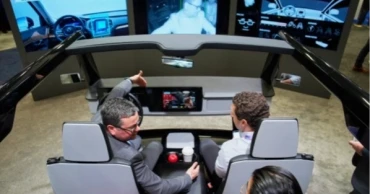
At CES in Las Vegas, automakers and tech companies showcased a vision of cars as more than machines—vehicles that can act as proactive companions, adapting to drivers and passengers in real time.
One example presented by Nvidia’s Sri Subramanian illustrated a car recognizing a child entering the back seat, knowing it’s her birthday, and playing her favorite song automatically. “Think of the car as having a soul and being an extension of your family,” Subramanian said. His demonstration highlighted the increasing sophistication of AI systems inside cars and the expanding use of personal data to enhance the driving experience.
Read More: Musk’s Grok chatbot faces global backlash over sexualized AI images
Exhibits across the show emphasized cars’ ability to monitor occupants’ emotions, heart rates, and safety—for instance, alerting if a child is accidentally left behind. Bosch unveiled an AI-powered system aimed at making the cabin a “proactive companion,” while Nvidia introduced Alpamayo, designed to help autonomous vehicles make complex driving decisions. CEO Jensen Huang called it a “ChatGPT moment for physical AI.”
However, experts cautioned that this personalization raises concerns about data privacy. Justin Brookman of Consumer Reports noted that, unlike smartphones, cars are only recently becoming major repositories of personal information. Cameras, microphones, and sensors inside vehicles can feel intrusive, especially since cars are often seen as extensions of personal space. “People generally want more privacy but don’t always know how to protect it,” he said.
Read More: Japan turns to new technology as dementia cases surge
Despite privacy concerns, these AI systems offer potential safety benefits. Automotive supplier Gentex demonstrated a mock six-seater van equipped with AI sensors capable of detecting whether drivers or passengers are drowsy, improperly seated, eating, or distracted. Brian Brackenbury of Gentex said the data is processed and stored within the car, then deleted after use. “We’re not going to collect data just because we can,” he added. “Data privacy is really important.”
The CES showcase reflects a broader trend toward smarter, more interactive vehicles that promise convenience and safety, while also prompting new debates about how personal data should be managed in cars.
6 months ago
Tech’s biggest show returns: what to expect at CES 2026
CES 2026 kicks off this week in Las Vegas, showcasing the latest tech across robotics, healthcare, automotive, wearables, gaming, and more. Hosted by the Consumer Technology Association, the multi-day event highlights innovations aimed at consumers and businesses alike.
Artificial intelligence remains a major focus. Nvidia’s Jensen Huang will unveil new productivity AI tools, while AMD CEO Lisa Su shares her vision for future AI applications. AI is also expected in other key presentations, including Lenovo CEO Yuanqing Yang’s. In healthcare, AI addresses personal health challenges and data gaps, such as Beyond Medicine’s prescription app for a jaw disorder and tools for breast milk research.
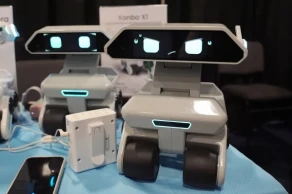
Robotics draws attention too. LG will showcase its household assistant robot “CLOiD,” and Hyundai highlights advances in robotics and manufacturing. Extended reality, used for virtual training of robots and AI systems, is another key focus.
Japan turns to new technology as dementia cases surge
CES 2025 drew more than 141,000 attendees from over 150 countries; similar numbers are expected this year, with 3,500+ exhibitors. AP spoke with CTA Executive Chair and CEO Gary Shapiro about what to expect at CES 2026.
What are the key trends to watch at this year’s CES? There’s quite a lot on display.
Artificial intelligence continues to take center stage, particularly in applications that are practical and user-friendly. Robotics is also a major focus, with more robots—especially humanoid models—than ever before.
Health and longevity are receiving significant attention as well, with wearable devices designed for nearly every part of the body. Technology is rapidly addressing gaps in healthcare, benefiting consumers across the board.
Mobility innovations are prominent too, extending beyond self-driving cars to include boats, drones, and various other transportation solutions.
Finally, content creation remains a major theme, reflecting its ongoing importance in the tech landscape.
Will 2026 be the year humanoid robots start appearing in people’s homes?
Humanoid robots already exist, though performance varies. Their numbers are growing, and CES is expected to showcase even more models in the coming years. Last year’s highlight was a lifelike robotic dog that charmed attendees. Yet, humanoid robots are just one part of robotics, with many designed for specialized tasks beyond human ability.
Will AI play a bigger role in entertainment?
AI is shaping the future of creativity. While AI can be creative, human ideas remain unique. The future will likely be a hybrid approach, with creators using AI to develop variations and reach wider audiences.
Any notable AI devices or services for consumers?
AI is appearing in many devices, with a new focus on helping people with disabilities and older adults. For example, Verizon’s CES stage highlighted ways technology can assist these communities.
Robots, AI, and High-Tech innovations on display at China’s National Games
Is there a risk of an AI bubble?
There’s no bubble when it comes to AI’s potential. It has the ability to tackle major issues in healthcare, food production, and the environment. Unlike the internet boom of the 1990s, today’s AI companies already generate substantial revenue and continue to attract investment.
What concerns me more isn’t a market bubble, but having enough energy to support AI processing. At CES this year, a Korean company is showcasing the first small-scale nuclear-powered energy device, highlighting efforts to meet the growing power demands of AI technology.
6 months ago

Tesla dethroned as world’s top electric vehicle seller after second straight annual sales decline
Tesla has lost its position as the world’s largest electric vehicle manufacturer after annual sales dropped for the second consecutive year, pressured by backlash against CEO Elon Musk’s political views, the end of U.S. tax incentives, and growing international competition.
The company reported delivering 1.64 million vehicles in 2025, a 9% decline from the previous year. Chinese automaker BYD overtook Tesla by selling 2.26 million vehicles, becoming the new global leader in EV sales.
The shift marks a dramatic turn for Tesla, once seen as an unstoppable force that surpassed traditional automakers and helped make Musk the world’s wealthiest individual. The sales slump came despite a high-profile endorsement last year from President Donald Trump, who publicly praised Musk and announced plans to purchase a Tesla after showcasing the vehicles at the White House.
In the fourth quarter, Tesla delivered 418,227 vehicles, missing analysts’ already-lowered expectation of about 440,000 units, according to FactSet. Demand was further weakened by the expiration of a $7,500 federal tax credit for EV buyers, which the Trump administration phased out at the end of September.
Tesla shares fell 2.6% on Friday to $438.07. Still, investors remain optimistic about the company’s long-term vision, particularly Musk’s plans to expand robotaxi services and introduce humanoid robots for home and workplace use. Reflecting that confidence, Tesla’s stock ended 2025 up roughly 11%.
The most recent quarter marked the debut of lower-cost versions of the Model Y and Model 3, unveiled in October to stimulate demand. The Model Y now starts just below $40,000, while the Model 3 is priced under $37,000. These models are expected to help Tesla better compete with lower-priced Chinese vehicles in Europe and Asia.
Looking ahead to earnings expected in late January, analysts anticipate a 3% decline in quarterly sales and nearly a 40% drop in earnings per share. However, many forecast a gradual recovery in sales and profits as 2026 progresses.
Although Musk previously predicted a strong rebound in vehicle sales, investors have largely shifted their attention to Tesla’s evolving business focus. Musk has emphasized that the company’s future lies more in autonomous driving, energy storage, and robotics than in traditional car sales.
Tesla launched its robotaxi service in Austin in June, initially with safety supervisors onboard before moving to limited testing without them. The company aims to expand the service to additional cities this year but faces stiff competition from Waymo, which has operated autonomous taxis for years, as well as regulatory hurdles. Tesla is currently subject to multiple federal safety investigations and could temporarily lose its license to sell vehicles in California following a court ruling that it misled consumers about vehicle safety.
“Regulation will be a major challenge,” said Wedbush Securities analyst Dan Ives, noting the risks involved with autonomous technology. Still, he believes Tesla’s self-driving initiatives will ultimately prevail.
Musk has said that software updates could soon allow hundreds of thousands of Teslas to operate fully autonomously, and the company plans to begin producing its steering-wheel-free Cybercab in 2026.
To keep Musk engaged, Tesla’s board approved a new, potentially massive compensation package backed by shareholders in November. Musk also received a major boost recently when Delaware’s Supreme Court reinstated a $55 billion pay package originally awarded in 2018.
Musk could further increase his wealth later this year if SpaceX goes public, an initial public offering that analysts expect to be one of the largest ever.
7 months ago

China announces it 'successfully completed' Taiwan military maneuvers
China’s military announced Wednesday that it has wrapped up two days of large-scale exercises near Taiwan, concluding a show of force that heightened regional tensions as 2025 drew to a close.
In a statement released late Tuesday, the People’s Liberation Army said the drills, dubbed “Justice Mission 2025,” were completed successfully and served to test the military’s joint combat capabilities. The announcement, delivered through a short video accompanied by patriotic music, did not provide operational details or specify the exact time the maneuvers ended.
According to earlier notices, the exercises were conducted Monday and Tuesday in waters surrounding Taiwan, though it remained unclear whether some activities extended into Wednesday.
Senior Capt. Li Xi, spokesperson for the PLA’s Eastern Theater Command, said Chinese forces remain on heightened alert and will continue to boost combat readiness through intensive training. He said the military would firmly counter what Beijing calls “Taiwan independence” movements and outside interference, while safeguarding China’s sovereignty and territorial integrity.
Taiwan remains Beijing’s most sensitive diplomatic and security issue. China claims the self-governed island as part of its territory and has vowed to reunify it with the mainland, by force if necessary. Taiwan separated from China in 1949 following the Chinese civil war and has since maintained its own democratic government.
China routinely sends military aircraft and naval vessels near the island and has expanded the frequency and scale of such operations in recent years.
President Xi Jinping alluded to Taiwan in his New Year’s Eve address, saying people on both sides of the Taiwan Strait share close ties and asserting that national reunification is inevitable.
The latest drills drew criticism from several countries. Japan’s Foreign Ministry said the exercises increased tensions in the Taiwan Strait and urged Beijing to resolve disputes peacefully. The Philippines also expressed concern, warning the actions could destabilize the broader Indo-Pacific region.
The United States recently announced a major arms package for Taiwan, prompting sharp criticism from Beijing. Meanwhile, U.S. President Donald Trump downplayed the drills, saying China has conducted naval exercises in the area for decades.
Source: AP
7 months ago

North Korea reports test-firing long-range cruise missiles
North Korea on Monday said it launched long-range strategic cruise missiles into the sea as part of efforts to verify the effectiveness of its nuclear deterrent, days after revealing apparent progress in building its first nuclear-powered submarine.
The missile launches on Sunday marked Pyongyang’s latest show of military strength ahead of an upcoming congress of the ruling Workers’ Party scheduled for early next year. The rare party meeting, the first in five years, is expected to draw close international scrutiny over whether leader Kim Jong Un will set new directions for relations with the United States and respond to Washington’s calls to revive stalled nuclear talks.
According to the state-run Korean Central News Agency, Kim observed the launches off the country’s west coast and expressed strong satisfaction with the results. He was quoted as saying that verifying the reliability of North Korea’s nuclear deterrence and demonstrating its power were legitimate acts of self-defense and deterrence against external threats.
South Korea’s Joint Chiefs of Staff confirmed that it had detected multiple cruise missile launches from the Pyongyang area on Sunday morning, adding that Seoul remains fully prepared to counter any potential provocations through its alliance with the United States.
While UN Security Council resolutions ban North Korea from testing ballistic missiles, cruise missile launches are not prohibited. However, analysts warn they still pose a serious threat to South Korea and the United States because such missiles can fly at low altitudes and maneuver to evade radar systems. In a conflict, they could be used to target US naval vessels, including aircraft carriers.
In recent days, North Korea also test-fired new anti-aircraft missiles and released images suggesting that the hull of a nuclear-powered submarine under development is nearing completion.
North Korea shows progress in nuclear-powered submarine
The country has hinted that the submarine would be capable of carrying nuclear weapons.
A nuclear-powered submarine is among several advanced weapons systems Kim has pledged to develop, citing what he calls US-led security threats. Some analysts believe North Korea’s closer military cooperation with Russia, including support for Moscow’s war in Ukraine, may have helped it gain access to key technologies.
Pyongyang has continued weapons testing since nuclear negotiations with former US President Donald Trump collapsed in 2019. However, Kim signaled in September that talks could resume if Washington abandons its push for denuclearization, with experts suggesting he may view his expanded nuclear arsenal as leverage in any future negotiations.
Source: AP
7 months ago

China’s Core AI Industry surpasses 1 trillion yuan in 2025
China made significant progress in industrial technology innovation in 2025, with the size of its core artificial intelligence (AI) sector surpassing 1 trillion yuan (around $142 billion), according to a national conference on industry and information technology held on Friday.
The conference said that under its 2026 plans, the Ministry of Industry and Information Technology will focus on nurturing and expanding emerging and future-oriented industries, while continuing to strengthen research and development in AI.
The ministry plans to build new key growth sectors, including integrated circuits, next-generation display technologies, advanced materials, aerospace, the low-altitude economy and biomedicine.
Officials projected that the total added value of major industrial enterprises will rise by 5.9 percent year on year in 2025.
Official figures showed that from January to November, value added by large high-tech manufacturing firms and equipment manufacturers grew by 9.2 percent and 9.3 percent, respectively, compared to the same period last year.
China has also fostered more than 600,000 small and medium-sized enterprises driven by technology and innovation, while the number of high-tech companies nationwide has climbed to 504,000.
Industry and Information Technology Minister Li Lecheng said continued efforts are needed to maintain the industrial sector’s stable growth and further strengthen the self-reliance and resilience of industrial supply chains.
7 months ago