Tech-News

Harley-Davidson Japan faces fine over excessive sales quotas
Japan's antitrust watchdog is set to fine the domestic unit of motorcycle company Harley-Davidson Inc. around 200 million yen ($1.4 million) for imposing excessive sales quotas on dealers in violation of the antimonopoly law, sources close to the matter have said.
The Japan Fair Trade Commission will also issue a cease and desist order to Harley-Davidson Japan KK, based in Tokyo, over pressuring dealers by implying their exclusive sales contracts might not be renewed if they failed to meet the quotas, leading some to buy unsold motorcycles themselves.
According to Kyodo News, the commission has already notified Harley-Davidson Japan of the proposed disciplinary measures and will make a final decision after considering the firm's response, according to sources.
Harley-Davidson Japan is alleged to have unilaterally imposed sales quotas on dozens of dealers from as late as January 2023.
Best Smartphones Releasing in July 2025
The firm has no directly managed stores, and only businesses that have concluded exclusive sales contracts are authorized to sell Harley-Davidson-branded motorcycles.
The excessive quotas were discontinued following an investigation by the watchdog.
In a similar case in 2019, the Japan unit of Germany's BMW AG was found to have imposed excessive sales quotas on dealers, forcing them to purchase unsold vehicles themselves to meet targets.
1 year ago

Microsoft to cut thousands of jobs, including gaming division
Microsoft is set to lay off thousands of employees worldwide, including cuts in its Gaming and Xbox division, as part of a global restructuring move.
The company confirmed Wednesday that fewer than 4% of its 228,000-strong global workforce will be affected, Variety reports.
US judge says China's Huawei must face criminal case
Microsoft Gaming chief Phil Spencer, in a memo to employees, said the changes aim to "increase agility and effectiveness" by reducing management layers and focusing on strategic growth areas.
A company spokesperson said the layoffs are part of “organisational and workforce changes necessary to position the company and teams for success in a dynamic marketplace.”
1 year ago
US judge says China's Huawei must face criminal case
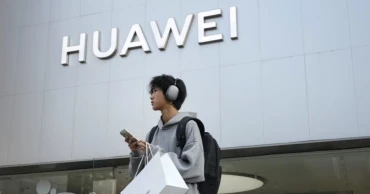
A US judge has ruled that China’s Huawei Technologies, a leading telecoms equipment company, must face criminal charges in a wide reaching case alleging it stole technology and engaged in racketeering, wire and bank fraud and other crimes.
US District Judge Ann Donnelly on Tuesday rejected Huawei’s request to dismiss the allegations in a 16-count federal indictment against the company, saying in a 52-page ruling that its arguments were premature, reports AP.
The company did not immediately respond to a request for comment.
The US accuses Huawei and some of its subsidiaries of plotting to steal US trade secrets, installing surveillance equipment that enabled Iran to spy on protesters during 2009 anti-government demonstrations in Iran, and of doing business in North Korea despite US sanctions there.
During President Donald Trump’s first term in office, his administration raised national security concerns and began lobbying Western allies against including Huawei in their wireless, high-speed networks.
In its January 2019 indictment, the Justice Department accused Huawei of using a Hong Kong shell company called Skycom to sell equipment to Iran in violation of US sanctions and charged its chief financial officer, Meng Wanzhou, with fraud by misleading the HSBC bank about the company’s business dealings in Iran.
US judge allows antitrust lawsuit against Apple
Meng, the daughter of Huawei's founder, was arrested in Canada in late 2018 on a US extradition request but released in September 2021 in a high-stakes prisoner swap that freed two Canadians held by China and allowed her to return home.
Chinese officials have accused the US government of “economic bullying” and of improperly using national security as a pretext for “oppressing Chinese companies.” In their motion to dismiss the broad criminal case, among other arguments Huawei's lawyers contended that the US allegations were too vague and some were ”impermissibly extraterritorial," and do not involve domestic wire and bank fraud.
The biggest maker of network gear, Huawei struggled to hold onto its market share under sanctions that have blocked its access to most US processor chips and other technology. The limits led it to ramp up its own development of computer chips and other advanced technologies.
The company also shifted its focus to the Chinese market and to network technology for hospitals, factories and other industrial customers and other products that would not be affected by US sanctions.
1 year ago

DOGE turns on Musk? Trump feud threatens Elon’s companies, government contracts
Billionaire entrepreneur Elon Musk’s feud with US President Donald Trump is escalating, putting billions in government contracts for his companies, including Tesla and SpaceX, at risk.
Musk, who once aligned himself with Trump, reignited their rivalry by publicly criticising the president’s massive spending and tax cut bill, which passed the Senate on Tuesday. The legislation slashes green energy incentives — a key revenue stream for Musk's businesses.
Trump fired back, warning that Musk’s outspoken opposition could cost him dearly. Speaking to reporters, Trump said Musk’s own creation, the Department of Government Efficiency (DOGE), might “turn on its creator.” He also hinted at the possibility of revoking Musk's US citizenship, saying, “We’ll have to take a look.”
On social media, Trump suggested Musk could be forced to shut down operations and “head back to South Africa,” where he was born. Musk, now a US citizen, responded cautiously, saying it was “tempting to escalate this” but he would hold off for now.
The fallout has already rattled Tesla's stock, which fell 5.3% on Tuesday, and raised concerns over SpaceX’s lucrative NASA contracts, including next year’s planned moon mission.
Musk’s criticism of Trump’s legislation included threats to unseat lawmakers who supported it, labelling Republicans the “PORKY PIG PARTY” and hinting at forming his own political party.
War of words over big bill intensifies between Musk, Trump
Trump, in turn, accused Musk of being motivated by financial self-interest, noting Tesla’s reliance on subsidies. He claimed without government support, Musk “would probably have to close up shop.”
The timing is critical for Musk. Tesla faces weak sales, particularly in Europe, and regulatory scrutiny of its new self-driving “robotaxi” service in Austin, Texas. US safety authorities have raised concerns after footage showed the driverless cars behaving erratically.
Analysts say Musk's political battles have alienated both sides of the political divide, risking his reputation and business prospects. "It seems impossible, but he’s actually done it," said Dan Ives of Wedbush Securities.
Source: Agency
1 year ago
How to Use ChatGPT and Other AI Tools to Improve Your IELTS Writing and Speaking Preparation
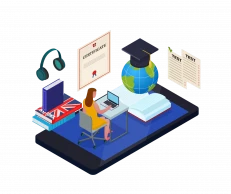
Preparing for the IELTS exam is a challenging yet rewarding journey. With the rise of AI tools like ChatGPT, learners now have a powerful resource to enhance their writing and speaking skills through personalised, on-demand practice and feedback. Let's find out how ChatGPT and other AI tools can help you make solid preparations for the writing and speaking sections of the IELTS exam.
How to Get Desired IELTS Score in Writing & Speaking Utilising ChatGPT or Other AI Apps
.
Generate Writing Topics On-Demand
One of the most effective ways to improve your IELTS writing skills is by consistently practising with new topics. ChatGPT can instantly generate IELTS Writing Task 1 and Task 2 prompts.
You simply need to give a command such as, “Give me a Task 2 essay topic on education,” and within seconds, you will have a practice prompt that mirrors the structure of real IELTS questions. This makes it easy to maintain variety in your writing and ensures you are exposed to a wide range of question types, from opinion to problem-solution essays.
Read more: How to Use ChatGPT and Other AI Tools to Improve Your IELTS Writing and Speaking Preparation
Analyze and Rewrite Your Essays
After completing a task response, you can request ChatGPT or any kind of similar AI app to review it. For example, using a prompt such as “Can you give feedback on this IELTS Task 2 essay?” along with your essay allows the chatbot to assess your grammar, vocabulary, coherence, and overall structure.
It will then break down your writing into the four IELTS scoring criteria—Task Response, Coherence and Cohesion, Lexical Resource, and Grammatical Range and Accuracy—and even give you a band estimate. You can also ask ChatGPT to rewrite your essay in a more academic or formal tone, helping you learn how to polish your writing.
Practice Academic Writing Style
Many test takers struggle with maintaining the required formal tone in Writing Task 2. ChatGPT can help you rewrite informal sentences into a more suitable academic style. For example, you might paste a paragraph and say, “Make this more formal and academic,” and it will return a refined version. This repeated exposure to academic phrasing trains your brain to automatically choose more formal constructions when writing under pressure.
Simulate IELTS Speaking Part Practice
ChatGPT is capable of simulating IELTS Speaking Parts 1, 2, and 3 by providing realistic prompts that resemble those used by actual examiners. Ask something like, “Pretend you are an IELTS examiner. Ask me Part 1 speaking questions,” and it will provide one question at a time, just like the real test.
Read more: IELTS for UKVI Explained: Key Insights for Bangladeshi Candidates
For Part 2, it can generate cue cards and even give you feedback on your response if you choose to type it out afterward. Practising in this format can help reduce anxiety, improve your fluency, and train you to think on your feet.
Improve Fluency Through Interactive Conversations
To sound more fluent and natural during the Speaking test, you need regular practice in forming complex ideas and expressing them clearly. ChatGPT can hold extended conversations with you on various IELTS-friendly topics like environment, education, technology, and culture.
This back-and-forth dialogue sharpens your ability to expand answers, use linking devices, and apply topic-specific vocabulary. While ChatGPT can not listen to your pronunciation, typing your answers and receiving written feedback still helps you develop rhythm and cohesion in speech.
Get Grammar and Vocabulary Feedback
One of the most frustrating aspects of self-studying IELTS is identifying your grammar and vocabulary weaknesses. With ChatGPT, you can paste any piece of writing or a sample speaking response and ask, “Please highlight grammar mistakes and suggest better word choices.”
Read more: How to Register for IELTS Exam in Bangladesh
It will analyse your work line by line, correcting errors and suggesting more advanced or suitable alternatives. You can even request vocabulary lists for specific topics or ask how to paraphrase certain phrases more effectively, helping you master the lexical resource band criteria.
Train ChatGPT to Evaluate Writing with Model Answers
You can use a more advanced method by “training” ChatGPT to assess writing against model answers. Provide five sample essays rated from Band 5 to Band 9, then include your own essay.
Instruct ChatGPT to compare your answer to the model responses and provide a full-band score evaluation based on IELTS criteria. This method is particularly helpful because it aligns ChatGPT’s feedback with the actual scoring system used by IELTS examiners, making the evaluation much more reliable.
Limitations of Using ChatGPT and Other AI Tools for IELTS Preparation
.
Not a Certified IELTS Examiner
While ChatGPT can provide helpful evaluations and corrections, it is not a certified IELTS examiner. This means the feedback it gives—especially band score predictions—may not always be accurate. Its understanding of IELTS criteria is broad but not specific to the training that human examiners undergo. Therefore, its scoring should be viewed as approximate, not official.
Read more: Free Websites for Online IELTS Mock Tests
Lacks Clear Opinion and Argumentation
A major limitation of ChatGPT in essay writing is its tendency to maintain a neutral tone. It is designed to present balanced viewpoints without taking a firm stand. However, in many IELTS Writing Task 2 essays, particularly those that ask for an opinion, test-takers are expected to take a clear position and support it with arguments. Overly vague or generic answers can lower your score for Task Response and reduce clarity.
No Personal Experience in Speaking Responses
Another major drawback is ChatGPT’s inability to reference personal experience. In the IELTS Speaking section, drawing from your real-life stories and opinions helps make your responses more engaging and authentic. Since ChatGPT and similar kinds of AI apps can only provide general or hypothetical examples, its answers often lack the depth and individuality that examiners look for.
Does Not Evaluate Pronunciation
Although ChatGPT can assess grammar and vocabulary through written responses, it cannot listen to your speech. This means it cannot evaluate crucial aspects like pronunciation, stress, or intonation—key components of the IELTS Speaking score.
Information May Be Inaccurate or Generic
Lastly, ChatGPT is not affiliated with IELTS, and its suggestions should be cross-checked with official resources. Always verify content accuracy and avoid using it as your only source of preparation. AI serves as a supplementary tool—not a substitute for official materials or expert advice.
Read more: IELTS Practice Tests: 7 Full Free IELTS Mock Tests to Take Online
In a Nutshell
ChatGPT and other AI tools can be a powerful ally in your IELTS Writing and Speaking preparation, offering flexible, instant practice and helpful insights. From generating topics to refining grammar and vocabulary, it adds great value to self-study. However, it is essential to balance AI support with official IELTS materials, expert feedback, and personal effort. While ChatGPT enhances learning, it should complement—not replace—structured preparation from certified sources and real-world language practice.
1 year ago

MrBeast pulls AI Thumbnail tool amid backlash from YouTube creators
Popular YouTuber MrBeast has taken down an AI-powered thumbnail generator following strong criticism from fellow creators who accused the tool of exploiting their work without consent.
The creator, whose real name is Jimmy Donaldson, introduced the feature last week through his YouTube analytics platform, Viewstats. He claimed the tool was designed to help smaller content creators craft more effective thumbnails. However, the move sparked a backlash, with critics arguing that it used existing thumbnails without permission.
Prominent YouTubers including PointCrow and Jacksepticeye condemned the AI generator. PointCrow, whose real name is Eric Morino, accused MrBeast of launching “something that can steal… hard work without a thought,” alleging the AI model had been trained on other creators’ thumbnails without consent.
In response, MrBeast announced on X (formerly Twitter) that he would be removing the tool from Viewstats. Instead, he plans to promote human artists available for hire.
"I genuinely care about the YouTube community more than anyone can imagine," MrBeast wrote, acknowledging the feedback. “It deeply saddens me when I do something that upsets people in the community. If creators don't want the tool, then that's perfectly fine.”
The now-defunct tool, offered via an $80-per-month subscription, allowed users to replicate popular thumbnail styles and even insert themselves into visuals resembling those from other channels. Critics likened the feature to generative AI tools trained on unauthorized content — a practice currently under legal scrutiny in multiple copyright lawsuits.
Despite MrBeast’s initial belief that creators would welcome the tool, it faced swift condemnation. Critics noted that, although the concept aimed to democratize content creation, it ultimately risked harming original creators and eroding trust in the community.
MrBeast, who currently holds over 385 million subscribers and is widely considered the platform’s highest-paid personality, has long emphasized supporting creators through tools and business ventures. However, the recent controversy adds to a series of challenges. These include a lawsuit tied to his Amazon series Beast Games, which drew allegations of mistreatment during filming, and criticism from the Mexican government for filming at Mayan ruins.
In a separate incident in April, MrBeast also apologized for a poorly organized fan event in Las Vegas that some attendees described as a “horrible” experience.
Despite these controversies, MrBeast remains a dominant figure in digital entertainment, with an expanding media presence and influence over YouTube’s creative landscape.
Source BBC
1 year ago

Windows' infamous ‘Blue Screen of Death’ turning black as part of new updates
After decades of haunting computer users with its trademark blue background, Windows’ infamous “Blue Screen of Death” is getting a new look — it will soon turn black.
The change comes as part of Microsoft’s wider efforts to make the Windows operating system more resilient, following last year’s major CrowdStrike incident that caused millions of computers worldwide to crash.
“It's now easier than ever to manage unexpected restarts and recover quickly,” Microsoft said in a statement from its Redmond, Washington headquarters on Wednesday.
As part of the update, Microsoft is simplifying the experience for users facing unexpected system restarts. The redesigned error screen will feature a black background, a shorter message, and will no longer display the familiar frowning face. Instead, it will show the percentage progress for the system restart.
The updated interface is expected to roll out later this summer for all devices running Windows 11 (version 24H2).
How ChatGPT and other AI tools are changing the teaching profession
In addition, Microsoft announced a new “quick machine recovery” feature aimed at reducing downtime, especially during large-scale outages. The mechanism will allow Microsoft to automatically deploy targeted fixes without requiring complex, manual intervention from IT teams.
The quick machine recovery feature will also become widely available later this summer on Windows 11, with further improvements expected by the end of the year.
1 year ago

How ChatGPT and other AI tools are changing the teaching profession
Ana Sepúlveda, a math teacher in Dallas, wanted to make geometry exciting for her 6th grade honors class. Knowing her students are passionate about soccer, she decided to connect the subject to the sport. To help, she turned to ChatGPT.
Within seconds, the AI provided a detailed five-page lesson plan, complete with a theme: “Geometry is everywhere in soccer — on the field, in the ball, and even in stadium designs!” The plan explained how shapes and angles are used in the game, suggested discussion questions like “Why are these shapes important to soccer?” and proposed a project for students to create their own soccer field or stadium using rulers and protractors.
“AI has completely changed the way I work,” said Sepúlveda, who teaches at a bilingual school and uses ChatGPT to translate materials into Spanish. “It’s helping me plan lessons, communicate with parents, and keep students more engaged.”
Teachers nationwide are increasingly using AI tools to create quizzes, lesson plans, worksheets, assist with grading, and reduce administrative work. Many say this technology allows them to focus more on teaching.
Google may be forced to link to rival search platforms in the UK
A Gallup and Walton Family Foundation survey released Wednesday found that 6 in 10 K-12 public school teachers in the U.S. used AI tools during the last academic year. The survey, conducted in April with over 2,000 teachers, showed AI use is most common among high school educators and those early in their careers.
According to Gallup research consultant Andrea Malek Ash, teachers who use AI weekly reported saving an average of six hours per week, suggesting AI could help reduce teacher burnout.
States are issuing guidelines for using AI tools in classrooms
As concerns grow over students misusing AI tools, many schools are introducing guidelines and providing training to ensure teachers use the technology responsibly and avoid shortcuts that could negatively impact student learning.
Currently, around two dozen U.S. states have issued AI-related guidance for schools, but how consistently these rules are applied across classrooms varies, according to Maya Israel, an associate professor of educational technology and computer science education at the University of Florida.
“We need to make sure AI doesn’t replace a teacher’s professional judgment,” Israel emphasized. She added that while AI can be useful for basic tasks like grading multiple-choice tests, it struggles with more complex assessments requiring nuance. Students should also have a way to report unfair or inaccurate grading, with the final grading decision left to the teacher.
AI tools are already saving time for many educators. Roughly 8 in 10 teachers who use AI say it helps reduce workload by assisting with tasks such as creating worksheets, quizzes, or handling administrative duties. About 6 in 10 report that AI has improved the quality of their work, particularly in adapting materials for students or providing feedback.
Mary McCarthy, a high school social studies teacher near Houston, said AI has transformed her teaching and improved her work-life balance by easing lesson planning and other tasks. Training provided by her school district has also helped her demonstrate responsible AI use to students.
“If all we say is ‘AI is bad, and kids will get lazy,’ then of course that’s what will happen if we don’t guide them,” McCarthy said. “As the adult in the room, I see it as my duty to help them learn how to use this tool responsibly.”
OpenAI pulls Jony Ive partnership details after court ruling in trademark dispute
Teachers say the technology is best used sparingly
Since the launch of ChatGPT in late 2022, opinions on the use of artificial intelligence in education have changed significantly. Many schools initially banned the technology, but over time, educators have begun exploring ways to integrate it into classrooms. Despite this shift, concerns remain. According to a recent study, nearly half of teachers worry that students' reliance on AI could harm their ability to think critically, work independently, or persevere through problem-solving tasks.
However, teachers also believe that understanding AI better helps them recognize when students overuse it. Colorado high school English teacher Darren Barkett, for example, says AI-generated assignments often lack grammatical errors and contain unusually complex language—both signs that a chatbot was involved. Barkett himself uses ChatGPT for lesson planning and grading multiple-choice tests and essays.
In suburban Chicago, middle school art teacher Lindsay Johnson uses only AI tools approved by her school to ensure student privacy. She introduces AI technology later in the creative process so students can build confidence in their own abilities first.
For her eighth graders' final project, Johnson asked students to draw a portrait of someone influential in their lives. After they finished the facial details, she offered them the option to use generative AI for designing the background. She relied on an AI feature in Canva, a design platform vetted by her school district's IT team for safety and privacy.
“My goal as an art teacher is to show students the range of tools available and help them understand how to use those tools properly,” Johnson said. Interestingly, some students declined the AI assistance. “About half the class said, ‘I already have a vision, and I want to complete it myself,’” she added.
1 year ago

Musk’s robotaxis under regulatory spotlight after video shows wrong-lane driving
U.S. traffic safety regulators have launched an inquiry into Elon Musk’s self-driving “robotaxi” trials in Texas following viral videos showing Teslas braking abruptly, veering down the wrong side of the road, and crossing intersections from incorrect lanes.
The National Highway Traffic Safety Administration (NHTSA) confirmed on Tuesday that it has contacted Tesla for more details about the incidents. Although other clips show the robotaxis functioning smoothly, any significant findings from the inquiry could raise concerns over Musk’s repeated assurances about the technology's safety and his ambitious vision of an autonomous future dominated by Tesla vehicles — potentially without steering wheels or drivers.
“NHTSA is aware of the referenced incidents and is in contact with the manufacturer to gather additional information,” the agency said in a statement.
Passengers testing Tesla robotaxis on Austin roads have generally reported positive experiences, and Tesla’s stock price rose by 8% on Monday. However, news of the federal inquiry caused the stock to fall more than 2% on Tuesday.
Tesla has yet to comment publicly.
Google may be forced to link to rival search platforms in the UK
Dan Ives, a bullish Tesla analyst at Wedbush Securities who experienced a flawless ride during Sunday’s launch of the test program, dismissed the concerning footage circulating on platforms like X and YouTube.
“Any issues they encounter will be fixed,” Ives said, calling the test program a “huge success” over the past three days “despite the skeptics.”
One such skeptic, vehicle technology expert Sam Abuelsamid of Telemetry Insight, argued the footage was worrying enough to pause public testing altogether.
“The system has always had highly erratic performance, working really well a lot of the time but frequently making random and inconsistent but dangerous errors,” Abuelsamid wrote in a message. “This is not a system that should be carrying members of the public or being tested on public roads without trained test drivers behind the wheel.”
One widely shared video shows a Tesla entering a left-turn-only lane, but instead of turning, it drives straight through the intersection and into an oncoming lane. The vehicle then swerves several times, with the steering wheel jerking back and forth, before stabilizing.
The car proceeds down the wrong side of the road for around 10 seconds. Luckily, no oncoming vehicles were present.
The passenger who filmed the incident, money manager Rob Maurer, downplayed the situation.
“There are no vehicles anywhere in sight, so this wasn’t a safety issue,” Maurer said in his video commentary. “I didn’t feel uncomfortable in the situation.”
Another video shows a Tesla braking suddenly in the middle of the road, possibly reacting to the flashing lights of parked police cars, though the officers appeared to be handling a separate matter nearby.
NHTSA has been monitoring Tesla’s autonomous technology closely. The agency launched an investigation last year into how Teslas with Musk’s so-called Full Self-Driving system performed in low-visibility conditions, following several crashes — one of them fatal. Tesla had to recall 2.4 million vehicles at the time.
Musk insists his Full Self-Driving Teslas are safer than human drivers, and he claims the upgraded robotaxi system will be so reliable that hundreds of thousands will be deployed by the end of next year.
OpenAI pulls Jony Ive partnership details after court ruling in trademark dispute
Despite the Austin trials, Musk faces stiff competition. Rivals such as Amazon-owned Zoox and Waymo — the current leader in self-driving taxis — have already launched services in multiple cities. Waymo recently announced it had completed its 10 millionth paid ride.
Musk is under pressure to deliver a robotaxi breakthrough. His recent role in the Trump administration as a cost-cutting czar has alienated Tesla’s core buyer base, traditionally made up of liberal, environmentally conscious Americans, contributing to declining sales. European markets have also cooled after Musk publicly supported far-right politicians in Britain and Germany earlier this year.
Source: Agency
1 year ago

Google may be forced to link to rival search platforms in the UK
Google may soon face new requirements in the UK aimed at providing consumers with more choice over which online search services they use, according to the country’s competition watchdog.
The UK’s Competition and Markets Authority (CMA) is investigating the tech giant under a new law that allows the regulator to demand changes if it finds that a company holds too much power in a particular market.
Google currently dominates the UK search market, accounting for over 90% of searches, with approximately 200,000 businesses using its search advertising services to reach customers, as reported by the BBC.
Alphabet, Google's parent company, has criticized the CMA's proposed changes, calling them "broad and unfocused." However, the company has said it will "work constructively" with the regulator moving forward.
The CMA, which is not accusing Google of anti-competitive behavior at this stage, has outlined a "roadmap" for potential changes to the company’s operations.
These changes could include requiring "choice" screens for users to access different search providers and offering more transparency and control for publishers whose content appears in search results. A final decision is expected in October.
According to the CMA, the average person in the UK conducts between five and ten searches per day, and businesses spend an average of £33,000 annually on Google advertisements. The watchdog believes that, if competition were functioning properly, this figure could be lower.
"Google search has delivered tremendous benefits but our investigation so far suggests there are ways to make these markets more open, competitive and innovative," said CMA Chief Executive Sarah Cardell.
She added that the proposed changes would give UK businesses and consumers more choice and control over how they interact with Google’s search services.
However, Google expressed concerns over the potential outcomes of the investigation. A company spokesperson said that while the CMA has reiterated that "strategic market status" does not equate to accusations of anti-competitive behavior, the investigation and proposed changes "could have significant implications for businesses and consumers in the UK."
Google faces major setback in appeal against EU antitrust fine over Android
They also cautioned that the UK has historically benefited from early access to Google innovations, but this could change as a result of what they described as "punitive regulations."
Concerns from Businesses and Publishers
The CMA’s investigation, which was launched in January, aims to ensure fair competition in online search. It has heard from 47 organizations, including airlines, adult online retailers, and media publishers, about how Google's search practices help or hinder their businesses.
EasyJet, for example, noted that changes to the search engine resulting from the European Union’s Digital Markets Act had diverted more customers to online travel agencies, which misrepresented the airline’s services and prices.
In response, Google stated that increasing the visibility of rival search engines and comparison sites was part of the required changes under the EU law. However, the company claimed this move had hurt airlines and hotel operators by reducing direct traffic to their websites.
Meanwhile, LoveHoney and Ann Summers, which sell sex toys, lingerie, and sexual wellness products, raised concerns about Google’s SafeSearch feature, which censors explicit results and has affected the "discoverability" of their sites.
Trade association UK Hospitality also warned that the UK should be cautious about adopting similar search requirements to those in the EU, fearing they could create "unintended consequences" for both businesses and consumers.
Implications for Artificial Intelligence
Sebastian Cuttill, of the News Media Association, highlighted that the CMA's intervention could have significant implications not just for traditional search engines but also for AI-powered alternatives, such as Google's own AI Overviews.
He argued that increasing transparency over how news content is used by tech firms to develop AI tools would be "massive" for publishers.
News organizations, including the BBC, have expressed concerns about the use of their content to train AI systems without consent or compensation. "This measure would pursue the statutory objectives of fair dealing and trust and transparency," Cuttill said.
Global Scrutiny
Google’s search operations have come under increased scrutiny by regulators in other countries as well.
In August, a US judge ruled that the company had operated an illegal search monopoly. Additionally, the European Union has imposed multiple enforcement actions, including a €2.4 billion (£2 billion) fine for allegedly "self-preferencing" its Shopping comparison service, a penalty that was upheld by the bloc’s top court last year.
1 year ago