Others
One held over journo Alif killing in Netrakona
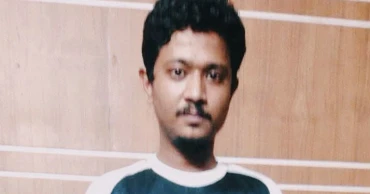
Police have arrested a man in connection with his suspected involvement in the killing of journalist Lutfuzzaman Fakir Alif in Durgapur upazila of Netrokona district on Saturday night.
The arrestee was identified as Apurba, 22, of Durgapur upazila.
Acting on secret information, a team of police conducted a drive in the upazila on Saturday night and arrested Apurba, said Khandaker Shaker Ahmed Khan, Officer-in-Charge of Durgapur Police Station.
Alif Fakir, 40, of Sunai village in Kalmakanda upazila, was shot dead by unidentified miscreants at Utrail Bazar on the Shamganj-Birishiri road in Durgapur municipality on October 15.
He worked as the Netrokona correspondent of Ruposhi Bangla TV and also ran a Facebook page titled ‘Detective Article’, where he wrote about various irregularities and crimes.
Five bullet wounds were found on different parts of the journalist’s body, including his head, neck and chest, said police.
9 days ago
BPPA board calls for expediting reforms to implement e-GP Version 2.0
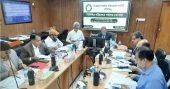
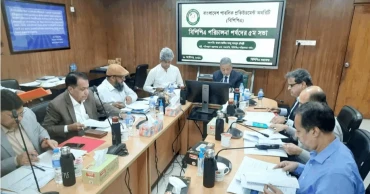
The Governing Board of the Bangladesh Public Procurement Authority (BPPA) has stressed the need to expedite business process reengineering activities to implement the second version of the electronic Government Procurement (e-GP) system.
The call came at the 5th meeting of the 10-member BPPA Governing Board, chaired by Planning Minister Amir Khosru Mahmud Chowdhury at the authority’s conference room on the Bangladesh Planning Commission premises in Dhaka on Sunday.
The meeting discussed the ongoing transition to e-GP Version 2.0, which aims to modernise and simplify the public procurement system.
The board underscored the need to complete the business process reengineering (BPR) activities quickly to facilitate the implementation of the upgraded system.
It also took note of the recently approved 110-member staff organogram of the BPPA and the ongoing preparation of service regulations for the authority.
The former Central Procurement Technical Unit (CPTU) was established under the Implementation Monitoring and Evaluation Division (IMED) in 2002 as part of the government’s public procurement reforms.
The CPTU was transformed into the Bangladesh Public Procurement Authority on 18 September 2023.
The 4th meeting of the BPPA Governing Board was held on 9 July 2026.
10 days ago

Preserve Bangladesh’s tradition of communal harmony: President
President Mirza Fakhrul Islam Alamgir on Sunday called on all to preserve Bangladesh’s long-standing tradition of communal harmony, saying the central message of Durga Puja is to stand against and defeat injustice, oppression, dishonesty and persecution.
“We can say with great conviction that I do not know of anywhere else in the world where communal harmony exists as it does in Bangladesh,” he said while visiting Ramna Kali Mandir in Dhaka on the occasion of Durga Puja.
The President said at a time when conflicts, violence and hatred prevail across the world, the peaceful celebration of Durga Puja by members of the Hindu community in Bangladesh stands as a shining example of communal harmony and peaceful coexistence.
Extending his greetings to the community, he said Durga Puja is one of their major religious festivals and conveys the values of justice, peace, harmony and human welfare.
“Demons have emerged repeatedly in this country, and the people of Bangladesh have defeated them,” Mirza Fakhrul said.
10 days ago
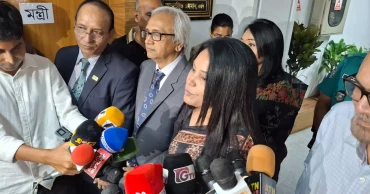
Information Commission will serve people, not government or individuals: CIC
Chief Information Commissioner (CIC) Prof Dr Nahreen Islam Khan on Sunday said the Information Commission will work for the people, not for any government or particular individual, with ensuring citizens’ right to information among its top priority.
She said the commission's initial tasks will be to ensure people's access to information, raise public awareness about its activities and make it easier for citizens to seek information.
Nahreen made the remarks while speaking to journalists after a meeting with Information and Broadcasting Minister Andaleeve Rahman at the Secretariat.
The government on Saturday appointed Nahreen as the CIC and journalists SAM Mahfuzur Rahman and Khan Mohammad Abul Hossain as Information Commissioners.
Responding to questions about the appointment of a woman as the CIC for the first time and the commission’s future activities, Nahreen said gender should not determine how a person performs their responsibilities. “What matters is the responsibility itself, not gender. The most important thing is to ensure equal priority for everyone in society,” she said.
She noted that though the Information Commission had existed for the past 17 years, it had not been able to carry out any particularly significant work.
The CIC expressed hope that the commission, appointed under a democratic government, will function as an independent body and ensure people's right to information.
“The Information Commission is for the people. We will work for the people, not for any government or any particular individual. We will work for everyone, and our doors will remain open to all people in Bangladesh,” she said.
Information Commissioner Mahfuzur Rahman, who previously served as the speechwriter to Prime Minister, said he has taken on a new responsibility at an independent statutory institution.
It is important to make clear how such an institution should function and serve the public, he said, adding that the right to information belongs to all citizens, not just the media.
Emphasising transparency and accuracy in the flow of information, Mahfuzur Rahman said the commission will seek to promote social welfare, public welfare and the interests of the state through the transparent and responsible dissemination of accurate information.
He said the commission will play an active role in meeting people's expectations regarding access to information and will stand beside citizens in exercising that right.
10 days ago

Two killed in separate Jhenaidah family disputes
Two men were killed by their own brothers in separate family disputes in Shailkupa and Sadar upazilas of Jhenaidah on Saturday.
The deceased were identified as Mojibul Islam, 45, of Brahmapur village in Shailkupa upazila, and Sohan Mondal, 26, of Bokshipur-Chandpur village under Saganna union in Jhenaidah Sadar upazila.
According to police and locals, the first incident occurred in Brahmapur village on Saturday afternoon over a feud regarding picking betel nuts from a courtyard tree on Friday. Following an argument, younger brother Robiul Islam allegedly struck his elder brother Mojibul on the head and body with a stick. Mojibul's wife and son were also injured while attempting to save him. Mojibul died on the way to Shailkupa Upazila Health Complex.
Robiul fled the scene, but locals detained his wife, Mili Khatun, and handed her over to police. Humayun Kabir Molla, Shailkupa Police Station Officer-in-Charge (OC), said the body was sent to the morgue and drives are underway to arrest Robiul .
In the second incident at Bokshipur-Chandpur village on Saturday evening, elder brother Sumon Mondal, 30, struck his younger brother Sohan on the head with a spade following an altercation over a dispute involving Sohan's wife earlier in the afternoon.
Sohan was rushed to Jhenaidah 250-Bed General Hospital, where duty doctor Dr. Humaira Huma declared him dead.
Asaduzzaman, Jhenaidah Sadar Police Station Officer-in-Charge (OC), said police are conducting drives to arrest Sumon.
10 days ago
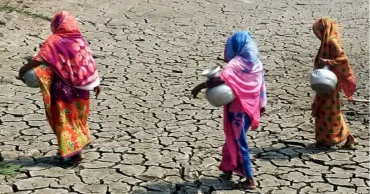
Bangladesh needs $1.4b to tackle climate-related health risks: Study
Bangladesh needs US$1.4 billion to address the health impacts of climate change under its Health National Adaptation Plan (HNAP) for 2026-2031, with a study identifying potential funding sources from domestic resources, development partners and international climate funds.
The study by BRAC University’s Centre for Climate Change and Environmental Research (C3ER), released at BRAC Centre in the capital on Saturday, proposes mobilising $380 million from domestic public financing, $360 million from health-related contributions by other sectors, $520 million from development partners and $140 million through international climate-finance channels.
The proposed amounts are financing targets, not confirmed commitments, the study noted.
The plan aims to address climate-related health challenges, including extreme heat, climate-sensitive diseases, unsafe water and disruptions to essential healthcare services.
Bangladesh will need around Tk 17,000 crore, equivalent to $1.4 billion, to implement the plan and tackle the adverse health effects of climate change, said Prof Dr Iqbal Kabir, director of the Centre for Climate Change and Public Health.
Dr Ainun Nishat, emeritus professor at BRAC University and adviser to C3ER, said the growing health burden of climate change must be reflected in the country’s development planning and financing.
He said the HNAP should guide investments across the health, water and infrastructure sectors, with clear responsibilities for ministries and specific budget allocations. International adaptation finance should complement national efforts, particularly through grants to protect vulnerable communities.
According to the study, domestic public financing and contributions from other sectors could jointly cover around 53 percent of the plan’s investment needs.
Potential domestic sources include health-sector budgets, the Annual Development Programme and the Bangladesh Climate Change Trust Fund. Investments in drainage, sanitation, safe water and flood-resilient infrastructure could also help reduce disease risks and maintain access to healthcare.
Development partners could provide around 37 percent of the required financing, with potential support aligned with programmes of the World Bank, UNICEF, the World Food Programme, the World Health Organization and the United Nations Population Fund.
The study also identifies possible funding opportunities through the Green Climate Fund, Adaptation Fund and Least Developed Countries Fund.
Ahead of COP31, the financing roadmap could help Bangladesh present specific climate-health investment proposals to development partners and international climate-finance institutions, it said.
Four components account for $966 million, or 69 percent, of the plan’s investment framework: $350 million for resilient and low-carbon infrastructure, technologies and supply chains; $266 million for integrated risk monitoring, early warning and emissions tracking; $210 million for a climate-smart health workforce; and $140 million for leadership and governance.
The study recommends incorporating climate-risk assessments into new health-sector development projects, establishing a dedicated taskforce under the Health Ministry to develop costed interventions, and introducing specific codes in the government’s iBAS++ accounting system to track climate-health expenditure.
It also calls for stronger coordination among government agencies, development partners, the private sector and NGOs to mobilise funding effectively.
Speakers at the event stressed the need for blended finance to address challenges in the health sector, alongside training for doctors, nurses, pharmacists and other healthcare workers on climate-related health risks.
They also recommended incorporating climate-related health risks into educational curricula.
10 days ago
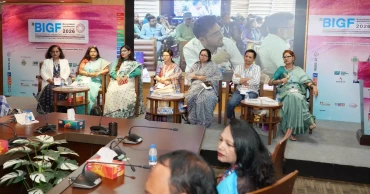
21st Bangladesh Internet Governance Forum calls for a safe, inclusive and human-centred digital future
The 21st Bangladesh Internet Governance Forum (BIGF) 2026 concluded on Saturday following three days of discussions on strengthening internet governance and building a safe, inclusive and human-centered digital future.
The sessions began on Thursday and followed the theme “Governing the Internet in the Age of Intelligence: An Inclusive, Safe, Resilient and Human-Centric Digital Future.”
Discussions covered internet governance, artificial intelligence (AI), cybersecurity, digital infrastructure, data protection, and people's rights online.
BIGF Secretary General Mohammad Abdul Haque Anu welcomed participants at the opening ceremony. Major General Md Emdad Ul Bari (Retd), Chairman of the Bangladesh Telecommunication Regulatory Commission (BTRC), attended as chief guest. Anja Gengo, a digital policy and regulatory expert at the United Nations Internet Governance Forum Secretariat, joined online as a distinguished guest.
Speaking at the opening session, AHM Bazlur Rahman, a member of the Multistakeholder Consultation Group of the United Nations Group on the Information Society (UNGIS) and Responsible Artificial Intelligence Ambassador for Bangladesh, highlighted the growing risks of cyberattacks, misuse of personal data, misleading information and technology-facilitated gender-based violence.
Brigadier General Mohammad Khalilur Rahman (Retd), former Director General of BTRC’s Systems and Services Division, described how the digital divide is changing. Expanding internet coverage was once the principal objective, he said, but meaningful access now also depends on digital skills, network quality, actual use and people’s ability to benefit from technology.
Although networks have reached many parts of the country, he noted, people do not have equal opportunities to use the internet.
A dedicated session introduced newcomers to internet governance and fellowship opportunities, exploring ways for young people to participate in national discussions and engage in international forums.
The second day included a session on “AI Policy and Strategy, Emerging Technologies and Human-Centric Governance,” featuring Md Asaduzzaman, Joint District and Sessions Judge and Additional Chief Judicial Magistrate, Gazipur.
Professor Dr Lafifa Jamal of the Department of Robotics and Mechatronics Engineering at the University of Dhaka delivered a keynote address on preventing gender-based violence in the age of AI.
Drawing on statistics on violence against women, she discussed online risks associated with limited awareness of technology, including the inadvertent disclosure of personal information to AI tools and the use of shared mobile phones.
Hiren Pandit, Program Coordinator at the Bangladesh NGOs Network for Radio and Communication (BNNRC), also addressed the risks of technology-facilitated gender-based violence and highlighted some interventions of BNNRC.
Nurul Islam, Capacity Development and Management Expert at Nagorikata: Civic Engagement Fund (CEF), spoke about youth empowerment and the opportunities and challenges young people face in the age of AI. He emphasized the need to strengthen digital skills and promote responsible technology use.
Nilufar Chowdhury, MP, mentioned the challenges she also faced during the last couple of years regarding online harassment in the age of AI. She emphasized the need to strengthen digital skills, promote responsible technology use, and make all accountable.
On the final day, BIGF convened a session with youth leaders to raise awareness of AI use among children and young people.
10 days ago
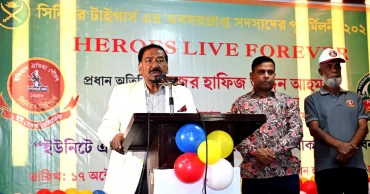
Speaker recalls proud role of East Bengal Regiment during '71 Liberation War
Speaker Hafiz Uddin Ahmed on Saturday said the 1971 Liberation War was a genuine people’s war in which people from all walks of life took part, describing the East Bengal Regiment as a leading force in the armed resistance against Pakistani rule.
“The East Bengal Regiment is a glorious name in the history of Bangladesh’s Liberation War. If the regiment had not started resistance against Pakistan, this country would still have been Pakistan,” he said.
The Speaker was addressing a reunion of retired members of the 1 East Bengal Regiment, known as the Senior Tigers, at SKS Tower in Dhaka as the chief guest.
Hafiz Uddin said the East Bengal Regiment was formed in 1948 and received the highest number of gallantry awards for its contributions during the 1965 India-Pakistan war and the 1971 Liberation War.
10 days ago

Tourism minister mourns Cox’s Bazar resort fire victims
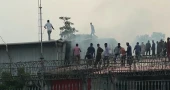
Civil Aviation and Tourism Minister M Rashiduzzaman Millat has expressed deep sorrow over the loss of lives in a devastating fire at Tuptup Resto & Resort in Cox’s Bazar’s Inani area.
In a statement on Saturday, he conveyed his heartfelt condolences to the bereaved families and wished a speedy recovery for those injured in the fire.
The minister also urged the authorities concerned to take prompt and effective steps to find the missing people and determine the actual cause of the fire.
“Such a tragic incident is deeply painful. It is essential to stand beside those affected and ensure continued coordinated efforts in rescue operations,” he said.
Millat also directed the Bangladesh Tourism Board to send a team to the site urgently to assess the situation, determine the extent of damage and assist tourists.
He also instructed the authorities to arrange an urgent meeting with the local administration, law enforcement agencies and tourism sector stakeholders to ensure tourists’ safety and swiftly implement the recommendations.
The minister further directed that special training programmes on fire safety and emergency rescue operations be arranged for staff at tourist destinations with the support of the Fire Service and Civil Defence to prevent similar incidents in the future.
10 days ago
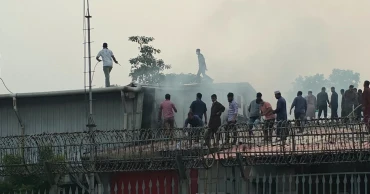
Ibn Sina factory fire brought under control
A fire that broke out at Ibn Sina Pharmaceuticals Ltd. in the Safipur area of Gazipur on Saturday afternoon was brought under control after one and a half hours of frantic efforts.
The fire started around 4pm on the ground floor of a six-storey factory building, said Talha Bin Zasim, station officer (media cell) at the Fire Service and Civil Defence (FSCD) headquarters.
On information, six firefighting units rushed to the spot and brought the fire under control around 5:35pm, the official said.
The cause of the fire could not immediately be confirmed, he added.
10 days ago