others

Sai Pallavi says she rejected Rs 2 crore fairness cream advertisement over personal values
Actor Sai Pallavi has said she turned down a reported Rs 2 crore endorsement deal for a fairness cream because she did not want to promote products that could make people feel insecure about their skin colour.
The actor, who will play Sita in Ramayana: Part 1, said she believes people should feel confident about their natural appearance rather than try to meet society's beauty standards.
Speaking in an earlier interview with Bollywood Hungama, Sai Pallavi said she has never endorsed beauty products because she rarely uses makeup and prefers to appear naturally on screen.
"You need to be confident about who you are and your skin colour," she said.
The actor explained that her decision was also influenced by her younger sister's experiences. She recalled that her sister was often encouraged to eat certain foods with the belief that they would make her fairer, which deeply upset her.
"I felt I needed to stand up for that, at least for my sister's sake. Otherwise, what would I do with all that money?" Sai Pallavi said.
She also shared that she had struggled with acne before entering the film industry and had tried many skincare products because she felt self-conscious about her appearance.
"I didn't want to leave home because I thought people would only notice my pimples," she said.
However, after making her acting debut in the 2015 Malayalam film Premam, she realised audiences accepted her despite her acne, which gave her greater confidence.
Sai Pallavi said many young people later told her they felt encouraged after seeing someone succeed without hiding such skin conditions.
She added that this inspired her to avoid promoting products that might make people question their appearance or feel less confident about themselves.
While explaining her decision, the actor said she respects those who choose to endorse such brands but wanted to remain true to her own beliefs.
Source: NDTV
2 days ago
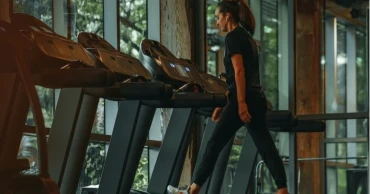
Fitness coach shares 30-minute treadmill routine for staying active
A treadmill can be a simple way to stay active and support overall fitness. It is easy to use and widely available in gyms.
Regular treadmill exercise can help improve cardiovascular fitness, support heart health, lift mood and keep the body active. A fitness coach has shared a 30-minute treadmill routine that gradually increases and decreases the incline.
According to Usamaa, who uses the name usamaa.fitness on Instagram, following a structured routine can make treadmill workouts easier to maintain.
The workout begins with five minutes at incline 5 as a warm-up. The incline is then increased to 8 for another five minutes, followed by incline 10 for five minutes and incline 12 for the next five minutes.
After reaching the highest incline, the routine gradually becomes easier. The incline is lowered to 8 for five minutes before finishing with another five minutes at incline 5.
The full workout takes 30 minutes.
“It burns calories without wrecking your recovery. You’ll feel it, but you won’t dread coming back tomorrow, and you can actually stay consistent with it,” the trainer said.
The coach recommends maintaining consistency while also allowing enough time for rest and recovery.
For a balanced fitness routine, treadmill workouts can be combined with age-appropriate strength and other physical activities. Eating regular, nutritious meals and getting enough protein and other essential nutrients are also important for supporting an active lifestyle.
Anyone starting a new exercise routine should choose an intensity that feels comfortable and gradually build up as their fitness improves.
Source: NDTV
3 days ago
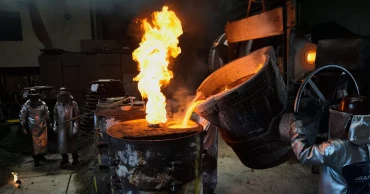
Austria’s 16th-century bell foundry embraces modern technology
Workers at one of Europe’s last remaining bell foundries are using modern technology alongside centuries-old techniques to keep the traditional craft alive.
Wearing protective gear against the intense heat of molten bronze, workers at the Grassmayr Bell Foundry in Innsbruck carefully pour the metal into specially shaped molds to cast bells weighing several tons. The foundry is currently producing 12 bells for churches in Italy, Germany and Romania.
Founded in 1599, the family-run foundry has survived wars, famines, epidemics and economic difficulties. Today, brothers Johannes and Peter Grassmayr run the business.
Hundreds of bell makers operated across Europe during the Renaissance, but only a few remain today.
The Grassmayrs say their survival has depended on persistence and innovation, including the use of 3D printing, scanning, lasers and computer simulation applications.
“Certain things are just like they were 400 years ago. But we innovated a lot. Especially within the last 20 years, we've changed a lot,” Johannes Grassmayr told The Associated Press.
Producing a bell takes three to four months. In the past, cleaning and polishing a newly cast bell accounted for about 30% of the production time. Modern equipment has reduced that process to roughly one-tenth of the time.
The company keeps some of its production methods secret, including a special chamber where bells are cleaned using high-pressure sandblasting. It also uses specially developed applications to calculate the sound of individual bells.
Despite the technological advances, designing and preparing molds for large bells can still take up to six months.
“The important thing is that you have calculate, form and then cast the bell as a musical instrument,” Johannes said.
One of the biggest challenges is ensuring the mold can withstand the pressure created by molten metal. When a bell weighing several tons is cast, liquid bronze can exert up to 125 metric tons (137 tons) of pressure inside the mold.
To protect the molds, the foundry uses only high-quality clay, which is reinforced with steel sleeves capable of handling the extreme pressure.
However, production challenges are not the only concern for the business. The traditional bell-making industry is under pressure as fewer churches are being built, changing demand for new bells.
Higher energy costs linked to the war in Ukraine have added to the difficulties, while labor costs have risen by about 30% since the COVID-19 pandemic began in 2020.
Still, materials remain the biggest expense. High-quality bells are made from bronze containing 80% copper and 20% tin. Johannes said bronze cost about 8 euros ($9.23) per kilogram a few years ago but now costs around 23 euros ($26.17).
“That’s why I can’t even say how much a bell is going to cost in a year. I just hope the metal price is going to come down again,” he said.
To sustain the business, the family has increasingly focused on restoring old bells, often using modern technology. According to the company, hundreds of damaged bells from 12 European countries have been restored at the Grassmayr foundry.
Grassmayr bells are installed in more than 100 countries, from Japan to the United States.
One of the largest bells produced by the brothers was made for Romania’s National Cathedral in Bucharest. Cast in 2016, it stands 3.3 meters (10.8 feet) tall and weighs more than 25 metric tons (27.5 tons).
Another bell weighing 15 metric tons (16.5 tons) hangs at a church on Mount Tabor in Israel.
Johannes recently showed AP several newly cast bells that were being left to cool for a week before being removed from their molds. The detailed imprint of the mold could still be seen in the clay.
“This bell is for the church in Zethau, in Germany,” he said. “I’m very happy with the casting. I’m especially happy that the innovations of the past decades helped a lot to make the bells ever more beautiful and better.”
5 days ago
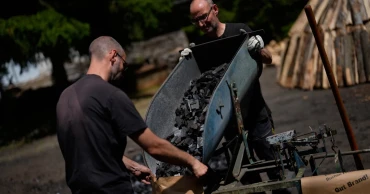
In a German forest, two brothers keep ancient charcoal-burning tradition alive
Immo Feldmer carefully tipped smoldering charcoal into a tall mound of earth, continuing an ancient tradition of charcoal making that has survived for centuries in Germany’s Harz Mountains.
Inside the mound, beech wood is tightly stacked and left to smolder for weeks until it is transformed into charcoal — a craft that has been practiced in the Harz region of eastern Germany for hundreds of years.
“We are making charcoal in traditional earthen kilns, just as it was done here in the Harz Mountains over 1,000 years ago,” Feldmer told The Associated Press in a recent interview as he stood among the mounds in the Harz forest near the small town of Hasselfelde.
Feldmer and his brother Sascha took over the Harzköhlerei Stemberghaus charcoal-making business from their father. They also employ a small number of workers because the smoldering wood inside the mounds must be monitored and carefully tended day and night to prevent it from catching fire and turning into useless ash.
Once covered with earth, the beech wood burns from top to bottom through carefully placed air holes. Beech is particularly suitable because of its high density and the intense heat it produces when converted into charcoal.
After the process is complete, the charcoal is cleared of soil and allowed to cool before being packed into 10-kilogram (22-pound) bags for sale.
Charcoal production was once essential to mining in the Harz Mountains. Valuable metals such as silver, lead, copper and zinc were extracted from hard rock by crushing the ore and smelting it in furnaces at extremely high temperatures — heat that could only be achieved with charcoal.
Over the centuries, hundreds of families in the Harz region made their living as charcoal burners.
Mining has since ended in the area, however, and only a small number of charcoal burners remain in Germany. The Feldmer brothers now mainly sell their charcoal to people who use it for barbecues at home.
“Our charcoal is, first and foremost, made from pure beech wood,” Feldmer said, noting that much of the charcoal sold in German hardware stores is imported and made from “mixed woods, scrap wood, and waste wood” to keep production costs low.
The brothers produce around 40 tons of charcoal a year, but the business alone is not enough to support them. They have therefore expanded the operation to include a museum showcasing the history of charcoal burning, a small shop and a restaurant serving local specialities, including steaks grilled over their own charcoal made from birch wood.
Although charcoal burning has largely disappeared as a traditional craft in Germany, Feldmer hopes his family can keep the practice alive for future generations.
“Of course, we hope ... that our business here will be taken over by our children, that it will continue to operate, and that the traditional craft of charcoal burning will be preserved here,” he said.
6 days ago

Marvel announces new Black Panther, Ryan Gosling as Ghost Rider at Comic-Con
Marvel Studios announced major casting updates at Comic-Con International on Saturday, naming David Jonsson as the new Black Panther and revealing Ryan Gosling will play Ghost Rider in upcoming films set for release in 2028.
Jonsson will portray the son of Chadwick Boseman’s T’Challa in Black Panther III, which is scheduled to release on December 15, 2028. The 32-year-old actor, known for Industry, The Long Walk and Alien: Romulus, appeared on stage with director Ryan Coogler, Letitia Wright and Winston Duke.
Marvel also confirmed that Gosling will star as Ghost Rider, reuniting with director Shawn Levy. Gosling said he had wanted to play the character for a long time.
The studio further announced a theatrical re-release of Avengers: Endgame on September 25 with new footage connected to Avengers: Doomsday, which will arrive on December 18.
A trailer shown at the event revealed more about Robert Downey Jr.’s Victor Von Doom and his connection with Fantastic Four characters Reed Richards and Sue Storm.
Ryan Reynolds surprised fans by appearing at the panel in a new grey Deadpool costume, adding to the excitement of Marvel’s presentation.
The announcements come as Marvel looks to boost interest in its superhero franchise following mixed reactions to some recent releases.
8 days ago
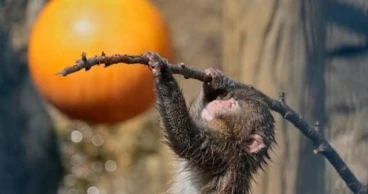
Japan's beloved monkey Punch turns one, receives thousands of birthday wishes from fans
Punch, the orphaned monkey at a Japanese zoo who won hearts around the world by cuddling an orangutan plush toy, is celebrating his first birthday on Sunday with thousands of birthday messages from admirers.
Although Punch no longer carries the toy and now happily plays with other monkeys, he remains one of the biggest attractions at the Ichikawa City Zoological and Botanical Garden.
Punch was abandoned by his mother shortly after birth a year ago, likely because she was exhausted. Zoo keepers hand-raised him and gave him a stuffed orangutan to help him develop the gripping skills newborn macaques need to survive.
Now fully grown into an active young monkey, Punch blends in with about 50 other monkeys in the enclosure. Still, visitors continue to flock to see him.
According to zoo director Takashi Yasunaga, Punch has received around 2,500 birthday cards and messages from supporters in Japan and abroad. Many of them are displayed at a special birthday exhibition inside the zoo, where visitors can also watch videos showing Punch's journey from his first days.
Yasunaga said the past year had been unforgettable for the zoo staff, recalling how two keepers devoted themselves to caring for Punch during the hot summer when he was born.
After six months of special care, Punch joined the monkey enclosure in January. Adjusting to life with the other monkeys was not easy, but it was during this period that he became an internet sensation.
In February, photos of Punch hugging his plush toy after being pushed away by other monkeys went viral on social media, attracting tens of thousands of visitors to the zoo, about half of them from overseas.
Supporters rallied behind him using the hashtag #HangInTherePunch, inspired not only by his adorable appearance but also by his determination to earn acceptance from the other monkeys.
Among those visiting the birthday exhibition was Kumi Ishizawa from Kobe, who said she first discovered Punch on social media while recovering from an illness.
"He inspired me," she said. "I kept telling myself I would get better and come to see Punch. Now I've finally made it, and I'm so happy."
Another fan, Yeye Lights, who has lived in Ichikawa for years, said she had never visited the zoo until her daughter in the Philippines introduced her to Punch online.
She has since become a regular visitor and even bought an annual pass.
"I have a cake for Punch-kun and I'm celebrating with my friends," she said, while thanking the two keepers who raised the young monkey.
9 days ago
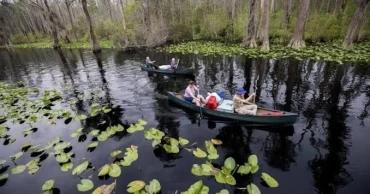
Georgia's Okefenokee Swamp, China's porcelain sites among new UNESCO World Heritage additions
Georgia's Okefenokee Swamp, historic porcelain production sites in eastern China and expanded tidal flats in western South Korea were added to UNESCO's World Heritage List on Saturday during a UN committee meeting in Busan.
The UNESCO World Heritage Committee is continuing its meeting through Wednesday to review dozens of other nominations, including France's D-Day landing beaches, Greece's Mount Olympus and the ancient Japanese capitals of Asuka and Fujiwara.
The Okefenokee Swamp, one of the world's largest freshwater ecosystems, is known for its extensive wetlands, rich biodiversity and its role as the source of two major rivers. According to UNESCO, its largely untouched peat beds contain a 5,000-year record of environmental changes, making it both an important natural habitat and a valuable site for climate and environmental research.
The World Heritage recognition places the Okefenokee National Wildlife Refuge alongside well-known US landmarks such as the Grand Canyon. However, some local residents had opposed the nomination, expressing concerns that the designation could lead to greater UN involvement in managing the area.
"We accept this inscription not as a finish line, but as a commitment to keep the Okefenokee wild, resilient and thriving for generations to come," said Kim Bednarek, executive director of the nonprofit Okefenokee Swamp Park, which worked with the US government on the site's nomination.
The committee also approved the expansion of South Korea's World Heritage-listed "getbol" tidal flats by adding four more coastal wetlands in Seosan, Goheung, Muan and Yeosu. UNESCO first listed four South Korean tidal flats in 2021 because of their rich biodiversity and their importance as resting grounds for migratory birds.
South Korea's Foreign Ministry said the expanded listing highlights the importance of international cooperation in protecting the Yellow Sea ecosystem and the East Asian-Australasian Flyway, a major migratory bird route stretching from the Arctic through Asia to Australia and New Zealand.
UNESCO also added the historic porcelain production sites in Jingdezhen, China, to the World Heritage List. The sites document the development of handcrafted porcelain production from the 10th to the 19th centuries and showcase innovations that helped establish Jingdezhen as one of the world's leading centers of fine porcelain. Its famous blue-and-white porcelain became a global symbol of Chinese craftsmanship, UNESCO said.
9 days ago

Jeweller reveals details behind Rashmika Mandanna's bridal gold jewellery
Jewellery brand SHREE Jewellers has shared details of the custom-made gold jewellery created for actress Rashmika Mandanna's wedding to actor Vijay Deverakonda, saying the entire design process took around 10 months.
Rashmika and Vijay tied the knot in Udaipur on February 26, 2026. While their wedding photos drew widespread attention online, the bride's elaborate gold jewellery also became a major talking point.
In an interview with NDTV, SHREE Jewellers said the project involved months of planning, design discussions, customisation, production and fitting sessions before the final look was completed.
Rashmika's bridal jewellery featured 11 handcrafted gold pieces, including a layered choker, traditional harams, statement jhumkas, a jada billa (hair ornament), champasaralu, hathphool, mathapatti, nose pin, bangles, bajuband, waist belt and anklets.
According to the jeweller, the collection was inspired by the grandeur of South Indian architecture. The bridal look was designed to reflect the image of a goddess, while Vijay's jewellery was created to give him the appearance of a royal king.
Among the standout pieces was a layered Lakshmi rani haar featuring multiple strands, four paisley-shaped pendants and a Goddess Lakshmi motif at the centre.
Rashmika also wore a gold pendant choker decorated with gold pearls and a large central pendant, along with intricately designed peacock jhumkas featuring twin peacock motifs.
Another highlight was an ornate gold jada hair accessory with sculpted gold work and cascading chains designed to complement her hairstyle.
Sharing images of the bridal jewellery on Instagram, SHREE Jewellers said each piece reflected tradition and craftsmanship, describing the collection as a tribute to heritage.
The jeweller also designed Vijay Deverakonda's wedding jewellery, which featured motifs of elephants and tigers symbolising wisdom and strength, along with floral patterns and traditional Nakshi engraving.
His jewellery included gold ear studs, a short necklace, a long necklace, a wrist cuff, an arm cuff, ankle kadas and a ring worn on his little finger.
Source: NDTV
9 days ago

Hawaii raises minimum age for riding in pickup truck beds to 16 over safety concerns
Hawaii has increased the minimum legal age for riding in the open bed of a pickup truck from 12 to 16, as growing traffic and faster roads have raised safety concerns over a long-standing island tradition.
Riding in the back of pickup trucks has long been a common sight across Hawaii, particularly in rural communities, where many people see it as part of the islands' unique lifestyle and culture.
For Kimeona Kane, a Native Hawaiian from Waimanalo on Oahu, riding in truck beds was a regular part of childhood, whether heading to sports practice or travelling around town.
"It's Hawaii culture," Kane said, explaining that the tradition reflects the islands' multicultural history rather than Native Hawaiian customs alone.
However, he now allows his family to ride in truck beds only on quiet back roads, citing increased traffic and higher-speed roads across Oahu.
After years of debate, state lawmakers passed legislation this spring raising the minimum riding age to 16. Democratic Gov. Josh Green signed the bill into law last month.
Green, who is also a physician, has witnessed the dangers firsthand. In 2023, he stopped to help a 25-year-old man who was thrown from the bed of a pickup truck following an accident.
At the time, Green said he would prefer that no one ride in truck beds because passengers should always be protected by seat belts.
Despite the safety risks, many residents continue to view riding in truck beds as an important part of island life.
Richard Landford Jr., an 80-year-old resident of Waianae, recalled riding in the back of farmers' pickup trucks in his youth. Although he acknowledges that modern roads are much faster and more dangerous, he believes truck beds should still be available for transporting passengers in rural areas.
"You drive to almost any church out here in the rural area, you'll see people in the back of trucks," he said.
Kane said the practice dates back to Hawaii's plantation era, when workers from countries including the Philippines, China, Japan, Portugal and Puerto Rico often travelled together in pickup trucks while working on sugar and pineapple plantations.
Even today, some families rely on truck beds because their pickup trucks do not have enough seats inside the cab, said state Representative Darius Kila.
Still, Kane follows strict safety rules, such as preventing passengers from sitting on the tailgate or on raised seats like coolers or chairs.
Some farmers have already moved away from the practice.
Dean Okimoto, chief operating officer of Nalo Farms, said the company now uses passenger vans equipped with seats and seat belts to transport workers.
"I wouldn't chance putting people in an open truck," he said, adding that he supports a complete ban.
The push for tighter rules gained momentum after a woman died earlier this year after being thrown from the bed of a pickup truck following a rear-end collision on a Honolulu freeway.
Kila, who introduced the legislation, said lawmakers tried to strike a balance between preserving a tradition many residents value and improving road safety.
He had originally proposed broader restrictions, including banning truck-bed passengers on certain highways, but strong public opposition led to a narrower measure.
Under the new law, people aged 16 and older may ride in a truck bed only if there is no available seat inside the vehicle. The law also includes exemptions for farm work, parades and emergency situations.
According to the Insurance Institute for Highway Safety, 29 US states and the District of Columbia have laws restricting passengers in pickup truck beds, although most allow exceptions for specific situations.
David Kidd, the institute's vice president of vehicle research, said riding in open truck beds is highly dangerous because passengers have no seat belts or other safety protections.
He welcomed Hawaii's new law as a positive step and said it could gradually change public attitudes.
Kila believes Hawaii may eventually ban truck-bed passengers altogether, although he expects such a move would face resistance before gaining wider public acceptance.
11 days ago

Millions sign up for Trump Accounts, but some parents still waiting for baby's $1,000
President Donald Trump on Wednesday highlighted the success of the new Trump Accounts programme, saying more than 7 million accounts have already been opened for children and describing it as a major investment in their future. However, some parents who enrolled their newborns say they are still waiting to receive the promised $1,000 government contribution.
Speaking at a rally at a Georgia high school, Trump said the accounts would help children get "a really fair shot at the American dream."
"The government is finally giving money back to our children," he told supporters.
The tax-advantaged savings accounts became available on July 4. Children under 18 are eligible to open an account, while babies born between Jan. 1, 2025, and Dec. 31, 2028 automatically qualify for a $1,000 deposit from the US Treasury to start their savings.
According to the Treasury Department, most families receive the government contribution within one or two days of opening an account. But a small number of parents have reported delays.
Once established, Trump Accounts can receive additional contributions from parents, relatives, friends and employers. Some wealthy donors have also pledged financial support. The money is invested by private firms in stock market index funds and cannot be accessed until the child turns 18. Withdrawals are limited to approved purposes such as higher education, starting a business or buying a home.
At Wednesday's rally, Georgia Republican gubernatorial candidate Rick Jackson pledged to seek matching state funding for every eligible child. He said that if lawmakers reject the proposal, he would personally contribute the additional $1,000.
Supporters say the programme will encourage more Americans to build long-term wealth through stock market investments and expand financial opportunities for future generations.
However, some families have experienced delays in receiving the initial government payment.
Masaki and Kristina McLellan of Bergen County, New Jersey, said they signed up for a Trump Account for their daughter Maya, who was born in March, after deciding the $1,000 incentive outweighed their initial concerns that the programme was politically motivated.
Masaki McLellan said he applied on July 6. After his first application was rejected, he contacted the programme's customer support and the account was activated. Although he was initially told the funds would arrive within 10 days, he was later informed it could take up to four weeks.
Kristina McLellan said she was disappointed by the delay but noted that Maya already has other long-term investments, including a college savings plan and a custodial brokerage account.
"We definitely want to give her options for her future and make sure she can choose what she wants to do," she said.
The Treasury Department described the McLellans' case as uncommon, saying only a small fraction of applicants require customer assistance.
Officials said the waiting period is comparable to routine government processing, such as issuing tax refunds. While most deposits are completed within one or two days, families are sometimes given a longer estimated processing period as a precaution.
The department said the accounts provide all families—not just wealthy households—with an opportunity to invest in their children's future. It also recently launched an initiative allowing child welfare agencies to open accounts for children in foster care.
Treasury officials said nearly one million families signed up each month before the programme officially launched, calling Trump Accounts the most successful government-backed savings initiative in US history.
Trump described the programme as one of the most significant elements of his signature tax-and-spending package, known as the "One Big Beautiful Bill."
The programme comes as Trump and fellow Republicans face increasing scrutiny over the economy ahead of the midterm elections. An AP-NORC poll conducted in June found that only 33% of US adults approved of Trump's handling of the economy, with inflation remaining a key concern despite his campaign promise to reduce living costs.
Trump Accounts resemble "baby bond" programmes introduced by several Democratic-led states and cities to reduce wealth inequality. Unlike those programmes, which often target low-income children, the Trump Accounts are open to families across all income levels.
Critics argue the initiative offers little immediate help to families raising young children and note that the Republican legislation establishing the accounts also reduced funding for programmes such as Medicaid and the Supplemental Nutrition Assistance Program, which provide assistance to many low-income families.
11 days ago