foreign-affairs
Dhaka eyes foreign investment opportunities ahead of 2026 CHOGM
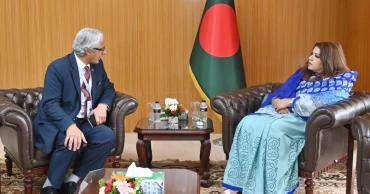
Executive Director, Commonwealth Businesswomen’s Network, Arif Zaman, on Monday paid a courtesy call on State Minister for Foreign Affairs Shama Obaed Islam.
The meeting was aimed at deliberating strategies for attracting foreign investors during the upcoming Commonwealth Heads of Government Meeting (CHOGM) scheduled to take place in November 2026 in Antigua and Barbuda.
The discussions focused on pitching Bangladesh, to the investors, as an attractive investment destination with a policy continuity and stability, Bangladesh’s aspiration to become a manufacturing hub for the world, strengthening agriculture and rural businesses of Bangladesh, sustainable opportunities in Bangladesh’s blue economy sector, renewable energy and circular economy.
They also discussed on the scope of Commonwealth Women’s Forum, which will take place alongside the upcoming CHOGM, to empower women entrepreneurs to realise their full potential.
22 days ago

Bangladeshi killed in Houthi strike in Saudi Arabia
A Bangladeshi national was killed in a missile or drone strike carried out by the Houthis on an Aramco facility in the Al Khurais area of Saudi Arabia's Eastern Province on Sunday, said the Ministry of Foreign Affairs on Monday.
The deceased was identified as Md Sajib Hossain, a resident of Cumilla district. Further details were not immediately available.
The ministry expressed deep shock and sorrow at his death and strongly condemned the attack. It also conveyed its heartfelt condolences to the bereaved family.
It said the Bangladesh Embassy in Saudi Arabia has already contacted the deceased's family and the employer and is providing necessary assistance.
The embassy is coordinating with the relevant Saudi authorities to complete the formalities and arrange for the repatriation of Sajib's body to Bangladesh, the ministry added.
23 days ago
Dhaka, Podgorica discuss trade, investment, labour cooperation
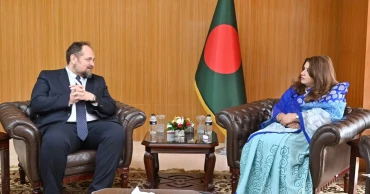
State Minister for Foreign Affairs Shama Obaed Islam has stressed the need to strengthen relations between Bangladesh and Montenegro.
Both sides laid emphasis on fully utilising Montenegro’s potential for regional connectivity in the Baltic region and beyond to explore untapped opportunities for enhancing cooperation between Bangladesh and Montenegro.
Gordan Stojovic, a Member of the Parliament of Montenegro, called on the State Minister at her office on Monday morning and discussed issues of mutual interest.
During the meeting, they discussed and emphasised the formation of a Bangladesh-Montenegro Parliamentary Friendship Group to broaden relations between the two parliaments, enhance parliamentary diplomacy, facilitate exchanges of delegations and strengthen people-to-people contacts.
Mentioning the ample potential for enhancing bilateral trade, they emphasised diversifying products and overcoming challenges to boost two-way trade.
Describing Montenegro as an importing country, the Montenegrin parliamentarian said his country could import more products from Bangladesh, including not only ready-made garments but also pharmaceuticals, leather and leather products, ceramics, and jute and jute products.
The State Minister highlighted investment opportunities in Bangladesh, particularly in sectors such as agriculture, agro-food processing, seafood, eco-tourism, ready-made garments, renewable energy and waste management.
The Montenegrin political leader indicated the possibility of investment from Montenegro in areas such as renewable energy.
Mentioning Montenegro’s significance as a regional tourism destination, the Montenegrin parliamentarian also expressed readiness for joint collaboration and investment in the development of Bangladesh’s tourism sector.
During the meeting, the leaders also discussed cooperation and partnerships in various sectors and issues, including education, women’s empowerment, sports and culture, manpower and employment opportunities, human mobility and migration, visa facilitation, and deeper engagement in international organisations on thematic issues such as climate change.
The State Minister said the government of Prime Minister Tarique Rahman has been striving to increase the legal migration of skilled manpower from Bangladesh.
She said Bangladesh has a vast pool of skilled manpower, including IT professionals, engineers, construction workers and healthcare personnel.
The Montenegrin parliamentarian said his country needs more than 50,000 workers of such categories every year and responded positively to the possibility of recruiting manpower from Bangladesh through government-to-government (G2G) agreements to meet Montenegro’s labour needs in sectors such as tourism, construction, hospitality and medical caregiving.
Both parliamentarians agreed on the need to streamline work permit processes and labour mobility agreements to facilitate the contribution of Bangladeshi workers to Montenegro’s economy.
23 days ago
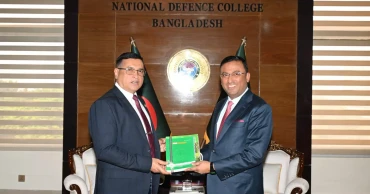
Dhaka’s relations with major powers should be guided by balance, clarity: Humaiun Kobir
State Minister for Foreign Affairs Humaiun Kobir on Monday said Bangladesh’s relations with major powers, including India, China, Japan, the United States and the European Union, should be guided by balance and clarity, recognizing their distinct opportunities and challenges.
Speaking at the National Defence College (NDC), he also underscored the protection of rights, dignity and welfare of Bangladeshi citizens abroad.
“Bangladesh’s foreign policy must be confident without being confrontational, open without being dependent, and pragmatic without compromising our national interests,” Kobir said.
He Bangladesh must pursue a foreign policy that is principled, pragmatic and firmly anchored in national interest amid a rapidly changing global environment.
23 days ago
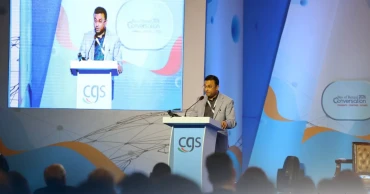
Rebuilding trust among states essential for effective cooperation: Dhaka
State Minister for Foreign Affairs Humaiun Kobir on Monday said rebuilding trust among states is essential for effective international cooperation, stressing that without trust, partnerships weaken.
“We must address the challenge of trust. Without trust, partnerships weaken. Without trust, institutions lose credibility. Without trust, diplomacy becomes more difficult and challenging,” he said, noting that Bangladesh believes in dialogue, international law, and peaceful settlement of disputes.
Speaking at the Bay of Bengal Conversation, the State Minister said Bangladesh believes in a rules-based international order that respects the sovereignty and dignity of every state.
He also called for diplomatic institutions to adapt to emerging technologies and new forms of global competition.
Prime Minister Tarique Rahman inaugurated the three-day international conference on Saturday which ended on Monday.
The State Minister said Bangladesh seeks to pursue an independent and pragmatic foreign policy focused on national interest, strategic autonomy, economic opportunity and peace amid growing geopolitical competition.
“Bangladesh should not simply navigate the changing international order. Bangladesh should help shape it and influence it. We should be a bridge between regions, a partner for peace, a hub for connectivity, a destination for investment and a responsible voice for the global South,” he said.
Kobir said their foreign policy must be confident, pragmatic, and forward looking. “It must protect our national interest without closing the door to cooperation and dialogue. It must expand our partnerships without creating dependency.”
And above all, he said, it must serve the people of Bangladesh. The State Minister shared four principles and said, “National interests must guide us. Strategic autonomy must strengthen us. Partnership must expand our opportunities, and peace must remain our ultimate objective.”
The State Minister said the future will not wait for them. “We must shape it, and we must ensure that Bangladesh is a meaningful voice in that future.”
“Our foreign policy must serve Bangladesh’s national interest,” he said, noting that Bangladesh’s foreign policy must protect its sovereignty and security while creating the external conditions necessary for national development.
“We seek engagement with all, based on mutual respect, mutual benefit and national interest. We want strong partnerships, but we also want strategic autonomy. We want cooperation, but we do not want dependency,” Kobir said.
The State Minister said the global order is undergoing rapid changes, with shifting power dynamics, technological transformation and increasingly strategic economic competition putting pressure on trust among states.
“Foreign policy must do more than respond to change. It must help Bangladesh shape the future,” he said.
Kobir said the Bay of Bengal is at the centre of the changing geopolitical landscape and Bangladesh must turn its geographic position into a strategic opportunity.
“The Bay of Bengal connects South Asia and Southeast Asia. It connects major markets, vital sea routes and growing economies,” he said.
Bangladesh wants the Bay of Bengal to remain a space for peace, stability and cooperation, rather than becoming a theatre of confrontation, he said.
The State Minister also stressed the need for Bangladesh to maintain constructive relations with major powers and regional partners without viewing international relations as a choice between competing camps.
“Our policy is not to choose sides. Our policy is to choose what is best for the national interest of Bangladesh,” he said.
“When interests converge, we will cooperate. Where opportunities exist, we will engage. Where differences arise, we will manage them. That is diplomacy. This is strategic maturity in an age of competition,” Kobir said.
He said foreign policy and economic policy can no longer be treated separately, as markets, supply chains, energy, technology and investment are increasingly linked to national security and development.
“Economic diplomacy must be a core instrument of Bangladesh’s foreign policy,” he said.
“For a country like Bangladesh, foreign policy, economic policy and security policy cannot be too separated from each other. It must take shape and formulation in an integrated way,” Kobir said.
The State Minister said South Asia remains one of the least integrated regions in the world and called for stronger regional connectivity, trade, energy cooperation and people-to-people contacts.
Bangladesh should be more ambitious in pursuing regional economic integration, including exploring the possibility of greater market access and a potential regional single market, he said.
“These are ambitious goals. But we need to put ourselves in that vision,” Kobir said.
He also highlighted non-traditional security challenges, including cyber, food, energy, water and maritime security, saying these challenges cross borders and require greater regional cooperation.
Bangladesh needs a security architecture that strengthens resilience, policy coherence and delivery, he said.
Kobir said climate change and humanitarian displacement remain major challenges for Bangladesh, which contributes very little to global emissions but faces severe climate risks.
He called for greater climate justice, adaptation finance, technology transfer and international cooperation.
“Climate leadership was the priority that we placed,” he said, referring to the government’s engagement at the World Economic Forum.
The Rohingya crisis, meanwhile, remains one of Bangladesh’s top national security and foreign policy priorities, Kobir said.
Bangladesh continues to host more than one million forcibly displaced Rohingyas and has carried the responsibility with “humanity and dignity,” he said.
“But humanitarian assistance cannot be the permanent answer to this crisis. It is a major and serious problem of political and security concern that needs to be addressed,” he said.
Kobir said Bangladesh would seek to raise the profile of the Rohingya issue at the international and multilateral levels during its presidency of the 81st session of the UN General Assembly.
The country would also seek greater financial support and intensify bilateral engagement with development partners in the region and beyond to help resolve the crisis, he said.
“The ultimate objective must be the safe, voluntary, dignified and sustainable return of the Rohingya people,” Kobir said, stressing the need for sustained international political commitment.
“Artificial intelligence will transform diplomacy. Digital technologies will reshape economies. Climate change will shape security. New technologies will reshape warfare,” Kobir said.
Bangladesh needs stronger strategic analysis, greater technological expertise and deeper economic knowledge, while its next generation of diplomats must be able to understand geopolitics, economics, technology, climate and security in an integrated manner, he said.
23 days ago
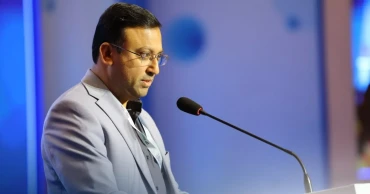
PM never ruled out visiting India through proper bilateral framework: Humaiun Kobir
State Minister for Foreign Affairs Humaiun Kobir on Monday expressed optimism that Prime Minister Tarique Rahman will pay a bilateral visit to India at a convenient time, stressing that the Prime Minister has never ruled out visiting the country through a proper bilateral framework.
“To maintain relations with another country, bilateral engagement is required. We will do it directly. The visit will be bilateral, and we will talk,” Kobir told reporters after delivering his speech at the Bay of Bengal Conversation in Dhaka.
Kobir said there were challenges in Bangladesh-India relations but expressed optimism that they could be addressed through dialogue.
“There are challenges, but we believe those can be overcome through dialogue,” he said.
Asked about the possibility of the Prime Minister’s visit to India this year, Kobir said Dhaka wants the visit to take place in a conducive environment and through a proper bilateral framework, but he did not give any specific timeframe.
“Nothing gets resolved just over a phone call. We are having discussions, and things are positive,” the State Minister said.
He praised Indian High Commissioner to Bangladesh Dinesh Trivedi for trying to understand Bangladesh’s current context and said Dhaka hoped New Delhi would give due importance to his assessments.
“The Indian High Commissioner here is doing a good job; he is trying,” Kobir said.
“Hopefully, Delhi will be receptive to him and the opinions and analysis he provides regarding the context in Bangladesh.”
Bangladesh wants to pursue a foreign policy based on strategic autonomy, national interest and balanced engagement with all countries, he said, stressing that Dhaka will not compromise its national interests while maintaining open channels with its partners.
“Every country wants strategic autonomy. Bangladesh also wants it,” Kobir said while speaking to journalists on the sidelines of the programme.
Ganga Treaty & National Interests
On the renewal of the Ganges Water Sharing Treaty, which is due to expire in December 2026, Kobir said Bangladesh would seek an outcome that serves its national interests.
The treaty’s expiry in December 2026 has also emerged as a major issue for the two countries.
Asked whether the existing treaty would be renewed or replaced with a new agreement, he said, “Whatever is best for Bangladesh’s interest will be done.”
Asked about a possible guarantee clause, Kobir said Bangladesh would work to safeguard its national interests and security.
“Whatever is best for Bangladesh’s national interest and security, we will work to ensure that,” he said.
Kobir said discussions are already underway and that Bangladesh is waiting for a response from its Indian counterparts.
“Our committee is ready. We are just waiting for the final response from our Indian counterparts. So yes, we are hopeful,” he said.
Kobir said Bangladesh would engage positively with the international community while protecting its national interests.
“We want to engage in a positive way that does not compromise our national interest, yet we embrace the diversity on offer to achieve success politically, economically, and in terms of overall security,” he said.
Dhaka Seeks Reciprocity
The State Minister said Bangladesh expected India to prevent individuals based in India from using its territory to make political statements or engage in activities aimed at destabilising Bangladesh.
“Restraining a terrorist or extremist in their land is not too much to ask,” he said.
“Why should that happen? So, if that is restrained, there won’t be any issues with our relationship, and a normal working relationship can be maintained, which is essential for both countries.”
He said Bangladesh also would not allow anyone from India to use Bangladeshi territory to make statements against the Indian government.
“We don’t allow any terrorist coming from India to sit here and speak against the Indian government. So, it sends a bad message. We hope India will do that as well,” Kobir said, noting that such restraint would help create a more stable environment for bilateral relations.
Kobir stressed that India remained an important partner for Bangladesh despite existing differences.
“Regional cooperation is required, and India will be an important partner for Bangladesh,” he said.
“As we said, we never close the door to dialogue in diplomacy. It is always open,” Kobir said.
Kobir also linked the government’s foreign policy approach to its broader vision of strategic autonomy, saying Bangladesh would seek engagement with countries across the world without compromising its own interests. “We will engage across the board,” he said.
He said Bangladesh would continue to approach its relationship with India with openness and candidness while seeking solutions to outstanding issues through dialogue.
“We are having positive discussions, and I am hopeful we will reach satisfactory conclusions,” Kobir said.
He also expressed hope that the Prime Minister’s visit to India would eventually take place once the necessary conditions were in place.
“The Prime Minister never said no to visiting,” Kobir said. “Certain things need to be addressed. We will reach a positive resolution through talks, and I am hopeful the visit will happen.”
23 days ago
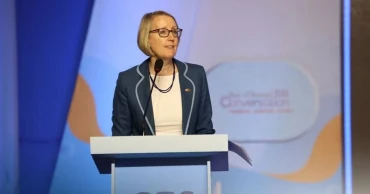
Contemporary security challenges require coordinated responses extending beyond traditional boundaries: Sarah Cooke
Highlighting the importance of broader security cooperation, British High Commissioner to Bangladesh Sarah Cooke has said Bangladesh and the UK share a common interest in a free and open Indo-Pacific and recognise Bangladesh’s responsibilities in the Bay of Bengal, a region of increasing strategic importance.
She said contemporary security challenges, including economic security, cybersecurity and climate-related insecurity, require coordinated responses extending beyond traditional boundaries.
Speaking at the Bay of Bengal Conversation in Dhaka, the High Commissioner described Bangladesh as a “strategic and trusted partner” of the United Kingdom.
She said relationship has evolved from predominantly development cooperation into a modern strategic partnership reflecting Bangladesh’s growing global role.
“Today, our relationship has matured into a much more modern strategic partnership, one that reflects Bangladesh's growing global role,” she said while addressing on the second day of the Bay of Bengal Conversation 2026 organised by the Centre for Governance Studies (CGS).
Prime Minister Tarique Rahman inaugurated the three-day international conference on Saturday which is scheduled to end on Monday.
Turning to Bangladesh-UK relations, Cooke said the partnership had for many years been shaped predominantly by development cooperation, which played a vital role in supporting Bangladesh’s economic development and resilience.
“At its heart are the people who connect our nations,” she said, noting that more than half a million people of Bangladeshi heritage live in the UK.
“These connections are one of the great strengths of our relationship,” the High Commissioner said.
LDC Graduation
She also highlighted strong economic ties, saying the UK is one of the largest investors in Bangladesh.
“From finance to fashion, education to energy, British companies have supported Bangladesh’s economic transformation and created many jobs,” Cooke said.
As Bangladesh prepares for graduation from least developed country status, she said the UK is focused on supporting a transition that is “both smooth and sustained.”
She said the UK’s Developing Countries Trading Scheme is widely regarded as one of the world’s simplest and most generous trade preference regimes.
“Bangladesh currently benefits from duty-free access to the UK market for 99.8% of product lines, and the country will continue to do so for a three-year transition following LDC graduation,” the High Commissioner said.
“After that, 92% of product lines will remain duty free, including for ready-made garments. It’s a clear signal of our commitment to be a reliable, long-term economic partner for Bangladesh,” Cooke said.
She said the UK remains committed to strengthening its partnership with Bangladesh based on “trust, mutual respect, shared interests and growing ambition.”
International System
The British High Commissioner said the international system is currently under strain from geopolitical competition, conflict, economic uncertainty, technological disruption and climate change, but described the situation as also presenting an opportunity.
“How countries respond will shape not only their own futures, but the international order for decades to come,” she said.
The British High Commissioner stressed that the answer to growing instability is not retreat or fragmentation, but stronger cooperation among nations.
“Effective international institutions, respect for international law, and enduring partnerships remain essential to our collective security and prosperity,” she said.
Cooke said the UK remains committed to multilateralism, collective security and international law, as well as trade, investment, economic openness and tackling climate change.
On the Middle East, Cooke said the UK condemns Hamas’s terrorist attack and supports Israel’s security, but added that this cannot justify Israel’s actions in Gaza and the West Bank.
“Far too many people have died,” she said, adding that the UK, together with international partners, has taken concrete steps to protect the two-state solution.
She said these efforts include action on illegal settlements and renewed diplomatic efforts at the United Nations to advance a just and lasting peace.
The UK is also working with partners to support de-escalation across the wider region, she said, noting that recent conflict in the Gulf has underlined the importance of regional stability and freedom of navigation through the Strait of Hormuz.
Cooke also highlighted the changing nature of security, saying it is no longer defined by military strength alone.
“Climate shocks threaten food security, drive displacement, and put pressure on societies, with women particularly vulnerable to its effects,” she said.
At this year’s UN General Assembly, she said, the UK Foreign Secretary joined Dr Khalilur Rahman and other foreign ministers to discuss climate change and ecosystem degradation as national security risks.
Rohingya Crisis
Cooke particularly highlighted the Rohingya refugee crisis as an area where regional cooperation is urgently needed.
“The UK continues to stand alongside Bangladesh, recognising the extraordinary generosity the country has shown in hosting more than 1 million Rohingya refugees,” she said.
The UK remains committed to supporting refugees and host communities, maintaining international attention on the crisis and working towards what she described as the only sustainable solution - the voluntary, safe and dignified return of the Rohingya to Myanmar when conditions allow.
Cooke said the UK co-sponsored discussions at this year’s UN General Assembly aimed at maintaining international focus on the crisis.
“As penholder on Myanmar at the UN Security Council, the UK continues to press for international action and accountability,” she said.
The UK also remains one of the largest donors to the Rohingya response, supporting refugees and host communities in Bangladesh while providing humanitarian assistance to vulnerable communities in Rakhine State, she said.
On climate change, Cooke said Bangladesh is among the countries that understand the realities of climate vulnerability best.
“The impacts of rising sea levels, changing weather patterns, and extreme weather events are not theoretical. They are already being felt by communities across the country, with consequences that will extend over generations,” she said.
She said Bangladesh is globally recognised for its resilience, innovation and leadership on climate adaptation.
The UK, she said, is working with Bangladesh through practical partnerships and international action to strengthen that resilience.
At the United Nations, Cooke said, the UK announced $330 million for the Global Environment Facility, one of the leading multilateral funds for protecting nature and tackling environmental threats.
In Bangladesh, she said, the partnership between the Bangladesh Meteorological Department and the UK Met Office is helping strengthen flood forecasting and early warning systems.
“It’s enabling communities, businesses, and government to prepare earlier for climate shocks,” she said.
The UK is also working with Bangladesh to unlock greater climate finance and develop high-integrity carbon markets to channel investment towards the country’s long-term resilience, Cooke said.
Concluding her remarks, Cooke said the UK believes that the answers to global challenges lie in partnership and cooperation.
“Not in managing crises after they emerge, but building resilience before they occur,” she said.
“And this is the spirit of the UK’s partnership with Bangladesh. It is a relationship based on trust, mutual respect, shared interests and growing ambition,” Cooke said.
“It’s a relationship that we are committed to strengthening still further in the years ahead.”
23 days ago
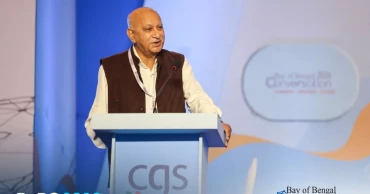
Passing clouds, storms cannot erase sunshine of Dhaka-Delhi ties: MJ Akbar
Former Indian Minister of State for External Affairs MJ Akbar on Sunday said temporary “clouds or storms” cannot erase the long-standing ties between Bangladesh and India, describing the two countries as civilisational states with deep historical and cultural links.
“I never think that passing clouds or passing storms can ever remove the sunshine of Indo-Bangladesh ties,” said the eminent writer, journalist and politician while addressing the Bay of Bengal Conversation 2026 in Dhaka, inaugurated by Prime Minister Tarique Rahman on Saturday.
Akbar said there would be ups and downs in the relationship between the two countries, but the issues between them should be approached by looking beyond what is considered immediately possible.
“I urge that the questions that are addressed by the two sides, we always think of or look at it from what is possible. Change the pivot from what is possible to why is it impossible? And suddenly, many, many more avenues will open up,” he said.
Akbar, an author of several internationally acclaimed books, said both Bangladesh and India are civilisational states and Bangladesh’s identity is deeply rooted in language and culture. “It is based on language, the power of language,” he said.
The strategic address examined the struggle over supply routes, Iran’s emerging role and the Gulf’s security challenges amid concerns over declining American influence. It also explored whether separate fires surrounding the Black, Mediterranean, Caspian, Red and Arabian seas could converge into a wider conflict, potentially drawing the Indian Ocean and the Bay of Bengal into its path.
He explored the potential for BRICS to help chart a path towards peace through political and diplomatic engagement.
Akbar also congratulated Bangladesh on the election of its Foreign Minister Dr Khalilur Rahman as President of the United Nations General Assembly, describing it as recognition of the country’s credibility on the international stage.
“This is a recognition of Bangladesh's credibility on the international stage and, in my view, a very long overdue recognition of the credibility,” said the veteran politician.
However, Akbar said the United Nations is facing the biggest challenge in its history, with the future of the institution depending on how the international community responds to growing threats to sovereignty.
He said the UN was built around the principles of sovereign equality, territorial integrity and political independence, which became the foundation of global stability after the Second World War.
Akbar warned that wars are increasingly being initiated or imposed without formal declarations of war, saying failure to respect sovereignty could lead to “a period of intensifying chaos.”
He described the conflicts of the 21st century as a new form of “worldwide war”, arguing that they are not necessarily one continuous global conflict but a series of conflicts that continue or recur across different regions.
Akbar said many of the current conflicts are also linked to competition for control of strategic waterways, including the Mediterranean, Black, Red, Caspian and Arabian seas. “What we are witnessing is actually wars for the control of the seas,” he said.
He also warned about the consequences of unresolved territorial and strategic disputes, describing many countries as “unfinished states”.
“What is an unfinished state? It’s a state whose geography does not synchronise with its strategic requirements by its own estimation or by its cultural definition,” he said.
“If the wars of the unfinished states and the wars of the seas meet, as they are threatening to, then we are looking at a very major conflagration,” he said.
On India’s foreign and security policy, Akbar said national security cannot be purchased or outsourced and must instead be built on internal strength.“Security can only be achieved by internal strength. It cannot be purchased. There is nothing in the world for checkbook security.”
23 days ago
Bangladesh seeks greater Swedish investment in renewable energy, green tech
State Minister for Foreign Affairs Humaiun Kobir on Sunday encouraged greater Swedish investment in renewable energy, green technology, pharmaceuticals, engineering and telecommunications.
The two countries noted the potential for expanding economic engagement and exchanged views on Bangladesh’s LDC graduation and future trade arrangements with the European Union.
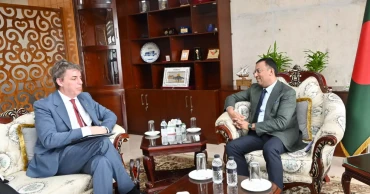
The issues were discussed when Ambassador of Sweden to Bangladesh Nicolas Weeks paid a courtesy call on the State Minister at the Ministry.
The Ambassador congratulated the State Minister on his assumption of office and exchanged views on further strengthening Bangladesh-Sweden relations.
The State Minister described Sweden as a trusted and longstanding partner of Bangladesh and appreciated Sweden’s support for Bangladesh’s socio-economic development, democratic transition and institutional strengthening, said the Ministry of Foreign Affairs.
The discussions covered development assistance, trade and investment, migration governance, and climate change among others.
The State Minister appreciated Sweden's co-hosting, with Bangladesh, of the high-level event on Midwifery into Primary Health Care on the sidelines of the UNGA-81 last month.
On migration, both sides discussed promoting safe, orderly and regular migration, including enhanced cooperation in skilled migration and vocational training.
The State Minister sought Sweden’s continued support for a durable solution to the Rohingya crisis, including the safe, voluntary, dignified and sustainable repatriation of the displaced Rohingyas to Myanmar. He further urged Sweden’s support to maintain international attention on the crisis.
Ambassador Weeks reaffirmed Sweden’s commitment to further strengthening bilateral relations and expressed readiness to enhance cooperation in areas of mutual interest.
He appreciated Bangladesh’s efforts towards democratic reforms and its continued humanitarian support for the Rohingyas.
He also reaffirmed Sweden’s commitment to working closely with Bangladesh in relevant multilateral fora towards their safe, voluntary, dignified and sustainable repatriation to Myanmar.
The two sides also exchanged views on regional and global issues and expressed their commitment to continued cooperation in relevant international fora.
The meeting concluded in a cordial atmosphere, with both sides expressing confidence that continued engagement would further strengthen Bangladesh-Sweden relations.
24 days ago
Bangladesh expects India to show political intent on Hasina extradition: Shama Obaed
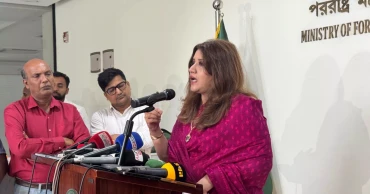
State Minister for Foreign Affairs Shama Obaed Islam on Sunday said Bangladesh expects India to expedite the ongoing extradition process to bring back accused individuals, including convicted former Prime Minister Sheikh Hasina, as swiftly as possible, stressing that political intent is equally important alongside legal procedures.
“While legal procedures must be respected, political intent is equally crucial. We hope the government of India will focus on expediting the ongoing extradition process to bring the accused back,” she told reporters at the Ministry of Foreign Affairs when her attention was drawn to Indian High Commissioner Dinesh Trivedi’s comments.
Both countries must have political will, Shama said, noting that the government of Bangladesh certainly has the political will and that the Indian government needs to have it as well.
The State Minister said it is entirely possible to extradite the accused under the framework of the extradition treaty and that the legal process is actively being pursued.
"To give you a straight answer, again and again, the government of India, through the Spokesperson at the Ministry of External Affairs (MEA), has replied to this that there is a process, and the process involves legality, and it is well structured. So, as far as that is concerned, the process is on,” Trivedi said on Saturday.
The courts are involved in the matter and, therefore, “nobody can give you a timeframe,” he said at a discussion titled “Power and Prudence: Managing Great-Power Competition without Conflict” as part of the ongoing Bay of Bengal Conversation in Dhaka.
The Indian High Commissioner highlighted the need for continuous dialogue, mutual respect and trust between the two countries to address bilateral issues, saying every issue between the two neighbours has a solution.
“There’s no point hiding the issues, and there’s no point not talking about the issues,” he said.
Trivedi, who faced a couple of questions, said the two countries need to discuss all outstanding issues, including water, trade, culture, sports, communication and transportation, through appropriate forums.
“In a democracy, the dialogue has to be there at the proper forum. And the dialogue has to be a continuous dialogue,” he said, noting that the process of engagement between the two countries may be slow, but it has not stopped.
“I can guarantee you, there is no stoppage of process. The process is ongoing,” Trivedi said. “Believe me, there has to be a solution, and there will be a solution,” the Indian diplomat added.
24 days ago