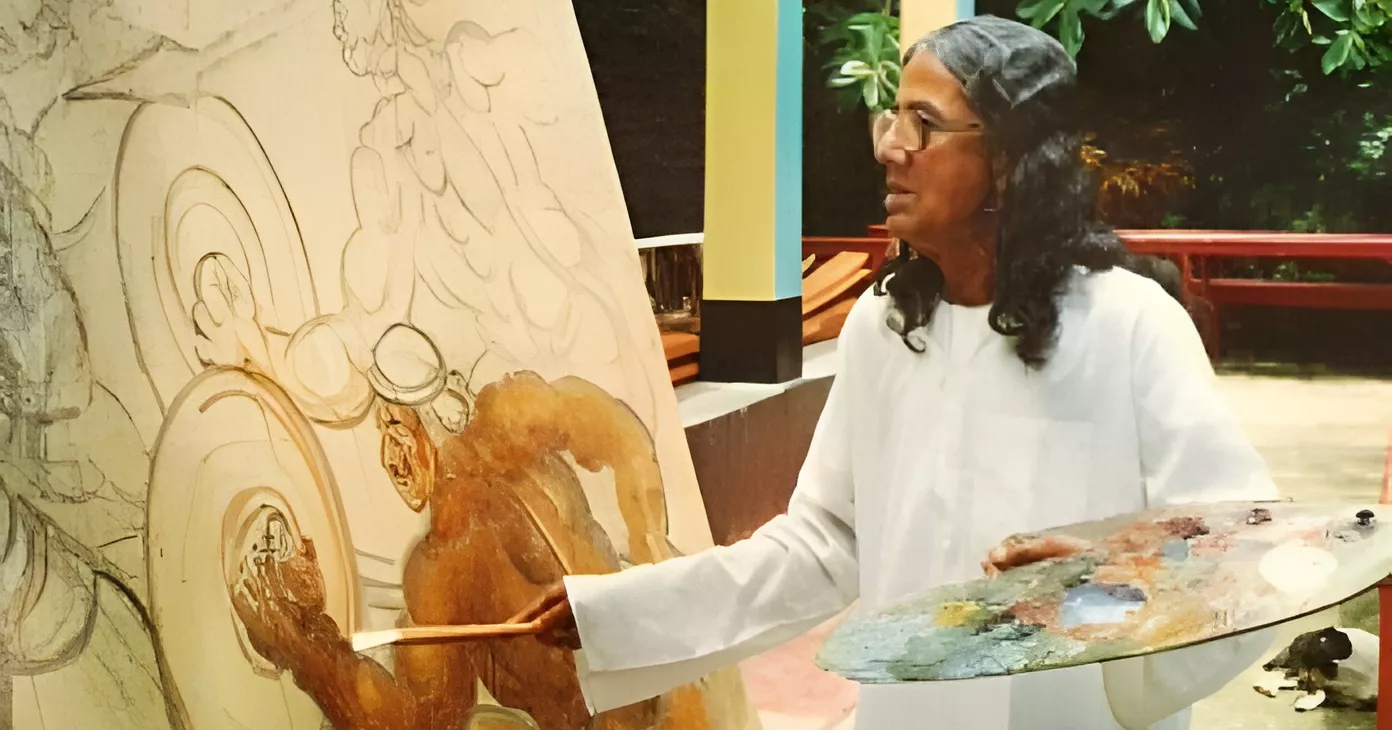
Bangladesh on Monday marked the 103rd birth anniversary of internationally acclaimed painter SM Sultan with a day-long celebration in his native Narail district, honouring an artist who once shared exhibition space with Pablo Picasso and Salvador Dali yet spent his life painting barefoot farmers in a mud-walled village studio.
The programmes, organised by Bangladesh Shilpakala Academy in association with the SM Sultan Sangrahashala and the district administration, were held at the SM Sultan Memorial Museum and Shishu Sworgo (Children's Paradise) and the District Shilpakala Academy in Narail.
The day's events included an art camp featuring 20 local artists, a painting festival and exhibition involving more than 300 children from Shishu Sworgo, the newly launched "Sultan Sammanona Padak" (Sultan Honour Medal) presentation, a discussion on the artist's life and work, and a cultural programme.
Cultural Affairs Minister Nitai Roy Chowdhury, speaking at the event, said Sultan's stature extended far beyond Narail or the banks of the Padma.
"This world-famous painter belongs not just to us in Narail, but to the whole of Bangladesh and the world," he said, announcing that the Sultan Sammanona Padak, introduced this year, will place special focus on school-based initiatives to nurture young artists from rural Bangladesh.
"If children in small village schools are encouraged in art and given the opportunity, their intellect will awaken and flourish, and they will be able to stand tall," the minister said.
Bangladesh Shilpakala Academy Director General, poet Rezauddin Ahmed (Rezauddin Stalin), described Sultan as the most humane and life-affirming artist Bangladesh has produced.
"He is the greatest painter of agrarian civilisation, a pride of Narail, of greater Jashore, of Bangladesh and of the entire world," he said, expressing hope that children growing up at Shishu Sworgo will one day become artists in Sultan's own mould.
Born Sheikh Muhammad Sultan on August 10, 1923, the artist became known simply as SM Sultan, an icon whose canvases evoke rural Bengal much as poets Jibanananda Das or Jasimuddin might have painted it, had they traded pens for brushes. Unlike abstract or cubist art, which often demands interpretation even from its own creators, Sultan's work speaks for itself at first glance.
His most distinctive signature was the muscular, almost superhuman physique he gave to Bengal's peasants, a striking departure from the frail, emaciated figures typically associated with rural farmers.