The United States launched airstrikes on Iranian targets early Wednesday, hours after revoking a license that had allowed the sale of Iranian oil under an interim agreement, prompting Iran to retaliate by targeting US military facilities in Bahrain and Kuwait.
US President Donald Trump later declared the interim agreement with Tehran effectively finished, although he said diplomatic talks could continue.
"I think it's over," Trump said when asked about the status of the agreement, adding that negotiations could proceed but expressing little confidence in their success.
The renewed hostilities raised fears of a broader regional conflict and sent global oil prices sharply higher.
The latest escalation also threatened shipping through the Strait of Hormuz, a vital waterway for global energy supplies.
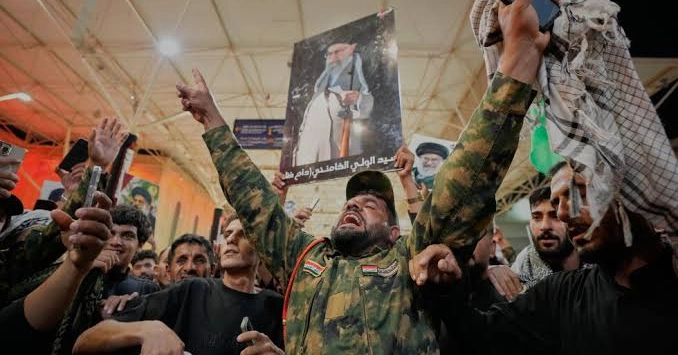
The exchange of attacks came during the multi-day funeral ceremonies for Iran's Supreme Leader Ayatollah Ali Khamenei, who was killed on Feb. 28 during the opening phase of the conflict. While negotiations on reopening the Strait of Hormuz and Iran's nuclear programme had been expected after his burial, the latest military actions cast uncertainty over those plans.
Iranian Parliament Speaker Mohammad Bagher Qalibaf said Tehran would not bow to pressure.
"The era of bullying and extortion is over," he wrote on X.
The US military's Central Command said the strikes targeted Iranian air defence systems, radar installations and more than 60 fast boats operated by the Islamic Revolutionary Guard Corps, saying the operation was intended to impose costs for attacks on commercial shipping in international waters.
The military added that the operation had concluded but warned that Washington remained prepared to respond if Iran failed to honour any future agreements.
Iranian state media reported explosions in several areas, including Bandar Mahshahr, where a Revolutionary Guard member was killed, and Bushehr, home to Iran's nuclear power facilities.
Shortly afterward, Bahrain and Kuwait activated missile alerts. Iran's Revolutionary Guard confirmed it had launched attacks against US military installations in both countries.
The strikes resembled a previous cycle of confrontation last month, when Iranian attacks on commercial shipping prompted US retaliation and Iranian missile attacks on Bahrain and Kuwait.
The United Arab Emirates condemned Iran's attacks, with senior diplomat Anwar Gargash saying they demonstrated Tehran's unwillingness to pursue de-escalation.
Earlier Wednesday, Washington cancelled the license that had temporarily allowed Iran to openly export oil under the interim agreement, restoring restrictions on Iranian crude sales.
The move followed attacks on commercial vessels in the Strait of Hormuz. One tanker carrying Qatari natural gas caught fire after being struck off the coast of Oman, according to the United Kingdom Maritime Trade Operations centre.
Iranian state television said the vessel had ignored warnings before being attacked but stopped short of claiming responsibility.
Qatar condemned the incident, calling it an unacceptable attack on international navigation and global energy security, and said Iran bore legal responsibility.
Two other commercial ships sustained minor damage but continued their voyages without casualties.
Under the interim agreement, Iran and the United States had agreed to allow ships to transit the Strait of Hormuz freely for 60 days. Tehran, however, has insisted that it should regulate vessel routes and eventually impose transit fees, a proposal rejected by Washington and Gulf Arab states.
Meanwhile, funeral ceremonies for Khamenei continued in Iraq's holy city of Najaf, attended by Iranian President Masoud Pezeshkian and senior Iraqi officials, before additional services scheduled in Karbala.
Khamenei's son and successor, Supreme Leader Ayatollah Mojtaba Khamenei, has not appeared publicly during the ceremonies and is believed to be in hiding after reportedly being injured in the airstrike that killed his father.
Khamenei's body is expected to be buried on Thursday at the Imam Reza shrine in Mashhad, his birthplace.