Election 2026
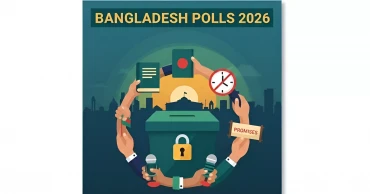
Bangladesh Polls: Electioneering ends as parties leave voters with promises
The curtain fell on Bangladesh’s election campaign on Tuesday morning as political parties wrapped up weeks of intense electioneering.
In the final hours, leaders made a series of promises and pledges, leaving voters to reflect on those ahead of the February-12 national election.
The restriction on campaigning came into effect at 7:30am as per the parliamentary election code of conduct for political parties and candidates’ rule, 2025.
According to the code of conduct, any political party, candidate or any person on their behalf can’t carry out any sort of electioneering three weeks before the balloting day and the electoral campaign must be completed 48 hours before the balloting starts.
The official election campaign by political parties and candidates started on January 22 after the allocation of election symbols on the previous day.
The voting in Thursday's election will start at 7:30 am and continue till 4:30 pm without any break.
The 13th parliamentary election and referendum will be held on February 12 in 299 constituencies across the country using transparent ballot boxes and ballot papers.
Voting will be held in 299 seats instead of 300 as the Election Commission cancelled the election in Sherpur-3 following the death of a Jamaat-e-Islami candidate.
Ban on Vehicular Movement
The EC imposed restrictions on the plying of motorcycles across the country three days before and after the national election. Motorbike movement will remain prohibited from midnight on February 10 until midnight on February 13, according to the EC directives issued on January 27.
Besides, the movement of four types of vehicles —trucks, microbuses, taxi-cab and motorcycles — will remain suspended for 24 hours on election day.
Meanwhile, the restriction was also imposed on the movement of vessels on Election Day.
Besides, no candidate or their supporters will be allowed to set up election camps or conduct campaigns within 400 yards of any polling station.
Candidates or anyone on their behalf cannot use any vehicles to bring voters to the polling station on the voting day.
Law Enforcers’ Deployment
Nearly one million members from the armed forces and different law enforcement agencies remain deployed across the country for seven days from February 8 (Sunday) to maintain law and order as well as contain violation of electoral code of conduct in the referendum and parliamentary elections scheduled for February 12.
Besides, 1,051 executive magistrates were deployed throughout the country for the seven days from February 8 to 14 to prevent and punish the violation of the election code.
A total of 970,948 security persons were deployed from February 8 for election duty, according to the statistics of the Election Commission.
The security personnel include 100,003 Army personnel, 5000 Navy personnel, 3730 Air Force members, 37,453 BGB personnel, 3,585 Coast Guard members, 187,603 police members, 9,349 Rab members, 576,483 Ansar and VDP members, 1922 BNCC cadets and 45,820 Chowkidar and Dafadar.
According to a recent government circular, the armed forces, BGB, Coast Guard, Rab, police, Armed Police Battalion (APBn) and Ansar Battalions would work as mobile and striking forces to maintain peace and order in the election areas.
BGB, Rab, APBn and Ansar battalions would operate on district, upazila and thana levels, while the Coast Guard would be deployed in coastal areas.
Outside the metropolitan areas, a team of 16–17 police and Ansar members will be deployed at each normal polling station, while 17–18 personnel will be posted at every vulnerable polling station, according to the EC.
In metropolitan areas, 16 security personnel –police and ansar members-- will be deployed at a normal polling station and 17 personnel at each vulnerable polling station.
In remote areas of 25 districts, a team of 16–18 police and Ansar members will be deployed at each polling station.
1M Cast Votes by Post
The Election Commission, led by Chief Election Commissioner AMM Nasir Uddin, introduced an IT-supported hybrid postal balloting system, combining digital registration with manual voting, for expatriate Bangladeshis living in more than 120 countries for the first time.
The new postal balloting system is also being used by government employees working outside their constituencies, polling officials and individuals under legal custody within the country. More than one million people have already cast their votes through postal ballots.
As of 8:00pm on Monday, a total of 1,031,269 voters including 511,757 expatriates cast their votes through postal ballots in the 13th parliamentary election.
A total of 1,528,131 voters, including 767,233 expatriates under the Out-of-Country Voting (OCV) programme and 760,898 government officials, polling personnel and prisoners under the In-Country Postal Voting (ICPV) programme, were registered for postal voting.
A total of 127,298,522 voters (in 299 constituencies) are eligible to cast their ballots in this election. Of them, 64,620,077 are male voters, 62,677,232 are female voters and 1,213 are third-gender voters.
The country has a total of 127,711,899 voters (in 300 constituencies) –64,825,154 males, 62,885,525 females and 1,220 third-gender.
Bangladesh Election: Over one million vote through postal ballots
Nearly 800,000 officials will be engaged in election duties in more than 42,600 polling stations in the 299 constituencies on Thursday next, while nearly another 800,000 security personnel will protect the polling stations.
Meanwhile, some 50,000 observers from 80 registered domestic organisations will monitor the election, while nearly 500 foreign observers are expected to oversee the election.
The Election Commission announced the election schedule on December 11 last year to hold the 13th parliamentary election and the referendum on the July National Charter (Constitutional Reform) Implementation Order simultaneously on February 12, 2026.
8 months ago
Independent candidate’s convoy comes under attack in Lalmonirhat, highway blocked
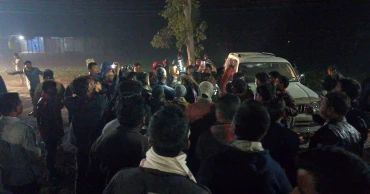
Supporters of independent candidate for Lalmonirhat-1 (Hatibandha-Patgram) Shihab Ahmed blocked Burimari–Patgram highway on Sunday night after some miscreants attacked his convoy in Hatibandha upazila, leaving him injured.
Witnesses said a group of miscreants suddenly attacked the convoy as it was returning from election campaigning around 10:30 pm at Jorapukur area of Hatibandha upazila.
Shihab Ahmed and several supporters were injured.
The candidate’s private vehicle was severely damaged.
Following the attack, hundreds of supporters took to the streets, staging demonstrations at various points along the Lalmonirhat–Burimari highway and halting traffic.
Several cargo trucks and passenger buses were stranded, causing severe congestion and inconvenience to commuters.
Police from Hatibandha police station rushed to the spot to bring the situation under control.
Additional police and Border Guard Bangladesh (BGB) personnel have been deployed due to heightened tension in the area.
BNP, independent candidates’ supporters clash in Natore; 13 injured
Shihab Ahmed said, “We were returning peacefully after campaigning but as soon as we reached Jorapukur, we faced a premeditated and cowardly attack. My vehicle was completely destroyed. Currently, there is no security for our lives and property. If the ground situation remains this unstable, general voters will be afraid to go to the polling stations.”
Hatibandha Thana Officer-in-Charge (OC) Ramjan Ali said, “We immediately visited the candidate to ensure his safety after learning of the incident. The agitated supporters were requested to lift the roadblock. The situation is now under control. Those involved in the attack will face strict legal action following investigation.”
8 months ago
How Undecideds May Decide the Election
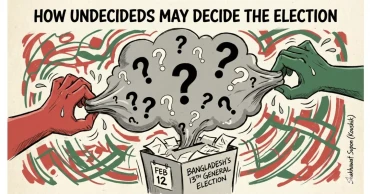
As Bangladesh heads into a landmark election to choose Members of Parliament for its 13th Jatiya Sangshad on February 12, opinion polls show a large segment of the electorate is still saying “I haven’t decided yet,” rather than choosing a party outright. That is surprising in a country where elections tend to be predictable and it has turned undecided voters into one of the most important blocs in the race.
A nationwide Pulse Survey conducted by the BRAC Institute of Governance and Development (BIGD) shows that 48.5 percent of voters have not yet decided whom they will support, up from about 38 percent eight months earlier. In the same survey, 14.4 percent refused to say who they might vote for and 1.7 percent said they will not vote at all. (BIGD Pulse Survey: July 2025 – Citizens’ Perceptions, Expectations, and Experiences)
That means nearly half of the electorate remains in “thinking mode,” even as campaign rallies intensify, debates are held and political narratives are repeated across social media platforms.
How Big Are the Undecideds Really?
Multiple opinion polls show a similar pattern of uncertainty.
In the most recent People’s Election Pulse Survey (PEPS Round-3) by Innovision Consulting, party preference figures among decided voters show the Bangladesh Nationalist Party (BNP) and its allies leading with 52.8 percent support, while the Jamaat-led alliance stands at 31.0 percent. Yet the same poll records 13.2 percent of voters as undecided on party choice itself.(PEPS Round-3)
Leadership projections from the same survey reveal further ambiguity. About 22.2 percent of respondents said they could not yet say who would become the next prime minister, even while 47.6 percent named a specific leader and 22.5 percent chose another candidate.(PEPS Round-3 prime minister projection)
Among younger voters, uncertainty is even more pronounced. A separate youth-focused study, the Youth Matters Survey 2025, found that nearly 30 percent of young respondents were undecided about their vote, with only smaller shares committing to parties or leaders.
These undecideds are not a marginal group. Their numbers rival those of entire voting blocs and make them impossible to ignore.
Voices from the Ground
Efforts to speak with voters who say they are unlikely to cast a ballot often meet quiet resistance. Many decline to comment for reasons they do not fully explain. Still, a handful agreed to share their views on condition of anonymity, offering insight into the hesitation behind the statistics.
A young lecturer of Political Science at a time-honored educational institution in Dhaka pointed to the unusual political configuration of the election.
“The two main political forces contesting the 13th parliamentary election, the BNP and Jamaat-e-Islami, have been long-time allies with overlapping ideological positions. Although they are now competing against each other due to the absence of a major political party, that absence itself shapes how voters see the election.”
He argued that the participation deficit that marked the 12th national election in 2024 has not been fully resolved.
“For the same reasons the 2024 election was not truly participatory, the 13th election also lacks full participation. This may not be discussed forcefully in the post-uprising environment, but it will matter in historical analysis. That is why I believe a segment of voters will stay away from polling centres.”
On the referendum being held alongside the election, he expressed cautious approval mixed with concern.
“There are positive elements in the referendum that could make future governments more accountable. But the way the questions are framed is problematic. Multiple issues are bundled together and voters are asked to answer only ‘yes’ or ‘no.’ It is not realistic to expect citizens to agree with every component at once.”
He cited provisions on increasing women’s representation, proposals involving the Supreme Court and changes that would curtail prime ministerial power while expanding presidential authority as areas where reasonable disagreement exists.
“Reaching a single ‘yes’ or ‘no’ decision on so many complex matters is extremely difficult. That is why there is uncertainty about the referendum as well. Nearly a quarter of the population remains illiterate and many voters are not fully aware of what the referendum entails. If voters do not understand the questions, how meaningful is the vote?”
A student from the Institute of Leather Engineering and Technology at the University of Dhaka expressed a more resigned pragmatism: “Looking at the situation, I do not expect much. This time, my vote is for what I see as the lesser of evils and for forces aligned with democratic freedoms. That means the BNP.”
Others were more dismissive of the process altogether. A former student of the law department at Chattogram University said he has decided not to vote: “None of the public’s expectations have been fulfilled. The promises that were made were not delivered, not even a fraction of them. Instead, a group of people have benefited enormously. I do not believe ordinary people’s expectations will be met after this election either.”
This election also introduces a new variable which is the inclusion of expatriate voters through postal ballots. Yet even among overseas Bangladeshis, enthusiasm appears limited.
Sumaiya Jannat, a Bangladeshi expatriate living in the United Kingdom, offered a blunt assessment: “I do not see this as a real election. It feels more like a consolation prize to keep the mass people calm.”
Kashpiya Badhon, another expat-voter based in the United States, cited the absence of her preferred party: “The party I support is not contesting this election. Not just me, my entire bloodline supports that party. If I were in Bangladesh, fear and social pressure might have pushed me to a polling centre. But since I am in the United States, voting is simply not an option for me.”
Together, these voices suggest that indecision is not rooted in apathy alone, but in doubts about participation, representation and the meaning of the vote itself.
Why the Undecideds Matter
In most elections, undecided voters shrink as polling day approaches. Campaign messaging intensifies, loyalties harden and choices become predictable.
This election is different. The absence of a previously dominant political party has altered the competitive landscape. International coverage has noted that many voters remain uncertain precisely because of this absence, creating an unusual and fluid electoral environment for Bangladesh.
Undecided voters also matter beyond party competition. Their views shape attitudes toward the constitutional referendum being held alongside the election. In another Innovision survey, about 59.5 percent of respondents favoured a “Yes” vote, while 12 percent remained undecided on the referendum question itself.(Innovision referendum poll)
Surveys also show that economic pressures, law and order concerns, and demands for timely elections strongly influence voting intentions, suggesting that undecideds are grappling with tangible issues rather than abstract political messaging.(Survey reveals economic woes and poll urgency)
A Snapshot of Voter Confidence
Despite widespread uncertainty, some indicators point to relatively strong confidence in the election process. One survey reports that 72.3 percent of respondents believe the interim government can conduct a free and fair election, while 82.3 percent expect to vote safely at polling centres. (PEPS Round-3 confidence metrics)
These figures suggest that many undecided voters are not rejecting the process itself. Instead, they are weighing their options carefully in an unfamiliar political context.
The Final Days
As election day draws closer, undecided voters remain the closest thing Bangladesh has to a wildcard. Their decisions in the final days could shape constituency-level outcomes and influence national results in ways early polls may fail to capture.
For journalists, analysts and citizens alike, paying close attention to this group is essential.
Understanding why undecided voters hesitate, and what ultimately motivates their choices, may offer deeper insight into the future direction of Bangladesh’s politics.
Rather than forming a quiet background chorus, the undecideds may end up setting the tempo of this election.
Read More: From posters to punchlines: How Bangladesh’s politics got 'Meme-ified'
8 months ago
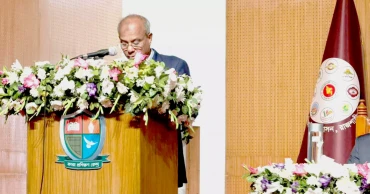
No threat of election violence, says Home Adviser
Home Affairs Adviser Lt Gen (Retd.) Jahangir Alam Chowdhury on Wednesday said there is no fear of any kind of violence surrounding the upcoming national election, as law enforcement agencies remain fully prepared to ensure a peaceful poll.
“The law enforcement agencies are very well prepared to conduct a peaceful election,” he said while speaking to reporters after attending a law and order coordination meeting at the Rajshahi Prison Training Academy auditorium. The meeting was organised to ensure the smooth conduct of the national elections and referendum.
He said regular operations are underway across the country to ensure free, fair, and peaceful elections, adding that illegal weapons are being recovered through these drives.
Interim govt to hand over power right after election: Deputy Press Secretary
The Home Affairs Adviser said around one lakh Army personnel will be deployed nationwide during the election. In addition, about 5,000 members of the Navy, 37,000 Border Guard Bangladesh (BGB) members, 4,000 Coast Guard personnel, 1.5 lakh police members, 9,000 Rapid Action Battalion (RAB) members, and over 5 lakh Ansar members will remain on duty.
He further said there is no such issue as “mob violence” in the country and that law enforcement agencies have no reason to feel fearful.
Responding to a question, Jahangir Alam Chowdhury said if any candidate violates the election code of conduct or engages in indecent behaviour, it will be disclosed. “If such actions are exposed in society, the candidate will naturally lose public support. Even then, if anyone crosses the line, legal action will be taken,” he added.
EC changes polls code a week before elections
The meeting was attended by Border Guard Bangladesh (BGB) Director General Major General Mohammad Ashrafuzzaman Siddiqui, Rapid Action Battalion (RAB) Director General AKM Shahidur Rahman, Bangladesh Ansar and Village Defense Force Director General Major General Abdul Motaleb Sazzad Mahmud, Additional Inspector General of Police Khandaker Rafiqul Islam and Senior Secretary of the Ministry of Home Affairs Nasimul Gani.
Senior officials of various election-related departments of Rajshahi Division and representatives of law enforcement agencies were also present in the meeting.
8 months ago
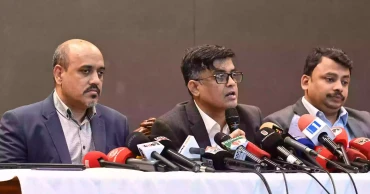
Smooth power handover after Feb-12 election: Shafiqul Alam
Chief Adviser’s Press Secretary Shafiqul Alam on Tuesday said Bangladesh will see a great election on February 12.
After that, he said, there would be a smooth handover of power.
"And I will return to my old ways - writing and reading, writing and reading and writing!! And guzzling enormous amounts of tea," said the Press Secretary in brief remarks shared from his verified Facebook page.
"We have a Cabinet (Council of Advisers) meeting this Thursday. Hopefully, there will be another one next week," Alam said.
Election atmosphere to improve further with gradual presence of security forces: Shafiqul Alam
He said first, the waiting days were three digits—500 days to the election. "Then they dropped to double digits: 90 days. The months slipped away. Now it’s weeks. And now the wait is down to single digits: nine days."
"In working days, it’s just five—today, Thursday, and the first three days of next week," Alam said.
8 months ago
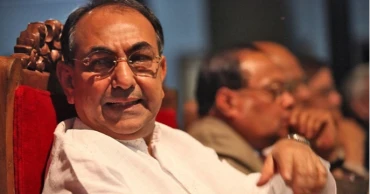
Election result delay beyond 12 hours to signal dishonest intent: Mirza Abbas
BNP senior leader and party-nominated candidate for Dhaka-8 Mirza Abbas on Saturday said any delay beyond 12 hours in announcing the upcoming national election results would indicate dishonest intentions.
“I have heard it may take a long time to announce the results. If results cannot be declared within two hours after voting ends, at most it may take 12 hours. Beyond that, we will assume there are evil motives,” he said.
Mirza Abbas, also a BNP Standing Committee member, made the remarks while speaking at an election views-exchange meeting with leaders of the Bangladesh Association of International Recruiting Agencies (BAIRA) and two other organisations at Ananda Community Centre in Nayapaltan.
He said BNP polling agents will not leave polling centres until the results are officially announced.
“We cannot accept claims that it will take three days to announce results. Previously, results were completed by evening. Why three days now, and whom do you want to make win?” the BNP leader questioned.
Expressing concern over possible irregularities on polling day, Abbas warned that any attempt to cast fake votes using ‘burqas’ would be resisted. “We respect the burqa—my mother used to wear one. But we will not tolerate fake voting under the cover of a burqa.”
He said the country is going through an uneasy period and that while police harassment has declined after Sheikh Hasina’s departure, people are still not living in comfort or peace.
Narrating his political experience, Abbas said age does not mean ineffectiveness; rather, experience is an asset for the younger generation. “If experience is not utilised, the new generation will not be able to move forward.
Mentioning his long-standing familiarity with the area, the BNP leader said that the poor and distressed people of the area, as well as wealthy individuals and businesspeople, know him well. “No businessman in this city can say that they were able to even buy me a cup of tea for their own interest.”
On election strategy, Abbas said rallies and processions are easy, but securing votes is the real task, urging party leaders and activists to go door to door to convince voters.
He also alleged that conspiracies against BNP have not stopped and warned of possible attempts to create instability in Dhaka-8 to disrupt the election.
“They (NCP candidate and his supporters) are provoking us in many ways. My leaders and activists are exercising patience. I thank Allah for giving me the strength to remain patient. I am enduring unspeakable abuse and staying in the field with the activists, clinging to the ground,” Abbas said.
The BNP leader said the election has been achieved through long struggles and sacrifices and is not a gift.
Abbas vows to rid Dhaka-8 of drugs, extortion, crimes
“Just as independence was not gifted, voting rights are not donated either,” he said, urging party workers to remain alert against any attempts to manipulate the election.
After the meeting, he carried out door-to-door campaigning in Bhasani Gali, Jonaki Cinema Hall Gali and the lanes opposite Paltan Police Station.
Later in the afternoon, he offered prayers at Old Paltan Jame Mosque and campaigned in the surrounding areas.
8 months ago
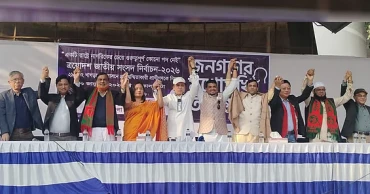
Khagrachhari candidates unite before voters, pledge major development
Ten candidates of Khagrachhari parliamentary seats met voters together at the town hall event on Thursday, promising to focus on road development, electricity, job creation, education, tourism, women’s empowerment, and drug control.
The event, titled “Face to Face with the People,” was organized by “Sushasoner Jonye Nagorik (SUJON)” in front of Khagrachhari Town Hall.
It began at 4:00 pm and was chaired by SUJON Khagrachhari district president Advocate Nasir Uddin Ahmed. The program was moderated by SUJON central coordinator Dilip Sarkar.
The candidates spoke on infrastructure development, resolving hill region issues, improving education, and creating job opportunities for the youth.
Voters from different backgrounds attended and asked questions.
‘Crude bomb’ explodes outside Jamaat candidate’s Khagrachhari house
Candidates responded directly and assured transparency and accountability in implementing development projects.
The 13th national parliamentary election is scheduled for February 12 and a total of 11 candidates are contesting in different constituencies of Khagrachhari.
Independent candidate Ziruna Tripura was absent from the event.
8 months ago
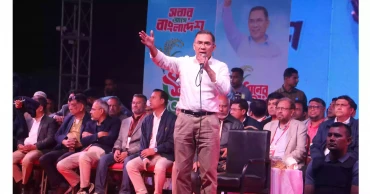
One group fled after snatching voting rights, another plotting again: Tarique
BNP Chairperson Tarique Rahman on Thursday said one group had stripped people of their voting rights and fled the country while another group had remained out of sight for years but is now conspiring again.
“ Everyone must remain alert to ensure ballot boxes are protected and empty boxes cannot be shown as full happened in the past, “he said while addressing a rally in Naogaon district town.
The rally was part of his election campaign in northern districts.
He said his party has no plan to suddenly flee the country by boarding a plane, saying BNP has survived 17 years of repression because it stood with the people.
He also called on people to vote for the ‘sheaf of paddy’ symbol.
The BNP chairperson said there has been no real improvement in the lives of people over the past 16 years.
He said BNP wants to change the fate of rural people and women and ensure public safety so people can walk freely and sleep peacefully at night.
Referring to development projects, he said Dhaka has seen development but mega projects have turned into mega corruption.
Addressing farmers, Tarique Rahman said Bangladesh will prosper if farmers are protected.
He said the northern region produces both rice and mangoes but lacks cold storage facilities for mango preservation, adding that steps would be taken to address the issue.
He said rail transport would be prioritised to help farmers send their produce to Dhaka at lower cost.
He recalled that late President Ziaur Rahman had waived interest on agricultural loans up to Tk 5,000 and said they would increase that waiver to Tk 10,000.
He also said agricultural cards would be gradually provided to all farmers to ensure timely supply of seeds and fertilisers, helping them strengthen their economic base and cope with natural disasters.
Speaking about women’s welfare, he said family cards would be issued to ensure monthly government support for mothers’ healthcare.
He said healthcare services would be expanded in rural areas so common illnesses can be treated locally.
Addressing educated unemployed youths, Tarique Rahman said not everyone has to become a doctor or engineer and many can become professional athletes.
He said students should be trained in sports from school level so they can earn and bring honour to the country abroad.
He said many educated youths live in agricultural and industrial regions, and employment opportunities would increase through skill development training.
He added that the IT sector would be prioritised and discussions have already been held with foreign companies interested in investing in Bangladesh.
Protect your votes, conspiracies still on: Tarique to voters
The rally was chaired by Naogaon district BNP President Abu Bakkar Siddique Nannu.
Central BNP leaders, district leaders and leaders of associate organisations also addressed the gathering.
Candidates from all Naogaon and Joypurhat constituencies were present and spoke at the rally.
8 months ago
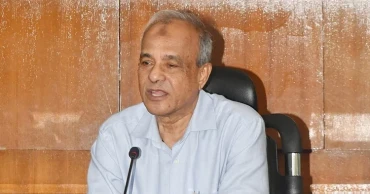
Home Adviser asks officials to uphold integrity, professionalism in election duties
Home Affairs Adviser Lt Gen Md Jahangir Alam Chowdhury (retd) on Thursday asked election officials and members of law enforcement agencies to discharge their duties with utmost integrity, efficiency and professionalism.
“Government officials are not members of any political party. They are salaried employees of the state, paid by taxpayers’ money. Any form of partiality or biased conduct towards a political party will not be accepted,” he said.
The adviser made the remarks while speaking at a law and order coordination meeting at the Bangladesh Police Auditorium at Rajarbagh in the capital in the afternoon.
The meeting was organised by the Home Ministry and the Dhaka Divisional Commissioner’s Office to ensure the smooth conduct of the 13th national parliamentary election and referendum.
If evidence is found that anyone has worked in favour of a candidate or pursued a partisan agenda, the government will take departmental and strict legal action without any leniency, he warned.
He also instructed officials and law enforcers to strictly avoid accepting money or any other benefits from candidates or their representatives, stressing that even accepting food would be unacceptable.
Jahangir Alam said the democratic future of the country would be determined through the national election, cautioning that a flawed or non-transparent election could push the nation into uncertainty.
“The role, conduct and responsibility of officials and law enforcement personnel are extremely important. I am hopeful that with collective efforts, we will be able to set a benchmark in the upcoming election that will be appreciated not only at home but also internationally,” he added.
They said no one should be allowed to violate the law, and anyone involved in illegal activities must be brought under legal action.
He urged all concerned to thoroughly understand and follow the Representation of the People Order (Amendment) Ordinance, 2025, the Code of Conduct for Political Parties and Candidates in Parliamentary Elections, 2025, circulars issued by the Home Ministry, and directives of the Election Commission.
“Neutrality must be reflected in words, actions, conduct, announcements and implementation,” he said.
The adviser also instructed senior officials to regularly brief their subordinate officers and staff on election conduct and preparations, suggesting that meetings could be held daily at district and metropolitan levels to review preparations, challenges, ongoing activities, upcoming plans, dos and don’ts, and compliance with the code of conduct.
Home Adviser Jahangir Alam pledges credible polls on Feb 12
Deputy commissioners, superintendents of police, upazila nirbahi officers, regional, district and upazila election officers, officers-in-charge of police stations from across Dhaka Division, as well as additional police commissioners, joint police commissioners, deputy police commissioners and OCs of the Dhaka Metropolitan Police, attended the meeting.
8 months ago
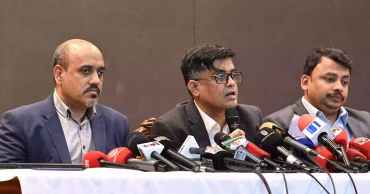
Election atmosphere to improve further with gradual presence of security forces: Shafiqul Alam
Chief Adviser’s Press Secretary Shafiqul Alam on Thursday expressed optimism that the security situation would improve with the gradual deployment of security forces, stating that political parties have so far shown restraint and tolerance while carrying out election campaigns.
“We hope the coming days will look better with the gradual deployment of security forces. Overall situation will further improve,” he told reporters at the Foreign Service Academy in response to a question.
Chief Adviser’s Deputy Press Secretary Abul Kalam Azad Majumder, Senior Assistant Press Secretary Foyez Ahammad, and Assistant Press Secretary Suchismita Tithi also spoke at the briefing, where the outcomes of the Council of Advisers’ meeting, chaired by Chief Adviser Prof Muhammad Yunus, were shared.
Alam said the government believes political parties are demonstrating adequate restraint and tolerance and are engaging in healthy election campaigns.
“Truly, they are abiding by electoral laws and following the code of conduct,” he said, referring to the situation ahead of the 2014 elections.
Hundreds were killed and injured in violent attacks surrounding the controversial elections, the Human Rights Watch said in a new report released on April 29, 2014, quoting the Bangladeshi human rights organisations.
Bangladesh’s government and members of rival political parties all bear responsibility for the violence which scarred national elections on January 5, 2014, said the Human Rights Watch at that time.
“We believe there is still a sufficient level of tolerance among the political parties. However, we do not deny that a few isolated incidents have taken place,” the Press Secretary added, noting that, according to police data, four people have died since the announcement of the election schedule.
Violence Unacceptable, Deeply Regrettable
With the national election only two weeks away, the government on Thursday called on all political parties, including BNP and Jamaat-e-Islami, to demonstrate responsible leadership and ensure restraint among their supporters.
"Violence, intimidation, and loss of life have no place in a democratic process," said the interim government in a statement, expressing deep concerns over the recent violent incident in Sherpur that resulted in the death of a political activist of the Jamaat-e-Islami party.
Any loss of life linked to violence is unacceptable and deeply regrettable, said the government.
"The interim government remains committed to ensuring a peaceful, free, and fair election," according to the statement shared by the Chief Adviser's press wing.
The police in Sherpur have launched an investigation into the clashes and the murder.
All perpetrators will be brought to justice. Security in the district has been stepped up, the government said.
All parties, leaders and campaigners must play their role in maintaining peace, respecting the rule of law, and engaging voters through peaceful and constructive means, it said.
The government said the future of the nation depends on calm, discipline and democratic conduct from all sides.
Innocents Won’t Be Arrested
Responding to a question, Deputy Press Secretary Abul Kalam Azad Majumder said no arrests have been made so far and efforts are underway to identify the actual individuals involved by scrutinising the available video footage.
He said police will speak with the families again after the burial (scheduled for 8pm on Thursday), to know whether they are willing to file a case. If not, the police will file the case.
Azad said investigations are ongoing to identify the real attackers, noting that many people were present at the scene.
Reject attempts to stoke fear, exploit tensions: Shafiqul Alam
He said the authorities want to ensure that no innocent person is arrested or unnecessarily harassed, while those involved in the incident will not be spared.
A local leader of Bangladesh Jamaat-e-Islami died after being injured in a clash between supporters of the BNP and Jamaat in Jhenaigati upazila of Sherpur district on Wednesday evening.
Rezaul Karim, general secretary of the Sreebardi Upazila unit, succumbed to his injuries around 9:30 pm while on the way to Mymensingh Medical College Hospital, said Sherpur Additional Superintendent of Police Md Mizanur Rahman Bhuiyan.
8 months ago