Africa
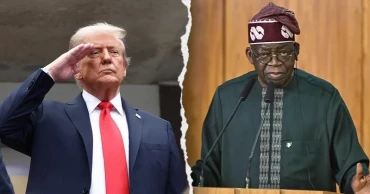
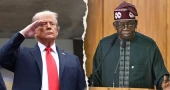
Trump threatens military action in Nigeria over alleged Christian persecution
U.S. President Donald Trump has ordered the Pentagon to start planning potential military action in Nigeria, citing concerns over the government’s handling of alleged persecution of Christians in the West African country. He also warned that the U.S. could immediately halt all aid and assistance to Nigeria.
Trump posted on social media that if the Nigerian government continues to allow attacks on Christians, the U.S. “may very well go into that now disgraced country, ‘guns-a-blazing,’ to completely wipe out the Islamic Terrorists committing these horrible atrocities.” He directed the Department of War to prepare for swift military action if necessary, describing it as “fast, vicious, and sweet.”
The warning followed Nigeria’s President Bola Ahmed Tinubu rejecting Trump’s earlier designation of Nigeria as a “country of particular concern” for allegedly failing to curb Christian persecution. Tinubu emphasized that religious freedom and tolerance are core to Nigeria’s identity and constitutional law, and the government opposes any form of religious persecution.
Trump has claimed that “Christianity is facing an existential threat in Nigeria,” attributing the violence to radical Islamists, echoing U.S. Senator Ted Cruz’s calls for Congress to recognize Nigeria as violating religious freedom due to alleged mass killings of Christians.
Nigeria, Africa’s most populous country with about 220 million people, is almost evenly split between Christians and Muslims. Security challenges in the country include attacks by extremist groups such as Boko Haram, communal clashes over resources, ethnic conflicts, and secessionist movements. Analysts note that while Christians are sometimes targeted, most victims of violence are Muslims in northern Nigeria.
Kimiebi Ebienfa, spokesperson for Nigeria’s Ministry of Foreign Affairs, reiterated the country’s commitment to protecting all citizens regardless of faith, highlighting the nation’s diversity as a strength.
The U.S. first placed Nigeria on the “country of particular concern” list in 2020 for broader religious freedom violations, a designation lifted in 2023 amid efforts to improve bilateral relations.
4 months ago
Landslide kills 21, leaves 30 missing in western Kenya
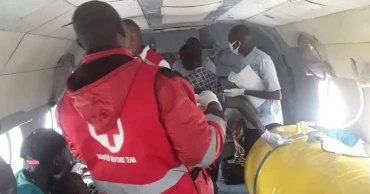
At least 21 people were killed and 30 others went missing after a massive landslide hit Kenya’s western Rift Valley region on Saturday, following days of heavy rainfall during the country’s short rains season.
The disaster struck the hilly area of Chesongoch in Elgeyo Marakwet County, destroying more than 1,000 homes and cutting off several roads.
Authorities said 30 people with serious injuries were airlifted to a hospital in Eldoret City for treatment.
Local resident Stephen Kittony told Citizen Television that he heard a loud rumble before fleeing his home with his children, each running in different directions to escape.
Landslides, floods cut off 300 Mexican communities; dozens dead and missing
Rescue operations continued through Saturday despite the ongoing rains, as emergency teams searched through the mud and debris for those still missing.
Chesongoch, known for its steep terrain, has experienced similar tragedies before — deadly landslides in 2010 and 2012 claimed dozens of lives, and floods in 2020 swept away a local shopping center.
Interior Minister Kipchumba Murkomen said the government is working to relocate affected families to safer ground.
Source: AP
Read more: Thunderstorm Lightning in Bangladesh: Causes, Risks, and Safety Tips
4 months ago
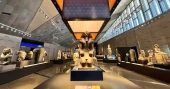
Egypt unveils the world's largest museum dedicated to its ancient civilization
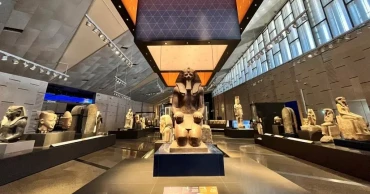
Egypt on Saturday inaugurated the long-awaited Grand Egyptian Museum (GEM) — the world’s largest museum dedicated to ancient Egyptian civilization — marking a milestone in both cultural preservation and efforts to revive the country’s tourism-driven economy.
Located near the Giza Pyramids on the outskirts of Cairo, the $1 billion museum has been two decades in the making. It houses more than 50,000 artifacts tracing Egypt’s rich history, from prehistoric times to the Roman era.
World leaders, including monarchs and heads of state, attended the inauguration, which the Egyptian presidency described as “an exceptional event in the history of human culture and civilization.” President Abdel-Fattah el-Sissi said the museum reflects the “genius of ancient Egyptians” and the “creativity of modern Egyptians,” serving as a new global cultural landmark.
The GEM features a striking triangular glass façade inspired by the nearby pyramids and includes 24,000 square meters of permanent exhibition space. A grand staircase lined with ancient statues leads visitors toward main galleries offering panoramic views of the Giza Plateau. A pedestrian bridge and electric vehicles will connect the museum to the pyramids.
Among the museum’s 12 main galleries, two are devoted to King Tutankhamun’s collection — over 5,000 artifacts displayed together for the first time since the tomb’s discovery by Howard Carter in 1922. Highlights include the boy pharaoh’s golden throne, funerary beds, chariots, and his iconic gold burial mask. Renowned archaeologist Zahi Hawass called the Tutankhamun exhibit the museum’s centerpiece, saying, “Everyone is waiting for this opening because of Tutankhamun.”
The facility’s completion comes after years of political upheaval and construction delays since work began in 2005. The Egyptian government also modernized surrounding areas, improving roads, constructing a metro station, and opening the nearby Sphinx International Airport to make access easier for tourists.
Authorities hope the museum will boost Egypt’s crucial tourism sector, which has struggled since the 2011 Arab Spring but has begun to recover. Egypt welcomed a record 15.7 million tourists in 2024, contributing about 8% of GDP, and aims to double that figure by 2032.
The Grand Egyptian Museum will open its doors to the public on Tuesday.
4 months ago
New inquest finds South African Nobel laureate Albert Luthuli was beaten to death
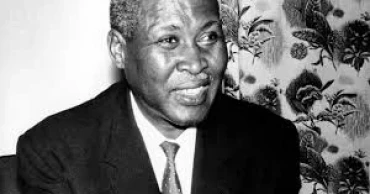
A new inquest into the 1967 death of South African Nobel Peace Prize winner and anti-apartheid leader Albert Luthuli has concluded that he was beaten to death, overturning the previous finding that he died after being struck by a train.
Thursday’s ruling by a Pietermaritzburg court comes more than 50 years after suspicions that Luthuli was killed by apartheid police for his leadership of the African National Congress (ANC) opposing white minority rule.
The South African government reopened the inquest in April as part of efforts to investigate high-profile apartheid-era killings allegedly covered up by authorities. A 1967 inquest had ruled Luthuli’s death accidental, caused by a freight train near his home—a conclusion long viewed with skepticism.
The judge said evidence showed Luthuli died of head injuries consistent with an assault and identified the notorious police Special Branch, possibly assisted by railway employees, as likely responsible.
The ANC hailed the ruling, saying it restores justice, truth, and dignity to Luthuli’s memory and honors all victims of apartheid brutality. Luthuli led the ANC from 1952 until his death and was the first African awarded the Nobel Peace Prize in 1960 for his nonviolent struggle.
The government is also reviewing other apartheid-era deaths, including that of Steve Biko.
Source: AP
4 months ago
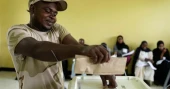
Protests over Tanzania’s election results continue for third day
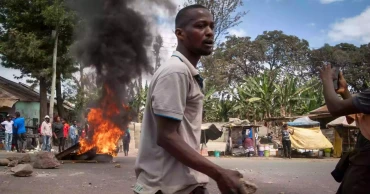
Demonstrations over Tanzania’s disputed election results entered a third day Friday, with hundreds of protesters clashing with police in the commercial capital, Dar es Salaam, prompting the deployment of the military and an internet shutdown.
The unrest began Wednesday after the Chama Cha Mapinduzi (CCM) party, which has ruled Tanzania since independence in 1961, appeared set to extend its hold on power in elections that opposition groups called unfair. Major opposition candidates were barred from running, leaving President Samia Suluhu Hassan facing 16 lesser-known contenders.
In Zanzibar, where tensions are often high during elections, the electoral commission said incumbent President Hussein Mwinyi won with 78.8% of the vote. The opposition rejected the results, alleging “massive fraud,” and vowed to announce its next steps. Although the islands remained calm Friday, they were under heavy military presence, and ferry services—halted for two days—were expected to resume.
In Dar es Salaam, protesters torched vehicles, a gas station, and police posts as clashes escalated. Amnesty International reported at least two deaths from Wednesday’s violence, though authorities have not released casualty figures or detailed the extent of damage.
The protests have since spread nationwide, prompting the government to postpone the reopening of universities and colleges, which had been scheduled for Monday.
Army chief Gen. Jacob John Mkunda condemned the unrest and said the military would work alongside police to restore order.
Meanwhile, Tanzanians abroad have taken to X Spaces to discuss the situation and explore ways to support the demonstrators financially.
State television continues to broadcast results, while access to social media and news websites remains severely restricted.
4 months ago

South Korean and Japanese leaders pledge stronger ties amid shifting global dynamics
South Korean President Lee Jae Myung and Japan’s new Prime Minister Sanae Takaichi on Thursday pledged to deepen bilateral relations despite lingering tensions rooted in their wartime history, as both countries navigate global uncertainty and pressure from the United States.
The meeting, held in the southeastern city of Gyeongju, marked their first summit and came ahead of the Asia-Pacific Economic Cooperation (APEC) summit. It followed visits by U.S. President Donald Trump to both Tokyo and Seoul, where he urged the two key American allies to fulfill their multibillion-dollar investment commitments in the United States.
President Lee said South Korea and Japan face “rapidly changing international dynamics and trade conditions,” stressing that forward-looking cooperation between the two nations is more vital than ever.
Prime Minister Takaichi, for her part, emphasized the importance of trilateral cooperation among Seoul, Tokyo, and Washington “under the current strategic environment,” according to a statement from the South Korean presidential office.
Both leaders agreed to continue their “shuttle diplomacy,” taking turns to host future summits. “Our talks were very enjoyable and meaningful,” Takaichi said, adding that she looked forward to hosting Lee in Japan next time.
Takaichi’s election on October 22 had raised concerns in Seoul due to her right-leaning stance on historical issues. She has previously resisted acknowledging Japan’s wartime aggression and denied coercion in the use of Korean laborers and women forced into sexual slavery during World War II.
Despite these concerns, analysts believe Seoul and Tokyo are likely to continue strengthening cooperation, as both seek to safeguard their economic interests amid Trump’s push to overhaul global trade rules. The two countries also share other pressing challenges, including supply chain vulnerabilities and North Korea’s nuclear ambitions.
President Lee’s rise to power in June initially sparked apprehension in Japan, given his past criticism for leaning toward North Korea and China. However, under his policy of “pragmatic diplomacy,” Lee has repeatedly vowed to reinforce ties with Japan and the U.S., prioritizing trilateral security collaboration.
Both governments have also pledged massive investment packages in the United States. Seoul had been negotiating for weeks with Washington over the structure of its proposed $350 billion investment plan. Following Lee’s summit with Trump on Wednesday, South Korea announced it had made progress toward finalizing a trade deal.
According to South Korean officials, the country will provide $200 billion in direct U.S. investments over the next decade and another $150 billion — including loan guarantees — to help rejuvenate America’s shipbuilding industry. In exchange, Washington has agreed to reduce tariffs on Korean cars and auto parts from 25% to 15%, while also promising to share technology that would allow South Korea to develop nuclear-powered submarines.
Trump’s visit to South Korea, which included a separate summit with Chinese President Xi Jinping on Thursday, followed his trip to Japan earlier this week. In Tokyo, Trump and Takaichi unveiled several major U.S.-based energy and technology projects funded by Japan, with American officials estimating up to $490 billion in Japanese investments tied to the new trade deal.
As both Seoul and Tokyo work to balance their alliance with Washington and manage regional rivalries, Thursday’s summit reflected cautious optimism that pragmatic cooperation could prevail over historical grievances.
4 months ago
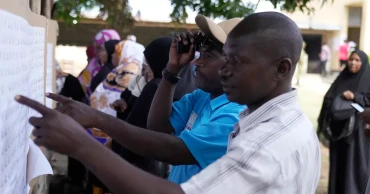
Tanzania protests continue after disputed election, 2 dead
Protests in Tanzania entered a second day on Thursday following a disputed election, with Amnesty International reporting that two people have died amid unrest.
The demonstrations began Wednesday after the ruling Chama Cha Mapinduzi (CCM) party, in power since independence in 1961, sought to extend its rule in an election that barred candidates from the two main opposition parties. President Samia Suluhu Hassan faced 16 candidates from smaller parties who conducted minimal campaigning.
Early results announced Thursday by the electoral body on state television showed President Hassan leading with 96.99% of votes in eight of the 272 constituencies counted so far. Turnout was low, and violence erupted in Dar es Salaam, with protesters burning a bus and a gas station, attacking police stations, and vandalizing polling centers.
Authorities responded with an internet shutdown, a nationwide curfew, and military deployment to control the unrest. Roadblocks were set up across the country, and public servants were instructed to work from home. Protesters attempted to reach the main airport but were blocked by security forces. Ferry services to Zanzibar, whose electoral body is expected to announce results Thursday, were suspended.
Two fatalities—a civilian and a police officer—were reported by Amnesty International, which also called for investigations into police use of force.
The European Parliament condemned the elections as “neither free nor fair” and urged democratic partners to defend human rights and democratic processes.
The main opposition leader, Tundu Lissu, remains in prison after being charged with treason for advocating electoral reforms. Another presidential candidate from the second largest opposition party, Luhaga Mpina, was barred from running.
Tanzanians voted for president, members of parliament, and ward councilors in Wednesday’s polls, which have sparked nationwide protests amid mounting criticism over the fairness of the electoral process.
4 months ago
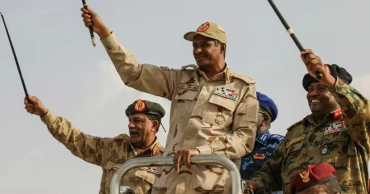
Sudan’s paramilitary seizes Darfur, raising fears of split
Sudan’s two-year war took a dangerous turn this week as the paramilitary Rapid Support Forces (RSF) captured the entire Darfur region, including its capital, el-Fasher, after ousting the Sudanese army from its last stronghold. The conflict has killed over 40,000 people and displaced more than 14 million, creating the world’s worst humanitarian crisis.
The RSF, led by Gen. Mohammed Hamdan Dagalo, also known as Hemedti, has roots in the Janjaweed militias that carried out mass killings and forced displacements in Darfur during the early 2000s. Initially formed to impose discipline on these militias, the RSF has been accused of torture, extrajudicial killings, mass rapes, and plunder.
Dagalo, a native of Darfur from an Arab camel-trading tribe, used his family’s livestock and gold mining operations to build support and expand the militia. Since the overthrow of former President Omar al-Bashir in 2019, he has emerged as Sudan’s main power broker, competing for control with army chief Gen. Abdel-Fattah Burhan.
The RSF has also courted regional allies. Its fighters have served in Yemen and Libya, and the group has been involved in European Union border deals. The army has accused the UAE and Libya’s Khalifa Haftar of supporting the RSF, charges denied by both parties.
After losing control of Khartoum earlier this year, the RSF regrouped in Darfur and Kordofan, strengthening its position with local alliances and foreign-supplied drones and weapons. Dagalo claims he is forming a rival government to rule RSF-controlled areas.
The capture of Darfur raises fears of renewed fragmentation in Sudan, nearly 15 years after South Sudan gained independence, and signals a possible expansion of the RSF’s campaign toward central Sudan.
4 months ago
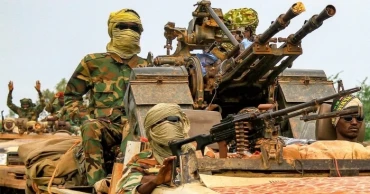
Sudan conflict deepens as paramilitary seizes Darfur, raising fears of national split
Sudan’s two-year war has reached a critical turning point after the Rapid Support Forces (RSF) seized full control of Darfur, ousting the army from its final stronghold in the region. The takeover of El-Fasher, North Darfur’s capital, has heightened concerns that the country could fragment, nearly 15 years after South Sudan’s independence.
Led by Gen. Mohammed Hamdan Dagalo, known as Hemedti, the RSF evolved from the Janjaweed militia, accused of atrocities during the early 2000s Darfur conflict that left about 300,000 dead and millions displaced. Originally backed by former ruler Omar al-Bashir, Hemedti built his power base through gold mining and regional alliances, deploying fighters to conflicts in Yemen and Libya with Gulf support.
The RSF has been accused of war crimes, including mass killings and sexual violence. Despite sanctions from the former U.S. administration, Dagalo expanded his influence after Bashir’s fall in 2019, becoming a key player in Sudan’s turbulent politics.
His forces now control large swaths of western and central Sudan, while the army, led by Gen. Abdel-Fattah Burhan, remains entrenched in the east. Both sides have relied on foreign fighters and drone weaponry supplied by countries such as Turkey, Iran, China, and Russia.
The RSF’s capture of Darfur—Sudan’s vast western region—marks one of its biggest victories since the war began, deepening the humanitarian crisis that has already displaced more than 14 million people and killed over 40,000. Dagalo has since declared plans to form a rival government, signaling the possible breakup of Sudan if peace efforts fail.
4 months ago
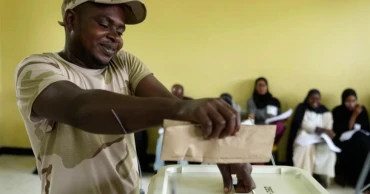
Voting Underway in Tanzania Amid Detentions, Rights Concerns
Polling began across Tanzania on Wednesday in an election overshadowed by arrests of opposition members and concerns raised by international rights groups.
President Samia Suluhu Hassan is seeking a second term, representing the long-ruling Chama Cha Mapinduzi (CCM) party, which has remained in power since the country’s independence in 1961.
Voting started at 7 a.m. local time and will continue until 4 p.m., with initial results expected within 24 hours. However, the electoral commission has up to seven days to declare the final outcome.
Reporters from the Associated Press observed orderly queues at several polling centers early in the day.
The main opposition leader, Tundu Lissu of the CHADEMA party, remains behind bars facing treason charges after calling for electoral reforms, while another major opposition candidate was disqualified from contesting.
Amnesty International said the pre-election environment was marred by “fear and intimidation,” citing verified incidents of enforced disappearances, arbitrary arrests and extrajudicial killings. The group warned that such abuses threaten the credibility of the vote.
Hassan, who completed the term of her late predecessor John Pombe Magufuli after his sudden death in 2021, is now seeking her first full mandate. Sixteen candidates from smaller opposition parties are also in the race.
Tanzania has over 37 million registered voters—up 26 percent from the 2020 polls—but analysts say voter apathy remains high amid expectations of an easy victory for the incumbent.
The CHADEMA party has called for peaceful protests on election day, alleging government interference and unfair practices.
Source: AP
4 months ago