Middle-East
More countries reject Israel’s recognition of Somaliland
A growing number of nations on Saturday denounced Israel’s recognition of Somalia’s breakaway region of Somaliland as an independent state, following the first such recognition by any country in over three decades.
Israel made the announcement Friday, though the reasons behind the move and whether any benefits were expected remain unclear. Somaliland declared independence from Somalia in 1991 amid ongoing conflict that has left the East African country fragile. Despite maintaining its own government and currency, Somaliland had not been recognized internationally until Israel’s decision.
On Saturday, more than 20 countries—primarily from the Middle East and Africa—along with the Organization of Islamic Cooperation, issued a joint statement rejecting Israel’s recognition, citing serious repercussions for peace and security in the Horn of Africa, the Red Sea, and beyond. Syria also separately rejected the move.
Somaliland lies along the Gulf of Aden, near Djibouti, which hosts military bases of the U.S., China, France, and other nations. Earlier this year, U.S. and Israeli officials reportedly discussed resettling Palestinians from Gaza in Somaliland under former President Donald Trump’s plan, which has since been abandoned. The U.S. State Department reaffirmed its recognition of Somalia’s territorial integrity, including Somaliland.
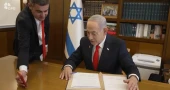
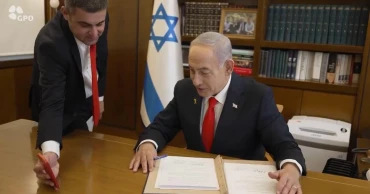
Israeli Prime Minister Benjamin Netanyahu, Foreign Minister Gideon Saar, and Somaliland President Abdirahman Mohamed Abdullahi signed a joint declaration citing the Abraham Accords, the 2020 initiative that established diplomatic and commercial ties between Israel and several Arab and Muslim-majority nations.
Somalia’s federal government condemned the move as illegal, reaffirming Somaliland as part of its sovereign territory. Regional bodies, including the African Union and IGAD, also rejected the recognition, warning that undermining Somalia’s sovereignty threatens peace and stability in Africa.
Source: AP
2 months ago
Iran is all-out confrontation with the West: President Pezeshkian
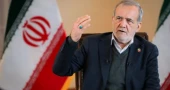
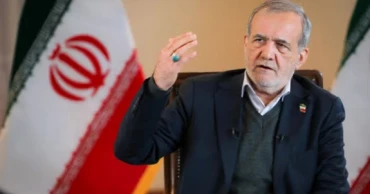
Iranian President Masoud Pezeshkian on Saturday said Iran is engaged in what he described as a comprehensive war with the United States, Israel and European countries, comments made ahead of Israeli Prime Minister Benjamin Netanyahu’s scheduled meeting with U.S. President Donald Trump.
In an interview published on the website of Supreme Leader Ayatollah Ali Khamenei, Pezeshkian said the current confrontation is more severe than Iran’s eight-year war with Iraq in the 1980s, which resulted in more than one million casualties on both sides.
“We are facing a full-scale war with the U.S., Israel and Europe,” Pezeshkian said, adding that Western powers are seeking to destabilize Iran. He described the present conflict as more complex and challenging than the 1980–1988 Iran-Iraq war.
Iran seizes foreign oil tanker in Strait of Hormuz
His remarks came just days before Netanyahu’s visit to Washington, where discussions with Trump are expected to focus heavily on Iran.
Tensions have escalated following Israeli and U.S. strikes on Iran during a 12-day aerial conflict in June, which Iranian authorities said killed nearly 1,100 people, including senior military officials and nuclear scientists. Iran’s retaliatory missile attacks reportedly killed 28 people in Israel.
2 months ago
Lebanon Cabinet approves draft law to restore lost bank deposits
Lebanon’s Cabinet on Friday approved a draft law aimed at assessing losses from the 2019 banking collapse and establishing a mechanism to return funds to depositors whose savings were wiped out.
The financial meltdown, which destroyed billions in personal savings, followed decades of corruption, mismanagement, and profiteering, leaving many unable to access their accounts. The draft legislation, known as the “financial gap law,” still requires parliamentary approval to become law.
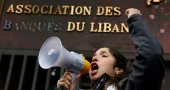
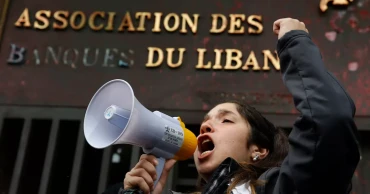
Thirteen ministers supported the draft while nine opposed it. Protesters outside the government headquarters expressed skepticism about the legislation and demanded swift action. It remains uncertain when parliament will consider the bill, as delays have marked previous reform efforts.
Prime Minister Nawaf Salam said that once approved, smaller depositors, making up 85% of the total, will recover their full deposits over four years. Larger depositors will receive up to $100,000 in cash first, with the remainder converted into tradable bonds backed by the Central Bank’s assets, valued at around $50 billion. Salam rejected claims that the bonds are worthless, explaining that large depositors could recover a portion of their funds annually.
The draft law also includes accountability measures to prevent misuse and is seen as a step toward restructuring Lebanon’s financial sector after years of inaction by political leaders, banks, and the central bank.
The legislation aligns with International Monetary Fund recommendations for returning deposits, restructuring bank liabilities, and improving transparency. Lebanon’s economy has suffered a severe currency collapse, with the Lebanese pound losing over 90% of its value and more than half of the population living in poverty.
The crisis was worsened by last year’s war between Israel and Hezbollah, which the World Bank estimated cost Lebanon $11 billion in reconstruction. President Joseph Aoun and Prime Minister Salam have pledged to implement reforms to restore trust in the banking system and stabilize the economy.
2 months ago
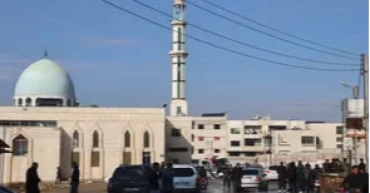
Mosque bombing in Homs kills 8, injures 18
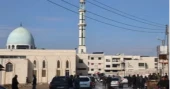
At least eight people were killed and 18 others injured in a bombing at the Imam Ali ibn Abi Talib Mosque in Homs during Friday prayers, Syrian authorities reported.
State-run Arab News Agency images showed blood-stained carpets, shattered windows, holes in the walls, and fire damage inside the mosque, which is located in the Wadi al-Dhahab neighborhood, predominantly inhabited by the Alawite minority. Preliminary investigations suggest that explosive devices had been planted inside the mosque, according to a security source cited by SANA. Syrian Interior Ministry officials said security forces established a cordon around the site and are searching for the attackers.
Local officials condemned the attack, describing it as “a desperate attempt to undermine security and sow chaos among the Syrian people.” The Ministry of Foreign Affairs reaffirmed Syria’s commitment to combating terrorism in all forms. Syrian Information Minister added that remnants of the former regime, ISIS militants, and collaborators seek to destabilize the country and threaten civil peace.
Neighboring states, including Saudi Arabia, Jordan, and Lebanon, also condemned the bombing. Lebanese President Joseph Aoun reiterated Lebanon’s support for Syria’s fight against terrorism.
The attack comes amid continuing sectarian, ethnic, and political tensions across Syria. Recent clashes between government forces and Kurdish-led fighters in northern Aleppo have prompted temporary school closures and forced civilians to shelter indoors, though a ceasefire was announced later on Monday.
Source: AP
2 months ago
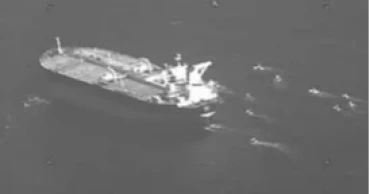
Iran seizes foreign oil tanker in Strait of Hormuz
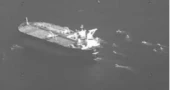
Iranian authorities have seized a foreign oil tanker in the strategically vital Strait of Hormuz, state media reported Friday.
According to Mojtaba Ghahramani, a provincial justice department chief, the tanker was carrying approximately 4 million liters, or 25,000 barrels, of smuggled fuel when it was intercepted by Revolutionary Guard naval forces, the IRNA news agency said. Sixteen foreign crew members were also detained during the operation, which Ghahramani described as a significant “blow” to fuel smugglers. He did not provide details on the vessel’s flag or the crew’s nationalities.
Iran has periodically seized oil tankers in the region on similar grounds. Last November, authorities detained another vessel in the Strait of Hormuz over alleged violations, including transporting illicit cargo.
The West has accused Iran of past attacks on tankers, including limpet mine incidents in 2019 and a 2021 drone strike on an Israeli-linked oil tanker that killed two European crew members, following the U.S. withdrawal from Iran’s 2015 nuclear deal. In April 2024, Iran also seized the Portuguese-flagged cargo ship MSC Aries.
Amid long-standing tensions with the West and regional conflicts, including June’s 12-day war with Israel, Iran has repeatedly threatened to close the Strait of Hormuz, a crucial passage for 20% of global oil trade. The U.S. Navy’s Bahrain-based 5th Fleet regularly patrols the area to ensure the waterways remain open.
Source: AP
2 months ago
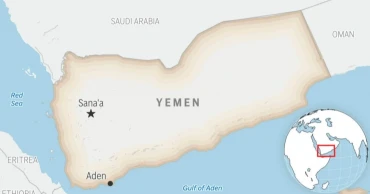
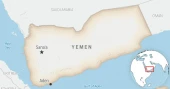
Yemen separatists accuse Saudi Arabia of airstrikes in Hadramout
Southern Yemen separatists on Friday accused Saudi Arabia of launching airstrikes against their forces in the eastern governorate of Hadramout, further raising tensions in the conflict-hit country.
The Southern Transitional Council, which is backed by the United Arab Emirates, said the strikes targeted its fighters after clashes in the area. Saudi Arabia did not immediately comment on the allegation.
Amr Al Bidh, a foreign affairs representative of the Council, told The Associated Press that its forces were operating in eastern Hadramout when they came under multiple ambushes by gunmen. He said two fighters were killed and 12 others wounded before the alleged Saudi airstrikes took place.
A tribal leader in Hadramout, Faez bin Omar, said the strikes appeared to be a warning for the Council to withdraw its forces from the area. An eyewitness said several military vehicles were destroyed and were believed to belong to forces aligned with the separatists.
The Council’s satellite television channel aired video footage it said showed the aftermath of the strikes, with a voice blaming Saudi aircraft for the attack.
The accusations came a day after Saudi Arabia urged the Emirati-backed separatists to pull out of areas they recently entered. Earlier this month, the Council moved into Hadramout and Mahra, displacing forces linked to the Saudi-backed National Shield Forces, another member of the coalition fighting the Iran-backed Houthi rebels.
The developments have increased strain between Saudi Arabia and the UAE, close allies who support different factions in Yemen. The UAE said on Friday it welcomed Saudi efforts to support security and stability in Yemen and reaffirmed its commitment to stability and development in the country.
Yemen has been locked in war since 2014, when the Houthis seized the capital Sanaa and forced the internationally recognized government into exile. A Saudi-led coalition intervened in 2015, but years of fighting have killed more than 150,000 people and triggered one of the world’s worst humanitarian crises.
Renewed fighting in southern Yemen risks further destabilizing the country, while the Houthis continue attacks on shipping in the Red Sea, adding to regional tensions.
2 months ago
Saudi Arabia urges Yemen's separatists to leave 2 governorates as the anti-rebel coalition strains
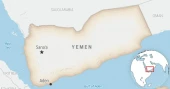
Saudi Arabia on Thursday urged Emirati-backed separatists in southern Yemen to withdraw from Hadramout and Mahra governorates, warning that their presence threatens the stability of the fragile coalition fighting Iran-backed Houthi rebels in the north.
The Southern Transitional Council, long supported by the UAE, moved into the two governorates earlier this month. Saudi authorities called for the council’s forces to return to previous positions and hand over camps to the National Shield Forces, aligned with Yemen’s internationally recognized government.
The Saudi statement criticized the separatists’ actions as an “unjustified escalation” harming both the southern cause and coalition efforts. Local Hadramout officials backed the call for withdrawal. Demonstrators in Aden waved the flag of the former South Yemen, reflecting ongoing secessionist sentiments.
The move strains Saudi-UAE relations, which, despite shared OPEC membership, have competed for regional influence. Yemen’s civil war, ongoing since the Houthis seized Sanaa in 2014, has caused over 150,000 deaths and a humanitarian crisis.
The Houthis have also disrupted Red Sea shipping amid the Israel-Hamas conflict. U.S. forces previously targeted Houthi leaders, including top missile and drone commander Maj. Gen. Zakaria Hajar. Escalation in southern Yemen risks further instability and could draw renewed international intervention.
2 months ago
Blast in Gaza injures Israeli soldier amid ceasefire tensions
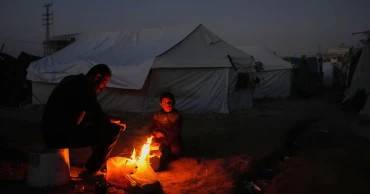
An explosion in Gaza on Wednesday injured an Israeli soldier, prompting Israel to accuse Hamas of violating the US-brokered ceasefire and raising fresh concerns over the fragile truce in place since Oct 10.
Israel’s military said the blast went off beneath a military vehicle as troops were dismantling militant infrastructure in the southern city of Rafah. The soldier sustained light injuries and was taken to hospital.
Hamas rejected responsibility, saying the explosion was caused by unexploded ordnance left behind from earlier fighting and that mediators had been informed. Israel’s military dismissed the claim. Prime Minister Benjamin Netanyahu described the incident as a ceasefire breach and said Israel would respond.
The incident occurred as Hamas leaders met Turkish officials in Ankara to discuss moving to the second phase of the ceasefire, which has slowed despite largely holding. The next stage is expected to tackle sensitive issues, including further Israeli troop withdrawals, the future governance of Gaza, the deployment of an international stabilization force and the disarmament of Hamas.
Since the truce began, all but one of the hostages taken in the Hamas-led Oct 7, 2023 attack have been released, alive or dead, in exchange for Palestinian prisoners. The family of the last hostage whose remains are still in Gaza urged that they be returned before talks advance.
Israel and Hamas have repeatedly accused each other of ceasefire violations. Israel has previously carried out strikes following alleged attacks, while Hamas says Israel has restricted aid flows and continued strikes. Gaza’s Health Ministry says more than 400 Palestinians have been killed by Israeli fire since the truce began.
Meanwhile, Turkish Foreign Minister Hakan Fidan met a Hamas delegation led by Khalil al-Haya, reaffirming Ankara’s support for Palestinian rights and humanitarian efforts in Gaza. Hamas officials said Israel’s actions were obstructing progress toward the next phase of the agreement.
On the hostage issue, Israeli officials said talks were continuing with mediators in Cairo to secure the return of the remaining remains, as pressure mounts from the family and the public to resolve the issue before the ceasefire moves forward.
2 months ago
Saudi urges Yemen separatists to pull back
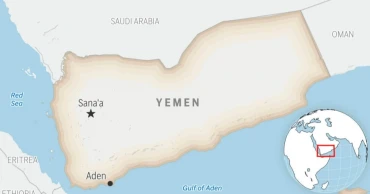
Saudi Arabia has publicly urged Emirati-backed separatists in Yemen to withdraw from two eastern governorates they recently entered, a move that highlights growing strains within the anti-Houthi coalition fighting the Iran-aligned rebels.
In a statement issued on Thursday, the Saudi Foreign Ministry called on the Southern Transitional Council to pull its forces out of Hadramout and Mahra, warning that the deployments risk escalating tensions and harming the interests of Yemenis as well as the broader coalition effort.
The ministry said the separatists’ actions amounted to an unjustified escalation and stressed the need for restraint and cooperation among all Yemeni factions to avoid further instability. It added that mediation efforts were under way to return the Council’s forces to their previous positions and hand over camps in the two governorates to Saudi-backed National Shield Forces.
The Southern Transitional Council has long received support from the United Arab Emirates, while Saudi Arabia backs other groups aligned with Yemen’s internationally recognized government. The latest developments threaten to spark internal confrontation within a coalition already weakened by years of war against the Houthis.
Supporters of the Council have increasingly raised the flag of the former South Yemen, which existed as an independent state until 1990. Calls were issued for demonstrations in the southern city of Aden in favor of renewed secession, though it was unclear whether they would proceed following Riyadh’s announcement. Aden remains a key base for forces opposed to the Houthis.
The dispute also places pressure on relations between Saudi Arabia and the UAE, close allies that are members of OPEC but have competed for influence across the region. Tensions between the two have also surfaced in Sudan, where they back rival sides in another conflict along the Red Sea.
Yemen has been gripped by conflict since the Houthis seized the capital, Sanaa, in 2014 and forced the government into exile. A Saudi-led coalition intervened the following year. The war has killed more than 150,000 people and pushed the country to the brink of famine, creating one of the world’s worst humanitarian crises.
The Houthis have recently disrupted shipping by attacking vessels in the Red Sea over the Israel-Hamas war, prompting many companies to reroute around Africa. They have also detained dozens of U.N. and aid workers, accusing them of espionage, allegations rejected by the United Nations and humanitarian groups.
2 months ago

Syrian church marks Christmas after deadly attack
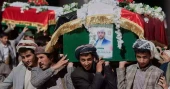
Hundreds of worshippers gathered Tuesday at Mar Elias Church in Syria to mark Christmas and honor 25 people killed in a June suicide attack, reaffirming their faith amid lingering fears.
A small security detail stood guard as congregants held Mass and lit a neon Christmas tree on the church courtyard wall, adorned with photos of the victims. Among those remembered were three men celebrated as heroes for tackling the bomber, potentially saving many lives.
The attacker opened fire and detonated an explosive vest inside the Greek Orthodox church on June 22, killing worshippers during Sunday prayers. Brothers Boutros and Gergis Bechara and congregant Milad Haddad confronted the bomber, pushing him away from the main congregation before the explosion.
“If it weren’t for the three of them, maybe not one person would remain out of 400 people,” said Imad Haddad, Milad Haddad’s brother. He described attending the Christmas tree lighting as “a message of peace and love” and proof of the congregation’s resilience.
Thana al-Masoud, widow of Boutros Bechara, said she takes comfort believing her husband and the others are martyrs. “Our Lord chose them to be saints and to spread His word to all the world,” she said, while acknowledging the pain of their loss.
The June attack, blamed on an Islamic State cell, heightened fears among Syria’s Christian minority, which once made up about 10% of the population. Many fled during the 14-year civil war marked by sectarian violence and attacks on religious communities.
Despite the trauma, some congregants say their faith has grown stronger. “Our God is present, and He was present in the church,” said Hadi Kindarji, recalling a spiritual experience during the explosion.
Mar Elias priest Yohanna Shehadeh acknowledged ongoing fears but said the congregation prays for peace as Christmas approaches.
2 months ago