others
Plane carrying newly printed currency crashes, killing 15
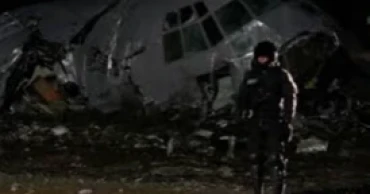
Lockheed C-130 Hercules cargo plane carrying newly printed Bolivian banknotes crashed Friday near the capital, leaving at least 15 people dead, injuring others and damaging numerous vehicles, officials said.
Defense Minister Marcelo Salinas said the aircraft skidded off the runway while landing at an airport in El Alto, a city next to La Paz, before coming to rest in a nearby field. Flames engulfed the plane but firefighters were able to extinguish the blaze.
Fire chief Pavel Tovar confirmed at least 15 fatalities but did not specify whether the victims were on board the aircraft or in vehicles traveling along the adjacent highway. Around 15 cars were reported damaged, with debris and bodies scattered across the roadway.
Bolivian Air Force Gen. Sergio Lora said the plane had six crew members and was arriving from Santa Cruz. By late Friday, two crew members remained unaccounted for.
The military aircraft was transporting currency to La Paz when the crash sent bills flying across the scene. Videos circulating online showed crowds attempting to gather the scattered money as police in riot gear tried to push them back. Tovar said the large number of people collecting cash complicated rescue operations.
Authorities deployed more than 500 soldiers and 100 police officers to secure the area. In the presence of Central Bank President David Espinoza, officials burned the cash containers, saying the banknotes had no legal value because they had not yet entered circulation. Espinoza did not disclose the amount being transported but noted the bills had recently arrived in Santa Cruz from abroad.
Flights to and from the airport were temporarily suspended as investigators worked to determine the cause of the crash.
6 days ago
US–Iran nuclear negotiations continue as Trump voices doubts
Donald Trump said Friday he is dissatisfied with the latest negotiations over Iran’s nuclear program but signaled he is willing to allow more time for diplomacy before considering military action.
His remarks followed another inconclusive round of indirect U.S.-Iran talks in Geneva. While American military assets continue to build up in the Middle East, Trump has warned that force remains an option if Tehran refuses a sweeping agreement. Iran, for its part, maintains that its uranium enrichment is for peaceful energy purposes and denies seeking nuclear weapons.
Speaking to reporters as he departed the White House, Trump criticized Iran’s negotiating stance, saying the U.S. was unhappy with the progress and reiterating that Iran “cannot have nuclear weapons.” Later, during a visit to Texas, he suggested Iranian officials were unwilling to make sufficient concessions. He repeated his opposition to Iran enriching uranium at any level, arguing the oil-rich country has no need to do so. Asked how close he was to authorizing military strikes, Trump declined to elaborate, acknowledging that any conflict carries risks.
Despite Trump’s critical tone, Oman’s foreign minister, Badr al-Busaidi — who is mediating the talks — publicly urged patience. In an interview with CBS, he said a deal was achievable if negotiators were given adequate space to resolve outstanding issues.
Meanwhile, U.S. Secretary of State Marco Rubio is scheduled to visit Israel early next week to discuss regional matters including Iran, Lebanon and Gaza. The State Department’s announcement of the trip, combined with Trump’s comments, suggested any immediate strike may not be imminent.
Rubio also designated Iran a “state sponsor of wrongful detention,” citing the arrest of Americans and other foreign nationals. He warned that Washington could potentially invalidate U.S. passports for travel to or from Iran — a restriction currently applied only to North Korea — if Tehran does not change its behavior.
At the same time, a confidential report by the International Atomic Energy Agency said inspectors have not regained access to key Iranian nuclear facilities since they were heavily bombed during a 12-day conflict launched by Israel last June. The agency said it could not verify Iran’s claim that enrichment activities ceased after U.S. and Israeli strikes.
Security concerns are rising across the region. The U.S. Embassy in Jerusalem authorized the voluntary departure of nonessential personnel and their families, with Ambassador Mike Huckabee encouraging those considering leaving to do so quickly. Several countries, including Britain, Germany, Australia and China, have also advised citizens to avoid travel to Israel or Iran, and some airlines have suspended flights from Tel Aviv.
Diplomatic activity continues in parallel. Omani mediators met with U.S. Vice President JD Vance, and technical discussions are planned in Vienna next week. Iran’s foreign minister has reiterated that sanctions relief must be part of any agreement.
U.N. Secretary-General António Guterres called on both sides to prioritize diplomacy, noting that while positive signals have emerged from negotiations, military movements in the region remain deeply concerning.
6 days ago
Pakistan, Afghanistan trade strikes as Defense Minister declares “Open War”
Pakistan and Afghanistan traded overnight cross-border strikes in a sharp escalation of hostilities, prompting Pakistan’s defense minister to declare the two nations are now in “open war.”
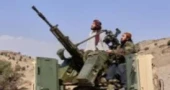
Late Thursday, Afghanistan launched attacks on Pakistani targets, saying they were in response to deadly Pakistani airstrikes along Afghan border regions earlier in the week. Early Friday, Pakistan retaliated with airstrikes in Kabul and two additional provinces, stating that military facilities were targeted.
Relations between the neighbors have been strained for months. Deadly border clashes in October killed soldiers, civilians and suspected militants. Islamabad accuses Afghanistan’s Taliban authorities of sheltering militant groups responsible for attacks inside Pakistan and of strengthening ties with rival India.
A ceasefire brokered by Qatar halted heavy fighting in October, but subsequent peace talks in Turkey failed to secure a durable settlement. Sporadic clashes have continued since. Qatar’s minister of state, Mohammed bin Abdulaziz al-Khulaifi, held calls Friday with both countries’ foreign ministers in an attempt to calm tensions.
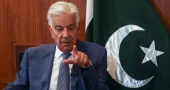
Afghan government spokesman Zabiullah Mujahid described the latest strikes as a warning to Pakistan, accusing it of avoiding dialogue. Pakistan’s Defense Minister, Khawaja Mohammad Asif, responded that Pakistan’s “patience has run out,” declaring the conflict an open war. He added that Islamabad had hoped stability would follow NATO’s 2021 withdrawal but instead accused the Taliban of drawing closer to India.
Asif further alleged that Afghanistan was “exporting terrorism,” repeating long-standing Pakistani claims that Kabul supports the Tehreek-e-Taliban Pakistan (TTP) and Baloch separatist groups. Kabul denies these accusations, and Mujahid said Pakistan’s militancy problems are internal and longstanding.
Both sides issued sharply conflicting casualty figures. Pakistan’s military said hundreds of Afghan forces and militants were killed or wounded, while reporting a dozen Pakistani soldiers killed. Afghan officials rejected those numbers, claiming heavier Pakistani losses and reporting Afghan military and civilian casualties from Pakistani strikes in Khost and Paktika provinces. Independent verification was not immediately possible.
Pakistan also reported thwarting drone attacks in northwestern cities, blaming Pakistani Taliban elements and alleging links to Afghanistan’s Taliban government.
International actors urged restraint. Turkey’s foreign minister held calls with regional counterparts, while the United Nations secretary-general called for diplomacy and civilian protection. Russia and Iran also pressed for an immediate halt to the fighting and offered support for dialogue.
Meanwhile, Pakistani authorities relocated Afghan refugees from border areas amid security concerns. Since Pakistan began expelling undocumented migrants in late 2023, millions have returned to Afghanistan, according to the U.N. refugee agency, with tens of thousands returning this year alone.
6 days ago
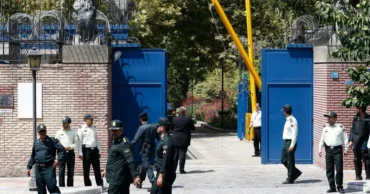
UK pulls Tehran embassy staff amid rising US-Iran tensions
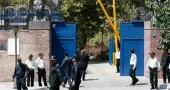
The United Kingdom has temporarily withdrawn staff from its embassy in Tehran as escalating tensions between the United States and Iran raise security concerns across the Middle East.
In a statement, the UK Foreign Office said the embassy in Iran’s capital would continue its operations remotely, without providing details on how long the withdrawal would last.
The move comes as several countries issue warnings to their citizens in the region. The US Embassy in Israel has advised some non-essential staff that they may leave the country, according to media reports. US Ambassador to Israel Mike Huckabee was quoted as urging staff wishing to depart to do so immediately.
The developments follow indirect talks held a day earlier between Washington and Tehran, widely viewed as a last-ditch effort to prevent a military confrontation over Iran’s nuclear programme.
Several other countries, including China, India and Canada, have also urged their nationals to leave Iran as soon as possible amid fears of potential hostilities.
Donald Trump has warned of possible military action if Iran fails to reach a deal on its nuclear activities. He has ordered what officials describe as the largest US military build-up in the Middle East since the 2003 US-led invasion of Iraq. Iranian authorities, meanwhile, have vowed to respond forcefully to any attack.
US Vice-President JD Vance told the Washington Post that military strikes remain an option, but said there was “no chance” of the United States entering a prolonged war.
Mediator Oman said Thursday’s indirect negotiations in Geneva produced “significant progress” and that further talks would be held soon. While Washington has yet to comment officially, Tehran has also described the discussions as yielding positive results.
The growing uncertainty has heightened concerns across the region, with diplomatic missions reviewing security arrangements and governments closely monitoring developments related to the standoff between the United States and Iran.
With inputs from BBC
7 days ago

Trump pressure deepens Cuba’s worst crisis, threatens revolution’s survival
Intensified pressure from the United States under President Donald Trump is pushing Cuba into its deepest crisis in decades, raising questions about whether the Cuban Revolution is facing its most serious threat since it took power in 1959.
Inside Havana’s Museum of the Revolution, images documenting poverty and inequality under the pre-revolution dictatorship of Fulgencio Batista are meant to underline how revolutionaries led by Fidel Castro transformed the country. But for many Cubans today, daily life increasingly resembles those stark scenes from the past.
In a Havana suburb, housewife Lisandra Botey says her family now cooks with firewood due to prolonged electricity cuts and the absence of cooking gas. Her husband, construction worker Brenei Hernández, says work is scarce and food shortages are constant, with the family often surviving on little more than rice.
Cuba’s economy, already battered since the Covid-19 pandemic, has plunged further following the loss of oil supplies from Venezuela after Washington removed President Nicolás Maduro from power in January. The Trump administration has since tightened the decades-old US embargo, threatening tariffs on any country supplying oil to Cuba.
Although Cuba’s traditional partners, including Mexico, Russia and China, have expressed concern, none have yet filled the gap left by Venezuela’s oil exports. The US Treasury has said it may allow limited oil sales for humanitarian and commercial purposes, but shortages remain severe.
The fuel crisis has triggered long daily blackouts, disrupted hospital services, closed schools and halted waste collection across the island. Petrol is rationed, paid for in US dollars, and accessed through a government app that can leave drivers waiting weeks. Black-market fuel prices have surged.
Despite the hardship, some Cubans direct their anger not at Washington but at their own government. Hernández openly voiced support for outside intervention, reflecting a growing frustration that has weakened fear of speaking out.
Cuban economist Ricardo Torres says the Trump administration’s “maximum pressure” strategy is aimed at regime change, exploiting internal crisis to weaken the socialist system from within. He warns, however, that the outcome is uncertain and risks severe humanitarian consequences.
Cuban President Miguel Díaz-Canel has condemned US policy as inhumane and illegal, accusing Washington of deliberately denying a smaller nation the means to function.
The current approach marks a sharp contrast with the diplomatic thaw initiated in 2014 by former US President Barack Obama, when relations were briefly restored and optimism spread among ordinary Cubans. That opening has since been dismantled.
Former US ambassador to Cuba Jeffrey DeLaurentis says the revolution’s survival may depend on whether other countries step in with tangible support. While Russia and China have held talks with Havana, no major fuel deliveries have yet arrived.
US policy on Cuba is now being led largely by Secretary of State Marco Rubio, a Cuban-American long associated with a hard line against Havana. Analysts say real negotiating power on the Cuban side still rests with Raúl Castro, despite his advanced age.
As shortages worsen and public frustration grows, humanitarian conditions continue to deteriorate, prompting emergency aid shipments from Mexico. With fuel scarce, tourism down and daily life increasingly constrained, uncertainty hangs over whether Cuba’s crisis will lead to reform, negotiation, or a deeper unravelling of the revolution itself.
With inputs from BBC
7 days ago
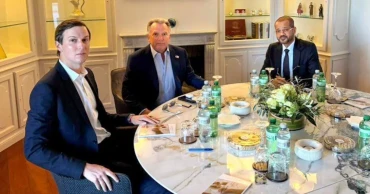
US–Iran nuclear talks end without agreement
Iran and the United States held hours of indirect negotiations Thursday over Tehran's nuclear program but walked away without a deal, leaving the danger of another Mideast war on the table as the U.S. has gathered a massive fleet of aircraft and warships in the region.
Oman's Foreign Minister Badr al-Busaidi, who mediated the talks in Geneva, said there had been “significant progress in the negotiation” without elaborating.
But just before the talks ended, Iranian state television reported that Tehran was determined to continue enriching uranium, rejected proposals to transfer it abroad and sought the lifting of international sanctions, indicating it was not prepared to meet U.S. President Donald Trump's demands.
Trump wants a deal to constrain Iran’s nuclear program, and he sees an opportunity while the country is struggling at home with growing dissent following nationwide protests. Iran also hopes to avert war, but maintains it has the right to enrich uranium and does not want to discuss other issues, like its long-range missile program or support for armed groups like Hamas and Hezbollah.
Al-Busaidi said technical talks involving lower-level representatives would continue next week in Vienna, the home of the International Atomic Energy Agency. The United Nations' atomic watchdog likely would be critical in any deal.
In an interview with Iranian state television, Iran’s foreign minister said the talks with the U.S. were some of the country’s “most intense and longest rounds of negotiations.”
Abbas Araghchi offered no specifics but said “what needs to happen has been clearly spelled out from our side.”
The White House did not immediately respond to a request for comment.
‘A very terrible scenario’
The stakes could hardly be higher.
If America attacks, Iran has said U.S. military bases in the region would be considered legitimate targets, putting at risk tens of thousands of American service members. Iran has also threatened to attack Israel, meaning a regional war again could erupt across the Middle East.
“There would be no victory for anybody — it would be a devastating war,” Araghchi told India Today in an interview recorded Wednesday just before he flew to Geneva.
“Since the Americans' bases are scattered through different places in the region, then unfortunately perhaps the whole region would be engaged and be involved, so it is a very terrible scenario.”
Ali Vaez, an Iran expert with the International Crisis Group, said it was a good sign that the Americans did not walk away immediately Thursday when Iran presented its latest proposal.
“There might still not be a breakthrough at the end of this day, but the very fact that the U.S. team is returning shows that there is enough common ground between the two sides," he said.
Geneva talks are the third meeting since June war
The two sides held multiple rounds of talks last year that collapsed when Israel launched a 12-day war against Iran in June and the U.S. carried out heavy strikes on its nuclear sites, leaving much of Iran's nuclear program in ruins even as the full extent of the damage remains unclear.
Araghchi represented Iran at the talks. Steve Witkoff, a billionaire real estate developer and friend of Trump who serves as a special Mideast envoy, headed up the U.S. delegation with Trump's son-in-law Jared Kushner. The talks again were mediated by Oman, an Arab Gulf country that's long served as an interlocutor between Iran and the West.
The two sides adjourned after around three hours of talks and resumed the discussions later.
During the break, Iranian Foreign Ministry spokesperson Esmail Baghaei said the Iranians felt there were “constructive proposals” offered on both nuclear issues and sanctions relief.
Trump wants Iran to completely halt its enrichment of uranium and roll back both its long-range missile program and its support for regional armed groups. Iran says it will only discuss nuclear issues, and maintains its atomic program is for entirely peaceful purposes.
US suspects Iran is rebuilding its program
U.S. Secretary of State Marco Rubio told reporters Wednesday that Iran is “always trying to rebuild elements” of its nuclear program. He said that Tehran is not enriching uranium right now, “but they’re trying to get to the point where they ultimately can.”
Iran has said it hasn't enriched since June, but it has blocked IAEA inspectors from visiting the sites America bombed. Satellite photos analyzed by The Associated Press have shown activity at two of those sites, suggesting Iran is trying to assess and potentially recover material there.
The West and the IAEA say Iran had a nuclear weapons program until 2003. After Trump scrapped the 2015 nuclear agreement, Iran ramped up its enrichment of uranium to 60% purity — a short, technical step away from weapons-grade levels of 90%.
U.S. intelligence agencies assess that Iran has yet to restart a weapons program, but has “undertaken activities that better position it to produce a nuclear device, if it chooses to do so.” Some Iranian officials have spoken openly about the country's readiness to produce a bomb if that decision is taken.
Threat of military action sparks war fears
If the talks fail, uncertainty hangs over the timing of any possible U.S. attack.
If the aim of potential military action is to pressure Iran to make concessions in nuclear negotiations, it’s not clear whether limited strikes would work. If the goal is to remove Iran’s leaders, that will likely commit the U.S. to a larger, longer military campaign. There has been no public sign of planning for what would come next, including the potential for chaos in Iran.
There is also uncertainty about what any military action could mean for the wider region. Tehran could retaliate against the American-allied nations of the Persian Gulf or Israel. Oil prices have risen in recent days in part due to those concerns, with benchmark Brent crude now around $70 a barrel. Iran in the last round of talks said it briefly halted traffic in the Strait of Hormuz, the narrow mouth of the Persian Gulf through which a fifth of all traded oil passes.
7 days ago
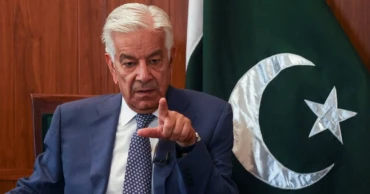
Pakistan–Afghanistan conflict deepens, minister describes situation as ‘open war’
Pakistan’s defense minister said that his country ran out of “patience” and considers that there is now an “open war” with Afghanistan, after both countries launched strikes following an Afghan cross-border attack.
In a post on X Friday, Defense Minister Khawaja Mohammad Asif said Pakistan had hoped for peace in Afghanistan after the withdrawal of NATO forces and expected the Taliban to focus on the welfare of the Afghan people and regional stability. Instead, he alleged, the Taliban had turned Afghanistan “into a colony of India,” gathered militants from around the world and begun “exporting terrorism.”
“Our patience has now run out. Now it is open war between us,” he said. There has been no reaction from Afghan government officials to Asif’s comments.
Pakistan has frequently accused neighboring India of backing the outlawed Baloch Liberation Army and the Pakistani Taliban, allegations New Delhi denies.
The latest escalation of violence between the neighboring countries makes a Qatar-mediated ceasefire appear increasingly shaky. The Pakistani defense minister didn’t mention the ceasefire.
Asif also accused the Taliban government of denying Afghans basic human rights, including rights for women that he said are guaranteed under Islam, without providing details or evidence.
He said Pakistan had tried to maintain stability both directly and through friendly countries.
“Today, when attempts were made to target Pakistan with aggression, by the grace of God, our armed forces are giving a decisive response,” he said.
Afghanistan on Thursday launched a cross-border attack on Pakistan in retaliation for deadly Pakistani airstrikes on Afghan border areas Sunday.
Early Friday, Pakistan carried out airstrikes in Kabul and two other Afghan provinces. At least three explosions were heard in Kabul, but there was no immediate information on the exact location of the strikes in the Afghan capital, or of any potential casualties.
Afghanistan government spokesperson Zabihullah Mujahid said Pakistan also carried out airstrikes in Kandahar to the south and in the southeastern province of Paktia.
In his post, Asif also said Pakistan had played a positive role over the past five decades, hosting about 5 million Afghan refugees. He added that millions of Afghans are still earning their livelihoods in the country.
Pakistan launched a sweeping crackdown in Oct. 2023 to expel migrants without documents, urging those in the country to leave of their own accord to avoid arrest and forcible deportation and forcibly expelling others. Iran also began a crackdown on migrants at around the same time.
Since then, millions have streamed across the border into Afghanistan, including people who were born in Pakistan decades ago and had built lives and created businesses there.
Last year alone, 2.9 million people returned to Afghanistan, the U.N. refugee agency has said, with nearly 80,000 having returned so far this year.
7 days ago
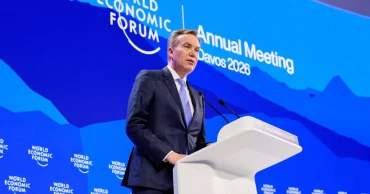
WEF head Børge Brende quits following pressure over Epstein links
World Economic Forum head Børge Brende said Thursday that he is stepping down after facing pressure over his contacts with the late sex offender Jeffrey Epstein.
Brende, a former Norwegian foreign minister, said in a statement that he had decided “after careful consideration” to step down as president and chief executive of the forum, known for its annual January summit in the Swiss Alpine resort of Davos.
“I am grateful for the incredible collaboration with my colleagues, partners, and constituents, and I believe now is the right moment for the Forum to continue its important work without distractions,” Brende said in a statement released by the WEF.
Brende was Norway’s foreign minister from 2013-2017 and is one of several prominent Norwegians who have faced scrutiny following the latest release of Epstein files.
He didn't refer directly to that controversy in Thursday's statement, but the WEF announced earlier this month that it was opening an internal review into Brende to determine his relationship with Epstein after files indicated the two had dined together several times and exchanged messages.
Brende told Norwegian broadcaster NRK at the time that he was cooperating with the investigation, that he only met Epstein in business settings and that he had been unaware of Epstein’s criminal background.
WEF co-chairs André Hoffmann and Larry Fink said in a statement that “the independent review conducted by outside counsel has concluded. The findings stated that there were no additional concerns beyond what has been previously disclosed.”
They said that Alois Zwinggi will serve as the forum's interim president and CEO.
7 days ago
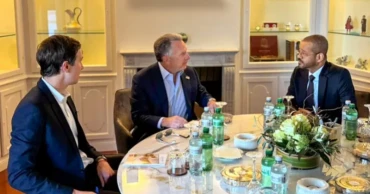
US and Iran hold crucial indirect talks in Geneva
US and Iranian officials have met for a third round of indirect talks in Geneva, seen as vital to prevent a conflict amid rising tensions in the Middle East.
The talks, mediated by Omani Foreign Minister Badr Albusaidi, lasted three hours on Thursday. Albusaidi said both sides exchanged “creative and positive ideas” and would return after a break to continue discussions. The chances of a deal, however, remain uncertain.
The Iranian delegation is led by Foreign Minister Abbas Araghchi, while the US team includes Special Envoy Steve Witkoff and Jared Kushner. The discussions focus on Iran’s nuclear programme, which Washington has long accused of seeking weapons capability, though Iran insists it is for peaceful purposes.
The meeting comes as the US has deployed thousands of troops and warships to the region, the largest military build-up since 2003. President Donald Trump has threatened strikes if a nuclear deal is not reached, though he has not fully explained his demands. Iran has rejected stopping uranium enrichment but indicated willingness to discuss some concessions.
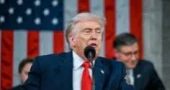
In his recent State of the Union address, Trump cited Iran’s missile programme and past nuclear activities but gave few details on potential military action. Iran, meanwhile, has said it will never develop a nuclear weapon and described Trump’s statements as “big lies.”
Observers say the talks may include proposals for regional uranium enrichment management, handling Iran’s enriched uranium stockpile, and verification mechanisms. In return, Iran seeks relief from economic sanctions. However, limits on missile development and regional proxy groups remain a major sticking point.
US media reports suggest Trump is considering limited strikes on Iranian nuclear sites if negotiations fail, though military leaders have warned such action could lead to prolonged conflict. Iran has vowed to respond to any attack, raising concerns of a wider regional confrontation.
Israeli Prime Minister Benjamin Netanyahu has called for a deal that also addresses Iran’s missile programme and support for proxies, warning that failing to do so could threaten Israel’s security.
The outcome of the Geneva talks is closely watched, as both sides seek to avoid military escalation while negotiating a nuclear agreement.
With inputs from BBC
8 days ago
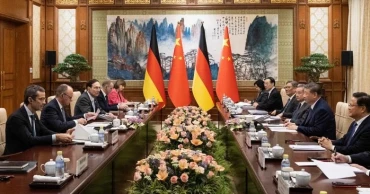
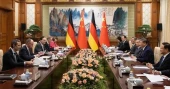
China, Germany vow closer cooperation despite differences amid global uncertainty
China and Germany on Wednesday pledged to strengthen ties despite major differences, including over Russia’s war in Ukraine, as both sides seek stability in a turbulent global environment.
The commitment came as German Chancellor Friedrich Merz met separately in Beijing with Chinese President Xi Jinping and Premier Li Qiang. The leaders of the world’s second- and third-largest economies stressed the need for deeper communication and trust at a time of rising geopolitical tensions and shifting global dynamics.
Xi said that the more complex and uncertain the world becomes, the more China and Germany should enhance strategic communication and mutual trust. He also noted that the world is facing the most profound changes since World War II.
Merz responded that while challenges and disagreements exist, both countries should focus on shared interests and tackle global challenges together.
On his first China visit since taking office in May, Merz highlighted Beijing’s key role in addressing global issues, including the Ukraine conflict. After the meetings, he said he had urged Chinese leaders to use their influence to help end the war, noting that signals from Beijing are taken seriously in Moscow.
China reiterated support for a political settlement, saying any solution must address the legitimate concerns of all sides and involve equal participation.
The visit comes as many world leaders head to Beijing while China seeks broader support against US tariff policies introduced by President Donald Trump and challenges to the post-World War II global order.
Merz stressed that Europe wants a balanced, reliable and fair partnership with China. However, trade imbalances remain a concern. Germany’s imports from China rose 8.8% to 170.6 billion euros last year, while exports to China fell 9.7% to 81.3 billion euros.
European leaders also want more Chinese investment in local manufacturing and reduced industrial overcapacity in sectors like electric vehicles and solar panels.
Merz said he was satisfied with the talks and pointed to potential business cooperation, including a possible Chinese order for up to 120 Airbus planes. He also plans to visit Hangzhou’s tech hub, including robotics firm Unitree, before heading to Washington for further talks.
8 days ago