
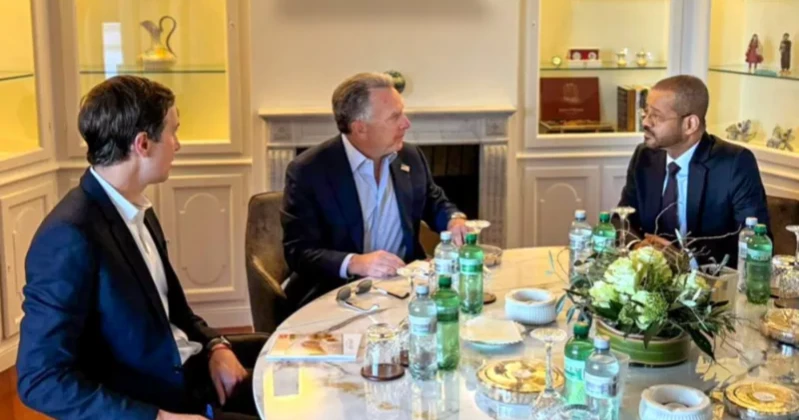
US and Iranian officials have met for a third round of indirect talks in Geneva, seen as vital to prevent a conflict amid rising tensions in the Middle East.
The talks, mediated by Omani Foreign Minister Badr Albusaidi, lasted three hours on Thursday. Albusaidi said both sides exchanged “creative and positive ideas” and would return after a break to continue discussions. The chances of a deal, however, remain uncertain.
The Iranian delegation is led by Foreign Minister Abbas Araghchi, while the US team includes Special Envoy Steve Witkoff and Jared Kushner. The discussions focus on Iran’s nuclear programme, which Washington has long accused of seeking weapons capability, though Iran insists it is for peaceful purposes.
The meeting comes as the US has deployed thousands of troops and warships to the region, the largest military build-up since 2003. President Donald Trump has threatened strikes if a nuclear deal is not reached, though he has not fully explained his demands. Iran has rejected stopping uranium enrichment but indicated willingness to discuss some concessions.
In his recent State of the Union address, Trump cited Iran’s missile programme and past nuclear activities but gave few details on potential military action. Iran, meanwhile, has said it will never develop a nuclear weapon and described Trump’s statements as “big lies.”
Observers say the talks may include proposals for regional uranium enrichment management, handling Iran’s enriched uranium stockpile, and verification mechanisms. In return, Iran seeks relief from economic sanctions. However, limits on missile development and regional proxy groups remain a major sticking point.
US media reports suggest Trump is considering limited strikes on Iranian nuclear sites if negotiations fail, though military leaders have warned such action could lead to prolonged conflict. Iran has vowed to respond to any attack, raising concerns of a wider regional confrontation.
Israeli Prime Minister Benjamin Netanyahu has called for a deal that also addresses Iran’s missile programme and support for proxies, warning that failing to do so could threaten Israel’s security.
The outcome of the Geneva talks is closely watched, as both sides seek to avoid military escalation while negotiating a nuclear agreement.
With inputs from BBC