Bangladesh
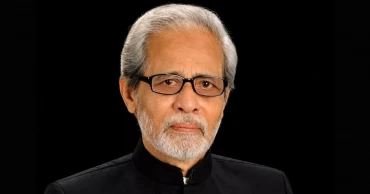
Eminent journalist, former MP Shafiqur Rahman dies
Muhammad Shafiqur Rahman, former lawmaker from Chandpur-4 (Faridganj), eminent journalist, freedom fighter, and former president of the Jatiya Press Club, passed away while undergoing treatment at a hospital in Dhaka on Saturday. He was 77.
Shafiqur breathed his last around 3:00pm at United Hospital in the capital. He was admitted to the intensive care unit (ICU) after suffering a heart attack at his Banani residence, family members said.
Born on September 25, 1949, in Krishnapur village of Faridganj upazila, Shafiqur earned his graduation and post-graduation in Bengali Language and Literature from Dhaka University in 1970 and 1971 respectively. He actively participated in the 1969 Mass Uprising and the 1971 Liberation War.
His journalism career began in 1970 with The Daily Ittefaq, where he served as staff reporter, senior reporter, and special correspondent over decades. He later served as two-time president of the Jatiya Press Club (2016-2018) and Chairman and Chief Editor of Citizen TV.
Shafiqur was elected Member of Parliament from Chandpur-4 constituency twice, in 2018 and 2024.
He leaves behind his wife, a son, a daughter, and numerous admirers.
3 days ago
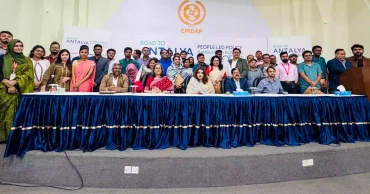
Bangladesh needs $116b to implement NDC 3.0, dialogue told
Implementing Bangladesh's updated Nationally Determined Contribution (NDC 3.0) for 2026-2035 will require an estimated US$116.18 billion, including US$90.23 billion in international support, a national dialogue was told Saturday.
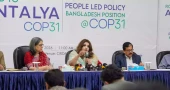
The figures were presented at the dialogue "People-Led Policy: Bangladesh Position at COP31" at the CIRDAP auditorium, ahead of COP31. The event was organised by a coalition of 33 national and international organisations.
According to the presentations, NDC 3.0 targets a 20.31 per cent cut in greenhouse gas emissions, equivalent to 84.97 million tonnes of carbon dioxide equivalent, by 2035.
The National Adaptation Plan for 2023-2050 identifies 113 initiatives that need around $230 billion.
Roufa Khanum of the Centre for Climate Change and Environmental Research (C3ER) presented figures on global emissions and Bangladesh's climate risks.
Prof Dr Ahmad Kamruzzaman Majumder, chairman of the Centre for Atmospheric Pollution Studies (CAPS), emphasised better waste management and steps to cut air pollution and industrial emissions.
Mahzabeen Mahfuz of ActionAid Bangladesh spoke on a just energy transition, while Chowdhury Abrar Zahin and Helena Khatun addressed marine resources and international finance.
Youth representatives presented six demands covering climate finance, education, employment, gender justice and meaningful participation in decision-making.
Mirza Shawkat Ali, director (climate change and international convention) at the Department of Environment, said initiatives are under way to reduce industrial emissions.
He said credible evidence and specific plans are essential to present Bangladesh's demands effectively in international negotiations.
SM Munjurul Hannan Khan, executive director of Nature Conservation Management (NACOM), stressed coordinated planning on climate finance, the blue economy, waste management and urban heat stress.
Farah Kabir, country director of ActionAid Bangladesh and moderator of the dialogue, said Bangladesh bears a disproportionate burden of climate change and that united efforts are needed to secure grant-based finance rather than loans.
The position paper's key demands include:
1. International climate finance, including for NDC 3.0, must be debt-free and grant-based.
2. The government, civil society, youth and private sector must coordinate their positions in negotiations.
3. Environment-friendly products such as jute should be showcased at COP31.
4. Industrial emissions must be cut, with a just energy transition that protects workers.
5. Women, youth and climate-affected communities must have meaningful roles in policymaking and national delegations.
6. Adequate finance must be secured for safe housing for climate migrants, waste management and urban heat mitigation.
The dialogue also underlined the need to ensure climate finance reaches affected communities, that displaced people can access resettlement support, and that women, persons with disabilities and marginalised groups take part in climate decision-making.
3 days ago
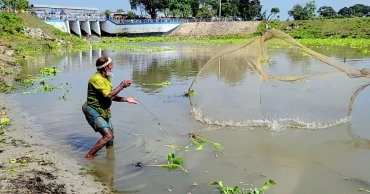
Thousands join traditional fishing festival at Burir Bandh in Thakurgaon
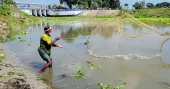
Thousands of people from different parts of Thakurgaon have gathered at Burir Bandh on the Shuk River to take part in a traditional fishing festival marking the beginning of winter.
The fishing ground, located between Akcha and Chilarang unions in Thakurgaon Sadar upazila, is opened to the public at the start of winter every year, turning the area into a lively gathering of fishing enthusiasts.
The five sluice gates of Burir Bandh were opened on Friday night. As the water level receded, fishermen and people from nearby villages and different parts of the district began catching fish early Saturday.
A visit to the site found people of all ages, including women, children and elderly people, wading through the muddy water with fishing nets, traditional bamboo traps known as polo, spears and other equipment. Some who had no fishing gear were also catching fish with their bare hands.
Participants brought various types of fishing equipment, including fika, lafijal, current nets, ring nets and chatka nets.
3 days ago

Germany eyes stronger development cooperation with Bangladesh
As Bangladesh stands on the threshold of a crucial economic transformation, Germany is looking to reaffirm its long-standing partnership with the country through high-level talks on development cooperation.
A delegation from Germany’s Federal Ministry for Economic Cooperation and Development (BMZ), led by Vice Minister Dr. Bärbel Kofler, will arrive in Dhaka on Sunday.
As Bangladesh takes its next steps onto the global economic stage, Dr. Kofler’s visit underscores Germany’s continued commitment to standing alongside the country as a strategic partner in sustainable progress, said the German Embassy in Dhaka on Saturday.
The upcoming discussions in Dhaka will look beyond traditional aid frameworks to focus on long-term resilience, economic adaptability and sustainable growth.
The three-day official visit marks an important moment in bilateral relations, with government-to-government (G2G) negotiations aimed at shaping the future of Bangladesh-German development cooperation.
The visit comes at a significant juncture as Bangladesh navigates economic transformation and prepares for its graduation from Least Developed Country (LDC) status.
Germany has long been one of Bangladesh’s most steadfast development partners.
Yet, as Bangladesh moves beyond the safety net of LDC status, the nature of international cooperation must also evolve, said the Embassy.
Beyond the negotiation table, Dr. Kofler will also hold political talks and visit projects in Chattogram.
In Dhaka, she will join the celebration of German Reunification Day at the German Embassy in Dhaka, commemorating the reunification of East and West Germany in 1990, following decades of division during the Cold War.
The event will bring together senior government leaders, civil society representatives, members of the diplomatic community, and prominent cultural and media figures both from Bangladesh and Germany.
3 days ago
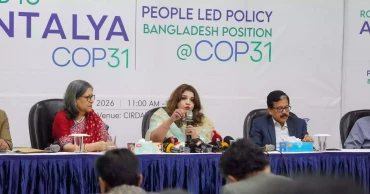
Shama Obaed urges developed nations to provide climate finance as grants, not loans
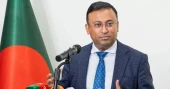
State Minister for Foreign Affairs Shama Obaed Islam has called on developed countries to fulfil their climate finance commitments through grants instead of loans, warning that debt-based support would increase the burden on climate-vulnerable communities in Bangladesh.
She also stressed the need for the government, private sector, civil society and experts to work together to strengthen Bangladesh’s unified position at the upcoming United Nations Climate Change Conference (COP31).
The state minister made the remarks as the chief guest at a national dialogue titled “People-Led Policy: Bangladesh Position at COP31” at the CIRDAP auditorium in Dhaka on Saturday.
The event was organised through a joint initiative of 33 national and international organisations working on climate change in Bangladesh. It presented key demands and recommendations from a civil society position paper on climate action.
Shama Obaed Islam said that, a decade after the Paris Agreement, it was essential to assess progress in implementation alongside existing commitments.
She said Bangladesh needed adequate financing to address the impacts of climate change, adding that adaptation and mitigation should receive equal attention and transparency in international climate negotiations should be strengthened.
She also said initiatives were under way to improve coordination between the Ministry of Foreign Affairs and the Ministry of Environment and Climate Change. She expressed interest in involving young people working on climate issues in the process.
The state minister said Bangladesh planned to showcase environmentally friendly jute products at COP31 through a dedicated Jute Pavilion. The initiative could help expand international markets for jute products and improve the livelihoods of rural farmers.
Mirza Shawkat Ali, director of Climate Change and International Convention at the Department of Environment, attended the event as a special guest. He said initiatives were being taken to reduce industrial emissions, stressing that credible evidence and specific plans were essential to presenting Bangladesh’s demands effectively at international negotiations.
In his welcome address, Dr SM Munjurul Hannan Khan, executive director of Nature Conservation Management (NACOM), highlighted the need for coordinated planning on climate finance, the blue economy, waste management and urban heat stress.
Farah Kabir, country director of ActionAid Bangladesh and moderator of the dialogue, called for collective action to secure grant-based climate finance. She said Bangladesh was among the countries bearing a disproportionate burden of climate change and needed united efforts to secure financial support at international climate conferences.
Financing needs and key demands
Presentations at the dialogue examined six major areas of climate action, including financing requirements, pollution control, energy transition, marine resources and youth participation.
According to figures presented at the event, Bangladesh’s updated Nationally Determined Contribution (NDC 3.0) sets a target of reducing greenhouse gas emissions by 20.31 percent, equivalent to 84.97 million tonnes of carbon dioxide equivalent, by 2035.
Implementing the plan for 2026-2035 is estimated to require US$116.18 billion, including US$90.23 billion in international support.
The National Adaptation Plan for 2023-2050 identifies 113 initiatives requiring approximately US$230 billion.
Roufa Khanum of the Centre for Climate Change and Environmental Research (C3ER) presented figures on global emissions and Bangladesh’s climate risks.
Professor Dr Ahmad Kamruzzaman Majumder, chairman of the Centre for Atmospheric Pollution Studies (CAPS), emphasised better waste management and measures to reduce air pollution and industrial emissions.
Mahzabeen Mahfuz of ActionAid Bangladesh discussed a just energy transition, while Chowdhury Abrar Zahin and Helena Khatun addressed marine resources and international finance.
Representing young people, Shohail Bin Saifullah presented six demands covering climate finance, education, employment, gender justice and meaningful youth participation in decision-making.
Participants also stressed the need to ensure that climate finance reaches affected communities, displaced people receive support for resettlement, and women, persons with disabilities and marginalised groups have meaningful roles in climate policymaking.
The civil society position paper outlined six key demands: debt-free, grant-based international climate finance; a unified national position at international negotiations; promotion of environmentally friendly products, including jute; reduction of industrial and air pollution alongside a just energy transition; meaningful participation of young people and marginalised communities; and adequate funding for safe housing for climate migrants, improved waste management and measures to address extreme urban heat.
The position paper was developed by a coalition of 33 platforms representing civil society, international NGOs, academic and research institutions, and young people in Bangladesh.
3 days ago

DU Chhatra Dal to observe Campus Cleaning Day every Saturday after Durga Puja break
Bangladesh Jatiyatabadi Chhatra Dal’s Dhaka University unit will observe a “Campus Cleaning Day” every Saturday after the ongoing Durga Puja vacation, aiming to promote cleanliness, environmental conservation and greenery on the campus.
The programme has been taken up under the slogans “Green & Clean Campus First” and “Develop the Habit of Cleanliness, Build a Vibrant Campus”, as part of the unit’s ongoing initiatives to support the broader goal of bringing positive changes in environmental protection, cleanliness and greening across the country.
DU Chhatra Dal President Ganesh Chandra Roy Sahos and General Secretary Nahiduzzaman Shipon approved the programme on Saturday.
In a press release on Saturday, the organisation said the initiative was intended to help realise the vision of Prime Minister Tarique Rahman, the organisational guardian of JCD, for promoting greenery, protecting the environment and improving cleanliness.
Under the programme, leaders and activists at all levels of the DU Chhatra Dal, including its hall units, will conduct special cleaning drives in different parts of the campus on a voluntary basis.
They will also take various effective initiatives to raise awareness, encourage participation and involve university teachers, students, officers and employees in activities related to greenery, environmental conservation and cleanliness.
They also instructed leaders and activists at all levels of the university unit to remain highly active in spreading awareness about greenery, environmental protection and cleanliness, starting with their own families and extending to fellow students, acquaintances and others on campus.
3 days ago
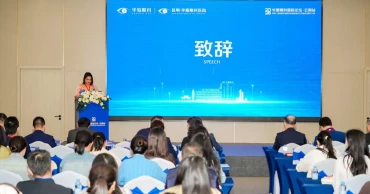
China launches ‘Green Channel’ for Bangladeshi eye patients
A special ‘Green Channel’ has been launched at a hospital in China to facilitate advanced eye treatment for Bangladeshi patients, offering priority appointments, interpreter services and follow-up care after their return home.
The service was formally inaugurated at Kunming Huaxia Eye Hospital in Kunming, southwestern China, on Saturday.
Shahanaj Akhter Ranu, Consul General of Bangladesh in Kunming, unveiled the Green Channel plaque and also inaugurated the Huaxia Ophthalmology International Forum 2026 on the same day.
Ridwanur Rahman, First Secretary (Commercial) at the Bangladesh Consulate General, and Zhang Zhiyong, vice-president of Huaxia Eye Hospital, attended the programme.
Under the new arrangement, Bangladeshi patients will be able to receive medical consultations and have their medical records reviewed before travelling to China for treatment. Upon arrival, they will have access to a dedicated international desk, priority appointments and interpreter assistance to overcome language barriers. Follow-up care will also be available after they return to Bangladesh.
Speaking at the inauguration, Shahnaz Ranu highlighted progress in Bangladesh’s public health sector and the achievements of local institutions in eye care.
She stressed the importance of ensuring internationally recognised medical services for Bangladeshi patients while safeguarding patient safety, transparency in treatment costs, fair pricing and dignity.
The consul general said the consulate’s main expectations were to ensure quality and safe treatment, maintain transparency in medical expenses and uphold patients’ dignity.
She also urged the hospital authorities to contribute not only to expanding treatment opportunities for Bangladeshi patients in China but also to strengthening Bangladesh’s own eye-care capacity.
She particularly emphasised training for Bangladeshi ophthalmologists and nurses, teleconsultation services and partnerships with eye-care institutions in Bangladesh.
Such initiatives could help improve the country’s capacity to provide advanced eye treatment at home, she noted.
The launch of the Green Channel establishes a coordinated support system for Bangladeshi eye patients, covering pre-travel consultations, hospital treatment and post-treatment follow-up. It also highlights opportunities to expand training and institutional cooperation between Bangladesh and China in ophthalmology.
3 days ago
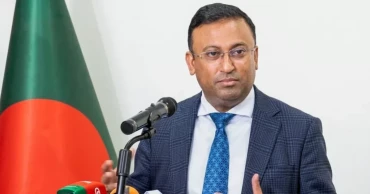
Multilateralism not merely an option, it's an imperative: Humaiun Kobir
Marking the United Nations Day, Bangladesh has reaffirmed its unwavering commitment to the UN Charter, international cooperation and a rules-based multilateral order.
"Let us work together to restore trust, bridge divisions and build a world where peace, justice and prosperity are shared by all," said State Minister for Foreign Affairs Humaiun Kobir in a message on Saturday.
Bangladesh continues to host more than 1.3 million Rohingyas forcibly displaced from Myanmar.
"We call for sustained international support for their early and sustainable return to Myanmar," Kobir said.
He extended warm greetings to the UN and its Member States on the occasion of United Nations Day.
"United Nations Day reminds us of the enduring relevance of the UN Charter and the importance of collective action in addressing shared global challenges," Kobir said.
At a time of growing geopolitical tensions, armed conflicts, humanitarian crises and widening inequalities, multilateralism is not merely an option, it is an imperative, he said.
"We must renew our commitment to dialogue, peaceful settlement of disputes, sovereign equality and respect for international law," Kobir said.
The government of Bangladesh remains firmly committed to multilateralism.
"Under the leadership of Prime Minister Tarique Rahman, Bangladesh is determined to strengthen democratic governance, uphold human rights and the rule of law and promote accountable institutions," he said.
Kobir said the election of Bangladesh’s Foreign Minister as President of the 81st UN General Assembly underscores the Government’s renewed impetus for multilateral engagement.
Bangladesh’s contribution to the UN is rooted in action and solidarity.
"As one of the leading contributors to UN peacekeeping operations, our brave peacekeepers continue to serve in challenging environments around the world," Kobir said.
He said they remain committed to advancing women’s participation in peacekeeping and decision-making on peace and security.
"Our partnership with the UN extends to sustainable development, disaster resilience, poverty reduction, gender equality and humanitarian action," Kobir said.
As the international community pursues the 2030 Agenda for Sustainable Development, he said they must ensure that developing countries, least developed countries and climate-vulnerable nations receive finance, technology and capacity-building support they need.
"Bangladesh also supports a more representative, transparent and effective UN, including meaningful reform of the Security Council so that the Organization can respond to today’s realities and deliver for all;" he said.
4 days ago
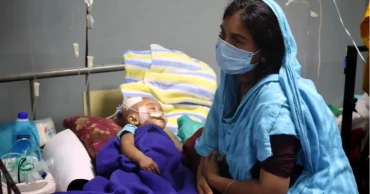
Measles: Death toll hits 1,222 as 8 more die in 24 hrs
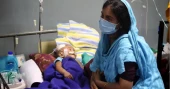
Eight more children died with measles-like symptoms in 24 hours until 8:00am on Saturday, bringing the country’s combined tally of confirmed and suspected measles-related deaths to 1,222 this year.
The Directorate General of Health Services (DGHS) has classified all eight latest fatalities as suspected measles deaths.
With these, the total number of suspected measles deaths has reached 1,118 while confirmed deaths from measles have remained the same at 104.
A total of 1,014 new suspected measles cases were reported during the 24-hour period, bringing the cumulative number of suspected cases nationwide to 219,884.
Meanwhile, 51 new confirmed measles cases were recorded, bringing the total number of laboratory-confirmed infections to 23,324.
Since March 15 this year, a total of 195,514 patients with suspected measles have been hospitalised across the country, of whom 187,605 have recovered, according to DGHS data.
4 days ago
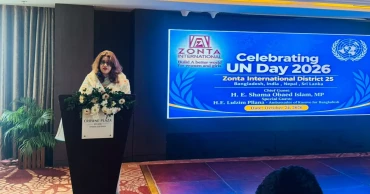
Bangladesh seeks predictable support, affordable financing for LDC graduation
State Minister for Foreign Affairs Shama Obaed Islam on Saturday stressed that predictable international support, affordable financing and continued market access are essential for countries like Bangladesh in the context of their LDC graduation aspirations.
She said an effective UN and stronger international solidarity are essential to addressing today’s global challenges and building a peaceful, prosperous and just world,.
The State Minister made the remarks while celebrating the UN Day organised by Zonta International, District 25 and Zonta Clubs of Bangladesh at Crowne Plaza Dhaka.
Reiterating the government’s resolve to advance multilateralism under the leadership of Prime Minister Tarique Rahman, the State Minister reaffirmed Bangladesh’s renewed commitment to the UN’s three pillars of development, peace and security and human rights.
4 days ago