bangladesh

Riding into the unknown: The impending mental health crisis in Bangladesh
Tears have no colour, they say. Yet in Bangladesh, countless tears fall quietly, behind closed doors, where no one notices.
A mother wakes before dawn, her chest tight with panic because sleep has once again betrayed her. A factory worker forces his trembling hands through another endless shift. A teenage girl laughs with her siblings while a storm of fear rages inside her.
These are not isolated tales of sadness. They are glimpses into the daily battles of people living with mental illness. Some carry a diagnosis. Many do not. Yet all of them shoulder conditions too often brushed aside - as weakness, as silence, as shame.
They are everywhere. But for each of them, there is almost no hand to hold, no ear to listen, no system ready to help.
The quiet siege of daily life
Numbers alone cannot tell the whole story, but they paint a grim picture.
Between 2022 and 2025, researchers surveyed more than 7,500 women in hospitals across Bangladesh. What they found was staggering: three out of four pregnant and new mothers battled depression or anxiety, and more than half suffered from both at once. For many, what should have been a time of joy turned into ‘nights of exhaustion, despair and haunting thoughts’. (Source: Dhaka Tribune)
Children and teenagers are no less burdened. An education system built on fear and finality too often crushes them. In May 2024, at least eight students died by suicide on the day their SSC exam results were released - proof that, for some, a single ‘piece of paper’ can feel like the end of life itself. (Source: Daily Observer)
Adults carry their own silent weights. Nearly one in five struggles with depression or anxiety. Yet the vast majority never receive treatment - not because they do not want it, but because it is too costly, too far away, or ‘too shameful to seek’.
In a country of more than 170 million people, there are only 260 psychiatrists and 565 psychologists - most based in cities. Rural Bangladesh, where most people live, remains abandoned in the dark.
Why the silence deepens
The last nationwide mental health survey was carried out in 2018. Since then, the country has endured the pandemic, spiralling prices, political turmoils and repeated climate disasters - each a heavy blow to already fragile minds. But no new data tells us how deep the wounds now run.
Even for those who try to seek help, barriers stand tall. Counselling often means long travel, unbearable expense and stigma that can break a person before the illness does.
Women face an added wall of silence, trapped by patriarchy and shame. Speaking about despair can invite ridicule or even abuse. For youth, failure feels final. For the poor, survival leaves no space for healing.
On paper, Bangladesh has taken steps. It has joined the WHO’s Special Initiative for Mental Health. Plans are in motion for a new Directorate of Mental Health, with promises of expanding primary care and telemedicine.
But promises are not practice. Most districts have yet to see any meaningful services. Budgets remain thin, facilities few and public awareness campaigns rare. The gap between ambition and lived reality continues to swallow lives.
What must change
Mental health is not a private weakness - it is a public issue, and ignoring it is a national failure. Experts urge:
1. Conduct national mental health surveys every 2–3 years.
2. Bring services closer - community centres, mobile clinics, school and workplace counselling, and promote tele-counselling.
3. Train and deploy more psychiatrists, psychologists, and counsellors - especially women professionals.
4. Embed mental health education into schools and workplaces.
5. Fight stigma through campaigns led by media, faith leaders, and communities.
Each unheard cry is not just an individual tragedy - it is a collective loss.
Bangladesh can choose to remain silent, becoming a country of unheard voices. Or it can choose to act — to open a clinic, to offer a listening ear, to save even one life.
Because if even one life is pulled back from despair, the story changes. And that change begins the moment silence finally breaks.
10 months ago
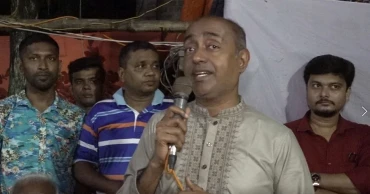
Attorney General vows to protect Hindu festivals in Jhenaidah “to the last drop of his blood”
Attorney General Md. Asaduzzaman on Tuesday night assured he will stand by the Hindu community to ensure a peaceful Sharadiya Durga Puja, even if it requires “the last drop of his blood.”
He made the remark while exchanging Puja greetings at ‘Bijuliya Sarbajanin Durga Mandir’ in Shailkupa upazila of Jhenaidah.
He warned that any attempt to disrupt the festival would be dealt with strictly by the government.
“Authorities have taken maximum precautions, including CCTV coverage in all temples. Anyone trying to create unrest will be treated as an enemy of the nation,” he said.
During his visit, he inspected local Puja mandaps and provided financial donations to the Puja committees.
Mob justice not acceptable, says Attorney General
Additionally, he emphasized that festivals belong to all and communal disturbances will not be tolerated.
Local Puja committee leaders and BNP officials, including Shailkupa Upazila BNP General Secretary Humayun Babar Firoz, were also present there.
10 months ago
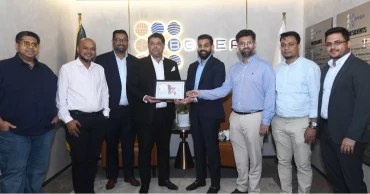
BFF, BGMEA explore collaboration to boost Bangladesh’s global image through football
The Bangladesh Football Federation (BFF) and the Bangladesh Garment Manufacturers and Exporters Association (BGMEA) discussed ways to promote Bangladesh internationally through football on Tuesday.
A BFF delegation led by Vice President Fahad Karim met with BGMEA leaders, including Vice President (Finance) Mijanur Rahman, Directors Shah Rayeed Chowdhury and Asef Kamal Pasha and Md. Shajjad Ali Khan, Chairman of BGMEA’s Sports Committee.
Co-chairs - Akbor Haider Munna and Kazi Nazmul Hasan were also present.
From BFF, Tajwar Awal, Member of the Competition Committee, and Abid Alam Chowdhury, Managing Director of BFF’s official kit partner KAC Fashion Wear Limited, attended the meeting.
The two sides discussed several initiatives, including organizing the BGMEA Cup Football Tournament at the National Stadium with BFF support.
Chinese Ambassador discusses cooperation in sports with BFF President
They also explored ways to allow BGMEA members greater access to Bangladesh’s international football matches.
Both BFF and BGMEA stressed their shared goal of using football to unite communities, inspire youth and improve Bangladesh’s image around the world.
10 months ago
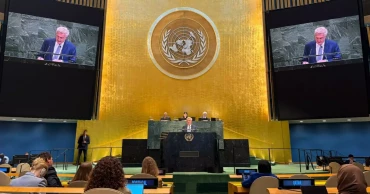
Rohingya Conference: Prospects for funding JRP next year grim, says Filippo Grandi
UN High Commissioner for Refugees Filippo Grandi has said they will continue to work with Member States, regional bodies, civil society, and refugee-led organizations to raise resources and advance protection, resilience, and solutions for all displaced people within and from Myanmar.
"We have no other choice if we want to chart a new course for the people of Myanmar — one that is principled, pragmatic, and forward-looking and if we want to bring a lasting solution to the plight of the Rohingya people," he said, stressing that the UNHCR stands ready to support.
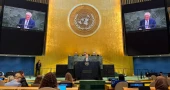
Grandi made the remarks while delivering his statement at the high-level conference on "Rohingya Muslims and Other Minorities in Myanmar" held at the United Nations General Assembly on Tuesday.
Chief Adviser Prof Muhammad Yunus, Special Envoy Julie Bishop, global stakeholders and the Rohingya representatives also spoke.
"The prospects for funding next year are grim. Unless further resources are forthcoming, despite the needs, we will be forced to make more cuts, while striving to minimize the risk of losing lives: children dying of malnutrition, or people dying at sea as more refugees embark on dangerous boat journeys," he said.
"We must do more, please. I call on all of you. And in addition to funding, it is critical to offer solutions, in line with the pledges made at the last Global Refugee Forum. Solutions such as resettlement as well as other pathways to hope, through education or labour mobility," Grandi added.
He said no assistance is too small, especially when the alternative leads to more instability in the region and to more costly measures further down the line.
"The most important however is not to forget that this crisis originates in Myanmar. And that, Madam President, is where the solution lies," he said.
Grandi recently visited Myanmar and saw how a country already dealing with a devastating humanitarian crisis was still reeling from the aftermath of the recent earthquake.
Julie Bishop spoke about the political challenges.
"As in other crises and given the way conflicts are conducted by parties across the country — too often disregarding the rules of war — civilians, as we heard this morning, are killed, wounded, and deprived of the basics," Grandi said.
More than 5 million are displaced, of whom more than 1.5 million have taken refuge in neighbouring countries.
In his own discussions with the de facto authorities in Naypyidaw, he has reiterated the requests of humanitarian agencies on the ground — they need safe and unhindered access to people impacted by the fighting.
"I have received some assurances, but these urgent and vital asks must be continuously conveyed by all those who can do so," he said.
Grandi focused in particular on the situation of the Rohingya population which his organization, UNHCR, has worked with for many, many years.
Their plight is somehow unique — not only do they continue to be discriminated, deprived of rights and abused, a situation they have endured for decades, but they are also caught in one of several ethnic conflicts affecting the country — except it is not their own: the one pitching the Arakan Army in Rakhine State against the de facto authorities.
The Rohingya people have faced challenges for a long time - not just in the past eight years -but eight years ago, were confronted with unspeakable violence at the hands of Myanmar’s military, 750 thousand fled to Bangladesh. Others became or remained displaced in Rakhine State.
With the advances of the Arakan Army, which now controls almost all the state, their situation has not improved. Discrimination, the burning of their villages, the exclusion from work and services, the continuous denial of their very identity.
"The Rohingyas live with the threat of arbitrary arrest and detention, with restricted access to healthcare and education. They cannot move freely. They are subjected to forced labour and forced recruitment. Their lives are defined everyday by racism and fear," Grandi said.
He reiterated his gratitude to countries in the region that for years have hosted refugees from Myanmar, and especially Rohingya refugees, such as Malaysia, Indonesia and Thailand.
"In particular, I wish to pay tribute to the people and the leadership of Bangladesh — the Chief Adviser, Prof Yunus, is here — for hosting close to 1.2 million Rohingya refugees," Grandi said.
Since the fighting re-ignited in Rakhine in 2024, another 150,000 individuals arrived in Bangladesh seeking safety.
And yet — despite enormous challenges — Bangladesh continues to host them, setting an example to the rest of the world.
"Showing us that compassion is still possible at a time when indifference and inaction are, sadly, fast, fast becoming the norm. Showing that giving asylum to refugees saves lives," Grandi said.
He appreciated that hosting such a large refugee population however is a burden.
Devise roadmap for Rohingya repatriation, act together to stabilise Rakhine: Prof Yunus
"Therefore let me praise countries which are taking positive steps to enact policies that allow refugees to build self-reliance. International financial institutions — the World Bank and the Asian Development Bank in particular -– have also played a critical role, providing over $1.25 billion to invest in programmes aiming to strengthen both refugee and host community resilience," he said.
"The private sector too is playing its part. And we hope that much more can be done, especially in the critical sectors of education, skills development and livelihoods," Grandi said.
But host countries, as has been repeated many times this morning, cannot shoulder that responsibility alone.
The humanitarian response in Bangladesh remains chronically underfunded including in key areas like food and cooking fuel.
Geandi said the recommendations of the Rakhine Advisory Commission remain as relevant as ever and must inform their engagement towards the voluntary, safe and sustainable return of Rohingya refugees to their homes - as is their right - and with the full involvement, by the way, of refugees themselves.
"But without taking bolder actions, the situation is unlikely to change. And these are issues that humanitarians cannot resolve alone," he said.
Foreign Affairs Adviser Md Touhid Hossain, National Security Adviser Dr Khalilur Rahman, SDGs Affairs Principal Coordinator Lamiya Morshed, Bangladesh Permanent Representative to the UN Ambassador Salahuddin Noman Chowdhury, visiting political leaders- National Citizen Party (NCP) member secretary Akhter Hossen and first senior joint member secretary of National Citizen Party Dr Tasnim Jara Refugee Relief and Repatriation Commissioner (RRRC), Mr. Mohammed Mizanur Rahman were, among others present at the high-level conference held at the General Assembly Hall of the United Nations Headquarters.
10 months ago
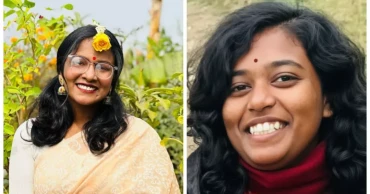
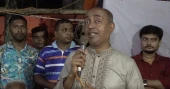
JU student alleges ragging by elected leaders of Fazilatunnesa Hall
A second-year Fine Arts student at Jahangirnagar University (2023-24 session, 53rd batch), Pranto Ray, has accused two senior students of ragging him, the university said on Tuesday.
The accused are student parliament leaders of Fajilatunnesa Hall—Vice President (VP) Aishi Sarker Athi and Assistant General Secretary (AGS) Proma Raha.
Athi is a fourth-year student (49th batch) and Raha is a third-year student (50th batch) of the Fine Arts Faculty.
The university’s Proctor, Professor AKM Rashidul Alam, confirmed that the complaint has been received.
According to the complaint, the incident occurred on August 27 during Pranto’s final exam while he faced ragging, threats and mental harassment by the two seniors.
Pranto stated in the complaint that students of the 51st batch, Noman and Arian, forcibly took him and his classmates to the gallery during the exam.
There, Athi mocked his appearance, saying, “His face has been like this since birth.”
Meanwhile, Sijan from the 51st batch kicked him and threatened to expel him from the department.
Noman also shouted at everyone to leave the exam hall, disrupting the examination environment and preventing Pranto from completing his exam smoothly.
Pranto told UNB, “We come to the university to study. Such ragging seriously damages our safety, dignity and mental health. The accused should face strict action and strong anti-ragging policies must be enforced to ensure our security.”
Responding to the allegations, Athi said, “The complaint misrepresents my words. It was not ragging, bullying, or body shaming. About fifty students were present that day, but only a few of us were named in the complaint.”
Raha said, “The incident was unintended. We expressed regret to the department. Some of the claims against me were discussed with Pranto later, yet my name was still included. I hope for a fair decision.”
JU students lay siege to medical centre over peer’s death
Fine Arts Department Chair, Professor Shamim Reza, said, “We initially tried to resolve the matter internally, but the student approached the proctor.”
Proctor Professor AKM Rashidul Alam said, “Ragging is not tolerated at this university and such incidents have been rare in recent years. The university has anti-ragging policies and action will be taken after investigation.”
10 months ago
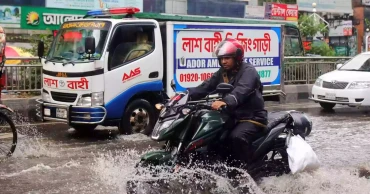
Parts of Dhaka waterlogged after evening showers
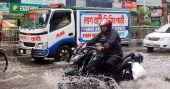
Intense rainfall on Tuesday evening led to waterlogging in some parts of Dhaka, causing immense suffering for commuters.
Streets in areas such as Mouchak, Malibagh, Shantinagar, Moghbazar, Dainik Bangla Intersection, and Kakrail were submerged, forcing residents to wade through water while trying to reach their destinations.
As the rains increased in the evening, homebound people from offices faced severe inconvenience to reach destinations.
Besides, those venturing out for urgent needs experienced heavy traffic jams and long waits for public transport.
10 months ago
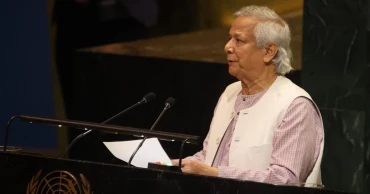
Devise roadmap for Rohingya repatriation, act together to stabilise Rakhine: Prof Yunus
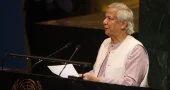
Emphasising that a lasting solution must come from within Myanmar, Chief Adviser Prof Muhammad Yunus on Tuesday laid out a seven-point proposal for the international community, urging the development of a practical roadmap to ensure the safe and dignified repatriation of the Rohingya and the stabilisation of Rakhine State.
"Initiatives to end the crisis are lacking. International funding faces alarming shortfalls. The Rohingya crisis originated in Myanmar; its solution lies there," he said, adding that eight years since the genocide began, the plight of the Rohingya continues.
As funding declines, Prof Yunus said, the only peaceful option is to begin their repatriation.
"This will entail far fewer resources than continuing their international protection," he said, adding that the Rohingyas have consistently pronounced their desire to go back home.
The Chief Adviser made the remarks while speaking at the opening session of the high-level conference on the ‘Situation of the Rohingya Muslims and Other Minorities in Myanmar’ held on the sidelines of 80th United Nations General Assembly (UNGA) at the UNHQs.
Foreign Affairs Adviser Md Touhid Hossain, National Security Adviser Dr Khalilur Rahman, SDGs Affairs Principal Coordinator Lamiya Morshed, Bangladesh Permanent Representative to the UN Ambassador Salahuddin Noman Chowdhury, visiting political leaders- National Citizen Party (NCP) member secretary Akhter Hossen and first senior joint member secretary of National Citizen Party Dr Tasnim Jara Refugee Relief and Repatriation Commissioner (RRRC), Mr. Mohammed Mizanur Rahman were, among others present at the high-level conference held at the General Assembly Hall of the United Nations Headquarters.
10 months ago
IDRA issues ‘Zero Tolerance’ warning against officials misusing authority
The Insurance Development and Regulatory Authority (IDRA) has issued a stern warning against the misuse of its officials' names to illegally demand financial and other benefits from various companies and institutions.
IDRA stressed that such activities are unethical, illegal, and will be met with a "zero tolerance" policy.
The issue has come to the attention of the regulatory body that financial benefits are being sought from insurance companies, survey firms, and related individuals using the names of IDRA officers or employees.
In a strong cautionary notice, IDRA clarified that none of its officials or employees can personally demand any financial or other form of benefit. The authority stated that such demands are completely illegal, immoral, and a punishable offense.
The IDRA emphasized that the institution has no connection with such enticements or demands.
The authority has instructed victims to take immediate action. "If anyone falls victim to such illegal demands, they must not respond in any way and must immediately inform IDRA in writing," the notice stated. Victims are also requested to submit evidence if available.
IDRA assured that upon receiving a complaint, strict legal action will be taken against the perpetrators.
The directive, signed by IDRA Director (Administration) Ahammad Ehsan-Ul-Hannan yesterday (Monday) which was made public on Tuesday.
The directive noted that these fraudulent activities are attempts to tarnish the image of the institution, underscoring the authority's commitment to maintaining a policy of zero tolerance in this regard.
10 months ago
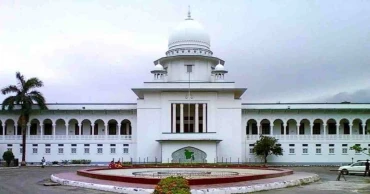
HC bars 15 clubs from BCB elections following ACC scrutiny
The High Court (HC) on Tuesday barred 15 clubs from participating in the upcoming Bangladesh Cricket Board (BCB) elections scheduled for October 6, after scrutiny by the Anti-Corruption Commission (ACC) raised concerns over their eligibility.
An HC bench comprising Justice Khizir Ahmed Chowdhury and Justice Syed Hasan Zubayer passed the order after hearing a petition filed by former BCB President Faruque Ahmed.
Following the order, the councillors of these 15 clubs will not be allowed to contest the BCB board polls.
Among the excluded clubs are the ones associated with former Bangladesh captain Tamim Iqbal. Tamim has been active in the election as a councillor of Old DOHS Club and as vice-president of Gulshan Cricket Club.
Tamim, Sports Adviser trade explosive claims as BCB election battle heats up
Initially, there had been controversy over the councillor posts of these clubs. Their names were omitted from the draft voter list but later reinstated after complaints from club authorities.
Even after nominations and scrutiny were completed, the HC order has now prevented their participation.
The clubs affected include Gulshan Cricket Club, Old DOHS Club, Exum Cricketers, Dhaka Cricket Academy, Mohammad Cricket Club, Nawabganj Cricket Coaching Academy, Purba Chawl Sporting Club, Old Dhaka Cricketers, Vikings Cricket Academy, Banani Cricket Club, Nakhalpara Cricketers, Mohakhali Cricket Academy, Dhanmondi Cricket Club, Pacific Cricket Club, Safaer Sporting Club, and Alpha Sporting Club.
Besides, Vikings Cricket Academy councillor Iftikhar Rahman Mithu was barred from contesting.
An uncertainty was created over the BCB election timely following the HC order.
10 months ago
Section 144 to be lifted if blockade called off: Khagrachari DC
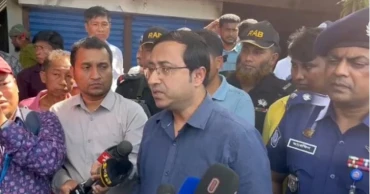
Khagrachari Deputy Commissioner and District Magistrate ABM Iftekharul Islam Khondakar on Tuesday said the Section 144 imposed in the district would be considered for immediate withdrawal once the blockade programme of the local Jumma population is lifted and the situation returns to normal.
He added that protesters need to end the blockade for their demands to be addressed.
A five-member probe committee, led by the Additional District Magistrate, has been formed to probe recent incidents, the DC said.
Speaking during a visit to the affected areas in Guimara, the DC and administration officials met with victims and distributed relief materials. He expressed condolences to families of those injured or killed in the violence and assured support for compensation, medical treatment, and rehabilitation.
Khondakar also said discussions have begun with representatives of the protesters. Seven of the eight demands submitted by them are currently under process and will be resolved at the negotiation table.
The DC’s visit was attended by Khagrachari Hill District Council Chairperson Shefalika Tripura, Superintendent of Police Md. Arefin Jewel, and other officials.
Khagrachari violence: TIB demands exemplary punishment for perpetrators
During the blockade, violent clashes on Sunday in Ramshu Bazar and surrounding areas of Guimara left three people dead. Shops, homes, and offices were set on fire, and several hill and Bengali residents, including army personnel, were injured.
The unrest followed an incident on the night of September 23, when an eighth-grade student was raped while returning home from a private tuition in Singinala, Ward No. 1 of Khagrachari municipality.
The victim’s father filed a case at Khagrachari Sadar police station against three unidentified suspects.
Police have arrested one accused, Shoyon Sheel, 19, while two others remain absconding.
Subsequently, on September 27, the administration-imposed Section 144 in Khagrachari municipality, Sadar Upazila, and Guimara for an indefinite period.
10 months ago