politics
Govt seeking Cyber Security Act amendment to suppress dissent: Porwar
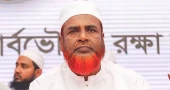
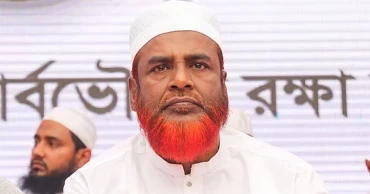
Bangladesh Jamaat-e-Islami Secretary General Mia Golam Porwar on Monday alleged that the government is seeking to amend the Cyber Security Act with an “ulterior motive” to suppress opposition views and prevent alleged government corruption and politicisation from being exposed.
“The government is moving to amend the law to suppress the opposition and the media so that its corruption and politicisation cannot be exposed,” he said.
The Jamaat leader was speaking at a seminar titled “Cyber Security Act 2026: Security, Control or Suppression of Freedom of Expression?” arranged by Jamaat’s Information and Broadcasting Department at the Jatiya Press Club.
He claimed that political leaders and journalists will be particularly vulnerable to harassment under the proposed amendments and urged the government to abandon the move.
Porwar urged the government to keep the Cyber Security Act, 2026 unchanged and scrap the proposed amendment draft, questioning why the law needs to be changed only four to five months after its enactment. “The government is showing instability and indecision,” he said.
He alleged that the BNP is using its parliamentary majority to pass laws “contrary to the Quran and Sunnah”, while disregarding the referendum verdict.
The Jamaat secretary general said the government repealed ordinances concerning the prevention of enforced disappearances, the National Human Rights Commission, and the Supreme Court Secretariat. “The government is turning fascist by virtue of its majority.”
Writer and journalist Abul Asad chaired the seminar, where Associate Professor Rafiquzzaman Ruman of Manarat International University presented the keynote paper.
Abul Asad said the government has failed to honour the referendum mandate by not implementing the July National Charter though it previously pledged to execute it fully.
“This implies that the government does not abide by the July Charter; indeed, it seeks to amend old draconian laws only to replace them with even more oppressive legislation,” he added.
Jamaat Assistant Secretary General Ahsanul Mahboob Zubair, Jamaat lawmakers Shafiqul Islam Masud and Nurul Islam Bulbul also spoke at the event.
1 month ago

Jubo Dal announces partial committees in 7 districts, Sylhet city
The Jatiyatabadi Jubo Dal, an associate organisation of the ruling BNP, has announced partial committees in seven districts and one metropolitan unit as part of its ongoing process of forming new committees in expired district and metropolitan units across the country.
The new committees are for Khulna, Kushtia, Sherpur, Shariatpur, Munshiganj, Satkhira and Sylhet districts, and Sylhet metropolitan unit.
Jubo Dal President Abdul Monayem Munna and General Secretary Mohammad Nurul Islam Nayon, approved the committees.
According to a press release, a five-member partial committee has been formed for Sylhet metropolitan Jubo Dal, with Mirza Mohammad Samrat as president and Delwar Hossain Dinar as general secretary.
The other members are Senior Vice-President Emdadul Haque Swapan, First Joint General Secretary Tahsin Mehdi Prince and Organising Secretary Hossain Ahmed.
A six-member partial committee has been formed for Sylhet district Jubo Dal, with Mohammad Maksud Ahmed as president and Abdus Salam Tipu as general secretary.
The other members are Senior Vice-President Koyes Ahmed, Vice-President Maksudul Karim Nuhel, First Joint General Secretary Masrur Russell and Organising Secretary Habibul Bashar Habib.
A five-member committee has been formed for Khulna district Jubo Dal, with Sheikh Nadimuzzaman Johnny as president and Golam Mostafa Tuhin as general secretary.
The other members are Senior Vice-President Jabir Ali, First Joint General Secretary Masum Billah and Organising Secretary Gazi Shahidul Islam.
A seven-member partial committee has been approved for Kushtia district Jubo Dal, with Fuhad Reza Fahim as president and Zillur Rahman Johnny as general secretary.
The other members are Senior Vice-President Mostafizur Rahman Suman, Vice-President Zakaria Milan, First Joint General Secretary Rashedul Islam Rashed, Joint General Secretary Jabbar Milan and Organising Secretary Mozaqqir Rahman Rabbi.
A five-member committee has been formed for Satkhira district Jubo Dal, with Hafizur Rahman Mukul as president and Shafiqul Alam Babu as general secretary.
The other members are Senior Vice-President Sheikh Moniruzzaman Prince, First Joint General Secretary Momtazul Islam Chandan and Organising Secretary Masud Rana Sabuj.
A five-member committee has been formed for Shariatpur district Jubo Dal, with Jamal Uddin Bidyut as president and Nazrul Islam Mridha as general secretary.
The other members are Senior Vice-President Liaquat Hossain, First Joint General Secretary Nazmul Haque Badal and Organising Secretary Atikul Islam.
A two-member committee has been formed for Munshiganj district Jubo Dal, with Mohammad Sohel Rana as president and Mozammel Haque Munna as general secretary.
A five-member committee has been formed for Sherpur district Jubo Dal, with Md Atharul Islam Ata as president and Md lShawkat Hossain as general secretary.
The other members are Senior Vice-President Mobinuzzaman Milton, Vice-President Maksudul Karim Nuhel and Organising Secretary Hashem Ahmed Siddiqui.
The Jubo Dal high command has instructed all the newly announced district and metropolitan units to form full-fledged 101-member committees within the next 30 days and submit them to the central office.
1 month ago
Fuel price hike to worsen people’s sufferings: Jamaat
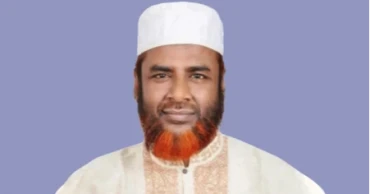
Bangladesh Jamaat-e-Islami on Monday protested the government’s decision to raise fuel prices by Tk 20 per litre, saying it will further worsen people’s sufferings amid rising commodity prices.
In a statement, Jamaat Secretary General Mia Golam Porwar said people were already struggling due to the unchecked rise in commodity prices, while the balance between the income and expenses of low- and middle-income people has been disrupted.
“They are struggling to meet their household expenses. In such a situation, the decision to raise fuel prices by Tk 20 per litre in one go will create a fresh crisis in people’s lives and further increase their sufferings,” he said.
The Jamaat leader said the impact of the fuel price hike will not remain confined to vehicle users.
As fuel is one of the key components of transportation and production systems, he said, the price hike will increase costs of agricultural and factory production, transportation and doing business.
“Consequently, prices of essential commodities and other goods will rise in the market. Ultimately, the common people will have to bear the burden,” Porwar said.
He said the government should have considered people’s purchasing power, the incomes of low- and middle-income groups and the overall economic situation before taking the decision. “Passing the burden of instability in the international market directly onto the people can in no way be considered a public welfare policy,” he said.
The Jamaat leader said the government should first take effective measures to explore alternatives, reduce costs, prevent waste and irregularities, improve efficiency in fuel management and cut unnecessary expenditure in the relevant sector.
At the same time, he said, strict monitoring should be ensured to control the prices of goods in the market and irregularities by middlemen should be stopped.
“If the government tries to address the financial pressure on state agencies simply by raising prices, it will have long-term adverse impacts on people’s livelihoods,” Porwar said.
He said alleviating people’s suffering is the government’s responsibility and repeatedly imposing an additional economic burden through price hikes is unacceptable. “We urge the government to withdraw its decision to increase fuel prices by Tk 20 per litre,” he said.
1 month ago
Opposition “living in fool's paradise” with one-point warning: Rizvi
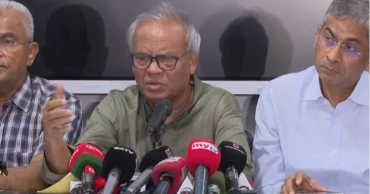
BNP Acting Secretary General and Prime Minister’s Political Adviser Ruhul Kabir Rizvi on Monday said the BNP will not sit idle if the opposition issues a “one-point warning”, saying those making such statements are “living in a fool’s paradise”.
“They are saying these things as if they are living in a fool’s paradise. A mass-based party has been elected through a free and fair election and you think it will happen simply because you say so? Will we sit back with our hands folded? No, we will not,” he said while briefing reporters after a joint meeting with leaders of BNP’s affiliated, associate and professional organisations.
Rizvi said the BNP will continue its political activities through democratic programmes involving people.
“The people are the main judges. No planned or conspiratorial programme can stop the course of a party that enjoys public support,” he said.
Asked about the opposition’s long march despite 34 MPs travelling abroad and its renewed talk of a one-point movement, Rizvi said such statements were intended to create confusion.
He said those making such statements are themselves engaging in a conspiracy and said their activities have no connection with people and would not receive public support.
Rizvi said the government and the BNP are currently focusing on issues including social protection, development and progress while the party’s election manifesto includes a pledge to plant 25 crore trees.
He said that efforts are being made to divert public attention from govt's public-interest measures and destabilise the country.
“There may be the fallen autocrat there, and various indications suggest that perhaps new accomplices are also joining hands with them in some underground secret chamber,” he said.
Rizvi said people, BNP activists and leaders, nationalist forces and conscious citizens are alert to the situation.
"They want to talk about various issues today. But what is the solution? We have repeatedly asked them: how will you solve the problems?” he said, referring to the fuel, gas and electricity crises.
He said the government has increased fuel prices by Tk 20, while the loss had previously been around Tk 22,875 crore, with monthly losses amounting to around Tk 3,813 crore during that period.
Rizvi said Bangladesh consumes around 7 million metric tonnes of fuel annually, including approximately 4.5 million tonnes of diesel.
He said diesel had been priced at Tk 115 per litre in Bangladesh until recently, compared with around Tk 134 in India, raising concerns about fuel smuggling.
He said Bangladesh has to purchase diesel at around Tk 250 per litre, resulting in a substantial loss for the government.
“When the price was Tk 115, we had to bear a loss of around Tk 90 per litre. Even after the Tk 20 price adjustment, we still have to bear a loss of around Tk 70 per litre,” he said.
He said the loss effectively has to be covered through subsidies.
Rizvi said fuel prices in Bangladesh remained relatively low compared to many other countries.
“The language they used against the government, including against the top BNP leader, cannot be the language of civilised people in a democratic society,” he said.
Asked about Prime Minister Tarique Rahman’s visit to the United States to attend the 81st session of the UN General Assembly, Rizvi said the prime minister is travelling with a 35-member delegation, which he described as the smallest delegation in the country’s history for such a visit.
“Many are there, including journalists and political leaders. There are 30 to 35 people. This itself proves that the BNP government and its head want to sustain and further strengthen the country’s economy through austerity,” he said.
Rizvi said the delegation size was another example and proof of the government’s commitment to austerity.
He alleged that during the previous government, when its head travelled to the United States or other countries, receptions were arranged at a cost of crores of taka.
“This time, Tarique Rahman has prohibited any such reception,” he said.
Rizvi alleged that such receptions were arranged by embassies or high commissions using public money, although it was sometimes claimed that party leaders and activists abroad had financed them.
1 month ago

PM’s US visit focused on Bangladesh’s interests, not ceremonial pomp: Mahdi Amin
Prime Minister Tarique Rahman’s visit to US to attend the 81st session of the United Nations General Assembly (UNGA) is focused on advancing Bangladesh’s interests and working for its people, rather than ceremonial pomp or a display of power, Prime Minister’s Adviser and his office spokesperson Mahdi Amin said Monday.
“Not ceremonial pomp; work for people. Not a display of power; protecting Bangladesh’s interests,” Mahdi Amin said describing the visit as a special moment in world’s history as well.
In a post on his verified Facebook page, Mahdi Amin said the prime minister’s visit to the United States would comprise one day for travel to the US, one day for the return journey and only four days in between.
“Without wasting a moment, these four days will be packed with one bilateral and multilateral meeting after another, high-level programmes of the United Nations and diplomatic engagements in Bangladesh’s interests,” he said.
The entire visit will last only six days, with 35 people accompanying the prime minister officially, he said.
Of the 35, 15 are ministers, state ministers, advisers and special assistants, while the rest are essential personnel responsible for security, media and personal duties, according to the post.
Prime Minister Tarique Rahman left Dhaka for New York on Monday morning to attend the 81st session of the United Nations General Assembly (UNGA).
Mahdi Amin said in his Facebook post that after Shaheed president Ziaur Rahman, former prime minister Begum Khaleda Zia and their son Prime Minister Tarique Rahman would now stand on the world stage of the United Nations.
“As the third representative of the same family, he will speak about the people of Bangladesh, the country’s interests, the government’s policies and future plans,” he said.
Pointing to another unique aspect of the visit, the prime minister’s Office spokesperson said that while Tarique Rahman represents Bangladesh at the world stage, the president of the same UN General Assembly will be his government’s foreign minister.
“With a huge mandate, Prime Minister Tarique Rahman is taking the voice of the people of Bangladesh to the world,” he said.
“This is not just a foreign visit. It is not just about presenting Bangladesh at the United Nations. It is the international representation of the aspirations of people. It is a legacy of emotion, feelings and ideals. It is the beginning of a new history on the world stage concerning Bangladesh’s interests, dignity and future,” Mahdi Amin said.
1 month ago

21 BNP men sued over attack on Jamaat leader in Sirajganj
A case has been filed against 21 BNP men, naming 10 BNP activists, over an attack on a Jamaat-e-Islami leader in Sirajganj on Saturday.
Shohar Bhanu, wife of the victim Abdus Sabur, filed the case with Sadar Police Station on Saturday night, said Rakibul Hasan, officer-in-charge of the police station.
Police have already launched an operation to arrest the accused, the OC said.
He said Jamaat activists gathered in the Saydabad area on Saturday afternoon to welcome the motorcade of the 11-party alliance's Dhaka-Rangpur long march.
After the procession proceeded towards Rangpur, the Jamaat activists were returning home when a group of people attacked Abdus Sabur and hacked him, leaving him seriously injured.
Another Jamaat leader, Nurnabi, was also beaten during the incident, the OC said.
Abdus Sabur has been admitted to Shaheed Ziaur Rahman Medical College Hospital in Bogura in critical condition.
1 month ago
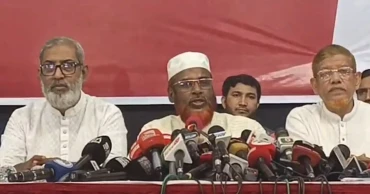
11-party alliance rejects govt's proposal for constitutional amendments
Jamaat led 11-party alliance on Sunday rejected the government's initiative to amend the Constitution through a special parliamentary committee, demanding implementation of the constitutional reform process approved in the February referendum.
“We have decided that we do not support any initiative for constitutional amendment in principle. We want constitutional reform,” Jamaat Secretary General Mia Golam Parwar on behalf of the alliance said at a press conference held at the Jatiya Press Club in the city.
The alliance said the parliamentary committee cannot replace the Constitution Reform Council envisaged under the July National Charter implementation framework, arguing that the people's direct mandate must be respected.
The alliance's position comes as the parliamentary special committee invited political parties that signed the July Charter to hold discussions.
The 12-member committee, headed by Home Minister Salahuddin Ahmed, was formed in July after opposition parties refused to nominate members, with the government saying it would later seek their views on the reform process.
Parwar said the 11-party alliance had rejected the committee because the February 12 referendum had endorsed not only constitutional reform proposals but also a specific mechanism for implementing them.
“The people's mandate cannot be replaced by a parliamentary majority. Nor can any special committee be a substitute for the sovereign will of the people,” he said.
He argued that elected MPs from the 11-party alliance had taken oath both as members of parliament and as members of the proposed Constitution Reform Council, while BNP lawmakers took oath only as MPs.
The alliance maintains that Parliament and the proposed reform council have different legal identities and sources of authority, describing Parliament's constitutional amendment power as delegated power and the people's authority to reshape the constitutional order as ‘constituent power.’
Parwar also questioned the government's reliance on Article 142 of the Constitution, saying Parliament's amendment power was not unlimited.
He referred to the Supreme Court's rulings concerning the Fifth, Seventh, Eighth, 13th and 16th constitutional amendments as evidence that parliamentary amendment powers have constitutional limits.
The alliance also cited the basic structure doctrine, arguing that fundamental features of the Constitution cannot be altered merely through a two-thirds parliamentary majority.
Parwar said the alliance wanted the elected representatives to complete the required oaths and activate the Constitution Reform Council rather than proceed through the parliamentary special committee.
“We officially reject the initiative of the special committee on constitutional amendment,” he said, adding that there was still time for Parliament to activate the reform council in accordance with the referendum verdict.
11-party alliance coordinator Hamidur Rahman Azad said the alliance had held a top-level meeting before deciding to reject the government's invitation for discussions.
He said the alliance had participated in the July Charter process and signed the document, but would not participate in what it considers an alternative process for constitutional reform.
Parwar also challenged the government's argument that the Constitution Reform Council lacked a legal basis, referring to Article 152's definition of ‘law’, which includes an Act, ordinance, order, rule, regulation, notification and other legal instruments having the force of law.
The parliamentary special committee, meanwhile, has said it intends to consult political parties, constitutional experts, lawyers, members of the judiciary, intellectuals, editors and other stakeholders before finalising its recommendations.
1 month ago
Nahid calls for security, justice
National Citizen Party (NCP) Convener Nahid Islam said the 11-party alliance wants security for the country and safety for its children.
He made the remarks while speaking at the closing rally of the 11-party alliance’s Dhaka-Rangpur long march on Saturday.
“We have not received justice for the killing of martyr Sharif Osman Hadi. Justice must be served. Death sentences are being handed down to those who are not in the country. We want to see verdicts against those who are actually here,” he said.
Nahid also demanded implementation of the Teesta Master Plan.
He said the alliance’s eight-point programme could “liberate Bangladesh”.
An activist of the 11-party alliance was hacked and injured in Sirajganj, he said.
“If there is even one more attack, we are prepared to strike back,” Nahid said, warning that attempts to suppress the opposition would fail.
1 month ago
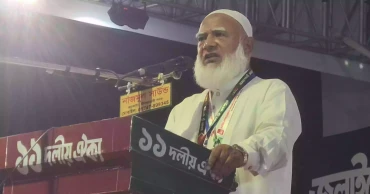
'We are on streets for people, not party': Dr Shafiqur Rahman
The 11-party alliance has taken to the streets to protect the rights of 18 crore people, Opposition Leader Dr Shafiqur Rahman said on Saturday.
“I believe you are all aware of our demands. I swear by Allah, not a single one of these is a partisan demand. These are the demands of 180 million people,” he said.
Dr Shafiqur, also Ameer of Bangladesh Jamaat-e-Islami, made the remarks at the concluding programme of the Dhaka-Rangpur Long March at Rangpur Zilla School grounds on Saturday night.
The Jamaat-e-Islami-led 11-party opposition alliance organised the long march from Dhaka to Rangpur with an eight-point demand. It was the alliance’s second long march in a fortnight.
Dr Shafiqur alleged that the government had failed to keep the promises it made to the people before the election.
He said the government had earlier urged people to vote “Yes” in a referendum but was now using various excuses to avoid implementing the referendum verdict.
He also alleged that the government had passed a law that contradicts the Quran and Sunnah.
“Before the election, this government pledged that if it formed the government, it would not enact any law contrary to the Quran and Sunnah. Yet, it has already passed a law that clearly contradicts the Quran and the teachings of the Messenger of Allah (peace be upon him),” he said.
“If this law remains in force, the Muslims of Bangladesh will not sit idle. This law will bring disaster to every household and society. This haram (forbidden) law must be withdrawn,” he added.
Dr Shafiqur said their struggle against injustice and “fascism” would continue.
“Our struggle against all malevolent forces, injustice and fascism will continue. We will not rest. We have taken to the streets to secure the rights of 180 million people. We will return only after securing those rights, Insha’Allah,” he said.
He said the alliance’s eight-point demand could be turned into a single-point demand if necessary.
“My colleagues have said that our eight-point demand could, at any time, become a single-point demand if the needs of the nation require it,” he said.
Dr Rahman hoped that a good sense will prevail within the government.
“If not, we will not sit idle. There will be strong protests inside parliament, while the movement will continue on the streets,” he added.
“And through that movement, we will realise the people’s demands, Insha’Allah,” Dr Shafiqur said.
He also said thousands of women had joined the street programmes in support of the movement.
“Today, thousands of our mothers and sisters have also taken to the streets to encourage us and express their solidarity and unity. A movement joined by mothers is destined to succeed, Insha’Allah,” he said.
The long march towards Rangpur was launched from Manik Mia Avenue in Dhaka in the morning.
Five street rallies were held at Bhogra bypass in Gazipur, Nagar Jalpai in Tangail, Hatikumrul in Sirajganj, Charmatha in Bogra, and Palashbari in Gaibandha before the concluding gathering at Rangpur Zilla School.
Earlier on September 5, the alliance held its first long march from Dhaka to Chattogram with a six-point demand, including the implementation of the verdict reflected in the February 12 referendum; trial of the July 2024 mass killings; resolution of the electricity, fuel, gas and fertilizer crisis; controlling soaring prices of essential commodities, making an end to corruption, extortion and occupation; and improvement of law and order.
1 month ago

AL holds first meeting of Central Working Committee since ouster from govt
The Awami League, whose activities as a political party remain banned in Bangladesh, on Friday held what observers billed as its first Central Working Committee meeting since being ousted from government through the July Uprising of 2024.
With most of the party’s top leaders having fled to India in the aftermath, Friday’s meeting was initially planned to be an in-person event, at the Indian Air Force safehouse on the outskirts of Delhi where party president Sheikh Hasina has been residing throughout this entire period.
Those plans had to be shelved however, after word got out and the Indian government possibly intervened in the matter. Delhi has been increasingly receptive in recent times, to Dhaka’s more assertive stance on tying the scope of bilateral relations to the extent the Indian government allows Hasina to use Delhi as a base for carrying on her political work.
And so in the event, the much touted meeting had to be held on a virtual platform.
The party’s Presidium member Sheikh Fazlul Karim Selim presided over the meeting, which was moderated by the party’s Liberation War Affairs Secretary Mrinal Kanti Das. Hasina delivered the keynote address as chief guest.
In her address, Sheikh Hasina said she had exchanged views with leaders and activists from 83 district AL units as well as 160 constituencies to assess the situation on the ground and get a sense of the organisational condition of the party.
She also painted a picture of impending doom for the country, saying the situation was declining in every sector and calling for AL to “rescue” it, according to the party statement.
Hasina instructed party leaders responsible for organisational affairs to give priority to those who had faced persecution when filling organisational vacancies. She also called for collecting and disseminating information about people who had allegedly faced oppression and persecution over the past two years, and also to expose those responsible.
Hasina demanded the release of military and civil officials whom she described as having been arrested on false charges. Showing no intention of expressing any remorse, she referred to the violence during July and August 2024 and said law-enforcement personnel had made efforts to protect lives and property and alleged that many police officers were killed, their bodies burned, and police stations looted and set on fire.
Her statement was indicative of her scorched earth view, with little room for reconciliation or making room for new actors on the political stage.
She also said she wanted to return to Bangladesh and “save the country from this dire situation”, but alleged that the government in Dhaka was creating obstacles to her return.
1 month ago