Business
BIDA, ADB, SANEM hold workshop in Khulna to launch industrial survey, address investor challenges
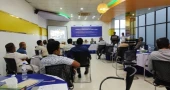
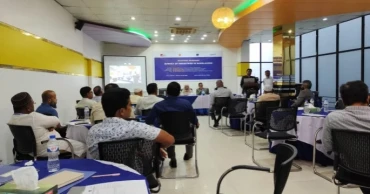
The Bangladesh Investment Development Authority (BIDA), in partnership with the Asian Development Bank (ADB) and the South Asian Network on Economic Modeling (SANEM), held a divisional workshop in Khulna on Thursday to introduce the "Survey of Industries in Bangladesh."
The event, held at a hotel in Khulna, brought together government officials, private sector representatives, and local business leaders to discuss promising regional sectors, identify barriers to investment, and seek stakeholder cooperation in verifying industrial data.
The survey led by BIDA, funded by ADB, and technically supported by SANEM—aims to identify investor grievances, resolve systemic bottlenecks, and establish a unified investment database to assist the government in evidence-based policymaking.
Addressing the workshop as the chief guest, Ms. Sifat Mehnaz, Additional Divisional Commissioner of Khulna Division, emphasized the need for efficient land use and the adoption of modern agricultural technologies to boost the economy.
She pointed out that approximately 30 percent of export-potential fruits are currently lost to post-harvest damage, and suggested the establishment of cold storage facilities to safeguard foreign earnings.
BIDA Director General Gazi AKM Fazlul Haque, who chaired the session, highlighted that the survey would replace scattered and redundant records with a clearer, unified database to help the government frame effective industrial policies.
"We must first make our domestic investment environment strong and keep local investors satisfied, which will naturally attract foreign investors," he said, noting that local business leaders have urgently requested a centralized portal for investment-related information.
Tasnim Alam, Public Sector Economist at ADB Bangladesh, who joined the session online, noted that with Bangladesh set to graduate from Least Developed Country (LDC) status in about three years, the private sector must step up to lead economic growth.
He stressed the importance of easing investor burdens through initiatives like BIDA's One-Stop Service (OSS).
Md. Tariqul Islam Zaheer, Managing Director of Achia Sea Foods Limited and guest of honour, discussed Khulna’s industrial potential in jute, sugar, shipbuilding, and cold storage sectors.
He advocated for establishing eco-friendly industries near the Sundarbans and integrating modern technologies into local enterprises. He also welcomed the survey, warning that the country’s growing debt is a heavy load being passed to future generations.
Dr. Selim Raihan, Executive Director of SANEM and Economics Professor at Dhaka University, explained that Bangladesh is simultaneously navigating three major structural shifts: energy, technology, and economic composition. He stated that building a unified investment database integrated with BIDA’s OSS portal is critical to overcoming the country's weak evidence base and fragmented records.
The industrial study is being executed through five work streams: collecting investment data, verifying it, building a standardized database, producing analytical reports, and preparing a national investment compendium.
SANEM Programme Director Zubayer Hossen highlighted that the survey covers all major economic sectors and ownership models across all eight administrative divisions of Bangladesh.
18 days ago

Economic growth may slow to 3.5% in FY27: IMF staff team
The International Monetary Fund (IMF) staff team concluded a five-day visit to Dhaka on Thursday, projecting Bangladesh's economic growth to moderate to 3.5 percent in FY2026-27 and weaken further below 3 percent over the medium term in the absence of decisive reforms.
The visit, which took place from July 12 to 16, 2026, was led by Ivo Krznar following a request from the Bangladesh government for a new Fund-supported economic reform program. The mission aimed to take stock of recent developments and discuss the authorities' policy plans and reform priorities.
"Bangladesh continues to face significant fiscal, financial, and inflationary challenges, which have been compounded by the war in the Middle East," Krznar said in a statement issued at the end of the visit.
He noted that higher global commodity prices and supply disruptions have renewed inflationary pressures, increased subsidy costs, and further constrained the country's limited fiscal space. Elevated banking sector stress and external pressures also continue to weigh on the economy, despite strong remittance growth.
The IMF warned that risks to the economic outlook remain tilted to the downside due to the potential interaction of banking sector strains, fiscal challenges, and external pressures.
To address these compounding weaknesses and safeguard macro-financial stability, the IMF team recommended several priority policy measures.
Revenue and Subsidy Reform: Stronger revenue mobilization and subsidy rationalization are needed to create fiscal space for priority social and development spending. Well-targeted social support should be implemented to protect vulnerable households.
Monetary and Fiscal Stance: The government should maintain tight monetary and prudent fiscal policies to tame inflation and rebuild foreign exchange reserves.
Exchange Rate Flexibility: Consistent implementation of the crawling peg regime adopted in 2025 is essential to enhance exchange rate flexibility and safeguard external stability.
Banking Sector Cleanup: Restructuring of the banking sector should be anchored in a credible, comprehensive strategy with a well-managed cleanup to support investment.
Looking ahead, Krznar indicated that discussions on the possible parameters of a new arrangement—including its size and associated reform commitments—will take place in the coming months.
18 days ago

BB extends special loan rescheduling facilities for finance companies
Bangladesh Bank (BB) has extended special loan rescheduling and restructuring facilities for the borrowers of non-bank finance companies until September 30, 2026, aiming to help struggling businesses recover, reduce non-performing loans (NPLs), and improve liquidity in the financial sector.
According to a circular issued on Thursday by the central bank’s Finance Company Regulation and Policy Department (FCRPD), this policy support is aligned with the benefits previously granted to the clients of commercial bank companies.
Under the new directive, finance companies can now provide special rescheduling and restructuring facilities for affected borrowers based on the financial institution-client relationship.
The facilities will be guided by the instructions issued under BRPD Circular No. 07 (dated September 16, 2025), BRPD Circular Letter No. 26 (dated November 24, 2025), and BRPD-1 Circular Letter No. 16 (dated May 7, 2026).
The central bank emphasised that finance companies must ensure compliance with the provisions of the Finance Company Act, 2023, and relevant department circulars while executing these facilities.
The entire process, including receiving applications from affected borrowers and obtaining official approval from the respective finance company's Board of Directors, must be completed by September 30, 2026.
The BB stated that this initiative is part of its ongoing efforts to assist viable but financially distressed businesses, enabling them to return to profitable operations, which in turn will secure loan recovery for the financial institutions.
The move is also expected to inject momentum into the country's overall economic activities.
18 days ago
BSEC says margin rules overhaul not final, warns against misleading reports
The Bangladesh Securities and Exchange Commission (BSEC) on Thursday clarified that the proposed amendments to the margin rules remain in draft form and have not been finalised, describing what it called incomplete and misleading media reports on the matter.
In a press release, it said the 1,020th commission meeting approved a draft proposal to amend the Bangladesh Securities and Exchange Commission (Margin) Rules, 2025.
However, before the draft could be published for public feedback, several media outlets carried incomplete, confusing and unrealistic information about the changes, creating unwarranted uncertainty among investors, it said.
The commission said the core objective of the amendment is to remove practical and operational complications that have emerged during implementation of the existing rules, and to make the regulations simpler, more effective and more realistic, thereby easing their application for stakeholders across the market.
The BSEC noted that in drafting the amendment proposal, it took into account the opinions and practical experiences of margin facility users, stock brokers, merchant banks, and other market intermediaries and stakeholders.
The commission's goal, it said, is to establish an effective, realistic and investor-friendly margin management framework.
The regulator further clarified that the amended draft rules have yet to be finalised. The draft approved by the commission will soon be published in national dailies and on BSEC's website for public opinion.
Only after reviewing feedback from stakeholders and the general public, the amendment to the Margin Rules, 2025 will be finalised, it said.
The BSEC urged all concerned to refrain from publishing speculative or partial information about the amended rules before the public opinion process begins, saying such reports create unnecessary confusion.
The commission expressed confidence that once the actual draft is published, all stakeholders will get a clear picture of the purpose, scope and rationale behind the amendment.
The BSEC said it has always worked to give top priority to the interests and safety of investors, and that the amendment to the margin rules is a continuation of that same policy.
18 days ago
Bangladesh Bank unveils new framework for import trade in FTZs
Bangladesh Bank has introduced a structured framework to govern import transactions into Free Trade Zones (FTZs), aiming to facilitate trade while ensuring prudent risk management by banks, according to a circular issued on Thursday.
The Foreign Exchange Policy Department-1 (FEPD-1) circular directs all Authorized Dealers (ADs) and Offshore Banking Units (OBUs) to follow the new instructions when providing financial services for FTZ-related transactions, in line with existing foreign exchange regulations.
Under the framework, imports into FTZs can be undertaken by industrial enterprises engaged in manufacturing or export-oriented production, authorized importers on record, and licensed logistics service providers operating within the zones.
Goods brought into FTZs for storage, warehousing or distribution may be imported on a consignment basis, with ownership remaining with foreign suppliers until the goods are either used in production or sold to ultimate buyers.
For financing and exposure purposes, banks will not treat such goods as owned inventory of FTZ enterprises until either event occurs.
The circular also sets out rules for purchase and sale transactions. Purchases of goods from FTZs by buyers in Bangladesh, including those in specialized zones or other FTZs will be treated as import transactions requiring standard IMP formalities.
Where such purchases involve industrial raw materials, usance import facilities of up to 270 days will be permitted under FE Circular No. 51 of December 29, 2025.
Sales of finished or semi-finished goods by FTZ enterprises to buyers in Bangladesh will be treated as export transactions for sellers and import transactions for buyers, with both EXP and IMP procedures to be followed accordingly.
All such payments must be settled in freely convertible foreign currency, though FTZ enterprises may retain sale proceeds in designated foreign currency margin accounts for onward settlement of import obligations abroad.
On tenor, goods imported into FTZs under consignment arrangements may remain in the zone for 48 to 60 months, subject to regulatory compliance, while usance import transactions, including those backed by buyer's or supplier's credit will carry a maximum tenor of 270 days.
The circular further allows ADs to extend financing to FTZ entities in a manner similar to facilities available to enterprises in specialized zones. However, for consignment-based imports, ADs and OBUs will not recognise or assume exposure on FTZ entities for goods where ownership remains with the foreign supplier, such consignments will only be recognised as imports once ownership transfers through production use or sale, supported by documentation including a bill of entry.
For usance imports, ADs may arrange buyer's or supplier's credit facilities with a tenor not exceeding 270 days, while OBUs may provide such financing in foreign currency.
On risk management, the central bank instructed that all admissible financing be backed by appropriate documentation aligned with underlying transactions, and directed ADs and OBUs to conduct due diligence on FTZ clients, including assessing contracts with foreign suppliers and buyers, verifying ownership structures, and evaluating production and sales cycles.
Banks have been asked to bring the contents of the circular to the notice of relevant stakeholders.
18 days ago
Stocks close lower on week’s last trading day
Both Dhaka Stock Exchange (DSE) and Chittagong Stock Exchange (CSE) closed lower on Thursday, the last trading day of the week, snapping a four-session winning streak, with overall turnover also declining on both bourses.
The DSEX, the benchmark index of the DSE, shed 25 points during the day's trading. The Shariah-based index DSES fell 2 points, while the blue-chip index DS30 dropped 15 points.
Losers dominated the trading floor, with 240 companies witnessing price declines against gains in 103, while 52 issues remained unchanged.
Turnover on the DSE fell to Tk 1,118 crore from the previous day's Tk 1,515 crore.
Techno Drugs Limited topped the gainers' list on the DSE, rising nearly 10 percent, while Usmania Glass Sheet Factory Limited was the worst performer, losing more than 9 percent.
The CSE also closed in negative territory, with its general index CASPI falling 55 points.
Here too, losers outnumbered gainers, with 116 companies posting price declines against 86 advancing, while 22 remained unchanged.
Turnover on the CSE stood at Tk 18 crore, down from Tk 32 crore the previous day.
Techno Drugs Limited also led the gainers on the CSE, rising nearly 10 percent, while Hamid Fabrics PLC was the top loser, shedding close to 10 percent.
18 days ago

Public concern grows over ABB proposal to charge fees for counter cash withdrawals over 3 times a month
Widespread concern and dissatisfaction have spread among common people regarding banks following a proposal that could require customers to pay additional fees to withdraw their own money from bank counters.
The Association of Bankers, Bangladesh (ABB), an organization of bank executives, has proposed that if a customer withdraws cash from a bank counter more than three times a month, an additional fee ranging from Tk 100 to Tk 300 could be charged for each subsequent transaction.
The association has also recommended introducing new fees for 14 other types of banking services and increasing several existing charges. These recommendations include a Tk 500 fee to reactivate long-dormant bank accounts and a multi-fold increase in loan processing fees.
Banks have justified the move by citing rising operational costs and noting that such fees are standard practice internationally. They also argued that the initiative aims to encourage customers to minimize counter-based transactions and utilize ATMs, mobile banking, and internet banking instead.
However, analysts and customers argue that the reality is not that simple. Amid high inflation affecting essential goods, medical care, education, and transportation, an additional fee on cash withdrawals would disproportionately burden the middle class, low-income individuals, retirees, and small businesses. Many elderly individuals and pensioners are not accustomed to digital banking and remain heavily dependent on bank counters.
Furthermore, critics highlighted significant shortcomings in the alternative digital infrastructure, noting that:
Sufficient ATM booths are still not available across all regions of the country.
Customers frequently face harassment due to booths running out of cash or experiencing technical glitches.
Mobile and internet banking services are not yet equally accessible to everyone, particularly in rural areas and small towns where many lack smartphones or comfort with digital services.
Customers have questioned why banks are raising charges without addressing persistent issues like long queues, server complications, and delayed services. They warned that continuous hikes in fees could damage public trust in the formal banking system, prompting some to keep cash at home instead, which is not positive for the formal financial sector.
Amid these growing anxieties, the central bank has taken a cautious stance, clarifying that it will not easily approve any decision that imposes an unreasonable financial burden on customers.
Bangladesh Bank Spokesperson Arif Hossain Khan said, "Imposing extra fees could create a reluctance among the general public towards banking services.”
Therefore, the interests of the customers will be given the highest priority before any decision is made, he said.
He added that the central bank has advised banks to focus on increasing their revenues through loan disbursement, investments, and regular banking operations rather than solely relying on service fees.
The ABB proposal currently remains a mere recommendation and cannot be implemented without formal approval from Bangladesh Bank.
However, the intense public reaction underscores that citizens, squeezed by a rising cost of living, are deeply uncomfortable with the prospect of new banking charges.
18 days ago
BB opens one-time exit window for bad loans at finance companies
Bangladesh Bank has introduced a special one-time exit facility to help finance companies recover or adjust their classified bad and loss loans, as part of efforts to shore up asset quality and liquidity in the sector.
The central bank's Finance Company Regulation and Policy Department (FCRPD) issued the directive on Thursday, addressed to managing directors and chief executive officers of all finance companies operating in the country.
BB eases external borrowing rules for foreign-owned industries
The circular noted that borrowers across businesses, industries and projects have faced difficulties due to various uncontrollable economic factors, with some enterprises shutting down or turning loss-making.
This has disrupted loan recovery for finance companies, prompting the central bank to allow a one-time settlement route for willing borrowers whose chances of regularising loans through the normal process have weakened.
Under the policy, finance companies may offer the special exit—subject to board approval to customers holding loans classified as bad or loss as of June 30, 2026, based on the institution's relationship with the borrower.
Key conditions set out in the circular include: Borrowers opting for the facility must clear their entire outstanding liability in a single, one-time payment.
According to the circular, the principal amount of the loan cannot be waived, though interest may be waived after verification and selective scrutiny. Where relaxation of fund utilisation conditions or income-sector deviation is required for an interest waiver, the justification must be confirmed through the finance company's internal audit function, with an opinion obtained from the Head of Internal Control and Compliance (HICC).
Besides loans involving fund diversion, fraud, forgery or other irregularities in disbursement will not qualify for the exit facility. Loss-classified loans that were rescheduled between August 6, 2024 and June 30, 2026 will be eligible under this circular.
Priority in granting the special exit will go to short-term agricultural loans and cottage, micro and small loans under the CMSME sector.
Finance companies have been instructed to notify eligible borrowers in writing about the facility and take other necessary steps to implement it.
The circular will remain in force until December 31, 2026, and has been issued under the powers vested in Bangladesh Bank by Section 41 of the Finance Company Act, 2023, effective immediately.
18 days ago
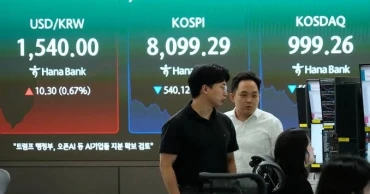
Asian markets mostly fall as South Korea's Kospi slides 6.6%; oil prices ease despite US-Iran conflict
Most Asian stock markets ended lower on Thursday, while oil prices edged down despite continued military exchanges between the United States and Iran. U.S. stock futures, however, moved slightly higher.
Technology and artificial intelligence (AI)-related shares came under pressure, dragging down markets in South Korea and Japan.
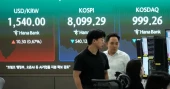
South Korea's Kospi dropped 6.6% to 6,816.70 after the Bank of Korea raised interest rates for the first time since 2023. The move was aimed at easing inflationary pressure linked to the Iran conflict.
Among major South Korean stocks, memory chipmaker SK Hynix fell 11.2%, while Samsung Electronics lost 8.2%.
Taiwan's Taiex slipped 0.3% ahead of the quarterly earnings report of Taiwan Semiconductor Manufacturing Co. (TSMC), whose results are widely viewed as an indicator of the global semiconductor industry and AI demand.
Japan's Nikkei 225 declined 2.9% to 66,767.64. Memory chip producer Kioxia plunged 13.5%, while chip equipment maker Tokyo Electron fell 5.2% and testing equipment manufacturer Advantest dropped 5.6%. SoftBank Group also lost 6.4%.
Hong Kong's Hang Seng Index stood out among regional markets, rising 1.7% to 25,111.22. Alibaba's Hong Kong-listed shares jumped 4.4% after China's cyberspace regulator approved Apple's Apple Intelligence AI service for use in China. Alibaba said its Qwen AI model will be integrated into the Apple Intelligence platform.
China's Shanghai Composite Index fell 0.9% to 3,921.20, while Australia's S&P/ASX 200 slipped 0.2% to 8,820.50. India's Sensex gained 0.3%.
Oil prices eased slightly but remained well above levels seen before the outbreak of the US-Iran conflict.
Brent crude, the international benchmark, fell 0.4% to $84.55 a barrel, compared with about $72 a barrel in late February before the conflict began. U.S. benchmark crude slipped 0.2% to $79.34 a barrel.
Analysts at ING said oil prices recorded a third straight day of gains before Thursday's slight decline, as there were still few signs of easing tensions between Washington and Tehran.
They also said the conflict was continuing to disrupt tanker traffic through the Strait of Hormuz, a key route for global oil shipments, affecting vessel movements from the Persian Gulf.
On Wall Street Wednesday, the S&P 500 gained 0.4% to close at 7,572.40. The Dow Jones Industrial Average rose 0.3% to 52,658.64, while the Nasdaq Composite advanced 0.6% to 26,269.23.
SpaceX shares briefly fell below their initial public offering (IPO) price of $135 before recovering part of the losses.
Investor sentiment was also supported by data showing U.S. inflation slowed in June and stronger-than-expected quarterly earnings from BlackRock. Shares of the investment firm climbed 6.6% after it reported better-than-expected revenue and profit.
In early currency trading Thursday, the U.S. dollar slipped to 162.09 Japanese yen from 162.19 yen, while the euro traded at $1.1467, little changed from $1.1464.
19 days ago
BTMA meets governor, seeks policy support to tackle textile sector challenges
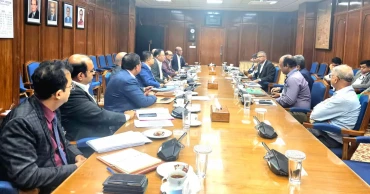
A delegation of the Bangladesh Textile Mills Association (BTMA) met with Governor of Bangladesh Bank Md. Mostaqur Rahman at the central bank headquarters in Motijheel on Wednesday to discuss critical issues affecting textile industry and seek necessary policy support.
The delegation led by BTMA President Showkat Aziz Russell, submitted a formal letter to the Governor highlighting priority areas aimed at ensuring the sustainable growth and competitiveness of the key sector.
Islami Bank holds board meeting presided over by BB representative
The priority demands and issues raised by the BTMA in the letter include:
Access to the central bank's stimulus scheme for fully and partially closed industrial units.
Prompt settlement of outstanding payments against Back-to-Back Letters of Credit (LCs).
Allocation of Green Transformation Fund (GTF) facilities.
Rationalization of interest rates specifically for the textile sector.
Incentive support for industries situated in Special Economic Zones (SEZs).
Implementation of an effective Exit Policy for distressed industrial enterprises.
The BTMA delegation also included former BTMA President A Matin Chowdhury, Vice President Shafiqul Islam Sarkar, former Vice President Saleudh Zaman Khan, Director Chowdhury Mohammad Hanif Shoeb, former Director Mosharaf Hossain, and former Director Engr. Razeeb Haider.
From the central bank, Deputy Governor Sarwar Hossain, Directors Harun Ar Rashid, and Liakat Ali were present at the meeting, according to a press release.
19 days ago