world
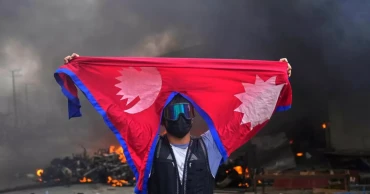
Nepal protests: Social media ban sparks outrage over corruption and nepotism
Nepal’s Prime Minister K.P. Sharma Oli resigned Tuesday after violent protests over a short-lived social media ban left 19 people dead and exposed widespread anger over corruption and nepotism.
The ban, widely seen as an attempt at censorship, triggered youth-led demonstrations that quickly turned into broader unrest against politicians and their families, accused of flaunting wealth while the country struggles with poverty and unemployment.
Analysts say the protests, largely driven by Gen Z, reflect deep frustration with political instability and lack of opportunities. Despite Oli’s resignation and rollback of the ban, demonstrations have spread beyond Kathmandu, with protesters demanding sweeping change and even dissolution of the government.
Observers warn Nepal faces its worst crisis in decades, with youth anger unlikely to subside without major reforms.
10 months ago
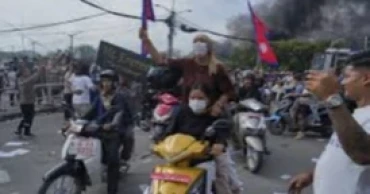
Nepal's Prime Minister resigns amid deadly protests over social media ban, corruption
Nepal's Prime Minister Khadga Prasad Oli resigned on Tuesday following a wave of violent protests sparked by a recent ban on social media platforms. The demonstrations, which escalated into broader outrage over government corruption and elitism, resulted in the deaths of 19 people after police opened fire on protesters in the capital.
The unrest began when the government blocked access to platforms like Facebook, X (formerly Twitter), and YouTube, citing the companies’ failure to register with authorities. Although the ban was lifted on Tuesday, the protests continued, turning into a wider movement led by the country's youth — dubbed the "Gen Z protest."
Anger over the social media restrictions quickly merged with growing frustration over alleged corruption among Nepal’s political elite. Demonstrators set fire to the homes of senior officials — including Oli’s private residence — and even targeted the parliament building. The international airport in Kathmandu was temporarily closed, and some government officials had to be airlifted to safety by military helicopters.
The protesters, many of them young people struggling with high unemployment and lack of opportunity, were particularly incensed by the perceived privilege of the political class and their families — commonly referred to as “Nepo Kids.” According to the World Bank, youth unemployment reached 20% last year, and over 2,000 young Nepalis reportedly leave the country daily in search of work abroad.
“I’m protesting because of the deep corruption in our country,” said student Bishnu Thapa Chetri. “There’s no future for us here.”
Targeting Political Leaders
Protesters stormed and torched the residences of top political figures from various parties, including the president, home minister, and leaders of both the ruling Nepali Congress and the opposition Communist Party of Nepal (Maoist). Oli’s family, however, was at the official residence during the attack.
Authorities imposed a curfew and closed schools in Kathmandu, but demonstrations continued. Protesters demanded justice for those killed and called for the resignation of Prime Minister Oli, chanting slogans like “Punish the murderers in government” and “Stop killing children.”
“We won’t stop until this corrupt regime is gone,” said protester Narayan Acharya, speaking outside the damaged parliament complex.
Police Violence and Rising Death Toll
Monday’s protests drew tens of thousands to Kathmandu’s streets, where demonstrators surrounded Parliament before police began firing live rounds into the crowd. Protesters chanted, “Stop the social media ban. Fight corruption, not free speech,” while waving national flags.
Seven of the 19 who were killed were taken to the National Trauma Center, with many others in critical condition from gunshot wounds to the head and chest, according to hospital staff. Families gathered outside the facility waiting for updates, while many citizens volunteered to donate blood.
Before stepping down, Oli announced the formation of an investigative panel to review the police shootings, with a report expected in 15 days. He also promised compensation for the victims’ families and free medical care for the injured.
Social Media Crackdown Seen as Censorship
The crisis unfolded alongside the government’s push to tighten control over social media through proposed legislation aimed at making platforms more accountable. Critics, however, view the bill as a move to suppress dissent and limit freedom of speech.
The legislation would require social media companies to establish a local presence in Nepal. Human rights groups have condemned it as an infringement on civil liberties.
While some platforms like TikTok and Viber have complied with government rules, major companies like Meta (owner of Facebook and Instagram), Google (YouTube), and X have not responded to the government's requests.
TikTok was previously banned in 2023 for allegedly disrupting social harmony but was reinstated after agreeing to follow Nepali laws, including a pre-existing ban on pornographic content.
10 months ago
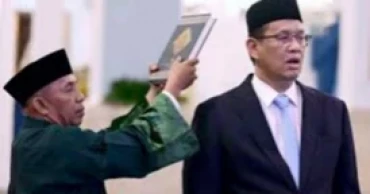
Indonesia’s President dismisses finance and security ministers following deadly protests
President Prabowo Subianto reshuffled his Cabinet on Monday, removing several key ministers after nationwide protests over rising living costs and controversial perks for lawmakers turned violent.
The public unrest, which resulted in multiple deaths, was sparked by revelations that all 580 members of the Indonesian parliament were receiving a housing allowance of 50 million rupiah ($3,075) per month — nearly ten times Jakarta’s minimum wage — on top of their salaries. The protests reflect growing dissatisfaction with Subianto’s leadership and the government’s failure to address economic challenges.
Among those dismissed were Finance Minister Sri Mulyani Indrawati, a respected technocrat with a background at the IMF and World Bank, and Budi Gunawan, the minister responsible for political and security affairs.
Indrawati will be replaced by Purbaya Yudhi Sadewa, an economist and head of the Deposit Insurance Corporation. While Sadewa has experience in government and economic policy, critics argue he lacks direct experience managing state finances.
Protests Turn Deadly
The five-day demonstrations saw violent clashes between protestors and police, with the National Commission on Human Rights reporting 10 deaths, and police confirming 7. One of the most high-profile deaths was that of 21-year-old delivery driver Affan Kurniawan, who was killed when a police armored vehicle drove through a crowd, causing him to fall.
The unrest escalated further after Indrawati’s home, along with several lawmakers' residences, was looted on August 31.
Analysts say these events reflect a deep-rooted frustration with economic issues — including widespread layoffs, declining purchasing power, and perceptions that the government has prioritized political elites over ordinary citizens.
In response to the public outcry, Subianto revoked lawmakers’ perks, including the housing allowance and international travel privileges, in an attempt to calm tensions.
Additional Ministers Removed
Alongside Indrawati and Gunawan, Subianto also dismissed the ministers for cooperatives, youth and sports, and migrant worker protection.
Economic and Market Reaction
Financial markets reacted negatively to the removal of Indrawati. The Jakarta Stock Exchange fell 1.28%, and the rupiah weakened, with one-month non-deliverable forwards dropping 1.1%, reaching their lowest level since May.
Indrawati was widely credited with maintaining fiscal stability and was seen as a key figure in keeping investor confidence high. Her departure raised concerns about Indonesia's economic direction.
Fadhil Hasan, senior economist at the Institute for Development of Economics and Finance, acknowledged Sadewa’s abilities but questioned his suitability for the finance role due to his lack of experience managing national finances.
Sadewa’s Response
At a press conference, Sadewa defended his appointment, highlighting his past roles advising previous administrations and his work in government. He emphasized his market-friendly approach and pledged to consult with Indrawati to ensure a smooth transition.
His priorities, he said, would include driving economic growth through efficient spending without a complete overhaul of the current fiscal system.
Economic Outlook
Subianto campaigned on a promise to raise Indonesia’s economic growth rate to 8% within five years. While this target remains ambitious, official data showed growth at 4.87% in Q1 2025 and 5.12% in Q2.
Sadewa acknowledged the challenge, saying, “If I claimed we could hit 8% right now, I’d be lying. But we’re moving toward that goal as quickly as we can.”
10 months ago
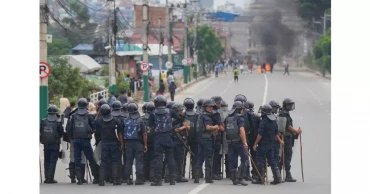
Homes of top Nepalese politicians torched amid growing protests over lifted Social Media ban
Widespread protests erupted across Nepal, with demonstrators setting fire to the residences of senior political leaders in response to a controversial social media ban that had been lifted early Tuesday, following a deadly day of anti-government unrest.
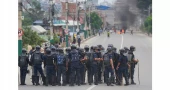
Videos circulating online and reports from local media showed protestors targeting the homes of key political figures in Kathmandu and nearby areas. In response, authorities imposed a curfew in the capital and other cities, while schools in Kathmandu were closed.
Among the properties torched were the homes of Sher Bahadur Deuba, leader of the Nepali Congress; President Ram Chandra Poudel; Home Minister Ramesh Lekhak; and Maoist leader Pushpa Kamal Dahal. A private school owned by Arzu Deuba Rana—Deuba’s wife and current Foreign Minister—was also attacked.
What began as outrage over the government’s ban on social media platforms escalated into a broader expression of public anger over corruption and political dysfunction.
“I’m here because our country is drowning in corruption,” said student protester Bishnu Thapa Chetri. “There’s no future here for young people like me.”
He added that the demonstrators wanted “peace and an end to corruption,” so that people could live and work in Nepal without needing to leave.
Despite the indefinite curfew, demonstrations continued on Tuesday. Protesters chanted slogans like “Punish the murderers in government” and “Stop killing children,” while police broadcast warnings for crowds to disperse.
Public outrage is increasingly directed at Prime Minister Khadga Prasad Oli, whose government has grown unpopular amid accusations of authoritarianism.
“We’re out here because our friends are being killed,” said protester Narayan Acharya. “We want justice and an end to Oli’s regime.”
Durganah Dahal, another protester, accused the government of deliberately targeting students with lethal force. “They killed so many hopeful young people yesterday—how can we stay silent? We’ll protest until this government is gone.”
The government had blocked access to major social media platforms like Facebook, YouTube, and X (formerly Twitter) last week, after they failed to register with local authorities under a new oversight law. Monday’s protest—largely driven by members of Gen Z—drew tens of thousands to the streets, culminating in violent clashes around the Parliament building where police opened fire, killing 19.
“End the social media ban. Fight corruption, not free speech,” protesters shouted, waving national flags.
Nepal’s main trauma hospital, the National Trauma Center, treated many of the injured. “Several have serious wounds, mostly gunshots to the head and chest,” said Dr. Badri Risa. Families gathered in distress while others lined up to donate blood.
Prime Minister Oli has announced a 15-day investigation into the incident and promised compensation for the victims’ families and free medical care for the injured.
Home Minister Ramesh Lekhak resigned during an emergency cabinet meeting late Monday.
The violent unrest comes amid the government’s broader effort to regulate online platforms under new legislation criticized by rights groups as repressive. The proposed law demands that tech companies establish local contact offices and register officially, a move seen by many as a crackdown on free expression.
Roughly two dozen platforms are affected by the rule. While TikTok, Viber, and three others complied, major companies like Google (YouTube), Meta (Facebook, Instagram, WhatsApp), and Elon Musk’s X have not responded publicly.
Nepal had previously banned TikTok in 2023 over concerns it was spreading harmful content, but the ban was later lifted after the platform agreed to follow national laws, including an earlier prohibition on pornography.
10 months ago
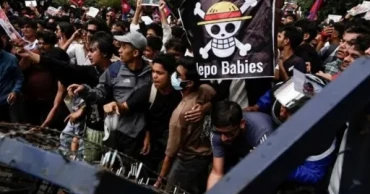
Nepal lifts social media ban after 19 killed in protests
Nepal has withdrawn its social media ban after violent clashes between demonstrators and police left at least 19 people dead.
On Monday, thousands of youths stormed the parliament building in Kathmandu, demanding the government lift restrictions on 26 platforms, including Facebook and YouTube, and urging action against corruption.
The ban was revoked following an emergency cabinet meeting late Monday to "address the demands of Gen Z," Communications and Information Minister Prithvi Subba Gurung said, according to a BBC report.
Over 100 people were injured in the unrest, which also spread to towns beyond the capital.
Platforms like Instagram have millions of Nepali users who depend on them for news, entertainment, and business. Authorities, however, had defended the ban—introduced last week—as a move to combat misinformation, hate speech, and online scams.
Protesters said their anger was not only about the restrictions but also about what they saw as the government’s authoritarian approach. Many carried placards reading "enough is enough" and "end to corruption." Some also threw stones at Prime Minister KP Sharma Oli's residence in his hometown, Damak.
One demonstrator, Sabana Budathoki, told the BBC the ban was "just the reason" for gathering. "Rather than [the] social media ban, I think everyone's focus is on corruption," she said, adding: "We want our country back. We came to stop corruption."
The protests also coincided with the rise of a "nepo kid" campaign on Nepali social media, targeting the lavish lifestyles of politicians’ children and accusing them of being funded by corruption.
Police in Kathmandu used water cannons, batons, and rubber bullets to disperse crowds on Monday. Prime Minister Oli said he was "deeply saddened" by the deaths and injuries, blaming the violence on "infiltration by various vested interest groups." He announced plans to form a panel to investigate the events, provide free medical care to the injured, and extend financial "relief" to victims’ families.
Home Minister Ramesh Lekhak resigned in the evening after heavy criticism of the government’s handling of the protests.
Authorities had originally ordered the blocking of 26 platforms last week for failing to register with Nepal’s communication and information technology ministry. The government has maintained it was not banning social media outright but seeking compliance with national laws.
10 months ago
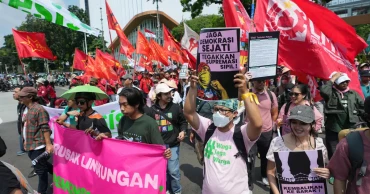
Ministers removed in Indonesia following deadly unrest
Indonesia’s president replaced key economic and security ministers in a Cabinet shakeup Monday after deadly protests over lawmakers' perks and the cost of living erupted across the country.
The Cabinet shake-up followed rising public dissatisfaction with President Prabowo Subianto’s administration and parliament’s perceived insensitivity over economic hardships.
Five ministers lost their jobs, including Finance Minister Sri Mulyani Indrawati, a technocrat who had served as the executive director of the International Monetary Fund and managing director of the World Bank, and Budi Gunawan, the coordinating minister for politics and security.
Subianto chose economist Purbaya Yudhi Sadewa, chairman of the Deposit Insurance Corporation, to replace Indrawati, one of Indonesia’s longest-serving finance ministers.
Violent protests gripped the country, home to more than 280 million people, after reports that all 580 members of the House of Representatives received a monthly housing allowance of 50 million rupiah ($3,075), in addition to their salaries. The allowance introduced last year was nearly 10 times the minimum wage in Jakarta.
The independent National Commission on Human Rights reported 10 people died during the five-day protests and cited an inhumane approach by security forces in handling the demonstrations. Police reported the death toll at seven.
The protests grew more violent following the death of 21-year-old ride-hailing driver Affan Kurniawan. He was reportedly completing a food delivery order when an armored police car sped through a crowd of demonstrators and caused him to fall.
Indrawati also become a target of recent protests over the cost of living and fresh perks for lawmakers. Her house was looted Aug. 31, alongside the homes of a number of lawmakers.
Analysts see the protests as a culmination of public anger over economic problems that the government has not addressed seriously, including widespread layoffs and declining purchasing power.
Calm largely returned after Subianto last week revoked lawmakers' perks and privileges, including the housing allowance, and suspended overseas trips.
Subianto also removed the ministers of cooperatives, the youth and sport and the minister for migrant workers protection.
Stocks in Southeast Asia's largest economy tumbled Monday after Subianto removed Indrawati from his Cabinet, closed down 1.28% at 7,766.85, shedding 100.5 points, while the rupiah slid after the news, with one-month non-deliverable forwards declining 1.1% to 16,583 per dollar, the weakest since May.
Indonesia remains attractive to investment, partly because Indrawati's strong credibility has been recognized both domestically and internationally for successfully maintaining a stable, prudent and sustainable fiscal policy, said Fadhil Hasan, a senior economist at the Institute for Development of Economics and Finance.
However, in recent years, Indrawati had accommodated many presidents’ ambitious programs, which increased government debt and diminished the credibility of her own fiscal policy, Hasan added.
He said that Sadewa, Indrawati’s successor, was a capable economist but lacks a track record in managing fiscal and state finances. “So, I don’t think he’s the best choice,” he said.
Sadewa, 61, highlighted his own experience at a news conference late Monday, noting he had provided fiscal expertise to the last two administrations. He has held several senior government roles, including deputy for maritime sovereignty coordination at the Coordinating Minister for Maritime Affairs Affairs and Investment.
Responding to the market drop after the Cabinet reshuffle, Sadewa said he is “a market person” who will keep Indonesia fiscally healthy and will talk with Indrawati to provide fiscal advice to the government.
The new minister said his focus is to speed economic growth by mapping out fiscal measures and ensuring that government spending is efficient without overhauling systems.
In his campaign for president, Subianto promised to take economic growth to 8% within five years, while official data showing Indonesia’s economy expanded 4.87% in the first quarter of 2025 and 5.12% in the second quarter.
“If I said the economy can grow 8%, I’d be lying. But we are moving in that direction as fast as possible,” Sadewa said.
10 months ago
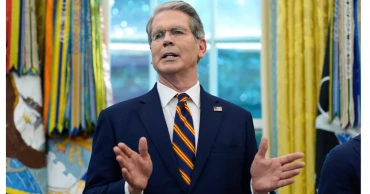
US, EU officials in talks over new Russia sanctions
U.S. and European officials met at the U.S. Treasury Department on Monday evening to discuss various forms of economic pressure to exert on Russia, including new sanctions and tariffs on Russian oil purchases, a person familiar with the meeting told The Associated Press.
The person, who spoke on the condition of anonymity to discuss the meeting, said U.S. officials emphasized to their European counterparts that President Donald Trump is willing to exert significant actions to end the war but expects full cooperation from European partners in whatever actions are taken.
The meeting, which lasted less than two hours, highlighted tariff actions, the need for collective action on whatever is determined on sanctions, and how to manage Russian sovereign assets that are still immobilized largely in Europe, among other issues.
Officials with the Treasury Department, including Secretary Scott Bessent, as well as the White House, State Department and U.S. Trade Representative participated in Monday’s meetings. The European team includes staff focused on energy, sanctions, financial services and trade.
The officials are set to meet again Tuesday.
The meeting comes as Trump has tried to get Russian President Vladimir Putin to agree to sit down with Ukrainian President Volodymyr Zelenskyy for direct talks aimed at ending the 3 1/2-year war. Trump held a summit with the Russian leader last month in Alaska.
It also comes after a Trump-imposed deadline, set in August, for the Kremlin to end its invasion has since passed.
Trump said Sunday that he expected to speak with Putin in the next couple days and acknowledged that the conflict had proved harder to resolve than he anticipated.
“I believe we're going to get it settled,” Trump told reporters. “I have confidence we're going to get it done."
10 months ago
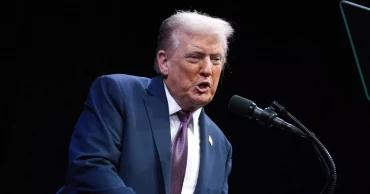
US court upholds $83 million verdict against Trump in Carroll case
A federal appeals court has upheld a civil jury's finding that President Donald Trump must pay $83.3 million to E. Jean Carroll for his repeated social media attacks against the longtime advice columnist after she accused him of sexual assault.
In a ruling issued Monday, the 2nd U.S. Circuit Court of Appeals rejected Trump's appeal of the defamation award, finding that the “jury's damages awards are fair and reasonable.”
Trump had argued that he should not have to pay the sum as a result of a Supreme Court decision expanding presidential immunity. His lawyers had asked for a new trial.
A civil jury in Manhattan issued the $88.3 million award last year following a trial that centered on Trump’s repeated social media attacks against Carroll over her claims that he sexually assaulted her in a Manhattan department store in 1996.
That award followed a separate trial, in which Trump was found liable for sexually abusing Carroll and ordered to pay $5 million. That award was upheld by an appeals court last December.
In a memoir, and again at a 2023 trial, Carroll described how a chance encounter with Trump at Bergdorf Goodman’s Fifth Avenue in 1996 started with the two flirting as they shopped, then ended with a violent struggle inside a dressing room.
Carroll said Trump slammed her against a dressing room wall, pulled down her tights and forced himself on her.
A jury found Trump liable for sexual assault, but concluded he hadn’t committed rape, as defined under New York law.
Trump repeatedly denied that the encounter took place and accused Carroll of making it up to help sell her book.
He also said that Carroll was “not my type.”
The 2023 jury awarded Carroll $5 million to compensate her for both the alleged attack and statements Trump made denying that it had happened.
After that first verdict, the court held a second trial with a new jury for the purpose of deciding damages for additional statements Trump made attacking Carroll’s character and truthfulness.
Trump had skipped the first civil trial but he attended the second, which took place as he was running for president in 2024. Speaking to reporters throughout the trial, Trump portrayed the lawsuit as part of a broader effort to smear him and prevent him from regaining the White House.
His lawyers complained that the judge, in setting rules for the second, damages trial, had barred Trump and his defense team from claiming in front of the jury that he was innocent of the attack. The judge ruled that that issue had been settled by the first jury and didn’t need to be revisited.
10 months ago
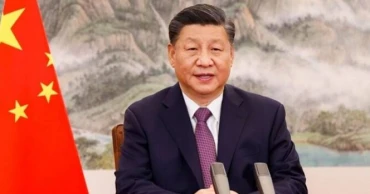
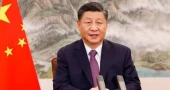
Xi urges BRICS to defend multilateralism, strengthen global cooperation
Chinese President Xi Jinping has called on BRICS nations to jointly uphold multilateralism and defend the multilateral trading system, urging stronger cooperation among emerging economies amid rising global challenges.
Speaking at a virtual BRICS Summit on Monday, Xi said BRICS countries – standing at the forefront of the Global South – must embody the BRICS spirit of openness, inclusiveness, and win-win cooperation.
“At this critical juncture, BRICS countries should act jointly to defend multilateralism and the multilateral trading system, deepen cooperation, and contribute to building a community with a shared future for humanity,” he said.
Xi emphasised that multilateralism remains a cornerstone of international peace and sustainable development. “Multilateralism is the shared aspiration of the people and the overarching trend of our time,” he said. “It provides an important underpinning for world peace and development.”
He urged BRICS members to adhere to the principle of extensive consultation, joint contribution, and shared benefits, and to safeguard the international system with the United Nations at its core and the international order based on international law.
Addressing economic concerns, Xi called on BRICS countries to stand firm in promoting openness and defending the international economic and trade order.
He described economic globalisation as an “irresistible trend of history,” stressing that no country can thrive in isolation. “No matter how the international landscape evolves, we must stay committed to building an open global economy and achieving win-win outcomes,” he said.
President Xi also underlined the importance of BRICS solidarity in addressing shared challenges and fostering common development. “The more closely we work together, the more resilient, resourceful, and effective we are in confronting external risks,” he said.
He reaffirmed China’s readiness to collaborate with fellow BRICS countries on initiatives such as the Global Development Initiative and high-quality Belt and Road cooperation. “We should leverage our respective strengths, deepen practical cooperation, and enhance partnerships in business, finance, science, and technology to strengthen the foundation and momentum of BRICS cooperation.”
“Strong wind tests the resilience of grass, and fierce fire reveals true gold. As long as we take responsibility and support one another, the giant ship of BRICS will weather the shifting international tides and sail far and steady,” he said.
10 months ago
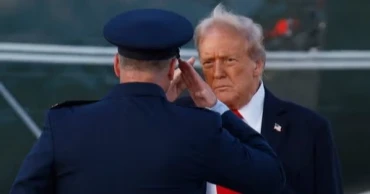
Trump urges Supreme Court to block release of billions in foreign aid
The Trump administration on Monday asked the Supreme Court for an emergency order to keep nearly $5 billion in foreign aid frozen, despite a lower court ruling that the move was likely illegal.
President Donald Trump announced on Aug. 28 that he would not spend $4.9 billion in congressionally approved foreign aid, using a rarely invoked budget maneuver known as a pocket rescission. The authority, disputed in court, has not been used by a president in about 50 years.
U.S. District Judge Amir Ali ruled last week that the administration’s decision violated the law, noting that only Congress can approve rescission proposals. A federal appeals panel also refused to block his ruling, prompting the administration to appeal to the Supreme Court.
Justice Department lawyers said another $6.5 billion in aid under the freeze will be released by Sept. 30, the end of the fiscal year.
Nonprofit groups that filed the lawsuit argued the freeze broke federal law and disrupted urgent humanitarian programs overseas.
10 months ago