Tech
US building unions back tech firms as demand for AI data centres surges
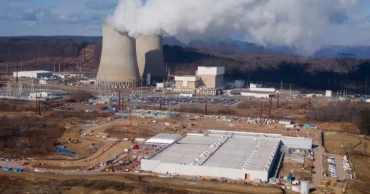
Building trades unions in the United States are emerging as key partners of major technology companies as the country rapidly expands its artificial intelligence infrastructure.
Union workers are playing a central role in constructing large data centres across the country, with demand for labour rising sharply. Many unions are now increasing training programmes and recruiting more apprentices to meet the growing need.
At the same time, unions have aligned themselves with tech firms and supportive government officials, often highlighting concerns that the US is in a strategic race with China to lead in AI development.
Their involvement has also made them a strong voice in local debates, where communities have raised concerns about data centres over issues such as energy use, water demand, rising utility costs and noise.
Union leaders have responded directly to such criticism, stressing the economic benefits these projects bring.
“These projects create thousands of construction jobs in local communities,” said Rob Bair, head of the Pennsylvania Building and Construction Trades Council. He added that instead of rejecting projects outright, communities should negotiate benefits such as improved project plans or funding for local services.
The boom in data centre construction is proving highly beneficial for unions. In some regions, these projects now account for a large share of work hours. Union officials say apprenticeship programmes are expanding rapidly and membership is reaching record levels.
North America’s Building Trades Unions reported record numbers of members and trainees in 2025, with growth driven by data centres, energy projects and government-backed investments in technology and infrastructure.
The surge in demand is also linked to the high energy needs of data centres, which has led to increased construction of power plants and related infrastructure.
Some unions that had struggled with declining work in recent years are now seeing renewed growth. For example, a union in Pennsylvania that had not recruited new apprentices for years is now training hundreds.
Technology companies say they also need more skilled workers and are investing heavily in training programmes, often in partnership with unions.
OpenAI CEO Sam Altman said earlier this year that union construction workers are helping build the foundation of the AI economy. Google also noted that much of the workforce on its data centre projects is unionised and highlighted its funding for electrician training programmes.
Union leaders acknowledge criticism over their close ties with large tech companies but argue that the projects would move forward regardless of their involvement.
“If unions step back, the data centres will still be built,” said Mark McManus of the United Association of Plumbers and Pipefitters. He added that his members are involved in a large share of such projects across the country.
Unions have also become active in political discussions around data centre development. They have supported projects and opposed stricter regulations in several states, including proposals to limit or delay construction.
In some cases, their position has created tension with environmental groups and progressive lawmakers seeking tighter controls.
At local meetings, union members have often voiced strong support for data centre projects, sometimes dominating discussions. In several cities, they have been among the few groups openly backing new developments.
Supporters argue that these projects bring jobs and economic growth, while critics continue to raise concerns about environmental impact and community costs.
3 months ago

Teens in US rely more on social media and influencers for news, study finds
Teenagers in the United States are increasingly turning to social media platforms and online influencers for news, signalling a clear generational shift in how people consume information, according to a new national study.
The survey by the Media Insight Project found that 57 percent of people aged 13 to 17 get news from social media at least once a day, compared with 36 percent of adults.
A similar pattern was seen in reliance on influencers and independent content creators. While 43 percent of adults said they sometimes get information on national issues from such sources, the figure rises to 57 percent among teenagers.
The study, a collaboration between The Associated Press-NORC Center for Public Affairs Research, the American Press Institute and journalism schools at Northwestern University and the University of Maryland, highlights the growing influence of nontraditional news sources in teens’ daily lives.
Despite this shift, traditional journalism still holds importance, though trust is evolving. Robyn Tomlin, executive director of the American Press Institute, said audiences, particularly younger ones, are increasingly drawn to creators they perceive as authentic and transparent.
She noted that while national and local news outlets remain trusted, the rise of personal connections with digital creators could significantly shape the future of journalism.
The survey also found teenagers are more likely than adults to use search engines and artificial intelligence tools to access news. Around 40 percent of teens said they get news daily through search, while about 20 percent rely on AI chatbots.
However, television and digital news platforms continue to attract similar levels of audiences across age groups. About four in 10 both adults and teenagers said they watch TV news daily, with a comparable number accessing digital news sites or apps.
Tom Rosenstiel, a journalism professor at the University of Maryland involved in the study, said video-based news remains popular but is evolving in format, with platforms like YouTube offering a different experience from traditional broadcasts.
Despite frequent use of influencers and AI, many teenagers remain cautious about the information they receive. Only 11 percent of teens expressed strong confidence in information from AI chatbots, compared with 4 percent of adults.
Teenagers also showed greater confidence in their ability to identify AI-generated content, with about one-third saying they can clearly distinguish it from human-created material, compared with roughly one in five adults.
Trust in influencers is also limited. Just 12 percent of teenagers said they have a high level of confidence in information from independent creators, though this is still higher than the 6 percent reported by adults.
The study further found that teenagers are more interested in entertainment-related news, including celebrities, music, movies and sports, while adults tend to focus more on politics, business and the economy.
At the same time, both groups are showing signs of news fatigue, especially regarding politics. A majority of respondents said they often or sometimes avoid political news, with around six in 10 saying they steer clear of coverage related to US President Donald Trump.
Rosenstiel said many people are becoming more selective about the news they consume, partly due to a sense of being overwhelmed by current events.
He added that teenagers often seek information differently, showing less interest in avoiding celebrity news or social media content. This suggests that what is considered “important” news may vary widely, posing challenges for traditional journalism in defining its role.
3 months ago

Indonesia asks social media platforms to disclose under-16 account suspensions
Indonesia has urged social media companies and digital platforms to publicly disclose how many accounts belonging to users under 16 have been suspended under new government restrictions, authorities said Wednesday.
“We will continue to insist that compliance alone is not enough; we must also report the figures to the public in the interest of transparency,” said Communication and Digital Affairs Minister Meutya Hafid.
The regulation, introduced at the end of March, bars children under 16 from accessing digital platforms that could expose them to risks such as pornography, cyberbullying, online fraud and addiction. Hafid noted that young people in Indonesia spend up to eight hours a day online.
Not all platforms complied immediately with the rules, which affect around 70 million children and young people in the country. TikTok was the first to report progress, saying it had deactivated 1.7 million accounts belonging to underage users.
Hafid suggested the country’s large user base may partly explain the slow pace of compliance among platforms.
Seven of the eight platforms classified as high-risk — including YouTube, TikTok, Facebook, Instagram, Threads, X and Bigo Live — have agreed to restrict access for children. Only Roblox has yet to commit to blocking under-16 users and did not immediately respond to requests for comment.
YouTube announced its commitment three weeks after the regulation took effect but has not provided figures on how many underage accounts have been suspended.
“We remain focused on protecting the community and will continue working closely with the Indonesian government to support a secure digital future for the next generation,” a YouTube spokesperson said.
Restrictions on under-16 access to social media were first introduced in December in Australia, where companies removed access to about 4.7 million accounts identified as belonging to children. Indonesia is the first country in Southeast Asia to adopt similar measures.
Other countries, including Spain, France and United Kingdom, are also considering or implementing restrictions amid concerns about the impact of unregulated online content on children.
Hafid acknowledged ongoing challenges in enforcing the rules, saying platforms are allowed to decide their own methods for verifying users’ ages.
“We understand the technology will continue to evolve rapidly. However, the platform is responsible for determining the best and most appropriate technology for its needs,” she said.
Critics, however, have raised concerns about enforcement, noting that reliable age verification often requires collecting sensitive personal data, which could create privacy and security risks. Some children may also bypass restrictions using false identities or accounts registered under adults, said Nenden Sekar Arum, executive director of the Southeast Asia Freedom of Expression Network (SAFEnet).
She stressed the need for stronger government oversight of verification systems to ensure consistent enforcement.
“The core problem is not the presence of children in the digital space, but how that digital space is shaped into a safe ecosystem. And how to ensure that those who are actually making this ecosystem harmful are held accountable. That is what needs to be addressed,” Arum said.
3 months ago
Microsoft cuts OpenAI revenue share as AI partnership shifts
Microsoft has said it will no longer share revenue with ChatGPT maker OpenAI, marking a new step in reshaping their high-profile artificial intelligence partnership.
The move comes as both companies adjust their relationship after years of close cooperation that helped fuel the global AI boom. OpenAI previously relied heavily on Microsoft’s cloud computing infrastructure to develop and run its systems, while Microsoft used OpenAI’s technology to power its Copilot AI assistant.
However, the partnership has evolved as OpenAI transitions from its nonprofit origins into a more commercial structure and prepares for a potential initial public offering. The company has also expanded its cloud partnerships with Amazon, Google and Oracle to reduce reliance on Microsoft.
Despite the change, OpenAI said it will continue to share a portion of its revenue with Microsoft until 2030. Both firms also confirmed that Microsoft remains OpenAI’s primary cloud provider, with Azure expected to host its products first unless technical limitations arise.
Amazon chief executive Andy Jassy described the development as a “very interesting announcement” and said OpenAI’s models would soon be available on Amazon’s AI platform Bedrock.
Analysts said the revised arrangement could support OpenAI’s path toward an IPO by expanding its cloud flexibility, while also giving Microsoft greater independence in developing its own AI systems and partnerships, including with rival firms.
3 months ago

Elon Musk and OpenAI CEO Sam Altman face off in landmark AI trial
Tech billionaires Elon Musk and Sam Altman have gone on trial in a high-stakes legal battle over the origins and direction of OpenAI, in a case that could influence the future balance of power in artificial intelligence.
Jury selection began Monday in Oakland, California, marking the start of proceedings in a lawsuit that centres on OpenAI’s founding in 2015 as a nonprofit organisation and its later transition into a highly valued commercial enterprise now worth an estimated $852 billion.
Musk, who initially helped fund the company with around $38 million, alleges that Altman and other executives deviated from OpenAI’s original mission of developing AI for the public good and instead shifted toward profit-driven operations without proper transparency.
The lawsuit accuses Altman and OpenAI leadership of “betrayal” and deceptive conduct, claims the company has dismissed as unfounded and motivated by Musk’s rivalry with OpenAI through his own AI firm, xAI.
The case is being heard by US District Judge Yvonne Gonzalez Rogers, with jurors also providing advisory input. The judge questioned potential jurors about their views on Musk, Altman and artificial intelligence, noting that some expressed negative opinions about Musk but said they could remain fair.
Musk, the world’s richest person, has sought damages that were once valued at more than $100 billion, though pre-trial rulings have significantly reduced the scope of his claim.
The trial also comes at a sensitive time for Musk, who recently faced separate legal findings involving investor deception in his Twitter acquisition, while OpenAI continues to expand rapidly in the global AI race.
Altman, whose public prominence rose sharply after the launch of ChatGPT in 2022, is expected to testify alongside Musk, with the proceedings likely to expose internal communications and early discussions about AI safety and commercialisation.
The case is widely seen as a defining legal confrontation in the technology sector, with potential implications for how artificial intelligence companies are structured and governed in the future.
3 months ago

AI boosts efficiency in industrial production in east China
Companies across China are increasingly using artificial intelligence to make industrial production faster and more efficient.
In east China’s Shandong Province, a steel plant has introduced smart systems powered by AI and big data to monitor operations. Hundreds of screens display every stage of the production process in real time.
With these advanced tools, workers can track performance instantly and even control blast furnaces located kilometers away with a single click, helping
3 months ago

Cellphone data that exposed bank robber now at center of Supreme Court case
WASHINGTON, Apr 26 (AP/UNB) – A cellphone helped identify bank robber Okello Chatrie after he stole $195,000 from a credit union in suburban Richmond, Virginia, and evaded police until investigators used a powerful digital tracking method now under Supreme Court scrutiny.
Authorities used a “geofence warrant” issued to Google, creating a virtual boundary around the crime scene. The tool collected location data of mobile devices nearby, revealing that Chatrie’s phone was present around the time of the robbery.
Chatrie was later identified, and a search of his home uncovered nearly $100,000 in cash, including bank-banded notes signed by a teller. He pleaded guilty and received a nearly 12-year prison sentence, though he is now challenging the use of geofence evidence.
China’s DeepSeek unveils upgraded AI model as competition with US firms intensifies
The Supreme Court will decide whether such warrants violate the Fourth Amendment protection against unreasonable searches. The case raises broader questions about applying a 1791 constitutional provision to modern digital surveillance.
Geofence warrants work in reverse of traditional searches, identifying all devices in a location rather than targeting a known suspect. Prosecutors say they help solve crimes without eyewitness or camera evidence, while civil liberties advocates warn they sweep in innocent people and could expand digital surveillance.
Similar warrants have been used in investigations of the January 6, 2021 US Capitol riot, pipe bomb incidents in Washington, and homicide cases across several states.
Courts remain divided, with some ruling them unconstitutional “general warrants,” while others uphold their use under certain conditions. A federal judge initially found a rights violation in Chatrie’s case but allowed evidence under a good-faith exception, a decision later upheld on appeal.
The Supreme Court previously ruled in 2018 that long-term warrantless cellphone tracking violated privacy rights, with Chief Justice John Roberts noting the vast amount of location data collected through modern mobile networks.
3 months ago
China’s DeepSeek unveils upgraded AI model as competition with US firms intensifies
Chinese artificial intelligence startup DeepSeek on Friday released preview versions of its latest AI model, stepping up competition with leading US tech firms.
The new V4 model has been highly anticipated, with users keen to compare it with rivals such as ChatGPT by OpenAI, Claude from Anthropic and Gemini by Google.
The company introduced “pro” and “flash” versions of the open-source V4 model, saying they offer major improvements in knowledge, reasoning ability and “agentic” functions, which allow the system to complete complex tasks on its own.
DeepSeek also said the new model partly runs on chips developed by Huawei, reducing dependence on US chipmaker Nvidia.
V4 follows the earlier V3 model released in late 2024. However, it was DeepSeek’s reasoning-focused R1 model, launched in January 2025, that drew global attention for being more cost-effective than similar systems from US firms.
The company claims its top version, “V4 Pro Max,” performs better than OpenAI’s GPT-5.2 and Google’s Gemini 3.0-Pro in several reasoning tests, though it falls slightly behind their more advanced versions. The launch came shortly after OpenAI introduced its GPT-5.5 model.
DeepSeek also said its V4 “pro” version could outperform Claude’s Sonnet 4.5 and come close to the performance of Claude’s Opus 4.5 model in handling complex tasks. The “flash” version is designed to deliver similar results in simpler tasks with faster performance.
Analysts say the new model could be a strong competitor.
“Based on early results, DeepSeek V4 looks highly competitive with US rivals,” said Lian Jye Su of research firm Omdia.
Marina Zhang of the University of Technology Sydney described the launch as an important step for China’s AI sector as global competition grows.
DeepSeek offers free chatbot services on web and mobile platforms and promotes its technology as open source, allowing developers to modify and build on it.
The company said both versions of V4 can process up to 1 million tokens of information at a time, a significant increase from the 128,000-token limit in V3.
Huawei confirmed its Ascend chips are compatible with the new model, highlighting China’s efforts to reduce reliance on US technology.
A January report from Microsoft showed DeepSeek is gaining popularity in developing countries, especially where Huawei devices are widely used.
However, some experts remain cautious. Ivan Su of Morningstar said the new model is a solid update but not as groundbreaking as the earlier R1 release.
Competition in China’s AI market has also increased, while independent testing is still needed to verify DeepSeek’s performance claims.
Meanwhile, tensions remain over accusations from US companies. Anthropic and OpenAI have alleged that DeepSeek used their models’ outputs to improve its own systems, a claim also echoed by US officials.
China has rejected the allegations, calling them unfair attempts to limit the growth of its technology companies.
3 months ago

Meta to cut about 10 percent workforce as Microsoft rolls out voluntary retirement plan
Meta Platforms plans to cut about 10 percent of its global workforce as part of ongoing restructuring aimed at boosting efficiency while expanding investments in artificial intelligence (AI), according to media reports citing an internal memo.
The planned reduction would affect roughly 8,000 employees, based on Meta’s reported workforce of 78,865 as of December 31, 2025.
The company said it remains focused on “operating efficiently” while continuing heavy investment in AI infrastructure and talent. It also projected capital expenditures of between $115 billion and $135 billion in 2026, driven by its Meta Superintelligence Labs initiative and core business expansion.
Meanwhile, Microsoft has introduced a one-time voluntary retirement programme for a small percentage of long-serving US employees, a move that reports suggest could involve thousands of workers.
As of June 30, 2025, Microsoft employed about 228,000 full-time staff worldwide, including 125,000 in the United States, according to its annual report.
The company has also significantly increased spending on AI infrastructure. In its fiscal 2026 second-quarter earnings call, Microsoft said capital expenditures reached $37.5 billion, with around two-thirds allocated to short-lived assets such as GPUs and CPUs.
The developments highlight how major US technology firms are reshaping their workforce structures while ramping up investment in AI-driven systems and services.
3 months ago

China launches new test satellites for internet technology
China successfully sent a new set of test satellites for internet technology into space from the Xichang Satellite Launch Center in the southwestern Sichuan Province on Friday.
The satellites were launched at 2:35 p.m. (Beijing Time) aboard a Long March-2D carrier rocket and have entered the preset orbits successfully.
3 months ago