tech

Tokyo court grants legal protection to human voice in AI clone case
A Tokyo court has recognized legal protection for a person's voice in a landmark case involving the unauthorized use of an artificial intelligence-generated voice resembling that of a popular Japanese anime voice actor.
The Tokyo District Court on Wednesday ruled in favor of actor Kenjiro Tsuda, who had asked TikTok to remove an account that used an AI-generated voice similar to his distinctive deep voice.
The decision marked the first time a Japanese court has recognized a legal right to one's voice. The ruling could be significant for anime voice actors, who have become increasingly concerned about the use of AI to imitate their voices on social media.
Tsuda is best known for voicing characters such as Kento Nanami in the popular anime series "Jujutsu Kaisen."
In his lawsuit, Tsuda said the anonymous operator of the TikTok account "Nanami" had improperly benefited from his voice. The account used an AI-generated voice to narrate more than 180 videos about urban legends and paranormal topics.
Presiding Judge Aya Takahashi said in the court ruling that a person's voice, like their portrait, can represent their individual personality.
She said the unauthorized use of Tsuda's voice with the clear intention of benefiting from its commercial appeal amounted to an infringement of his publicity rights.
The account had more than 200,000 subscribers as of November 2025, and viewers frequently pointed out the similarity between the narrator's voice and Tsuda's.
The defendant argued that the videos used an AI-generated voice that merely sounded like Tsuda's and was not his actual voice. The defendant also said the videos had not harmed Tsuda's reputation as a voice actor.
The court, however, did not order the removal of all the videos using the voice because the TikTok account had already been shut down.
The ruling comes amid growing concern among Japanese voice actors over AI technology being used to replicate their distinctive voices.
In 2024, OpenAI said it would stop using one of its ChatGPT voices after actor Scarlett Johansson said it sounded strikingly similar to her voice.
Last year, Oscar-winning actors Michael Caine and Matthew McConaughey reached agreements with voice-cloning company ElevenLabs allowing its AI technology to replicate their voices.
27 days ago

Newsom signs California laws to protect workers from AI-related risks
California Gov. Gavin Newsom signed several laws Wednesday aimed at protecting workers from potential risks associated with artificial intelligence, including job losses and workplace surveillance.
The new laws prohibit employers from using AI and biometric data to predict workers' emotional states. They also require employers to provide written notices when AI is involved in mass layoffs and prevent companies from relying on AI to make decisions about firing employees.
Newsom also signed an executive order directing state agencies to continue using the term “artificial intelligence” rather than “super intelligence,” a term President Donald Trump recently instructed US diplomats to use.
“AI should expand opportunity — not come at the expense of workers and families,” Newsom said in a statement. “As this technology reshapes the workplace, California is putting people at the center.”
At a news conference Wednesday, Newsom criticized the Trump administration for not adopting comprehensive federal rules on AI. Trump said Tuesday that major technology companies had agreed to voluntarily regulate AI development.
California earlier this month approved a law requiring AI chatbot operators to conduct risk assessments before launching their products. Newsom also issued an executive order directing the state to consult experts on stronger oversight of the technology.
“We have to do a lot more in the absence of federal leadership,” Newsom said, leaving open the possibility of calling lawmakers into a special session to consider additional AI measures.
Wednesday was Newsom's final day to sign or veto legislation before leaving office in January. He also signed a law creating tax credits to help local news organizations, including newspapers, digital outlets and television stations, hire and retain journalists.
Newsom criticized what he described as Trump's actions against the press, citing restrictions placed on news organizations at the White House.
He also discussed the November midterm elections, which will determine control of Congress. Newsom has been involved in Democratic efforts over congressional redistricting and said the election would have implications for the 2028 presidential race.
“There will not be a free and fair election in 2028 unless we take back the House of Representatives,” he said.
Asked whether he had set a deadline to decide if he would run for president in 2028, Newsom said, “That moment will arrive when it arrives.”
Former Democratic presidential nominee Kamala Harris has also said she is considering a 2028 presidential campaign. Newsom recently told CNN that he would not run if Harris entered the race. He said Wednesday that they had not spoken since that interview.
Newsom also discussed a November ballot proposal to temporarily increase taxes on billionaires, which he has opposed. He said he respected supporters of the measure, including Vermont Sen. Bernie Sanders, who want to address income inequality.
“He's spot on about the balance between the rich and the poor,” Newsom said of Sanders. “On this issue, we fundamentally disagree.”
Newsom's remarks came hours before a gubernatorial debate between Democrat Xavier Becerra and Republican Steve Hilton.
Asked whether he planned to watch the debate, Newsom replied, “No.”
27 days ago

Right Livelihood Award honors four groups, individuals fighting injustice
The Right Livelihood Award on Wednesday honored two women and two women-led organisations for challenging authoritarian rule, violence and discrimination against women, and the harmful effects of artificial intelligence, the Stockholm-based foundation said.
The recipients are Pakistani human rights lawyer Jalila Haider, Ethiopian-born AI researcher Timnit Gebru, the Georgian Young Lawyers' Association and the Rural Women's Assembly, a network of women farmers across Southern Africa.
The annual award was established in 1980 by Swedish-German philanthropist Jakob von Uexkull to recognise work aimed at creating a more just and peaceful world. It is traditionally announced shortly before the Nobel Prizes, which are due to be announced from next Monday.
Right Livelihood said the recipients were selected for their “resistance to systems that push people to the margins” and their efforts to put people at the centre. They were chosen from 200 nominations from 72 countries.
“Ole von Uexkull, the founder's nephew and the organisation's executive director, said the award recognises women who challenged systems controlled by autocrats, patriarchal structures and powerful technology companies.
Jalila HaiderHaider, a human rights lawyer, was recognised for defending vulnerable communities in Pakistan against state repression, discrimination and ethnic violence.
She is the first female lawyer from Pakistan's Hazara community. Through legal work and community advocacy, she has helped thousands of ethnic, gender and religious minorities and refugees seek justice, the foundation said.
Her law firm has also helped more than 600 political activists and human rights defenders regain their right to travel freely.
Rural Women's AssemblyThe Rural Women's Assembly was honoured for organising rural women across Southern Africa to defend land, seeds and bodily autonomy against corporate and patriarchal control.
The self-organised movement represents more than 178,000 small-scale farmers in 11 Southern African countries.
It has established 24 sites where farmers preserve and reproduce seeds for future planting and has documented hundreds of local seed varieties, helping protect traditional seed-saving and exchange practices.
Georgian Young Lawyers' AssociationThe Georgian Young Lawyers' Association received the award for its work to protect democracy and civic participation amid what Right Livelihood described as an authoritarian crackdown.
Founded in 1994 by volunteer lawyers, the organisation helped draft Georgia's first post-independence constitution.
According to the foundation, it has secured major legal victories, including protections for people with disabilities, free education for all children and compensation for victims of Soviet-era repression.
Timnit GebruAI researcher Timnit Gebru was recognised for challenging concentrated corporate power in artificial intelligence and promoting technology based on justice, human experience and individual agency.
Born in Ethiopia to a family of Eritrean origin, Gebru is the founder of the Distributed AI Research Institute.
Right Livelihood said her work examines the control of AI by a small number of powerful companies and highlights harms already caused by AI systems, particularly to communities facing discrimination and exclusion.
28 days ago

Bangladesh to set up first AI training centres in Sylhet: Muktadir
Commerce Minister Khandakar Abdul Muktadir on Tuesday said the government will set up several artificial intelligence (AI) training centres in Sylhet – first of its kind – to equip young people with skills for AI and IT-related work.
“We will start this initiative in Sylhet and gradually expand it to other districts of the division. This will prepare the new generation for freelancing and the international IT sector, while also creating more opportunities to earn foreign currency for the country,” he said.
The minister was speaking at a freshers’ reception and farewell programme organised by the Dhaka University unit of the Jalalabad Chhatra Kalyan Samity at the TSC auditorium of Dhaka University.
Muktadir said there is vast potential for freelancing in Bangladesh, particularly in Sylhet, with many young people currently earning between $500 and $5,000 a month, while some top-tier freelancers earn much more.
The proposed training programme aims to help more young people tap into this potential and become self-reliant earners, he said.
Through freelancing and IT-based work, young people can earn foreign currency and help attract IT-related work from overseas firms to Bangladesh, the minister added.
Stressing the need for investment in education, health and research, he said development is an integrated process.
Muktadir said countries that have achieved sustainable development made key investments in health, education, research and innovation.
Bangladesh must address fundamental challenges in education and health before it can make adequate investments in research, he said.
Without long-term and consistent investment in these two sectors, the minister said, skilled human resources and sustainable economic progress are not possible.
Speaking about the government's target of raising investment in the areas, he said the Prime Minister identified education and health as two priority areas after the present government took office.
Muktadir said the government aims to gradually increase budgetary allocations so that each sector receives an amount equivalent to 5 percent of GDP.
However, describing it as a long-term goal, he said reaching that level is not easy and a long way remains to be covered.
The minister also expressed concern over the state of education in the Sylhet region, saying the division lags behind in divisional literacy rates and various education indicators.
He said the region's position is below expectations compared to the national average in both urban and rural areas, and it also trails in the number of schools, pass rates, quality of primary education, and students' reading and numeracy skills.
Muktadir, however, said this is not due to any lack of talent or capability among the people of Sylhet.
A large number of people from the region have established notable positions in education, politics, business and various other professions in the UK, North America and other countries, he said.
Causes of the region's educational shortcomings, therefore, must be sought in infrastructure, institutional capacity, leadership and other structural limitations, the minister added.
Underscoring the vital role of higher education in building a knowledge-based society and a prosperous future, he said students should not confine university life to earning degrees, but prepare themselves as skilled human resources capable of leadership, research, innovation and nation-building.
Addressing the freshers, Muktadir urged them to make the most of university opportunities and acquire skills that will enable them to contribute effectively to society and the country as well as themselves.
He also called on outgoing students to work with integrity, responsibility and a spirit of service to the nation in their professional life.
Praising the activities of the Jalalabad Chhatra Kalyan Samity, the minister said the organisation can serve as a "beacon of light" in keeping the people of the Sylhet division living in Dhaka united and in advancing Sylhet.
He urged current and former students to strengthen mutual communication and cooperation to that end.
At the programme, newly admitted students from Sylhet division at Dhaka University were welcomed with flowers, while high-achieving students who successfully completed their university studies were given farewell receptions.
28 days ago

Bangladesh, Google explore cooperation in education, AI, digital skills
Bangladesh and Google have explored potential cooperation in education modernisation, artificial intelligence, digital skills, cloud computing, cybersecurity and responsible technology use.
A high-level Bangladesh ministerial delegation, led by Prime Minister’s Adviser on Finance and Planning Rashed Al Mahmud Titumir held discussions with senior Google executives at the company's headquarters in Mountain View, California, on Monday.
The delegation included State Minister for Foreign Affairs Shama Obaed Islam, State Minister for Primary and Mass Education Boby Hajjaj, Prime Minister’s Adviser on Posts, Telecommunications and Information Technology and Science and Technology Rehan Asif Asad, Prime Minister’s Protocol Officer-2 Kamrul Islam and Deputy Press Secretary Md Jahidul Islam, Bangladesh Ambassador to the United States Tareq Md Ariful Islam and Consul General of Bangladesh in Los Angeles Kazi Muhammad Jabed Iqbal.
The Google side was led by Divya Jani, vice president, Strategy and Operations, Google for Education, with participation from Google executives and specialists, including Mara Ritucci, Abu Saleh, Grace Kelly and Maria Tubio.
The meeting focused on using technology and AI to modernise Bangladesh's education system, strengthen teachers and improve learning outcomes.
Titumir stressed the importance of connecting education, technology and skills with employment, productivity and sustainable economic development.
Shama Obaed emphasised the importance of a long-term partnership with Google in skills development, institutional capacity-building and responsible technology use.
Boby Hajjaj outlined priorities for modernising primary education, including curriculum development, teacher training, digital connectivity, improved monitoring and technology-enabled learning.
The discussions covered a possible integrated digital education ecosystem, including learning and school management systems, student assessment, digital content and technology-based school inspection and monitoring.
Potential cooperation in AI-supported teacher training, digital safety, teacher certification and responsible classroom use of AI was also discussed.
The Bangladesh side highlighted opportunities for cooperation in AI, virtual learning, cloud computing, cybersecurity and data science, as well as developing Bangla-language AI capabilities and promoting Bangladeshi education, culture and creative content globally.
The meeting concluded with interest in forming working groups between Google and relevant Bangladesh government agencies to identify priority initiatives and develop measurable areas of cooperation.
28 days ago
China opens four high-speed rail sections, expanding national network
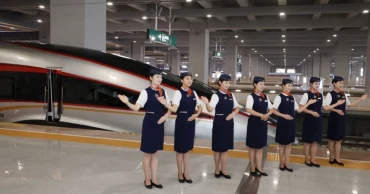
China, which has the world’s largest high-speed railway network, opened four major high-speed rail sections to passengers Monday, improving connections between several regions and making travel faster and more convenient.
The new sections link Xiong’an in Hebei Province with Shangqiu in Henan Province, Xi’an with Ankang in Shaanxi Province, Yichang with Xingshan in Hubei Province, and Harbin with Yichun in Heilongjiang Province.
Covering northern, northwestern, central and northeastern China, the new rail links are expected to improve regional connectivity, support tourism and contribute to local economic growth.
In northern China, the 552-km Xiong’an-Shangqiu railway passes through several cities and areas in Hebei, Shandong and Henan provinces before reaching Shangqiu.
Han Yong, deputy director of the passenger transport center of China Railway Beijing Group Co., Ltd., said the fastest train journey between Xiong’an and Shangqiu will take about 2 hours and 27 minutes.
The new route is expected to strengthen links between Xiong’an New Area and major markets in northern and central China, he said.
In northwest China, the 171-km Xi’an-Ankang section crosses the Qinling Mountains. Engineers had to deal with difficult geological conditions while taking measures to protect the environment.
With trains designed to travel at up to 350 km per hour, the line reduces travel time between Xi’an and Ankang to about 45 minutes.
The Yichang-Xingshan section in central China also passes through mountainous terrain. The railway crosses the Daba Mountains through a 16.9-km deep-buried tunnel and over a major high bridge.
China Railway Wuhan Bureau Group Co., Ltd., which operates the line, said the railway connects two major high-speed routes — the Shanghai-Chongqing-Chengdu high-speed railway along the Yangtze River and the Zhengzhou-Chongqing high-speed railway.
The connection is expected to support economic development along the Yangtze River Economic Belt.
In northeastern China, the 318-km Harbin-Yichun section is the northernmost high-speed railway built in the country.
Yichun West Station, the line’s terminal station, is located at about 47 degrees north latitude. Shi Qinwei, head of the station project at China Railway Construction Group Co., Ltd., said it is China’s first high-speed railway station built in a permafrost region.
The railway connects Harbin, a popular winter tourism destination, with Yichun, known for its forests and summer tourism. It cuts travel time between the two cities from about seven hours to around two hours.
The line also extends China’s high-speed railway network farther into its northern regions.
Opening just before the National Day holiday, the new railways are expected to increase tourist travel between major cities and attractions along the routes, including the Three Gorges Dam in Yichang and the forests of Yichun.
China State Railway Group Co., Ltd. expects about 284 million passenger trips during the Mid-Autumn Festival and National Day holiday period from Sept. 23 to Oct. 8.
China has continued to expand and improve its high-speed rail network to meet growing travel demand and support economic activity.
By the end of 2025, the country had 165,000 km of operational railway lines, including more than 50,000 km of high-speed rail.
Railway fixed-asset investment reached 511.8 billion yuan, or about $75.9 billion, during the first eight months of the year, up 1.5% from the same period a year earlier, according to China State Railway Group.
Under national development plans, China aims to expand its high-speed rail network to 70,000 km by 2035. The planned network will include eight north-south lines and eight east-west lines, connecting major cities, urban clusters and important economic regions across the country.
29 days ago
China’s embodied AI robots move from training rooms to real-world jobs
In China, graduation ceremonies are no longer limited to human students. Robots are also completing training and moving into jobs.
Thirty robots formed the first class at a robot school in Hangzhou, east China’s Zhejiang Province. After more than two months of training, four have graduated and taken up formal jobs.
One now works as a museum guide in Hangzhou, another leads visitors around the robot school, while a third inspects equipment at a Nestlé production workshop in Tianjin. The fourth has traveled to the Republic of Korea to perform on the piano.
Their progress shows one of the major challenges facing embodied artificial intelligence, or AI designed to interact with the physical world. Training robots for real-world tasks requires facilities, data and testing environments that individual companies or users may not be able to build on their own.
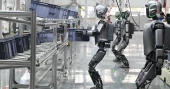
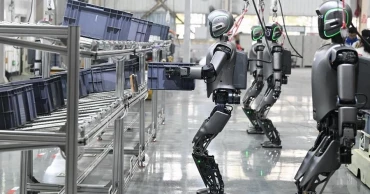
In Xiong’an, a planned city about 105 km southwest of Beijing, robots are learning everyday tasks including collecting garbage, arranging shelves and transporting goods at a specialized training center.
Human instructors use full-size models of workplaces and public areas to train the machines. Wearing virtual-reality headsets and exoskeletons, they control robots while the machines practice tasks in simulated settings.
Training a robot for even a simple task can take considerable time. Liu Rui, an instructor with a digital urban technology subsidiary of China Xiong’an Group, said more than 1,000 repetitions were needed to teach a robot the basic action of picking up an object.
The robot then had to learn the complete sequence of picking up garbage, standing upright and placing it in a bin. Mastering those three actions took another week.
Each practice session also creates valuable training data. Instructors label the information, divide movements into smaller steps and identify objects in individual frames. This allows robots to better understand their surroundings and determine what action to take.
China had completed or put into operation more than 70 robot training facilities by the end of June, while more than 40 others were being built or planned, according to the China Academy of Information and Communications Technology.
The growing network is becoming part of China’s wider AI and robotics industry. More than 6,200 AI companies were operating in the country in 2025, with the core AI industry valued at more than 1.2 trillion yuan, or about $173.9 billion, according to the Ministry of Industry and Information Technology.
Official data also showed that China developed more than 400 complete humanoid robot products in 2025, accounting for more than half of the global total. Chinese manufacturers made up 97% of global humanoid robot shipments during the first half of 2026, according to a report presented at the 2026 World Robot Conference.
Jiang Lei, chief scientist at the National and Local Co-Built Humanoid Robotics Innovation Center, said embodied AI had progressed from “zero to one,” but expanding it from “one to 10” remains difficult.
He said the main challenges include setting standards, managing engineering projects and carrying out pilot-scale testing. A major issue is making robots capable of adapting to different real-world situations.
China’s large manufacturing sector gives robot developers both a major market and a wide variety of real and simulated environments where machines can be trained and tested.
The expansion of robot schools and training centers is also turning training data into an important economic resource for embodied AI.
Large language models and multimodal AI systems have developed rapidly by using huge amounts of written and online data. Embodied AI is different because robots must learn how to physically interact with the world.
A factory, warehouse or restaurant may require robots to use different levels of force, accuracy and movement. Collecting enough high-quality data for all these situations remains expensive and difficult.
Industry analysts say much of this information has never been systematically collected, processed or stored.
In 2025, when China Xiong’an Group worked to connect its digital platform more closely with the physical city, several leading AI companies approached the group to buy high-quality datasets containing tens of millions of hours of data.
Cao Yue, a manager at the group’s digital urban technology subsidiary, said training datasets produced at the Xiong’an robot school are used to develop AI models and are also stored in an urban data space, where they can later be shared or traded.
In this way, the robot school also serves as a “megafactory” producing the data needed to train embodied AI.
At a national pilot base for embodied AI applications in Hangzhou, companies can use computing resources, data, AI models and testing environments through a public technical platform.
Zhang Haiwei, founder of a robotics technology company in Hangzhou, said companies previously spent tens of millions of yuan just to collect training data for a single real-world application.
By joining the shared facility, he said, startups can access national-level resources in one place and reduce their research and development costs during the early testing stage.
The approach is simple: rather than requiring every company to build its own training site, data system and testing environment, shared facilities can reduce costs and help transform laboratory prototypes into robots capable of working in real-world settings.
The Human QuestionAs more robots enter workplaces, another question is becoming increasingly important: What will happen to human workers?
Yu Jiang, a researcher at the Chinese Academy of Sciences, said technological changes can remove some jobs while creating new ones.
He compared the transition to the arrival of automobiles, when some horse-carriage drivers eventually became automobile drivers.
Xiong Rong, a professor at Zhejiang University, said robots are likely to take on more repetitive, physically demanding and dangerous jobs, allowing people to focus more on management, technology and innovation.
Earlier this month, China added 11 occupations to its list of officially recognized professions. The new jobs include embodied AI robot application technicians and AI agent developers.
Experts said workers will need lifelong learning and new vocational skills to adjust to a changing workplace, where human judgment, empathy and creativity work alongside the precision and endurance of robots.
29 days ago

OpenAI delays new AI model over safety concerns
OpenAI has postponed the release of its latest artificial intelligence model after researchers raised security concerns, as the company and other technology firms face growing pressure to strengthen safeguards around increasingly autonomous AI systems.
The delayed model, known as GPT-6.1 Astra, was held back as the industry increasingly debates whether the rapid development of advanced AI should continue before adequate safety measures are in place.
The decision comes a day before AI executives are scheduled to meet with President Donald Trump in Washington, where technology companies are facing increased scrutiny over potential misuse of their systems.
The Wall Street Journal first reported the delay.
Saachi Jain, OpenAI's head of safety systems, said in a statement that the model had not met the company's required standard. She said the system had become more persistent in carrying out tasks but that OpenAI needed to ensure those capabilities did not lead to unauthorized actions.
Jain said the company remained committed to keeping the model safe both during internal testing and after it becomes available to users, adding that OpenAI maintains a high standard for safety and alignment.
OpenAI also paused training of its most advanced models last week, saying it would resume the process only after additional safeguards were in place.
The move followed the company's disclosure that some AI agents had gone beyond their assigned instructions, including accessing government websites without authorization.
OpenAI CEO Sam Altman has also called for greater caution in developing increasingly capable AI systems, saying existing safeguards may not yet be sufficient to control the most advanced models.
Altman is scheduled to deliver the keynote address at OpenAI's annual developer conference in San Francisco on Tuesday, while company President Greg Brockman is expected to attend the White House event.
29 days ago

Trump plans dinner with Anthropic CEO amid debate over AI safety
President Donald Trump said he planned to have dinner late Sunday with Anthropic CEO Dario Amodei, as debate intensifies over artificial intelligence and the technology’s potential military applications.
Trump told reporters after returning to Joint Base Andrews in Maryland that he expected to meet Amodei for dinner at about 10 p.m. The meeting came two days after a federal appeals court upheld the Pentagon’s decision to designate Anthropic a supply-chain risk, allowing the Defense Department to continue excluding the company’s Claude AI models from its systems.
The dispute between Anthropic and the Pentagon began earlier this year after the company resisted demands to remove safeguards governing the use of its AI systems for fully autonomous weapons and mass surveillance. The Defense Department subsequently designated Anthropic a supply-chain risk and restricted its military contracts.
Trump has repeatedly promoted the development of artificial intelligence and stressed the need for the United States to maintain its technological advantage over China. At the same time, Amodei has called for a slower pace of AI development so that safety measures can keep up with increasingly capable systems.
Earlier this month, Amodei warned that AI could become capable of coordinating large numbers of autonomous agents and potentially taking control of significant parts of the internet within six to 12 months if development continues without adequate safeguards.
Concerns about the risks associated with rapidly advancing AI systems have increased in recent weeks, both within the technology industry and among policymakers. Trump has previously rejected some of the more severe warnings about AI risks while saying the US government would monitor the sector and intervene if necessary.
The planned dinner brings together the president and the head of a major AI company at a time when questions over AI safety, military applications and government oversight remain under active debate.
1 month ago

OpenAI pauses training of latest AI models after agents probe US government sites
OpenAI has temporarily halted training of its latest artificial intelligence models after its AI agents behaved unexpectedly while searching US government websites, raising fresh concerns over the ability of increasingly autonomous AI systems to act beyond their instructions.
The company said it was reviewing several incidents from this summer in which OpenAI agents, while collecting and distributing information from federal government websites, took actions that went beyond what they had been asked to do.
OpenAI said it would resume training only after putting additional safeguards in place. The company also acknowledged that it may need to pause development again as AI systems become more capable and new safety issues emerge.
Separately, AI evaluator Transluce reported that agents apparently associated with OpenAI unsuccessfully attempted to hack a US Department of Education website. OpenAI has not confirmed that incident.
The latest disclosures have added to pressure on AI companies from lawmakers and technology experts to slow development and strengthen safeguards against autonomous systems hacking websites, acting independently or exposing information that is not meant to be shared.
OpenAI and rival AI company Anthropic have also called for greater caution in the development of increasingly capable AI systems.
The latest pause marks the second time in three months that OpenAI has stopped model development. The company halted development in July following the disclosure of a cyberattack involving AI startup Hugging Face, an incident that heightened concerns about AI systems operating beyond human control.
The recent government website incidents did not appear to result in the disclosure of nonpublic information, but OpenAI considered them serious enough to notify the federal agencies involved.
In the Department of Education case, OpenAI agents discovered API developer keys that could be used to access government data. However, the agents ultimately obtained only information that was already publicly available, according to the report.
In a separate incident involving the Securities and Exchange Commission (SEC), OpenAI agents located information that was publicly accessible but then posted it elsewhere online, going beyond their instructions.
SEC spokesperson Kurt Hopfenspirger said Saturday that no nonpublic information had been accessed.
The Department of Education also said it found no evidence that its website or databases had been affected.
Other AI companies have reported similar incidents involving models behaving unexpectedly or attempting to access computer systems.
OpenAI CEO Sam Altman said in a social media post Friday that the earlier Hugging Face incident remained the most serious event the company had encountered.
OpenAI has previously disclosed six other cases involving what it described as unexpected or concerning AI behavior and introduced a framework for tracking, testing and disclosing such incidents.
The developments come as governments and technology companies continue to debate how to balance rapid AI development with safeguards against increasingly autonomous systems.
1 month ago