education
UGC promises research funding boost for universities
The University Grants Commission (UGC) has assured that academic freedom and autonomy of the country's universities will remain fully intact even as research budgets are implemented through the commission in line with a government decision.
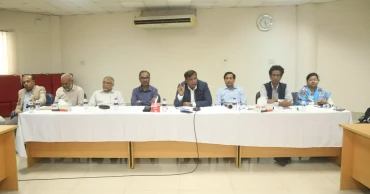
UGC Chairman Mamun Ahmed gave the assurance while addressing an exchange meeting with the Association of Bangladesh University Council at the UGC auditorium on Thursday, held to discuss implementation of the research budget for the 2026-27 fiscal year.
He said a coordinated committee involving university representatives will be formed to ensure proper, effective and transparent use of the allocated research funds. "The UGC will also frame a clear policy for management and implementation of the research budget."
Speaking at the meeting, Association of Bangladesh University Council President Prof SM Abdur Razzak said allocating the research budget under the UGC code, instead of universities' own codes, created some administrative complications.
He, however, noted the need to balance the government's priority of advancing education and research with the universities' long-standing practice of autonomy.
Responding to the concern, Mamun said the research budget is being disbursed through a specific code as per government decision, and the UGC will implement it while ensuring an effective mechanism through regular discussions and coordination with the universities.
He disclosed that Tk 226 crore has been allocated for the research sector in the 2026-27 fiscal year, to be spent under three key sub-sectors.
Calls for research proposals at undergraduate, postgraduate, MPhil and PhD levels will be issued at the start of the fiscal year, with universities vetting proposals through their own institutional processes before sending them to the UGC. Funding decisions will then be made based on national priorities and the quality of research, he said.
The UGC chairman said fund disbursement processes for the new fiscal year have already begun, with research proposals set to be collected quickly and necessary funds released within two weeks of receiving proposals to avoid delays in research activities.
He assured that no university's allocation would decrease despite the funds being routed through the UGC; rather, universities stand to receive more funding compared to previous years. "Regional universities across the country will get equal opportunities in research allocation, with no discrimination."
Citing last fiscal year's figures, Mamun said around Tk 900 crore was allocated for research, of which public universities received about Tk 793 crore and private universities around Tk 56 crore, dismissing the notion that private universities are deprived of research funding.
He further said initiatives are underway to establish an integrated research ecosystem and a national research repository to ensure maximum effective use of allocated funds, which will help preserve research data, enable information sharing, and enhance the visibility of research at national and international levels.
UGC chairman added that significant funding for higher education and research development is also being channelled through UGC-implemented projects, including the Higher Education Acceleration and Transformation project and the Improving Computer and Software Engineering Tertiary Education project.
UGC members Mohammad Anwar Hossain, Saidur Rahman, Masuma Habib, Mohammad Ayub Islam and Abdullah-Al-Mamun were present at the meeting, along with vice-chancellors or their nominated representatives from 45 public universities and concerned UGC officials.
Participants expressed hope that the new management system would ensure greater transparency, accountability and efficiency in research funding, and strengthen the overall research environment in the country's higher education sector.
25 days ago
GCI World April 2026: Bangladeshi aces Japanese AI education programme
The Japan International Cooperation Agency (JICA) and the Matsuo-Iwasawa Laboratory (Matsuo Lab) of the University of Tokyo have celebrated the successful completion of the 14-week GCI World April 2026 artificial intelligence (AI) education programme, with a Bangladeshi student earning a place among the top 17 participants worldwide.
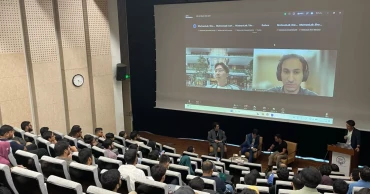
To mark the programme's completion, JICA, Matsuo Lab and BRAC University jointly organised a hackathon and a special lecture on July 8.
GCI World is a global educational initiative by Matsuo Lab that offers practical training in artificial intelligence, data science and machine learning through a combination of theoretical learning, competitions and real-world business applications.
More than 25,000 students from 114 countries took part in the programme, including around 700 participants from Bangladesh.
The programme featured the GCI World Hackathon, where students developed AI-based solutions to real-world challenges, followed by a special lecture delivered by researchers from Matsuo Lab, one of Japan's leading AI research laboratories.
The session highlighted the latest developments in artificial intelligence and demonstrated how data science and machine learning can be applied to address practical business and societal challenges.
The special lecture and closing ceremony, held at BRAC University, brought together more than 800 students from around the world, both in person and online, along with researchers, academics, industry professionals and distinguished guests.
The event underscored a shared commitment to promoting innovation and preparing the next generation of AI professionals.
Speaking at the closing session, Morikawa Yuko, Senior Representative of JICA Bangladesh, said Bangladesh has the potential to develop innovative AI solutions to address its own challenges.
"If AI education can be connected with entrepreneurship, research and industry, I believe Bangladesh can develop its own solutions for its own challenges—and, in doing so, contribute innovations to the world," she said.
The programme concluded with the announcement of the Outstanding Student Certificate recipients. One Bangladeshi student was selected among the 17 Outstanding Students globally and will have the opportunity to visit Matsuo Lab at the University of Tokyo in August 2026.
According to JICA, the initiative reflects its continued commitment to strengthening Bangladesh's human resource development through international collaboration.
By connecting Bangladeshi students with globally recognised academic initiatives such as GCI World, JICA aims to enhance local expertise in AI, data science and digital innovation, contributing to the country's ongoing digital transformation.
25 days ago
JU suspends 12 History students over ragging allegations
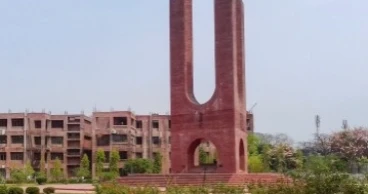
Jahangirnagar University (JU) authorities have temporarily suspended 12 students of the History Department over allegations of ragging several first-year students of the same department.
The suspended students belong to the 2024-25 academic session (54th batch), while the victims are from the 2025-26 academic session (55th batch).
The university annou5nced the suspension in an office order signed by Acting Registrar Dr ABM Azizur Rahman at around 11:30pm on Saturday.
According to the order, a group of 54th-batch students allegedly took several 55th-batch students to the Jahangirnagar University School and College field between 11pm on July 3 and 2am the following day, where they subjected them to ragging.
The allegations state that the accused verbally abused the victims in obscene language, forced them to hold their ears and harassed them in the name of “teaching manners.”
The office order said the alleged actions violated Section 5(6) of the university’s ‘Student Discipline Ordinance-2018’, which prohibits teasing, ragging and abusive behaviour anywhere on campus, including halls and academic departments.
Following the allegations, the university suspended the 12 accused students under Section 4(1)(b) of the ordinance.
The suspended students are including- Nasim Uddin Majumdar, Md Mahfuzur Rahman Onto, Abdullah Mahdi, Shubhashish Roy Pranto, Md Abu Abtahi Anik, Md Raihan Khan, Md Naimul Hasan, Md Isfak Hadi, Naim Ahmed Sazib, Kartik Chandra Roy, Kazi Shah Jamshed Alam Nabil and Saifullah Mansur Anan.
29 days ago
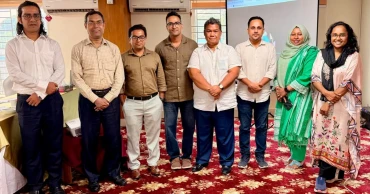
Universities join hands to enhance climate journalism education
A two-day workshop under the AGILE project has brought together communication and journalism educators from universities across Bangladesh to collaboratively develop a climate reporting curriculum for higher education.
The initiative aims to strengthen climate journalism education by equipping future journalists with the knowledge, skills, and ethical frameworks, said a media statement on Saturday.
The workshop was held on July 3–4 at the CCULB Resort in Purbachal, Dhaka, and was facilitated by Professor Jude William Genilo and journalist Jesmin Papri.
Representatives from Begum Rokeya University, Jagannath University, the University of Liberal Arts Bangladesh (ULAB), and the University of Barishal participated in the programme.
The first day focused on strengthening participants' understanding of climate reporting through expert presentations, interactive discussions, and knowledge-sharing sessions.
Professor M Shahjahan Mondal of the Institute of Water and Flood Management (IWFM) at Bangladesh University of Engineering and Technology (BUET) introduced key concepts in climate science and discussed the challenges Bangladesh faces in addressing climate change.
The day concluded with a reflection session facilitated by Professor Gift Gwindingwe of Great Zimbabwe University.
On the second day, participants reviewed a draft climate reporting course outline developed during an earlier AGILE co-design meeting in Sri Lanka in March this year. Discussions focused on adapting the proposed curriculum to the academic context of their respective universities.
Participants then worked in groups to refine course content, teaching methods and implementation strategies before presenting their recommendations for further discussion.
The workshop concluded with a shared commitment to advancing climate journalism education in Bangladesh.
Participants said future journalists and communication professionals need stronger knowledge and practical skills to report accurately and effectively on climate change, one of the country's most pressing development challenges.
AGILE is a global consortium (2025–2028) supported by the European Union aimed to strengthening independent journalism worldwide.
30 days ago
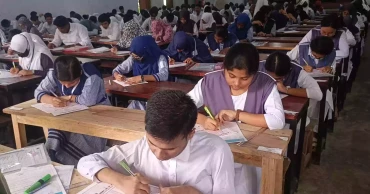
Dinajpur Board sees 1,937 absentees, 1 expelled on HSC opening day
A total of 1,937 students were absent from the Bengali (Compulsory) First Paper examination on the opening day of the Higher Secondary Certificate (HSC) examinations under the Dinajpur Education Board.
Among the absentees, 366 were from Dinajpur district, said a notification issued by the Board's Examination Controller Mohammad Borhan Uddin.
A total of 91,036 candidates were scheduled to sit for the Bengali First Paper examination.
The notification also said one student was expelled from an examination centre in Thakurgaon district for adopting unfair means.
This year, a total of 113,479 students—including regular, irregular and improvement candidates—from 665 colleges across the eight districts of Rangpur division are expected to appear in the HSC examinations under the Dinajpur Education Board.
Of them, 59,043 are female and 54,436 are male.
The Education Board said necessary measures have been taken to ensure the examinations are conducted in a fair and cheating-free environment.
Although CCTV cameras were installed at the examination centres, police personnel deployed for security were not seen wearing body-worn cameras.
The Higher Secondary Certificate (HSC) and equivalent examinations began simultaneously across the country on Thursday, with over 12.70 lakh candidates set to appear under 11 education boards.
HSC exams began at 10 am with Bangla 1st Paper on the first day.
1 month ago
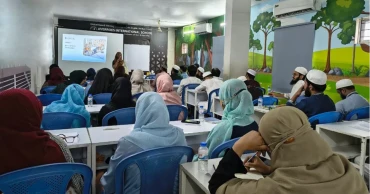
Teachers Time conducts training for 90 teachers of Averroes International School
Teachers Time, a parenting and teacher training platform, has launched a two-day professional development programme for the teachers of Averroes International School.
A total of 90 teachers will participate in the training in two batches.
The first batch of the programme began on Thursday at Averroes International School's Mirpur Campus.
The training covers learning theories, experiential learning, and the effective use of Teaching-Learning Materials (TLMs). Participants are also receiving practical guidance on promoting active classroom participation, creating engaging learning environments, and improving teaching practices.
According to the organisers, the programme aims to strengthen teachers' professional skills and support more effective, learner-centred classroom instruction.
1 month ago
Over 12.70 lakh students to sit for HSC, equivalent exams from Thursday
The Higher Secondary Certificate (HSC) and equivalent examinations will begin simultaneously across the country on Thursday, with over 12.70 lakh candidates set to appear under 11 education boards.
Secondary and Higher Education Division Secretary Abdul Khaleque revealed this information at a press briefing held the Secretariat on Wednesday.
Education Minister A N M Ehsanul Hoque Milon and the Prime Minister's Adviser on Education Mahdi Amin were also present.
Students from 9,439 educational institutions will sit for the examinations at 2,697 centres under the country's nine general education boards, the Bangladesh Madrasa Education Board and the Bangladesh Technical Education Board, said Khaleque.
A total of 77 subjects will be covered over 21 examination days.
Regular classes will continue at educational institutions on days when no examinations are scheduled, he said.
Of the total candidates, 6,21,969 are male and 648,614 are female under the nine general education boards with female candidates outnumbering males by 26,645.
The Education Minister said all nine general education boards will conduct examinations using a uniform set of question papers this year.
CCTV cameras have been installed at all examination centres, while a central monitoring cell has been set up at the Ministry of Education to oversee examination activities in real time across the country, he said.
Police officers deployed at examination centres will also be equipped with body-worn cameras to help prevent any untoward incidents, he added.
Abdul Khaleque said exam centres previously identified as vulnerable to question paper leaks or cheating have been cancelled.
However, some centres in haor areas, the Chattogram Hill Tracts and remote char regions have been retained considering the transportation difficulties faced by students.
Candidates belonging to the Seventh-day Adventist community will be allowed to take Saturday examinations after sunset under special arrangements, he said.
A total of 1,069,714 candidates will sit for the examinations under the nine general education boards this year, an increase of 14,316 from last year.
The number of participating institutions has increased by 77, while the number of examination centres has risen by 21.
Bangladesh Madrasa Education Board has 92,905 candidates this year, up by 6,803 from last year. The number of institutions under the board has increased by 23 and examination centres by two.
Meanwhile, Bangladesh Technical Education Board has 107,964 candidates, 1,647 fewer than last year.
The number of examination centres under the board has also declined by 123 to 610.
1 month ago
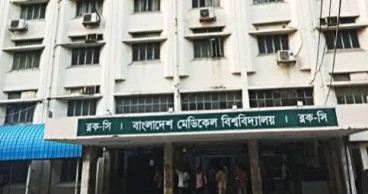
Bill to amend the legislation under which BMU operates presented in JS
A bill seeking to amend the Bangladesh Medical University Act, 1998 was placed in Parliament on Sunday to facilitate the operation of the university's Super Specialised Hospital and empower the institution to establish and invest in companies to expand medical education, research and healthcare services.
Health Minister Sardar Md Sakhawat Husain placed the Bangladesh Medical University (2nd Amendment) Bill, 2026, which was subsequently sent to the relevant parliamentary scrutiny committee for detailed examination. The committee has been asked to submit its report within the next three working days.
According to the statement of objects and reasons of the bill, Bangladesh Medical University was established under the Bangladesh Medical University Act, 1998 to promote higher education, research and advanced healthcare services in the country.
A Super Specialised Hospital was later established under the university, but despite the completion of its construction, it could not be fully commissioned due to the absence of adequate doctors and supporting staff as well as the lack of a clear operational framework.
To make the hospital functional, the university's Syndicate decided to operate it under the Companies Act, 1994, making it necessary to amend the existing law.
The proposed amendment also seeks to authorise the university to establish profit-making or non-profit companies or organisations and to acquire, hold and transfer shares in such entities for expanding its medical education, healthcare and research activities.
The bill aims to provide the university with explicit legal authority to establish and manage such companies while clarifying the Syndicate's powers, the scope of regulations governing these entities, provisions for incorporating income generated by them into the university's funds and conditions for investment from university funds.
According to the bill, establishing internationally standard specialised hospitals under this framework would enable the university to engage renowned local and foreign physicians, teachers and researchers on a contractual basis, facilitating the transfer of modern medical technology, knowledge and expertise.
The bill said that the government believes the initiative would strengthen residency, fellowship and other advanced medical training programmes, provide students with improved clinical exposure and help produce internationally competent doctors, researchers and healthcare professionals.
The bill also says that income generated from these companies could be reinvested in the university's healthcare, education and research activities, contributing to its overall academic excellence.
1 month ago
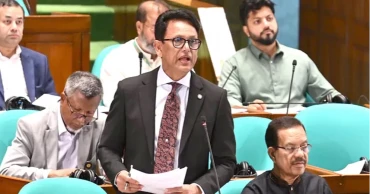
Milon places bill to clean up exams, targeting question leaks and other offences
Education Minister Dr A N M Ehsanul Hoque Milon on Sunday placed the The Public Examinations (Offences) (Amendment) Bill, 2026 in Parliament, aiming to strengthen legal measures against question paper leaks, cheating, fake certificates and technology-driven examination offences.
The bill was subsequently sent to the relevant parliamentary scrutiny committee for detailed examination, with the committee asked to submit its report within the next three working days.
According to the objective of the Bill placed before the House, the existing The Public Examinations (Offences) Act, 1980 was enacted about 45 years ago to prevent malpractice in public examinations, including cheating, question leaks, fabrication of certificates and other irregularities.
However, the Bill observed that the widespread use of technology and the growing trend of committing examination-related crimes through digital means have rendered several provisions of the existing law outdated.
The proposed amendment seeks to ensure a fair and malpractice-free examination environment by bringing offences committed through digital systems and online platforms within the legal framework.
The draft law received policy approval from the Cabinet on April 2, 2026. Following Cabinet directives, the draft underwent several rounds of revision, vetting and further amendments by the Legislative and Parliamentary Affairs Division and the Cabinet Division before receiving final Cabinet approval on June 18.
One of the key features of the proposed legislation is the inclusion and definition of the term “Digital Manipulation” to cover unauthorised access to examination databases through cybercrime, as well as any form of digital tampering.
The bill proposes a maximum punishment of five years’ imprisonment and fines for those found guilty of digital manipulation.
It also provides for stricter penalties and financial sanctions against individuals or groups involved in organised examination fraud or the formation of criminal networks to facilitate such offences.
The government said the amendment has become urgently necessary to address emerging challenges in safeguarding the integrity of public examinations in the digital age.
1 month ago
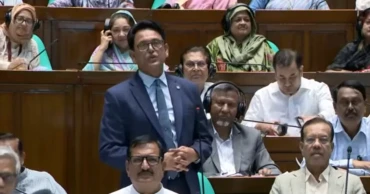
Technical , vocational education to expand from Class VI: Milon
Education Minister A N M Ehsanul Hoque Milon on Sunday said the government has allocated the highest-ever budget for the education sector, amounting to 2 percent of the country's GDP, while unveiling an ambitious package of reforms ranging from multimedia classrooms and free Wi-Fi to unique education IDs and nationwide school nutrition programmes.
Taking part in the budget discussion in Parliament, Milon said the Prime Minister has attached the highest priority to education and allocated Tk 136,000 crore for the sector in the proposed budget.
He claimed that during the previous government's tenure, education received only 1.39 percent of GDP, alleging that the figure was misleading as it included allocations for the ICT Ministry and the Rooppur Nuclear Power Plant.
Emphasising the need to develop skilled human resources, the minister said technical and vocational education would receive the highest priority with plans to expand technical, professional education and training from Class VI.
The minister said part of the education allocation is distributed among different ministries, including Tk 107.24 crore for the Ministry of Chittagong Hill Tracts Affairs, adding that the funds should have helped address shortages of schools in remote areas.
Highlighting the government's education roadmap, Milon said initiatives have been undertaken to establish more multimedia classrooms, provide teacher training, introduce free Wi-Fi in educational institutions, launch a unique education ID for every student and encourage environment-friendly activities among learners.
He said teachers would be provided with tablet computers to facilitate multimedia teaching, prepare lesson plans and maintain student records digitally.
The minister said the government's objective is to promote "learning with happiness" by reducing students' dependence on textbooks and notebooks alone, adding that teachers are being trained to implement the programme.
Milon also announced plans to establish another 20,000 multimedia classrooms at secondary and higher secondary institutions in phases.
He said the government has initiated Geographic Information System (GIS) mapping of 500 educational institutions to help reduce social and geographical disparities and plans to provide free Wi-Fi at 15,000 educational institutions.
The minister said a unique education ID would be introduced for every student, noting that such a system would have been unnecessary if Bangladesh had a comprehensive national registration system from birth similar to the social security numbering systems used in many developed countries.
Referring to the Prime Minister's "One Child, One Tree" initiative, he said every student across the country would be encouraged to plant a tree.
Milon said the government is also promoting innovation and entrepreneurship among students through startup initiatives, alongside strengthening co-curricular activities such as debate competitions, Olympiads, Scouts, BNCC and Girl Guides.
He said preparations are underway to increase the number of BNCC cadets to 24,000 nationwide from next year.
He also highlighted government plans to provide primary school students with uniforms, shoes, bags and midday meals nationwide.
The minister said the inspiration for the initiative came from the Prime Minister's observations of schoolchildren's welfare during a visit to London.
He expressed hope that the midday meal programme would be rolled out across Bangladesh in the next fiscal year to improve children's nutrition.
Milon also raised concerns over salary delays for madrasa teachers, saying around 17,000 teachers recruited through the Non-Government Teachers' Registration and Certification Authority (NTRCA) had not received salaries for May and June because the previous government had not arranged the required funds.
He said the monthly salary requirement for the teachers is Tk 501 crore, adding that the Finance Minister had already arranged Tk 100 crore and assured that the remaining funds would be released in July.
The minister further said teachers who retired from non-government educational institutions since 2022 have yet to receive welfare trust benefits and retirement allowances, thanking the Finance Minister for allocating funds in the budget to clear the outstanding payments.
1 month ago