rmg
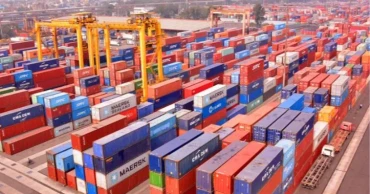
Bangladesh exports grow 13.14% in Aug as RMG, non-RMG sectors post strong gains
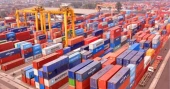
Bangladesh's merchandise exports rose 13.14 percent year-on-year to US$4.43 billion in August, up from $3.92 billion in the same month last year, according to data from the Export Promotion Bureau (EPB).
Exports during the first two months of fiscal year 2026-27 also increased by 5.43 percent to $9.16 billion from $8.69 billion in the corresponding period of the previous fiscal year.
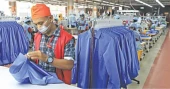
The ready-made garment (RMG) sector remained the main driver of export growth, with earnings rising 13.92 percent year-on-year to $3.89 billion in August. RMG exports during July-August grew 5.12 percent to $7.50 billion.
Both major apparel segments posted strong growth in August. Knitwear exports increased 14.88 percent, taking cumulative growth for July-August to 6.17 percent, while woven garment exports rose 12.70 percent, pushing cumulative growth to 3.81 percent.
Several non-RMG sectors also recorded double-digit growth in August, supporting efforts to diversify the country's export base.
Jute and jute goods exports grew 37.09 percent in August and 22.26 percent during July-August. Pharmaceuticals surged 28.52 percent in August and 38.94 percent cumulatively.
Leather and leather goods exports increased 24.85 percent in August, while printed materials grew 24.83 percent, with cumulative growth reaching 41.89 percent.
Engineering products rose 23.88 percent, while other footwear exports increased 15.29 percent, with cumulative growth of 27.32 percent.
The United States remained Bangladesh's largest export market, with exports to the country growing 26.09 percent in August and 11.90 percent during July-August.
The United Kingdom regained its position as the second-largest export destination, followed by Germany, Spain and the Netherlands.
Among emerging markets, exports to Türkiye rose 141.03 percent, while those to the Republic of Korea and Saudi Arabia increased 42.37 percent and 42.09 percent, respectively.
The growth in export earnings was attributed to stronger demand in key international markets, improved buyer confidence, expanded production capacity, higher shipments of value-added products and efforts to diversify export destinations.
1 day ago
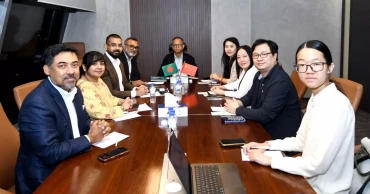
BGMEA, OCAIB launch initiative to attract Chinese investment, joint ventures in RMG sector
The Bangladesh Garment Manufacturers and Exporters Association (BGMEA) and the Overseas Chinese Association in Bangladesh (OCAIB) have launched a joint initiative to strengthen the upper supply chain and backward linkages of the country’s ready-made garment (RMG) sector by attracting foreign investment and modern technology.
The decision was taken during a bilateral meeting between BGMEA leaders and a high-level OCAIB delegation at the BGMEA Complex in Uttara on Tuesday.
The discussions focused on boosting Chinese investment in the apparel sector, introducing new capital and advanced technology into operational or closed factories, and facilitating strategic joint ventures.
BGMEA President Mahmud Hasan Khan led the association’s delegation, accompanied by Vice President (Finance) Mizanur Rahman, and Directors Shah Rayeed Chowdhury, Joarder Md Hosne Qumer Alam, and Samiha Asim.
The OCAIB delegation included Vice President Lisa Lou, Vice President and Secretary General Vivian Huang, Executive Director Steven Zhang, and Secretary Tina Hu.
During the meeting, Chinese representatives highlighted that foreign investment is crucial for strengthening and modernizing Bangladesh’s upper supply chain. They noted that while many Chinese companies are keenly interested in setting up factories, transferring technology, and expanding operations in Bangladesh, a lack of reliable, central information often delays decision-making. They sought active coordination and information support from BGMEA.
In response, BGMEA President Mahmud Hasan Khan assured the delegation that BGMEA will collect detailed data from its member factories via email. Local factory owners who are seeking Chinese capital, modern technology, or full ownership/share transfers through joint venture partners will be asked to submit key information, including-Factory name and general details, Factory space and floor area, Description and quantity of machinery, Current operational status of the factory, Preferred type of partnership
BGMEA will analyze the capabilities and profile of these factories before sharing the vetted data with OCAIB.
Through this one-stop mechanism, BGMEA and OCAIB aim to build a direct business match-making link between prospective Chinese investors and local factory owners. The initiative is expected to revive closed or struggling factories while accelerating foreign direct investment in backward linkages and high-value garment manufacturing.
BGMEA has requested interested factory owners and potential investors to submit their detailed proposals, according to a press release.
29 days ago

RMG exports rebound to $3.88 billion in July despite YoY dip
Bangladesh's ready-made garment (RMG) exports began fiscal year 2026-27 with a strong month-on-month rebound, rising 14.73 percent to US$3.88 billion in July from $3.38 billion in June, although earnings were slightly lower than a year earlier, according to the latest data from the Export Promotion Bureau (EPB).
The July export earnings were 1.92 percent lower than the $3.96 billion recorded in July 2025, reflecting softer year-on-year performance despite the strong sequential recovery.
RMG exports slip 0.63% to $19.34b in H1 2026: EPB
A product-wise analysis reveals that knitwear continued to hold the lion's share of total apparel exports during the opening month of the fiscal year, generating $ 2.15 billion, accounting for over 55 percent of total RMG export earnings, while woven garments brought in $ 1.72 billion.
Analysing the EPB performance figures, Mohiuddin Rubel, founder and chief executive officer of Bangladesh Apparel Voice and former director of the Bangladesh Garment Manufacturers and Exporters Association (BGMEA), noted that the strong sequential rebound from June demonstrates the sector's underlying resilience amid shifting global trade dynamics and demand fluctuations.
Industry experts emphasise that maintaining operational efficiency and navigating tariff structures across primary Western markets will be crucial to sustaining momentum through the remainder of FY27.
30 days ago
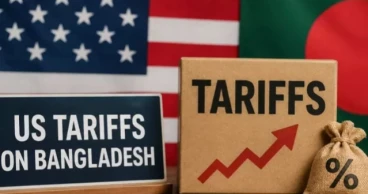
New US tariff regime gives Bangladesh 2.5 percentage point edge over RMG rivals
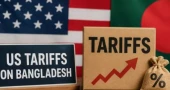
Bangladesh has been placed in the lower 10 percent tariff tier under the newly finalized U.S. Section 301 regime that took effect on July 24, granting local ready-made garment (RMG) exporters a 2.5 percentage point advantage over major global competitors like China, Vietnam, and Thailand.
According to an analysis by Mohiuddin Rubel, Founder and CEO of Bangladesh Apparel Voice, the new tariff structure formalizes temporary measures into a permanent legal framework. Following the U.S. Supreme Court’s February 2026 ruling that struck down "reciprocal" tariffs, the U.S. administration utilized Section 122 authority to impose a temporary 10 percent universal tariff for up to 150 days. The Section 301 forced-labor investigation was scheduled to seamlessly replace the expiring Section 122 tariffs on July 24 without any gap in coverage.
Covering 60 economies, the U.S. Trade Representative's (USTR) forced-labor action placed Bangladesh among 17 economies in the lower 10 percent tier, while China, Vietnam, Thailand, and 35 other nations were assigned a higher 12.5 percent rate. Bangladesh secured the lower rate due to its February 2026 Agreement on Reciprocal Trade (ART) with the U.S., which committed the nation to a forced-labor import ban. By contrast, economies like India, Sri Lanka, and Trinidad and Tobago entered the lower tier by adopting forced-labor bans between June and July, whereas Cambodia held both an ART commitment and adopted an interim ban.
Under the new rules, the USTR has been directed to establish two three-year Tariff Rate Quotas (TRQs)—one for general U.S. textile imports and another specifically for U.S. cotton—when feasible. These TRQs will allow a defined volume of Bangladesh's textile and apparel exports to enter the U.S. duty-free.
Only four economies—Bangladesh, Cambodia, Indonesia, and Malaysia—qualify for these TRQs, while key competitors such as Vietnam, China, and India have been excluded. However, the TRQ mechanism is not yet operational, as USTR has not set an activation date, keeping the flat 10 percent rate applicable to all shipments in the interim.
While Bangladesh holds a tangible tariff edge and an exclusive TRQ opportunity over key rivals, Rubel emphasized that tariff changes alone will not lower overall costs in the U.S. market. To fully capitalize on this positioning amidst intense global competition, Bangladesh must focus on improving productivity, diversifying its product basket, increasing value addition, and investing in innovation.
1 month ago
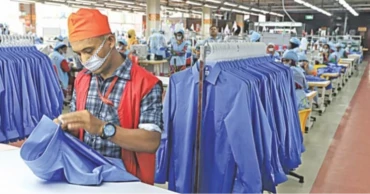
Bangladesh apparel exports to EU slump 19% in Jan-May
Bangladesh’s apparel exports to the European Union (EU) slumped by 18.89 percent year-on-year to €7.28 billion ($8.33 billion) in the first five months of 2026 (January-May), marking the steepest decline among the region's major global suppliers.
According to Eurostat data analysed by Mohiuddin Rubel, founder and CEO of Bangladesh Apparel Voice, the country is facing a critical "dual weakness," losing ground on both shipment volume and unit price simultaneously.
During the period, Bangladesh's apparel export volume to the EU fell by 10.46 percent, while its unit price dropped by 9.41 percent. Both figures are roughly double the global average decline.
Overall EU Demand Shrinks
The downturn reflects a broader contraction in the EU apparel market. Total EU apparel imports from the world fell by 9.96 percent year-on-year to €33.84 billion ($38.71 billion), down from €37.58 billion ($43.00 billion) in the same period last year.
The global decline was driven by a 6.46 percent drop in volume and a 3.74 percent decline in unit prices, suggesting that weaker consumer demand and softer pricing contributed almost equally to the market contraction.
However, Bangladesh’s performance in May alone showed worsening vulnerability, with export value sliding by 17.12 percent, volume down by 13.55 percent, and unit prices dropping by 4.13 percent.
Mixed Performance Among Competitors
While Bangladesh struggled on both fronts, its global competitors showed mixed resilience by adopting different market strategies.
China – the leading supplier – recorded the smallest value decline of 4.20 percent. It was the only major exporter to grow its shipment volume, which rose by 1.96 percent, defending its market share through a 6.05 percent price cut.
Vietnam emerged as the most resilient exporter, with its export value dipping just 1.51 percent. Despite a sharp 12.27 percent drop in volume, it defended its value through premium positioning, pushing its unit price up by 12.26 percent.
Pakistan’s export value fell by 17.01 percent despite a 3 percent increase in volume, suffering from a major unit price collapse of 19.43 percent.
India experienced a milder version of Bangladesh's dual weakness, with its export value declining by 13.33 percent.
Turkey and Cambodia faced volume-led declines of 17.17 percent and 15.13 percent, respectively, though their unit prices saw upward adjustments.
Indonesia experienced the sharpest volume contraction among all suppliers, plunging 23.76 percent.
Sustained Structural Concerns
Highlighting the gravity of the data, Mohiuddin Rubel noted that Bangladesh is currently the only major apparel supplier losing on both volume and price at this scale – contrasting sharply with Vietnam’s price-resilience and China’s volume-resilience.
He warned that because this dual weakness has persisted from April into May, it points to a sustained structural problem within Bangladesh's apparel sector rather than a temporary, one-month blip.
1 month ago
BGMEA urges govt to ease compliance regulations for RMG sector
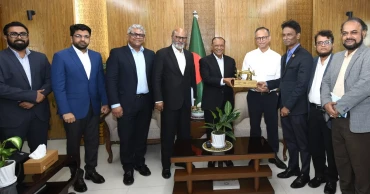
A delegation from the Bangladesh Garment Manufacturers and Exporters Association (BGMEA) on Wednesday held a meeting with Environment, Forest and Climate Change Minister Abdul Awal Mintoo to advocate for pragmatic, science-based environmental compliance in the ready-made garment (RMG) and textile sectors.
Led by BGMEA President Mahmud Hasan Khan, the delegation met the Minister at the Bangladesh Secretariat to discuss mitigating technical and regulatory bottlenecks to ensure the industry's sustainable growth and global competitiveness.
The BGMEA team included former BTMEA President A. Matin Chowdhury, BGMEA Director Nafis-Ud-Doula, and Kingsley CEO Md. Ashikur Rahman.
During the discussion, the apparel leaders reaffirmed their commitment to ecological sustainability but drew attention to serious technical hurdles arising from the "Environment Conservation Rules, 2023."
The delegation pointed out that the current effluent treatment plant (ETP) color parameters are technically difficult to achieve with the country's existing industrial infrastructure. They urged the ministry to revise and establish a more realistic, science-based benchmark.
Regarding Zero Liquid Discharge (ZLD) implementation, the BGMEA proposed replacing the current mandatory commitment required for Environmental Clearance Certificate (ECC) renewals with a phased, performance-based roadmap.
To support factories transitioning to ZLD, the business leaders demanded specific sustainable water-saving guidelines, fiscal incentives such as VAT and duty exemptions on ZLD machinery, and the creation of a specialized "ZLD Window" under Bangladesh Bank’s Green Transformation Fund.
To enhance administrative transparency, the delegation suggested introducing a mirror testing mechanism for environmental sampling.
They also proposed a risk-based, long-term ECC renewal framework for factories with a consistent history of regulatory compliance.
Furthermore, the BGMEA urged the government to swiftly formulate necessary rules under the "Forest Ordinance (2026)" to eliminate ongoing uncertainties surrounding industrial land-use permissions.
They also emphasized the need for a balanced air quality assessment framework that factors in external pollution sources and accounts for environmental parameter fluctuations caused by extreme weather conditions.
Environment Minister Abdul Awal Mintoo acknowledged the RMG sector's critical contribution to the national economy and received the proposals positively.
He assured the leaders that the ministry would address these concerns through a rational and pragmatic framework that balances industrial viability with environmental conservation goals.
2 months ago
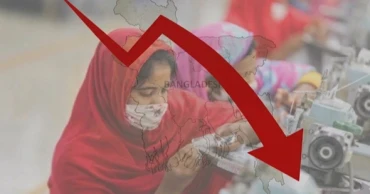
RMG exports decline 3.41% in 11 months of fiscal
Bangladesh’s ready-made garment (RMG) exports fetched US$ 35.31 billion during the July–May period of the fiscal year 2025–26, registering a 3.41 percent decline compared to the same period in the previous fiscal year FY2024-25, according to the latest data from the Export Promotion Bureau (EPB).
The sector, which serves as the backbone of the country's export economy, faced minor contractions across most of its traditional and non-traditional destinations, though Canada emerged as a silver lining by maintaining positive growth momentum.
According to industry analyst Mohiuddin Rubel, Former Director of the Bangladesh Garment Manufacturers and Exporters Association (BGMEA), the European Union (EU) retained its status as the largest destination for Bangladeshi apparel. The EU market accounted for nearly half of the total RMG exports, taking in 49.15 percent of the shipments.
However, export earnings from the EU dropped to US$ 17.36 billion, marking a year-on-year negative growth of 4.88 percent.
The United States remained the second-largest destination for local apparel, holding a 19.90 percent market share. RMG exports to the US stood at US$ 7.03 billion, reflecting a marginal year-on-year decrease of 0.04 percent.
Meanwhile, export trends varied across other major Western markets. The United Kingdom, holding an 11.38 percent share, saw a slight decline of 0.50 percent, bringing its total import value to $ 4.02 billion.
Conversely, Canada bucked the downward trend by posting a 2.27 percent year-on-year growth, with exports reaching $ 1.23 billion (a 3.47 percent share).
Exports to non-traditional markets also experienced a slowdown. The collective earnings from these emerging markets dropped by 5.95 percent to $ 5.68 billion, capturing a 16.09 percent share of the total RMG export basket.
In terms of product performance, both major segments of the RMG basket registered negative growth. The knitwear segment fell by 4.26 percent, while the woven garment segment recorded a 2.42 percent decrease during the 11-month period.
2 months ago

Over 94% RMG factories pay Eid bonuses, 99% clear Apr wages: BGMEA
More than 94 percent of active ready-made garment factories in Dhaka and Chattogram have paid Eid-ul-Azha bonuses to workers ahead of the festival, according to a summary report released by the Bangladesh Garment Manufacturers and Exporters Association (BGMEA) on Monday.
The report, prepared with data as of May 23, covers a total of 2,134 operational factories across the two zones.
Of these, 2,133 factories were found active, of which 2,117 or 99.20 percent have cleared April wages, while 2,021 factories, representing 94.70 percent, have disbursed Eid bonuses.
Additionally, 767 factories, or 35.94 percent, have already paid an advance on May salaries.
In the Dhaka zone, out of 1,984 active factories, 1,983 (99.95%) paid March wages and 1,983 (99.39%) cleared April salaries. A total of 1,909 factories (95.98%) have paid Eid bonuses, while 690 factories (37.58%) have provided advance wages for May.
In Chattogram, all 380 active factories (100%) paid March salaries. Of these, 334 (98.24%) cleared April wages, 352 (91.76%) paid Eid bonuses, and 97 factories (28.53%) have paid advance wages for May.
BGMEA data also outlines a staggered worker dispersal plan from Dhaka: 108 factories (6%) released workers on May 24; 664 (37%) on May 25; 771 (43%) are set to do so on May 26; and the remaining 251 factories (14%) on May 27.
3 months ago
Textile sector must embrace innovation for long-term competitiveness: Commerce Minister
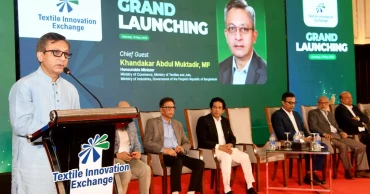
Commerce Minister Khandakar Abdul Muktadir on Saturday said Bangladesh’s readymade garment (RMG) and textile industry must prioritise sustainable production, innovation, research and product diversification to maintain its long-term global competitiveness.
“Sustainability is no longer just a slogan; it is now an essential condition for the industry’s survival and future growth,” Muktadir said while addressing the Grand Launching Event of Textile Innovation Exchange at a hotel.
The minister stressed the need for ensuring efficient use of electricity, gas and water through energy-saving measures, water recycling, circular production systems and improved management practices.
Muktadir said although the country’s apparel industry has achieved remarkable success over the past decades, exports still remain heavily dependent on a limited range of products. “It will be difficult to stay ahead in global competition unless we move quickly into high-value-added products such as sportswear, man-made fibre-based garments and technical textiles.”
He also said Bangladesh must become more proactive in diversifying products and exploring new export destinations to remain competitive in the European Union market and tackle potential challenges after the country’s graduation from the least developed country (LDC) status.
He also underscored the importance of research, design development, skills enhancement and the adoption of modern technologies to take the industry to new heights.
Highlighting the textile sector’s contribution to Bangladesh’s economic development, the minister said the industry has been a major driving force behind industrialisation and export growth by generating large-scale employment with relatively low investment. “With proper planning and innovation, the sector still has vast untapped potential.”
Referring to the government’s plan to utilise closed industrial units, Muktadir said no funds would be wasted on reviving inefficient factories by retaining outdated machinery.
Instead, he said, industry-specific solutions would be adopted, including developing industrial parks, attracting fresh investment through public-private partnerships (PPP) and leasing arrangements.
He said decisions in this regard would be taken in consultation with experienced private-sector entrepreneurs.
The minister also said promising sectors such as leather, light engineering and shipbuilding would be revitalised through modern technology, skills development and international cooperation.
Welcoming the Textile Innovation Exchange initiative, Muktadir said stronger collaboration between industry and academia, along with the exchange of experiences among entrepreneurs, would help make Bangladesh’s textile sector more modern, environmentally friendly and competitive.
The minister later inaugurated the Textile Innovation Exchange platform and visited different stalls at the event.
3 months ago
BGMEA, GIZ partner to drive green industrialisation in RMG sector
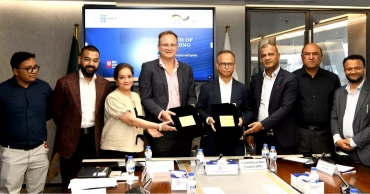
Bangladesh Garment Manufacturers and Exporters Association (BGMEA) and German development agency GIZ have signed an agreement to accelerate sustainability, green industrialisation, and digital transparency within the country’s Ready-Made Garment (RMG) sector.
A partnership agreement was signed with an 11-point charter of demands and a strategic cooperation framework at a ceremony held today (Sunday) at the BGMEA Complex in the capital.
The initiative aims to help the sector navigate mounting global economic pressures and comply with evolving international trade regulations.
Under the agreement, both parties will collaborate on enhancing the environmental standards of Bangladeshi factories.
Key focus areas include promoting LEED-certified production and reducing the carbon footprint of the apparel industry, addressing the ongoing energy crisis by promoting renewable energy adoption and improving resource management within factories, implementing better waste management and recycling practices to align with global circular fashion trends.
A significant portion of the partnership involves the digitalisation of sector monitoring.
This includes the implementation of digital audits for national tax returns and the selection of over 87,000 taxpayers for tech-based transparency checks.
The project will also focus on a "one-stop service" model for licenses and permits to reduce the time and complexity currently faced by factory owners.
3 months ago