Local-Business

June exports surge by 25.91%, FY26 earnings hold steady at $48 billion: EPB
Bangladesh's merchandise exports posted a robust 25.91 percent year-on-year growth in June 2026, closing out fiscal year 2025-26 with renewed momentum despite persistent global economic and geopolitical headwinds, according to provisional data released by the Export Promotion Bureau (EPB) on Thursday.
The country earned US$ 4,202.69 million from merchandise exports in June 2026, up from $ 3,337.92 million in the same month last year, with broad-based growth recorded across ready-made garments (RMG), leather and leather products, jute and jute goods, home textiles, engineering products, and agricultural products.
Total export earnings for the entire fiscal year 2025-26 (July-June) stood at $ 48,001.91 million, remaining largely stable compared to $ 48,283.93 million in the previous fiscal year.
The EPB noted that maintaining earnings near the previous year's level, amid geopolitical tensions, global inflationary pressures, supply chain disruptions, energy market volatility, and subdued consumer demand in key markets, reflects the underlying strength and adaptability of the export sector.
The RMG sector, the mainstay of Bangladesh's export economy, registered 21.52 percent year-on-year growth in June, earning $ 3,387.71 million against $ 2,787.78 million a year earlier. Knitwear exports grew by 19.49 percent while woven garments rose 24.02 percent during the month. The sector contributed $ 38,701.15 million to overall export earnings in FY26.
Several other sectors also posted strong gains. Leather and leather products exports rose 47.68 percent in June and 7.09 percent for the fiscal year, reaching $ 1.23 billion. Jute and jute goods recorded a 76.60 percent jump in June and 7.75 percent growth for the year, totalling $ 883.69 million.
Home textiles grew 59.95 percent in June and 6.52 percent for FY26, while engineering products posted 44.74 percent growth in June and 21.77 percent for the fiscal year. Agricultural products exports rose 46.77 percent in June, reflecting sustained international demand for Bangladeshi agro-based goods.
On the destination front, the United States remained Bangladesh's largest single-country export market, with earnings of $ 9,048.05 million in FY26, up 4.09 percent year on year, and strong growth recorded in June as well.
Germany and the United Kingdom retained their positions as the second and third largest export destinations, respectively, both showing continued positive momentum.
The EPB data further showed that all of Bangladesh's top 20 export destinations recorded positive year-on-year growth in June 2026, pointing to a broad-based recovery in external demand and strengthening market diversification.
The EPB expressed optimism that the positive momentum seen in June, along with continued product and market diversification, will provide a strong foundation for export growth in FY 2026-27 and support the country's sustainable economic development.
3 months ago

BSEC holds financial literacy training for capital market investors, students
The Bangladesh Securities and Exchange Commission (BSEC) on Wednesday organised a day-long training programme on “Primary Investment Education (Financial Literacy)” for investors and potential investors in the capital market.
The programme was held at the multipurpose hall of the BSEC Building in the capital's Agargaon area, with around 100 teachers and students from the Department of Finance and Banking of Dhaka Commerce College taking part, according to a press release.
BSEC Executive Director Mir Mosharraf Hossain Chowdhury inaugurated the event.
BSEC Director Sheikh Mahbub Ur Rahman spoke on “Fundamentals of Financial Literacy”, while Additional Director Sk. Md Lutful Kabir discussed “Investment Risk and Investor's Protection.” BSEC Commissioner Nafeez Al Tarik delivered a detailed presentation on “Financial Planning.”
The training covered basic concepts of capital market investment, investment accounts and risk management, investor rights and protection, personal financial planning, long-term investment strategies, and informed investment decision-making, both from theoretical and practical perspectives.
Participants took part actively in the question-and-answer session and exchanged views on various real-life issues related to investment.
At the closing session, Commissioner Nafeez Al Tarik delivered concluding remarks. Certificates were distributed among the participating teachers and students at the end of the programme.
BSEC said it will continue organising such investment education programmes for educational institutions, investors, and potential investors across the country in the future.
3 months ago
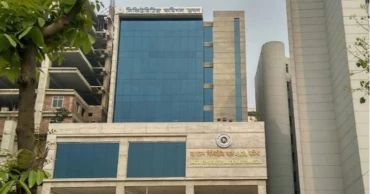
BSEC hands stock exchanges power to set circuit breaker limits, eases mutual fund reinvestment rules
The Bangladesh Securities and Exchange Commission (BSEC) has decided to allow the Dhaka Stock Exchange (DSE) and the Chittagong Stock Exchange (CSE) to independently determine and implement market control parametres, including circuit breaker limits, in line with relevant regulations, policies and operational requirements.
The decision was taken at the commission's 1018th meeting held on Wednesday, chaired by BSEC Chairman Masud Khan.
As the stock exchanges have the regulatory authority to fix and enforce such market control parametres under their respective regulations, the commission decided to direct DSE and CSE to independently set and implement these standards.
In line with the decision, the commission repealed its earlier order, issued on June 17, 2021 on the matter.
In another decision, the commission said asset management companies may, upon proposal, be allowed to reinvest the income earned by close-ended mutual funds at the end of a fiscal year without distributing it as dividends, if such a move serves the interest of investors and the capital market.
The decisions were taken considering the operational efficiency of the stock exchanges and the interests of investors and the capital market, according to a press release said.
3 months ago
Bangladesh Bank keeps policy rate at 10pc, reaffirms flexible exchange rate
Bangladesh Bank on Tuesday unveiled its monetary policy for the July-December period, retaining the policy rate at 10 percent while seeking to curb inflation.
Governor Mostaqur Rahman announced the monetary policy for the first half of the new fiscal year at a press conference held at the central bank.
Bangladesh Bank (BB) will firmly stick to its flexible, market-determined exchange rate regime to protect the country's external sector from international shocks, expand exports, and optimize remittance inflows, official sources said.
Unveiling the new Monetary Policy Statement (MPS) for the July–December period of the fiscal year FY2026-27, Mostaqur Rahman reiterated that the market-driven exchange mechanism remains a vital strategic pillar for the country's macroeconomic stability.
3 months ago
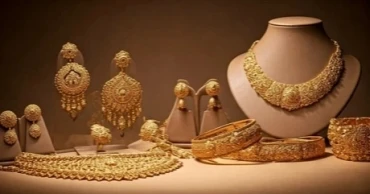
Bajus cuts gold price for second straight day
The Bangladesh Jewellers Association (Bajus) has again cut the price of gold in the local market, reducing the rate of 22-carat gold by Tk 3,324 per bhori within 24 hours.
In a notice issued on Tuesday morning, Bajus said the new price, inclusive of VAT, has been set considering the overall situation following a fall in the price of pure gold in the local market.
According to the new price, 22-carat gold will now cost Tk 2,21,966 per bhori (11.664 grams) including VAT.
The price of 21-carat gold has been fixed at Tk 2,11,993 per bhori, 18-carat gold at Tk 1,82,075 per bhori, and traditional gold atTk 1,48,774 per bhori.
Bajus said the new rate will remain effective at all jewellery shops across the country until further notice, though making charges will apply depending on the design of ornaments.
Since VAT is already included in the sale price of gold ornaments, customers cannot be charged VAT separately, the association said.
It added that its existing rules on exchange and purchase of ornaments, excluding specified VAT, making charges and stone prices will remain unchanged. A decision on VAT for silver ornaments will be announced soon, Bajus said.
Bajus last adjusted gold prices on the morning of June 29, when the price of 22-carat gold was cut by Taka 3,266 per bhori to Tk 2,25,290, inclusive of VAT.
So far in 2026, gold prices have been revised 84 times in the local market, with 41 upward adjustments, 42 downward adjustments, and one VAT adjustment.
Along with gold, the price of silver has also been reduced. The price of 22-carat silver has been cut by Taka 175 per bhori to Tk 4,491.
The price of 21-carat silver has been set atTk 4,257 per bhori, 18-carat silver at Tk 3,674 per bhori, and traditional silver at Tk 2,741 per bhori.
Silver prices have been adjusted 51 times so far in 2026, with 25 upward revisions and 26 downward revisions.
3 months ago
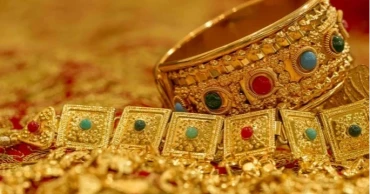
Gold price drops by Tk 3,266 per bhori as BAJUS revises rates
The Bangladesh Jewellers Association (BAJUS) has reduced gold prices by Tk 3,266 per bhori, setting the new price of 22-carat gold at Tk 225,290 per bhori, including VAT, effective from 10am on Monday.
In a statement issued in the morning, BAJUS said the price adjustment was made following a decline in the price of pure gold (tejabi gold) in the local market.=
Under the revised rates, a bhori (11.664 grams) of 22-carat gold will now cost Tk 225,290, including VAT.
The price of 21-carat gold has been fixed at Tk 215,142 per bhori, while 18-carat gold will be sold at Tk 184,758 per bhori. Gold of the traditional method has been priced at Tk 150,932 per bhori.
BAJUS said the new rates will remain in effect at all jewellery stores until further notice. However, making charges will vary depending on the design of the jewellery.
As VAT is already included in the retail price of gold ornaments, jewellers will not be allowed to charge VAT separately from customers, the association said.
It also said the existing rules for exchanging and purchasing gold ornaments, excluding specific VAT, making charges and the value of stones, will remain unchanged. A decision regarding VAT on silver ornaments will be announced soon.
The latest revision comes just two days after BAJUS raised gold prices on June 27 by Tk 5,482 per bhori, taking the price of 22-carat gold to Tk 228,556 per bhori, including VAT.
So far in 2026, BAJUS has adjusted gold prices 83 times. Of those, prices were increased on 41 occasions, reduced 41 times, while one adjustment involved VAT.
Despite the latest cut in gold prices, silver rates remain unchanged.
A bhori of 22-carat silver is currently selling for Tk 4,666, while 21-carat silver is priced at Tk 4,432 per bhori, 18-carat silver at Tk 3,791 per bhori, and traditional-method silver at Tk 2,858 per bhori.
3 months ago
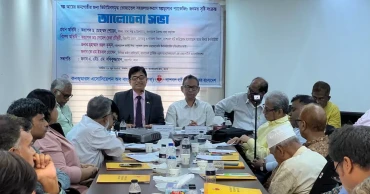
CAB calls for small-packet edible oil to tackle Vitamin A deficiency among low-income people
Consumer rights experts and advocates on Sunday called for introducing small-packet edible oil in the market to address Vitamin A deficiency among low-income people.
The call came at a joint seminar organised by the Consumers Association of Bangladesh (CAB) and the National Heart Foundation at the CAB office in Segunbagicha.
It also urged the government to enforce the existing laws banning the sale of open loose oil.
Experts at the event said a large portion of the population still uses open loose oil which diminishes the efficacy of Vitamin A and exposes the oil to dust and other contaminants.
They said introducing pouches, mini-packs or sachets with a capacity of 100 to 500 millilitres would allow low-income consumers to buy safe, vitamin-enriched oil at affordable prices. Smaller packaging would also ensure quicker use, reducing the risk of nutritional degradation.
However, experts acknowledged challenges including plastic waste management, packet leakage and low consumer awareness.
They recommended high-quality packaging, introduction of return-and-sell or cash-back systems, and public awareness campaigns to address these concerns.
Speakers said a coordinated effort involving policymakers, edible oil producers, the packaging industry, consumer rights organisations and the media could help introduce affordable safe packaging while simultaneously improving public health and reducing Vitamin A deficiency.
Presenting the keynote paper, Mushtak Ahmed Mohammad Iftikhar, founder chairman of Bangladesh Safe Food Authority and adviser to the National Heart Foundation, outlined the nutritional and public health risks associated with open oil consumption.
Professor Dr Sohel Reza Choudhury, head of the epidemiology department at National Heart Foundation Hospital and Research Institute, speaking as special guest, said open oil must be avoided for a healthy body and that overall oil consumption should also be reduced, as even healthy oil in excessive quantities can cause fat-related ailments.
Professor Dr Mohammad Shoyeb, a member of Bangladesh Safe Food Authority, speaking as chief guest, said CAB has long been working to ensure food safety for consumers and that collaborative efforts to protect consumer rights would continue.
CAB President AHM Shafiquzzaman, presiding over the event, said bottled healthy oil must replace open oil on public health grounds, noting that while the government has clear directives on the matter, enforcement remains absent. He said the initiative with the National Heart Foundation would be expanded across the country to compel effective action.
CAB Vice President Nazer Hossain said the interim government had suppressed an existing law banning the sale of open oil, and demanded its proper enforcement.
Also present were Director of the National Consumer Rights Protection Directorate Masum Arefin, BSTI Assistant Director Engineer Shashikanta Das, Jessore University of Science and Technology Assistant Professor Dr Rashida Parvin, and representatives from various NGOs and government and non-government institutions.
4 months ago

Janata Bank officials allege discrimination as promotion freeze continues
The State-Owned Bank Officials Unity Council (SOBOUC), Bangladesh, on Saturday demanded the immediate approval of the proposed 2025 organizational structure (organogram) for Janata Bank PLC, warning that prolonged delays have stalled regular promotions and left thousands of officials deprived.
The council raised the demand during a press conference held at the Dhaka Reporters Unit (DRU) in the capital, where its convener, Motahar Hossain, presented a written statement.
According to the written statement, the promotion process has been severely disrupted by successive circulars from the Financial Institutions Division (FID). Following a July 7, 2025 directive instructing state-owned banks to restructure and amend their organograms, the FID on October 14 ordered a halt to all regular promotions until previously granted "supernumerary" (ex-cadre) promotions were fully adjusted.
The council noted that in 2019, Janata Bank promoted 1,926 officials to the post of Senior Officer on a supernumerary basis. Despite a subsequent freeze on such advancements issued on November 21, 2022, state-owned banks continued the practice, elevating an additional 7,218 officials across the sector until August 2024—including 579 officials of various grades at Janata Bank.
While Janata Bank submitted its proposed organogram to the FID on December 11, 2025, to resolve the deadlock, it has yet to receive government approval.
In contrast, other major state-owned lenders—including Sonali, Agrani, and Rupali banks—have already secured approvals for their updated organograms and processed regular promotions using December 31, 2024, as the cut-off date. This discrepancy has left Janata Bank officials facing severe discrimination and professional stagnation, speakers alleged at the press conference.
The council highlighted a rapidly worsening administrative crisis, stating that the number of officials eligible for promotion stood at 5,802 at the end of 2024, but surged to 7,268 by the end of 2025. Without the creation of new posts under a revised organogram, this backlog will continue to swell.
Under the proposed 2025 organogram, Janata Bank’s total sanctioned manpower would increase from 18,373 to 21,817. The council argued that this expansion is essential to restore balance to human resource management, clear the promotion backlog, and inject dynamism into critical operations such as customer service, digital banking, SME and CMSME activities, risk management, and default loan recovery.
The organizational body estimated that implementing the new organogram would incur an additional expenditure of approximately Tk 13.82 crore over a three-year period—an amount they described as minimal compared to the bank's overall financial capacity.
The SOBOUC urged the government to intervene immediately to approve the pending structure and resolve the long-standing promotion impasse to protect the interests of the bank's workforce.
4 months ago

DBA intervention saves BEXIMCO Pharma GDR from London delisting
Trading in the Global Depository Receipts (GDRs) of BEXIMCO Pharmaceuticals PLC on the London Stock Exchange (LSE) has resumed from June 26, after the bourse lifted its trading suspension following coordinated intervention by the DSE Brokers Association of Bangladesh (DBA).
BEXIMCO Pharmaceuticals PLC is the only Bangladeshi company listed on the LSE, having secured its listing in 2004. The company's GDR trading was suspended from January 2, 2026, after it failed to publish its audited financial statements for the year ended June 30, 2025, and subsequent financial disclosures within the required timeframe.
Under LSE listing rules, any security suspended continuously for six months without resolution of the suspension ground is liable to delisting, a deadline that fell on July 2, 2026.
Against this backdrop, foreign institutional and individual investors wrote to the Bangladesh Securities and Exchange Commission (BSEC) Chairman requesting necessary measures to prevent the GDR from being delisted and sought the cooperation of the DSE Brokers Association of Bangladesh (DBA) in the matter.
Recognising the urgency, DBA President Saiful Islam led swift coordination between BSEC and BEXIMCO Pharmaceuticals' management to urge the necessary steps in the wider interests of investors.
Acting on DBA's initiative, BSEC granted the company permission to hold a special board meeting, enabling approval and publication of the third-quarter financial statements for fiscal year 2024-25, the audited annual financial report, and the first, second and third-quarter reports for fiscal year 2025-26.
This resolved the company's reporting backlog, prompting LSE to lift the trading suspension and approve the resumption of GDR trading with effect from June 26, 2026.
DBA believes the development will reinforce Bangladesh's international capital market image and credibility, strengthen foreign investor confidence, and consolidate the country's position in global markets.
DBA President Saiful Islam expressed sincere gratitude to Finance and Planning Minister Amir Khosru Mahmud Chowdhury, Prime Minister's Special Assistant for Investment and Capital Markets Tanvir Sani, BSEC Chairman Masud Khan, BSEC commissioners and officials, the board and management of BEXIMCO Pharmaceuticals PLC, and the print and electronic media for their cooperation and effective support.
DBA hopes the government will continue to prioritise attracting greater foreign investment into Bangladesh's capital market and will sustain investor-friendly policies, effective reforms, and timely measures to build international investor confidence.
4 months ago

Gold prices rise after two consecutive cuts
Bangladesh Jewellers Association (Bajus) on Saturday raised the price of gold in the domestic market by Tk 5,482 per bhori, ending a brief two-round decline and fixed the new retail price of 22-carat gold at Tk 2,28,556 per bhori.
The new price came into effect from 10:00am.
In a morning circular, Bajus said the revision was made in light of rising prices of pure (tejabi) gold in the local market.
Under the new rates, 21-carat gold has been priced at Tk 2,18,292 per bhori, an increase of Tk 5,249 while 18-carat gold has gone up by Tk 4,490 to Tk 1,87,440 per bhori. Traditional-method (sanatan) gold has been set at Tk 1,53,148 per bhori, up by Tk 3,674.
The new prices will remain in effect at all jewellery establishments across the country until further notice, Bajus said, adding that making charges will apply separately depending on design. As VAT is already included in the selling price, jewellers will not be permitted to collect it additionally from customers.
Bajus also said its earlier rules on jewellery exchange and purchase, excluding specific VAT, making charges and stones will remain unchanged, and a decision on VAT applicable to silver ornaments will be announced shortly.
The last adjustment had come on June 25, when Bajus cut 22-carat gold prices by Tk 2,216 per bhori to Tk 2,23,074.
Saturday's hike marks the 82nd price adjustment this year in the domestic gold market, comprising 41 upward revisions, 40 downward revisions, and one VAT adjustment.
Silver prices were also raised on Saturday, with 22-carat silver going up by Tk 175 to Tk 4,666 per bhori.
Prices of 21-carat, 18-carat and sanatan-method silver have been fixed at Tk 4,432, Tk 3,791 and Tk 2,858 per bhori, respectively.
Silver has seen 50 price adjustments so far in 2026, 25 upward and 25 downward.
4 months ago