local-business
Gold price hiked again in Bangladesh
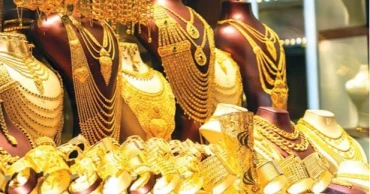
Bangladesh Jewellers Association (Bajus) has again raised the price of gold in the domestic market, hiking the rate by Tk 1,633 per bhori for 22-carat gold.
With the increase, the new price of 22-carat gold, including VAT, has been set at Tk 2,47,743 per bhori (11.664 grams), effective from 10am on Tuesday.
In a notice issued on Tuesday morning, Bajus said the price of pure gold (tejabi) has increased in the local market, prompting the revision.
According to the new rate, 21-carat gold will now cost Tk 2,36,604 per bhori, 18-carat gold Tk 2,03,187 per bhori, and traditional gold (Sanatan) Tk 1,65,920 per bhori, all including VAT.
Bajus said the new prices will remain effective at all jewellery shops until further notice, though making charges will apply depending on jewellery design. Since VAT is already included in the selling price of gold and silver ornaments, customers cannot be charged VAT separately.
The organisation added that its existing rules on making charges, wastage and stone deductions will remain unchanged for ornament exchange and purchase.
Bajus last adjusted gold prices on the morning of August 22, when the rate of 22-carat gold was increased by Tk 5,482 per bhori to Tk 2,46,110, including VAT. At that time, 21-carat gold was priced at Tk 2,35,030 per bhori, 18-carat gold at Tk 2,01,846, and traditional gold at Tk 1,64,812 per bhori.
So far in 2026, gold prices have been adjusted 107 times in the domestic market, with 55 hikes, 51 cuts, and one VAT adjustment.
Meanwhile, silver prices remained unchanged. Currently, 22-carat silver is being sold at Tk 5,482 per bhori, 21-carat at Tk 5,249, 18-carat at Tk 4,491, and traditional silver at Tk 3,383 per bhori.
Silver prices have been adjusted 64 times so far in 2026, with 34 hikes and 30 cuts.
2 months ago

MCAB sets new US dollar buy-sell rates for money exchanges
The Money Changers Association of Bangladesh (MCAB) has set new exchange rates for buying and selling US dollars in the open market to maintain stability and curb exchange rate fluctuations.
Under the new rates announced on Monday, authorized money exchanges across the country will purchase the US dollar at Tk 125.50 and sell it at Tk 126.50.
MCAB President MS Zaman officially announced the decision during a press conference held at the association's central office in the capital.
Speaking at the event, MCAB leaders emphasized that fixing the uniform exchange rate aims to bring discipline to the curb market, prevent price manipulation, and ensure smooth currency exchange services for outgoing and incoming travelers.
MCAB General Secretary Engr. Gautam Dey, along with central leaders of the association and owners of various money exchange institutions, were present at the press conference.
2 months ago
Ctg Customs House to organise electronic auction for uncleared goods
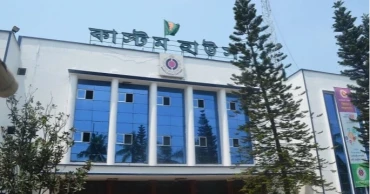
Customs House, Chattogram has taken an initiative to sell 442 containers of auctionable goods through an electronic auction in August as part of efforts to ease container congestion at Chattogram Port, enhance its operational capacity and prevent wastage of state resources.
The customs authorities regularly arrange auctions of uncleared and auctionable goods to ensure the efficient use of port facilities and safeguard physical and financial security, according to a press release issued on Monday.
Of the 442 containers, 290 containers containing goods in 101 lots will be auctioned under Special E-Auction No. 10/2026 in accordance with the National Board of Revenue’s Permanent Order No. 91/Customs/2025/123 and Special Order No. 82/2025.
The lots include various chemicals, machinery and machinery parts, plastic waste and scrap, chest freezers, pipes, different types of yarn and fabrics, solar modules, various types of salt, paper, tiles and household goods. The auction will also include 86 old empty containers.
No reserved value will be fixed for the goods under Special E-Auction No. 10/2026.
Separately, 152 containers in 109 lots will be sold under E-Auction No. 09/2026 in accordance with the NBR’s Permanent Order No. 91/Customs/2025/123.
The goods under this auction include different types of capital machinery, fabrics, PVC flex banners, chemicals, air-conditioner parts, tiles, stainless steel coils, scanners, badminton rackets, elevators and salt, among other items.
The customs authorities said the entire auction process would be conducted digitally to ensure transparency and accountability and make the bidding process more competitive.
Prospective bidders will be allowed to physically inspect the goods under E-Auction No. 09/2026 from August 30 to September 13 during office hours. The inspection period for Special E-Auction No. 10/2026 will continue from August 30 to September 15.
Interested buyers can register through the Customs’ official e-auction portal, auction.bdcustoms.gov.bd, and submit bids online.
For E-Auction No. 09/2026, bids can be submitted from August 27 until 3:00pm on September 16. For Special E-Auction No. 10/2026, the bidding period will run from August 27 until 3:00pm on September 17.
Bidders will have to upload a scanned copy of a security deposit equivalent to at least 10 percent of their proposed bid amount during the online bidding process and submit the required original documents within the stipulated time.
The highest bidders will have to comply with the applicable conditions of the Import Policy Order 2021-2024 before taking delivery of the auctioned goods.
The bid boxes for E-Auction No. 09/2026 will be opened at 3:30pm on September 16, while those for Special E-Auction No. 10/2026 will be opened at 11:00am on September 20.
The customs authorities have urged interested bidders to visit the official e-auction portal for detailed information about the auctions, including the lots, bidding conditions and procedures.
The NBR expressed hope that the technology-based auction process would play an important role in enhancing the capacity of Chattogram Port and ensuring effective management of national resources.
2 months ago

Islami Bank Grahak Forum stages demo demanding independent board, end to ‘political interference’
Islami Bank Sachetan Grahak Forum on Monday staged a demonstration in front of the bank's head office in Motijheel, demanding an independent board of directors and an end to alleged political interference in the bank's legal proceedings.
Forum Convener Prof Nur Nabi Manik and Member Secretary Motasim Billah, among others, spoke at the event. The rally was attended by bank customers and shareholders.
In his speech, Manik alleged that beneficiaries of S Alam Group within the government are exerting pressure regarding judicial cases involving the ownership of Islami Bank.
He claimed that as cases filed by the bank approached settlement, key legal representatives, including the bank's lawyer, Barrister M Qaium, and the counsel representing Bangladesh Bank – were replaced with government-aligned junior lawyers, which he described as direct interference in the judicial process.
Manik urged the Bangladesh Bank governor to immediately form a full and independent board of directors comprising original sponsors and professional stakeholders, emphasising that a bank cannot function properly without a proper governing board.
He warned that if the forum's seven-point demand is not met swiftly, stricter programmes, including a mass grand rally, will be announced.
The demands of the forum are formation of an independent, capable, and professional board of directors; reviewing the controversial ownership and shareholding changes of 2017 to reinstate the rights of genuine, original owners; establishing a special tribunal to fast-track the trial of those accused of plundering bank funds; immediate recovery of looted capital and confiscation of illicitly acquired assets; refraining from controversial or arbitrary regulatory decisions to curb panic and volatility across the banking sector; amending Section 18(a) of the Bank Company Act to close rehabilitation loops for financial fraudsters; and withdrawing misleading political statements regarding the bank's health made in Parliament.
2 months ago

Dhaka bourse turnover sinks to month’s low, shares slide for 2nd straight day
Turnover on the Dhaka Stock Exchange (DSE) fell to its lowest level so far this month on Monday as the bourse's key index extended a two-day slide, shedding a combined 141 points amid a broad sell-off that dragged down nearly every listed company.
The DSEX, the DSE's main index, dropped 78 points on Monday, following a 63-point fall on Sunday. The Shariah-based DSES index lost 16 points, while the blue-chip DS30 index fell 14 points.
Daily turnover fell by more than Tk 100 crore, with shares and units worth Tk 601 crore changing hands on Monday, down from Tk 711 crore a day earlier, the lowest single-day turnover recorded in August so far.
Losses were widespread, with prices falling in 355 companies against gains in only 14, while 18 issues remained unchanged.
Among the day's biggest movers, ACME Pesticides Limited led the DSE decliners with a fall of nearly 4 percent, while Fu Wang Food Ltd tumbled the hardest, losing close to 10 percent of its value.
The steep fall in Fu Wang Food's share price followed the company's announcement on Sunday of a six-month factory lay-off.
In a disclosure to the DSE, the company said it was forced into the decision due to an acute gas crisis and high raw material costs.
The stock, which had traded at Tk 11.10, fell to Tk 10 within a single session after the announcement.
The Chittagong Stock Exchange (CSE) mirrored the downturn, with its overall index CASPI plunging 173 points. Prices fell in 159 companies, rose in 21, and stayed unchanged in 11.
CSE turnover also contracted sharply, dropping by Tk 50 crore in a day. Shares and units worth Tk 14 crore were traded on Monday, compared with Tk 64 crore the previous session.
C&A Textiles Limited topped the CSE gainers with a rise of nearly 10 percent, while People's Leasing and Financial Services Ltd was the day's worst performer, losing about 10 percent.
2 months ago
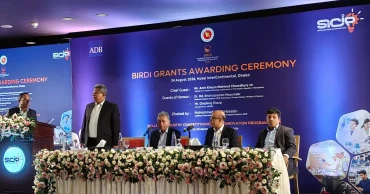
Research, innovation not expenditure but investment: Finance Minister
Finance Minister Amir Khosru Mahmud Chowdhury on Monday said Bangladesh needs to build an economy that competes through knowledge, innovation and the ingenuity of its people rather than relying solely on traditional sources of growth.
He made the remarks while handing over grant certificates to 12 projects under the Bangladesh Industry Research, Development and Innovation (BIRDI) initiative at a special event organised by the Finance Division on Monday.
“Today is not merely a ceremony of handing over grant certificates. We are making a statement about the kind of economy Bangladesh intends to become: an economy that competes on knowledge, on innovation, and on the ingenuity of its own people,” the finance minister said.
He said the Finance Division considers research and development not as expenditure but as an investment in productivity, export diversification, green technology and high-skilled employment for young people.
“A bird takes flight not because the sky is easy, but because its wings are ready. Today, with these twelve projects, the BIRDI has taken flight — and we will make sure it soars,” he said.
The BIRDI grants are a Finance Division initiative implemented with support from the Asian Development Bank (ADB) to promote practical research and innovation aimed at addressing industry needs.
The Skills for Industry Competitiveness and Innovation Program (SICIP) honoured researchers, innovators and entrepreneurs selected under its Bangladesh Industry Research Development and Innovation (BIRDI) initiative for their contributions to strengthening Bangladesh’s industrial capacity.
The BIRDI initiative recognises innovative achievements and contributions that support industrial development, productivity and technological advancement, making it a flagship initiative to promote industry-oriented research and innovation in Bangladesh.
Finance Division Secretary and National Program Director of SICIP Dr Md Khairuzzaman Mozumder said the grants have been designed to catalyse practical, industry-relevant solutions that can raise productivity, strengthen competitiveness and expand the country’s skills base.
He said the initiative is aligned with SICIP’s vision of “Illuminating Bangladesh through Skills”.
ADB Bangladesh Resident Mission Country Director Qingfeng Zhang highlighted the development partner’s continued partnership with the Bangladesh government in advancing the objectives of SICIP and supporting the country’s broader development aspirations.
Additional Secretary and Executive Program Director of SICIP Mohammed Walid Hossain welcomed the guests and delivered the vote of thanks.
He expressed appreciation to the guests, grant recipients and participants for their contributions to making the event successful.
The initiative is expected to strengthen collaboration between industry and research institutions while encouraging innovation-driven solutions to improve industrial productivity and competitiveness.
2 months ago

Bangladesh’s gross reserves hit $37.24 billion
Remittance inflow to Bangladesh rose 21.6 percent year-on-year to $4.74 billion in the first 48 days of the current fiscal year, while the country's gross foreign exchange reserves stood at $37.24 billion on Tuesday.
According to Bangladesh Bank data, the country received $4.74 billion in remittances between July 1 and August 17, 2026, compared with $3.90 billion during the corresponding period of the previous fiscal year.
In August alone, remittance inflow reached $1.88 billion during the first 17 days, up 32.6 percent from $1.42 billion received during the same period in August 2025.
On August 17, Bangladesh received $98 million in remittances in a single day.
The strong inflow of remittances has contributed to the country's foreign exchange position, with gross reserves standing at $37.24 billion as of August 18, according to Bangladesh Bank.
Reserves stood at $32.43 billion under the International Monetary Fund's Balance of Payments Manual (BPM6) methodology.
The central bank data were shared by Mohammad Ibrahim Munsi, joint director of the Accounts & Budgeting Department (A&BD-2) of Bangladesh Bank.
2 months ago
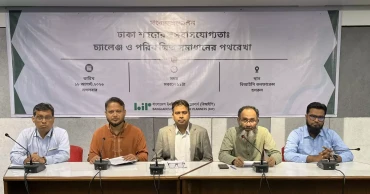
Unplanned urbanisation pushes Dhaka near bottom of livability index: BIP
Dhaka now ranks 171st among 173 cities on the Global Livability Index, planners said Tuesday warning that unplanned urbanisation, environmental degradation and weak governance have pushed the capital to one of the lowest livability levels in the world.
Speaking at a press conference titled "Dhaka City's Livability: Challenges and Roadmap for Planned Solutions," organised by the Bangladesh Institute of Planners (BIP) at its conference hall in Planners Tower, BIP President Muhammad Ariful Islam said transport, air and noise pollution, waterlogging, shrinking green space, public health risks and weak social inclusion are all directly tied to the city's planning failures.
He said Dhaka ranks 18th among the world's most polluted cities.
Of the roughly 56 canals the city once had, only 26 survive in any recognisable form, while 48 areas have been identified as waterlogging-prone due to encroachment on canals and wetlands and poor drainage, he said.
Ariful Islam said unplanned billboards and lighting are damaging the cityscape and road safety, he added, while rising building density and poor waste management are fuelling dengue and chikungunya risks.
Only 7.99 percent of the city's 99.29 square kilometres is green space, he said, far short of what a livable city needs.
On transport, Ariful said Dhaka loses about 50 lakh working hours annually to congestion, at an estimated economic cost of Tk 37,000 crore.
He said around 1,765 tonnes of waste, 27 percent of total generation, goes uncollected daily, worsening waterlogging and mosquito breeding.
BIP General Secretary Mohammad Mosleh Uddin Hasan said Dhaka is heading toward its lowest-ever livability level due to poor implementation of existing plans and institutional weakness.
Planner Adil Muhammad Khan raised concerns over footpath encroachment, illegal businesses, extortion, and political influence in urban management while planner AKM Riaz Uddin noted that despite declining livability, migration to Dhaka continues because other regions lack jobs and services.
Speakers agreed that Dhaka's crisis stems from interlinked failures in environment, land use, transport, health and waste management, calling for long-term, coordinated national planning.
2 months ago
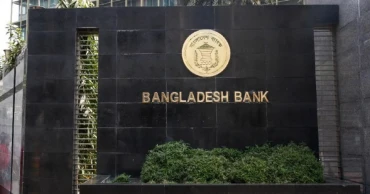
Bangladesh Bank sets 10% quota for individual investors in Sukuk bonds
To boost retail participation in Shariah-compliant financial instruments, Bangladesh Bank has set aside a dedicated 10 percent quota for individual investors in Sukuk bond issuances.
The Debt Management Department of the central bank issued a directive to the Managing Directors and Chief Executive Officers of all scheduled banks and financial institutions across the country on Monday.
Under the newly defined distribution framework, 50 percent of Sukuk allocation will be reserved for full-fledged Shariah-based Institutions: Islamic banks, financial institutions, and insurance companies.
Thirty percent will go to Islamic Branches & Windows: Islamic branches and windows of conventional banks.
Ten percent is exclusively earmarked for general individual retail investors.
The remaining 10 percent will be allocated among conventional banks, financial institutions, insurance firms, provident funds, deposit insurance, investment companies, corporate bodies, gratuity funds, and mutual funds.
Previously, there was no exclusive reserved allocation for individual investors.
Under the previous policy, 15 percent of Sukuk was jointly allocated to individual investors along with provident funds, deposit insurance, investment firms, corporate entities, gratuity funds, and mutual funds.
Meanwhile, 80 percent was allocated to Shariah-compliant entities alongside Islamic branches and windows of conventional banks, and 5 percent was reserved for conventional institutions.
The central bank's explicit 10 percent quota ensures that individual retail investors will no longer have to compete directly against large institutional funds for their entire allocation share.
Sukuk bonds are Shariah-compliant investment instruments issued by the government to raise capital for various national infrastructure and development projects. Unlike conventional interest-bearing bonds, Sukuk offers returns structured around profit-sharing principles.
2 months ago

BB relaxes LC cash margin for fruit imports on a bank-client relationship basis
Bangladesh Bank (BB) has removed the mandatory 100 percent cash margin requirement for opening letters of credit (LCs) to import fruits, allowing scheduled banks to set the rate based on their banker-customer relationship.
Banking Regulation and Policy Department (BRPD) of the central bank issued a circular on Sunday (August 16), instructing the managing directors and chief executives of all scheduled banks to implement the decision immediately.
Previously, under BRPD Circular Letter No. 41 issued on September 5, 2024, Bangladesh Bank imposed a mandatory 100 percent cash margin on luxury items and locally produced import-substitute goods—which included fruits—to manage foreign exchange reserves amid global economic volatility.
Explaining the rationale behind the policy shift, the latest circular notes that foreign exchange rates and transactions in Bangladesh have gradually stabilized, reducing the necessity of a rigid 100 percent cash margin requirement.
Furthermore, fruits are considered essential nutritious food items for the general public, particularly children, the elderly, sick individuals, and pregnant women.
By easing import restrictions, the central bank aims to facilitate smoother imports, maintain affordable price levels, foster competitive market dynamics, and ensure a steady supply of fruits across the country.
The circular highlights that all other instructions outlined in BRPD Circular Letter No. 41/2024 and related directives remain unchanged.
Mandatory 100 percent LC cash margin for fruit imports replaced with flexible rates based on banker-customer relations and recognition of fruits as vital. Easing import conditions, maintaining affordable prices, strengthening market competition, and securing supply.
2 months ago