World-Business
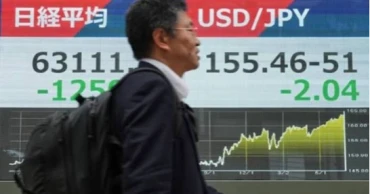
Asian markets mixed as yen strengthens, oil prices fall on easing Iran tensions
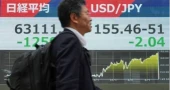
Asian stock markets traded mixed on Monday after the United States and Japan confirmed they had intervened to support the Japanese yen, pushing the currency to its strongest level against the US dollar since late last year.
The yen strengthened after US President Donald Trump and Japanese officials confirmed they had stepped into the currency market last week to slow the dollar's sharp rise. The dollar fell to as low as 155.20 yen, compared with nearly 164 yen last week.
A weaker yen usually benefits Japanese exporters by increasing the value of their overseas earnings when converted into yen. However, it also raises the cost of imports such as oil and raw materials, adding pressure on Japan's economy.
The euro edged up slightly to $1.1533 from $1.1528.
Oil prices dropped sharply after Trump said he would instruct US forces not to carry out attacks on Iran, saying an agreement to end the conflict in the Middle East was close.
US benchmark crude fell 4.8% to $80.58 a barrel in early trading, while Brent crude, the international benchmark, dropped 5% to $83.87 a barrel.
In Asian markets, Japan's Nikkei 225 index fell 1.9% to 63,140.68, while South Korea's Kospi dropped 4.5% to 6,298.75.
The Kospi had surged 17.9% on Friday, its biggest single-day gain on record, after heavy losses earlier in the week. Shares of Samsung Electronics and SK Hynix, which had jumped more than 25% on Friday, fell 8% and 7.8%, respectively, in early Monday trading.
Hong Kong's Hang Seng index rose 0.6% to 26,038.92, while China's Shanghai Composite index slipped 0.5% to 3,812.97.
Australia's S&P/ASX 200 declined 0.2% to 8,961.30, while Taiwan's Taiex gained 0.7%.
On Friday, US stocks ended a volatile July on a positive note. The S&P 500 gained 0.7%, the Dow Jones Industrial Average rose 0.5%, and the Nasdaq Composite advanced 1%.
Wall Street has experienced sharp swings in recent weeks due to rising oil prices linked to the Iran conflict and investor concerns over whether heavy spending on artificial intelligence will generate enough profits to justify soaring technology stock prices.
Amazon led Friday's rally, jumping 15.3% after reporting quarterly earnings that far exceeded analysts' expectations. The company said profits more than tripled from a year earlier, helped by strong growth in its cloud computing business. It also raised its investment outlook, suggesting its AI spending is beginning to deliver results.
Microsoft saw a similar market reaction a day earlier after reporting signs that its AI investments were also boosting profits.
Chipmakers remained volatile. Micron Technology erased an early gain of 6.4% to end the day down 5.9%.
Apple, however, fell 7.4% despite reporting better-than-expected quarterly earnings. Investors were disappointed by its weaker revenue forecast, which the company attributed to supply shortages of key components amid strong AI-related demand.
22 hours ago

Bangladesh Honda exports NX200 motorcycles to Mexico
Bangladesh Honda Private Limited (BHL) has expanded its export operations by shipping Honda NX200 motorcycles to Mexico, marking another milestone in the company's efforts to strengthen Bangladesh's presence in the global motorcycle market.
The export follows BHL's earlier shipment of Honda motorcycles to Guatemala and reflects the company's strategy to expand its international footprint while maintaining Honda's global quality standards, according to a press release.
The export ceremony was attended by Dr Md Sakirul Islam Khan, Special Assistant to the Prime Minister with Secretary status, as the chief guest, while Gazaria Upazila Nirbahi Officer Ummay Hafsa Nadia was present as the guest of honour.
BHL, a joint venture between the Bangladesh Steel and Engineering Corporation (BSEC) and Japan's Honda Motor Co., Ltd., said the latest export demonstrates the growing capability of Bangladesh's motorcycle manufacturing sector to supply high-quality products to international markets.
The company said the initiative would contribute to export diversification, promote local manufacturing, strengthen the domestic supply chain and create employment opportunities.
Speaking at the event, Dr Sakirul Islam Khan said the government remained committed to creating a business-friendly environment that encourages manufacturing, exports and investment.
He described the export of the Honda NX200 to Mexico as a significant achievement that would support export diversification, employment generation and enhance Bangladesh's global recognition.
Susumu Morisawa, Managing Director and Chief Executive Officer of Bangladesh Honda Private Limited, said the expansion of exports to Mexico reflected the company's continuous improvement in production capability, quality assurance and the dedication of its workforce.
He said the company would continue enhancing local procurement, improving manufacturing competitiveness and expanding exports to new international markets, while contributing to Bangladesh's industrial development.
Shah Muhammad Ashequr Rahman, Chief Marketing Officer of BHL, said the export of the Honda NX200 to Mexico highlighted Bangladesh's growing manufacturing capability and Honda's global quality standards.
He said although the domestic market remained the company's priority, the export initiative would support industrial development, technological advancement, localisation, employment generation and Bangladesh's emergence as a competitive motorcycle manufacturing and export base.
BHL said it would continue improving production efficiency, increasing localisation and exploring export opportunities in additional international markets in line with Honda's global vision.
The company also expressed gratitude to the government, the National Board of Revenue, the Duty Exemption and Drawback Office, the Bangladesh Economic Zones Authority, customs authorities, banking partners, suppliers, dealers and other stakeholders for supporting its export activities.
BHL said it aims to contribute to sustainable economic growth, export diversification and Bangladesh's reputation as a trusted global manufacturing hub through continued expansion of its export business.
2 days ago
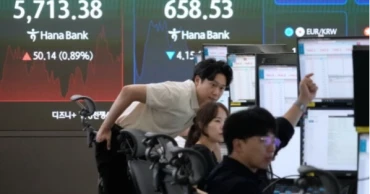
Oil prices fall, Asian shares mostly lower as chip stocks retreat
Oil prices fell and most Asian stocks traded lower Thursday as investors sold shares of major chipmakers, while South Korea’s benchmark Kospi extended its sharp losses.
Oil markets remained volatile after the United States said it had carried out a “heavy wave” of strikes against Iran in response to an attack on a US military base.
US stock futures edged higher after Wall Street ended lower on Wednesday.
In South Korea, the Kospi has come under heavy pressure following a sharp rally driven by the global artificial intelligence boom. Some analysts say the recent sell-off reflects growing concerns about the huge amounts technology companies are spending to expand AI-related capacity.
The Kospi was down 1.3% at 5,587.82 on Thursday after plunging 10.8% Tuesday and nearly 6% Wednesday. It has fallen more than 35% from its record high of above 9,000 reached in June, although it remains about 30% higher so far this year.
Samsung Electronics rose 2.4% after the technology giant reported record operating profit for the latest quarter, broadly matching market expectations.
Chipmaker SK Hynix fell 4% after dropping more than 9% Wednesday. The company reported a record quarterly operating profit that nearly increased sixfold, but the result fell short of analysts’ expectations, prompting investors to sell its shares.
Japan’s Nikkei 225 gained 0.6% to 61,778.02. SoftBank Group, which has invested in OpenAI, dropped 2.7%, while Tokyo Electron, a maker of chip production equipment, climbed 4.4%. Memory chipmaker Kioxia Holdings gained 7.5%.
Taiwan’s Taiex, another major beneficiary of the AI boom, advanced 0.8%, while leading chipmaker TSMC rose 1.8%.
Hong Kong’s Hang Seng index slipped less than 0.1% to 25,779.70, while the Shanghai Composite fell 1.2% to 3,784.55.
Australia’s S&P/ASX 200 declined 0.9% to 8,959.90, while India’s Sensex edged up less than 0.1%.
Oil prices remain volatileOil prices fell Thursday despite renewed exchanges of attacks between the US and Iran.
US President Donald Trump said Washington would hit Iran “very hard” after Iranian forces attacked a US base in Jordan.
Shipping through the Strait of Hormuz, a key route for global oil supplies, remains limited, raising concerns about disruptions to international energy markets.
Brent crude, the international benchmark, fell 1% to $87.18 a barrel after rising sharply the previous day. It was trading at around $72 a barrel in late February, before the war began.
US benchmark crude fell 0.9% to $83.74 a barrel.
US stocks end lowerOn Wall Street, the S&P 500 dropped 1.5% to 7,316.15 on Wednesday. The Dow Jones Industrial Average fell 2.2% to 51,594.14, while the tech-heavy Nasdaq composite declined 1.7% to 24,442.94.
Major chipmakers also suffered losses. Nvidia fell 3.6%, Advanced Micro Devices dropped 5.5% and Broadcom declined 2.8%.
US stocks were also pressured after the Federal Reserve kept interest rates unchanged, although some members of its policy committee had favored raising rates.
Fed Chairman Kevin Warsh reaffirmed his commitment to bringing inflation back to the 2% target. At the same time, he maintained his approach of providing financial markets with limited guidance about the central bank’s next interest-rate moves.
With fewer signals from the Fed, investors could face more volatile trading as uncertainty over the direction of interest rates continues.
“Did the Fed take an explicit change in its policy rate today?” Warsh asked at a news conference after the decision. “No, but I think that's the beginning of the story.”
In the bond market, the yield on the 10-year US Treasury note rose to 4.70% from 4.61% late Tuesday.
In early Thursday trading, the US dollar rose to 163.49 Japanese yen from 163.41 yen. The euro fell to $1.1454 from $1.1467.
4 days ago
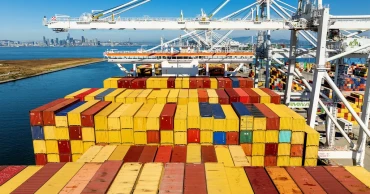
A forced-labor crackdown or an end-run around Congress? Dissecting Trump's new tariffs
The Trump administration has imposed double-digit tariffs on more than 60 countries, using a legal justification that permits the president to levy import taxes and other sanctions against countries found to engage in “unjustifiable,” “unreasonable” or “discriminatory” trade practices.
The new tariffs announced in recent days take effect just as temporary 10% worldwide tariffs expired, and critics say they are less about cracking down on forced labor than they are a way to replace those tariffs. The expired tariffs were themselves a temporary replacement for worldwide tariffs the Supreme Court struck down in February.
The tariffs were levied on countries that the U.S. says either don't have or don't effectively enforce a forced-labor import ban. The affected countries, which account for 99% of U.S. imports, were quick to protest, calling the Trump administration's claims unfounded and arbitrary, as nations with vastly different records on forced labor received the same tariff level. The U.S. spent four months investigating but gave few details on how it arrived at the tariff rates, which are either 10% or 12.5%.
Sidestepping Congress
The tariffs were levied under Section 301 of the Trade Act of 1974 on countries that the U.S. determined had failed “to impose and effectively enforce a prohibition on the importation of goods produced with forced labor.”
During President Donald Trump 's first term, he cited Section 301 to impose sweeping tariffs on Chinese imports amid a dispute over the sharp-elbowed tactics Beijing was using to challenge America’s technological dominance. The U.S. is also using 301 powers to counter what it calls unfair Chinese practices in the shipbuilding industry.
“The 301s allow a permanent tariff without going to Congress to settle the dispute,” said Barry Appleton, a law professor and co-director of New York Law School’s Center for International Law. “That’s what all of this is about. The president doesn’t want to knock on the front door of Congress, so he’s trying every side door and every unlatched window to get in.”
Little evidence that countries failed to enforce import bans
The office of the United States Trade Representative (USTR) said it consulted with all 60 economies under investigation and held two rounds of public hearings, elicited more than 2,100 public comments, and had “engagement” with its trading partners about what they were doing to combat forced labor bans.
It didn't detail its talks with the countries, saying those were confidential. Experts say it is fairly straightforward to investigate whether a country has a ban or not, but it is difficult to determine the government's exact rationale for each country's failure to enforce import bans.
“There’s not a lot of hard evidence there,” said Scott Lincicome, vice president for general economics and trade policy at the Cato Institute, a libertarian think tank. “It’s pretty laughable on its face to think that a country like the ones in Europe or in Norway or Switzerland aren’t doing enough to police forced labor.”
And even if countries do enact and enforce the forced-labor import bans the U.S. wants, they would still need to prove that they’re enforcing them to Washington’s satisfaction before the tariffs would be removed, said lawyer Patrick Childress, a partner at Holland & Knight and a former U.S. trade official.
“This suggests that no short-term path for countrywide relief from the new Section 301 tariffs will be available,” he said.
Countries and industries reject the forced labor argument
Many countries have pushed back against the Trump administration's findings.
Brazil, which faces a 12.5% forced-labor tariff, called the U.S. move “arbitrary and unjustified.” The U.S. “chose to manipulate an issue of great importance to human rights and the struggles of workers worldwide in order to accuse 59 countries and the European Union of unfair practices,” it said in a statement.
Australia also questioned the justification for its 12.5% tariff.
“We believe that amongst all of the countries in the world, Australia does take the issue of slavery, modern slavery, seriously, and will continue to do that,” Trade Minister Don Farrell told reporters in Adelaide.
Carve-outs have riled some industries. The National Council of Textile Organizations (NCTO), which describes itself as the voice of the American textile industry, protested a mechanism that exempts the Section 301 tariffs for textile and apparel imports from Bangladesh, Cambodia, Indonesia, and Malaysia based on those countries’ imports of U.S. cotton and textiles.
“No other industry has been more disadvantaged by forced labor than the U.S. textile industry, which employs 453,000 workers and has lost 41 plants over the past two plus years,” NCTO chief executive Kim Glas said in a statement. “We remain strongly concerned that USTR’s textile mechanism will harm the very domestic manufacturers the administration seeks to help.”
US forced-labor bans don't always work
The U.S. has two major pieces of legislation related to forced-labor import bans. The Tariff Act of 1930 gave Customs and Border Protection the authority to seize shipments where forced labor was suspected and to block further imports. But it had a big carve-out: If there was “consumptive demand,” meaning there wasn't sufficient supply to meet domestic demand, imports were allowed regardless of how they were produced. The Trade Facilitation and Trade Enforcement Act that took effect in 2016 eliminated that loophole.
In 2021, the Uyghur Forced Labor Prevention Act was passed. It blocks imports from China’s Xinjiang region unless businesses can prove the items were made without forced labor.
But goods made with forced labor can still make it into the U.S. In 2015, an Associated Press investigation found that slave labor was used in the fishing industry in Southeast Asia. The seafood they caught made its way to supermarkets and pet food providers across the U.S.
An investigation by The Associated Press in 2020 into the $65 billion palm oil industry found labor abuses among an invisible workforce consisting of millions of men, women and children in Asia. The fruit they harvested made its way into the supply chains of major companies, including Unilever, L’Oreal, Nestle and Procter & Gamble.
Calls for a more comprehensive approach to combat forced labor
During hearings on the tariffs this month, National Retail Federation vice president Jonathan Gold, who was representing the business coalition the Joint Association Forced Labor Working Group at the hearing, said that in order for the import bans to work, they would have to be much more extensive.
He said there need to be “clear, measurable benchmarks” tied to tariffs for countries to hit, and that the U.S. should help countries build enforcement programs.
Kenya Davis, a partner at the Boies Schiller Flexner law firm, said an effective ban needs a “comprehensive approach” that provides transparency about what the investigations consisted of, along with programs that provide countries aid in enforcing bans.
8 days ago
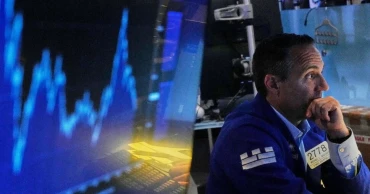
Oil tops $100 on Middle East tensions as Tesla, Alphabet weigh on Wall Street
Global oil prices climbed above $100 a barrel on Thursday as escalating tensions in the Middle East raised concerns over disruptions to crude supplies, while sharp losses in technology giants Tesla and Alphabet pushed US stocks lower.
Brent crude, the international benchmark, surged 7.2 percent to $100.88 per barrel after attacks on two Saudi oil tankers in the Red Sea heightened fears over the security of key shipping routes for global energy supplies.
The latest attacks added to concerns surrounding the Strait of Hormuz, a critical passage for oil exports from the Middle East. In response, US President Donald Trump warned of "major military punishment" against Iran-backed Houthi rebels if attacks on commercial shipping continue.
Rising oil prices weighed heavily on financial markets as investors worried that higher energy costs could fuel inflation, increase business expenses and reduce consumer spending.
The benchmark S&P 500 fell 1.2 percent in late morning trading, while the Dow Jones Industrial Average dropped 477 points, or 0.9 percent. The technology-heavy Nasdaq Composite declined 2.4 percent.
Market analysts said the sharp increase in crude prices has renewed concerns that central banks may delay interest rate cuts or even tighten monetary policy further if inflation accelerates.
The European Central Bank left its key interest rates unchanged on Thursday. However, traders significantly increased expectations that the US Federal Reserve could raise interest rates at its meeting next week, reflecting growing concerns over inflationary pressure from higher energy prices.
The yield on the benchmark 10-year US Treasury note rose to 4.70 percent, continuing an upward trend that has already pushed long-term mortgage rates to their highest level in nearly a year.
Airline stocks came under pressure as investors anticipated higher fuel costs. American Airlines fell 7.4 percent despite reporting quarterly earnings that exceeded analysts' expectations, while Southwest Airlines lost 3.9 percent even after posting stronger-than-expected profit and revenue.
Technology shares also weighed heavily on Wall Street.
Tesla tumbled 13.6 percent after reporting quarterly earnings that missed market expectations, making it one of the biggest drags on the S&P 500.
Alphabet, Google's parent company, declined 7.3 percent despite posting better-than-expected revenue and profit. Investors instead focused on the company's plans to significantly increase spending on artificial intelligence infrastructure after capital investment nearly doubled from a year earlier.
Chief Executive Sundar Pichai said AI-driven demand helped accelerate Google Cloud's revenue growth during the latest quarter, but investors remained cautious about whether the company's massive AI investments would generate sufficient long-term returns.
European markets also ended lower as oil prices surged, with France's CAC 40 among the major indexes posting notable declines. In contrast, Asian markets closed mostly higher earlier in the day, led by South Korea's Kospi, which gained 4.4 percent.
11 days ago

Asian markets mixed as oil prices rise despite Wall Street rally
Asian stock markets ended mixed on Wednesday after a strong performance on Wall Street, as investors weighed gains in technology shares against concerns over rising oil prices and inflation.
Japan's Nikkei 225 slipped 0.2% to close at 66,115.60. Government data showed both imports and exports increased compared with a year earlier, helped by the weaker yen, which boosted the value of trade when converted from US dollars.
Australia's S&P/ASX 200 rose 0.3% to 8,823.00, while South Korea's Kospi gained 0.7% to 6,797.70. Hong Kong's Hang Seng Index fell 1.1% to 24,866.67, and China's Shanghai Composite edged down by less than 0.1% to 3,861.82.
Wall Street closed higher overnight, driven by renewed buying of technology stocks linked to artificial intelligence (AI). The S&P 500 gained 0.9%, the Dow Jones Industrial Average rose 385 points, or 0.7%, and the Nasdaq Composite advanced 1.3%.
AI-related shares rebounded for a second straight session after suffering heavy losses last week amid concerns that their prices had risen too quickly.
Micron Technology jumped 12.2%, building on the previous day's gains after a sharp decline last week. Nvidia also rose 2%, with both companies among the biggest contributors to the S&P 500's advance.
However, higher oil prices continued to worry investors as tensions between the United States and Iran persisted.
In early Wednesday trading, US benchmark crude oil rose $1.67 to $86.01 a barrel, while Brent crude, the international benchmark, climbed $1.84 to $92.85 a barrel.
Stephen Innes, a market analyst and former trader, said higher oil prices pose a particular challenge for Japan, which relies heavily on imported energy.
"A weaker yen and rising crude oil prices are putting extra pressure on the Japanese economy at the same time," he said.
In currency trading, the US dollar was little changed at 163.13 Japanese yen, while the euro strengthened slightly to $1.1409.
Analysts say rising oil prices could push inflation higher again after recent signs of easing. That may prompt the US Federal Reserve and other central banks to keep interest rates higher for longer or raise them further, a move that could slow economic growth and weigh on global stock markets.
12 days ago
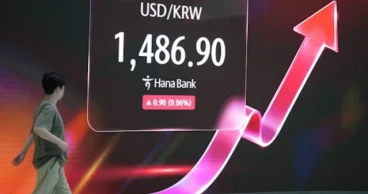
Asian markets rebound as South Korea and Japan recover after AI stock sell-off
Asian stock markets mostly closed higher on Tuesday, with South Korea and Japan recovering some of the losses suffered in recent sessions due to heavy selling of artificial intelligence (AI)-related shares.
U.S. stock futures moved slightly higher, while oil prices fell.
South Korea's Kospi index rose 4.7% to 6,821.41 after dropping 4.5% a day earlier. Technology stocks led the recovery, with Samsung Electronics climbing 7.4% and memory chip maker SK Hynix gaining 6.4%.
Despite a decline of more than 20% over the past month as investors locked in profits amid concerns over a possible AI investment bubble, the Kospi remains up more than 50% so far this year.
Japan's Nikkei 225 gained 2.8% to 65,926.41 after reopening following Monday's public holiday, recovering part of last week's losses.
Among major gainers, Kioxia Holdings surged 15.9%, chip testing equipment maker Advantest rose 6.9%, SoftBank Group advanced 6.1%, and Tokyo Electron added 1.3%.
Taiwan's Taiex index climbed 3.6%, supported by a 2.8% rise in Taiwan Semiconductor Manufacturing Co. (TSMC), the world's largest contract chipmaker.
Elsewhere, Hong Kong's Hang Seng Index edged up less than 0.1% to 25,150.75, while China's Shanghai Composite Index rose 0.6% to 3,819.66. Australia's S&P/ASX 200 added 0.1%, while India's Sensex slipped 0.1%.
Oil prices eased after Monday's gains. Brent crude, the global benchmark, fell 0.7% to $88.63 a barrel, while U.S. benchmark crude dropped 0.3% to $82.24 a barrel.
Investors continued to watch developments in the Middle East after Iran reportedly attacked another tanker in the Strait of Hormuz, a vital route for global oil and gas shipments. The United States also launched fresh strikes on Iran for a tenth consecutive night, while Tehran continued retaliatory attacks targeting U.S. allies in the region.
Iran's interior minister visited Pakistan, which has been acting as a mediator, for talks aimed at easing tensions, although no breakthrough has been announced.
Analysts at ING said there were some signs of possible de-escalation between the United States and Iran, but warned that major differences remain. They also said attacks by Yemen's Iran-backed Houthi rebels on shipping linked to Saudi Arabia have increased concerns over global oil supplies.
On Wall Street, the S&P 500 fell 0.2% on Monday, while the Dow Jones Industrial Average dropped 0.6%. The Nasdaq Composite slipped by less than 0.1%.
Several major AI and semiconductor companies still posted gains. Nvidia rose 0.2%, Micron Technology gained 1.9%, Broadcom climbed 2%, and Advanced Micro Devices (AMD) advanced 1.6% after expanding its AI partnership with Microsoft.
In currency trading, the U.S. dollar was little changed at 162.48 Japanese yen, while the euro remained steady at $1.1414.
13 days ago

Asian markets mostly rise, South Korea's Kospi tumbles nearly 5% amid AI stock selloff
Most Asian stock markets ended higher on Monday, but South Korea's benchmark Kospi index plunged nearly 5% as investors sold off artificial intelligence (AI)-related stocks.
Japanese markets remained closed for a public holiday, while US stock futures showed mixed trends.
Oil prices continued to rise, gaining more than 2%, as tensions between the United States and Iran intensified, raising fears of supply disruptions. Brent crude climbed 2.6% to $90.40 a barrel, while US benchmark crude rose 2.2% to $83.58 a barrel.
The latest gains came after the US carried out attacks for a ninth consecutive night, with Iran continuing retaliatory strikes against US allies across the Middle East.
Analysts at ING said the ongoing exchange of attacks could lead to wider conflict across the Persian Gulf if the situation continues to escalate. They also noted that tanker traffic through the Strait of Hormuz, a key route for global oil shipments, has slowed sharply, adding pressure to oil supplies.
In stock markets, South Korea's Kospi fell 4.9% to 6,490.97, dragged down by losses in major technology shares. Samsung Electronics dropped 4.4%, while memory chipmaker SK Hynix declined 3.3%.
Taiwan's Taiex index slipped less than 0.1%. However, Taiwan Semiconductor Manufacturing Co. (TSMC), the island's largest chipmaker, rose 2% after tumbling 7.3% on Friday. Investors had reacted negatively to the company's announcement that it would invest an additional $100 billion to expand chip production in the United States.
Elsewhere in the region, Hong Kong's Hang Seng Index advanced 2.1% to 25,105.78, the Shanghai Composite Index gained 1.2% to 3,808.39, and Australia's S&P/ASX 200 edged up 0.2% to 8,815.30. India's Sensex, however, fell 0.9%.
AI-related technology shares remained under pressure after heavy losses on Friday, reflecting growing concerns that the sector may be overvalued following months of strong gains. Many investors chose to book profits by selling their holdings.
Market sentiment was also affected by the launch of a new open-source AI model, Kimi K3, developed by Beijing-based Moonshot AI. The release drew comparisons with the "DeepSeek moment" in early 2025, when a Chinese AI model unsettled global markets by demonstrating that lower-cost Chinese AI systems could compete with leading products from companies such as Anthropic and OpenAI.
On Wall Street on Friday, the S&P 500 fell 1% to 7,457.69, the Dow Jones Industrial Average lost 0.8% to 52,146.42, and the Nasdaq Composite dropped 1.4% to 25,520.24.
Chipmakers also posted losses, with Nvidia falling 2.2%, while Broadcom and Advanced Micro Devices (AMD) each declined about 1%.
SpaceX shares dropped 5.4%, falling below their initial public offering price of $135 and hitting their lowest level since the company's Nasdaq debut last month.
In currency trading, the US dollar slipped to 162.37 Japanese yen from 162.43 yen, while the euro rose slightly to $1.1446 from $1.1438.
14 days ago
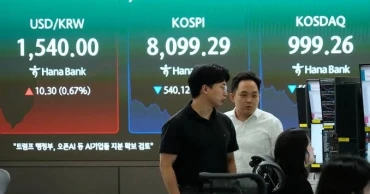
Asian markets mostly fall as South Korea's Kospi slides 6.6%; oil prices ease despite US-Iran conflict
Most Asian stock markets ended lower on Thursday, while oil prices edged down despite continued military exchanges between the United States and Iran. U.S. stock futures, however, moved slightly higher.
Technology and artificial intelligence (AI)-related shares came under pressure, dragging down markets in South Korea and Japan.
South Korea's Kospi dropped 6.6% to 6,816.70 after the Bank of Korea raised interest rates for the first time since 2023. The move was aimed at easing inflationary pressure linked to the Iran conflict.
Among major South Korean stocks, memory chipmaker SK Hynix fell 11.2%, while Samsung Electronics lost 8.2%.
Taiwan's Taiex slipped 0.3% ahead of the quarterly earnings report of Taiwan Semiconductor Manufacturing Co. (TSMC), whose results are widely viewed as an indicator of the global semiconductor industry and AI demand.
Japan's Nikkei 225 declined 2.9% to 66,767.64. Memory chip producer Kioxia plunged 13.5%, while chip equipment maker Tokyo Electron fell 5.2% and testing equipment manufacturer Advantest dropped 5.6%. SoftBank Group also lost 6.4%.
Hong Kong's Hang Seng Index stood out among regional markets, rising 1.7% to 25,111.22. Alibaba's Hong Kong-listed shares jumped 4.4% after China's cyberspace regulator approved Apple's Apple Intelligence AI service for use in China. Alibaba said its Qwen AI model will be integrated into the Apple Intelligence platform.
China's Shanghai Composite Index fell 0.9% to 3,921.20, while Australia's S&P/ASX 200 slipped 0.2% to 8,820.50. India's Sensex gained 0.3%.
Oil prices eased slightly but remained well above levels seen before the outbreak of the US-Iran conflict.
Brent crude, the international benchmark, fell 0.4% to $84.55 a barrel, compared with about $72 a barrel in late February before the conflict began. U.S. benchmark crude slipped 0.2% to $79.34 a barrel.
Analysts at ING said oil prices recorded a third straight day of gains before Thursday's slight decline, as there were still few signs of easing tensions between Washington and Tehran.
They also said the conflict was continuing to disrupt tanker traffic through the Strait of Hormuz, a key route for global oil shipments, affecting vessel movements from the Persian Gulf.
On Wall Street Wednesday, the S&P 500 gained 0.4% to close at 7,572.40. The Dow Jones Industrial Average rose 0.3% to 52,658.64, while the Nasdaq Composite advanced 0.6% to 26,269.23.
SpaceX shares briefly fell below their initial public offering (IPO) price of $135 before recovering part of the losses.
Investor sentiment was also supported by data showing U.S. inflation slowed in June and stronger-than-expected quarterly earnings from BlackRock. Shares of the investment firm climbed 6.6% after it reported better-than-expected revenue and profit.
In early currency trading Thursday, the U.S. dollar slipped to 162.09 Japanese yen from 162.19 yen, while the euro traded at $1.1467, little changed from $1.1464.
18 days ago

Saudi Arabia keen to expand investment in Bangladesh’s transport, logistics and Maritime sectors
Saudi Arabia has expressed a strong interest in expanding its investment footprint in Bangladesh, with a particular focus on strengthening cooperation in the transport, logistics, and maritime sectors.
The interest was conveyed during a meeting between a Saudi delegation, led by Deputy Minister of Transport and Logistics Dr. Rumaih Mohammed Al-Rumaih, and Bangladeshi officials at Biniyog Bhaban in the capital on Wednesday.
Saudi envoy meets PM, hands over Crown Prince's letter
Ashik Chowdhury, Executive Chairman of the Bangladesh Investment Development Authority (BIDA) and CEO of the Public Private Partnership (PPP) Authority, led the Bangladesh side during the focused discussion on transport, logistics, and infrastructure cooperation. Officials from the PPPA, BIDA, and the Bangladesh Economic Zones Authority (BEZA) also joined the meeting.
During the meeting, the Saudi minister lauded Bangladesh’s focus on privatisation and business facilitation, noting that it closely aligns with Saudi Arabia’s own strategic goals.
19 days ago