Asia

South Korean PM Han Duck-soo reinstated as acting president after impeachment overturned
South Korea’s Constitutional Court has overturned the impeachment of Prime Minister Han Duck-soo, reinstating him as acting leader on Monday. However, the court has yet to rule on the separate impeachment of President Yoon Suk Yeol over his declaration of martial law in December.
Implications of the RulingObservers noted that the 7-1 decision in Han's case does not necessarily indicate how the court will rule on Yoon’s impeachment, as Han was not central to the martial law declaration. However, the ruling may embolden Yoon’s supporters and escalate political tensions with the opposition.
Following his reinstatement, Han expressed gratitude to the court for what he termed a “wise decision” and vowed to prioritize pressing issues, including global trade challenges—an apparent reference to the Trump administration’s tariff policies. Calling for national unity, he stated, “There’s no left or right—what matters is the advancement of our nation.”
Background: Political Turmoil and ImpeachmentSouth Korea has been in political crisis since Yoon, a conservative, declared martial law on December 3, deploying troops to the opposition-controlled National Assembly and other locations in Seoul. The decree lasted just six hours before lawmakers convened and successfully voted to nullify it.
On December 14, the assembly impeached Yoon, accusing him of violating the Constitution and attempting to suppress political opposition. Han assumed the role of acting president until his own impeachment later that month.
The dual impeachments of South Korea’s top two leaders have deepened domestic political divisions and raised concerns about the country’s economic and diplomatic stability.
Key Factors in Han’s ImpeachmentOne major factor in Han’s impeachment was his refusal to fill three vacant seats on the nine-member Constitutional Court, a move that could have influenced the outcome of Yoon’s impeachment ruling. His successor as acting president, Choi Sang-mok, later appointed two justices but left one seat vacant.
Han also faced allegations of abetting Yoon’s martial law order and obstructing independent investigations into potential rebellion charges against Yoon.
Japan China and South Korea discuss trilateral cooperation
On Monday, seven of the court’s eight justices ruled against Han’s impeachment, stating that his actions were either not illegal or not severe enough to justify removal. Additionally, they noted procedural flaws in the impeachment motion. One justice dissented, supporting Han’s impeachment.
Political ReactionsThe main liberal opposition Democratic Party criticized the court’s decision, urging it to remove Yoon swiftly. Meanwhile, Yoon’s office welcomed the ruling, calling the opposition’s repeated impeachment efforts “reckless, malicious political offensives.”
Uncertainty Over Yoon’s FutureInitially, analysts expected a verdict on Yoon’s impeachment by mid-March, but the delay has fueled speculation about the court’s reasoning.
“Today’s verdict will energize both Yoon’s supporters and opponents,” said Duyeon Kim, a senior analyst at the Center for a New American Security in Washington. “However, given the differences in allegations, it’s too early to predict the court’s ruling on Yoon.”
Kim noted that Han’s reinstatement, given his bureaucratic background, would likely stabilize the country compared to the uncertainty during his suspension.
Public Opinion and Political DivisionsMass protests for and against Yoon have erupted across South Korea. Initial polls showed widespread disapproval of Yoon’s martial law order, though his support has recently strengthened.
Yoon contends that his declaration was a necessary measure to counter the Democratic Party’s obstruction of his policies and impeachment motions against key officials. Critics argue he sought to use military rule to avoid investigations into corruption scandals involving him and his wife.
Senior military and police officials have testified that Yoon ordered them to remove lawmakers from the assembly to prevent a vote against his decree. Yoon, however, insists the troop deployment was meant to maintain order.
Japan's leader calls for common ground ahead of key meeting with China and South Korea
Potential OutcomesIf the court upholds Yoon’s impeachment, a new presidential election will be required. If it overturns the decision, Yoon will regain his full presidential powers.
Separately, Yoon faces charges of directing rebellion, a crime punishable by life imprisonment or the death penalty if convicted.
Source: With input from agency
1 year ago

South Korean court overturns PM Han's impeachment
South Korea’s Constitutional Court on Monday reversed the impeachment of Prime Minister Han Duck-soo, reinstating him as acting leader of the country. This decision was made while the court has yet to issue a verdict on the separate impeachment of President Yoon Suk Yeol.
Many analysts believe the ruling on Han’s impeachment doesn’t offer much insight into the likely outcome of Yoon's case, as Han was not central to the controversial imposition of martial law by Yoon. Nevertheless, the decision could strengthen Yoon's loyal supporters and intensify their political campaign against the opposition.
US lifts bounties on senior Taliban officials, including Sirajuddin Haqqani
Han became acting president after Yoon, a conservative, was impeached by the opposition-controlled National Assembly in December following Yoon’s imposition of martial law on December 3, which sparked a political crisis. However, Han himself faced impeachment by the assembly later that month amid political conflict with opposition lawmakers.
The consecutive and unprecedented impeachments of the nation’s top two leaders deepened the country’s political division and raised concerns over its diplomatic and economic stability. In the interim, Deputy Prime Minister and Finance Minister Choi Sang-mok served as acting president.
On Monday, seven of the court’s eight justices ruled to overturn or dismiss Han's impeachment, stating that the accusations against him were not legally valid or significant enough to justify his removal from office, or that the impeachment motion had failed to meet the necessary quorum in the assembly. Only one justice upheld the impeachment.
A dismissal of Han would have required the backing of at least six justices.
After his reinstatement, Han addressed the media, stating that he would focus on "the most urgent matters," including the shifting global trade landscape, likely alluding to the Trump administration’s aggressive trade policies. He also called for national unity, stating that "there’s no left or right — what matters is the advancement of our nation."
The court has not yet ruled on Yoon's impeachment. If upheld, South Korea will need to hold a presidential election. If Yoon’s impeachment is overturned, he will be restored to office with full presidential powers.
Yoon's impeachment came about two weeks before Han's. Observers had expected the Constitutional Court to rule on Yoon's case in mid-March, but no decision has been made as of now.
Yoon has also been arrested and charged with rebellion related to his martial law decree. If convicted, he faces either the death penalty or a life sentence. On March 8, a Seoul district court allowed Yoon to stand trial while not being detained, leading to his release from prison.
Massive protests for and against Yoon have divided South Korea’s major cities, including Seoul. Earlier polls suggested that a majority of South Koreans disapproved of Yoon's martial law decree, though support for Yoon and his sympathizers has grown since then.
The main point of contention in the political battle over Yoon is his deployment of hundreds of troops and police to the assembly following the declaration of martial law. While Yoon claims the intention was to maintain order, military and police officials have stated that Yoon ordered them to remove lawmakers to prevent a vote to rescind his decree. Eventually, enough lawmakers managed to vote against the decree, rejecting it unanimously.
Han, a seasoned diplomat appointed by Yoon, attempted to stabilize diplomatic relations and reassure financial markets while serving as acting president. His refusal to fill three vacancies on the nine-member Constitutional Court, however, triggered the opposition’s push for his impeachment.
Restoring the court’s full membership became a contentious issue, as a ruling in favor of Yoon’s impeachment would require at least six justices. Han’s successor, Choi Sang-mok, appointed two new justices but left the ninth seat vacant.
Turkish court orders key Erdogan rival jailed pending trial on corruption charges
Both Han and Choi argued that bipartisan consent was needed to appoint new justices, but critics suggested they were aligning with Yoon's People Power Party to increase Yoon’s chances of returning to power. On Friday, the main liberal opposition party, the Democratic Party, along with other smaller opposition parties, submitted an impeachment motion against Choi.
1 year ago

US lifts bounties on senior Taliban officials, including Sirajuddin Haqqani
The U.S. has lifted bounties on three senior Taliban figures, including the interior minister who also heads a powerful network blamed for bloody attacks against Afghanistan’s former Western-backed government, officials in Kabul said Sunday.
Sirajuddin Haqqani, who acknowledged planning a January 2008 attack on the Serena Hotel in Kabul, which killed six people, including U.S. citizen Thor David Hesla, no longer appears on the State Department’s Rewards for Justice website. The FBI website on Sunday still featured a wanted poster for him.
Interior Ministry spokesman Abdul Mateen Qani said the U.S. government had revoked the bounties placed on Haqqani, Abdul Aziz Haqqani, and Yahya Haqqani.
“These three individuals are two brothers and one paternal cousin,” Qani told the Associated Press.
The Haqqani network grew into one of the deadliest arms of the Taliban after the U.S.-led 2001 invasion of Afghanistan.
The group employed roadside bombs, suicide bombings and other attacks, including on the Indian and U.S. embassies, the Afghan presidency, and other major targets. They also have been linked to extortion, kidnapping and other criminal activity.
A Foreign Ministry official, Zakir Jalaly, said the Taliban’s release of U.S. prisoner George Glezmann on Friday and the removal of bounties showed both sides were “moving beyond the effects of the wartime phase and taking constructive steps to pave the way for progress” in bilateral relations.
Japan China and South Korea discuss trilateral cooperation
“The recent developments in Afghanistan-U.S. relations are a good example of the pragmatic and realistic engagement between the two governments,” said Jalaly.
Another official, Shafi Azam, hailed the development as the beginning of normalization in 2025, citing the Taliban’s announcement it was in control of Afghanistan’s embassy in Norway.
Since the Taliban takeover of Afghanistan in August 2021, China has been the most prominent country to accept one of their diplomats. Other countries have accepted de facto Taliban representatives, like Qatar, which has been a key mediator between the U.S. and the Taliban. U.S. envoys have also met the Taliban.
The Taliban’s rule, especially bans affecting women and girls, has triggered widespread condemnation and deepened their international isolation.
Haqqani has previously spoken out against the Taliban’s decision-making process, authoritarianism, and alienation of the Afghan population.
His rehabilitation on the international stage is in contrast to the status of the reclusive Taliban leader Hibatullah Akhundzada, who could face arrest by the International Criminal Court for his persecution of women.
1 year ago

90-year-old woman killed in pet dog attack in India’s Kanpur
A 90-year-old woman was fatally attacked by her pet German Shepherd in Rawatpur, Kanpur of India’s in Uttar Pradesh..
The incident took place last Friday when Mohini Trivedi was mauled by the dog.
The matter surfaced on Wednesday after her grandson, Dheer Prashant Trivedi, a mechanical engineer, approached the veterinary department of Kanpur Municipal Corporation (KMC), seeking approval to hand over the dog to the family.
Deputy Commissioner of Police (West), Arti Singh, confirmed the attack, stating, “We have not received any written complaint on this matter till now.” However, she has instructed her subordinates to investigate and submit a report promptly.
According to police, the dog bit the elderly woman multiple times, including on her head, face, stomach, and hands. She was rushed to Lala Lajpat Rai Hospital, where doctors pronounced her dead.
5 killed as under-construction elevated road collapses in Bangkok
The attack occurred when Mohini Trivedi went to the courtyard for some work. The dog began barking at her, and when she hit it with a stick in irritation, it turned aggressive and attacked her. Her grandson Dheer and daughter-in-law Kiran Trivedi, who were inside the house at the time, were unable to intervene as both had fractures in their legs.
Upon receiving the information, police and a KMC team reached the spot and took the dog to the veterinary department.
KMC's chief veterinary officer, R K Niranjan, told reporters that Dheer Prashant has submitted a formal request to reclaim the dog. A final decision regarding its return will be made following a detailed examination of the animal.
Source: NDTV
1 year ago

Turkish court orders key Erdogan rival jailed pending trial on corruption charges
A court formally arrested the mayor of Istanbul and key rival to President Recep Tayyip Erdogan on Sunday and ordered him jailed pending the outcome of a trial on corruption charges.
Mayor Ekrem Imamoglu was detained following a raid on his residence earlier this week, sparking the largest wave of street demonstrations in Turkey in more than a decade. It also deepened concerns over democracy and rule of law in Turkey.
His imprisonment is widely regarded as a political move to remove a major contender from the next presidential race, currently scheduled for 2028.
Government officials reject accusations that legal actions against opposition figures are politically motivated and insist that Turkey’s courts operate independently.
The formal arrest came as more than 1.5 million members of the opposition Republican People’s Party, or CHP, began holding a primary presidential election to endorse Imamoglu as its presidential candidate. With Imamoglu as the sole candidate, the primary — announced last month — was largely a symbolic show of support.
Japan China and South Korea discuss trilateral cooperation
The party has also set up symbolic ballot boxes nationwide — called “solidarity boxes” — to allow people who are not party members to express their support to the mayor.
“Honestly, we are embarrassed in the name of our legal system,” Ankara Mayor Mansur Yavas, a fellow member of Imamoglu’s CHP, told reporters after casting his vote, criticizing the lack of confidentiality in the proceedings.
“We learned from television pundits about the allegations that even lawyers did not have access to, showing how politically motivated this whole ordeal has been,” he said.
The Council of Europe, a Europe-wide body that focuses on promoting human rights and democracy slammed the decision to imprison the mayor.
“We deplore the decision to place Mayor of Istanbul Ekrem Imamoglu in detention, and demand his immediate release,” said Marc Cools who heads the grouping’s congress of local authorities.
Soner Cagaptay, director of the Turkish Research Program at the Washington Institute for Near East Policy and an author of a biography of Erdogan, said with Imamoglu’s arrest, Erdogan was taking an extreme measure against his key opponent.
“Erdogan is determined to do whatever it takes to end Imamoglu’s career,” he said. “(Imamoglu) beats Erdogan in every imaginable presidential poll.”
Cagaptay said the international environment — where the European Union appears keen to maintain Turkey’s favor amid security threats from Russia, and the United States is unconcerned by other countries’ internal affairs — allows Erdogan to proceed without fear of international scrutiny.
1 year ago

Japan China and South Korea discuss trilateral cooperation
Foreign ministers from Japan, China and South Korea reaffirmed the importance of denuclearization on the Korean peninsula and sought common ground in areas like aging, low birth rates, natural disasters and cultural exchange at a meeting that took place at a time of growing tensions.
At a joint news conference after the talks, Japanese Foreign Minister Takeshi Iwaya said he, his Chinese counterpart Wang Yi and South Korea’s Cho Tae-yul agreed on the need to promote mutual understanding and tackle shared, multi-generational concerns to gain wider support for trilateral cooperation.
Iwaya emphasized his concerns about North Korea' s nuclear and missile development and cooperation with Russia as regional threats, and stressed the importance of pursuing the North's full denuclearization under the U.N. Security Council resolutions.
Iwaya reiterated Japan's condemnation of Russia's war on Ukraine, adding that there is no place in the world for unilateral attempts to change the status quo by force, a subtle message about China's growing assertiveness in the region.
Wang said that China supports the formation of a mutual regional economy and proposed further efforts toward achieving an economic framework for the three countries. He said trilateral cooperation in a range of areas including technology, climate exchange and other issues will “serve as key driving force for East Asian cooperation.”
Japan's leader calls for common ground ahead of key meeting with China and South Korea
The meeting on Saturday focuses on plans for a trilateral leaders' summit later this year amid growing political and economic uncertainty at home and challenges from U.S. President Donald Trump.
The three-way meetings are an accomplishment for Japan, which has historical and territorial disputes with both China and South Korea. An earlier trilateral meeting was held in South Korea last year.
Cho, whose country chaired their leaders’ first summit after a four-and-half-year hiatus due to the pandemic, said the ongoing global crisis makes the trilateral cooperation more important than ever and it is important to maintain their positive flow.
He said that their cooperation is especially important as the world faces tension and divisions, and that their cooperation in areas of common challenges will set a good model for global cooperation.
Later Saturday, delegations from Japan and China were to meet separately to hold their first high-level economic dialogue since April 2019. Iwaya and Wang will also hold separate bilateral talks with Cho.
1 year ago

Thousands protest in Istanbul as Erdogan warns against demonstrations over Mayor’s arrest
Demonstrations erupted across multiple cities in Turkey on Friday in response to the arrest of Istanbul’s mayor, a key opponent of President Recep Tayyip Erdogan, despite a stern warning from the Turkish leader against public protests.
In Istanbul, security forces used tear gas, rubber bullets, and pepper spray to disperse hundreds of demonstrators attempting to breach barricades near the city’s historic aqueduct. Protesters hurled flares, stones, and other objects at police.
Authorities also intervened in protests in Ankara, the capital, and in the coastal city of Izmir, sometimes using force, according to footage aired by private broadcaster Halk TV. Thousands of people marched in various cities, demanding the government step down, the station reported.
Interior Minister Ali Yerlikaya stated that at least 97 individuals had been detained across the country during the demonstrations.
Istanbul Mayor Ekrem Imamoglu was taken into custody during a dawn raid on his home Wednesday, accused of corruption and links to terrorist groups, further intensifying the government’s crackdown on opposition figures. Several other political figures, including two district mayors, were also arrested.
Critics view Imamoglu’s detention as a politically motivated effort to sideline a strong opposition leader ahead of the 2028 presidential election. However, government officials deny any political interference, asserting that Turkey’s judiciary remains independent.
Imamoglu spent four hours being questioned by police over corruption allegations, rejecting all accusations, according to Cumhuriyet newspaper and other media. He is expected to be taken to court for further questioning by prosecutors on Saturday evening.
Taiwan's leader calls for tougher measures against Chinese spying
His arrest has triggered the largest wave of protests in Turkey since 2013, when mass anti-government demonstrations led to the deaths of eight people.
Earlier on Friday, Ozgur Ozel, leader of Turkey’s main opposition party, reiterated his call for peaceful demonstrations, while authorities expanded restrictions on protests and criticized his appeal as irresponsible.
“I invite tens of thousands, hundreds of thousands, and millions, to peacefully demonstrate, express our democratic reaction, and exercise our constitutional rights,” Ozel said.
Speaking at a large rally outside city hall, Ozel accused Erdogan of exploiting the judiciary after being unable to defeat Imamoglu “in a fair way.”
Erdogan Warns Against Street Protests
Erdogan, who has become increasingly authoritarian after more than 20 years in power, stated that the government would not permit street demonstrations and accused the opposition party of ties to corruption and terrorism.
“An anti-corruption operation in Istanbul is being used as an excuse to stir unrest in our streets. I want it to be known that we will not allow a handful of opportunists to bring unrest to Turkey just to protect their plundering schemes,” Erdogan said.
“Pointing to the streets instead of courtrooms to defend theft, plunder, lawlessness and fraud is a grave irresponsibility,” he added. “Just as we have not surrendered to street terrorism until now, we will not bow to vandalism in the future either.”
Authorities in Ankara and Izmir announced a five-day ban on demonstrations Friday, following an earlier restriction imposed in Istanbul. Officials also ordered more road closures in Istanbul and shut down metro stations near a university in Ankara, where violent clashes had taken place the day before.
1 year ago

30 years after Tokyo Subway Sarin Attack, Survivors and families still seek justice
Thirty years after the deadly sarin gas attack on Tokyo’s subway system, survivors and families of victims continue to seek justice and closure.
On March 20, 1995, members of the Aum Shinrikyo cult released sarin nerve gas in packed subway trains, killing 13 people and sickening thousands. The attack, one of Japan’s worst acts of domestic terrorism, shocked the nation. The cult’s leader, Shoko Asahara, and 12 senior members were executed in 2018, but survivors say their struggles persist.
Around 1,600 former Aum members still operate under renamed groups and have refused to pay court-ordered compensation to victims. Families of those killed, like Shizue Takahashi, whose husband was a subway station worker who died saving passengers, demand stronger government action.
US firebombing of Tokyo 80 years ago; survivors seek compensation
The attack led to major counter-terrorism measures, including laws banning sarin production and strict monitoring of Aum’s successor groups. However, experts warn that more public awareness is needed to prevent extremist cults from gaining influence.
Survivors continue to face health issues and trauma, while legal battles over compensation remain unresolved. “We must not let the memories fade,” said Takahashi, urging authorities to ensure justice for the victims and prevent future tragedies.
Sourceo: With input from agency
1 year ago
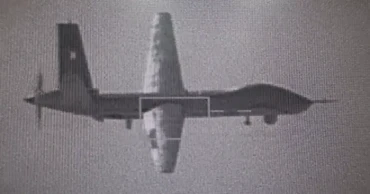
China Stages military drills near Taiwan in response to US and Taiwan remarks
A significant number of Chinese military aircraft, ships, and drones operated near Taiwan between Sunday and Monday, according to the island’s Defense Ministry.
China described the exercises as a reaction to recent statements and actions by both the United States and Taiwan. Although Beijing conducts such operations regularly to pressure Taiwan’s defenses and morale, the majority of the island’s 23 million residents reject China's sovereignty claims over Taiwan.
Taiwanese Defense Minister Wellington Koo told lawmakers that the drills underscored China's role as a “troublemaker” threatening regional stability.
On Tuesday, Taiwan’s Defense Ministry shared images of Chinese military assets on social media, noting that 43 of 59 aircraft entered its air defense identification zone. However, no direct confrontations occurred. Taiwan responded by deploying aircraft, naval vessels, and coastal missile systems to monitor the situation.
The reason behind the large-scale Chinese deployment remains unclear, as daily numbers fluctuate depending on statements from Taiwan or its US allies.
North Korea fires several ballistic missiles after the US and South Korea began military drills
Chinese Foreign Ministry spokesperson Mao Ning stated Monday that the drills were a firm response to foreign “connivance and support” for Taiwan’s independence and a warning to separatist forces. She defended Beijing’s military maneuvers as “necessary, legal, and justified” actions to safeguard national sovereignty.
Mao also criticized the US for modifying its State Department website, removing language that previously aligned with Beijing’s one-China principle and opposed Taiwan’s independence. She argued that such changes sent misleading signals to pro-independence forces in Taiwan.
Adding to tensions, Taiwanese President William Lai Ching-te recently described mainland China as a “foreign hostile force” under Taiwanese law and announced stricter measures to counter Chinese influence in the media and civic space. Lai also warned of the risks posed by individuals leaking sensitive information to Beijing.
The Taiwan Strait, a crucial global trade route, remains an area of contention. While China does not disrupt civilian shipping in the Strait or the broader South China Sea—territories it largely claims—it regularly protests the presence of US and allied naval forces in the region.
Over the weekend, China strongly rebuked the Group of Seven (G7) industrialized nations after their diplomats accused Beijing of threatening maritime security. The G7’s joint statement condemned China’s “provocative and coercive” actions, including land reclamation and military expansion, which they said destabilize regional security. In response, China dismissed the accusations as “arrogant, prejudiced, and malicious.”
Amid growing security concerns, Taiwan has been bolstering its defenses by acquiring advanced weaponry, including missiles and aircraft, from the US, while also strengthening its domestic defense industry.
Iran warns airlines to avoid its airspace for 3 hours on Thursday over military drills, Egypt says
Taiwan and China have been politically divided since a civil war 76 years ago. However, Chinese President Xi Jinping remains committed to bringing Taiwan under Beijing’s control, despite China facing economic challenges and an ongoing technological rivalry with the West.
Source: With input from agency
1 year ago
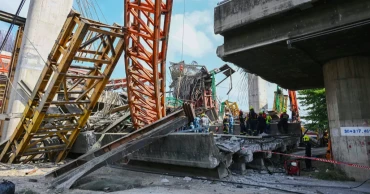
5 killed as under-construction elevated road collapses in Bangkok
An elevated road being built in Thailand’s capital Bangkok collapsed, killing at least five people, officials said.
The collapse, which happened in the early morning in southwestern Bangkok, also injured 24 other people at the construction site, said Transport Minister Suriya Jungrungreangkit.
Suriya offered his condolences and said victims would be compensated by contractors and relevant agencies. He said four workers and an engineer were killed, and no road users were affected as traffic lanes near the construction were closed at the time.
Bangkok police commander Siam Boonsom said authorities were still investigating to determine the cause of the collapse and that they would pursue legal actions against those found responsible.
Hamas will release the American-Israeli hostage only if a truce is implemented
Photos from the site showed that large metal and concrete structures fell on the ground and completely blocked the road.
The construction of the 5-kilometer (3-mile) elevated road started in 2022, according to project information published on the website of the Expressway Authority of Thailand.
Surachet Laophulsuk, governor of the agency, said they were working to clear the debris as quickly as they could, but he said it might take a week. He added that the contractors working on the project were ordered suspended for 14 days pending the investigation.
Taiwan's leader calls for tougher measures against Chinese spying
Road and construction safety is a major problem in Thailand. The site of Saturday’s collapse is a part of a major road connecting Bangkok to Thailand’s south, which has been a subject of controversy over its prolonged construction and frequent fatal accidents.
Suriya said the transportation ministry is in the process of issuing new regulations that would suspend contractors found liable for construction accidents and blacklist them from bidding on future government projects.
1 year ago