Others
Fake papers blocking Bangladesh’s overseas job prospects: Prof Yunus
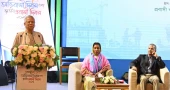
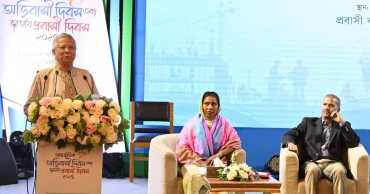
Highlighting the importance of safer, fairer and skilled migration, Chief Adviser Prof Muhammad Yunus on Wednesday said the submission of fake documents has emerged as a major barrier to sending people abroad, despite the huge opportunities offered by destination countries for Bangladeshis.
“Bangladesh has become quite famous globally for the submission of fake documents,” he said, noting that the country continues to face the same complaints from receiving nations, regardless of the destination.
Prof Yunus cited an example raised by the United Arab Emirates (UAE) to illustrate the severity of the problem.
He said the migration system is heavily dominated by brokers and syndicates, where the government’s role remains limited.
Prof Yunus also warned that the widespread use of fake documents is leading to the closure of doors for Bangladeshi workers seeking employment abroad.
The Chief Adviser was speaking at a function in the city marking the International Migration and National Expatriates Day.
Adviser Dr Asif Nazrul was, among others, present.
International Migrants Day (IMD) is observed on 18 December, reaffirming the need for safer, more inclusive, and fairer migration systems in a rapidly changing world.
Despite its proven benefits, migration remains poorly understood, and systems often lack the investments, partnerships, and evidence needed to respond to today’s realities.
This year’s theme, ‘My Great Story: Cultures and Development’, highlights how human mobility drives growth, enriches societies, and helps communities connect, adapt, and support one another.
In 2025, this message is more urgent than ever as migration continues to shape economies, communities, and global development.
Migration is a defining force of the century. Remittances to low- and middle-income countries are projected to reach a record USD 685 billion, and migrants are central to addressing labour shortages, driving innovation, and supporting demographic stability. Yet these contributions can only be maximized when migration is safe, orderly, and responsibly governed.
Well-managed migration is a strategic asset: it strengthens resilience, fuels prosperity, and supports social cohesion, IOM said.
From documentation and skills recognition to integration and dignified return, effective systems ensure migrants can find stability, support their families, and build new futures, while helping communities adapt and thrive.
Khaleda Zia integral to an important chapter in Bangladesh history: Prof Yunus
On this IMD, IOM called for smarter policies, stronger cooperation, and a renewed commitment to making migration work for all.
Because every migrant’s journey is a story of resilience and possibility, and because when migration is managed well, each personal story becomes part of a larger one that enriches cultures, strengthens development, and benefits all.
This is the idea at the heart of the 2025 theme: ‘My Great Story’ is not only a migrant’s story, it is the shared story of how mobility can shape a fairer and more sustainable future.
7 months ago
EC to send SMS urging govt officials to register for postal voting
The Election Commission (EC) has instructed the relevant authorities to send SMS alerts to all government officials and employees, encouraging them to register for voting through postal ballots ahead of the upcoming parliamentary election and the referendum on the July Charter.
The instruction was given in a letter signed on Wednesday (December 17) by KM Ali Newaz, Additional Secretary of the Election Commission and Project Director of the OCV–SDI project.
According to the letter, government officials and employees working inside the country, as well as officers and employees of the armed forces who receive salaries through the iBAS++ system, will be able to cast their votes through an IT-supported postal ballot after completing registration via the “Postal Vote BD” app.
The registration process will remain open until December 25, 2025, the letter said.
Read more: EU deploys election observation mission to Bangladesh
The 13th parliamentary election and the referendum will be held simultaneously on February 12, 2026.
The EC has instructed the authorities concerned to send SMS messages to all military and civilian government officials and employees who are drawing salaries through the iBAS++ system, requesting them to complete their registration through the app by the stipulated deadline.
The SMS text will be “All government officials and employees (military and civilian) are requested to complete registration through the ‘Postal Vote BD’ app by December 25, 2025, to cast votes through IT-supported postal ballots.”
The Commission said postal ballots will be sent by mail to the registered voters’ addresses. After casting their votes, voters will have to return the ballots in the provided return envelopes to the respective returning officers.
Though the postal balloting system has been in the laws for a long time, it was never practised in the previous elections.
Read more: ‘In-Country Postal Vote’ registration to continue till Dec 25: EC
This is the first time the Election Commission has introduced an IT-supported hybrid postal balloting system, enabling expatriates, government staff, polling personnel, and the persons who will be in the legal custody to exercise their franchise through a combination of digital registration and manual voting.
Among them, the probable polling personnel who are not in the government services, and the prisoners will be able to register after December 17 to 25 for voting through the postal ballots in the upcoming election.
So far 46,701 government officials and employees registered through the app to vote in the February-12 election after the announcement of the election schedule announced on December 11.
The Election Commission said postal ballots will be sent by mail to the registered voters’ addresses. After casting their votes, voters will have to return the ballots in the provided return envelopes to the respective returning officers.
The EC also said that instructions in this regard have already been sent to the Secretary of the Finance Division.
According to the election schedule, the deadline for the submission of nomination paper is December 29, while the scrutiny of nomination paper is on December 30-January 4 and the last date for the withdrawal of candidature is January 20. The election campaign will start on January 22 and continue till 48 hours before the balloting period (7:30am on February 10).
Read more: February election to lay strong foundation for democracy: Rizwana
7 months ago
Inqilab Moncho provides first update from Singapore on Osman Hadi's condition
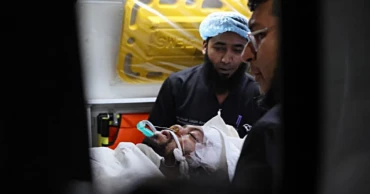
The condition of Sharif Osman Hadi, Inqilab Moncho spokesperson who was looking to run in the upcoming election as an independent candidate, had deteriorated slightly according to primary tests upon reaching Singapore, but is now stable.
Inqilab Moncho's verified Facebook page provided the update in the evening, quoting Hadi's brother who travelled with him as the source. Hadi is being treated at the Singapore General Hospital.
It added that he will need another surgery, but Hadi's physical condition is not yet ready for it.
Earlier on Monday, an air ambulance equipped with all emergency facilities for a critical patient, departed Hazrat Shahjalal International Airport carrying Hadi, who was shot in the head from close range in an assassination attempt last Friday, to Singapore for advanced treatment.
The decision to send Hadi abroad for treatment was taken on Sunday.
RAB arrests close aide of main accused in attempted assassination of Osman Hadi
He was shot after Jummah prayer on Bijoynagar Boxculvert road in the capital. He was rushed to Dhaka Medical College Hospital with bullet injuries from where he was shifted to Evercare hospital.
Following the incident, law enforcement agencies launched a series of operations to identify and arrest those involved.
The Dhaka Metropolitan Police earlier said Faisal Karim Masud, alias Daud Khan, a Chhatra League activist with a criminal record. Although he is believed to have crossed the border into India with another suspect with links to the Awami League, who drove the motorcycle from which Faisal/Daud shot Hadi while riding pillion.
RAB and police have already earlier arrested eight suspects for their alleged roles in aiding the shooter.
7 months ago
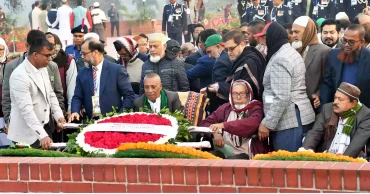
As ever, enthusiasm marks Victory Day celebrations across Bangladesh
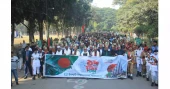
Bangladesh celebrated Victory Day on Tuesday with great enthusiasm, as people across the country paid homage to the martyrs of the Liberation War through ceremonies, rallies, and cultural programmes.
The celebration began with the traditional 31-gun salute ringing out across the capital at the break of dawn, to honour the nation’s martyrs who sacrificed their lives in the Liberation War.
At the Old Airport area in Tejgaon, an artillery regiment of the Bangladesh Army fired 31 rounds from six guns to pay tribute to the heroic martyrs who laid down their lives in the War of Liberation.
President Mohammed Shahabuddin and Chief Adviser Professor Muhammad Yunus paid rich tributes to the martyrs of the 1971 Liberation War by placing wreaths at the National Memorial here, on the outskirts of the capital with the rise of the sun.
7 months ago
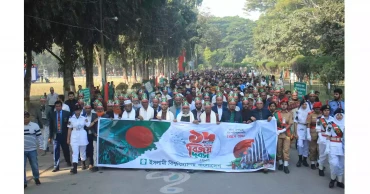
Victory Day celebrated at Islamic University through series of events
Victory Day was celebrated at Islamic University (IU) in Kushtia on Tuesday through various programs.
Marking the day, the national and university flags were raised by university Vice-Chancellor Professor Nakib Muhammad Nasrullah, and Pro-Vice Chancellor Professor M Yeaqub Ali with guard of honor by university BNCC and Rover Scouts.
The VC Dr Nasrullah inaugurated the victory day ceremony by flying the Balloon in the sky, symbolising joyousness, along with its Pro-Vice Chancellor Dr M Yeaqub and treasurer Dr Jahangir Alam.
Later, a colorful procession was brought out led by IU VC Professor Nasrullah. IU Pro-VC Professor Dr M Yeaqub Ali, treasurer Dr Jahangir Alam, registrar Professor Dr M Manjurul Haque, proctor Professor Dr Shahinuzzaman, student advisor Professor Dr Obayedul Islama were present at the joyous rally.
More than one thousand students, teachers, Officers, staff from various departments also took part in the procession.
Followed by the rally, University authority led by the VC placed a floral wreath at the Mukto Bangla while Pro-VC, treasurer, registrar were present.
IU Zia Parishad, UTAB, departments, halls, Chatro Dol, Chatro Union, IUJA and various teachers-officials, and students organizations placed floral wreaths at the Mukto Bangla.
Later, the university authority marched to the foundation stone and laid a floral wreath there. The observance concluded with a moment of silence and a munajaat led by an imam of the university central mosque.
Regarding the day, university main gate, halls, and the Daina square was decorated with lights and banner festoons.
7 months ago
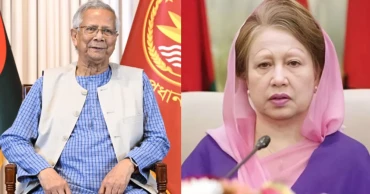
Khaleda Zia integral to an important chapter in Bangladesh history: Prof Yunus
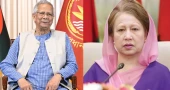
Chief Adviser Prof Muhammad Yunus on Tuesday said national leader, three-time former Prime Minister, one of the leading figures of democratic politics and BNP Chairperson Begum Khaleda Zia is an integral part of an important chapter in Bangladesh history.
"As you know, the national leader, three-time former Prime Minister of the country, one of the leading figures of democratic politics and BNP Chairperson Begum Khaleda Zia is currently in the hospital in a critical condition. This is a matter of concern for all of us," he said.
While addressing the nation on Tuesday evening, Prof Yunus said the interim government has been giving utmost importance to Begum Khaleda Zia's health issues since the beginning.
"Considering her unwavering commitment to the independence, sovereignty and democracy of Bangladesh, her contribution to the development of the country and the people's respectful feelings towards her, the government has already declared her as a VVIP," he said.
The government is providing all necessary assistance to ensure her treatment, respecting the wishes of the family.
In addition to her treatment in the country, all matters, including advanced medical treatment abroad, if necessary, are being considered, Prof Yunus said.
After assuming office, he said, the interim government has given utmost importance to three issues - the trial of the July-August massacre, the necessary fundamental reforms of the state structure for the transition to an accountable and effective democratic system, and a fair election.
The trial of the massacres committed by the then fascist government during the July Uprising is proceeding in due legal process. The verdict of one case has already been announced by the tribunal.
The International Crimes Tribunal has sentenced former Prime Minister Sheikh Hasina, the head of the fallen fascist government, to death for being the main instigator of the indiscriminate killings of students, workers and the general public of the country, through an independent and transparent evidence-based trial process.
As part of the due legal process, he said the government has formally requested the Indian government to return Hasina, who has been absconding since the uprising, and former Home Minister Asaduzzaman Khan, another accused convicted in this case, to the country.
Prof Yunus said a number of institutional and structural reforms have already been completed.
Dozens of old laws have been amended, and several new laws have been enacted,he sThe biggest step in the reforms is the July National Charter. It has been issued in the form of an order to ensure fundamental constitutional reforms.
"Dear people of the country, I have come before you today with a very heavy heart. On this joyous day, I inform you with deep sorrow that the recent attack on Sharif Osman Hadi, the spokesperson of the Inqilab Mancha, a frontline fighter of the July Uprising, is not just an attack on an individual—it is an attack on the existence of Bangladesh, an attack on our democratic path," he said.
Sharif Osman Hadi is currently undergoing treatment in a critical condition.
The government has taken all necessary measures to ensure his treatment and safety, Prof Yunus said.
He has already been sent to Singapore for better treatment. "Please pray to Almighty Allah for him from the bottom of your hearts."
"The government is taking this incident very seriously. Those involved in the incident have been initially identified," the Chief Adviser said.
"I want to assure the countrymen that no one involved in this conspiracy, no matter where they are, will be spared," he mentioned.
7 months ago
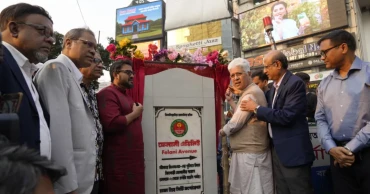
Road named after Felani to uphold national dignity: DNCC Administrator
The Dhaka North City Corporation (DNCC) has named a road in the capital's diplomatic quarter after Felani Khatun, the minor girl who was shot dead by India'a border security force in 2011, as a 'symbolic gesture of protest.'
It would also serve as a reminder to uphold Bangladesh’s dignity as a sovereign nation, DNCC Administrator Mohammad Azaz said on Tuesday.
“This road, stretching from Gulshan-2 to Pragati Sarani, has been named after Felani as a symbol and protest to maintain our national dignity. We believe that while interacting with any country in the world, including our neighbours, we must uphold human dignity and respect. The Liberation War teaches us the importance of human dignity,” he said.
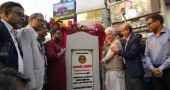
Azaz made the remarks during the unveiling of the nameplate of Felani Avenue in Gulshan to mark Victory Day.
Chief Guest Adilur Rahman Khan, Adviser to the Ministry of Local Government, Rural Development and Cooperatives, said: “Eighteen crore people of Bangladesh want an end to border killings. Our sister Felani gave her life hanging from a barbed wire. This road is named to remind us of the cruelty committed against her and to appeal to the conscience of the world that heinous crimes like border killings are still happening along our borders. This is why the government inaugurated this road in her name on Victory Day, demanding an end to all types of border killings.”
Local Government Department Secretary Md. Rezaul Maksud Zahedi, added that Felani's killing was not just a killing, but a clear violation of human rights as well.
Public Works Secretary Md. Nazrul Islam, RAJUK Chairman Engineer Md. Riazul Islam, DNCC Chief Engineer Brig. J. Moin Uddin, DNCC Secretary Mohammad Asaduzzaman, Chief Urban Planner SM Shafiqur Rahman, and other senior DNCC officials, also attended the event.
Felani Khatun was shot dead by BSF on January 7, 2011, at the Anantapur border point in Kurigram’s Fulbari upazila while returning to Bangladesh with her father. Her body was left hanging on the barbed-wire fence for hours, sparking widespread outrage in national and international media.
Felani’s brother joins BGB
Since then, various groups have repeatedly demanded that the road in front of the Indian High Commission in Gulshan be named after Felani.
On September 13, 2024, the Peoples’ Activist Coalition (PAC) symbolically named the road ‘Shaheed Felani Sarak’ and installed an unofficial signboard in protest against border killings. Now, the interim government has officially renamed the stretch as Felani Avenue.
7 months ago
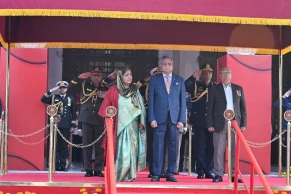
President's Victory Day message: Uphold independence, sovereignty, development journey
President Mohammed Shahabuddin on Tuesday called upon everyone to play a responsible role from their respective positions to uphold the country’s independence, sovereignty, and the continuity of its development journey.
This was conveyed by Sabir Ahmed Akunji, Private Secretary to the Public Division Secretary at the President’s Office, Bangabhaban after a state reception held at Bangabhaban.
On this glorious day, the President also extended his heartfelt greetings and felicitations to the people of the country on the occasion of the Great Victory Day.
The reception was attended by the Chief Justice; Advisers; Judges of the Appellate Division and the High Court Division; diplomats; valiant freedom fighters; senior civil and military officials; political leaders; and distinguished guests from various professions.
The President exchanged greetings with the War Veterans’ delegation, members of the families of the Bir Sreshtho, and other invited guests, conveying his sincere congratulations and best wishes on the Great Victory Day.
On the occasion, he paid deep respect to the heroic martyrs and freedom fighters of the Liberation war remembering their unparalleled sacrifices with profound reverence.
7 months ago

Intimidation or bloodshed cannot halt Bangladesh’s march to democracy: Prof Yunus
Chief Adviser Prof Muhammad Yunus on Tuesday said no one can stop the country’s march towards democracy by intimidation, terror acts or bloodshed, categorically noting that such an attempt by the 'defeated fascist terrorists' will be completely thwarted.
'I appeal to you—maintain restraint. Do not listen to propaganda or rumours. We will definitely confront the fascist terrorists who want to create unrest together. We will not fall into their trap," he said while addressing the nation in the evening on the occasion of the Great Victory Day.
State-owned Bangladesh Television (BTV), BTV News, and Bangladesh Betar simultaneously broadcast the speech.
Earlier, the Chief Adviser enjoyed Victory Day Fly Past, Parajump, and Band Display at the National Parade Ground in Dhaka.
Prof Yunus said the defeated fascist forces will never return to the sacred soil of this country.
"Dear people of the country, protect our youth. Then we all and our beloved motherland will be saved. Those who have fled the country have understood that the young fighters are a huge obstacle to their resurrection," Prof Yunus said.
He said those who fled the country are terrified of these unarmed, fearless, completely indifferent to personal interests—these everyday-looking children.
Anti-independence forces trying to resurface on Victory Day: Fakhrul
"Their goal is to remove these obstacles before the elections and re-establish their rule. They will dream of this as long as their friends are with them," Prof Yunus said.
Once the elections are over, he said their friends will have trouble getting support.
"That is why there is such a rush. They want to ensure their return before the elections. They will do it in various ways. This secret assassination attempt is one form of it. They are preparing for a more difficult plan," Prof Yunus said.
Everyone in the country must say loudly that they will protect the youth, he said
"Those who are here following the slavery of the old days must come out of slavery. By holding festive, peaceful elections, we will all establish our complete control over the country," he said.
There are only two months left until the elections, scheduled to take place in February.
"We will keep an eye on them and make every day of the remaining days festive. Since there is no fear in the minds of our young people, they will make every moment of the two months before the elections festive," Prof Yunus said.
The country will be saved from all kinds of violence and conflicts, he said.
Victory Day: Nation honours Liberation War martyrs
Today, the Chief Adviser said they are standing on the threshold of a new history.
"This country is ours. This state is ours, its future is also in our hands. Now is our turn to move forward unitedly. We want to take this Victory Day as a golden opportunity to unite anew in national life," he said.
"It is our collective responsibility to move forward with the goal of empowering the people, taking the historical inspiration of the Great Liberation War and the July Uprising, and to advance the new journey that has begun on the path of democratic transition," Prof Yunus said.
He called for joint efforts to build a safe, happy, and beautiful Bangladesh for the new generation to fulfil the century-old struggle and freedom achieved through much hardship.
Regardless of religion, caste, group, and gender identity, he said, "Let us all join hands and move forward on the path of peace, prosperity and democracy. Let us move forward together on the path of justice, democracy, humanity, and development."
Prof Yunus once again extended his heartfelt greetings to everyone on the Great Victory Day.
7 months ago
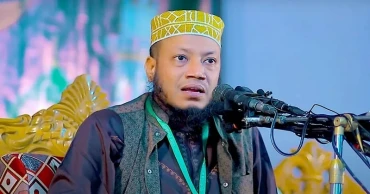
Jamaat Islam opposed India, not 1971 war: Amir Hamza
Mufti Amir Hamza, Bangladesh Jamaat-e-Islami–nominated candidate for the Kushtia-3 constituency, on Tuesday claimed that his party was not opposed to the Liberation War of 1971 but was instead against India, saying the real truth had long been suppressed.
“The role of Bangladesh Jamaat-e-Islami in 1971 has been misrepresented until now,” Amir Hamza said. “You should read the history book written by Badruddin Umar. From that book, we learned that nearly 90 percent of the narratives written about the Liberation War are false.”
He made the remarks while addressing a victory rally organised by Bangladesh Jamaat-e-Islami in Kushtia on the occasion of Victory Day.
Amir Hamza said the rally reflected the party’s commitment to the country’s independence. “We were against India’s aggression, which is why we were portrayed as opponents. Our aim today is to free the future Bangladesh from India’s dominance and run the country as a truly independent nation,” he said. “The country will remain united in the future, InshaAllah”.
Injustice, discriminations led people to revolt in 1971: Jamaat Ameer
He also said all people born in Bangladesh are respected citizens. “We want to move the country forward together. I do not think it is right to drag the past backward. Forgetting past divisions, we will create a new history. It is better not to emphasise party affiliations here—we are all one,” he said.
Kushtia District Jamaat Secretary Shuja Uddin Joardar, Assistant Secretary Mazharul Haque, City Jamaat Amir Enamul Haque, and leaders from various levels of the party were present at the rally.
7 months ago