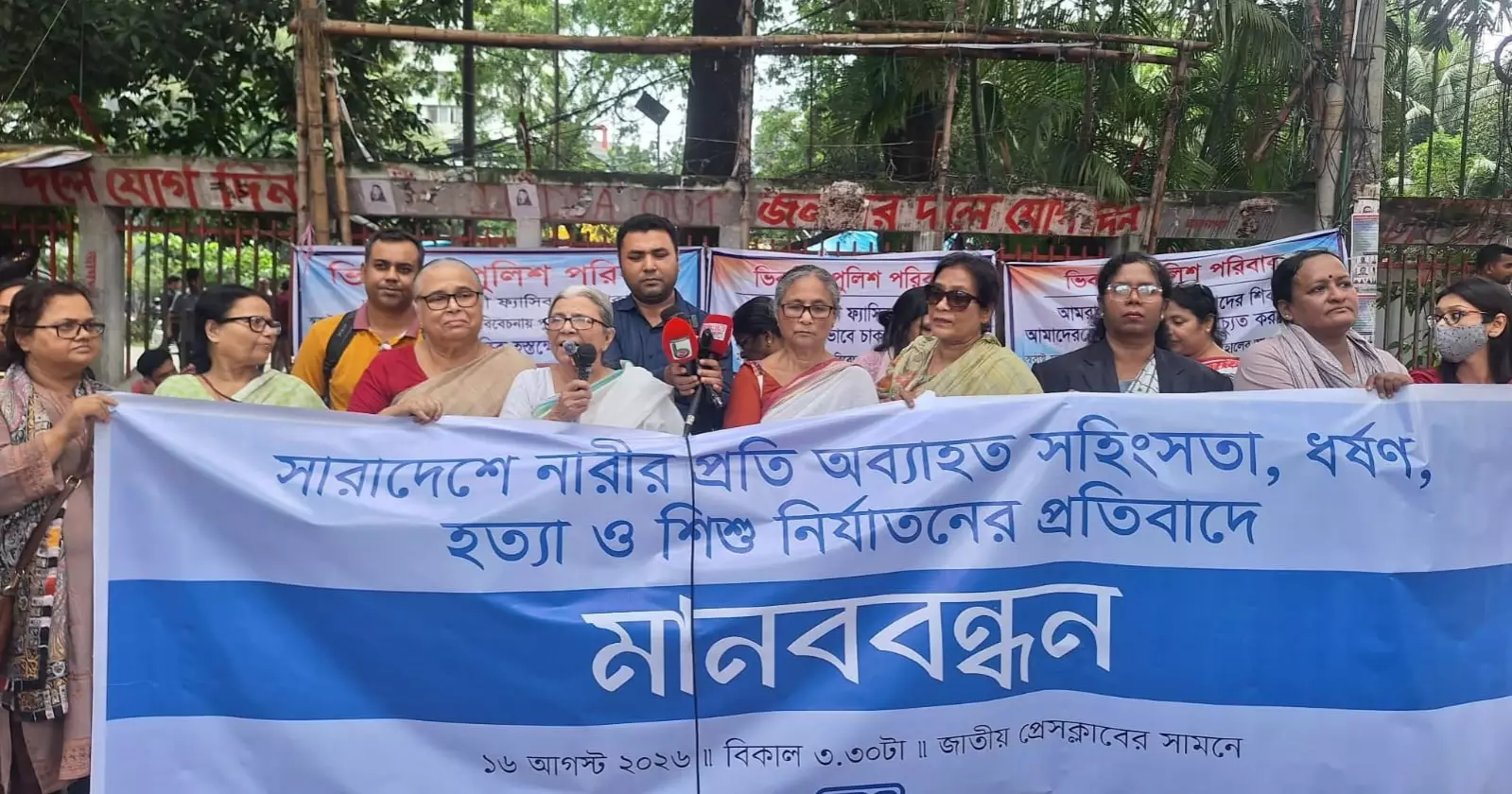
As many as 1,667 women and girls across Bangladesh were subjected to various forms of violence between January and July this year, with 83 girl children and 258 women killed and 292 raped, Bangladesh Mohila Parishad said on Sunday.
The rights organisation disclosed the figures at a human chain in front of the Jatiya Press Club in the afternoon, staged to protest the continuing violence, rape, murder and killing of children across the country.
Speaking at the programme, Mohila Parishad president Fauzia Moslem said an analysis of data showed that 83 girl children and 258 women were killed over the past seven months, of which 31 incidents were linked to rape and post-rape murder.
She, however, cautioned that the figures likely understate the actual scale of violence.
"The information we are getting has mainly been compiled from a limited number of newspaper reports, based on data from only 14 newspapers. Yet there are numerous other media outlets in the country. Had we received data from all media, the real picture of violence against women could have been far more alarming," she said, questioning how far women's right to live safely is actually ensured in Bangladesh.
Mohila Parishad general secretary Maleka Banu said 1,667 women and children faced different forms of violence between January and July 2026, of whom 292 women and girls were victims of rape.
"These incidents make it clear that women and children in Bangladesh are not fully safe anywhere today. It is not just rape or sexual violence, women and children are also falling victim to murder, torture and various other forms of violence. The most worrying part is that we are failing to bring down this trend of violence. Even children who have not yet reached physical and mental maturity, who have not yet reached an age where they identify themselves as women, are becoming victims of sexual violence," she said.
Other speakers at the programme said the rising violence against women is a matter of grave concern, describing Bangladesh as having turned into a "safe haven" for rape and abuse. They noted that women have been the primary targets of violence at every turn, from the country's independence struggle to the present day.
Citing prevailing patriarchal attitudes and discriminatory social norms that fail to treat women as human beings, the speakers called for building a social movement, ensuring proper enforcement of laws, and monitoring their implementation to prevent ongoing violence, rape, murder and killing of children, while urging the head of state to run the country with patriotism, humanity and a sense of responsibility to restore trampled human rights.