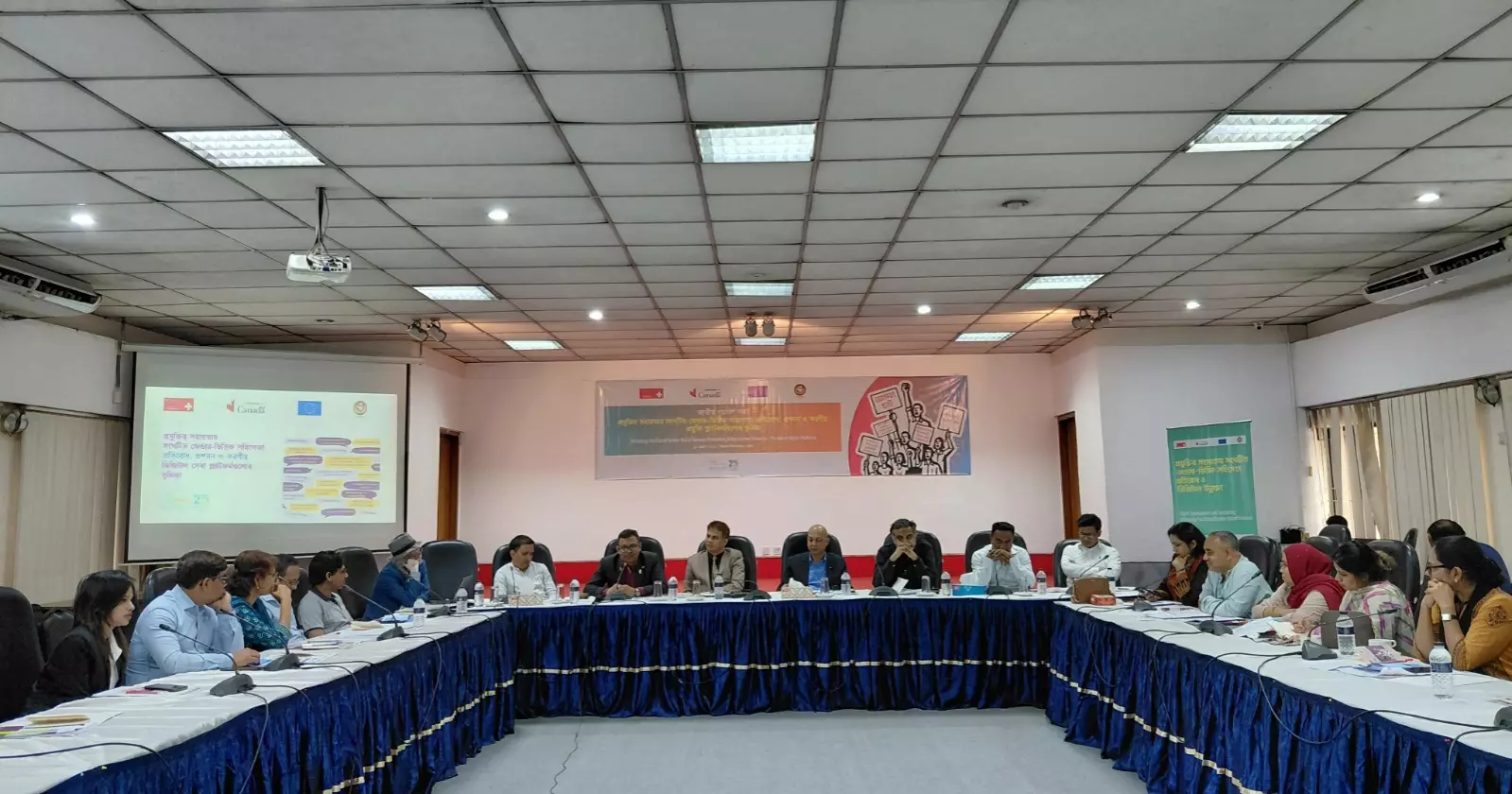
A staggering 89% of women social media users in Bangladesh have experienced online violence at least once, speakers said at a national consultation, calling for urgent coordinated action to tackle technology-facilitated gender-based violence (TFGBV).
Speaking at the programme titled “Prevention, Mitigation and Response for Technology-Facilitated Gender-Based Violence in the Context of Digital Development: The Role of Technology Platforms” on Thursday, they stressed the need for stronger policies, greater accountability of tech platforms, and widespread awareness to prevent and respond to the growing threat amid rapid digital expansion.
The consultation, organised by the Bangladesh NGOs Network for Radio and Communication (BNNRC) at the CIRDAP Auditorium in Dhaka, brought together policymakers, law enforcement officials, regulators, and development experts.
It was organised under the project titled “Strengthening Resilience Against Technology-Facilitated Gender-Based Violence (TFGBV) and Promoting Digital Development.” The project is implemented as part of the “Nagorikata: Civic Engagement Fund (CEF)” programme, funded by Switzerland, Global Affairs Canada, and the European Union, with technical assistance from GFA Consulting Group.
Among the distinguished discussants were Mohammad Anwar Uddin, Additional Secretary of the ICT Division; Barrister Khalilur Rahman, acting Director General of the NGO Affairs Bureau; Md Jahidul Islam, Additional DIG of the Criminal Investigation Department (CID); Md Farhan Alam, Deputy Director of the Bangladesh Telecommunication Regulatory Commission (BTRC); Md Nurul Islam, Capacity Development and Management Expert at GFA Consulting Group’s Nagorikata Programme; and Tahrina Tahrima Chowdhury, Research Fellow at the Bangladesh Institute of Development Studies (BIDS), among others.
Speakers noted that while technology has made life easier and access to services faster, it has also led to a rise in online violence, including blackmail, identity fraud, image manipulation, data breaches, cyber harassment, and hate speech.
Women, adolescents, and gender-diverse individuals were identified as the most vulnerable groups.
Data presented at the event, based on a 2024 report by the Bangladesh Bureau of Statistics (BBS) and UNFPA, revealed that 89% of women social media users in Bangladesh have experienced online violence at least once, with those aged 18 to 30 facing the highest risks.
In his opening remarks, AHM Bazlur Rahman, Chief Executive Officer of BNNRC, stressed the importance of addressing the evolving and complex forms of gender-based violence in the digital age. He underscored the urgent need for coordinated measures to ensure prevention, protection, timely redress, and survivor-centered support.
Participants highlighted the need to strengthen policy and institutional frameworks, improve access to justice and remedies, ensure accountability of technology platforms and service providers, and enhance awareness at individual, family, and community levels. The discussion also touched on introducing national ID-based verification systems to reduce fake accounts on social media and ensuring localised services tailored to Bangladesh.
The discussion outlined various forms of TFGBV, including cyberstalking, cyberbullying, doxxing, hacking, online harassment, image-based abuse, child grooming, technology-facilitated sexual violence, and gender-based hate speech.
Farhan Alam of BTRC stated that the commission received 13,023 complaints for content removal on social media last year, of which over 12,000 pieces of content were removed.
Mentioning that around 90% of complainants were women, he emphasised the need to raise awareness at the family level to prevent online harassment against women.
Mohammad Anwar Uddin, Additional Secretary of the ICT Division, noted that Bangladesh already has several legal frameworks to address TFGBV, but greater public awareness of these laws is essential.
The consultation further noted that women are frequently subjected to doxxing, where personal information is shared without consent to intimidate or threaten them. Such forms of violence can have long-term psychological impacts, underscoring the need for stronger preventive measures at both administrative and societal levels.