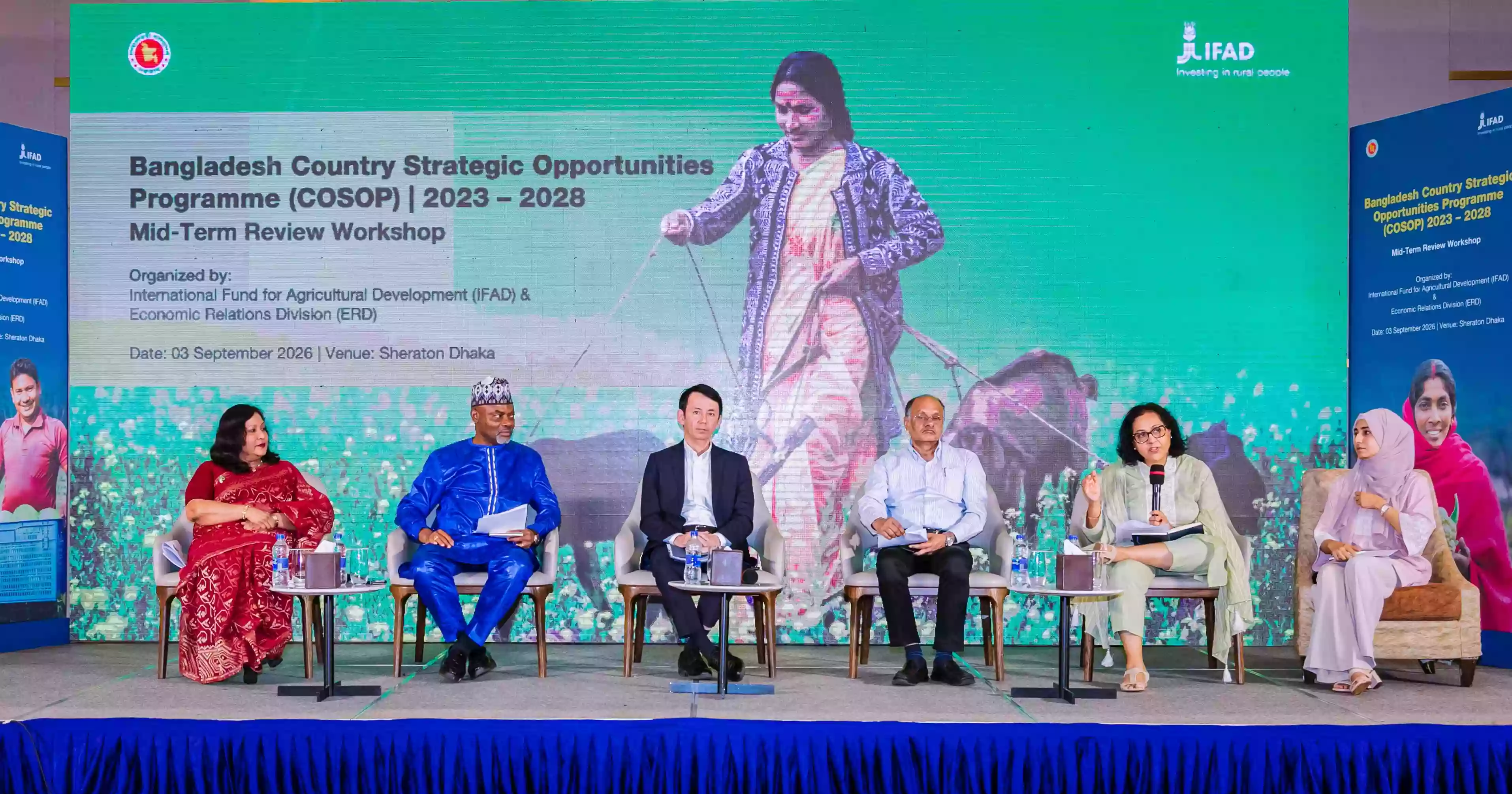
The rural transformation in Bangladesh must connect climate resilience with employment, finance, technology and markets, government and United Nations representatives said at a workshop on the mid-term review of the Country Strategic Opportunities Programme (COSOP) 2023–2028 of the International Fund for Agricultural Development (IFAD) in Bangladesh.
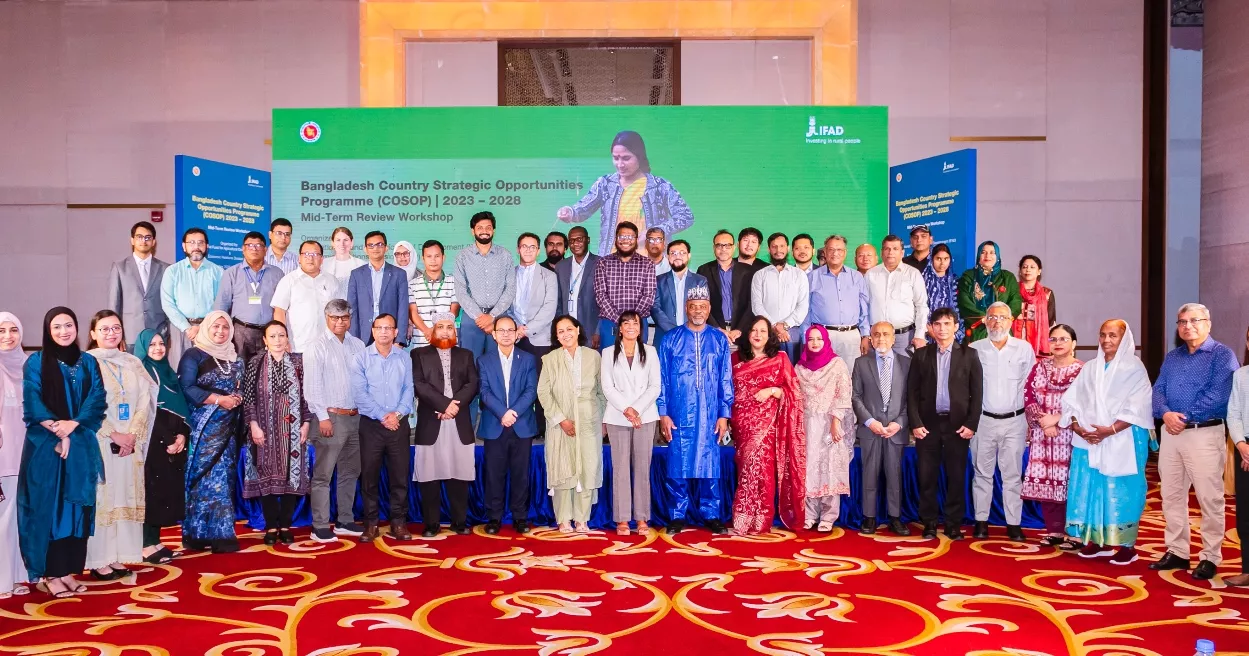
Convened by the Economic Relations Division (ERD) of the Government of Bangladesh and IFAD recently, the workshop brought together government representatives, development partners, UN agencies, implementing institutions and rural participants.
They reviewed progress since 2023, assessed the COSOP’s continued relevance and identified adjustments for the remaining period, including a possible extension.
Moslema Nazneen, Joint Secretary, ERD, highlighted IFAD’s long-standing contribution to rural development and called for investments supporting food security, employment, balanced regional development and the restoration of rivers and canals.
“The lessons of the past years are clear: keep project design simple, invest in strong implementing partners, pair infrastructure with production support, and never neglect institutional capacity,” she said.
The review found that the programme is making steady progress, although results vary across areas and better tracking is needed to measure its impact.
So far, it has reached 3.58 million rural people, with women accounting for 46 per cent of participants while young people accounting for about 27 per cent.
Progress is already visible across rural communities. Improved water systems now serve 86 per cent of the targeted farmland, while the number of community groups managing natural resources has exceeded expectations.
Around 749,000 rural households are producing more crops and other agricultural products.