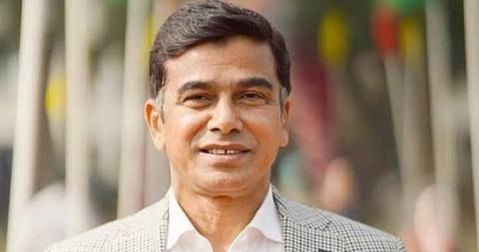
Bangladesh will seek a higher share of Ganges water when the water-sharing treaty with India is renewed, as the existing 30-year agreement is set to expire in December, State Minister for Water Resources Forhad Hossain Azad said on Thursday.
“We are working to secure a higher share of water than the one secured under the 1977 agreement signed during the tenure of President Ziaur Rahman. We want to renew the treaty accordingly,” he said while addressing a seminar in the city.
Nongor Trust, a non-profit organisation, arranged the seminar titled “People-centric River and Water Resource Management: Sustainable Future and Shared Responsibility” at the Jatiya Press Club.
Referring to the 1977 Farakka Treaty, Azad said it was the timeliest and more effective water-sharing agreement for Bangladesh, claiming that the volume of water secured under that agreement was never matched in subsequent pacts.
“The 1977 agreement signed during President Ziaur Rahman’s tenure was the most appropriate and timely agreement for Bangladesh. The amount of water we received through that agreement was never secured in the same way in any subsequent agreement,” he said.
Unlike the 1977 pact, there is no guarantee clause (for ensuring Bangladesh’s required share of water) in the existing Ganges Water-Sharing Treaty signed between Bangladesh and India, the state minister said.
Besides, he said the government is working with several major river management initiatives, including the proposed Padma Barrage and Teesta Barrage.
“We will, Insha-Allah, implement the Teesta project,” Azad said, adding that China is willing to assist Bangladesh in this scheme.
BNP lawmaker Anisur Rahman Khokon, among others, spoke at the seminar presided over by Nongor Trust Chairman Shuman Shams.