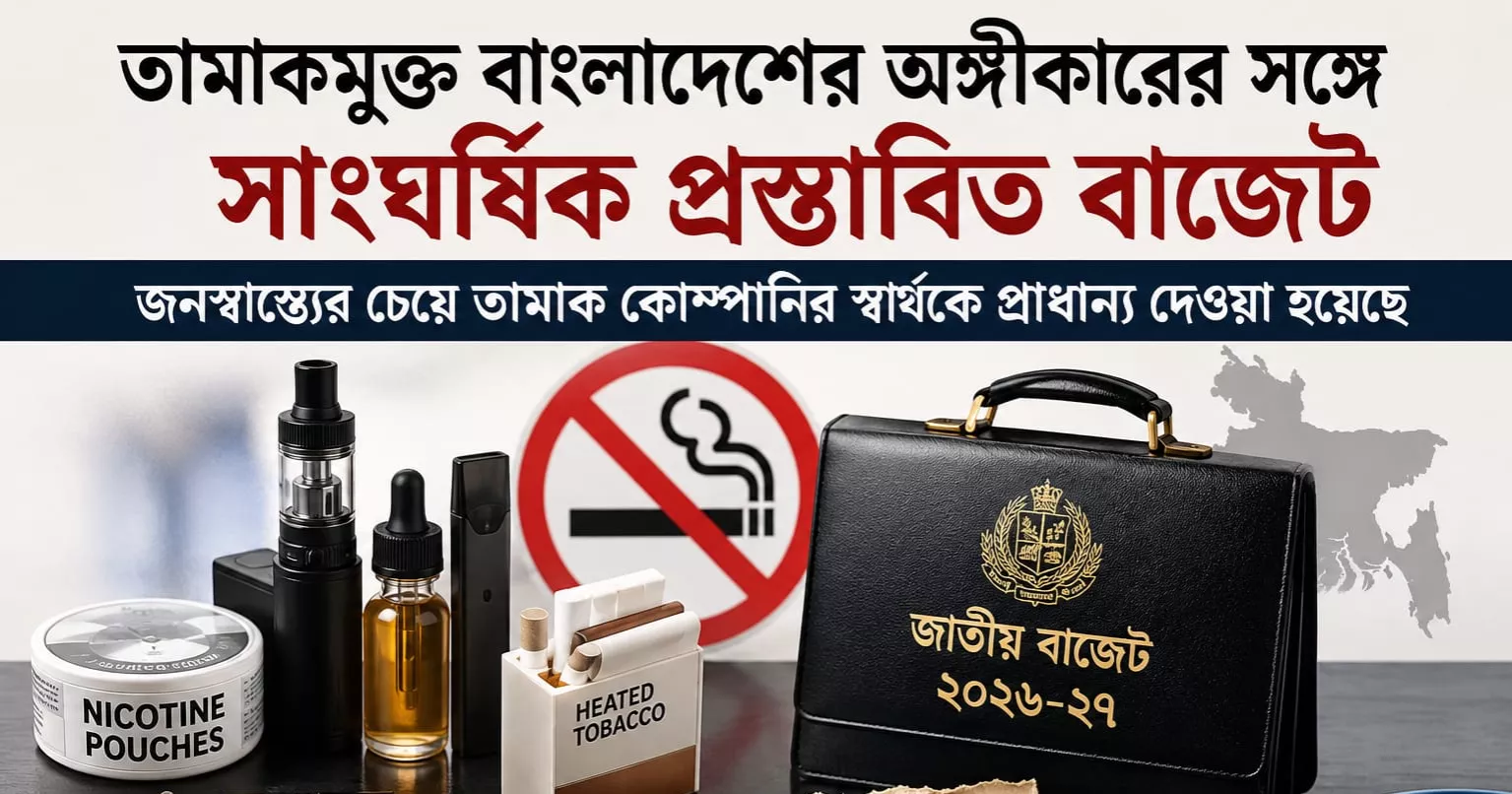
The Bangladesh Tobacco Control Advocates (BTCA) on Friday expressed concern over the proposed national budget for FY2026-27, alleging that several measures favor the tobacco industry and contradict the government's commitment to building a tobacco-free Bangladesh.
In a joint statement signed by BTCA Convener Iqbal Masud and Moderators Sushanta Sinha, Syeda Ananya Rahman, Farhana Jaman Liza, Samiul Hasan Sajeeb, Abu Raihan and Ibrahim Khalil, the organization criticized the decision to bring nicotine pouches, heated tobacco products (HTPs), e-cigarettes and vape products under the tax regime.
According to BTCA, public health experts had long called for banning these emerging tobacco and nicotine products. Instead, the proposed budget and the draft amendment to the tobacco control law have paved the way for their legal entry into the market, potentially exposing millions of adolescents and young adults to nicotine addiction.
The organization said the move may generate short-term revenue but could lead to higher healthcare costs and economic losses in the long run due to tobacco-related illnesses, reduced productivity and premature deaths.
BTCA also described the proposed increase in cigarette prices as insufficient from a public health perspective. It noted that nearly 75 percent of cigarettes sold in Bangladesh belong to the low-tier segment, while the price of such cigarettes has been increased by only Tk 2 per pack, a measure it believes will have little impact on consumption amid inflation.
The organization further criticized the government's decision not to introduce a specific excise tax alongside the existing ad valorem tax system, saying the omission could reduce potential revenue collection and allow tobacco companies to exploit tax loopholes.
BTCA termed the minimal increase in prices of low-tier cigarettes and the lack of significant tax hikes on bidis, zarda and gul, along with the effective legalization of new nicotine products, as setbacks to tobacco control efforts.
However, it welcomed several budget measures, including the introduction of QR codes on cigarette tax stamps, a digital track-and-trace system and stronger monitoring of the tobacco supply chain, saying these initiatives could help reduce tax evasion and boost revenue collection.
The organization urged the government and the National Board of Revenue (NBR) to review the proposed budget and incorporate recommendations from public health experts to place public health considerations at the center of fiscal policy.