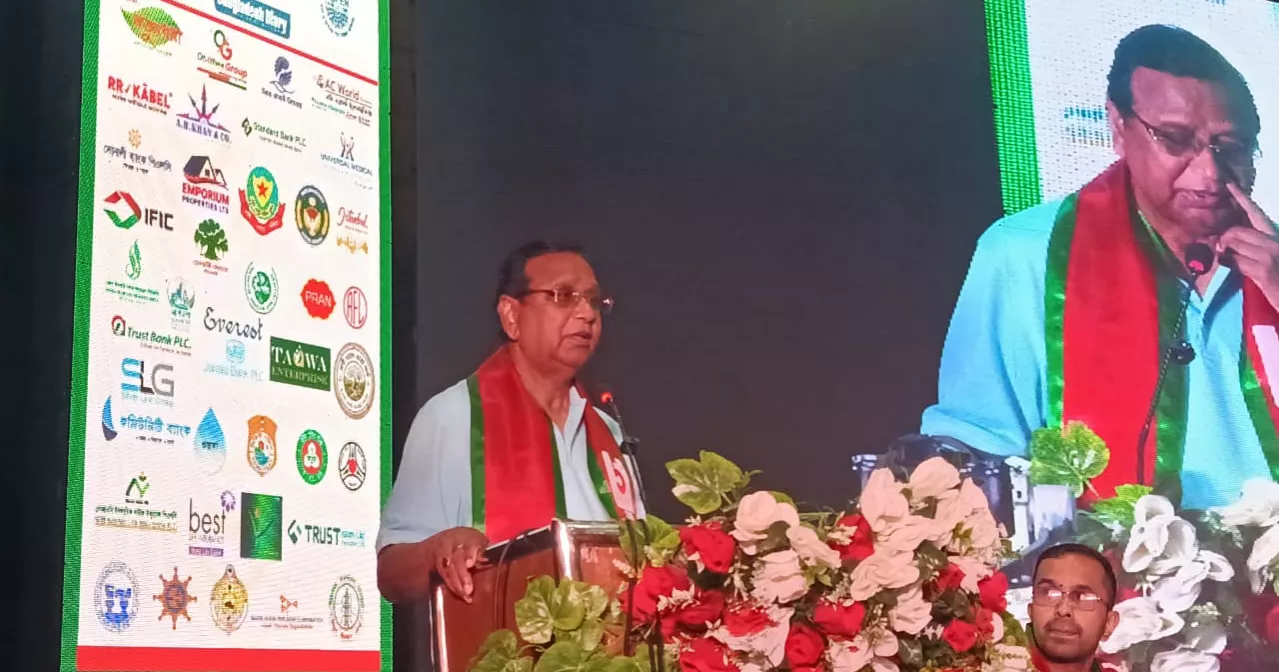
Dhaka South City Corporation (DSCC) Administrator Abdus Salam on Saturday urged journalists to criticise the government’s mistakes and shortcomings, but also provide positive suggestions to help the country move forward without creating unnecessary obstacles to its functioning.
“The government’s mistakes and shortcomings should be criticised, but alongside criticism, positive suggestions should be given so that the country can move forward without creating unnecessary obstacles to the government’s journey,” he said.
DSCC administrator pledges to turn city areas greener
Abdus Salam made the remarks as the chief guest at a programme organised at the IDB Bhaban in Kakrail in the capital on the occasion of the fifth founding anniversary of The Daily Bangladesh Diary.
He said journalism is an integral part of society and newspapers are regarded as the fourth estate of the state.
“Journalists have responsibilities to the country, the people and society. Journalists played an unforgettable role in various movements and struggles of the country, including the Liberation War. By highlighting irregularities and shortcomings in society and criticising them, they play a role in guiding society in the right direction,” he said.
Referring to the Liberation War, Abdus Salam said more than 50 years have passed since independence, but the country has yet to reach its desired destination.
“One of the main objectives of the Liberation War against Pakistan was to institutionalise democracy and establish people’s rights. But democracy has stumbled repeatedly,” he said.
He said the country’s democratic journey had begun anew after 17 to 19 years of movements and struggles.
“Everyone must remain aware so that this journey is not disrupted and the country does not once again fall off the path of democracy,” he said.
Addressing journalists, he said positive criticism is necessary to help the country move forward.
“But unnecessary obstacles should not be created in the government’s journey. It is not possible to solve all the electricity and gas problems within five or six months of taking responsibility. The government should be given positive suggestions on how these problems can be solved,” he said.
Talking about urban management in Dhaka, Abdus Salam said the city management system was largely in disarray when he assumed responsibility.
“Battery-run rickshaws, hawkers and waterlogging are longstanding problems. Most areas of Old Dhaka have not undergone systematic development. Many drains have also lost their capacity to drain rainwater. As a result, areas including Dhanmondi, New Market and Green Road become waterlogged after even light rainfall,” he said.
Regarding plans to control battery-run rickshaws, he said Dhaka South City Corporation is planning to divide its area into four zones so that rickshaws from one area could not enter another.
“Alongside preventing rickshaws from Narayanganj and surrounding areas from entering Dhaka, efforts are being made to bring the rickshaws under registration. There are also plans to use solar power instead of illegally using electricity to charge their batteries,” he said.
He urged citizens to become more aware of dengue prevention, saying the three-month programme could not be implemented by the city corporation alone.
“Everyone has to come forward. Houses, courtyards, rooftops and nearby drains must be kept clean. Water should not be allowed to remain stagnant anywhere for more than three days,” he said.
Abdus Salam also stressed the importance of planting trees to protect the environment.
He urged journalists, editors and newspaper owners to play their role in raising public awareness.
“If everyone works together, Bangladesh will move much further forward and Dhaka will become a clean and green city,” he said.