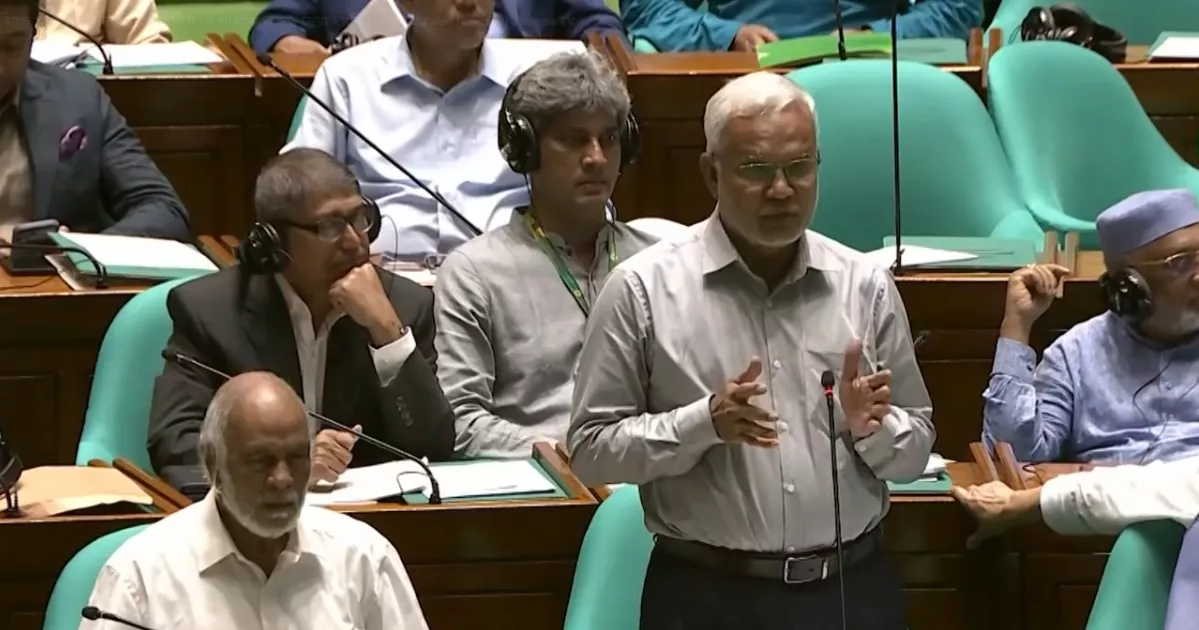
The government is placing special emphasis on cottage industries and handicrafts as a means of improving the socio-economic condition of poor and destitute women across the country, Social Welfare Minister Abu Zafar Md. Zahid Hossain told Parliament on Sunday.
Responding to a written question from treasury bench lawmaker Nilufar Chowdhury Moni (reserved women’s seat-10), the minister said the Ministry of Social Welfare has been implementing a range of training and income-generating programmes aimed at helping disadvantaged women become self-reliant.
He informed the House that the Department of Social Services operates two socio-economic training centres at Mirpur in Dhaka and Shalbon in Rangpur, where women receive vocational training in leather goods production, block-batik printing, flower making, wool knitting, doll making, tailoring, embroidery, beauty parlour services, garment production, and bamboo and cane crafts.
According to the minister, women from lower and middle-income families are being equipped with practical skills that can help them secure employment opportunities or establish small businesses.
Highlighting government initiatives to bring disadvantaged women into mainstream economic activities, Zahid Hossain said women aged between 18 and 50 are being provided training in sewing, cutting, block printing, batik and handicrafts under various programmes designed to improve the living standards of marginalised communities.
“Through these programmes, their skills are enhanced and they are engaged in income-generating activities, enabling them to become self-reliant,” he said.
The minister added that beneficiaries also receive post-training support to help them utilise their newly acquired skills effectively and establish sustainable sources of income.
He said the project titled Improvement of Living Standards of Marginal Occupational Communities (Second Phase) is currently being implemented to further strengthen the economic condition of disadvantaged groups.
Another project, Improving the Living Standards of Marginal Farmers, Persons with Disabilities, Underprivileged People, Widows and Deserted Women of Joypurhat District through Income-Generating Activities in the Context of the Global Pandemic, is also contributing to women’s economic empowerment, he added.
Replying to another question from the same lawmaker regarding old-age allowances, the minister said the programme is being implemented in line with the Old Age Allowance Implementation Policy 2013.
He said the allowance programme was introduced to ensure social security for elderly citizens who are poor, have limited earning capacity, or are unable to earn a livelihood.
Regarding beneficiary selection, Zahid Hossain said preparing new beneficiary lists and updating existing records is a regular activity of the Department of Social Services and remains an ongoing process.
He said the government is committed to bringing all eligible elderly citizens under the social protection framework through the continuous updating of beneficiary databases.
The minister also noted that both the number of beneficiaries and the amount of monthly allowances under social security programmes are reviewed and increased periodically.
Under the social security system, decisions on increasing allowance rates and beneficiary coverage are taken by the Cabinet Committee on Social Security Programmes, he said.
“As this is a continuing government programme, efforts will be made to gradually increase both the number of beneficiaries and the amount of allowances in the coming fiscal years,” the minister added.